
Hindu Mandir Executives' Conference in San Jose
August 20, 2012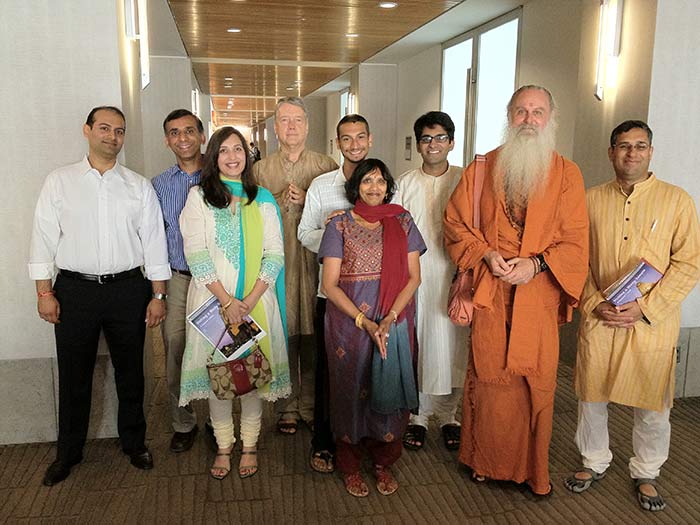
Before the conference began we met with member
s of the Hindu American Foundation'
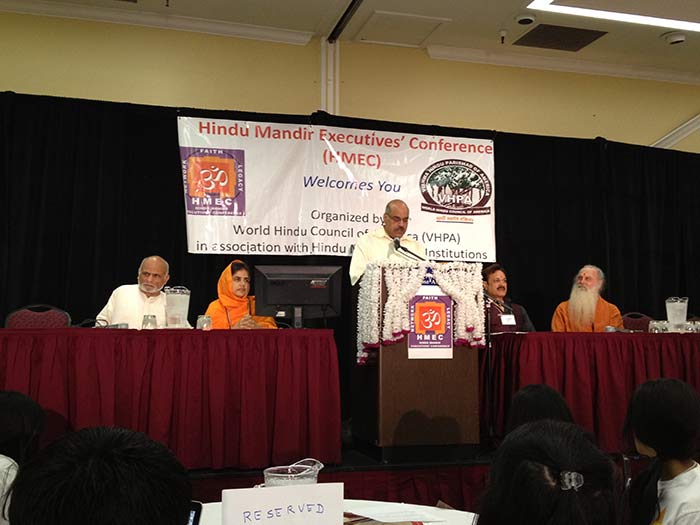
Sant Gupta opens the inaugural session
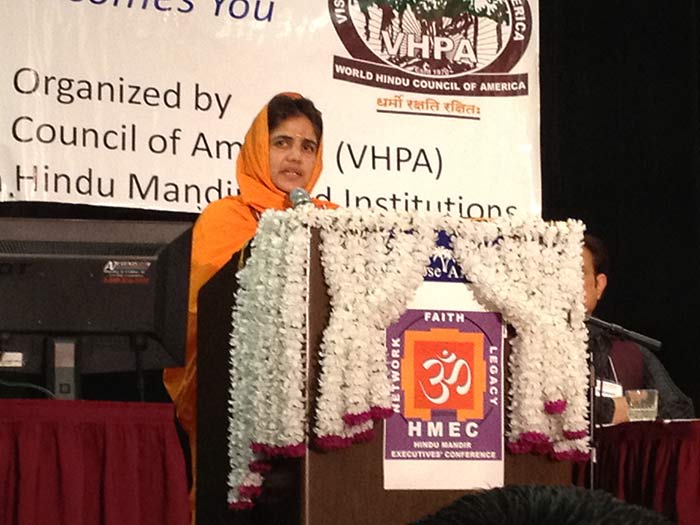
Swamini Svatmavidyananda Saraswati gave an insightful, rousing and humorous address
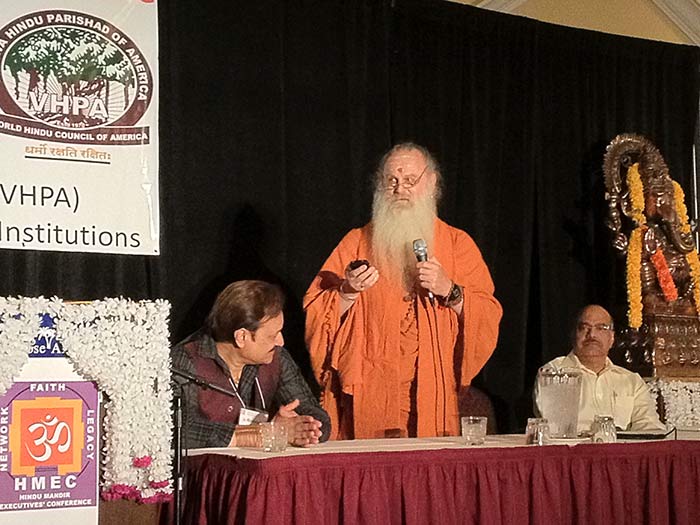
Sadasivanathaswami
s high-tech presentation, controlled via iPhone, was enjoyed by all'
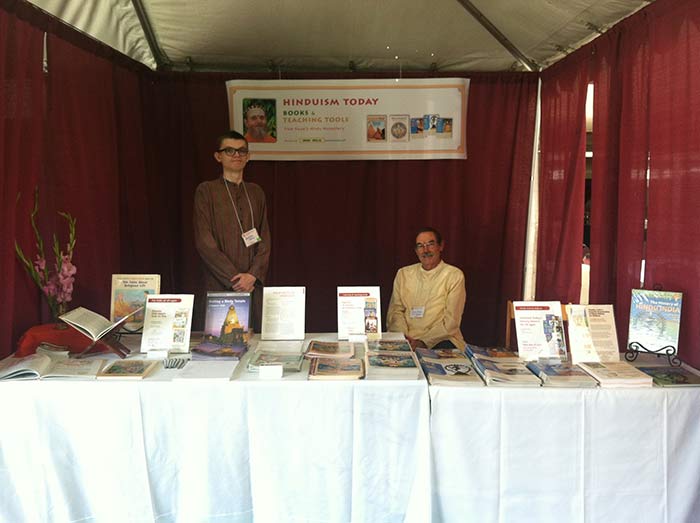
Kulapati Deva Rajan and Bhajana Param were among our member staffing our literature table
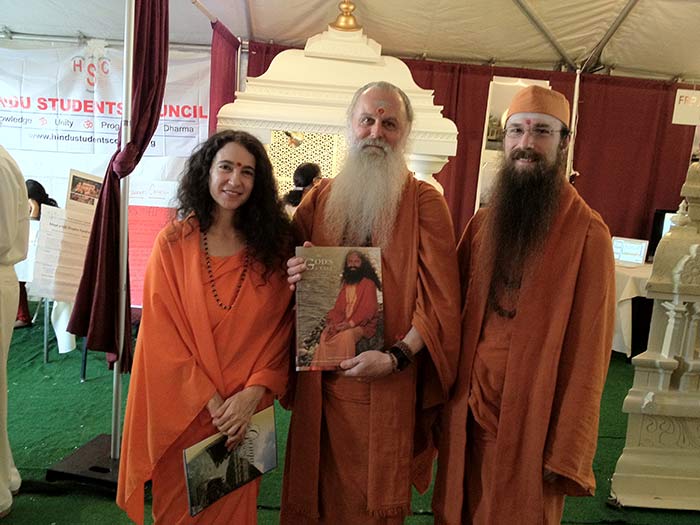
Sadhvi Bhagawati gave us a book she wrote about her guru, Swami Chidanand, affectionally known as Muniji
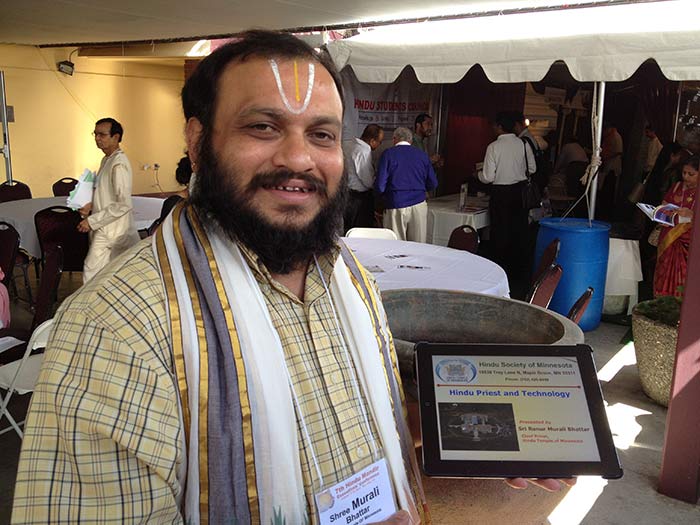
Pandit Murali Bhattar gave a presentation about how priests can use technology in the mandir
Nagarajan, a.k.a. Nashville Naga, moderated Senthilnathaswami
s session'
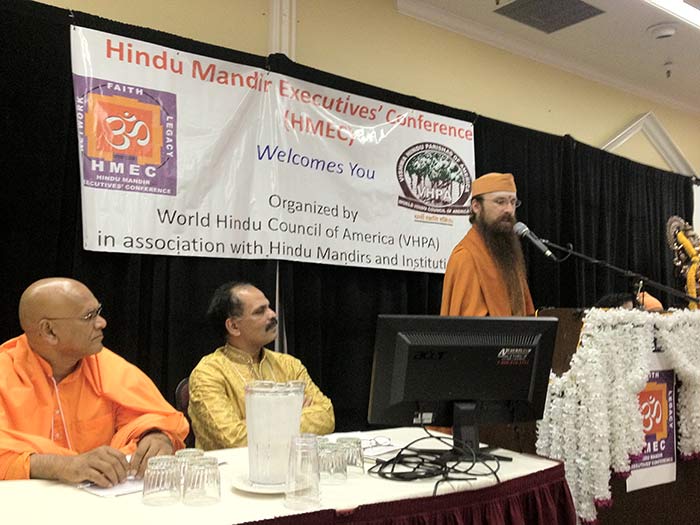
Senthilnathaswami was among three swamis on one panel
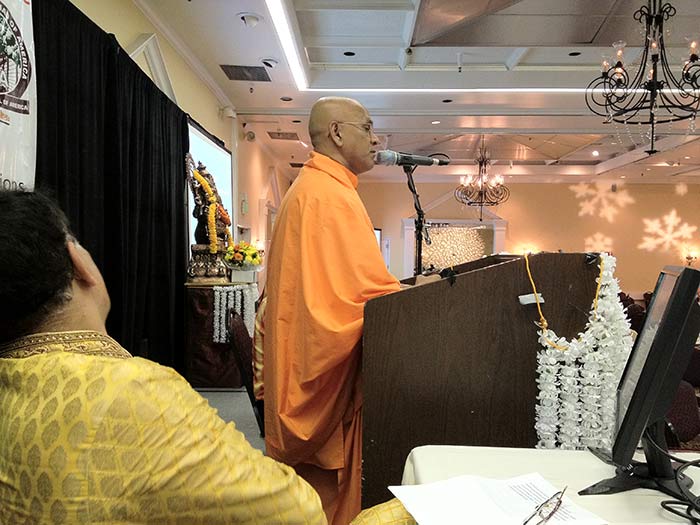
Swami Parameshanand, a dear friend of the monastery, does invaluable work with the UN
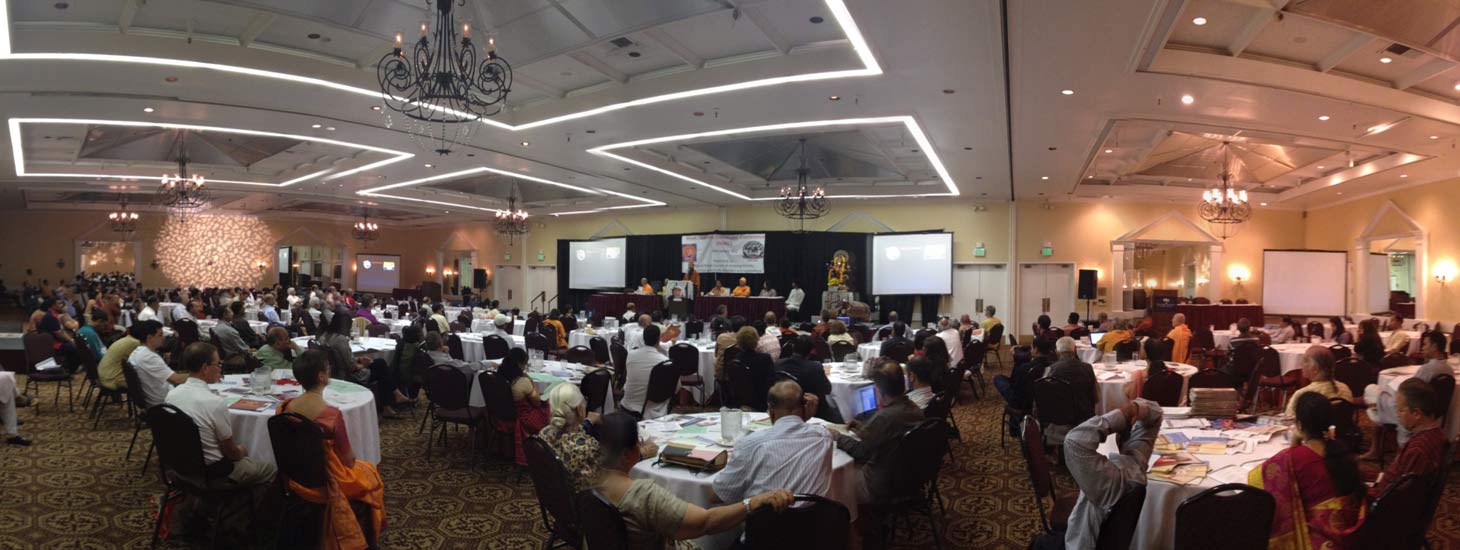
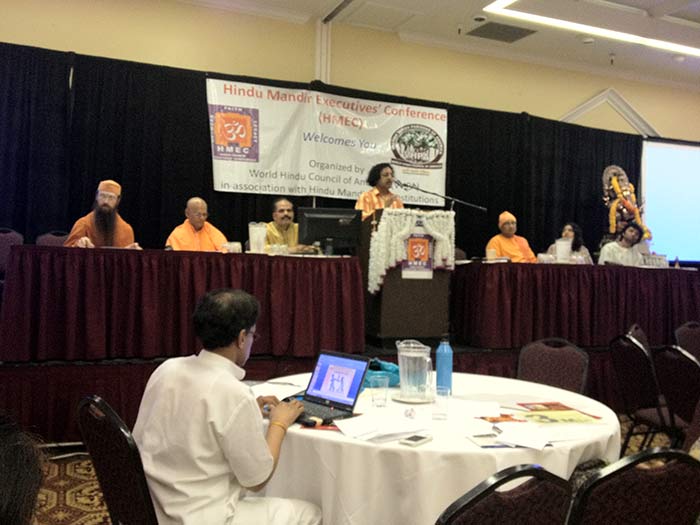
Panorama of the conference general session 10
}
];
height: 550,
width: 700,
transitionSpeed:150});
On Friday and Saturday, Sadasivanathaswami and Senthilnathaswami attended the 7th Hindu Mandir Executives' Conference in San Jose, California. Our swamis have attended most of these conferences and have become some of the most sought-after speakers. Sadasivanathaswami gave a beautiful presentation about our latest Educational Insight section from Hinduism Today, "Visiting a Hindu Temple," which we constructed for the conference itself. Copies were distributed to all who attended, along with the feature article from the Oct/Nov/Dec 2012 issue, "Hindu Temples in the West," about how the many temples in North America and the Caribbean adjust and adapt to serve the unique needs of the Hindu diaspora here. Both articles were warmly received. Senthilnathaswami presented on "Spiritualizing Temple Leadership," conveying Gurudeva's thoughts on the sensitivity of the vibration of a temple and how trustees' fighting in the board room invokes asuras in the temple and discourages volunteers and youth attendance. We then gave five tools from Gurudeva's teachings that can be used to improve how we lead and interact with each other in the mandir: 1) professional behavior, 2) ahimsa, 3) the spirit of karma yoga, 4) zero tolerance for disharmony and 5) consensualocracy. See the presentation here.