
Italian Temple Excursion
July 4, 2013Off to Italy
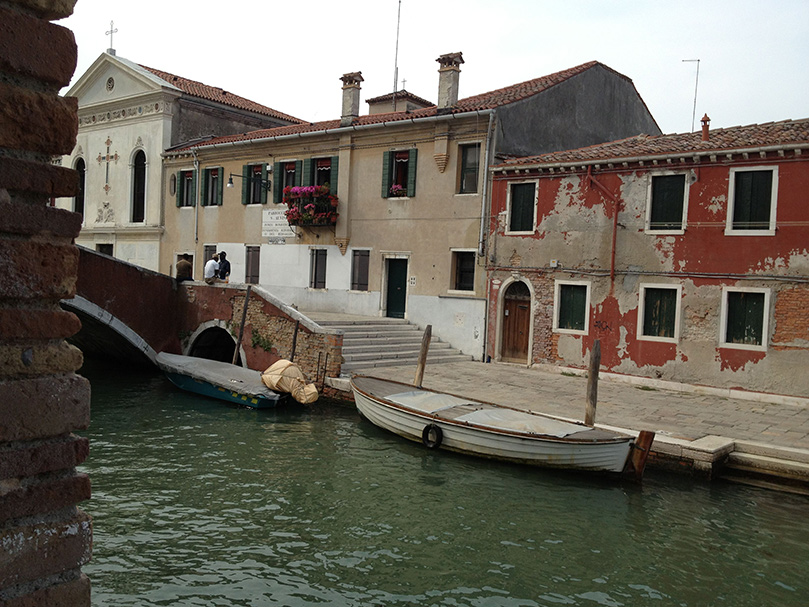
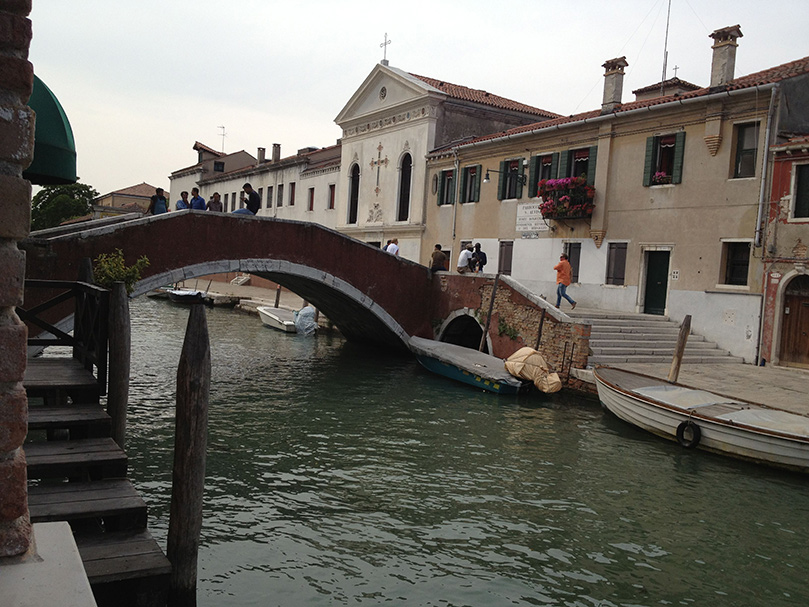
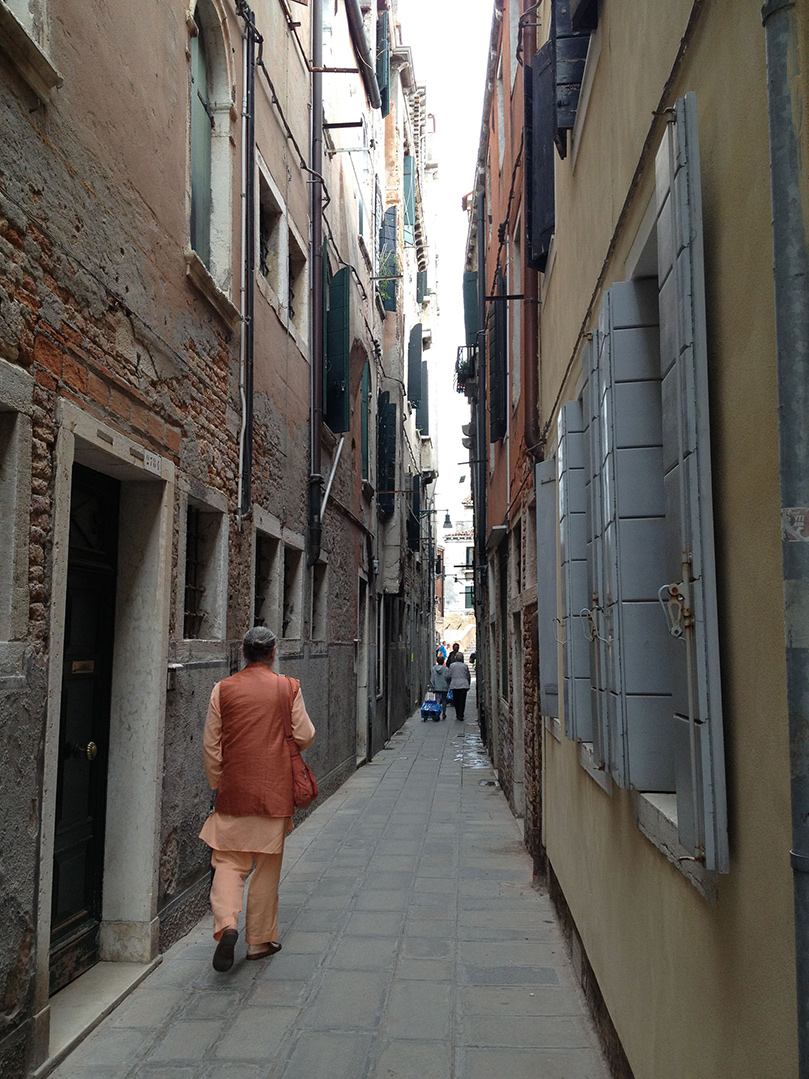
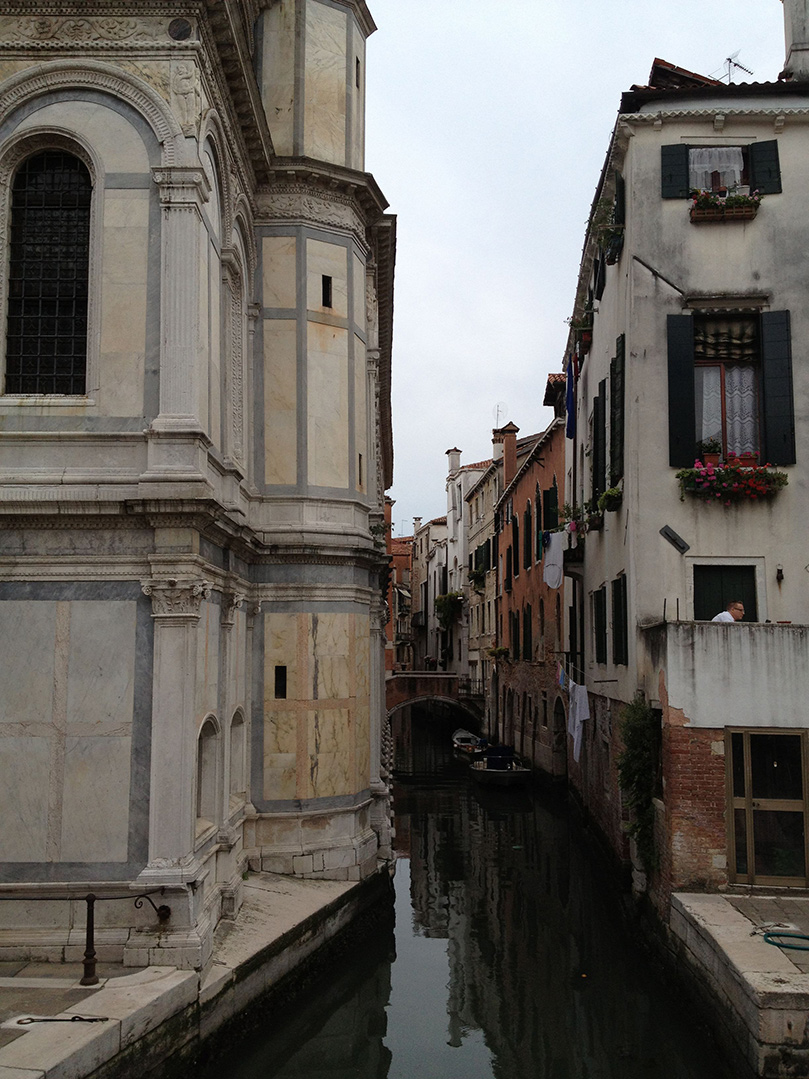
From Barcelona we flew two hours to Italy, landing in Venice only to take a water taxi to the lobby of our hotel. That's a first! We are here just a few hours enroute to Milan, but we do manage to get lost for 90 minutes late in the night. It turns out that streets here almost all end at a waterway, a dock for boats. The water taxi that took us into the city, down a canal and right to the pier of our hotel, which was in a centuries-old building (all buildings here are centuries-old, actually) that was originally a monastery, then later a gondola factory before it was remodeled inside as a hotel. An evening and morning were spent in this unusual city, with its tiny alleys, canals, frontage paths and such. There are no cars here, at least past one area, Piazzale di Roma, where busses and taxis can cross a bridge and drop people off.
Otherwise transportation throughout the entire city is by foot, gondola and water taxis called vaporetto (plural: vaporetti), which are long, skinny power boats, frequently made of wood in the style that you would imagine from James Bond movies and such. It's so easy to get lost here because all the paths and foot bridges over the canals look pretty much the same. And boy did we get lost. So you can walk half a mile down a narrow alley, only to stop at the waters edge, brick walls rising five feet apart on each side and no way to continue. So back you (we) go, down another and another. Certainly there is a method that we don't understand, and we end up after midnight at our hotel. Siva clearly wants us to exercise more. It's a magical little city, though, and the people are wonderful.
Our train to Milan gives us a chance to write about the adventures in Spain, and two hours later we are met at the train station by Svamini Hamsanandaji and Svami Nityapriyananda from the alpine ashram in Italy's northwest.
Hamsananda is one of the founding members of the Svami Gitananda Ashram in Altare. She is absolutely sharp, intelligent and so warm and wonderfully friendly. She is in charge of their publications as well as their participation in the Italian Hindu Union (which just a few months ago accomplished with great effort to get Hinduism officially recognized as a religion by the Italian government), as well as likely other matters in the monastery. The 31-year-old Nityapriyananda is basically their Siddhidatta Kulam talaivar. He takes care of all the buildings and grounds at the monastery, with the only two other male monks as his team. He is so bright, so intelligent, so friendly, so disciplined. (More about them and their monastery and our brother and sister monks in a later post.)
The swamis from the monastery in the northwest had driven over five hours to pick us up and take us throughout the rest of the North to visit three temples in less than 24 hours on the way back to their monastery.
The four of us drive through the Milan countryside, which has grape vineyards as far as the eye can see, ending up at our B&B atop a hillock, complete with a small church. We get settled, then off we go to our first Hinduism Today interview in Italy, held at a small temple that is just beginning. In fact, that seems to be a pattern here. Some 20 years ago a large group of Panjabis arrived from India, eager for work, which was plentiful in those days. But in the intervening years Italy has suffered a rather severe economic depression, and what few jobs there are the Italians are inclined to give to their own. The Panjabi men struggle with support of their families, and many are leaving Italy for other European nations. This exodus is having an impact on the Hindu population in Italy, and many here are worried. Oops, we are moving into the HT story, back to the mission at hand.
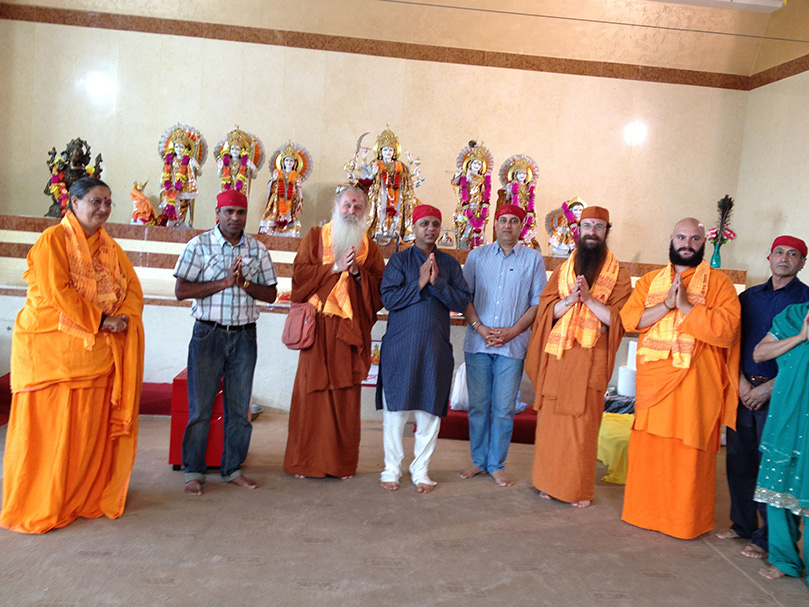
The next day the four saffron-clad swamis move from one village temple to the next, gathering in each one with the leaders of the community and asking our questions about their history, their present circumstances and what they see for their future.
The two swamis from the Svami Gitananda Ashram were infinitely patient with our interviews, and have deep knowledge of Hinduism here in Italy and all over Europe, having been instrumental in the creation of the recently ratified Italian Hindu Forum which guarantees certain rights for Hindus here. We pass the long hours on the road talking about monastic life, about sannyas, gurus and our surprisingly similar missions. Of this, more soon.
Day's end comes as we pass Genova on the Mediterranean sea coast, then turn inland at Savona, to climb into the hills where the ashram is located. The paved road turns into a mountain trail, narrow and well-worn, passing through a forest of blossoming chestnut trees. Up and up we climb, around tight corners, mile follows mile. It seems to us to be late afternoon, but it's 9:30pm and the sun is just setting over the mountains on the other side of the valley. As we get out of the car, the bright orange sun is on our left and a smiling group of bright orange swamis are on the right, gathered to greet their Hawaiian sannyasin brothers. We are home!
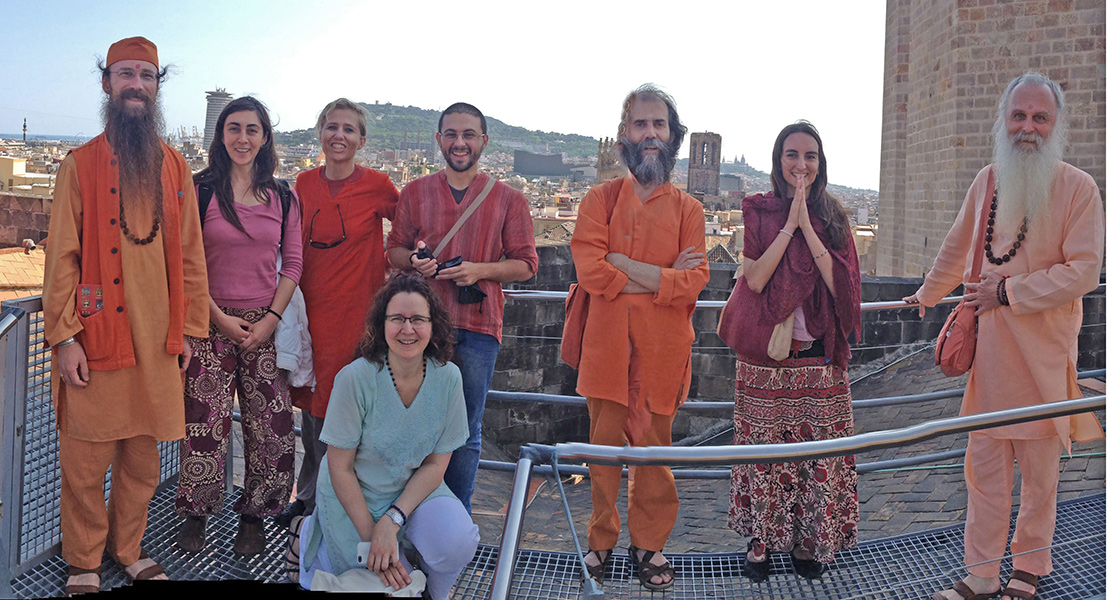
We leave Swami Satyananda and his team in Barcelona.
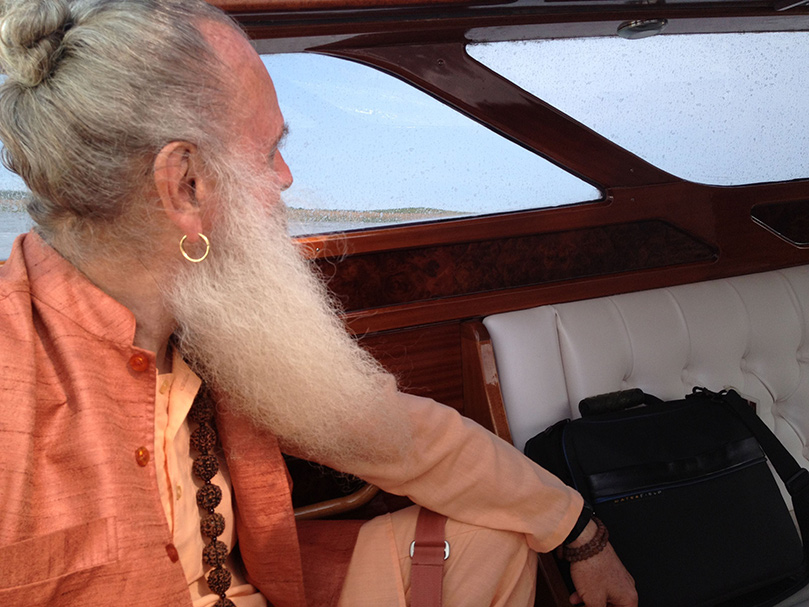
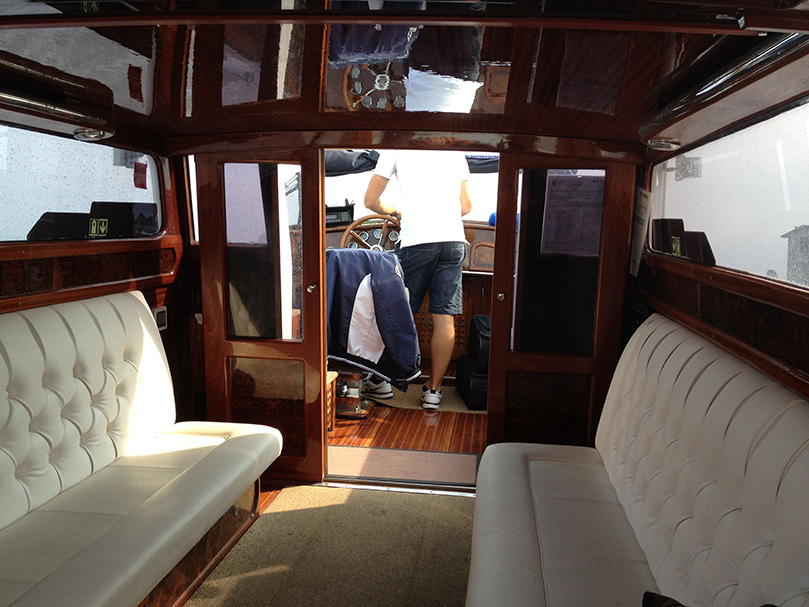
The boat to our Venice hotel
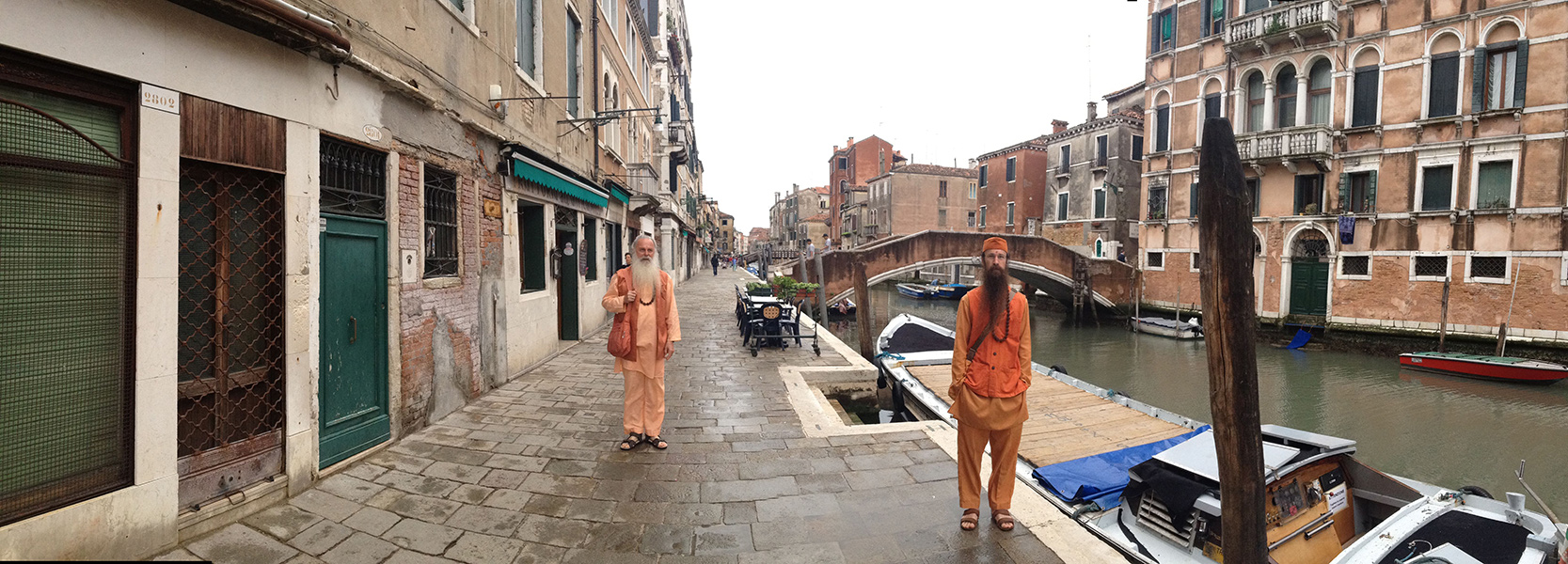
One of us took this photo.
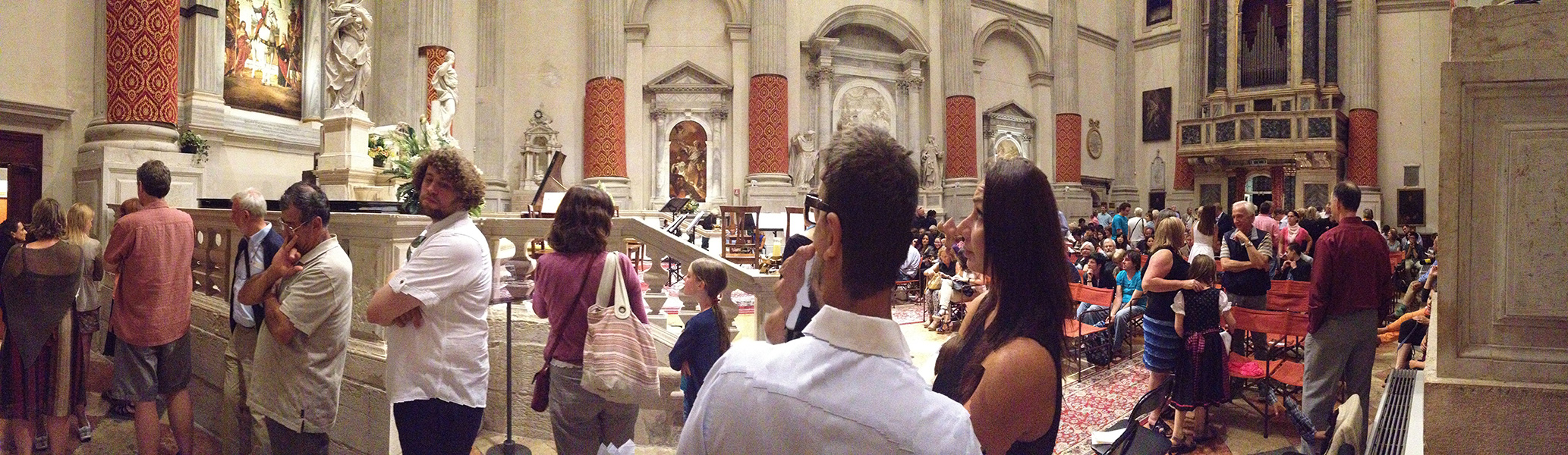
A cathedral
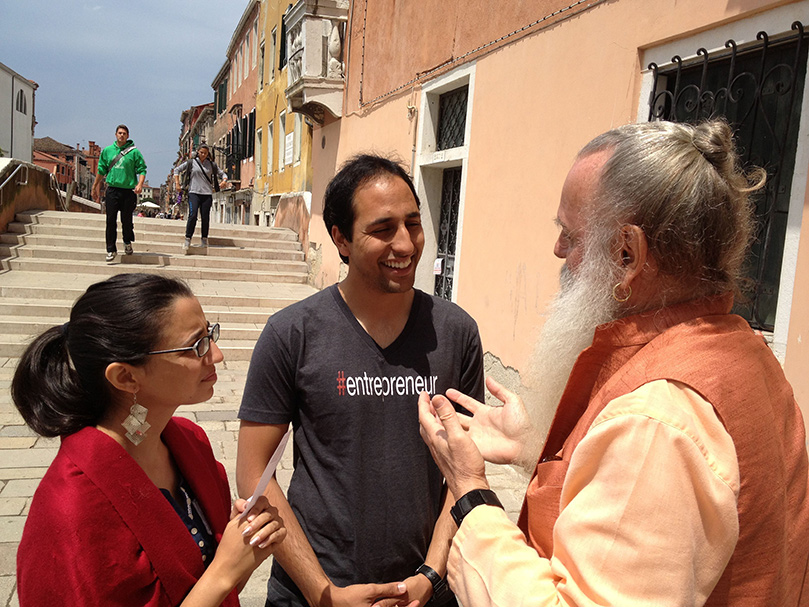
Walking around we met Sandeep and his new bride. Long-time HT readers who asked for blessings for their life together. We gave two rudraskas as our wedding gift.
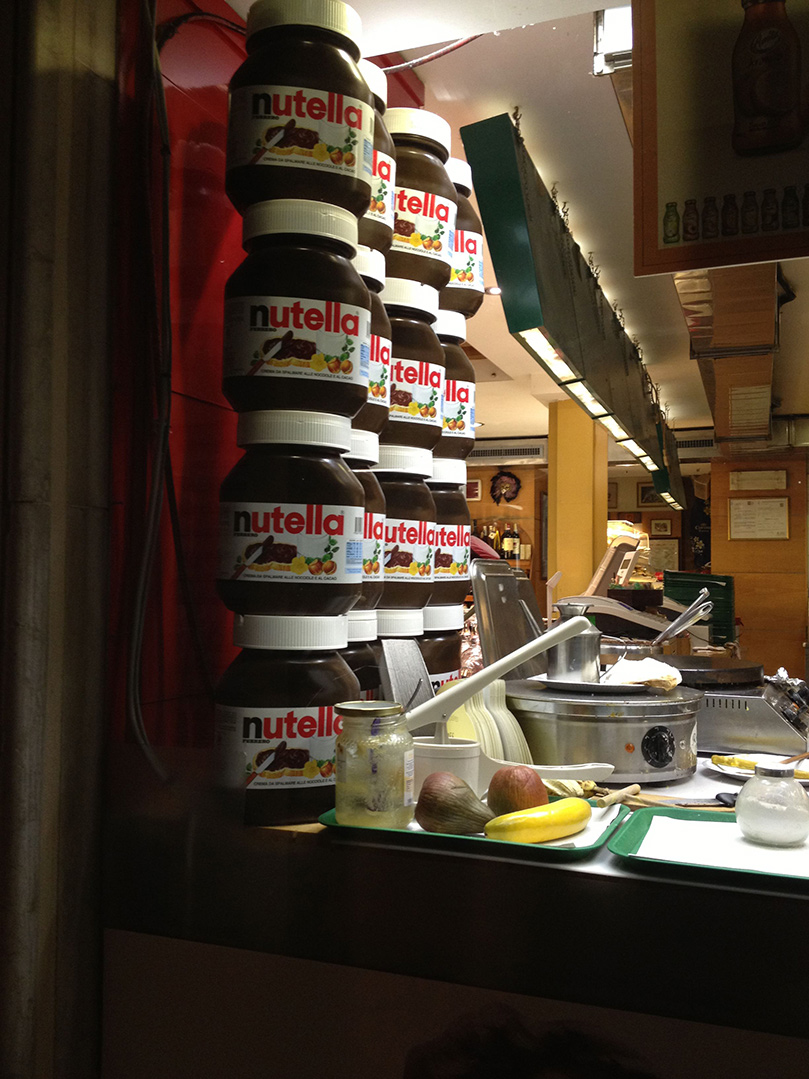
Nutella in gallon-sized jars!
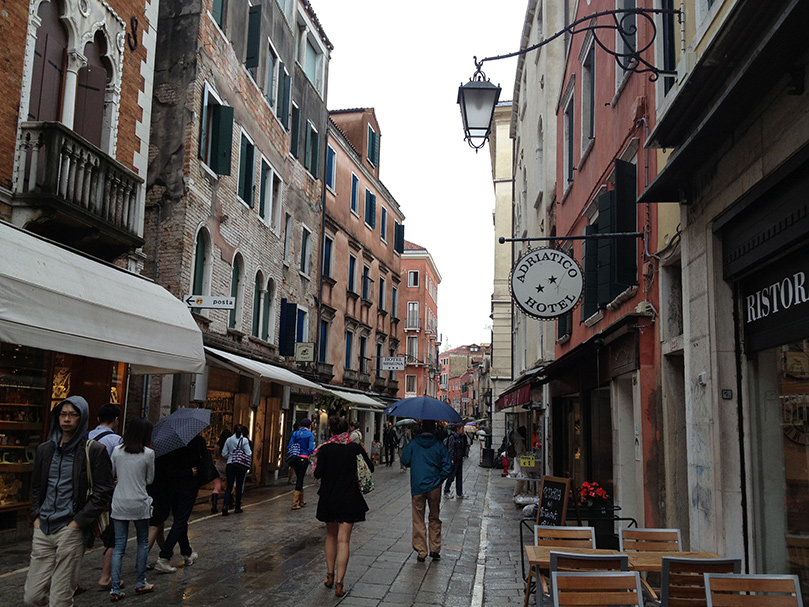
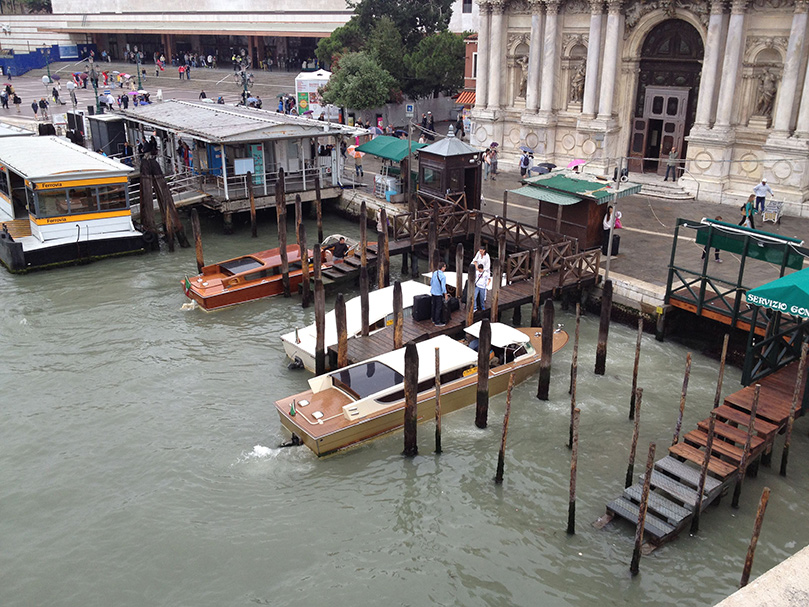
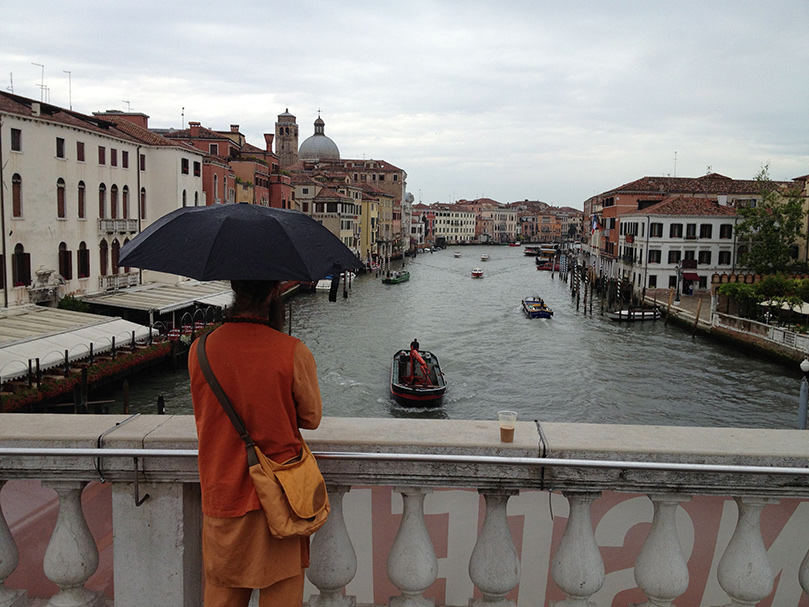
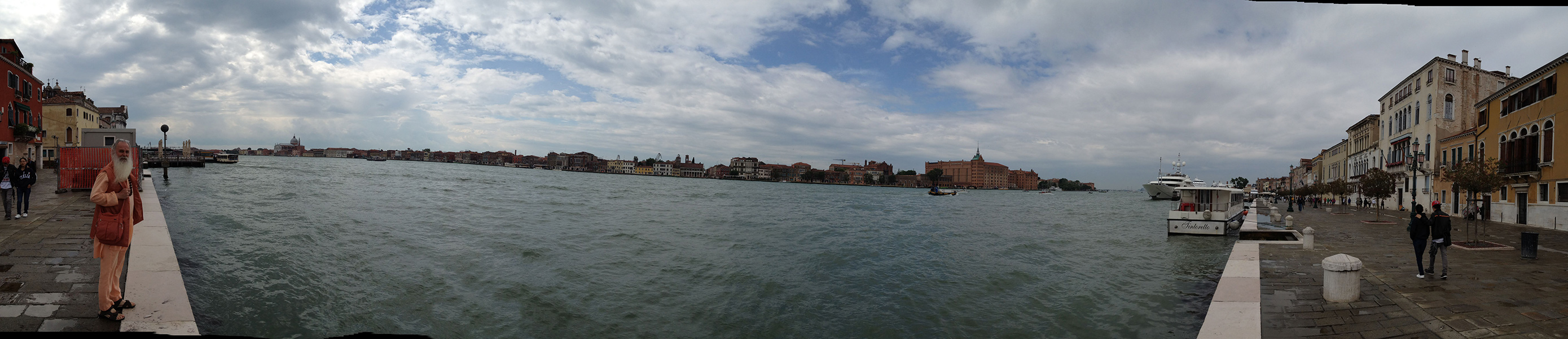
Senthilnathaswami takes a panorama at Grand Canal
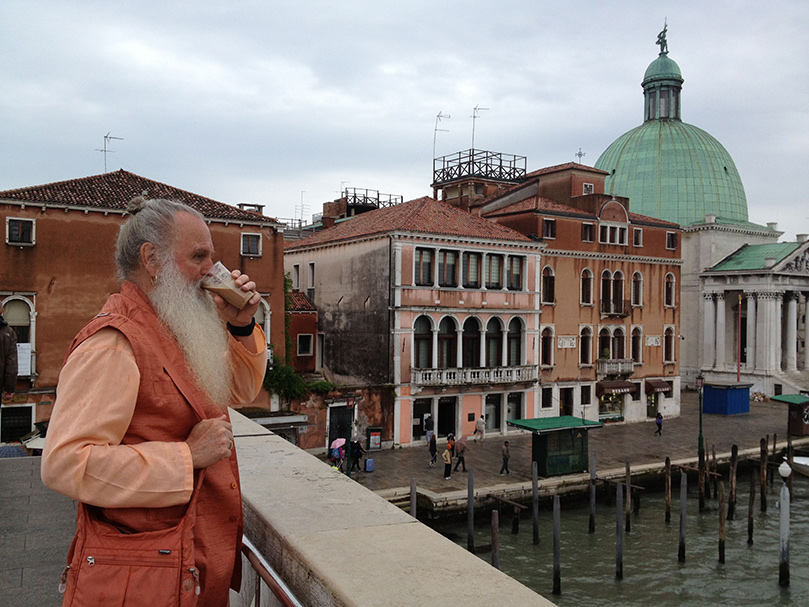
Italian coffee lives up to its reputation
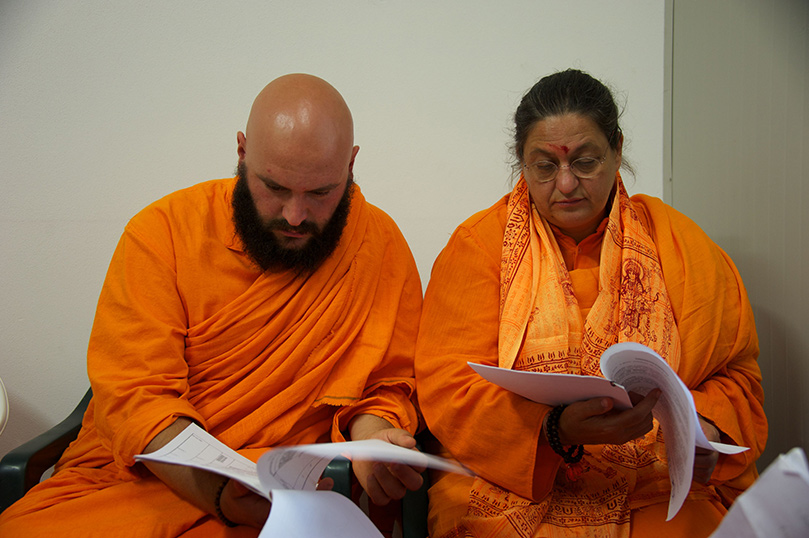
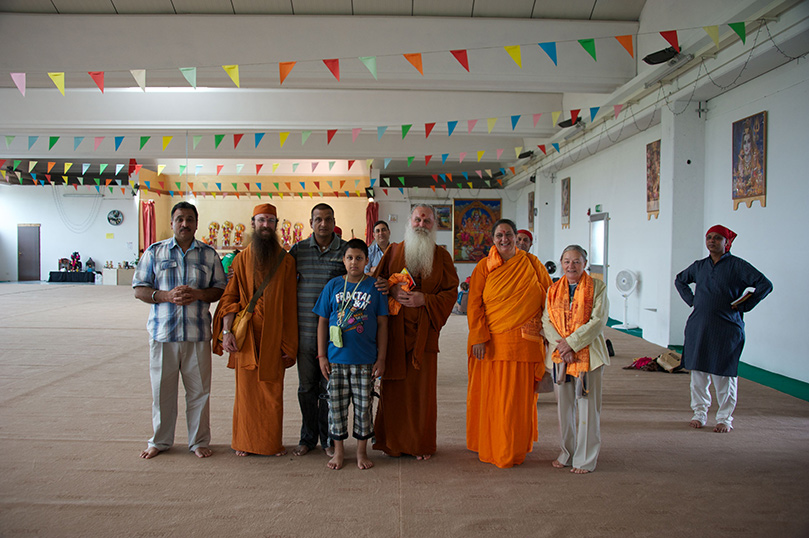
The swamis are such wonderful hosts for our visits to three Hindu temples
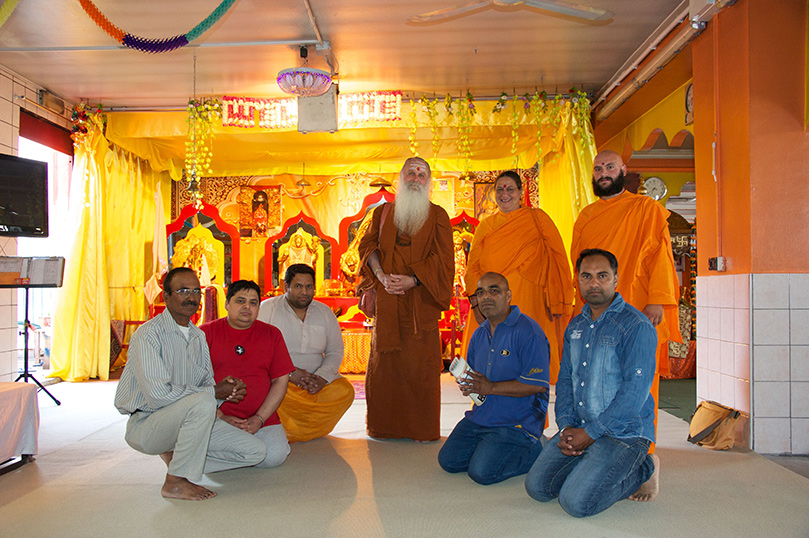
The temple leaders share their history and details of the community here in Arzignano
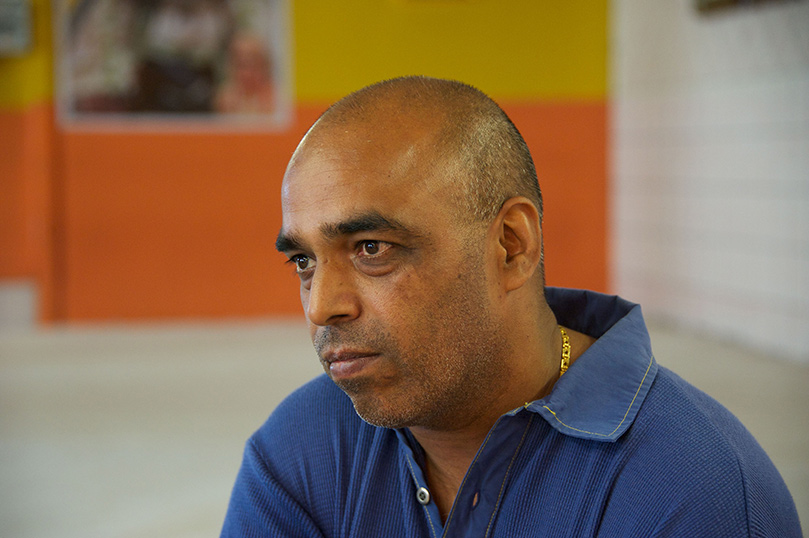
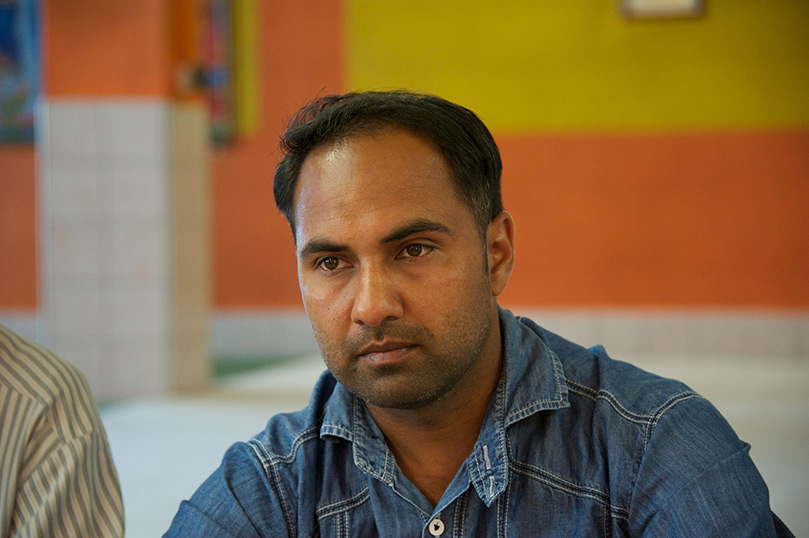
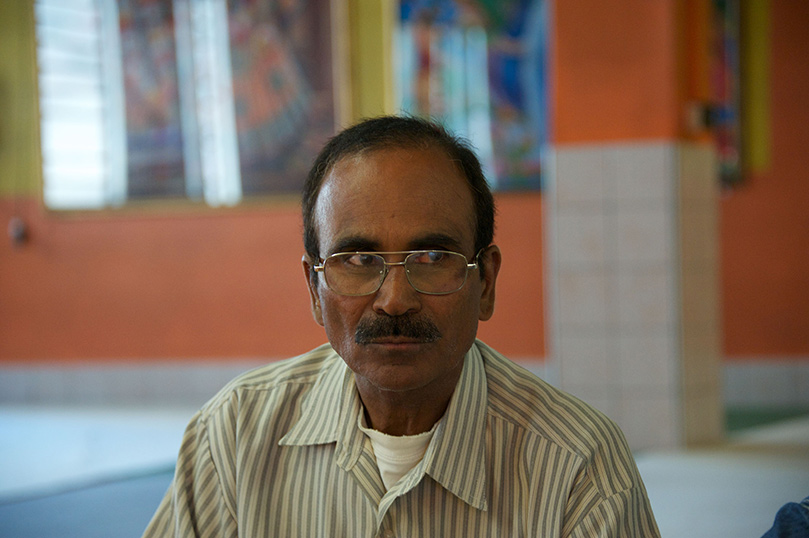
President
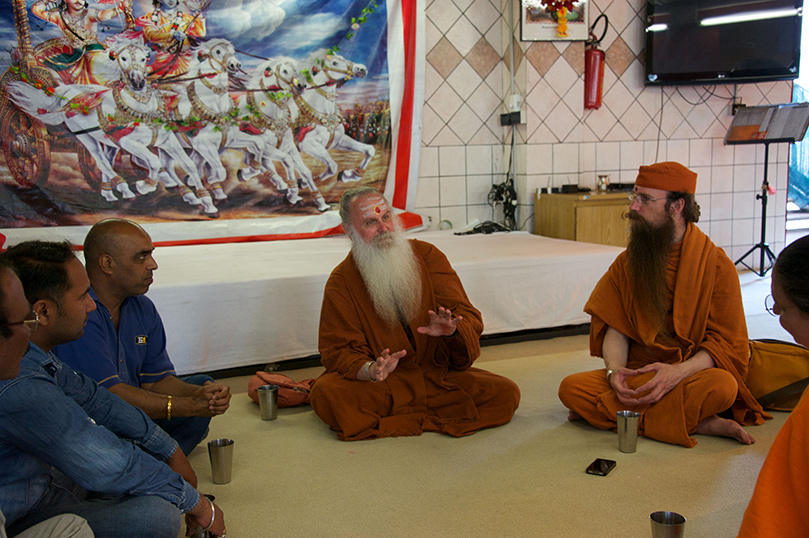
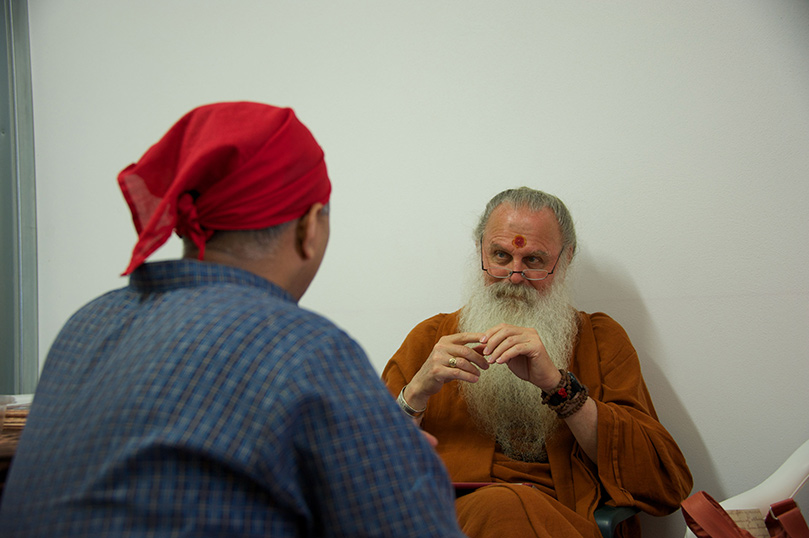
We have a series of questions and in the answers we hear a similar tale
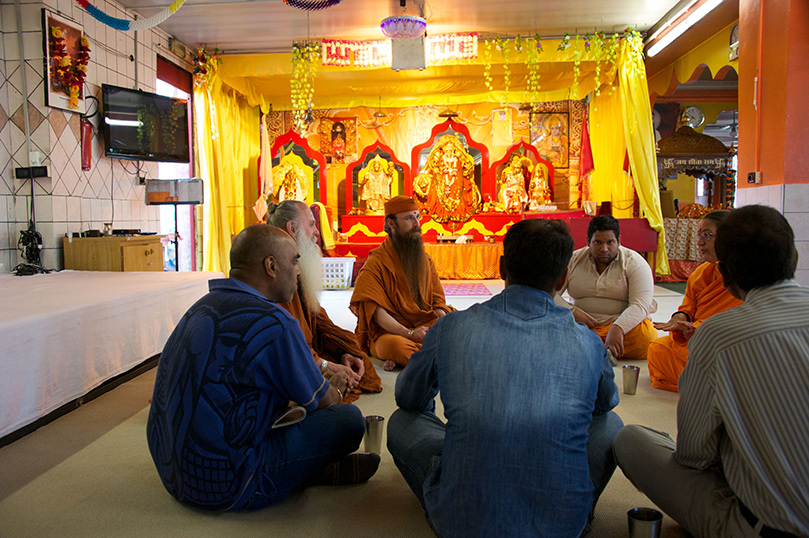
These are Panjabis who came to Italy twenty years back
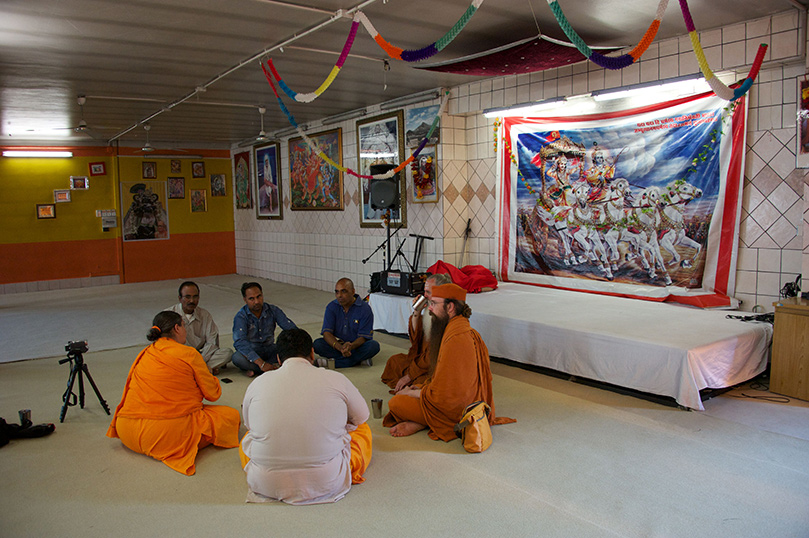
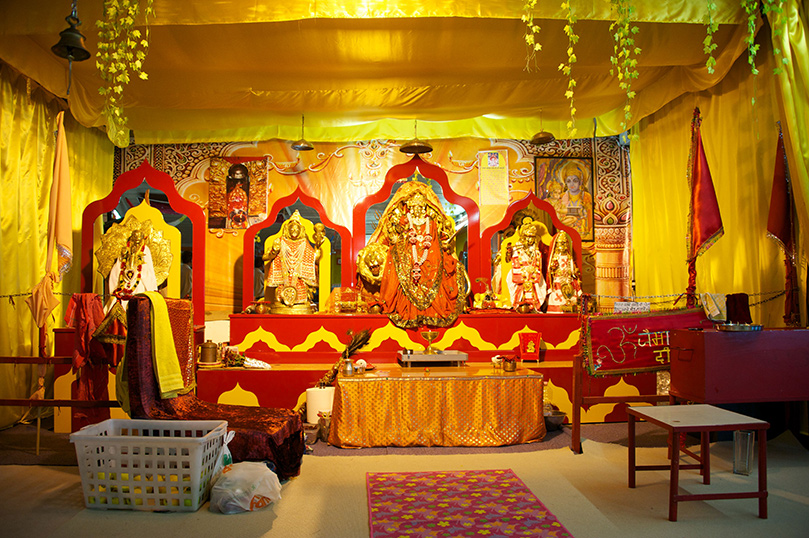
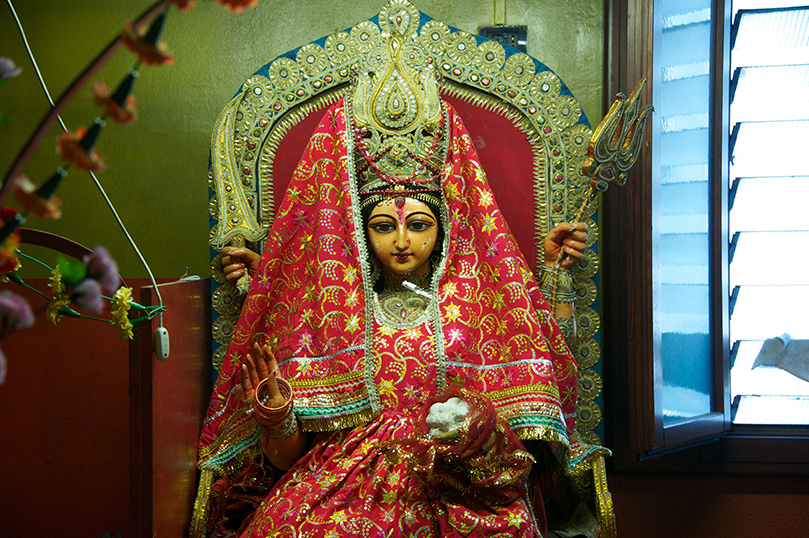
The shrines are simple, but well used
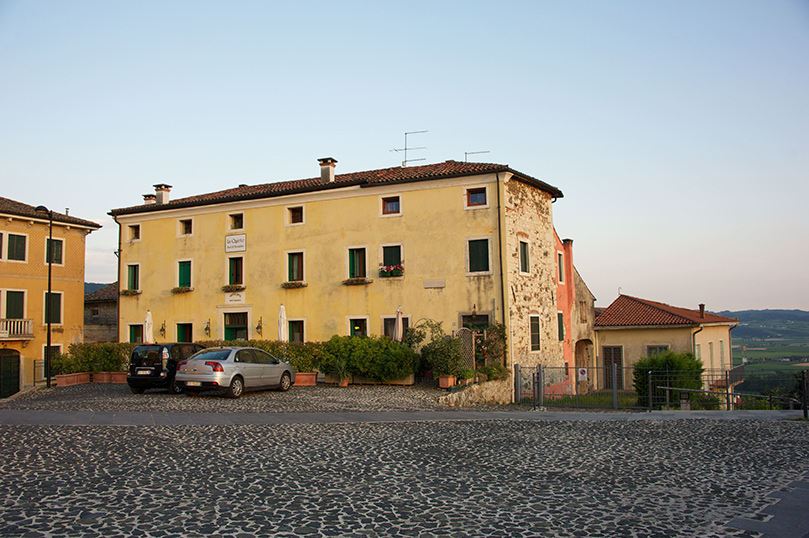
We reach our B&B atop a knoll
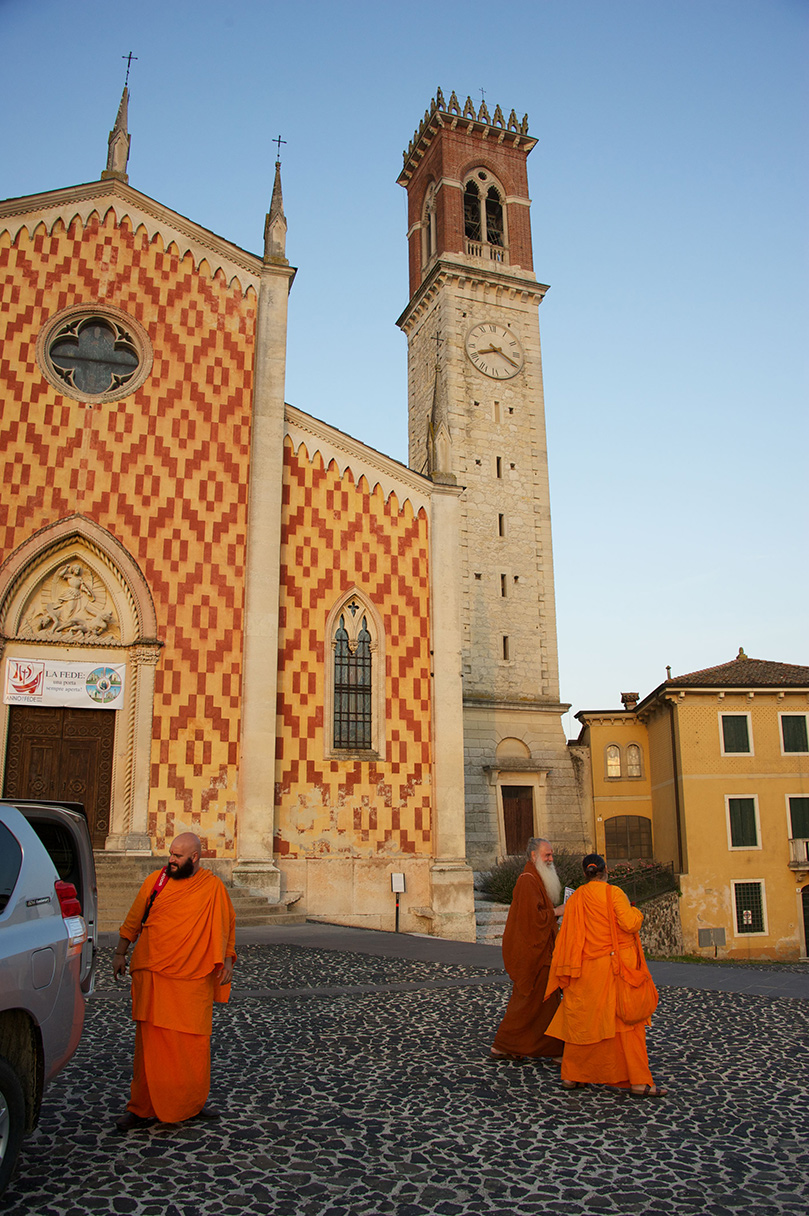
There is a church nearby, but in Italy that is a given. The bells ring quite frequently, almost with the hope that more will come back.
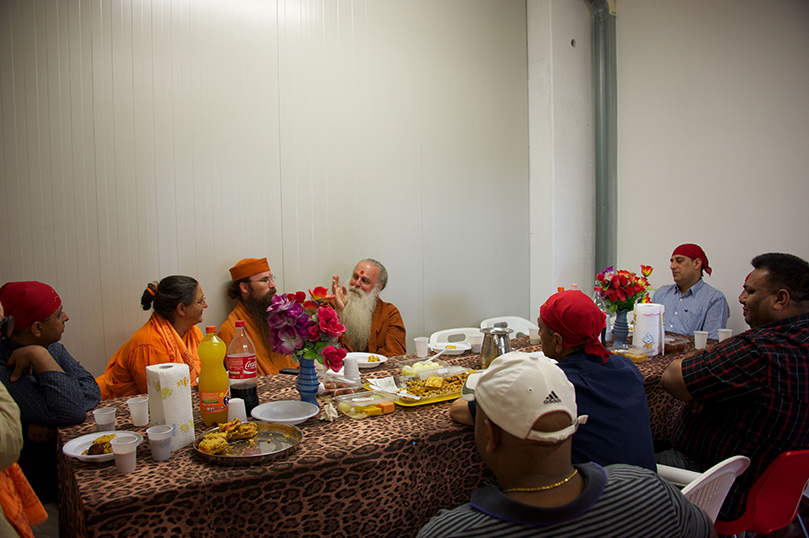
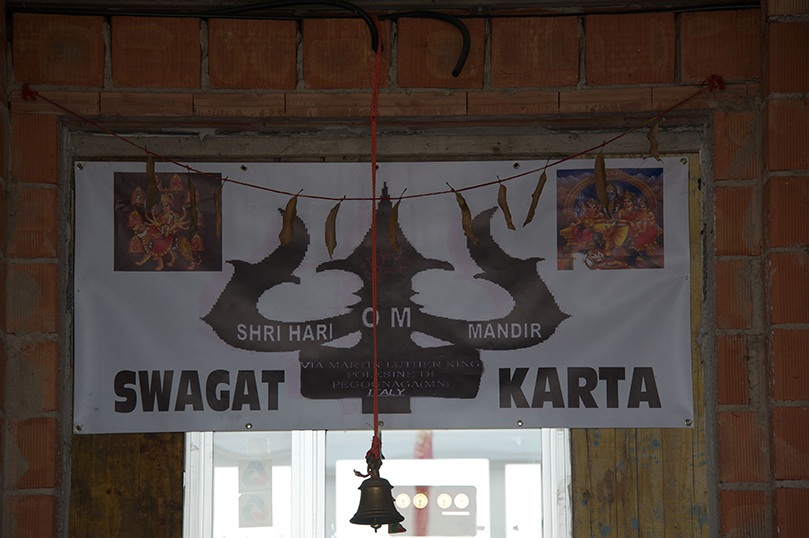
Then back on the road for more interviews with another group that is building a brand new, traditional temple in Pegognaga
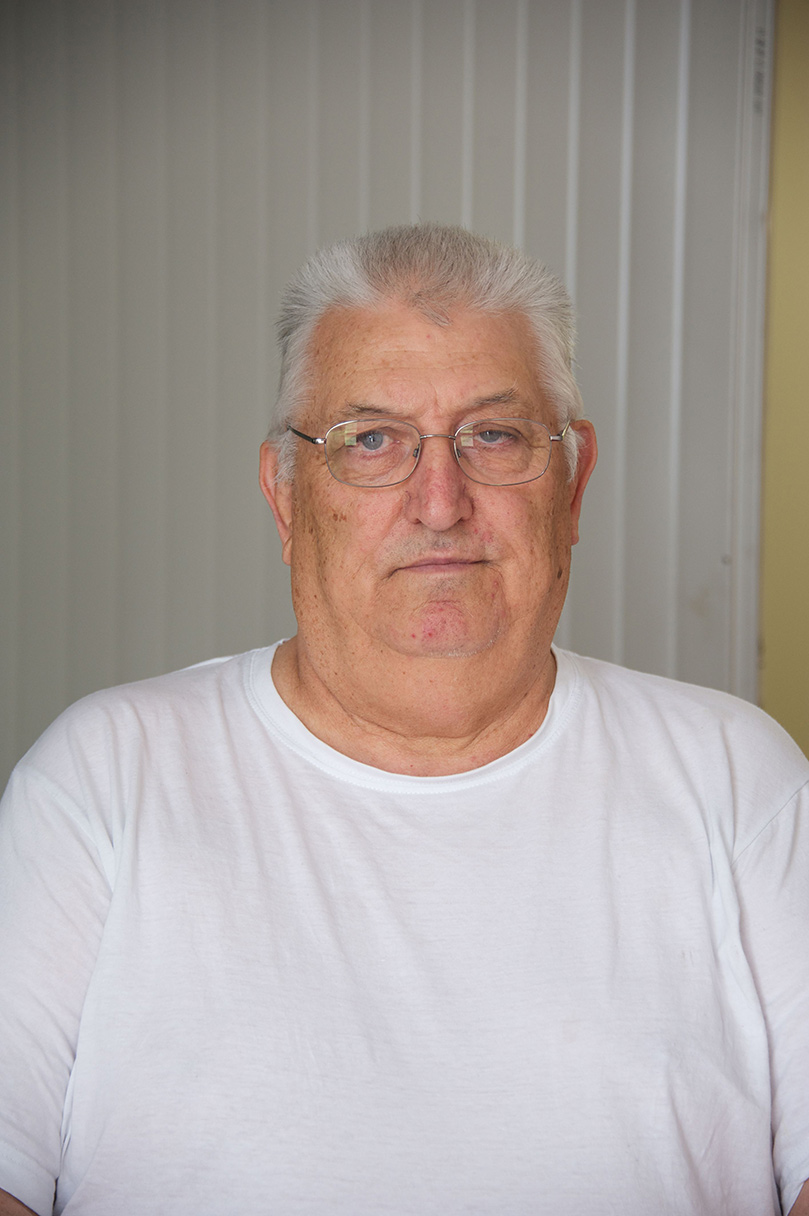
The temple contractor, Francesco
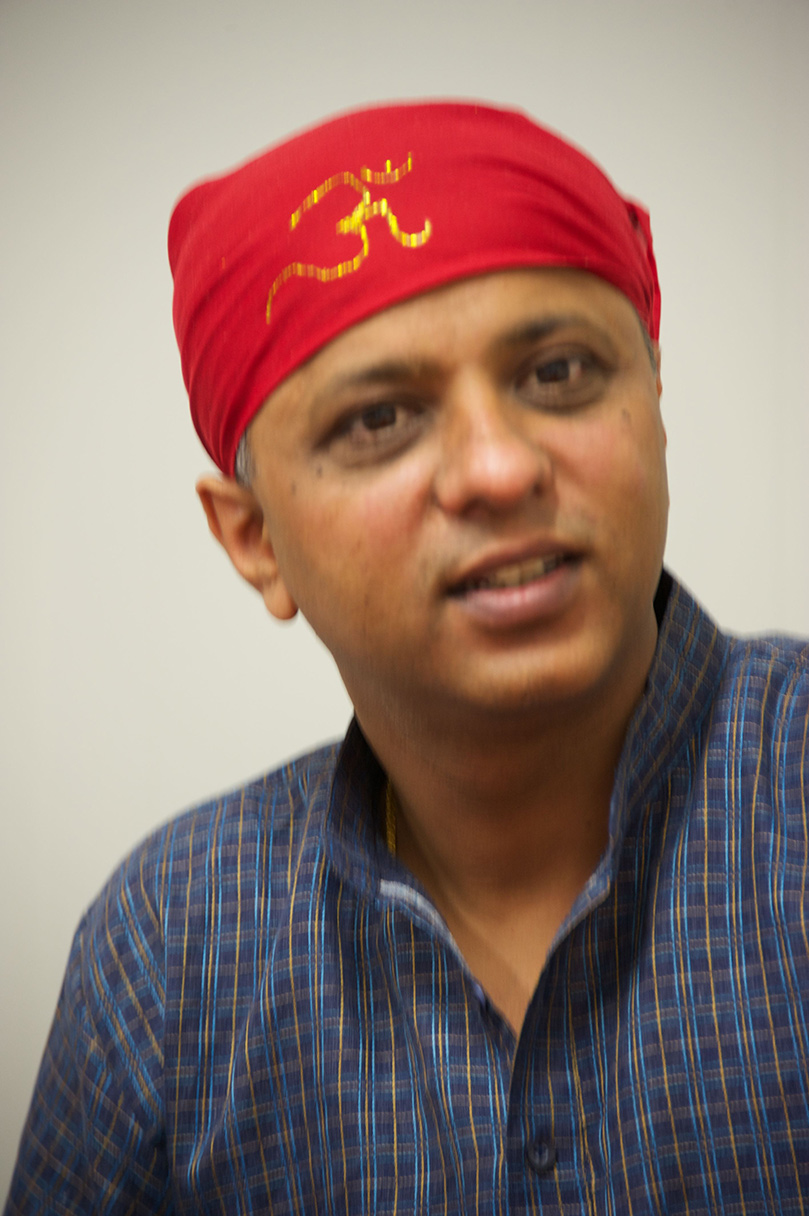
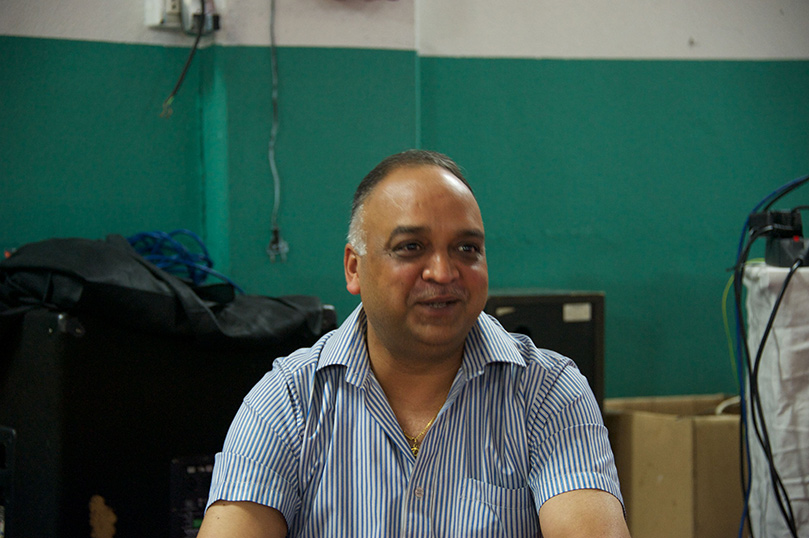
Spokesman.
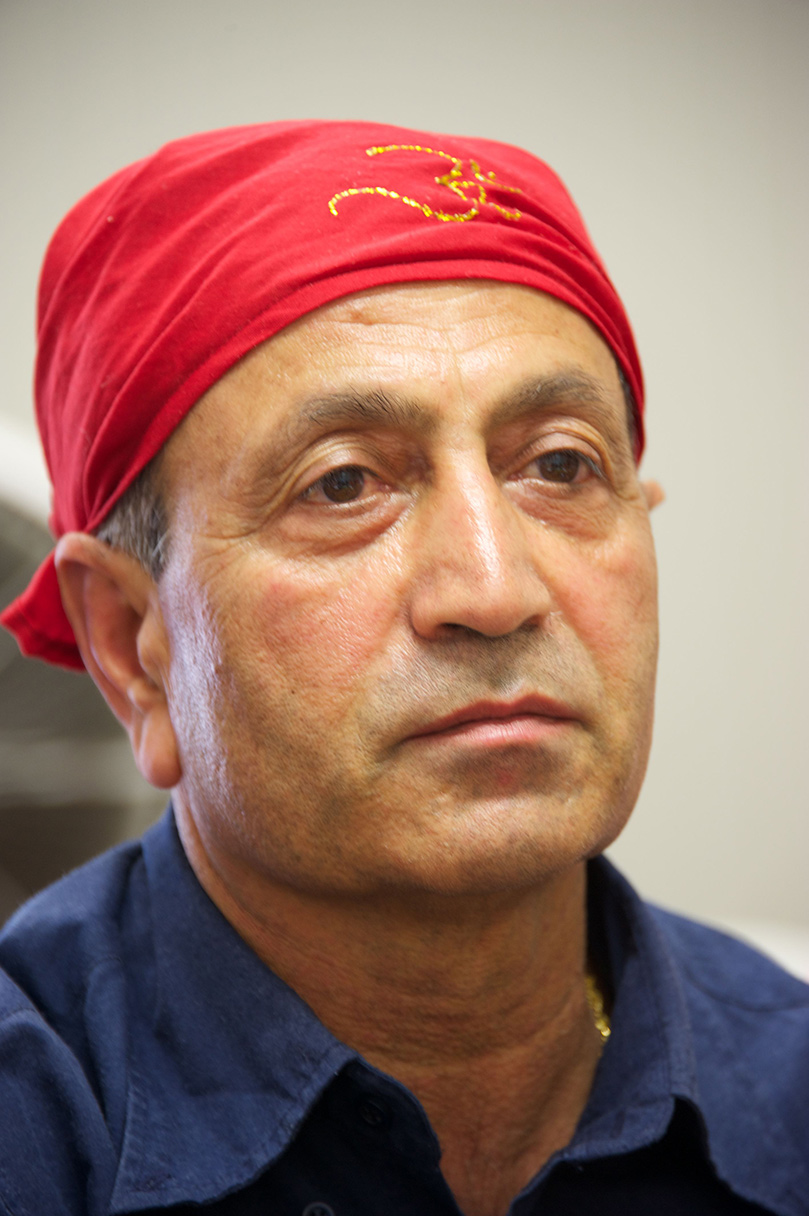
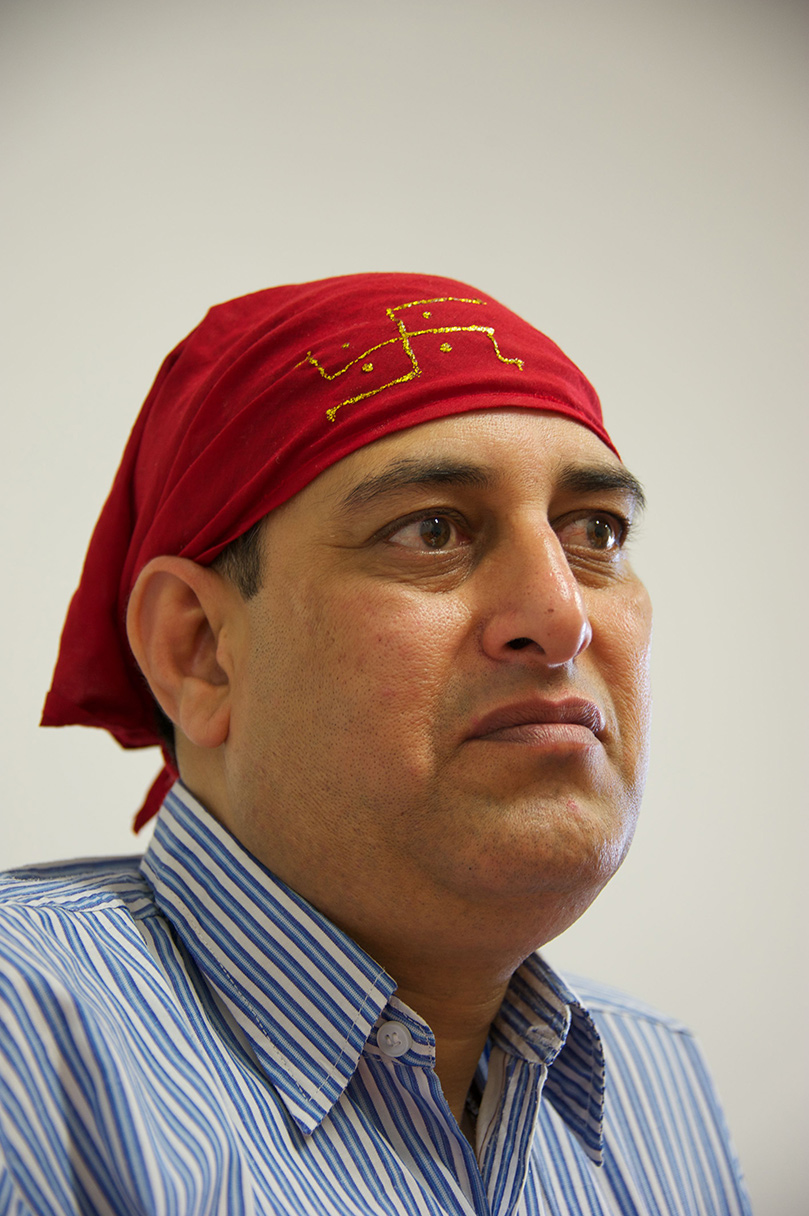
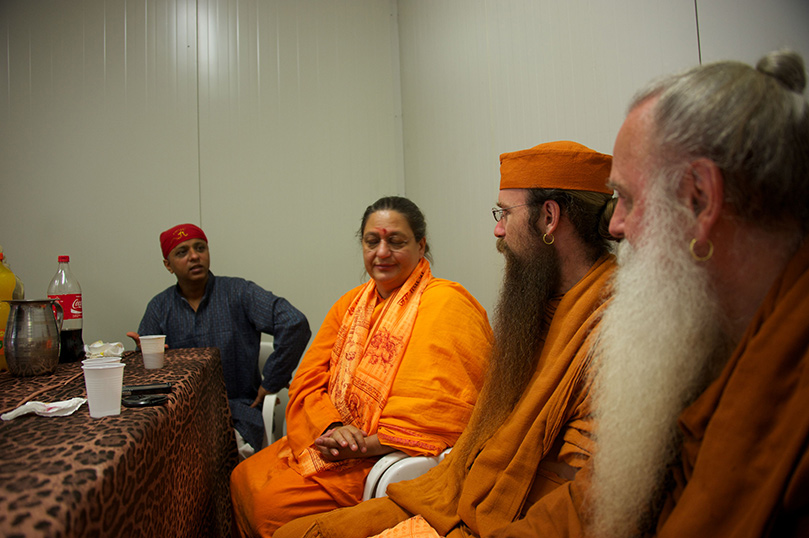
Hamsanandaji does her masterful work as translator.
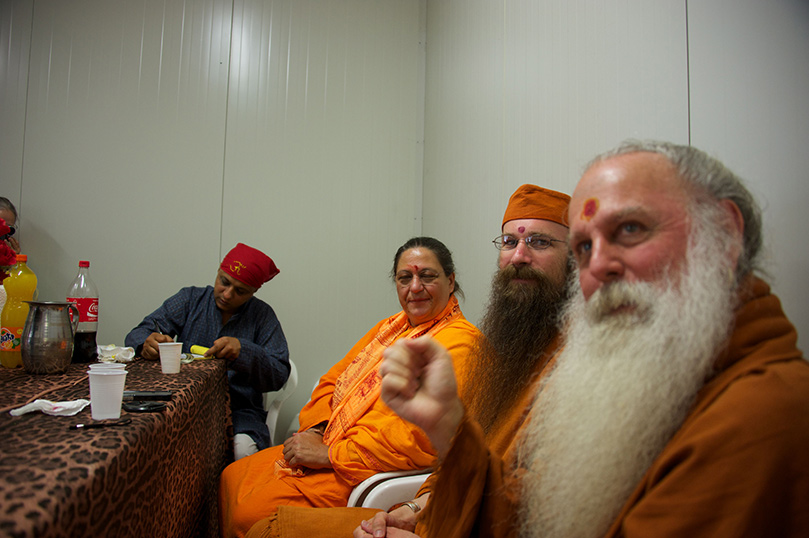
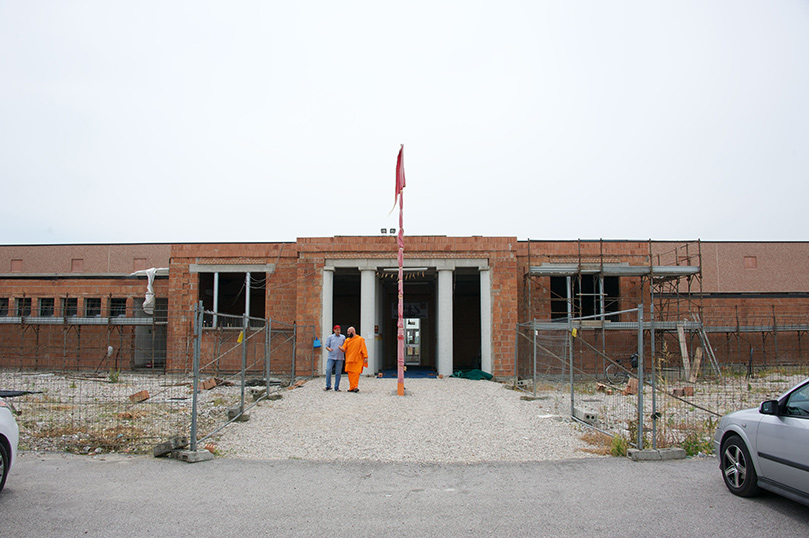
The temple is partly done and the community is working hard to finish it, facing many problems.
Yet another group, this one in the tiny village of Castelverde
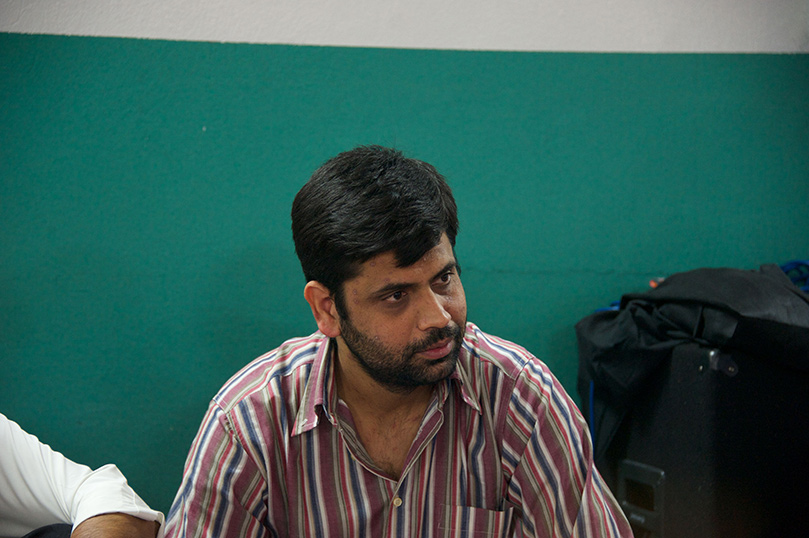
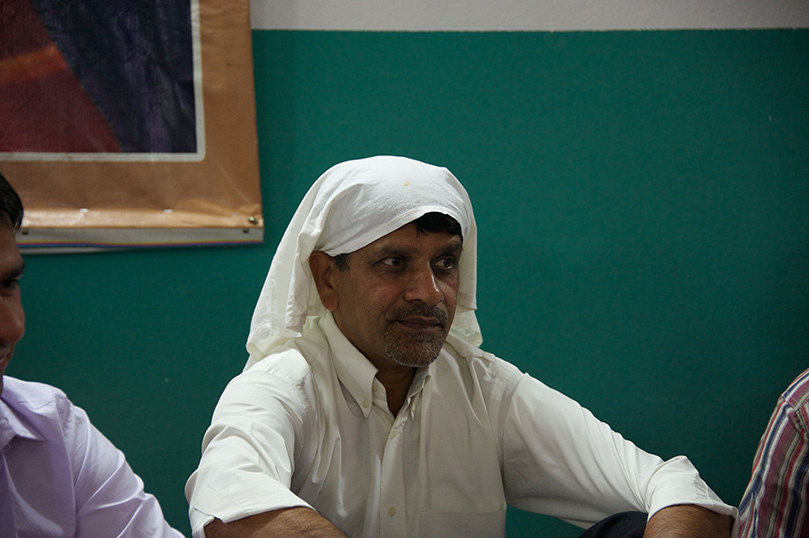
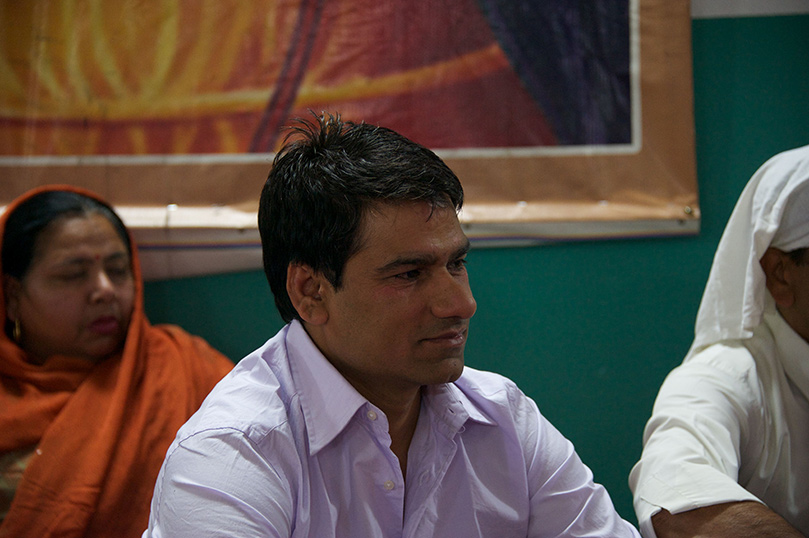
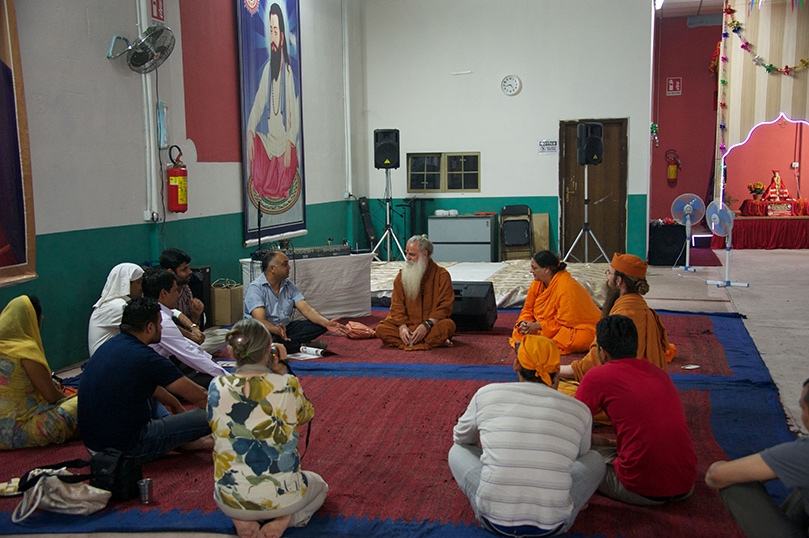
The story for the magazine begins to take form as meeting after meeting reveals the facts.
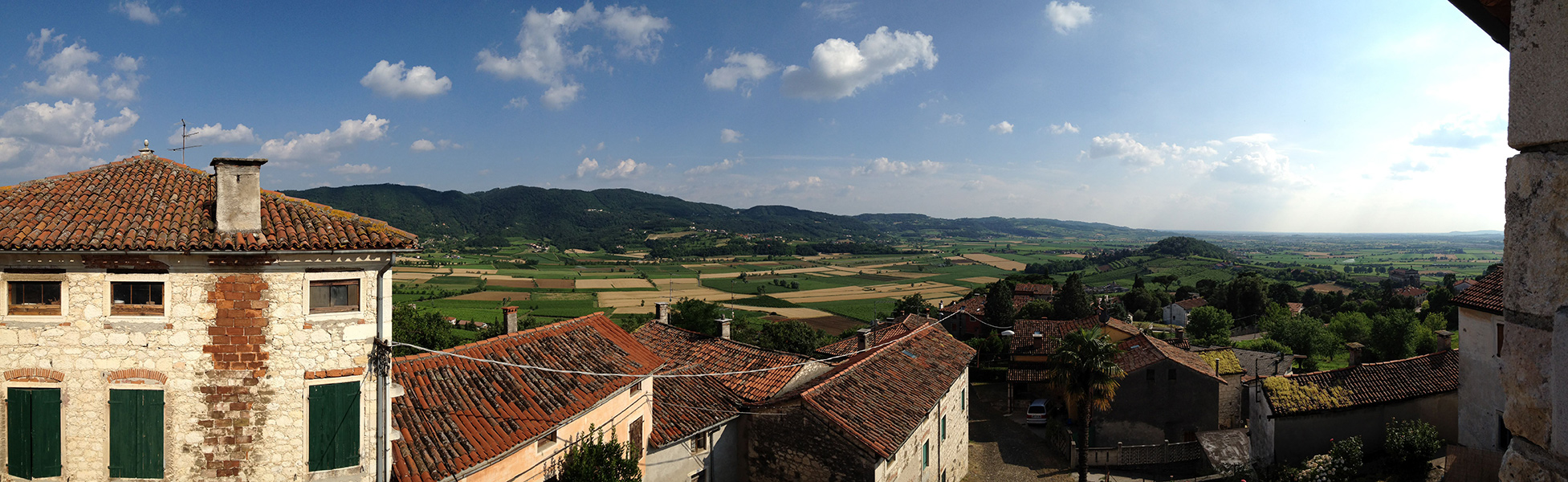
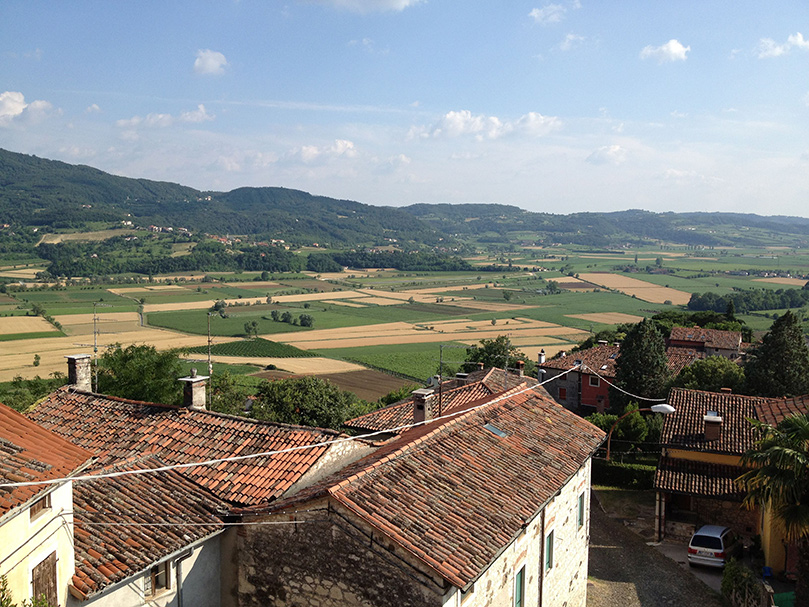
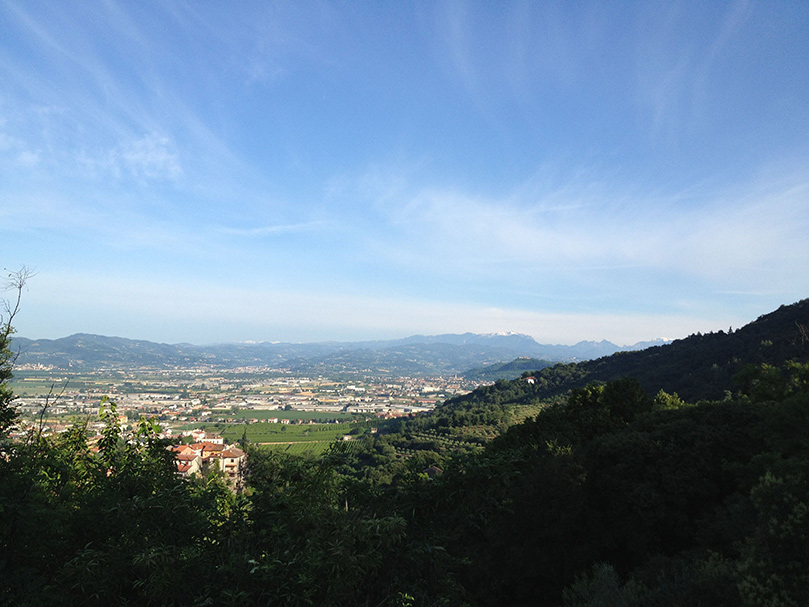
Back to our mountaintop aerie
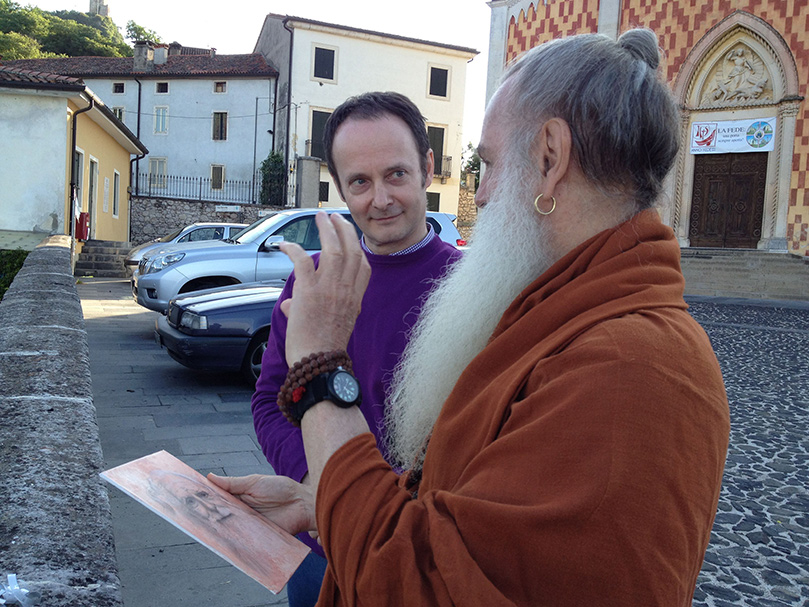
Zsolt Kovacs drives two hours to meet us for breakfast. He is Dora\
s brother, an engineer, artist, accomplished mind.'
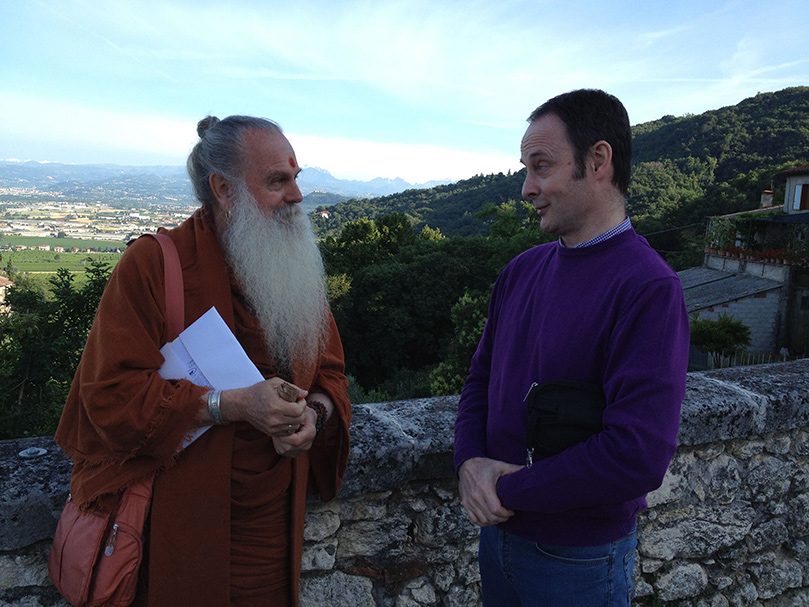
There is talk of Gurudeva\
s works, of religion and philosophy.'
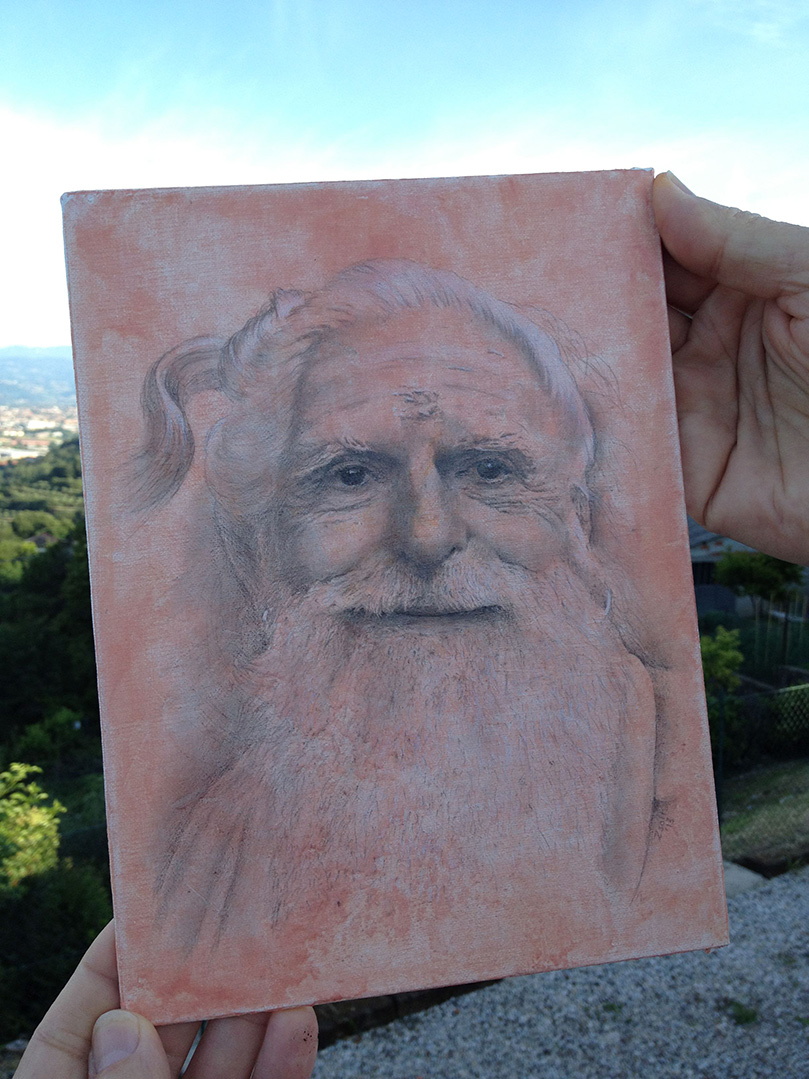
He has broght this gift, a masterful illustration of Gurudeva in acrylic background to which is added white and black pencil.
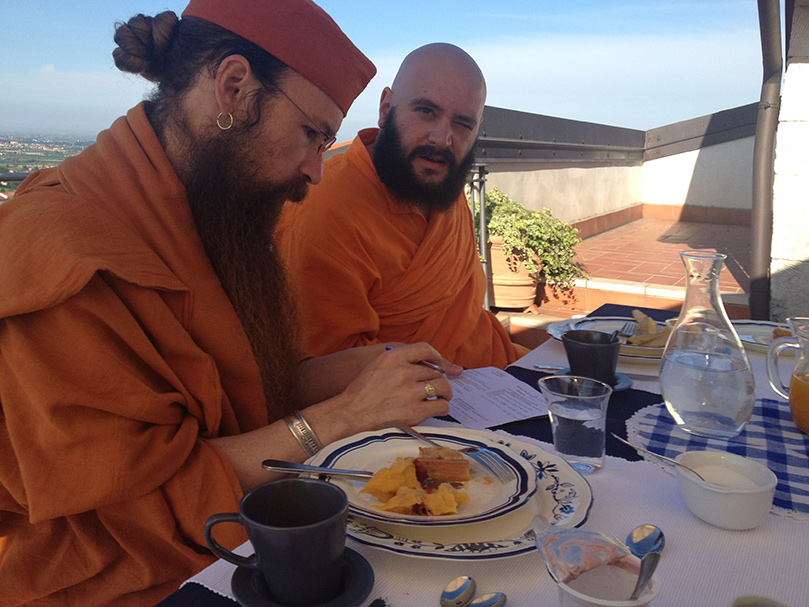
Breakfast together.
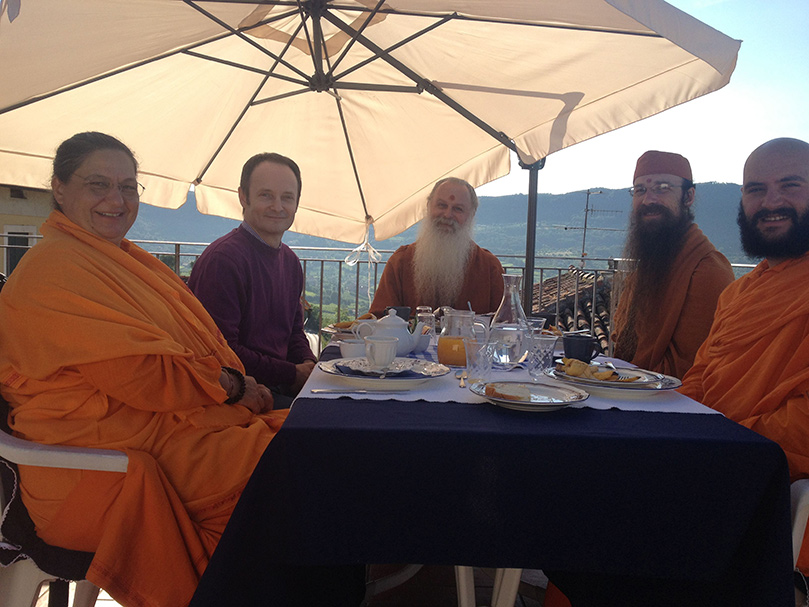
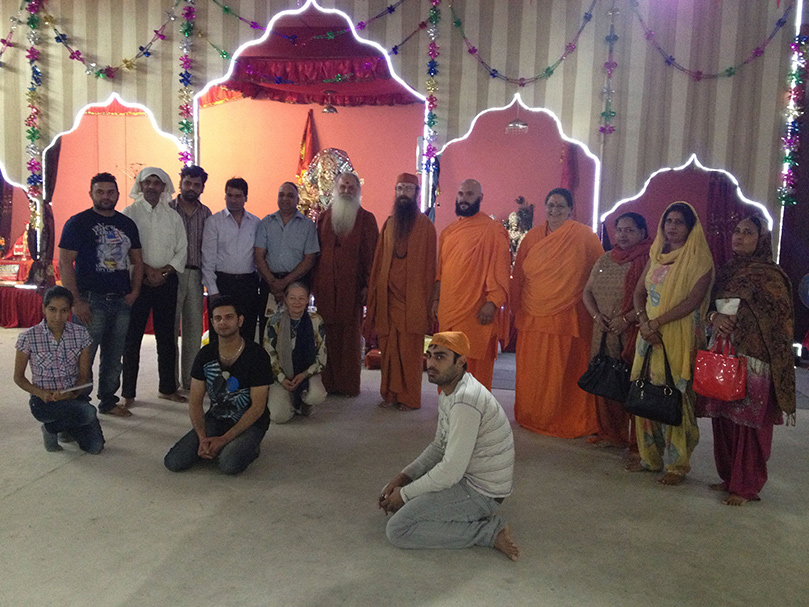
Then more temple visits and interviews.
}
];
transitionSpeed:150});