
Updated: Gitananda Ashram in Italy
July 7, 2013Note: This post contains new content that didn't make it into its original posting
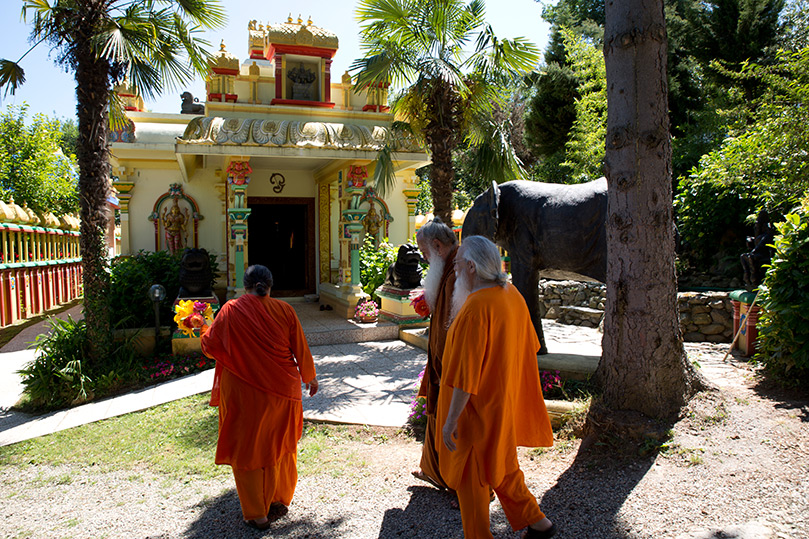
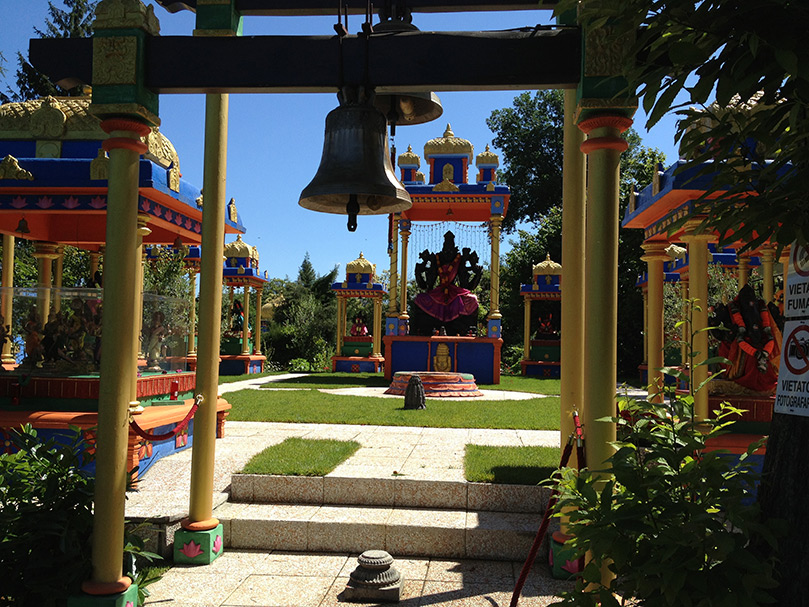
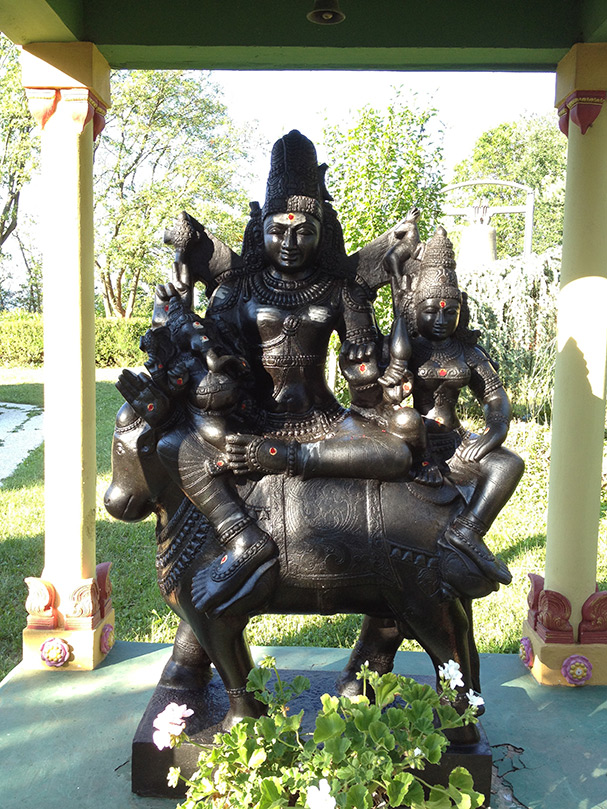
As described in our previous post, arriving at the Svami Gitananda Ashram in Altare, in the province of Savona, Italy, was a colorful delight beginning with an orange sunset on one side and a cadre of orange-robed monks on the other. But this was not the only colorful delight. As our two days at this mountain monastery unfolded, walking the hilly grounds where there is nary a square meter of flat space, reminiscent of the Himalayas, we encountered one shrine after the other, each with one or more black granite murtis (all carved in Mahabalipuram), the pillars and roofs of the Chola-style shrines all carved from plaster and painted in the traditional South Indian way.
Self-sufficiency is one of the cardinal principles of the founding guru Svami Yogananda Giri's South Indian monastery, and they do virtually everything themselves, from growing the food to splitting wood for the winter fires (100,000 kg for that each year, it turns out). That ideal expresses itself in the dozens of ornate shrines that proudly stand along the pathways. When the Indian silpis were here for some 10 months building the temple, the monks took pains to learn the craft and when the silpis returned the monks went to work to design, build, sculpt and paint these delightful Chola-style monuments, each holding a Hindu deity.
So many shrines, including ten forms of the Goddess Sri Lalita Tripurasundari (who is also enshrined in the monastery's main temple--more on that later), Siva, Ganesha, Valli-Devayanai-Shanmugam, Panchamukha Ganapati, Durga Mahadevi, Lakshmi, Saraswati, Sheshanaga Narayanar, Sri Akara-Ukara-Makara (three murtis representing Pranava Aum), and on and on.
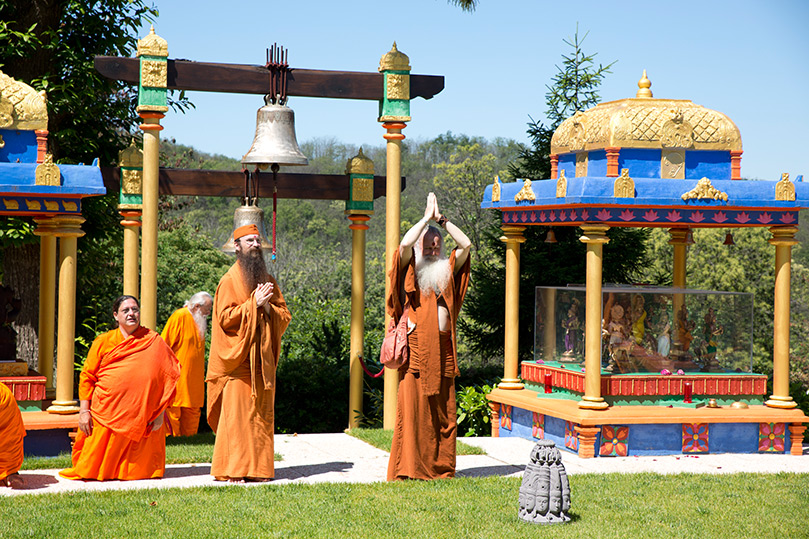
And the bells! Wow, the bells. Two massive metal bells, cast in the Vatican's not-too-far-away bell forge in Brescia, are installed on huge armatures. Along with regular clappers (which must weigh tons each), they have electric hammers that are controlled by a computerized, timed system that Svami Nityapriyananda set up himself. So, at set times, the bells ring, first the smaller (still huge) of the two, in a lilting pattern, and then the enormous one, tolling the hour of the day. The bells must be able to be heard from miles around, but the monastery is so deep in the forest, so far even from the nearest villages of Altare and Carcare, that the residents of those towns may only hear a faint whisper of what starts as a commanding announcement onsite.
Between the tightly but somehow perfectly, divinely arranged temples and shrines dotting the rolling landscape of the main monastery area, gorgeous landscaping is a feast for the eyes. Unlike the tropical plants of our home, here the flora is of the low Alps, where the monastery is located. Evergreen trees, grasses, flowering bushes, apples, apricots, plums, cherries, gardenias. This is all the masterful work of one of the founding residents of the monastery, Svamini Ma Uma Shakti, and her small team. But if you ask how she did it, she will smile sweetly and place the garden at Durga's feet.
Daily offerings to the Deities are extensive, and, to fulfill the need, the monastery has gone to great effort to plant over 5,000 rose bushes on a steep, sun-facing hillside, standing out from the otherwise all-surrounding chestnut forest. Here, more than enough flowers are grown for the temple pujas and offerings to the many shrines, and to the guru, Svami Yogananda Giri, who quietly, intuitively, masterfully leads the monks here in their hermit life of sadhana and service. So many varieties of roses, nearly all fragrant--as the monks here say that fragrance is the essence of the flower, the physical counterpart to its subtle prana, and without fragrance, a flower would be pointless to offer. Svami Isvarananda tends the roses along with his many other duties. All the monks have multiple duties, and come together whenever tasks require it, so their skill set is amazingly broad.
Not to mention the dogs. As a little side business that they hope will help support the monastery someday, the monks breed large Spaniels. These enormous, furry creatures are quite a job to take care of, walk, feed and play with (the puppies are so much fun), but, like everything else, this is the job of one or two of the monks, and they do it with such precision and joy. Svamini Hamsananda, who ingeniously manages the monastery's teaching, PR and publication programs--as well as our two-day stay here--takes care of a wrinkled old bulldog named Yogi. Yogi likes to be taken around in a wheelbarrow, and Svamini, as his chief of staff, dutifully obliges. Yogi is nothing short of adorable and ridiculous, reminding us of some of our feline friends back home on Kauai.
Feasting wasn't only for the eyes here, it turned out. We were privileged to take our meals in a designated room upstairs in the main monastery building, joined always by five of the senior swamis as well as Svami Yogananda, the guru. This was a real treat, and these informal times with our brother swamis and swaminis were precious opportunities to talk monk stuff, including how their life works, how our life at our monastery goes, their projects, our projects, their philosophy, our philosophy, and on and on. It turns out we are quite remarkably alike, astonishingly so. They eat such a healthy diet, filled with fresh herbs and home-made breads. But back to feasting for a moment.
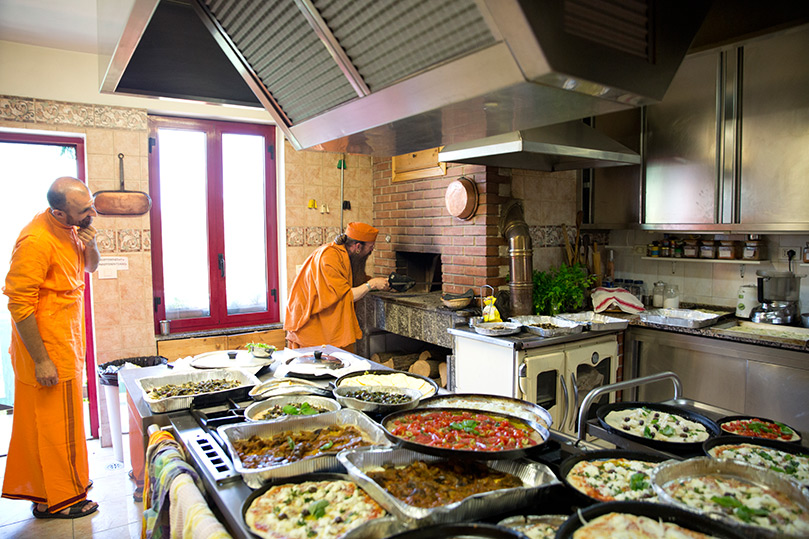
These Italian monks, as you might imagine, are amazing cooks. One of the sannyasinis is from Napoli--yes, Napoli, a.k.a. Naples, where pizza was invented. And with a traditional wood-fire brick oven, the swamis and brahmacharis make pizza once a week. They put it off a couple of days to time it with our visit, much to our surprise--and delight! It was without question the most amazing pizza we have ever enjoyed. Not one was the same as another. The variety was as mind-boggling as the taste (and educational for one of our own monthly monastery pizza chefs). Clearly the monks' love and dedication extends to every part of their life, as it does in our monastery. They are a living example of Gurudeva's instructions years ago: "Life is meant to be lived joyously."
More tomorrow on the deeper aspects of our amazing visit.
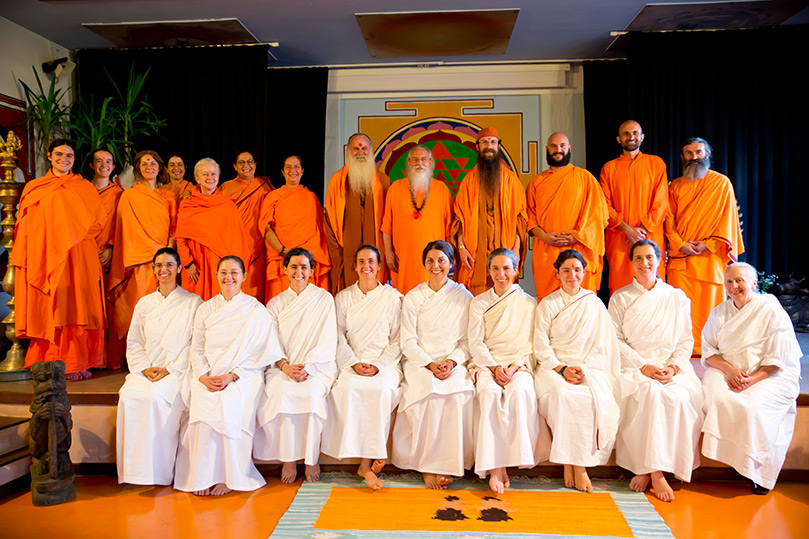
All the monks gather to greet the swamis from Hawaii. Such joy in their faces, such discipline in their lives. We have much to learn.
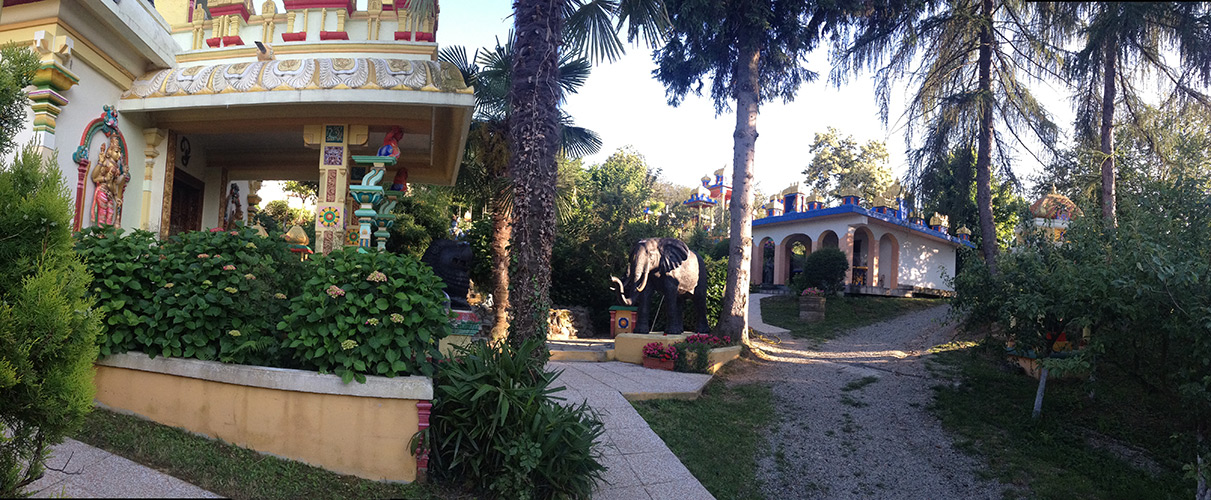
One enters the monastery grounds, stunned by the South Indian architecture encountered at every turn of every path.
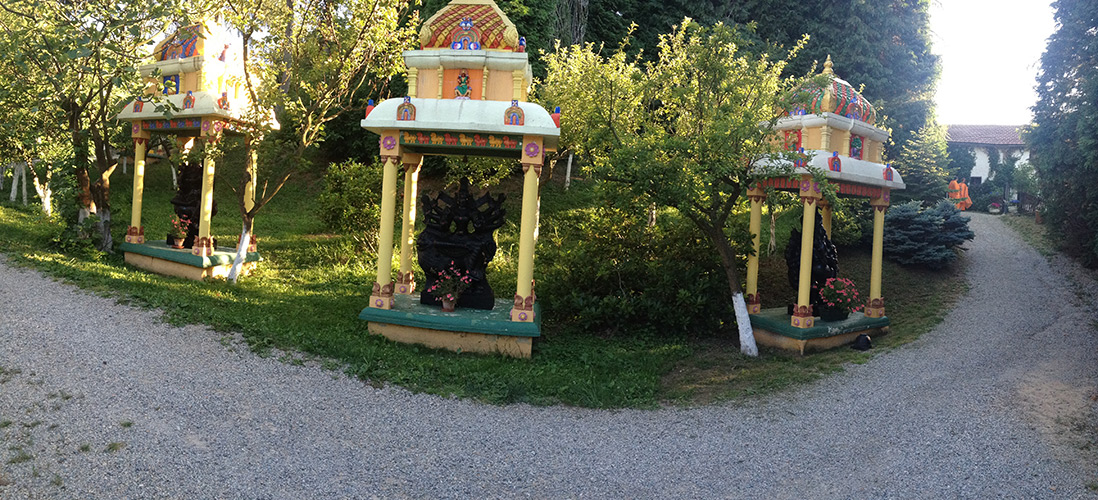
The swamis made all of the smaller shrines.
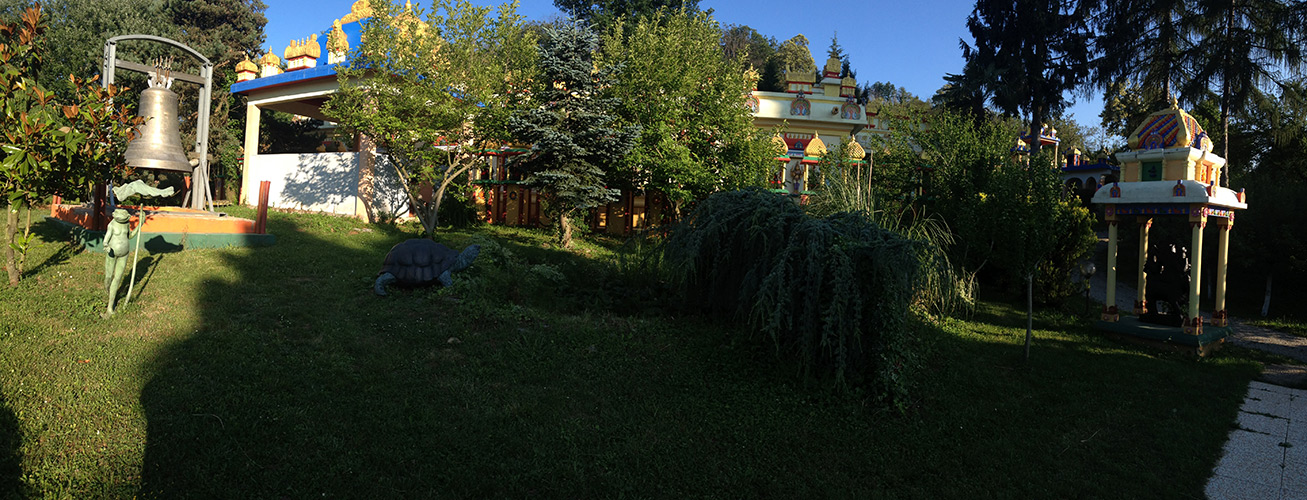
There\
s the small bell on the left'
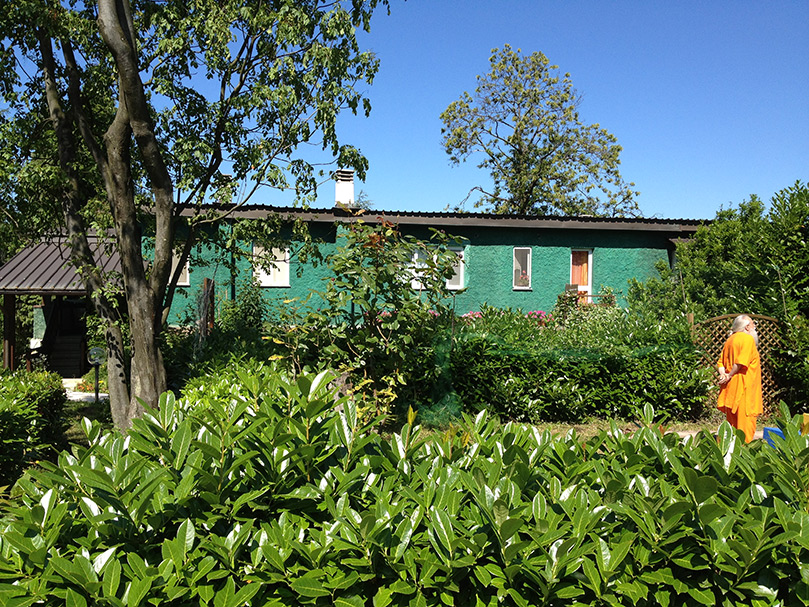
Our hermitage for the night was here.
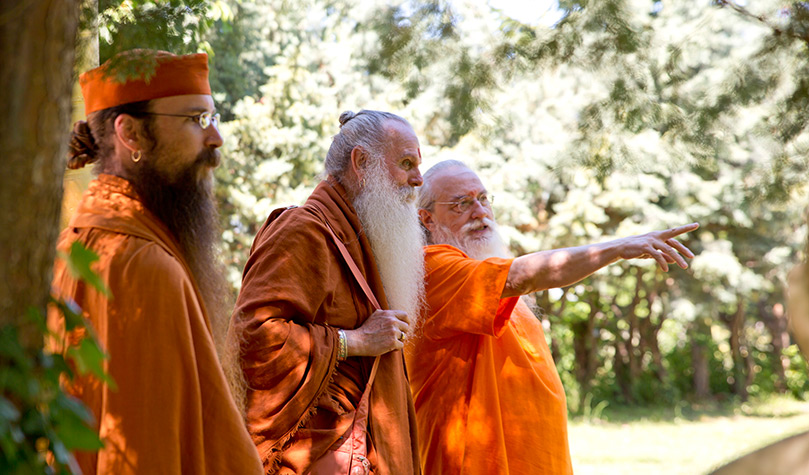
Svami Yogananda Giri takes us on a personal tour of the grounds, which he has spent most of his life creating.
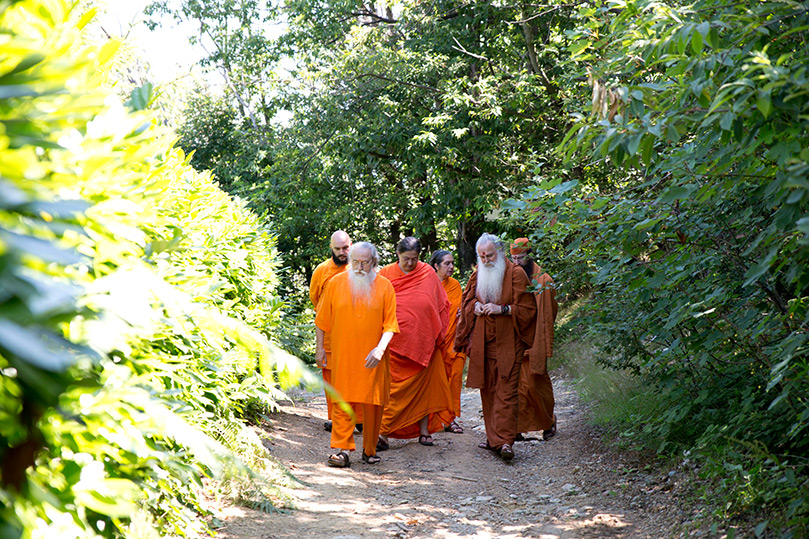
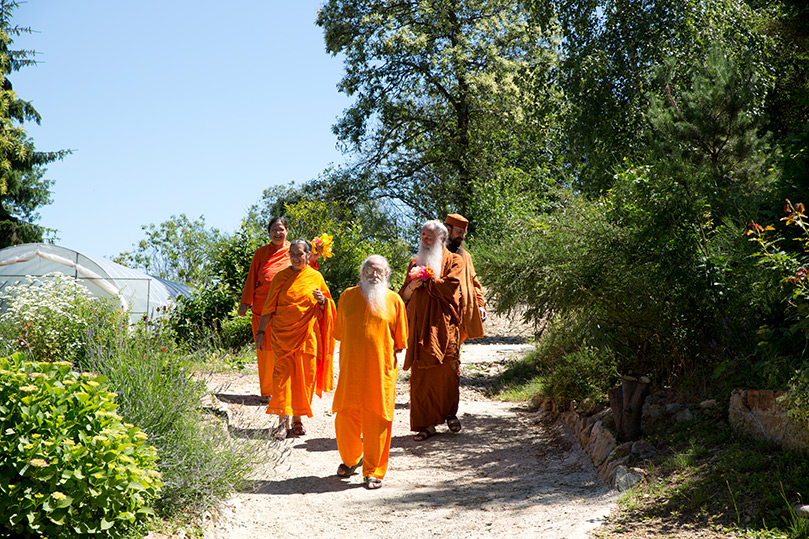
We follow the founder along the many paths
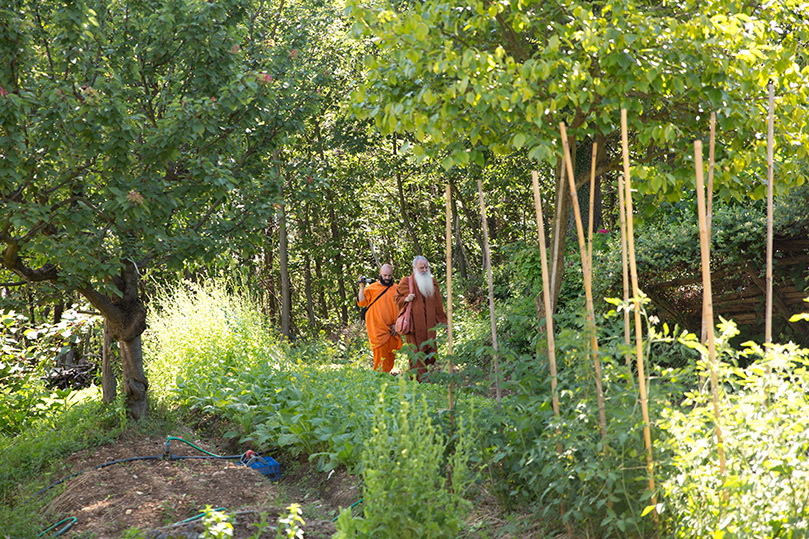
Here we are in part of the veggie garden
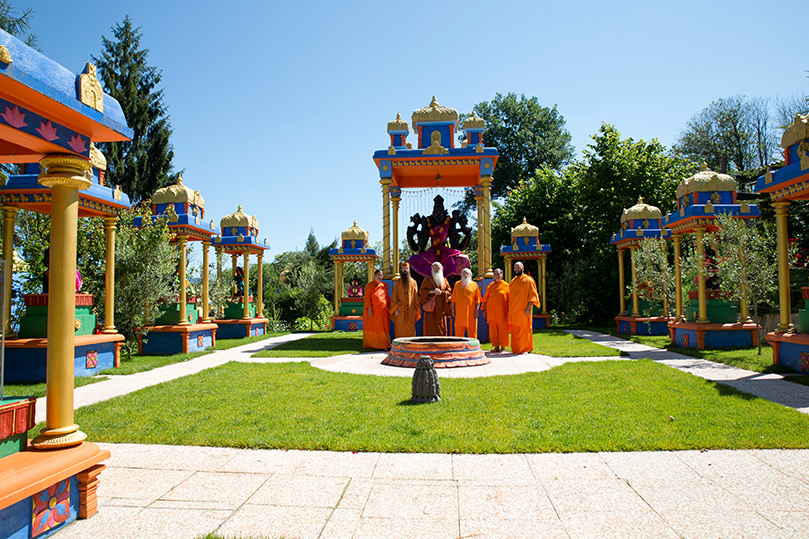
The ten Shaktis cause us to pause for a portrait
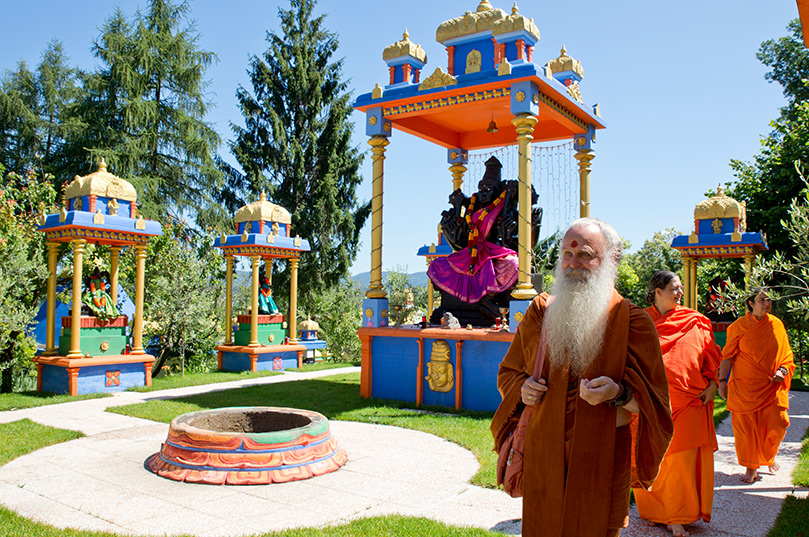
Large homas are held here, the hoa is some four feet deep
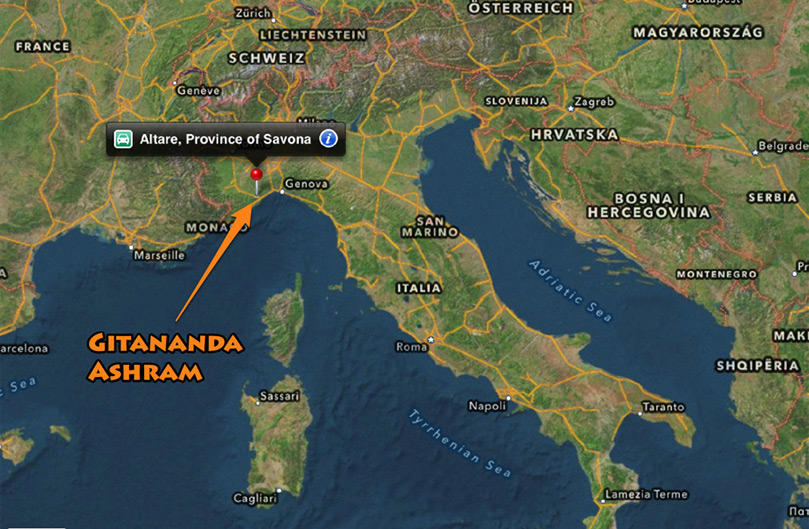
A map showing the location of the Gitananda Ashram near the Mediterranean Sea.
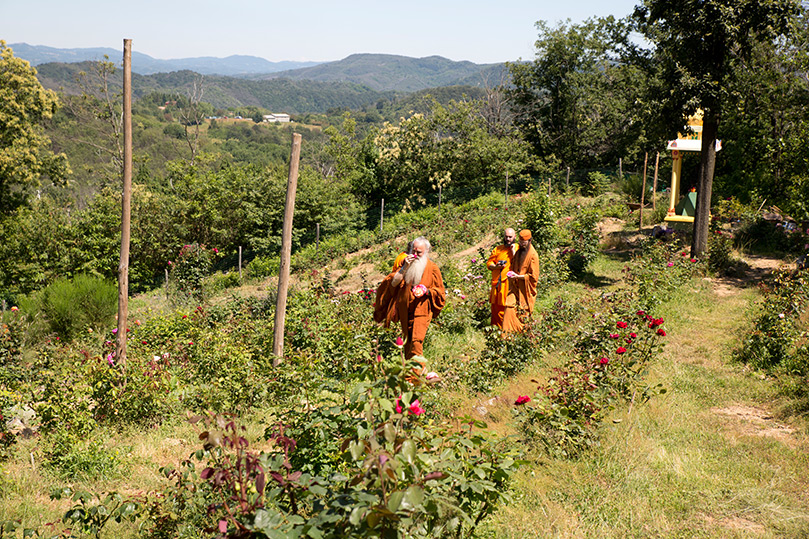
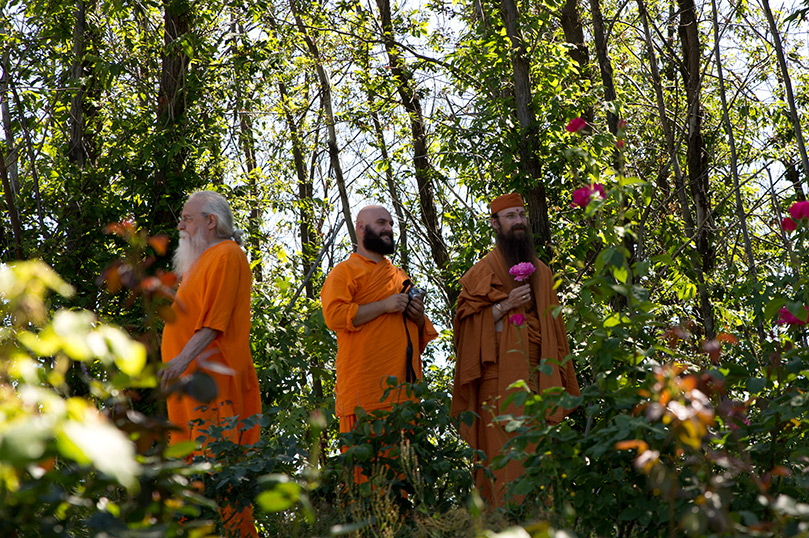
Off to the hillside rose garden
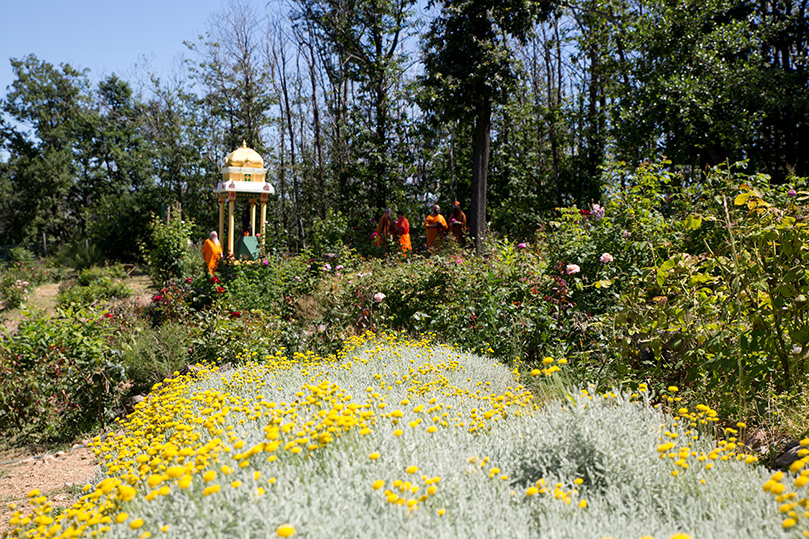
Herbs with fragrant oils intersperse the rose bushes
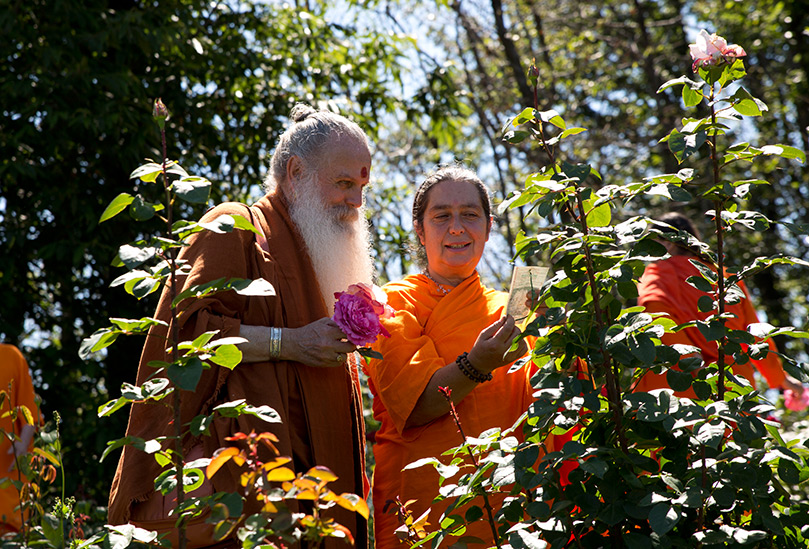
Svamini Ma Umananda reads the card which describes the species
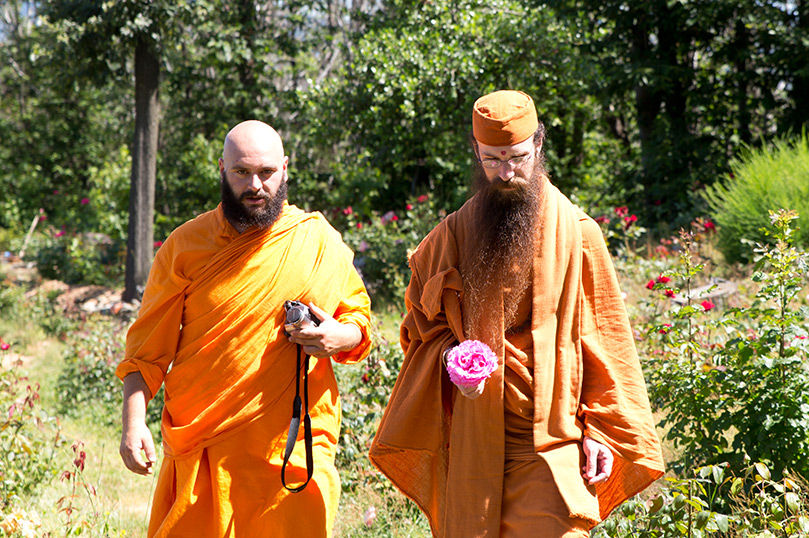
Svami Nityapriyananda takes care of all the buildings, grounds, computers\/network, and more
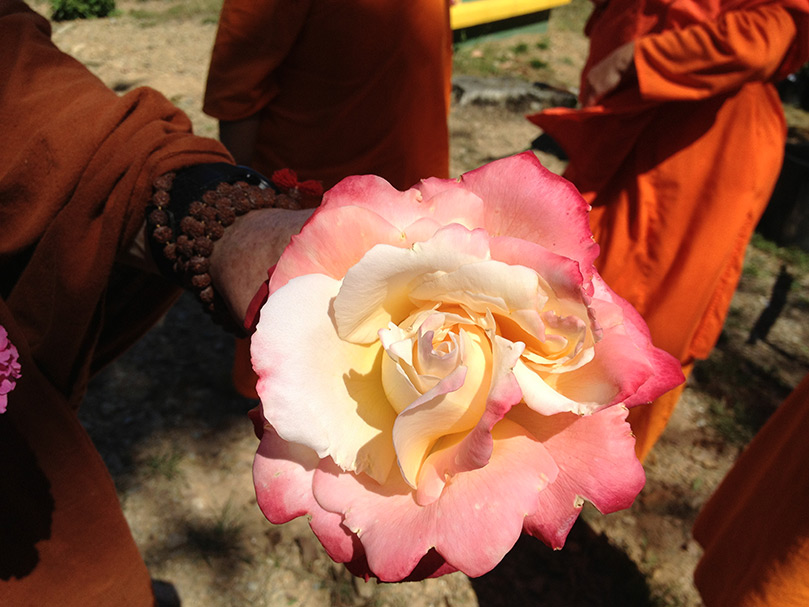
If only we could let you smell these roses
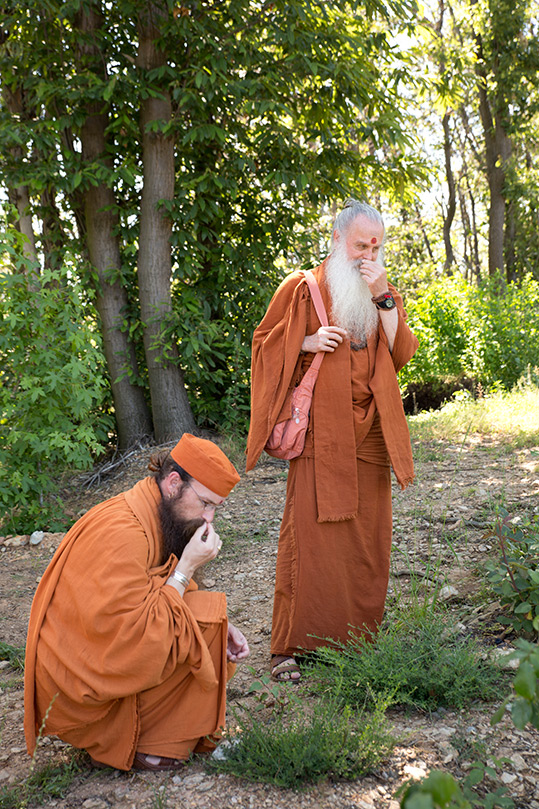
Much of the garden is about smell, loved so by the Deities
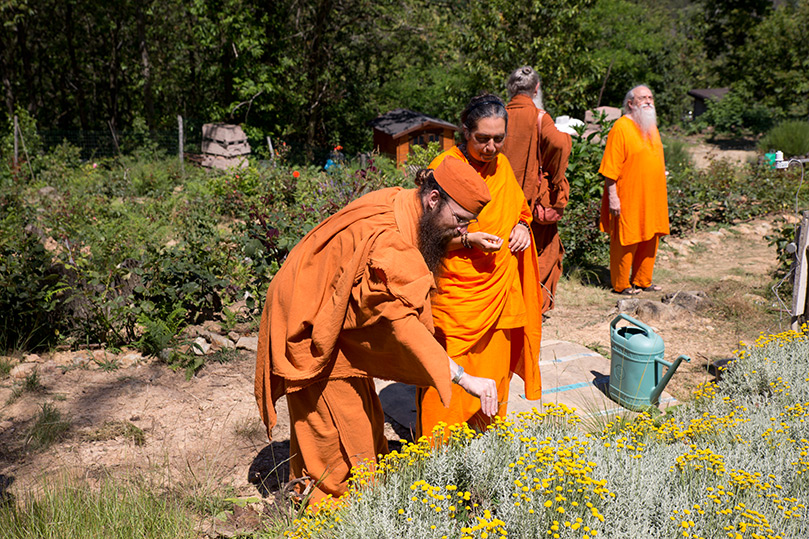
If you just touch this plant, you skin is covered with a powerful, redolent oil.
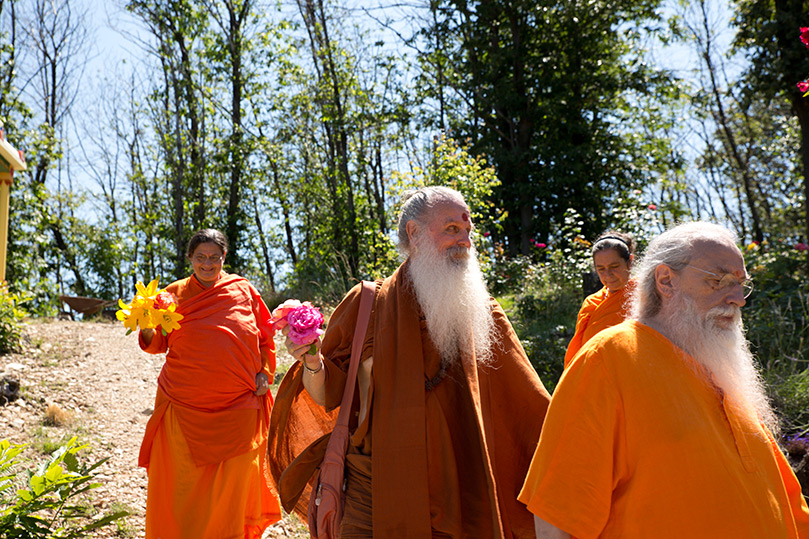
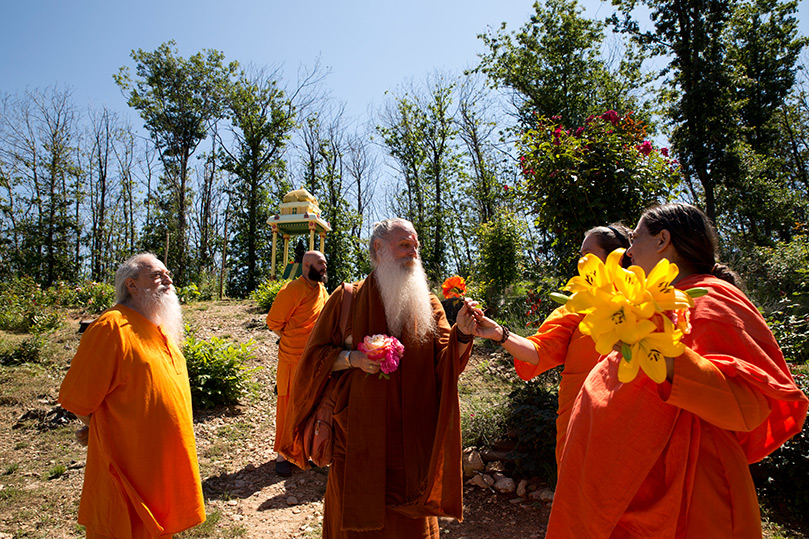
We exit the garden, hands full of roses
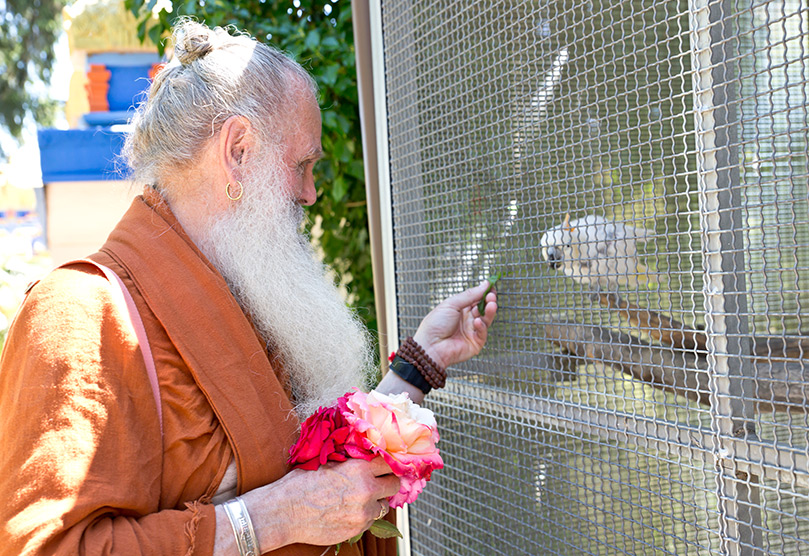
We stop to feed Shanti
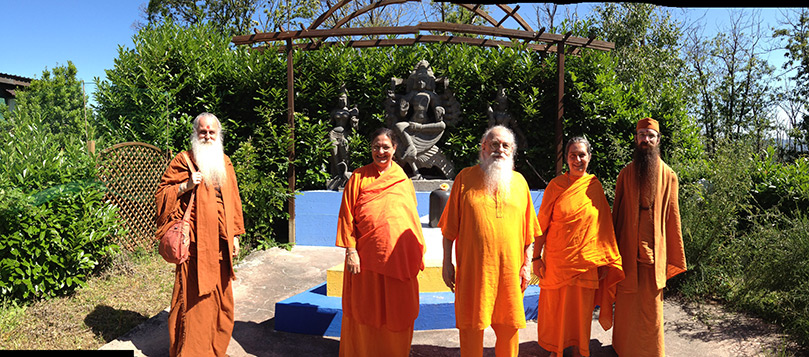
We take a magical photo with Lord Shanmuga on His peacock behind
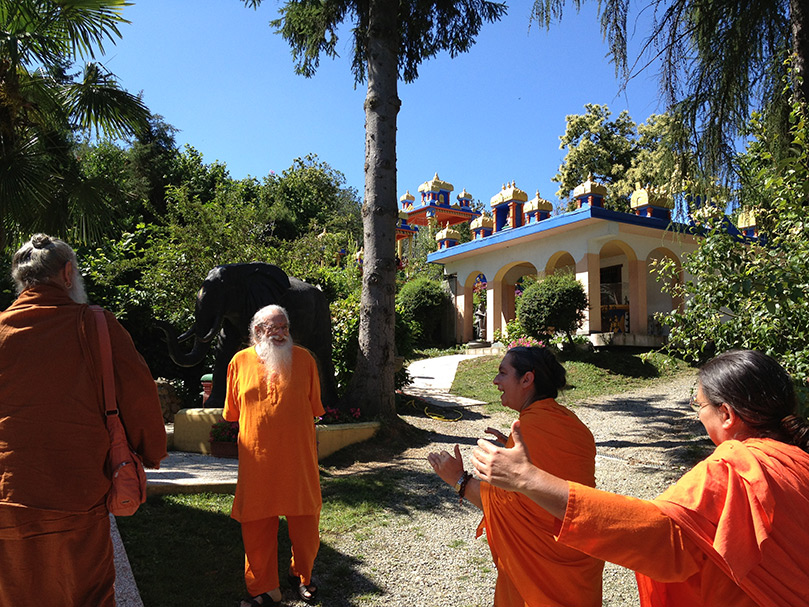
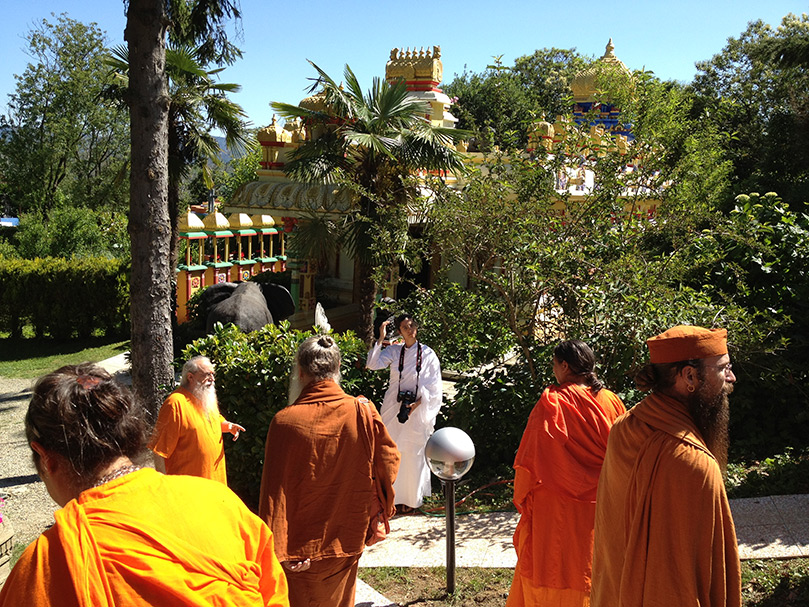
Yuvati is a gifted artist and photographer and most of the photos you will see of our day are hers.
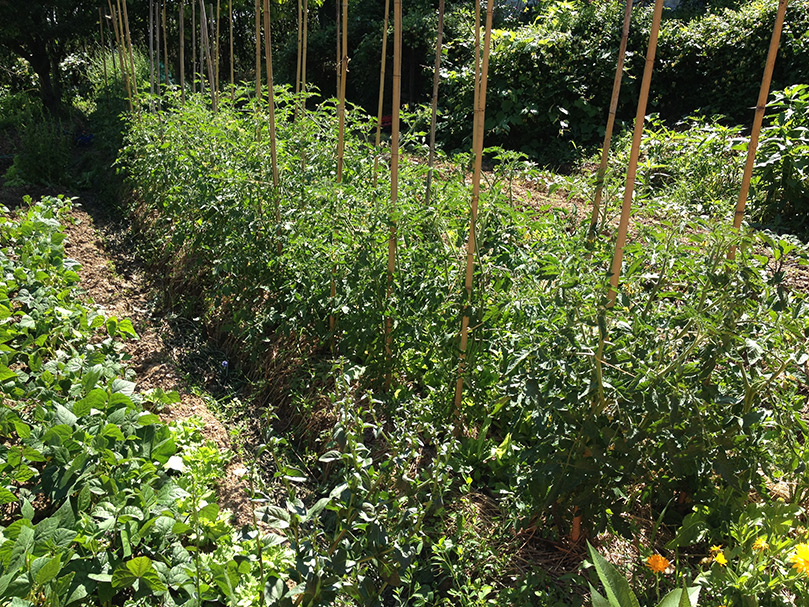
The garden is lush and eager to grow now that winter snows, which get 3 meters deep, are melted.
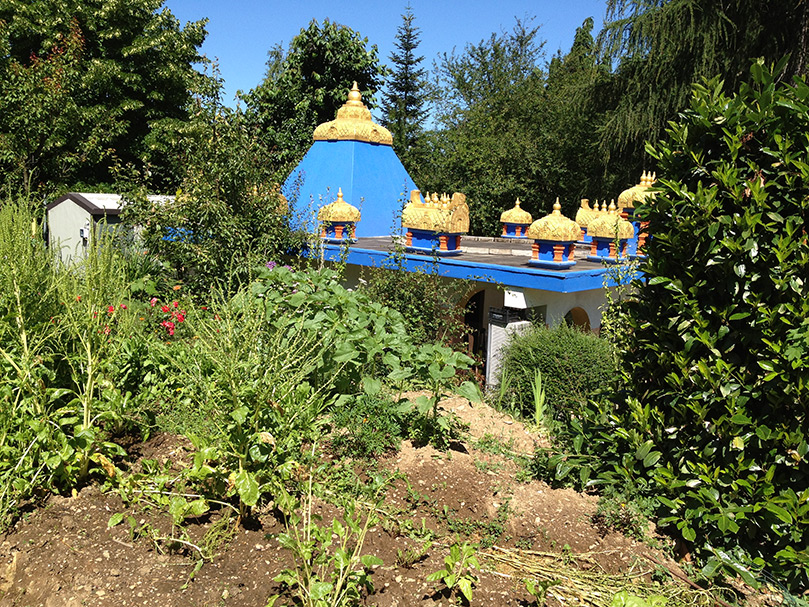
The Dattatreya temple next to the garden
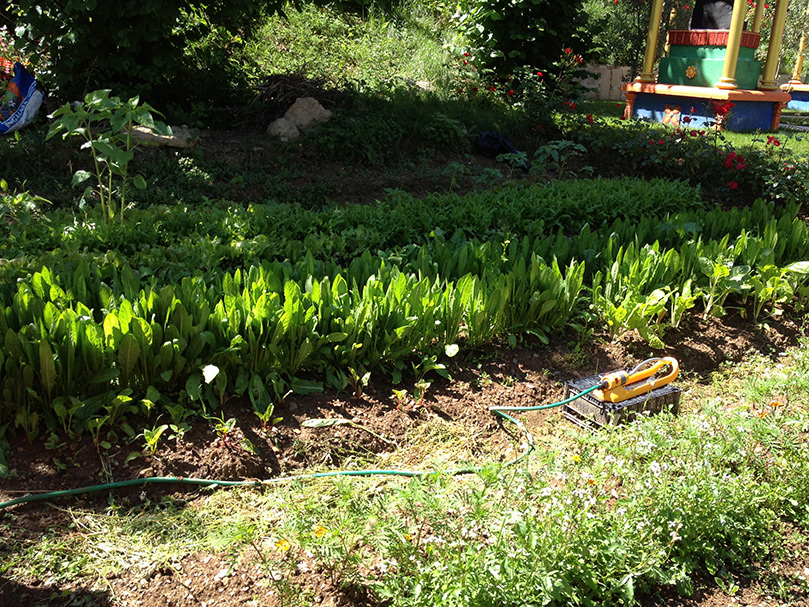
Kale, lettuce, raddicchio, rucola, tomatoes, pumpkins, zucchini...
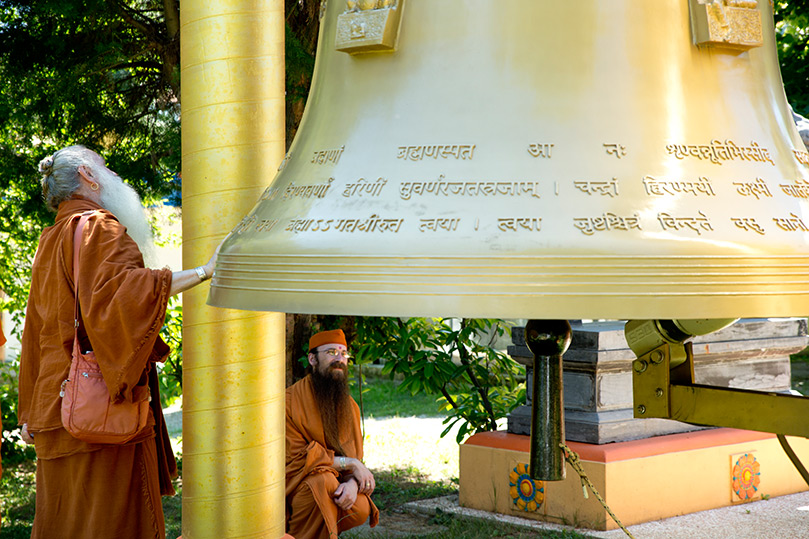
Swami takes us to the giant bell, covered in mantras from the four Vedas and sacred imagery
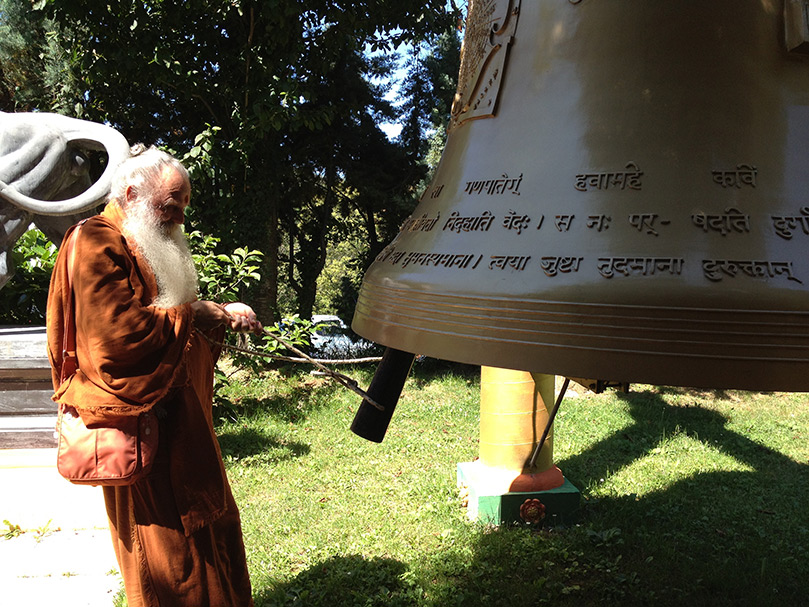
Ringing it is no easy task as the clapper weighs hundreds of pounds.
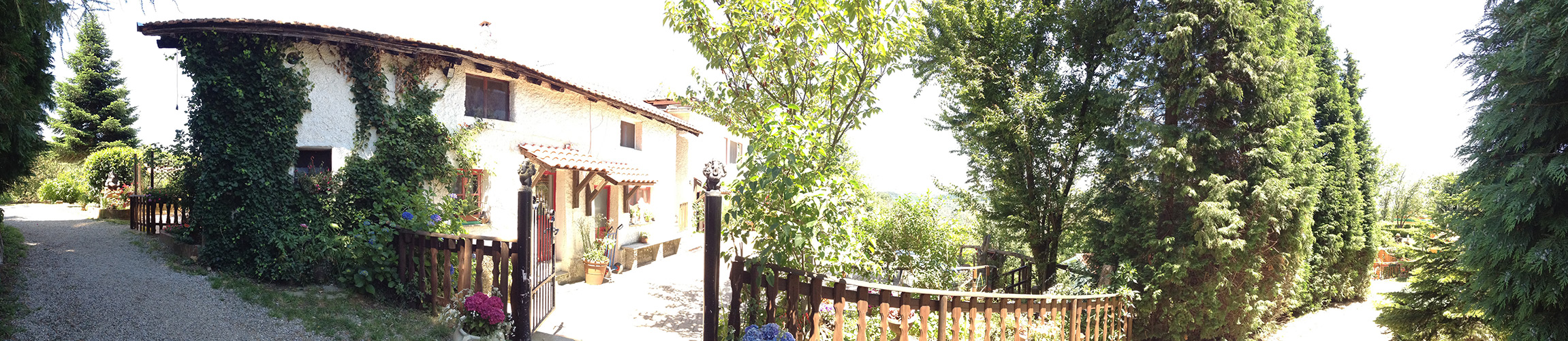
This is the main building for meetings, classes, meals and such.
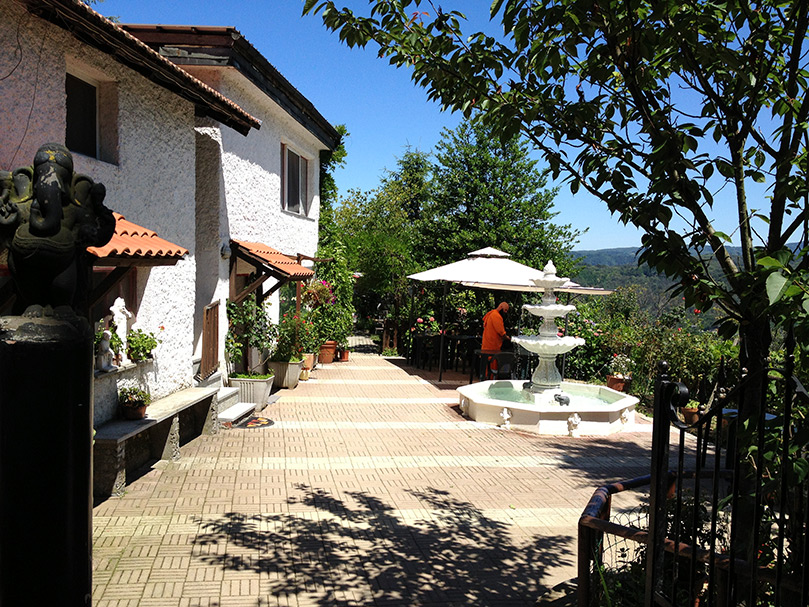
Swami lives here and the activities of the day revolve around him. A view of the resplendent countryside is enjoyed here.
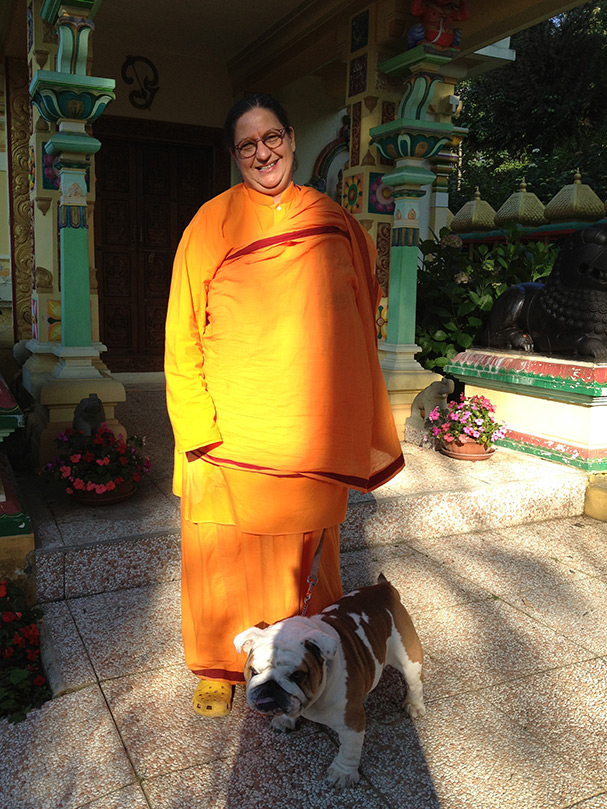
Yogi\
s favorite swami, and our hostess, Hamsanandaji'
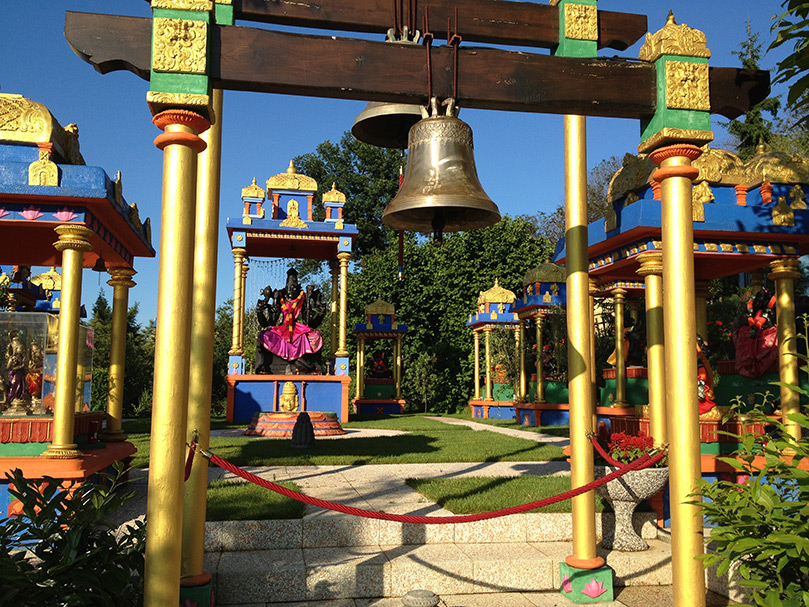
We just can\
t stop paying respects to the ten forms of Shakti here in this beautiful outdoor temple! Not to worry, we\'ll show you the indoor temple in a future post.'
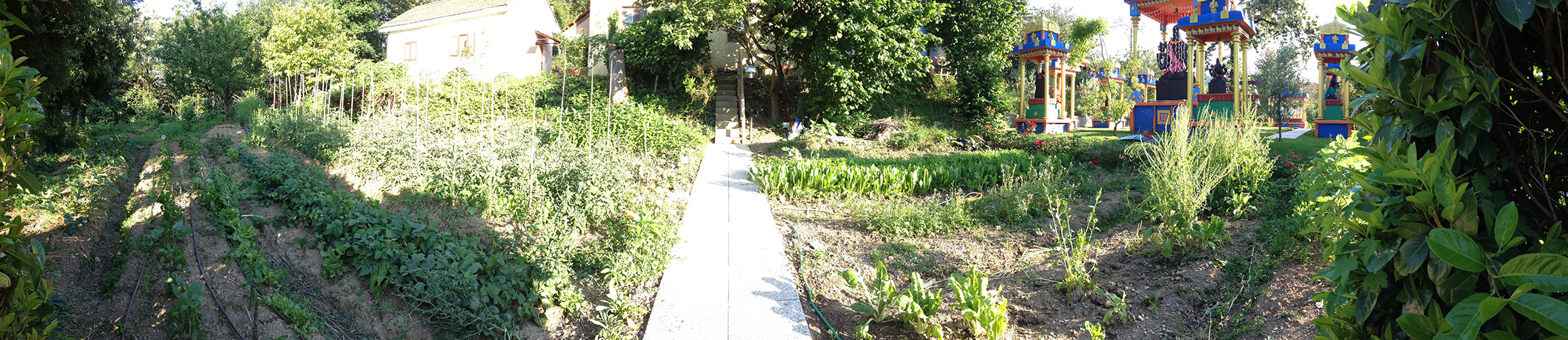
A panorama of the main vegetable garden. Don\
t forget to pan left and right!'
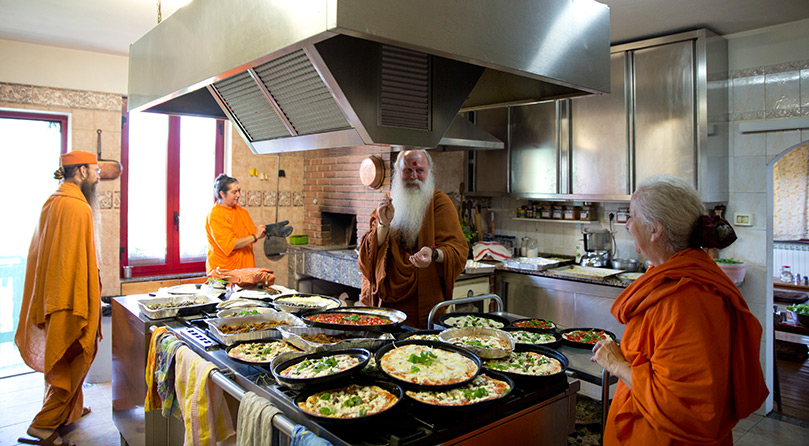
Pizza for lunch
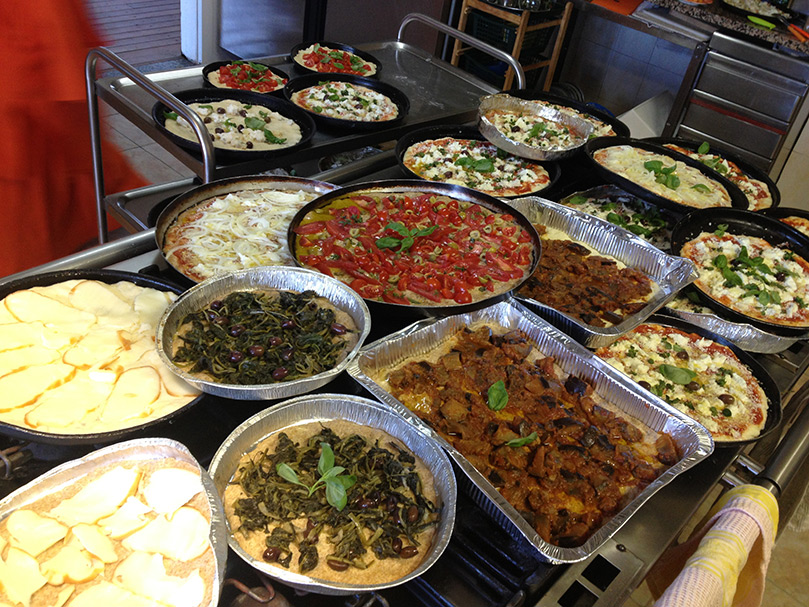
The varieties were stunning. The monks make pizza, sometimes, to bring joy to the community when difficulties appear. We know exactly how that works!
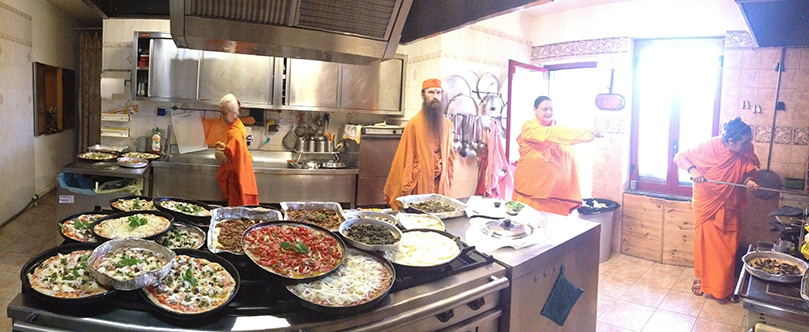
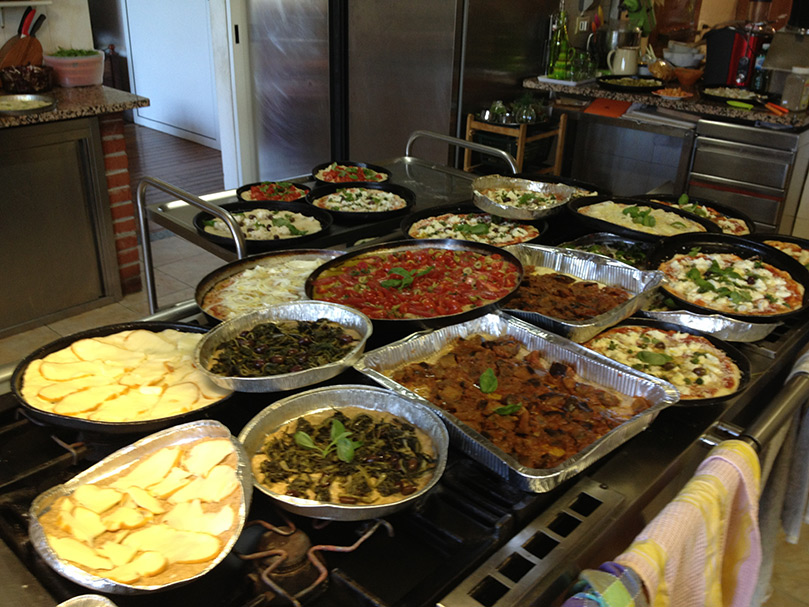
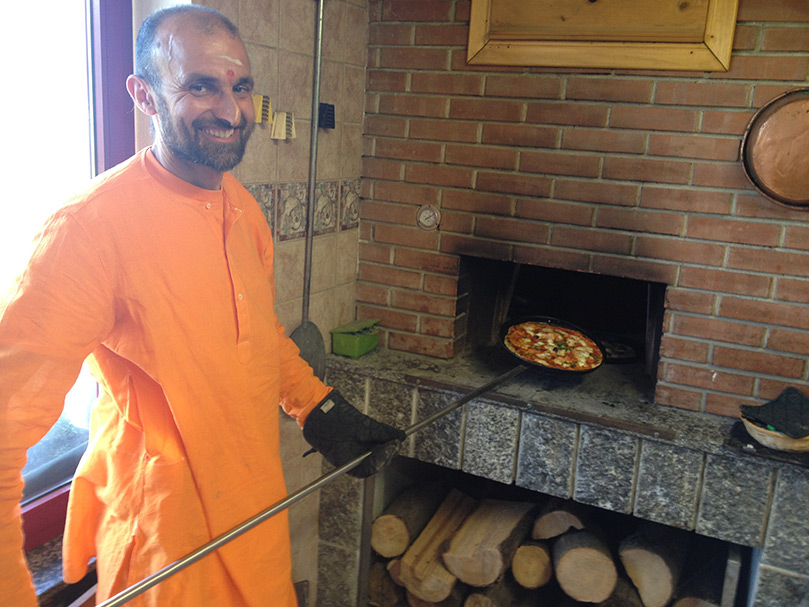
Swami Isvarananda shows us the art of using a brick oven that reaches 840°F, something our modern gas oven cannot do. It is the secret of their pizza prowess, and they strongly encouraged us to build one.
Senthilnathaswami explores the oven while turning embers, with a mind to perhaps one day have such a wood-burning stove for Kauai.
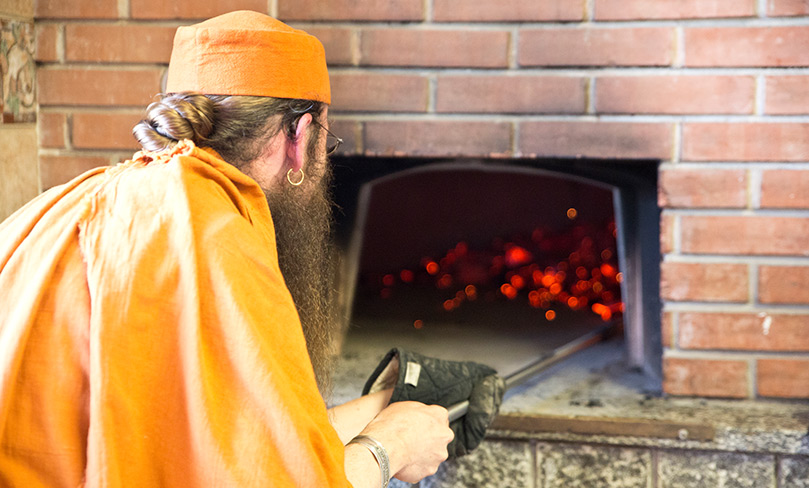
After pizza is done, as the oven cools, they bake bread, then as it cools more they bake cakes and things taking less heat, so the weekly fire is quite well used.
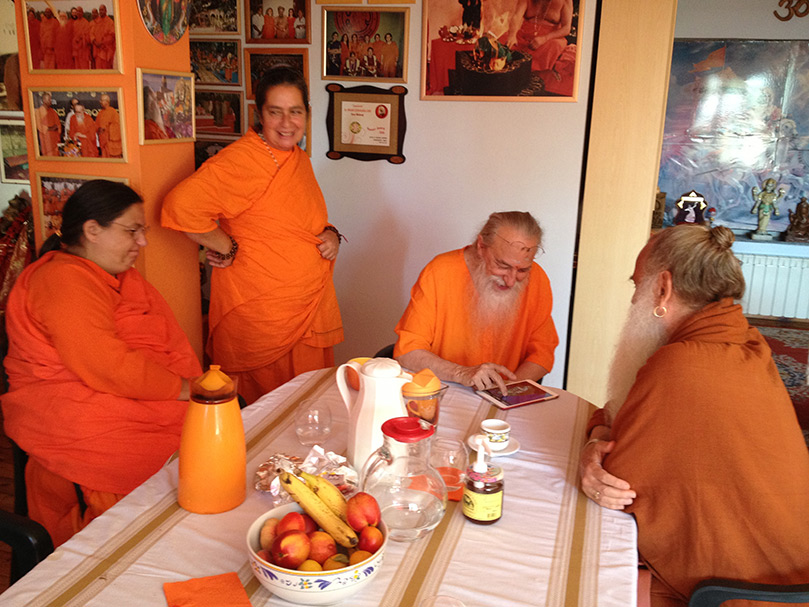
Paramacharya shows the guru and his two senior shishyas photos of Kauai\
s Hindu Monastery at the breakfast table.'
}
];
transitionSpeed:150});