
Blog Archives
February 2, 2006Bodhinatha in the Sydney Morning Herald
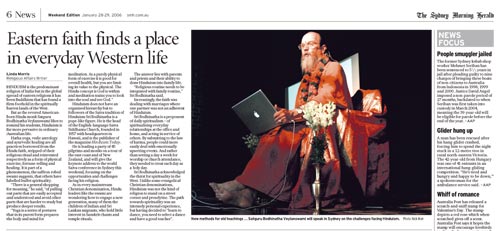
Bodhinatha received a lot of attention from the mainstream media in Australia. Here is the article that appear in the Sydney Morning Herald. Factoid: one-quarter of the population of Australians live in Sydney.
~~~~~~~~~~~~
By Linda Morris Religious Affairs Writer
January 28, 2006
HINDUISM is the predominant religion of India but in the global spread of eastern religions it has been Buddhism that has found a firm foothold in the spiritually barren lands of the West.
But as the revered American-born Hindu monk Satguru Bodhinatha Veylanswami likes to remind his students, Hinduism is far more pervasive in ordinary Australian life.
Hatha yoga, vedic astrology and ayurvedic healing are all practices borrowed from the Hindu faith, stripped of their religious ritual and reinvented respectively as a form of physical exercise, fortune-telling and healing. It is part of a phenomenon, the saffron-robed swami suggests, that others have labeled buffet spirituality.
"There is a general shopping for meaning," he said, "of pulling out parts that are easily accepted and understood and avoid other parts that are harder to study but produce deeper results.
"Yoga is a series of postures that in its purest form prepares the body and mind for meditation. As a purely physical form of exercise it is good for overall health, but you are limiting its value to the physical. The Hindu concept is God is within and meditation trains you to look into the soul and see God."
Hinduism does not have an organized hierarchy but to followers of the Saiva tradition of Hinduism Sri Bodhinatha is a pope-like figure. He is the head of the English-language Saiva Siddhanta Church, founded in 1957 with headquarters in Hawaii, and is the publisher of the magazine Hinduism Today.
He is leading a party of 45 pilgrims and monks on a tour of the east coast and of New Zealand, and will give the keynote address to the world Saiva conference in Sydney this weekend, focusing on the opportunities and challenges facing his religion.
As in every mainstream Christian denomination, Hindu leaders like the swami are wondering how to engage a new generation, many of them the children of Indian and Sri Lankan migrants, who hold little interest in Sanskrit chants and temple rituals.
The answer lies with parents and priests and their ability to draw Hinduism into family life.
"Religious routine needs to be integrated with family routine," Sri Bodhinatha said.
Increasingly, the faith was dealing with marriages where one partner was not an adherent of Hinduism.
Sri Bodhinatha is a proponent of daily spiritualism - of spiritualizing everyday relationships at the office and home, and acting in service of others. By submitting to the law of karma, people could more easily deal with emotionally upsetting events. And rather than setting a day a week for worship or church attendance, they needed to treat each day as a holy day.
Sri Bodhinatha acknowledged the thirst for spirituality in the West. Unlike some evangelical Christian denominations, Hinduism was not the kind of religion to stand on a street corner and proselytize. The path towards spirituality was an intensely personal experience, but having decided to "learn to dance, you need to select a dance and have a good teacher".
What Happened Today at the Monastery?
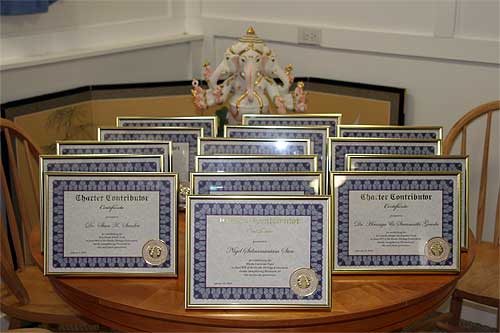
The Pillaiyar Kulam at work: here are certificates that are prepared to send to charter contributors of Hindu Heritage Endowment funds. Each one who starts an endowment is given such a certificate. These are the most recent ones.
The raising of the dome of the West Chinna Gopuram could be considered a small milestone for Iraivan, marking the completion of the main structural elements around the central sanctum..
Here is small time lapse video of this historic moment:
And from an earlier lift this month, on January 17th...
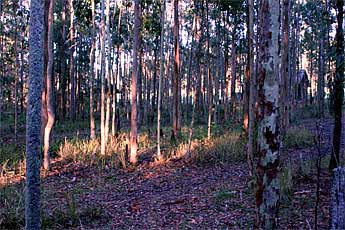
Dawn in Dooralong is heartbreakingly beautiful.
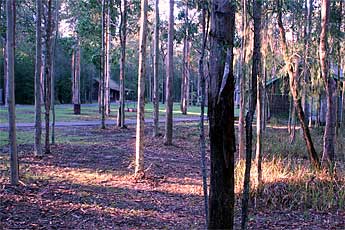
So quiet with only the sounds of birds greeting the sun to accompany us on our 5-minute walk to 6am yoga and meditation.
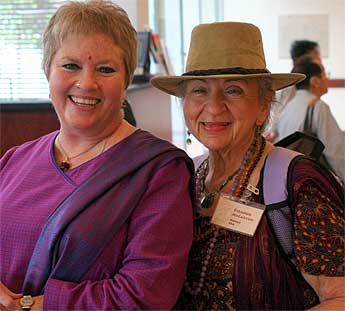
Each new day brings smiling faces - Gayatri Rajan and Eleanor McCarthy.
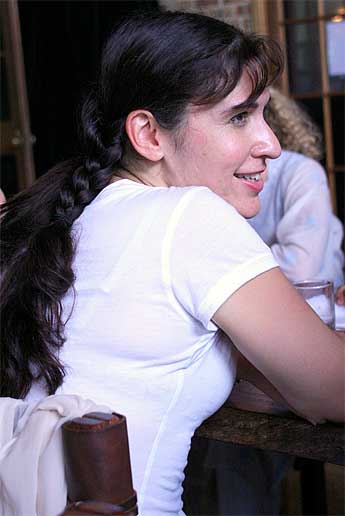
Lisa Marston
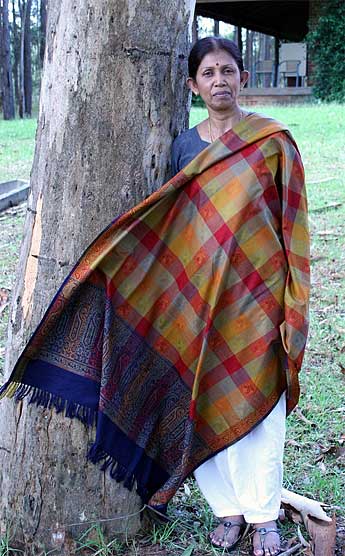
Sakuntalai Krishnan
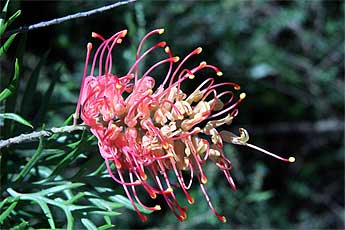
One variety of grevillia - or Spider Plant - a native to Australia. Everywhere we went, Palaniswami sought information on local trees, ferns and bushes, thinking always of Gurudeva's visions for the gardens of the Kauai Aadheenam. On the last day of Innersearch he met a breeder and collector of palms.
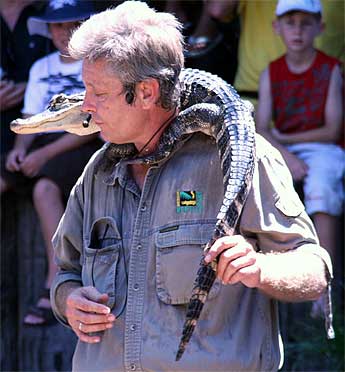
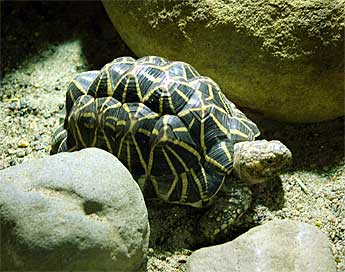
One morning was spent at a Reptile farm where we were able to come up close and personal with a variety of local animals - aligators, crocodiles, snakes and oh so much more.
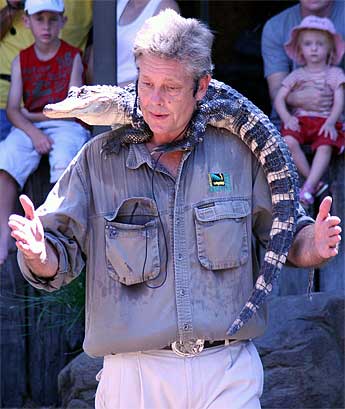
This man actually had a snake stuffed inside his shirt.
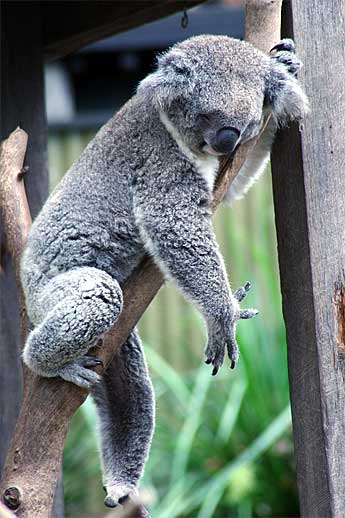
Koalas look so cute! They eat only a few varieties of gum tree - eucalyptus - exactly the type grown in Kauai!! The leaves actually put the koalas to sleep so they are slow moving and sleep most of the time that they are not eating leaves. They look so cute, but if annoyed they scratch and bite.
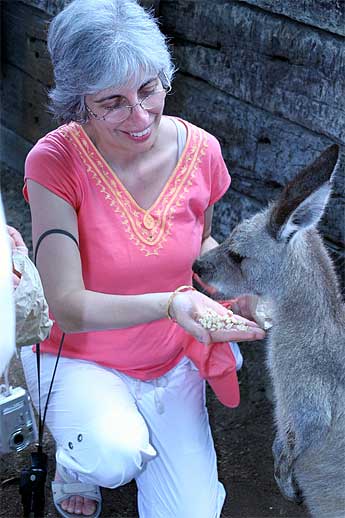
Nilufer feeding the kangaroos.
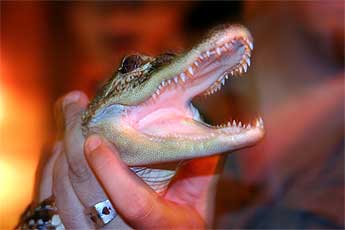
REAL up close and personal with some of the animals.
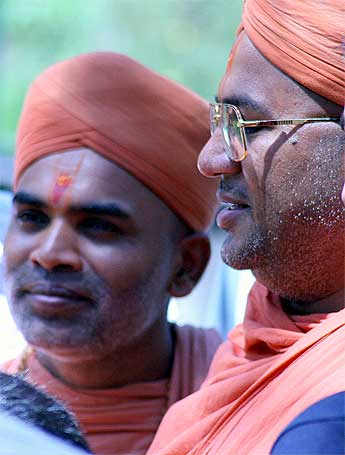
Reptile Park that day saw more than its usual quota of men in orange. Also visiting were 3 sadhus from the Swami Narayan order with many local devotees. While we were taking photos one chanted a blessing for us.
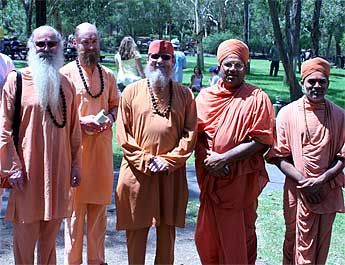
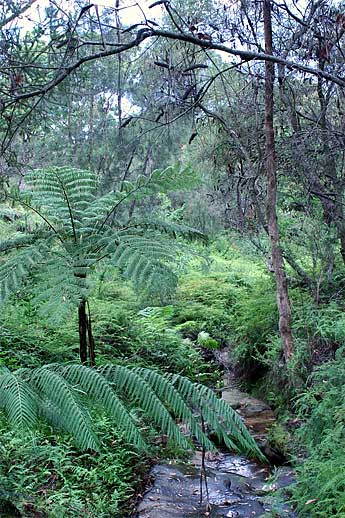
The gardens of the park.
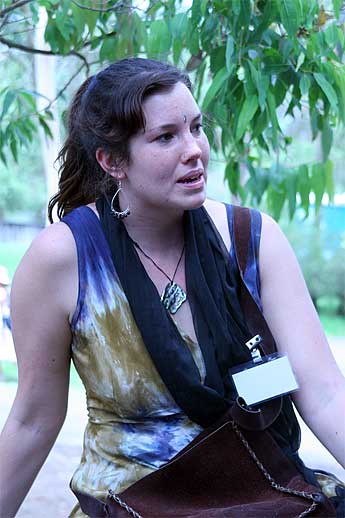
Shivani Rajan sits under a gum tree.
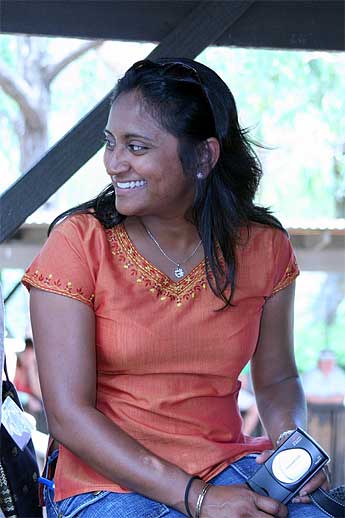
Hema Patel after feeding kangaroos.
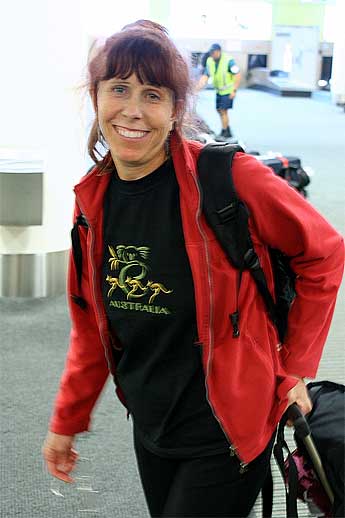
But soon we were on the move again - Josan Feathers at Sydney airport. It was hard to leave the tranquil atmosphere of Dooralong with our daily classes of yoga and meditation with Saravananathaswami, and Karma Management with Bodhinatha. Palaniswami also gave a class on Monism and Dualism - advaita and dvaita - and the history of Gurudeva's work in promoting the Monistic Theism reality of Saiva Siddhanta. He shared with us some early photos of Gurudeva discussing these points with various scholars and kartars in India.
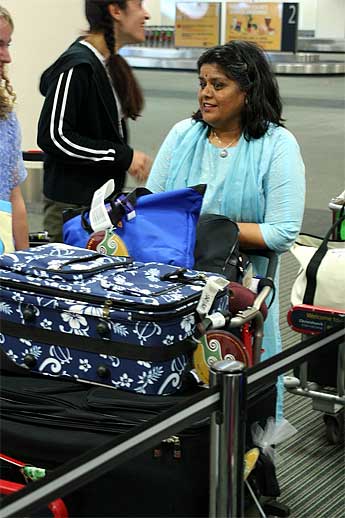
Usha Shastri.
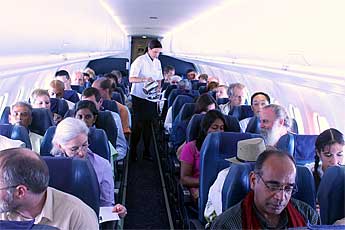
And then we were winging our way across the Tasman to New Zealand to Christchurch, and onto another plane to Queenstown.
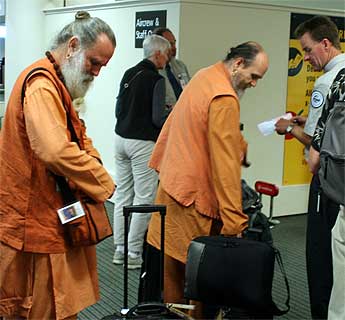
Because both New Zealand and Australia are island countries, they are very particular about what you can bring into the country - particularly any food, wooden items, seeds or plant materials. Their strict regulations avoid any new pests or plant diseases being introduced into the countries. After experiencing the rigour of customs inspections in Australia, our guru and monks were ready in New Zealand.
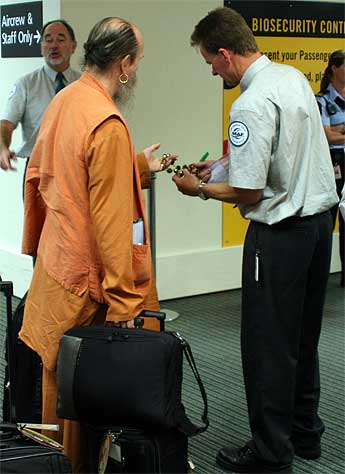
Bodhinatha shows his Rudraksha beads to the official.
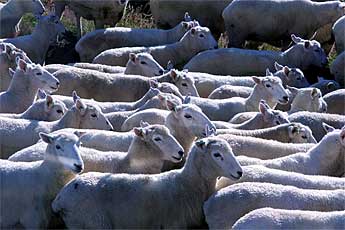
And then we were in New Zealand - a land where sheep outnumber the inhabitants. New Zealand has a population of 4 million people and 6 million sheep.