
Gurudeva Siva Vision Day
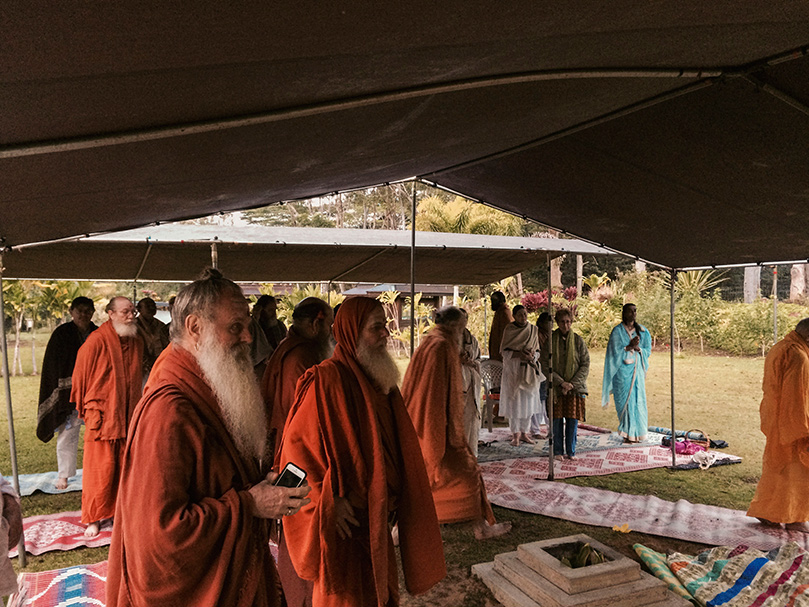
March 3, 2014Today we celebrate Gurudeva's Siva Vision Day, calculated by Revathi nakshatra in the month of Kumbha. It is today that we worship Siva at the svayambhu lingam, to which Gurudeva's vision lead him. Just before sunrise, monks and devotees walked through the darkened gardens, to the lingam square to enjoy a short puja and meditation.
Here is the story of Gurudeva's vision, as told in these excerpts from The Guru Chronicles:
In the early hours of February 15, 1975, lying on a tatami mat in his Ryokan room, Gurudeva was having one of those profound sleeps that is neither awake nor full of dreams. In that clear space above physical consciousness, the 48-year-old satguru experienced a threefold vision that would be the spiritual birth of the great Siva citadel called Iraivan Temple and its surrounding San Marga Sanctuary.
I saw Lord Siva walking in the meadow near the Wailua River. His face was looking into mine. Then He was seated upon a great stone. I was seated on His left side. This was the vision. It became more vivid as the years passed. Upon reentering Earthly consciousness, I felt certain that the great stone was somewhere on our monastery land and set about to find it.
Guided from within by my satguru, I hired a bulldozer and instructed the driver to follow me as I walked to the north edge of the property that was then a tangle of buffalo grass and wild guava. I hacked my way through the jungle southward as the bulldozer cut a path behind me. After almost half a mile, I sat down to rest near a small tree. Though there was no wind, suddenly the tree's leaves shimmered as if in the excitement of communication. I said to the tree, "What is your message?" In reply, my attention was directed to a spot just to the right of where I was sitting.
When I pulled back the tall grass, there was a large rock--the self-created Lingam on which Lord Siva had sat. A stunningly potent vibration was felt. The bulldozer's trail now led exactly to the sacred stone, surrounded by five smaller boulders. San Marga, the "straight or pure path" to God, had been created. An inner voice proclaimed, "This is the place where the world will come to pray." San Marga symbolizes each soul's journey to liberation through union with God.
That vision must have wrought profound changes in Gurudeva's interior world, for it certainly was the seed of profound changes on the outside. Immediately he embarked on a long journey that would bring Saivism deeply into the lives of his followers and build not only a temple to honor his life-changing vision, but a traditional aadheenam like the great ones he had visited in South India just three years before.
Gurudeva had observed there was no such temple/monastery complex in all of the West for Hindus and threw himself into its creation. With no authorities to guide, he searched within for the systems of spiritual and material management and crafted an astonishing set of procedures and flows to guide every aspect of his several institutions, and to inform the monks' lives and relationships.
By the spring of 1987 Gurudeva's vision for Iraivan Temple was evolving from a mystical revelation to a real-world plan. Working with sacred architects in South India, he was defining its physical form, establishing the principles of its creation and considering the style of the massive stone edifices built during South India's Chola Dynasty a millennium ago. The big question was still pending: What form of Siva would inhabit the inner sanctum? It was a meditation that continued for months, for he knew the relevance of this decision. It would define the temple more than any external style. It would be its life and essence, the most holy and powerful force around which all else would circle.
One day, in an early-morning vision in his private quarters, Gurudeva saw the future, as he would later say. In fact, he often said, if you want to know what you should do, do this: In your mind, travel into the future, and from there look back and witness what happened. The present-day decision will be obvious.
In this vision of the yet-to-be, Gurudeva saw a massive crystal Sivalingam shining brightly in the sanctum of Iraivan Temple, radiating out to the world. It was a titan among crystals. In fact, it seemed in this first seeing impossibly large, fantastical and beyond reality.
The Agamas say one can worship this Great God Siva in the form of a Lingam made of mud or sand, of cow dung or wood, of bronze or black granite stone. But the purest and most sought-after form is the quartz crystal, a natural stone not carved by man but made by nature, gathered molecule by molecule over hundreds, thousands or millions of years, grown as a living body grows, but infinitely more slowly. Such a creation of nature is itself a miracle worthy of worship.
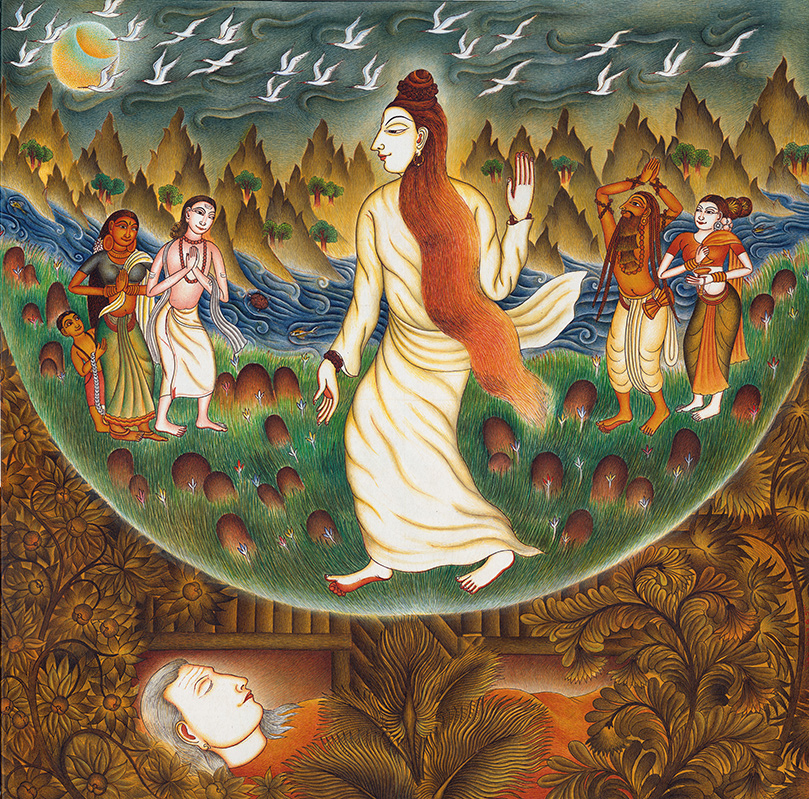
These paintings by artist Suresh Muthukulam, artfully dispict Gurudeva\
s powerful visions. Here Siva walks along the Wailua, worshiped by devotees'
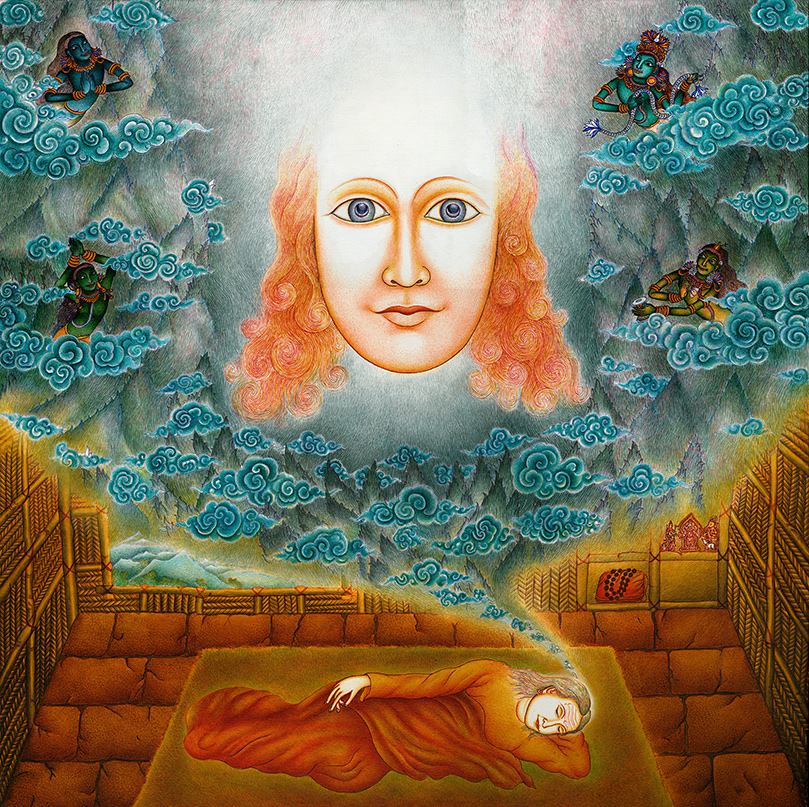
In another vision, Gurudeva sees Siva\
s face, fading into blissful light'
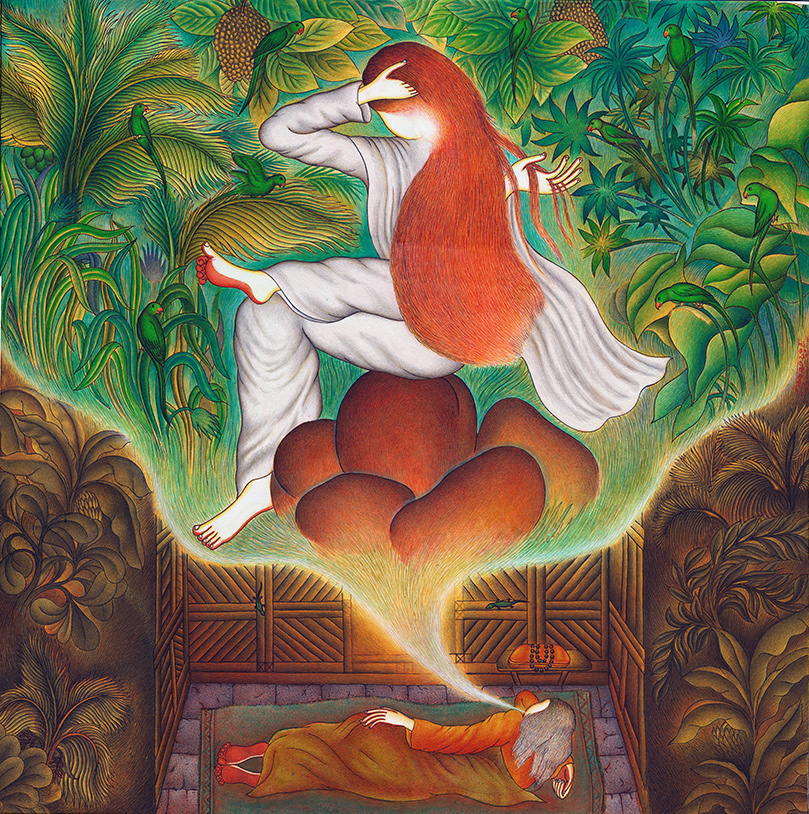
Siva sits upon the Lingam stones
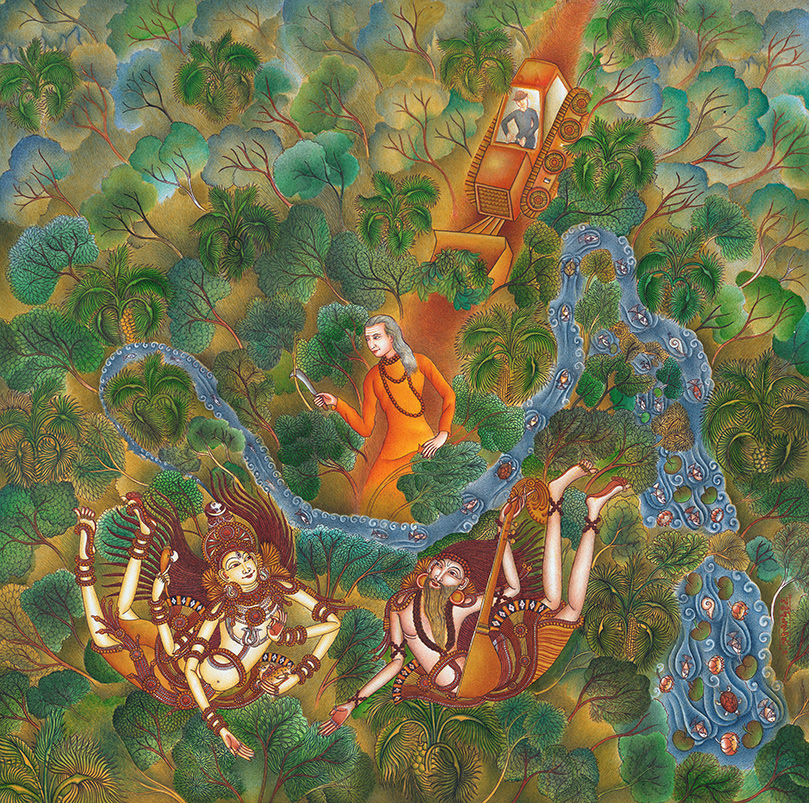
Gurudeva hires a bulldozer and clears a straight path to the Svayambhu Lingam
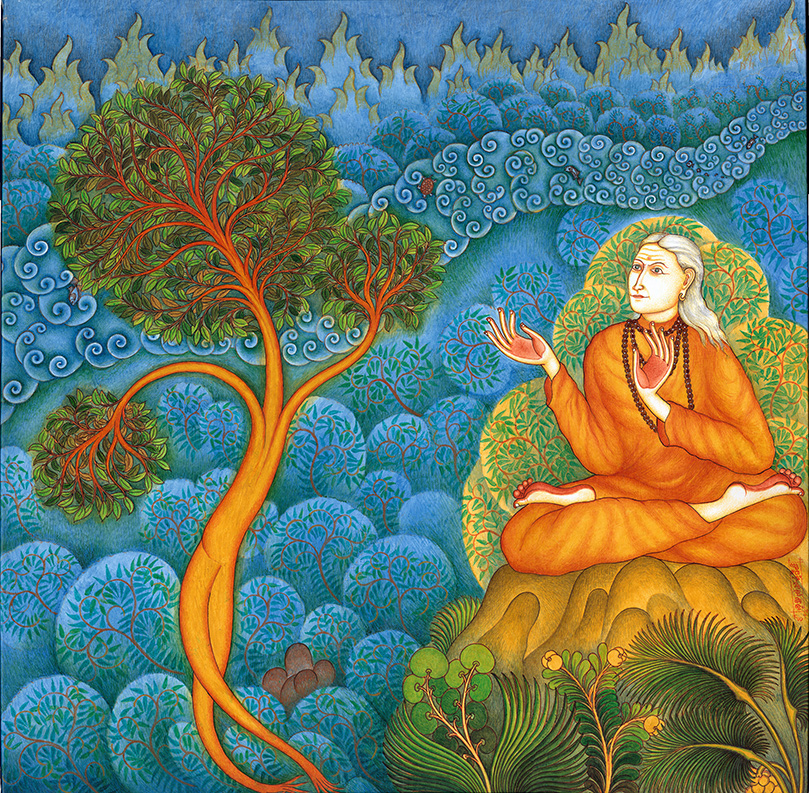
Upon stopping for a rest, a mango tree begins to dance, with no wind present. \"is there something you\
re trying to tell me?\" Gurudeva asks.'
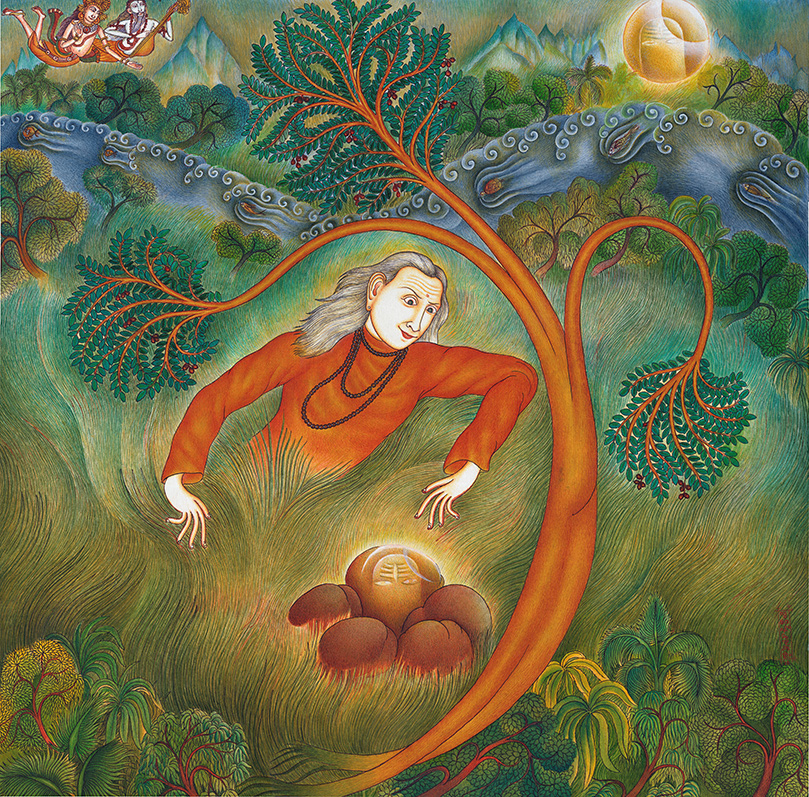
At the tree\
s base Gurudeva uncovers the lingam stones'
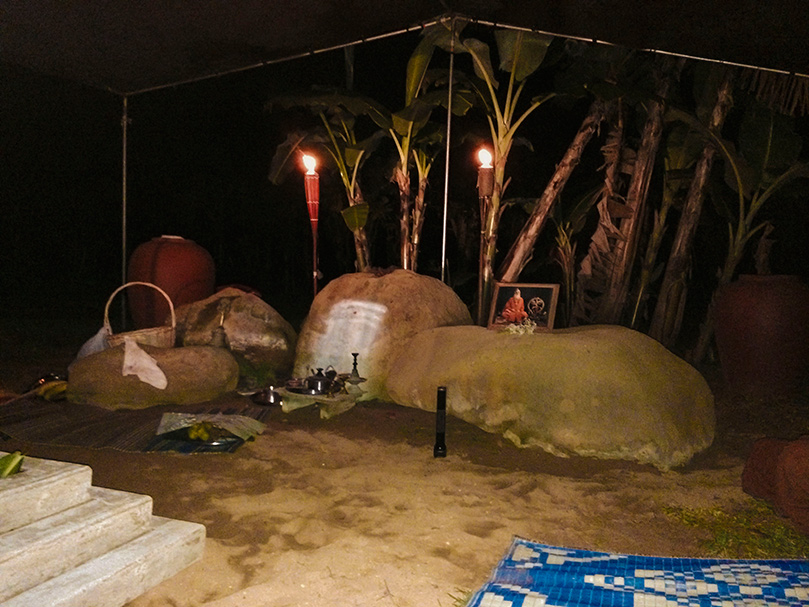
This morning, we gathered around them for worship
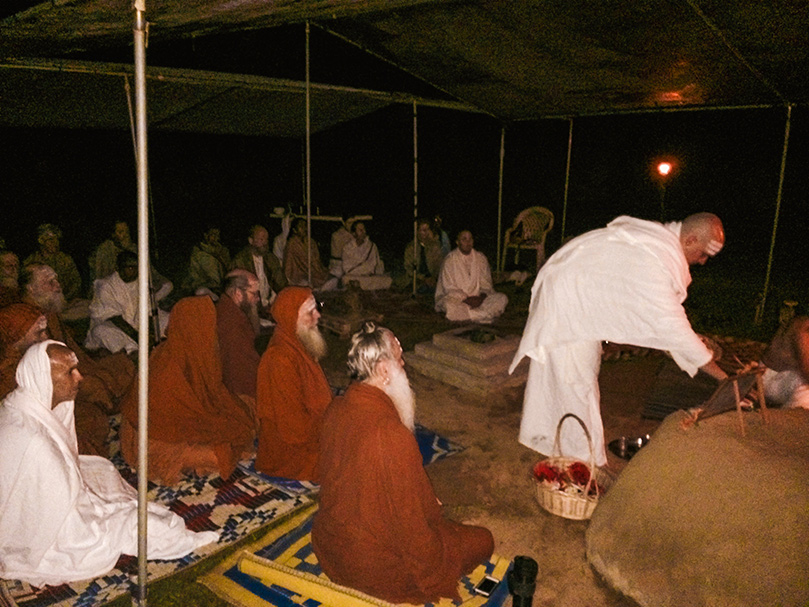
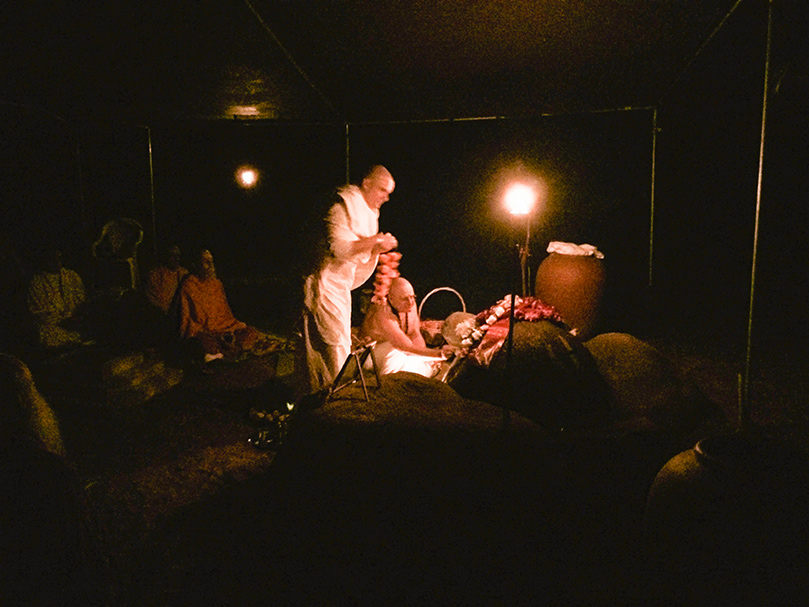
Nirvani Haranandinatha performs a peaceful puja, with Natyam Nandinatha assisting
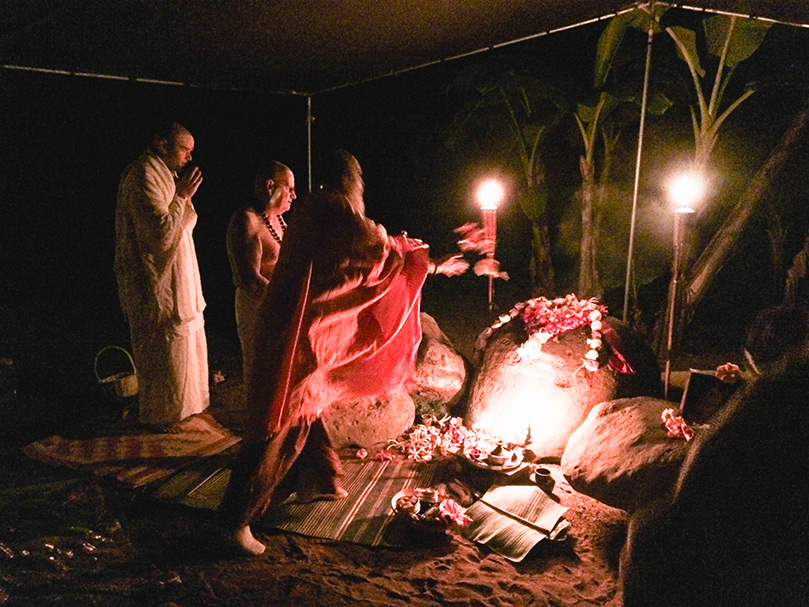
Bodhinatha offers flowers to the Lingam
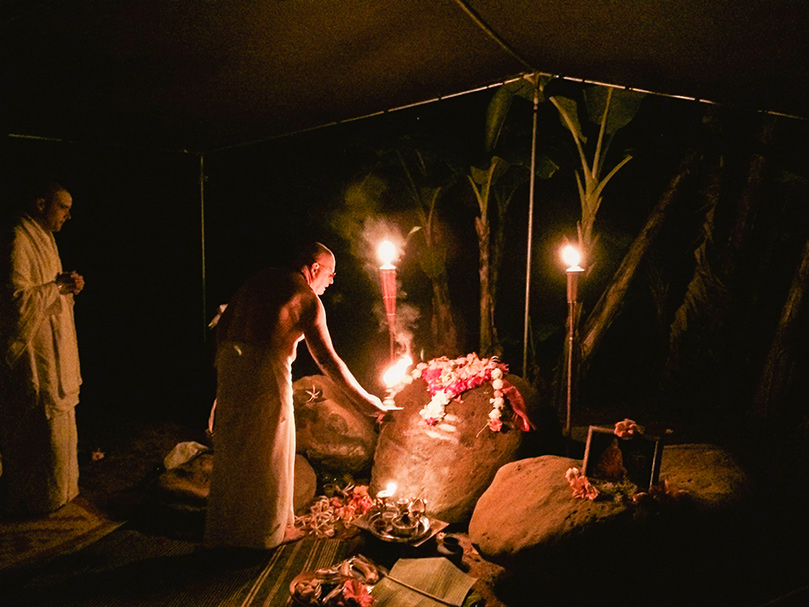
Then a final arati, followed by meditation
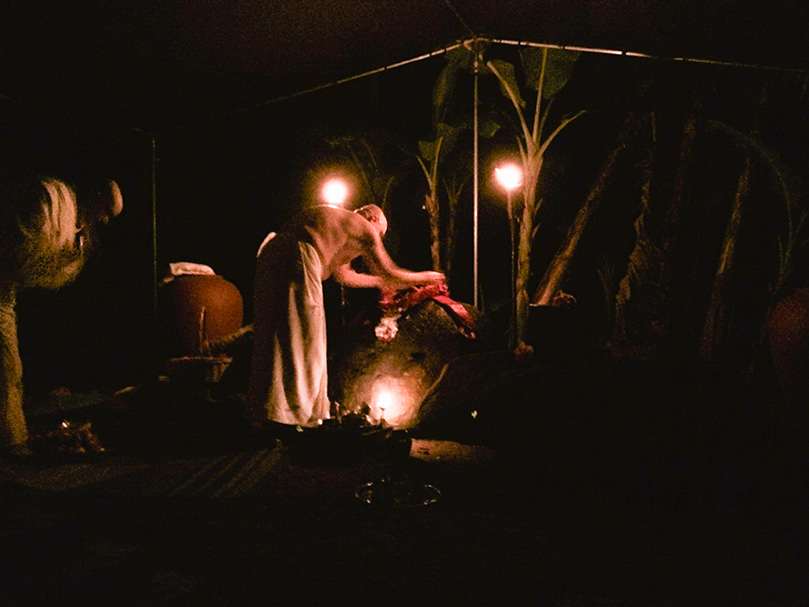
The sun rises, and we disperse to start our day
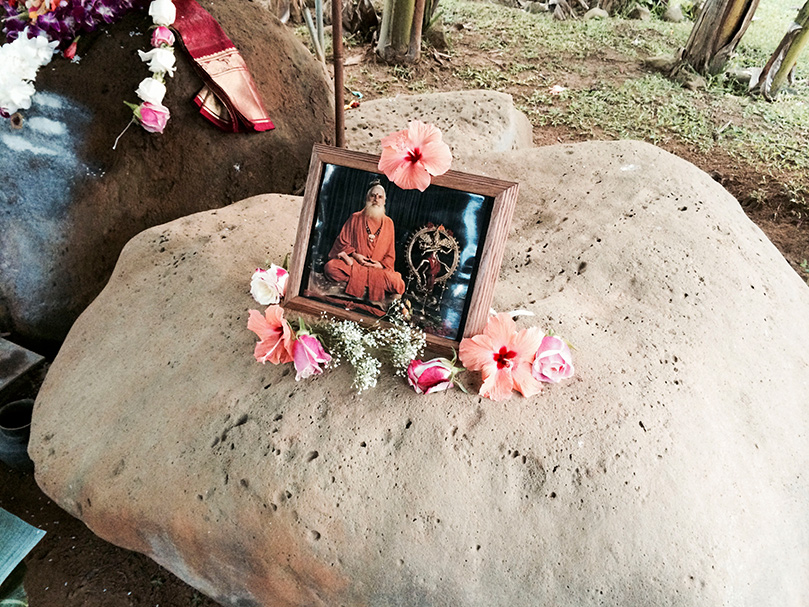
Jai Gurudeva!
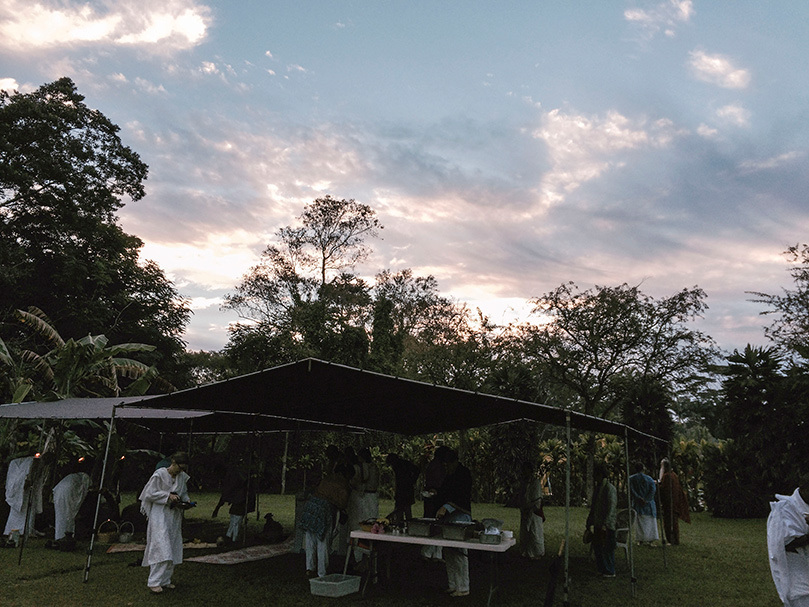
we enjoy prasadam as the rising sun paints the sky
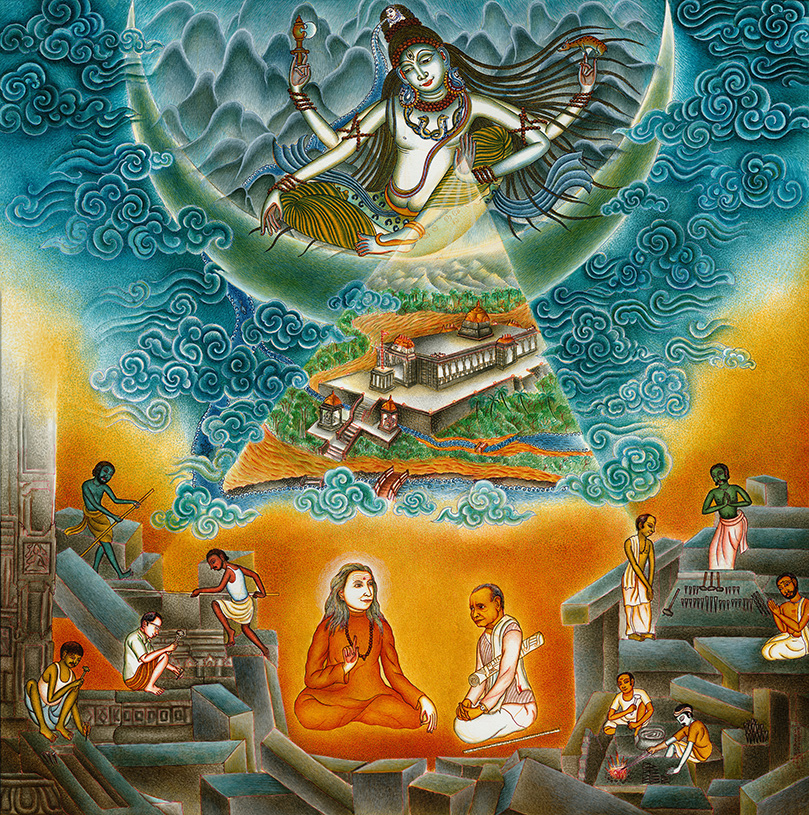
Gurudeva\
s visions lead to the creation of Iraivan Temple'
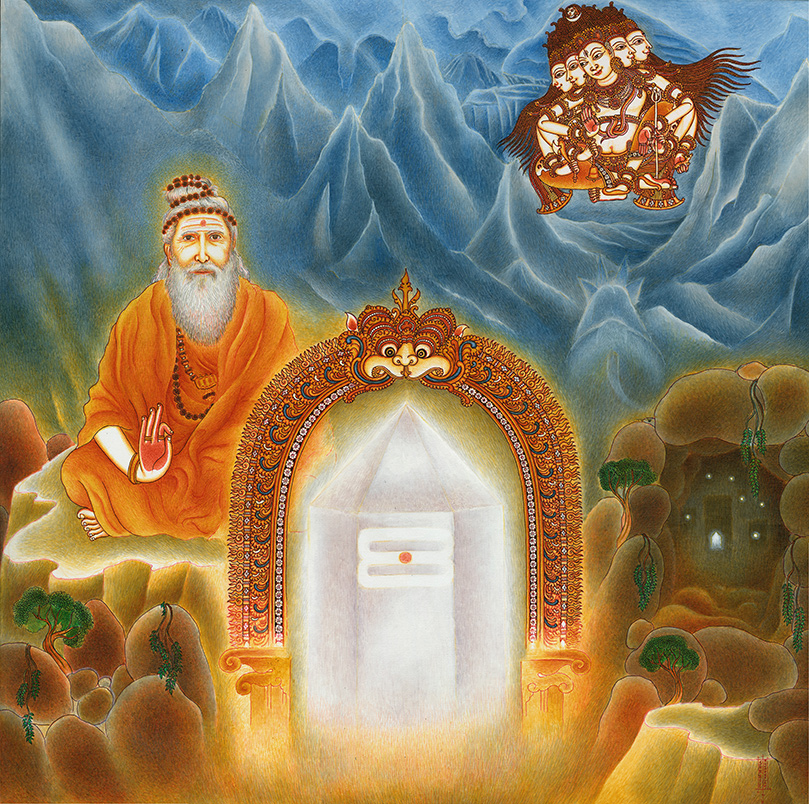
and to the finding of the crystal Sivalingam
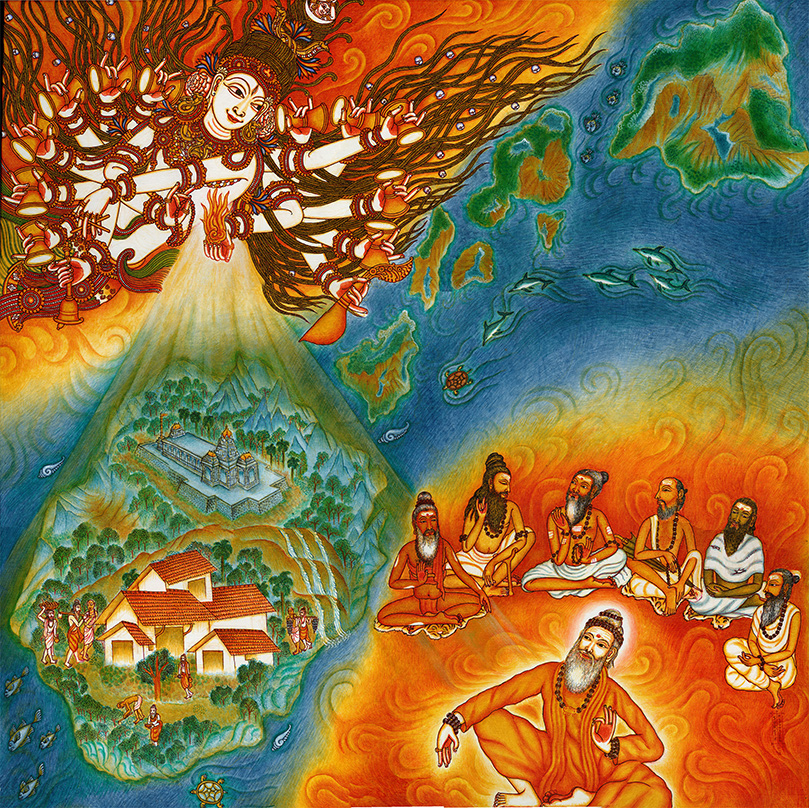
Through Gurudeva, Siva\
s blessing\'s have created an unshakable foundation for the future of our Parampara, a stronghold for Saivism, and a place where the world truly can come to pray. Aum Namah Sivaya. '
}
];
transitionSpeed:150});