
Siva Puja
March 12, 2016One of our monks doing the Siva puja a few days ago was inspired to take some photos of the sacred process, without any images of Lord Nataraja of course.
Puja literally means "worship, adoration." Forms of puja vary widely between Hinduism's four main denominations and its hundreds of lineages, but all puja finds its basis in sixteen offerings, shodasha upachara. These also vary somewhat, depending on the scriptural source that is followed, but one popular list is the following: 1) Avahanam, invoking; 2) Asanam, offering a seat; 3) Padyam, offering water for cleansing feet; 4) Argyam, offering water for cleansing the palms; 5) Achamaniyam, sipping water; 6) Snanam, ceremonial bath; 7) Vastram, offering vestments; 8) Yajnopavitam, offering sacred thread; 9) Chandanam, offering sandalwood paste; 10) Pushpam, offering flowers; 11) Dhupam, burning incense; 12) Dipam, waving lighted camphor; 13) Naivedyam, offering food; 14) Anjali, praying with folded hands; 15) Pradakshina, circumambulation; 16) Udvasanam, farewell.
Seers can reach Him because He is visible; worshipers, too, can see Him. But if they possess love for Him, Hara, who is the first cause of the ancient universe, will manifest Himself to their mind as light.
Tirumurai, Arputat Tiruvantati 17
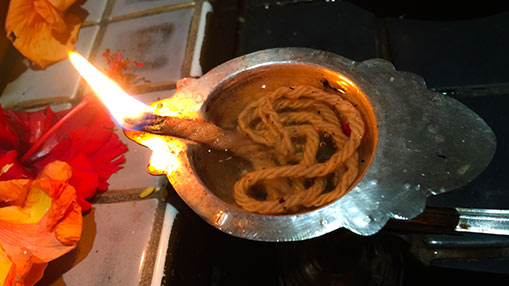
The dipam lamp, an offering of light. It acts as a way for light to travel between this and inner worlds.
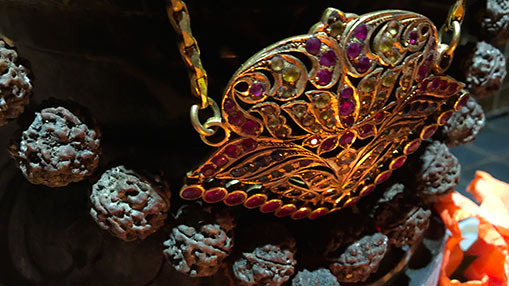
The pendant that adorns the Siva Lingam at Nataraja\
s feet. Gold acts as a conductor of rarefied energies and can easily be seen by devas and Mahadevas alike'
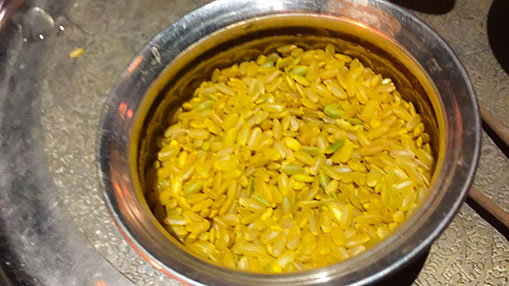
Akshata--unbroken rice with turmeric--is a commonly used offering
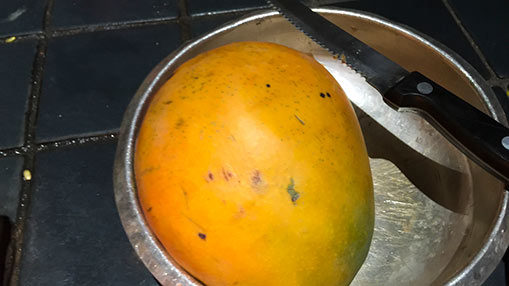
cut fruit releases the pranas, which the Gods and devas can see, absorb, enjoy and reflect back to cleanse the auras of devotees.
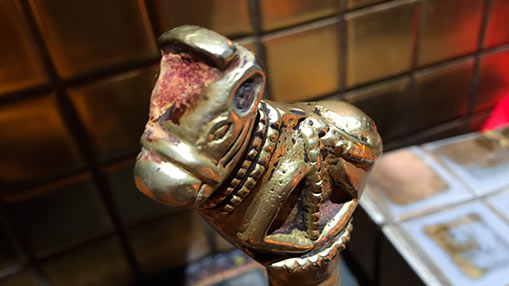
Nandi Sits atop the bell, worshiping Lord Siva as the ideal devotee
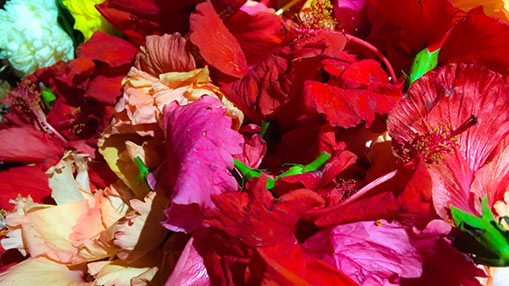
Flowers also produce a glow in the inner worlds and are offered in abundance
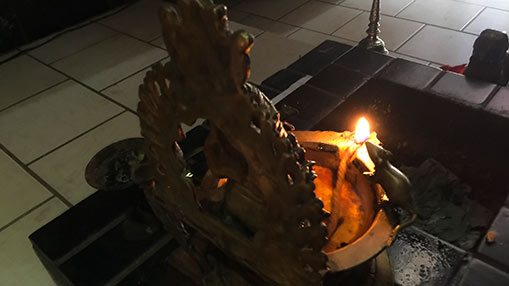
This is the small homa kunda just in front of the Siva shrine. This is were written payers are burned during most of the week
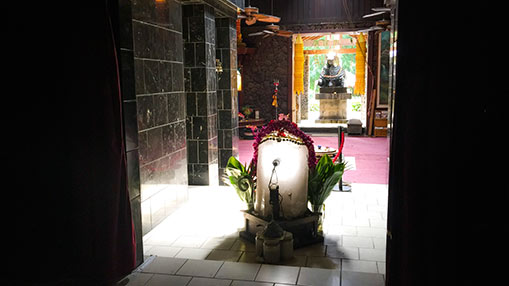
A view from Nataraja\
s Sanctum, not often seen by anyone other than the monks'
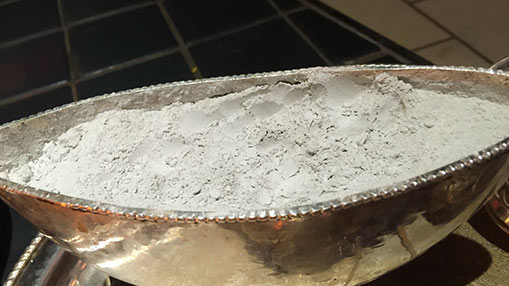
Vibhuti glows brightly in the inner worlds and when worn keeps the devas alerted to our presence. The Tripundra is a Saivite\
s great mark, comprised of three stripes of white vibhuti on the brow. This holy ash signifies purity and the burning away of anava, karma and maya. The bindu, or dot, at the third eye quickens spiritual insight'
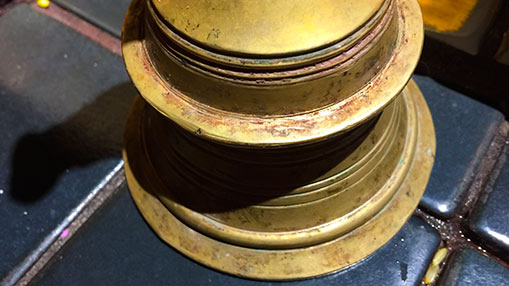
Ghanta is the bell used in ritual puja, which engages all senses, including hearing. Its ringing summons the Gods, stimulates the inner ear and reminds us that, like sound, the world may be perceived but not possessed.
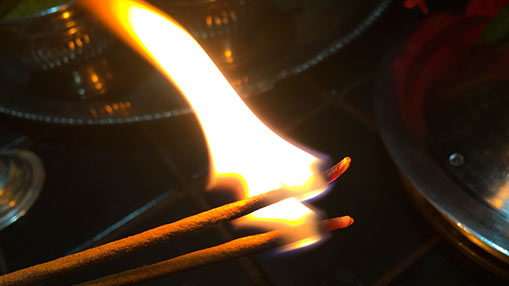
A lighting of sandalwood incense
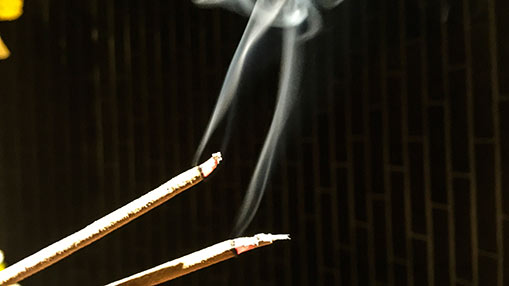
the sense of small is connected to the muladhara chakra, and is therefor strongly tied this physical plane. Sweet aromas are a way of directing the invoked deity\
s energies out into this world.'
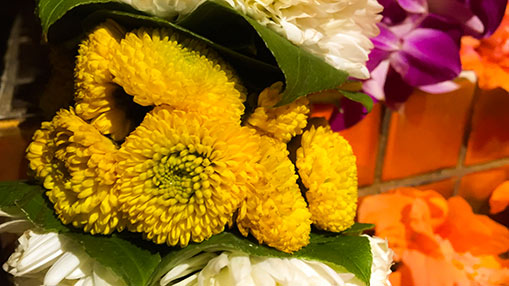
The base of the large flower garland that currently hangs from Lord Nataraja\
s Shoulders. Om Namah Sivaya'
}
];
transitionSpeed:150});