
Our New Noni Washer in Action
August 21, 2016After months of toiling and research, Acharya Arumuganathaswami was ready to test out his recently-crafted barrell washer. Our method of cleaning the freshly harvested fruit heretofore was entirely manual. While effective, it isn't entirely the most efficient. Automating some of that process will aid in the overall production.
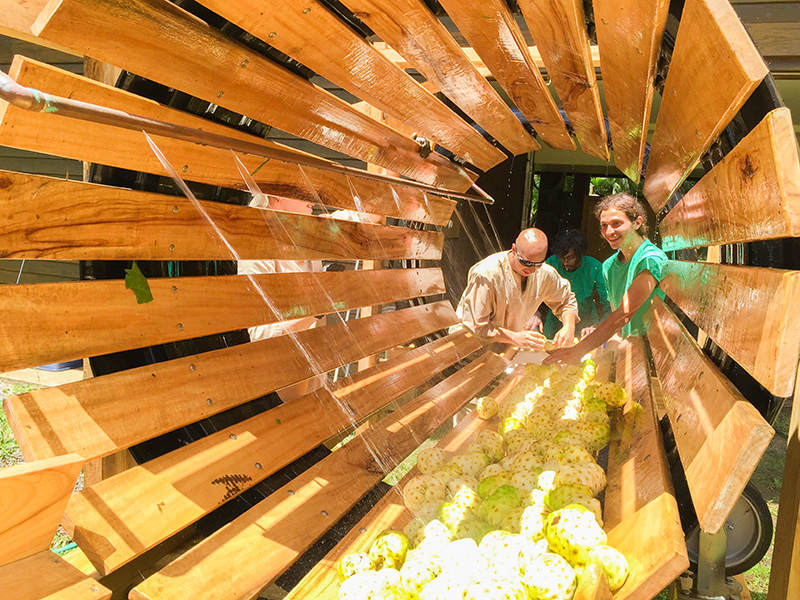
Natyam Rajanatha works with task forcers Kodiswara and Dean on helping the noni fruits through the barrell.
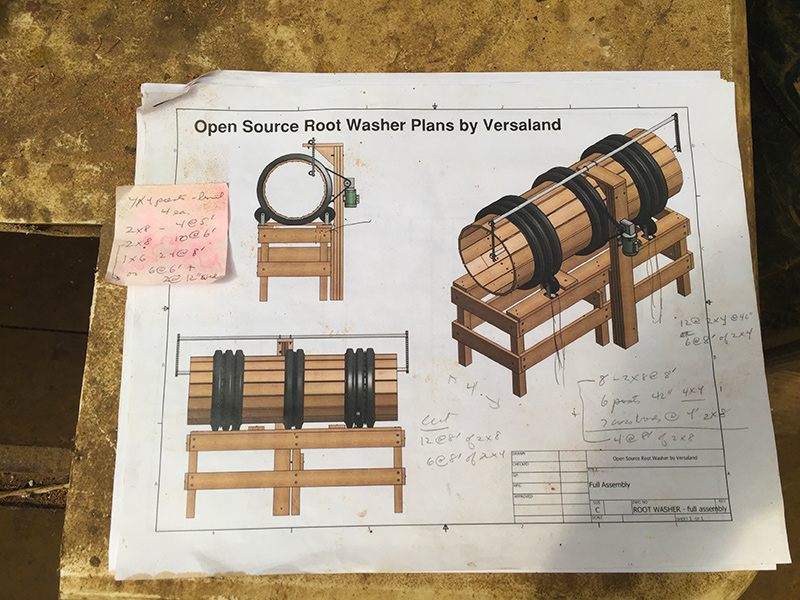
But, back to square one. Here are some drawings used by Acharya to begin making the barrel washer.
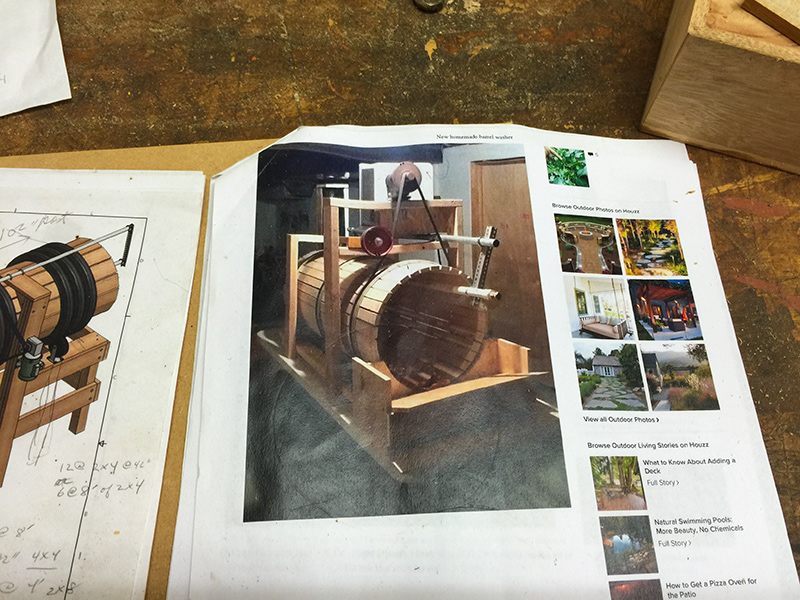
It\
s quite a simple yet multi-faceted machine. A motor turns the angled barrell as the fruits are sprayed with high-powered jets of water. The fruit tumbles down and out into a receptacle provided by the user.'
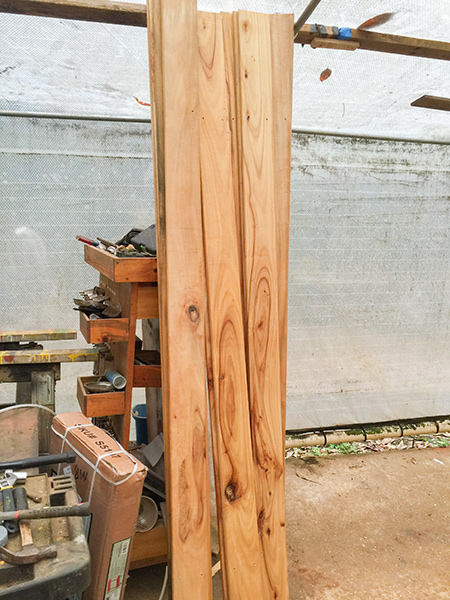
These planks of wood were milled by the monks from our own lumber and will act as the barrell\
s slats.'
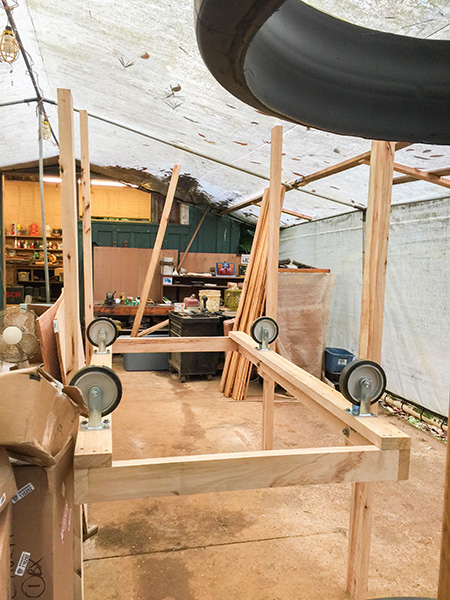
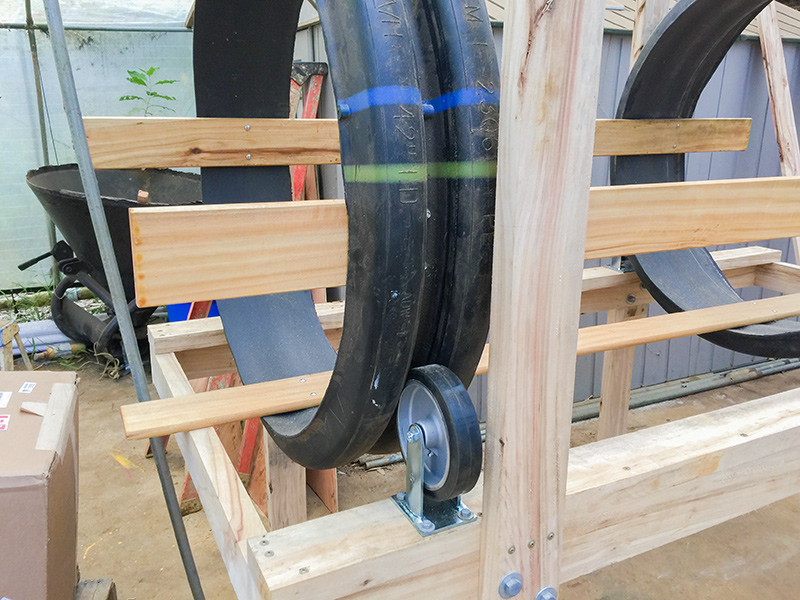
The frame. The four wheels you see guide the barrell\
s rotation as the motor powers its movement.'
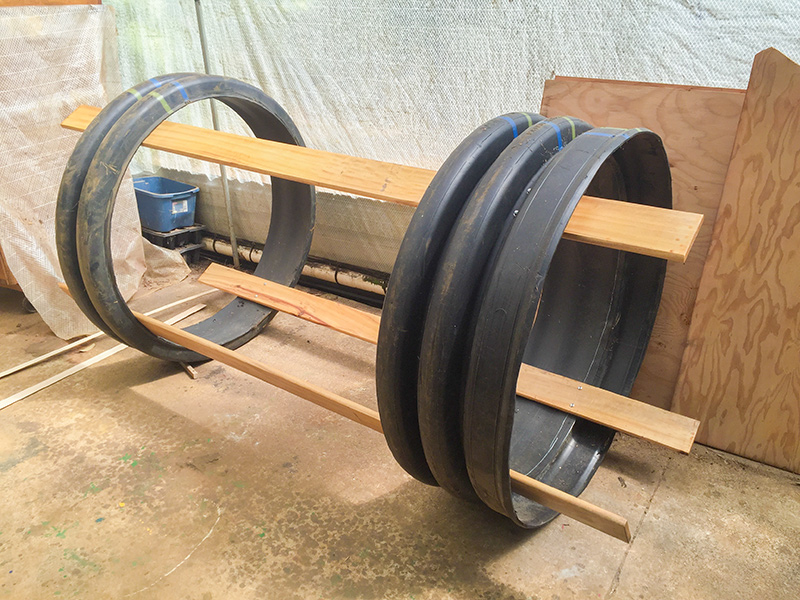
The rings are being fitted with the slats.
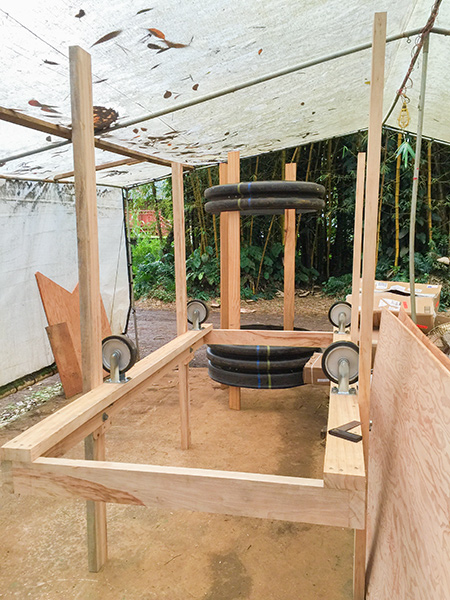
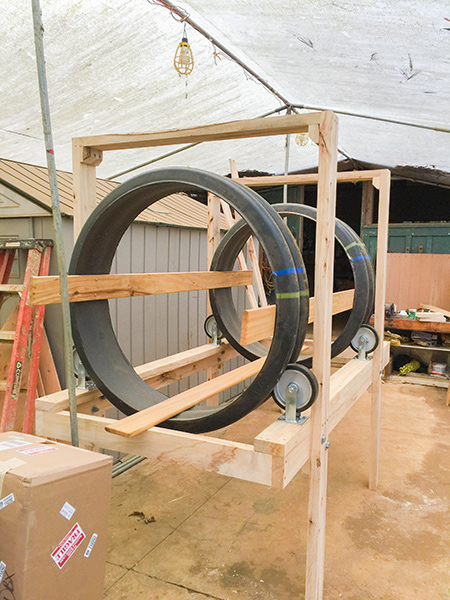
Time to place the barrell-in-the-making on the frame.
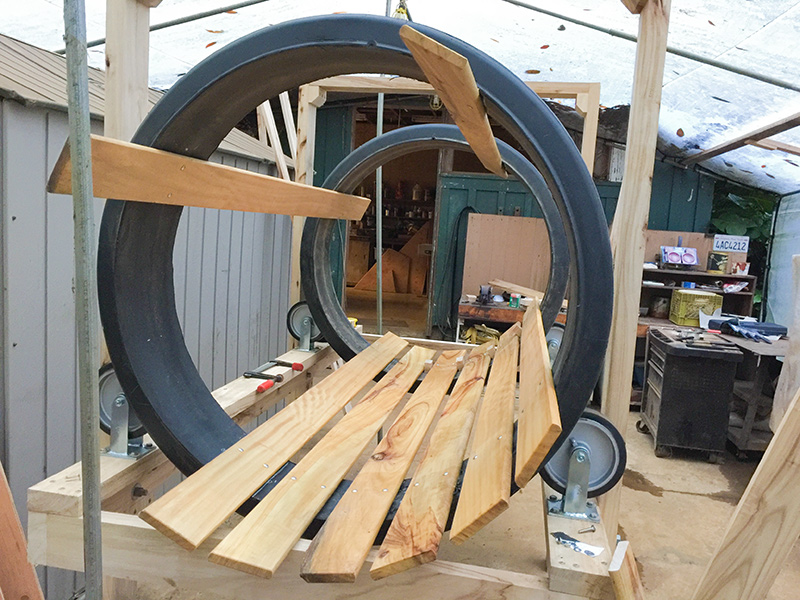
Adding more planks. They need to be spaced just so.
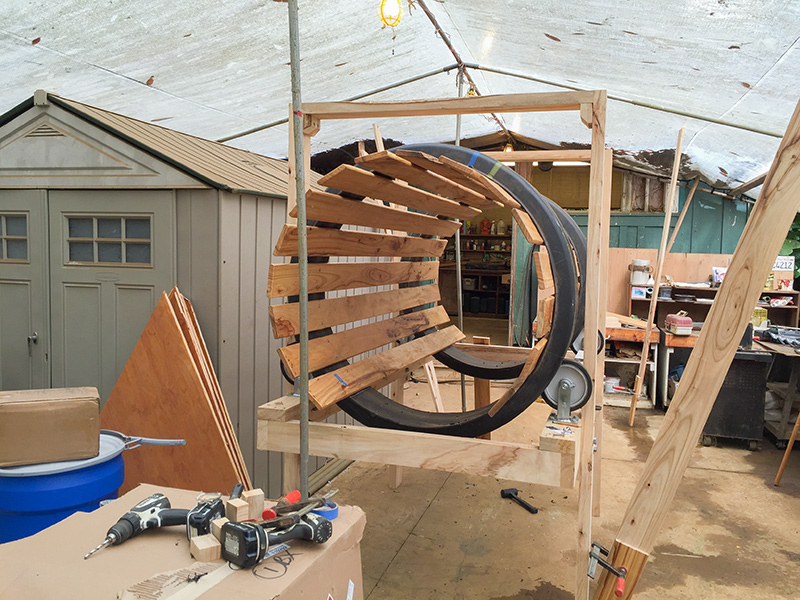
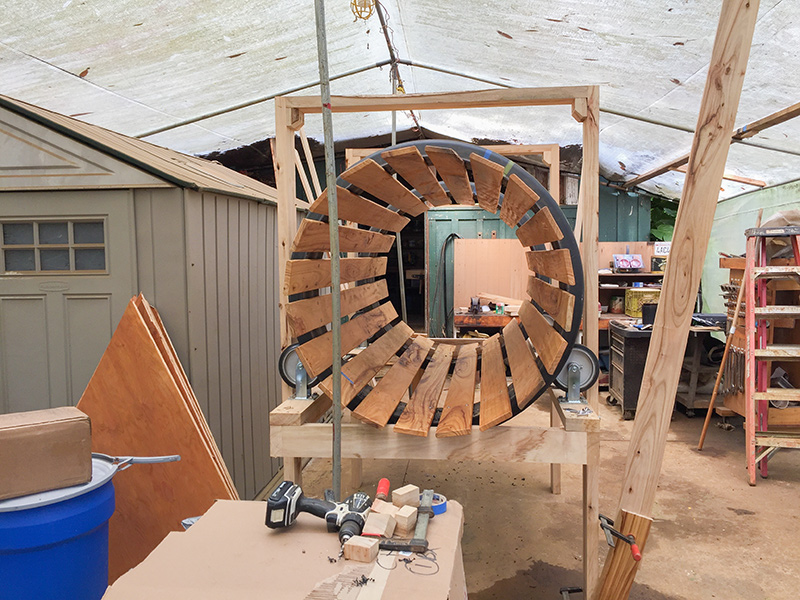
Application of slats complete!
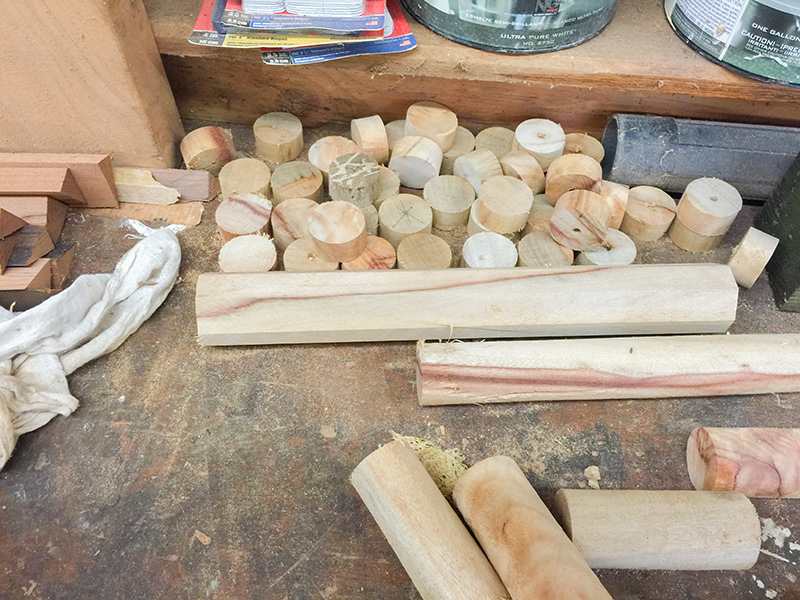
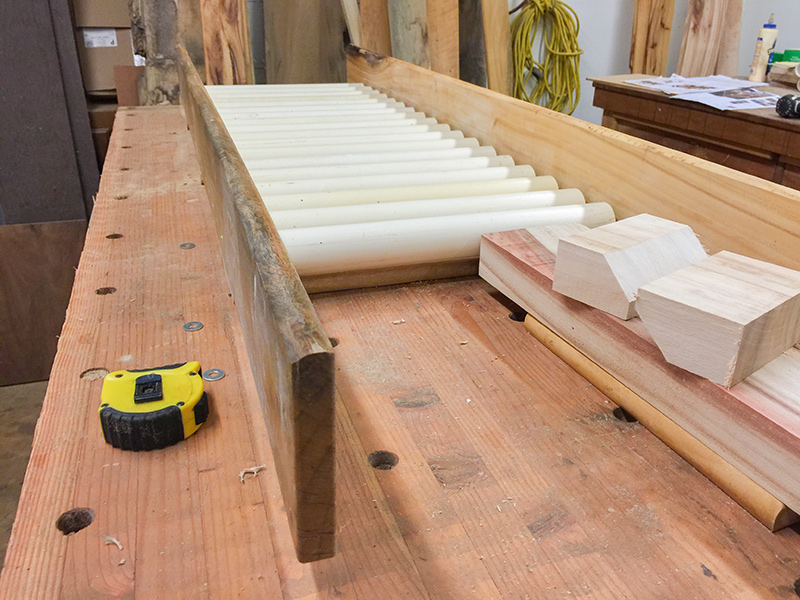
These handmilled, handspun dowels will be used to receive the washed fruit as it descends out from the barrell. You\
ll see.'
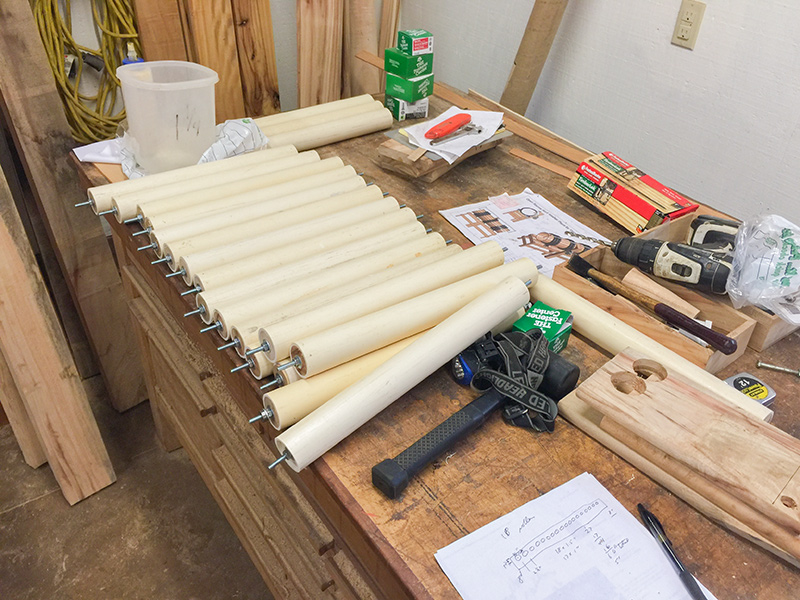
Finished!
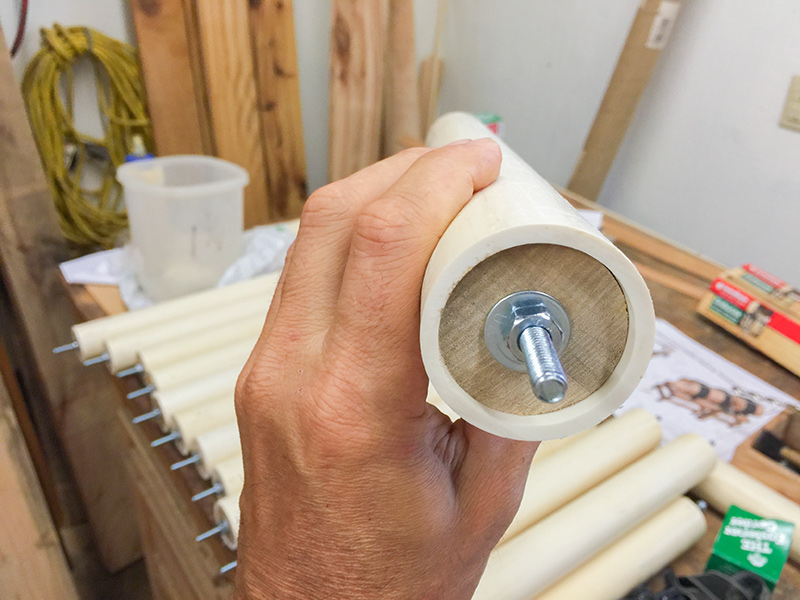
Each completed wood dowel is fitted within a PVC pipe cut to size and a nut and bolt is placed at either end in order to fit into the final conveyer belt.
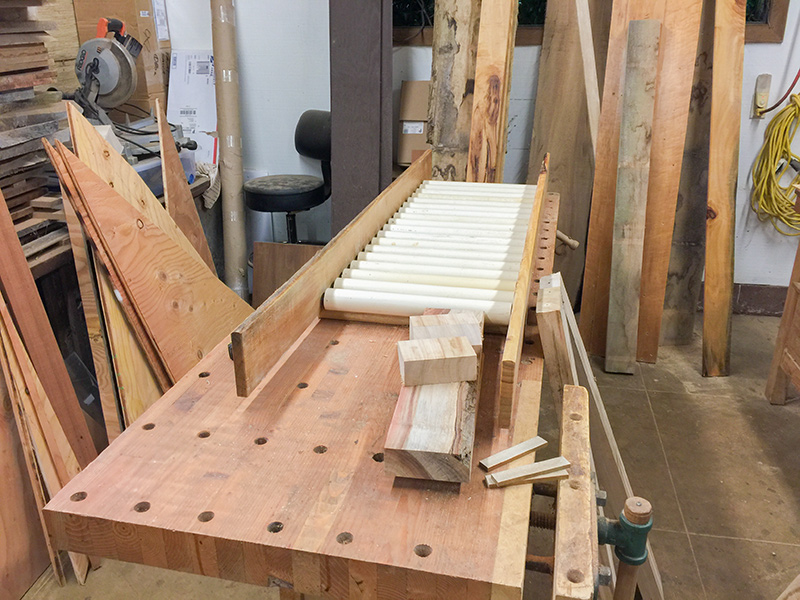
Conveyer belt complete!
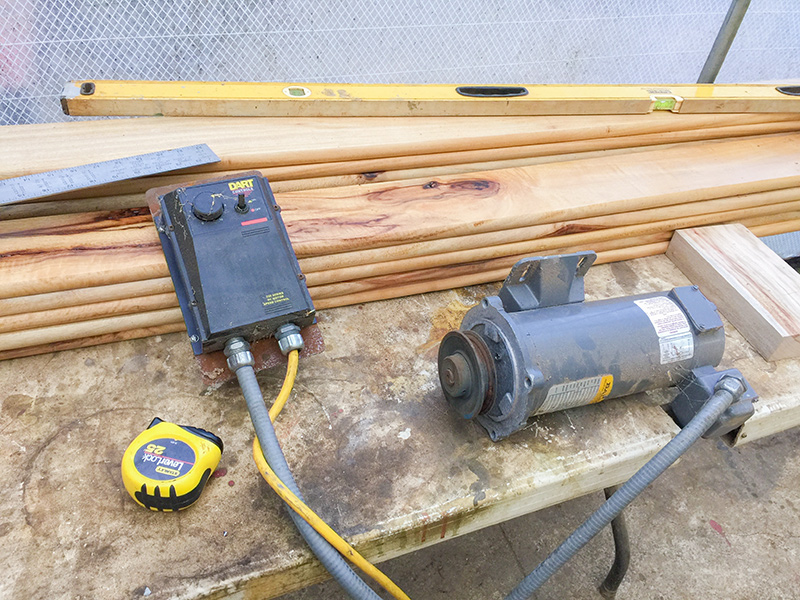
This is the motor which will sit atop of the frame.
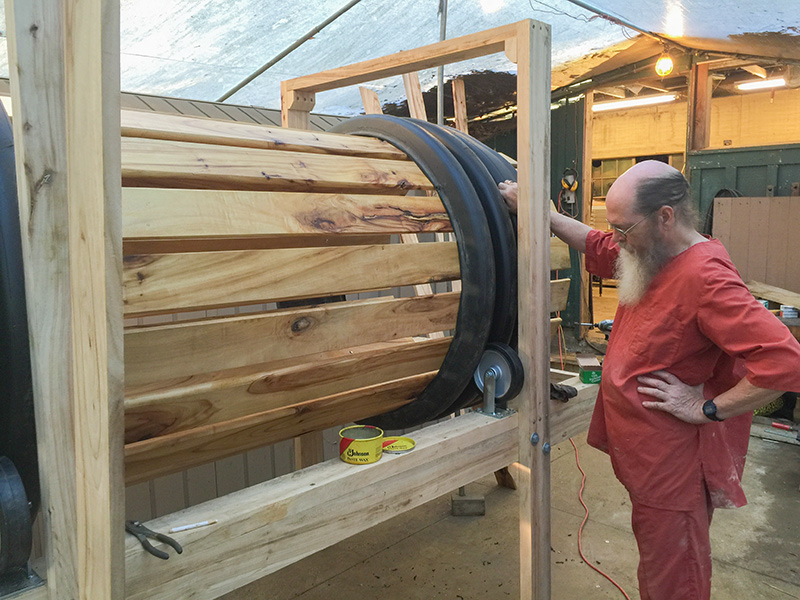
Acharya inspects his work.
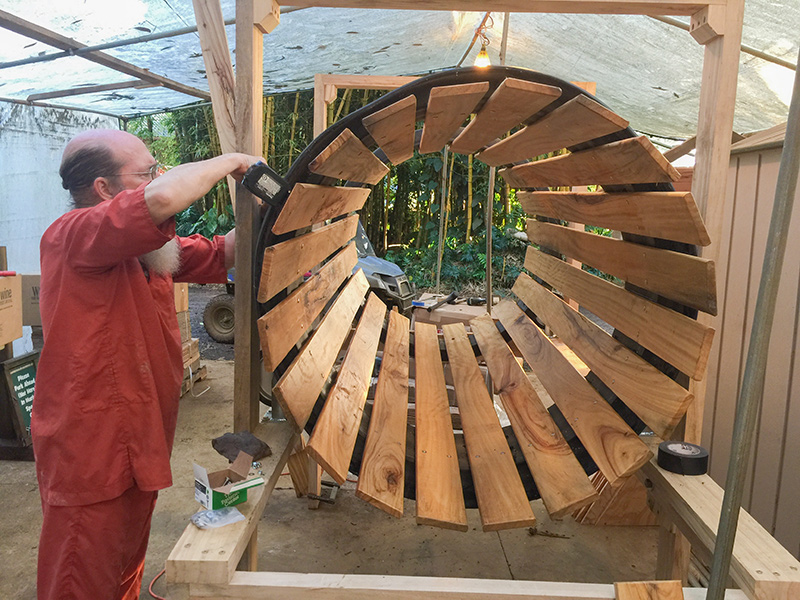
And makes some adjustments.
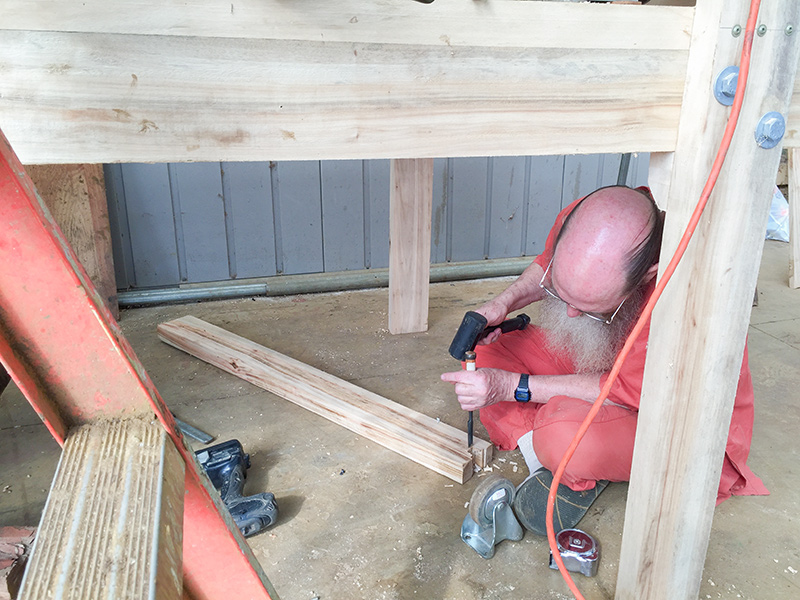
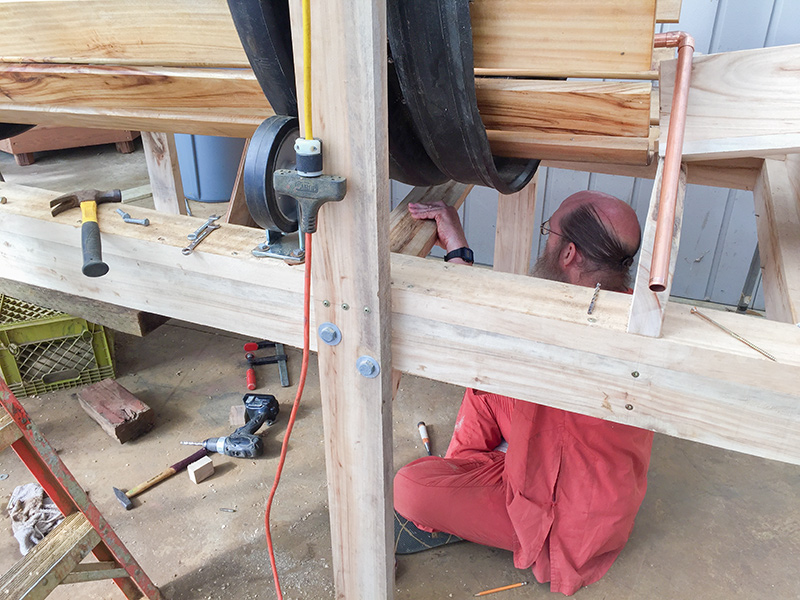
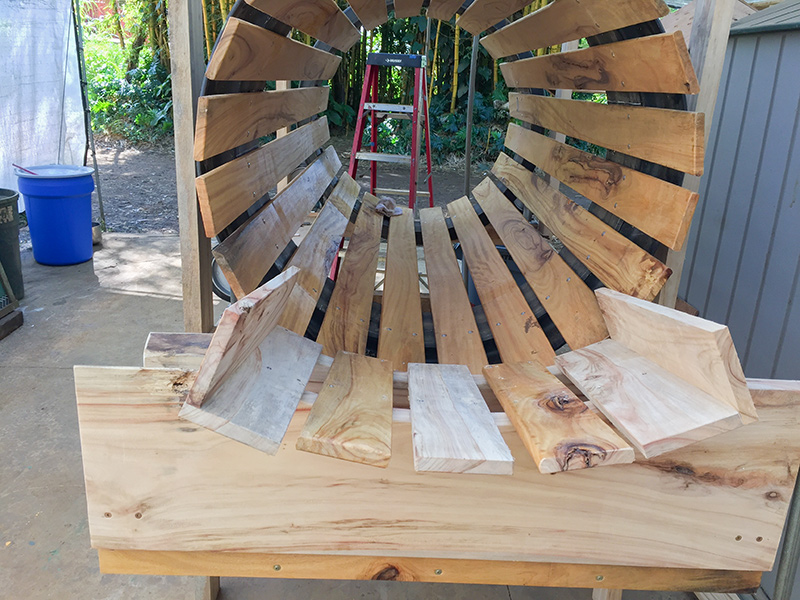
This is the shoot through which the noni will be placed.
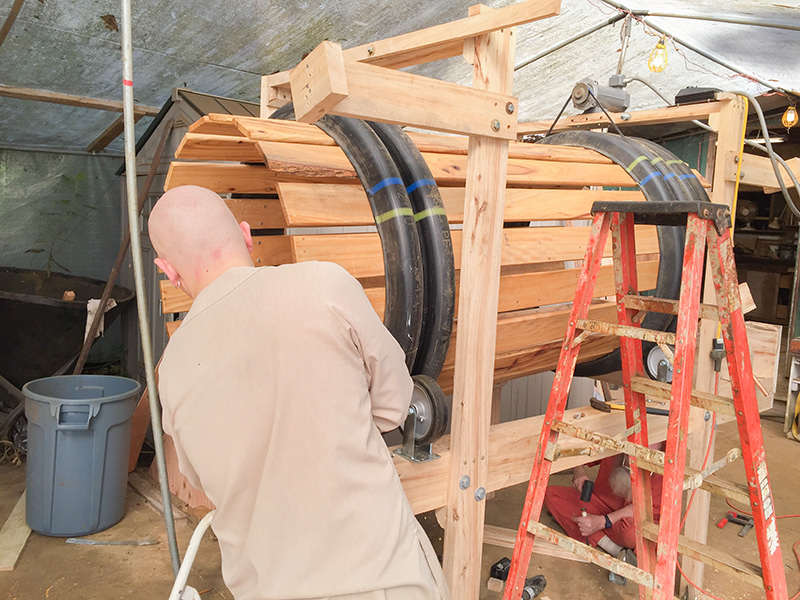
Natyam Jayanatha worked closely with Arumuganathaswami on this project over several months.
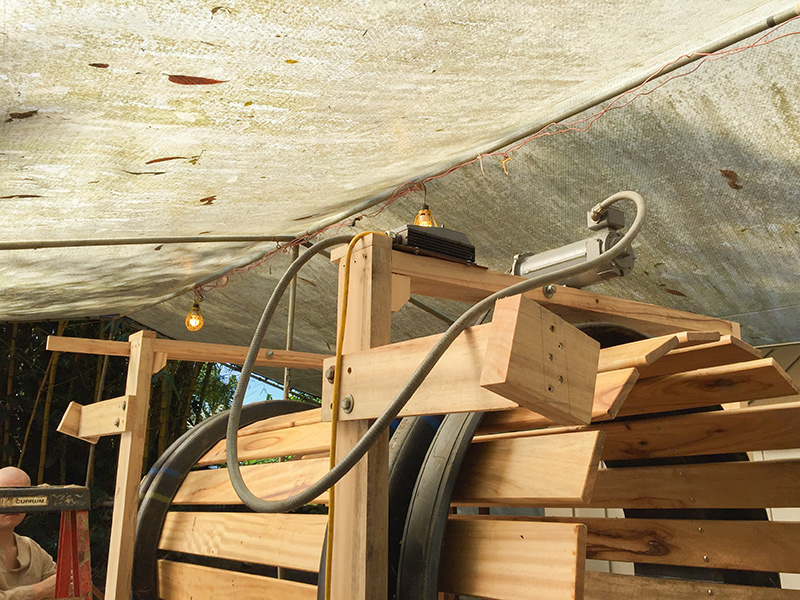
The motor is now up there.
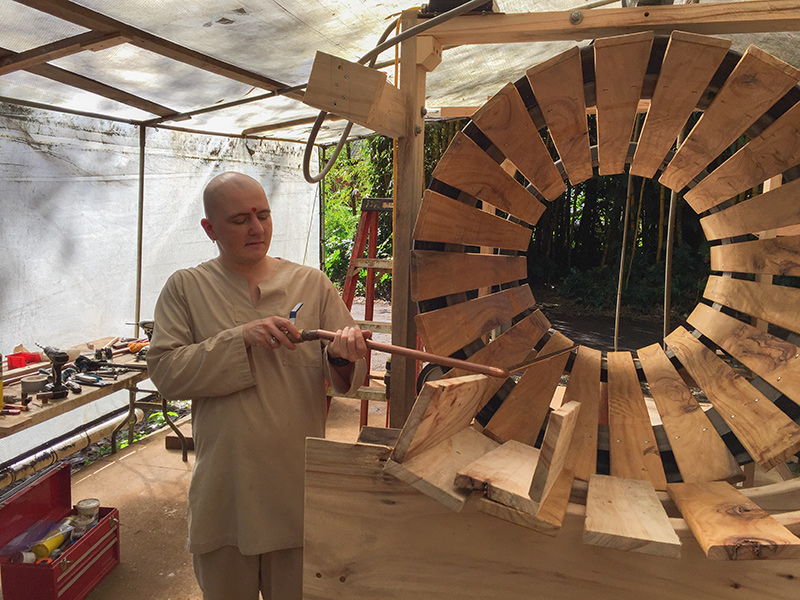
This copper piping is what will be used to dispense water onto the fruit. Eight small holes were drilled into it all down along it, acting as a high-pressure water jet.
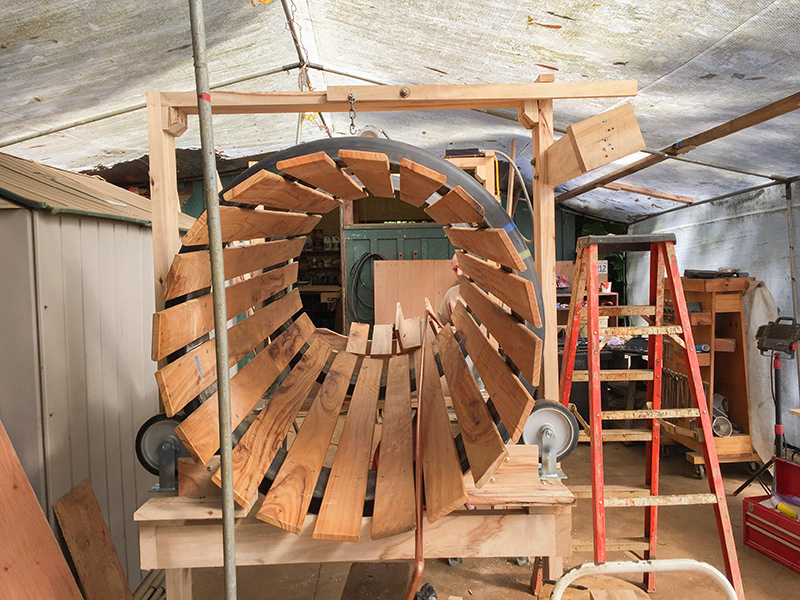
We\
re getting there...'
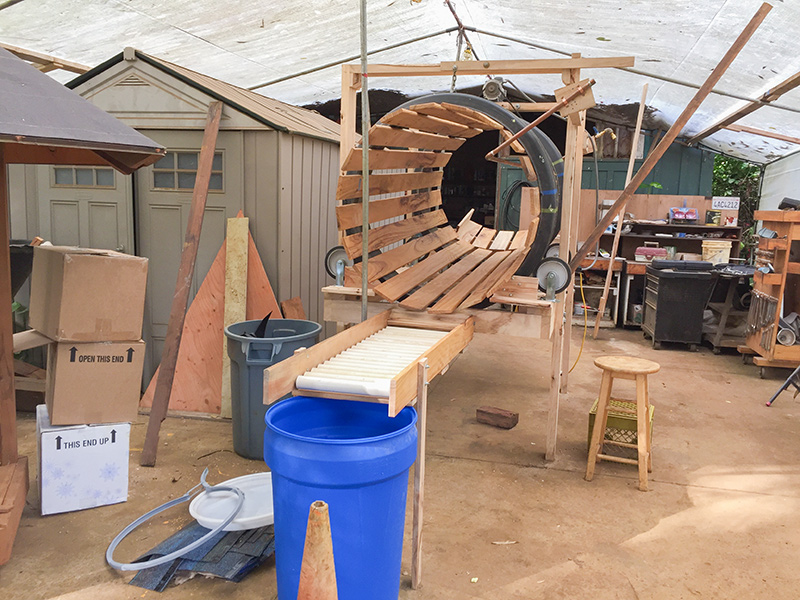
Fruition! All the elements are assembled. The barrell is on the frame, the piping is in place, the conveyer belt is attached, and an acual blue barrell used to ferment the fruit is shown at it\
s base.'
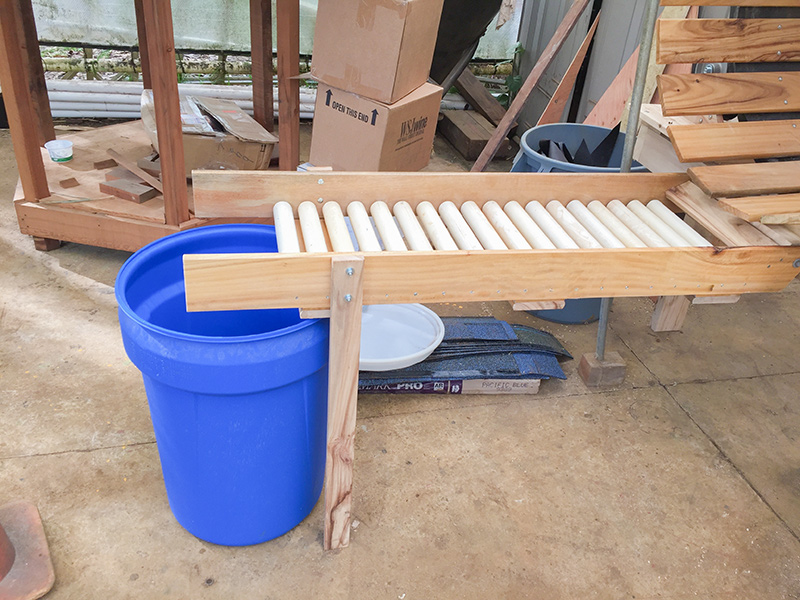
These are 55 gallon (208 litre) drums which contain the fresh noni fruits for several weeks while they ferment and release their powerful healing juices.
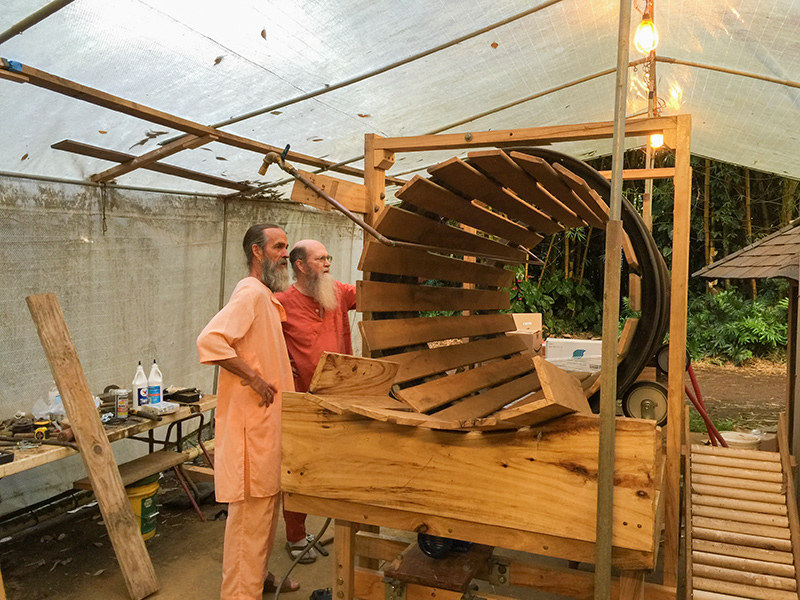
Acharya Kumarnathaswami comes over to offer his expertise. Tomorrow will be the washer\
s first test run.'
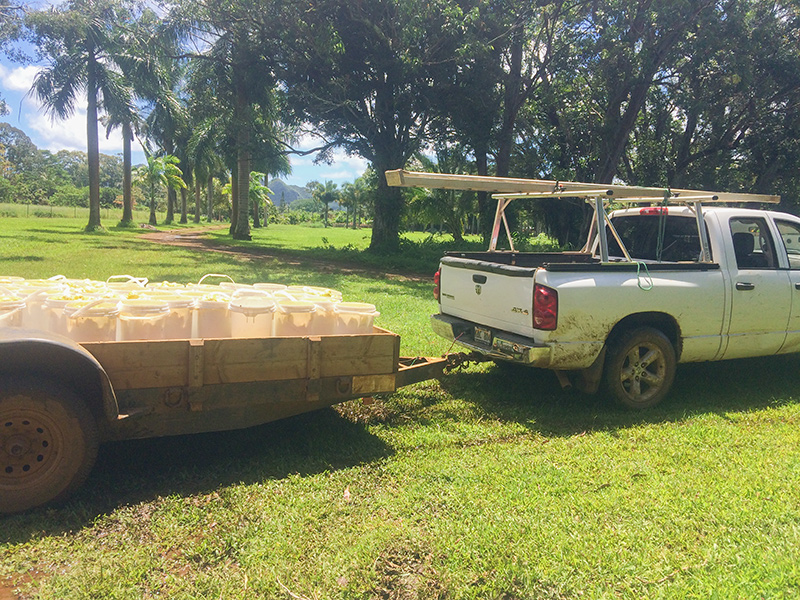
24 hours later, our harvesting monks have returned from Himalayan Acres with about 1,800 pounds (815 kg) of freshly picked noni fruit, ready to be washed before fermentation.
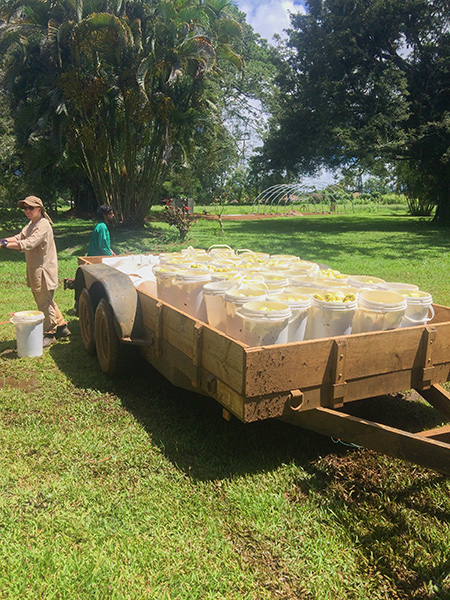
Let\
s get to work here (not that we weren\'t before...)'
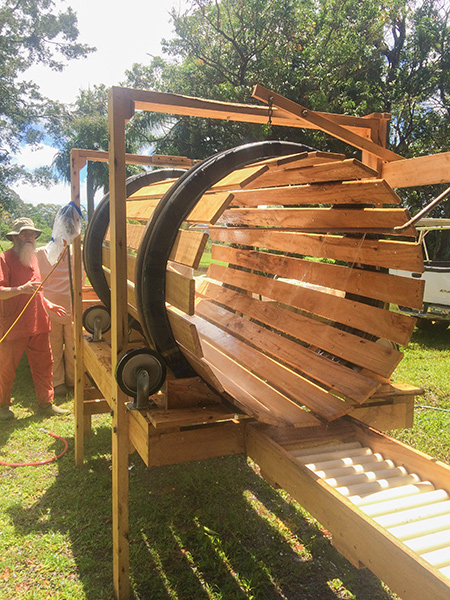
You can see in the upper right side of the barrell water coming out of the copper piping.
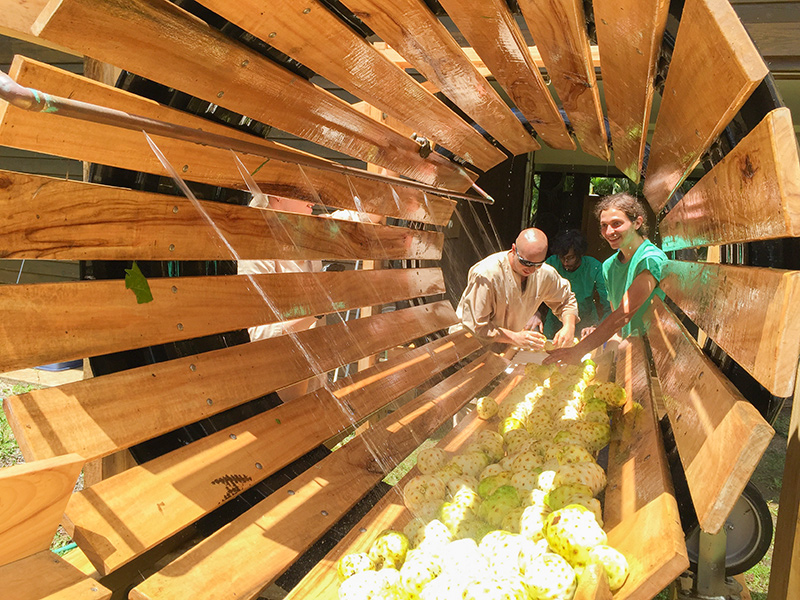
Admittedly, we ran into some mechanical set backs on our first run. But the concept of the washer is sound and works well. Jayanatha turns the barrell by hand until we can later make needed adjustments to the motor.
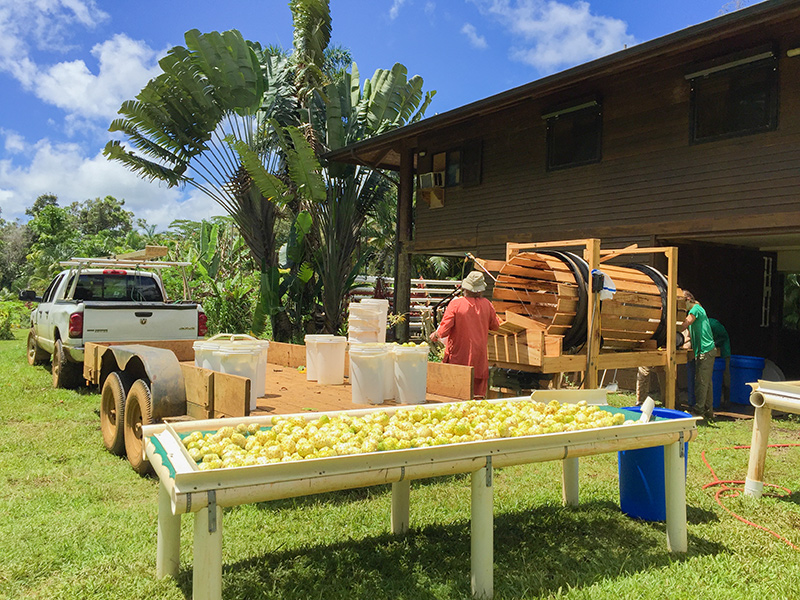
It\
s all good. Beside the new washer is our old set up - a PVC table topped with shade cloth. The fruit buckets are emptied into it, someone washes the fruit with a handheld hose, and the fruits are manually placed in their blue drums.'
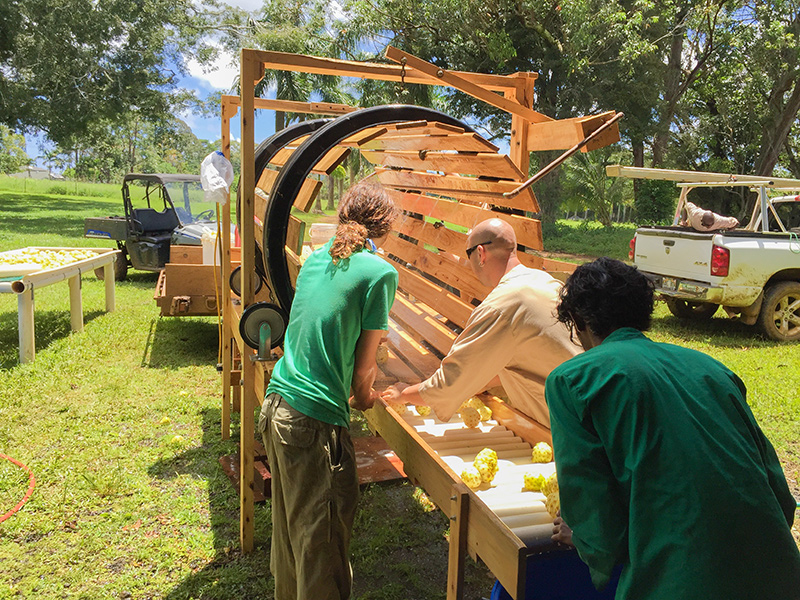
Both styles are employed in the same morning to maximize efficiency as we work out kinks with the new washer.
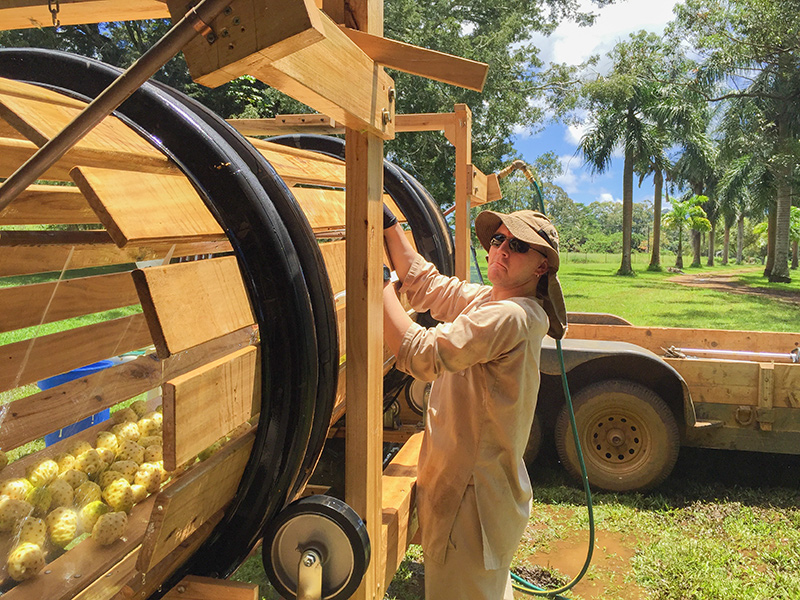
Nice job, Jayanatha. Ever conducting a yeoman\
s service.'
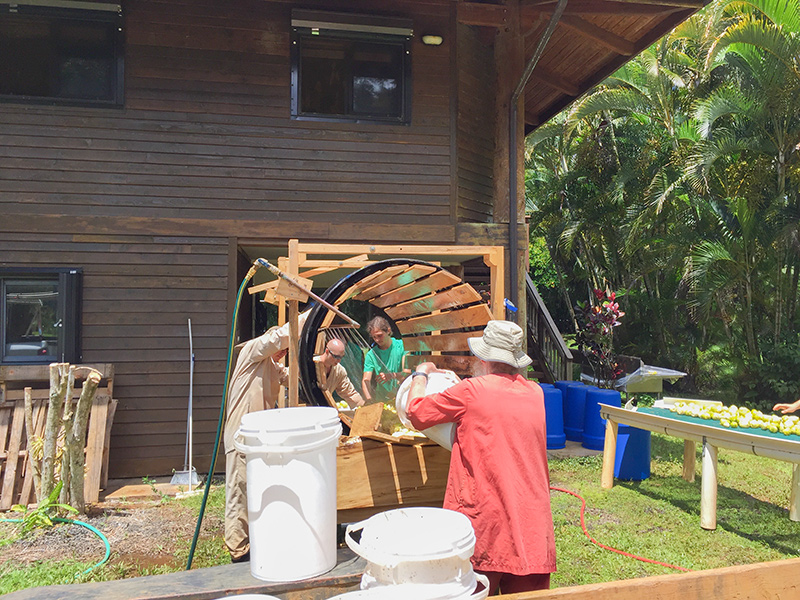
Our efforts proved successful, ultimately, and we washed and packaged all the fruit of the morning\
s harvest.'
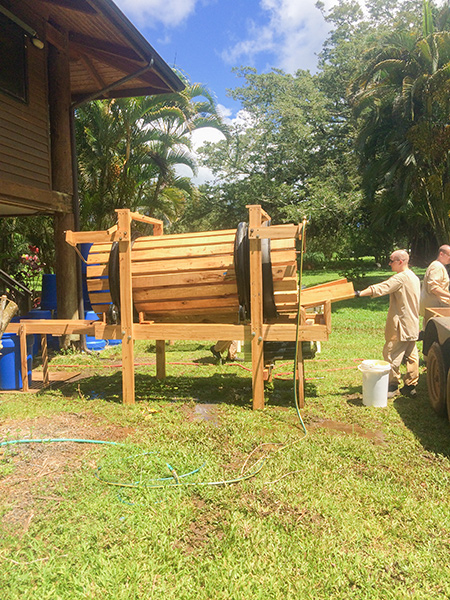
Soon this device will be a powerhouse of productivity.
}
];
transitionSpeed:150});