
Happy Ganesha Chaturthi!
September 5, 2016Yesterday we celebrated Ganesha Chaturthi at Kauai Aadheenam in Kadavul Hindu Temple. This annual home-temple festival occurs on the fourth day ("chaturthi" means "fourth" in Sanskrit) after amavasya, or the new moon in the month of Simha, which is always in either August or September. In Hindu homes around the world in which Ganesha is worshiped, handmade Ganesha icons are fashioned and worshipped for ten days, culminating on the fourteenth day after the new moon in Simha, known as Ananta Chaturdashi. "Ananta" means eternal, and "chaturdashi" means fourteen. "Chatur" is four, "dashi" is tenth from the word "dasha" meaning ten in Sanskrit. On this day, the aforementioned Ganesha murti which the family made and worshiped for ten days is submersed in a body of water, be it an ocean, lake, river, pond, etc. Though in same families and communities, this submersion, called visarjana or a "farewell" is sometimes done on Ganesha Chaturthi day itself.
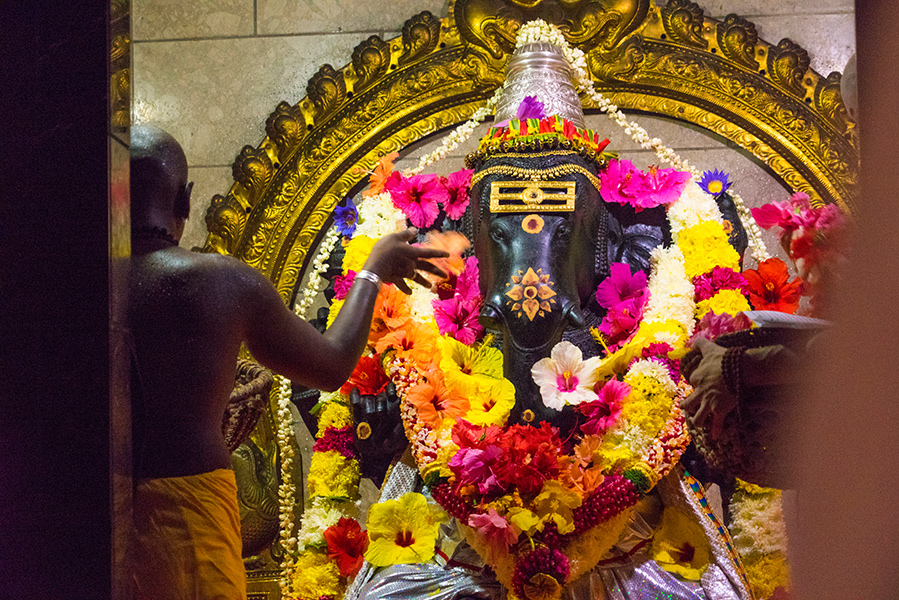
Natyam Dayanatha is Lord Ganesha\
s pujari for this year\'s festival. It is his first time being the officiating preist for such an event in Kadavul Temple.'
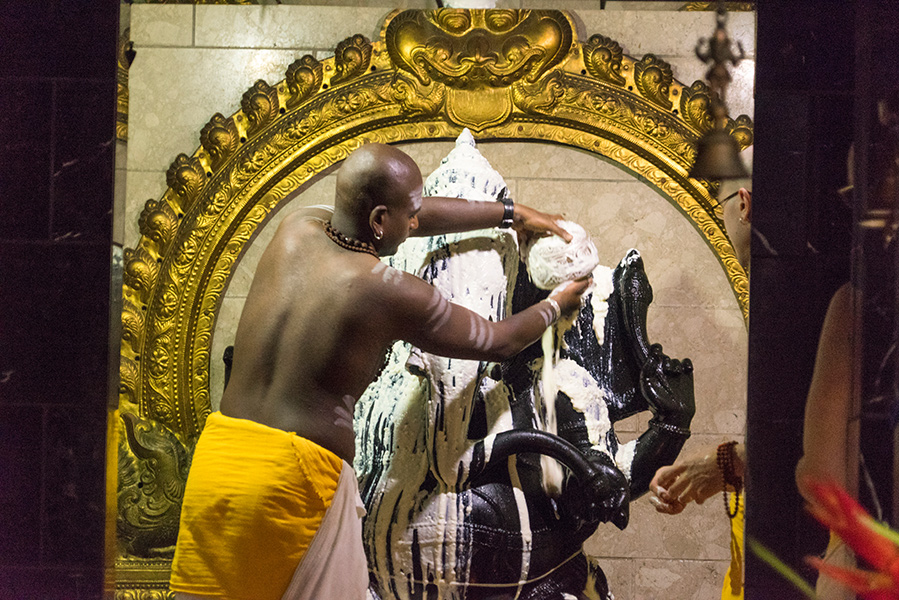
Fresh yogurt made from the pure milk of our Jersey cows.
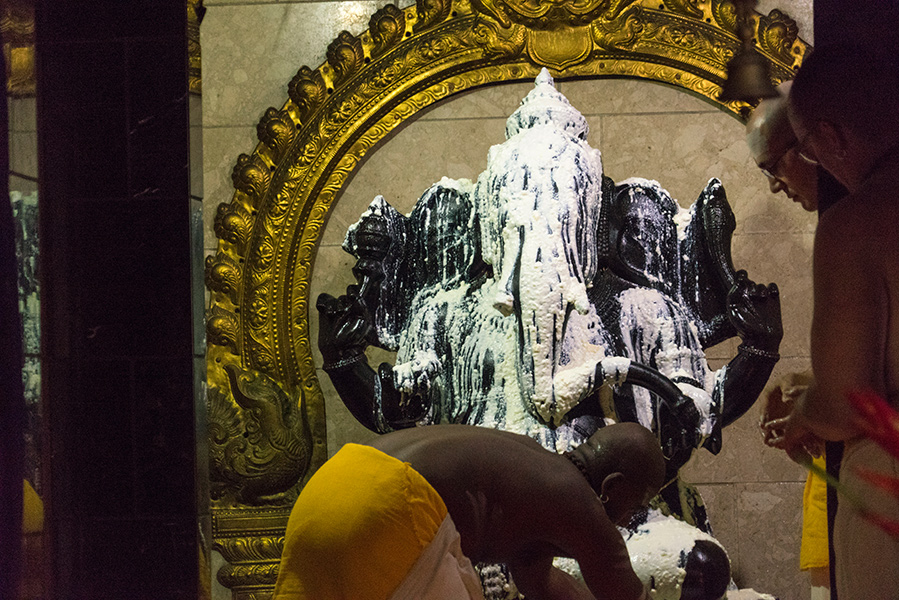
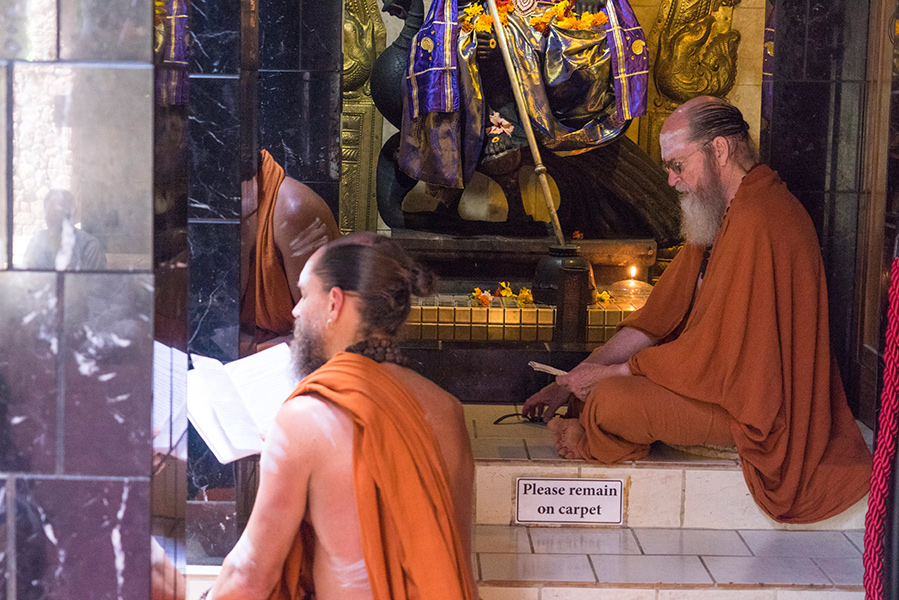
Other monks chant Sri Rudram during the abhishekam.
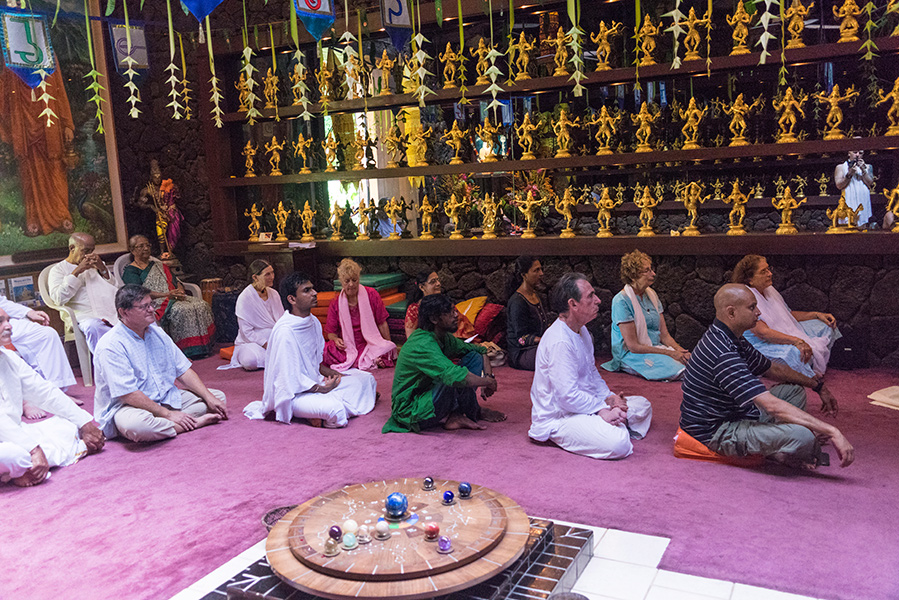
Devotees seek blessings and upliftment in the form of Lord Ganesha\
s thick, sweet darshan.'
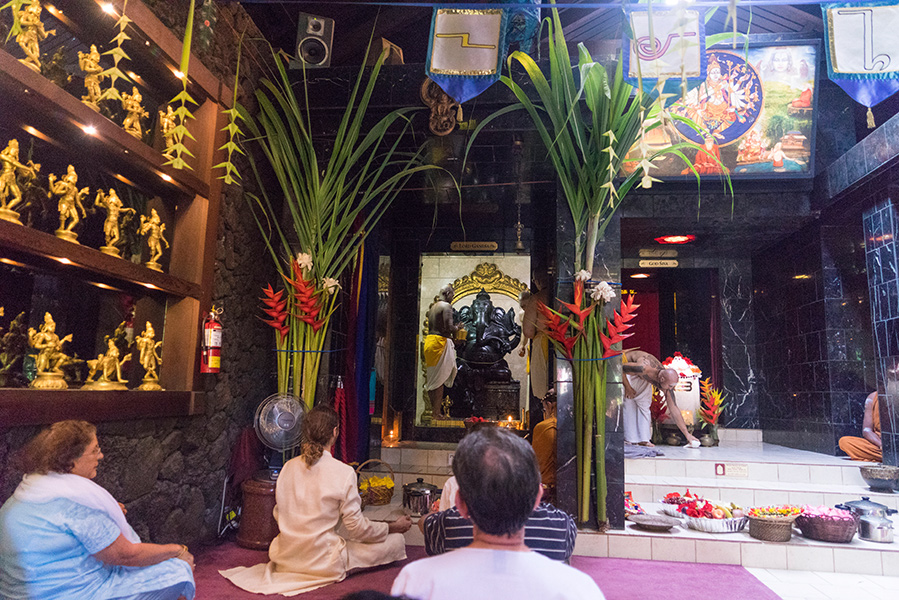
Our local mission adorned the pillars before His shrine with freshly cut sugar cane bows. In Living with Siva, Gurudeva says, \"A mountaintop represents Lord Siva; a hill represents Lord Murugan, and sugar cane fields represent Lord Ganesha.\"
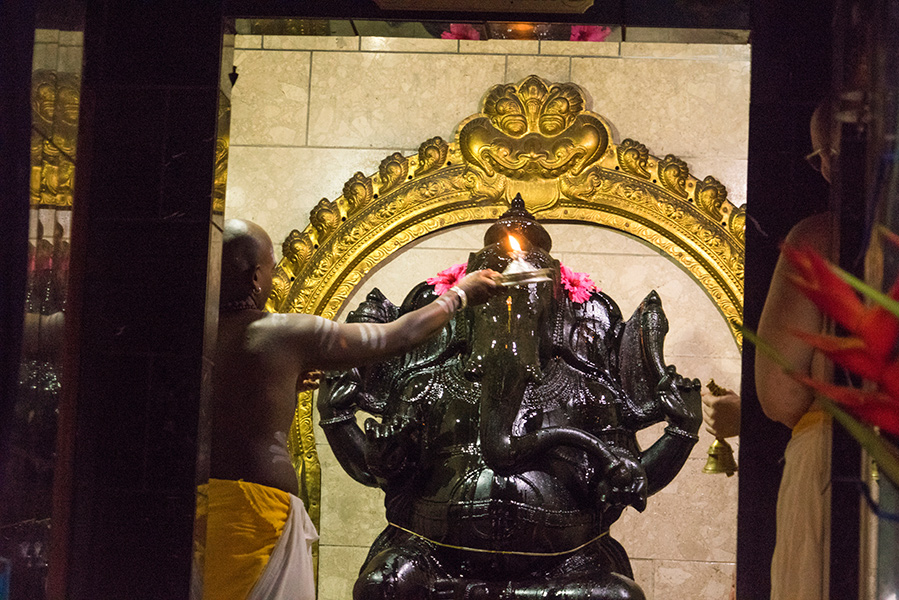
Offering arati after honey ablutions.
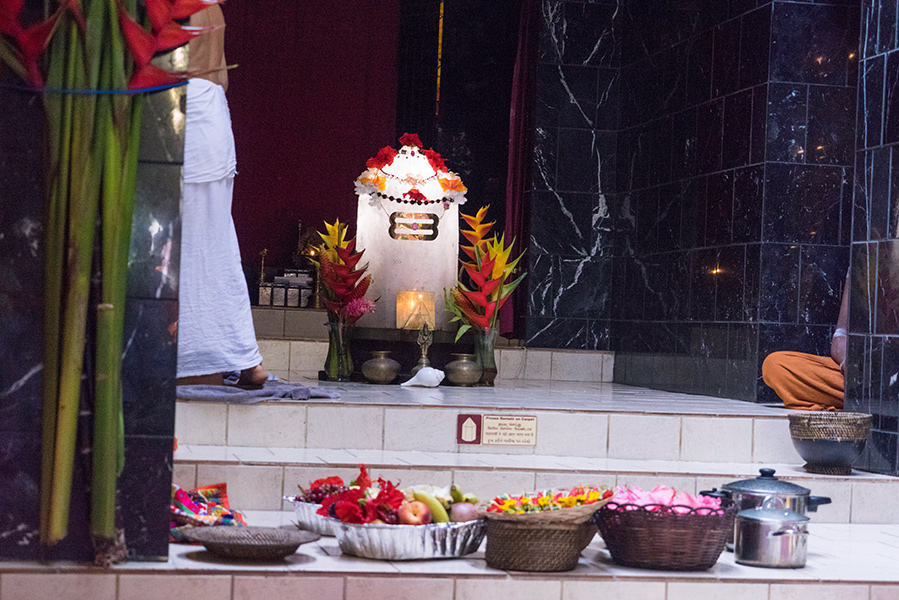
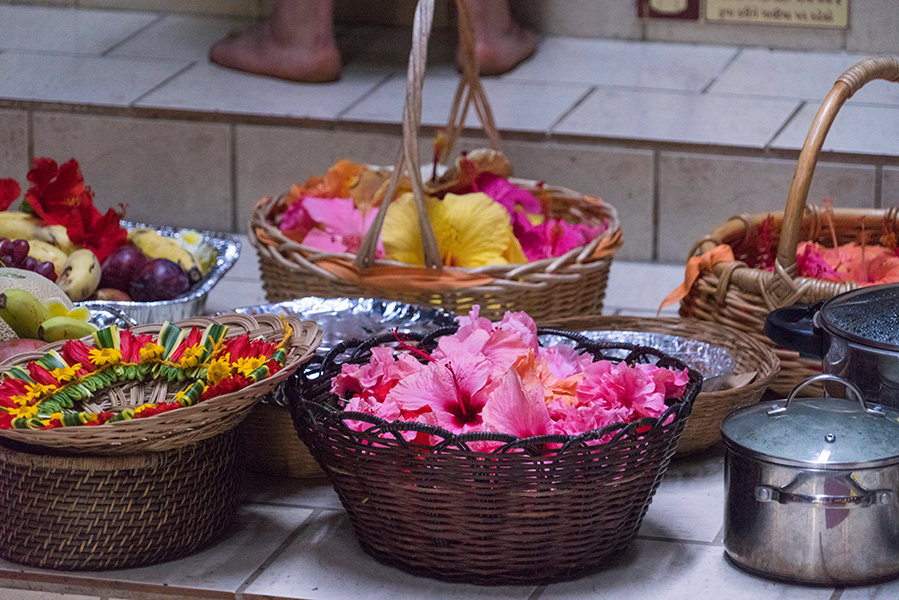
Offerings of fresh fruits, flowers, and lovingly-cooked prasadam.
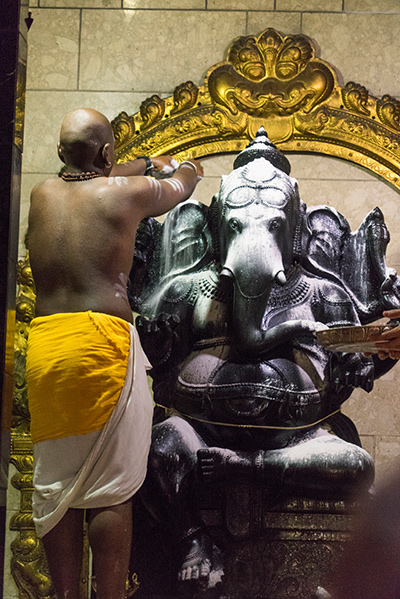
Vibhuti abhishekam.
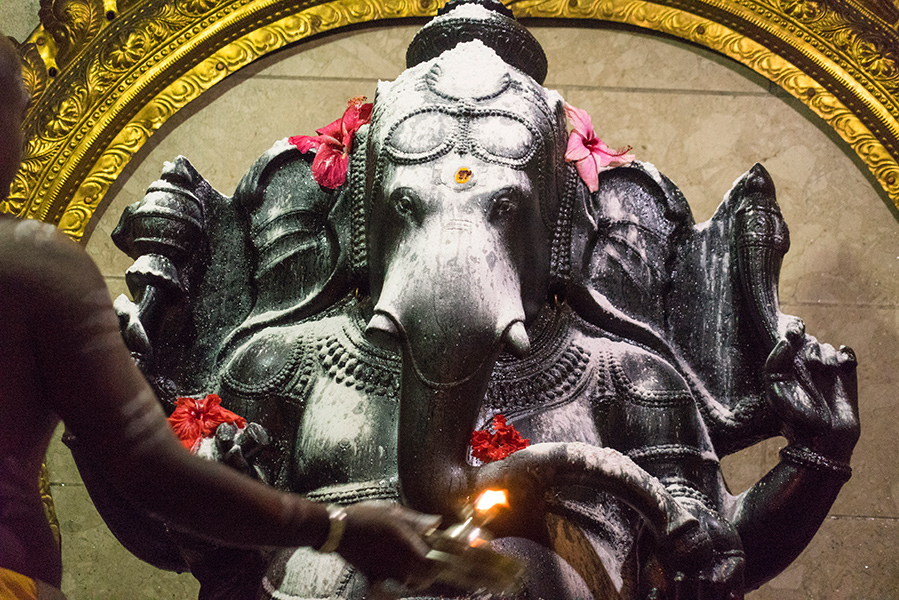
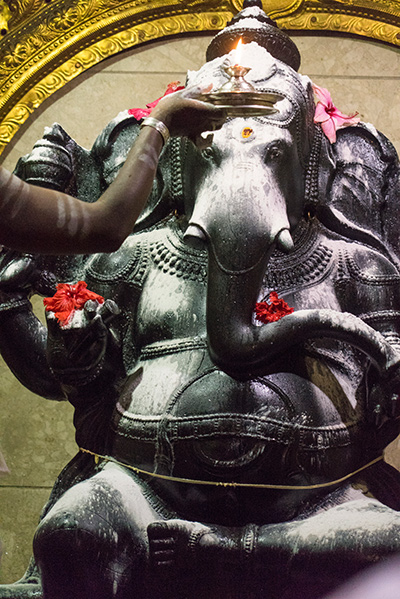
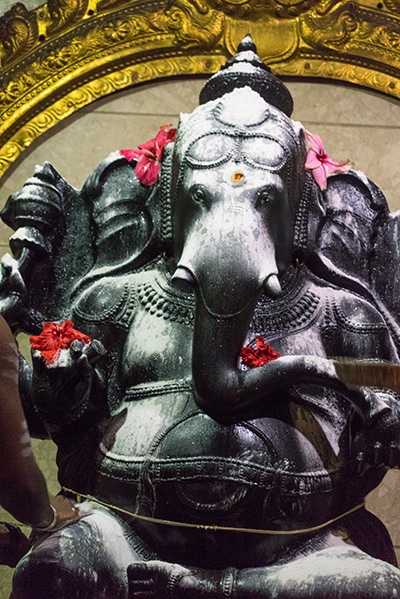
After being offered, the vibhuti is collected and then distributed to devotees as prasadam. The vibhuti that was on Lord Ganesha is now on you!
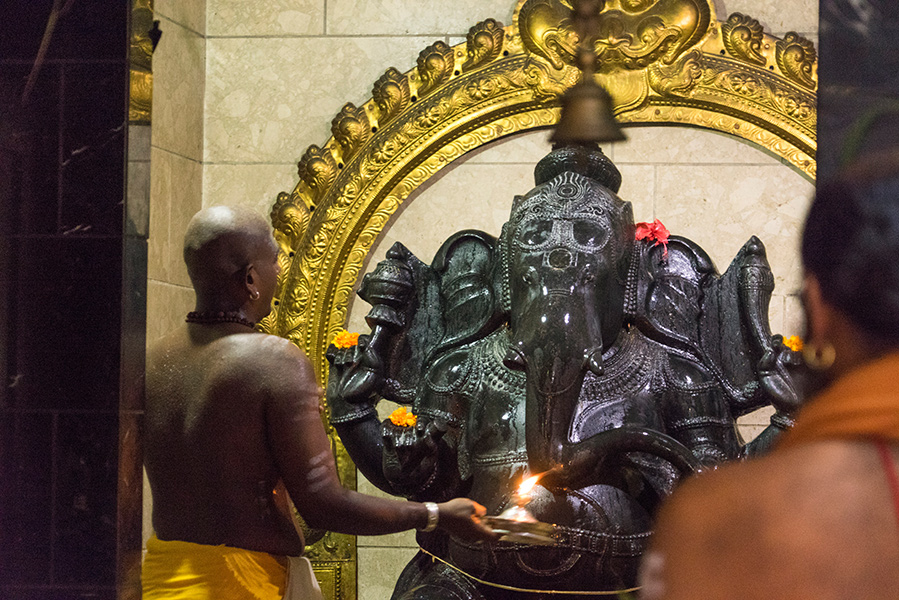
The final kumbha full of rosewater is offered, flowers are placed, and arati is shown. The temple resounds with the powerful invocation of Our Elephant Faced Lord as Natyam works hard to culiminate this meaningful puja.
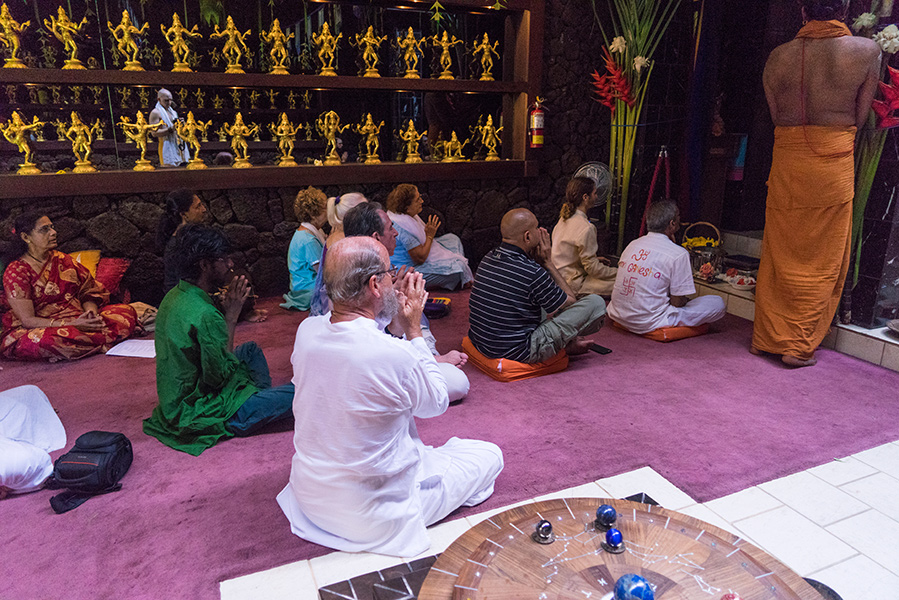
Om Sri Mahaganapataye Namah!
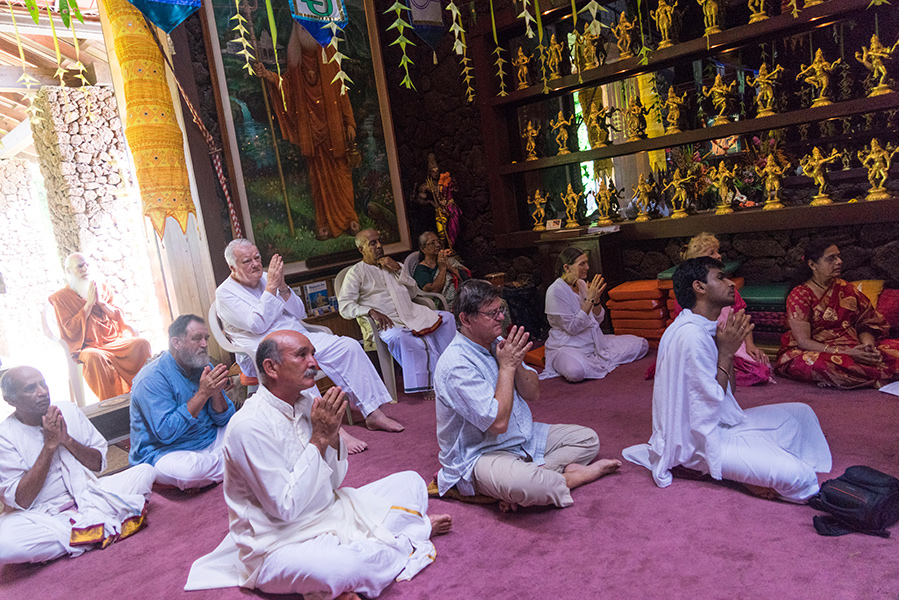
Om Sri Mahaganapataye Namah!
Now the curtain is closed while Our Big Bellied Lord gets cleaned up, pampered, dressed and gussied up by the monks. He awaits His sweet and savory foods. We don\
t want to keep Him waiting, so we work to finish quickly.'
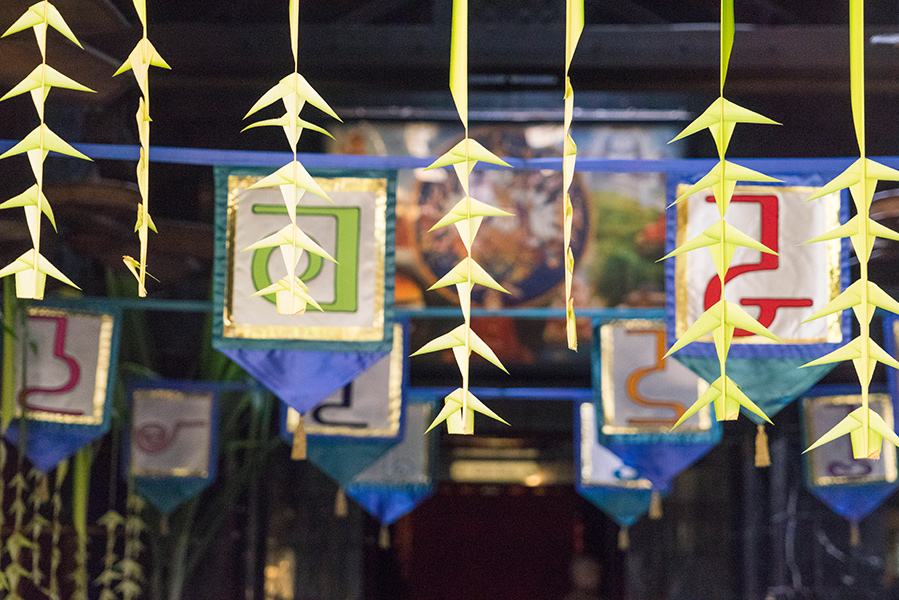
Toranam made of tender palm fronds and mango leaves festoon the temple. Banners depicting the first 18 letters of Gurudeva\
s Shum language are also hung.'
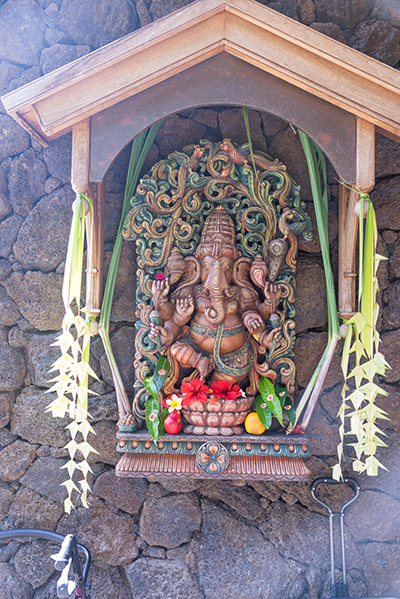
Outside, Ganesha is shown as Nrtya Ganapati, or Dancing Ganapati.
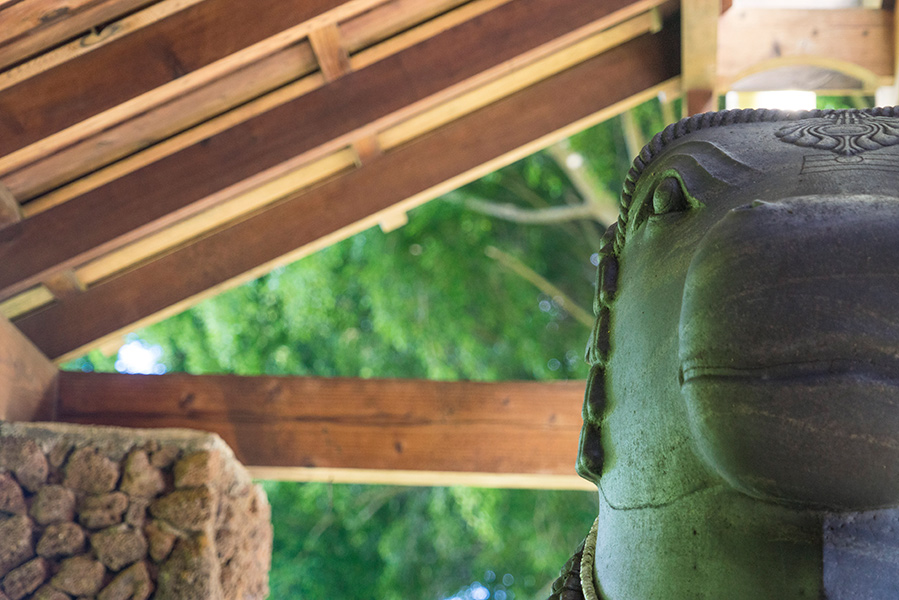
Glowing in green from the sun reflecting off nearby vegetation, Nandi contently rests while ever gazing at his Loving Lord Nataraja, resting after just having delivered Him to His temple.
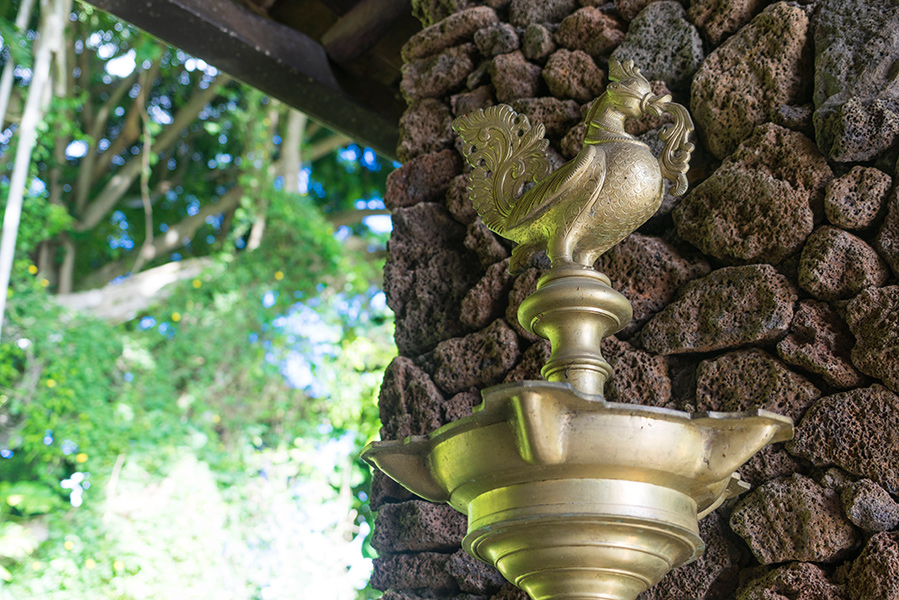
One of two very large kutthuvilakku at the temple\
s entrance.'
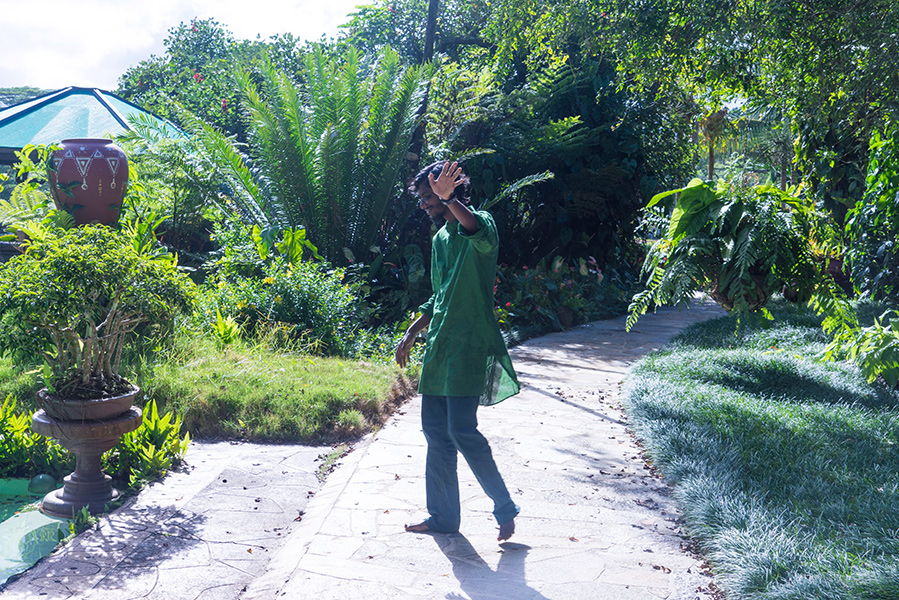
\"Please, no photos,\" says Kodiswara. Only the really talented celebrities don\
t want their photos taken.'
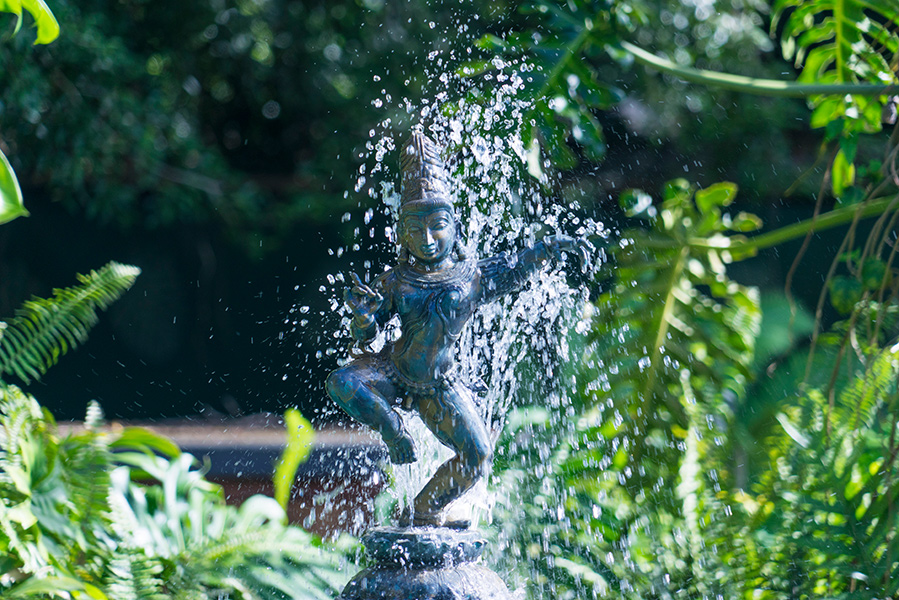
Thirugnanasambandar dances care free in the cool waters of the temple tank.
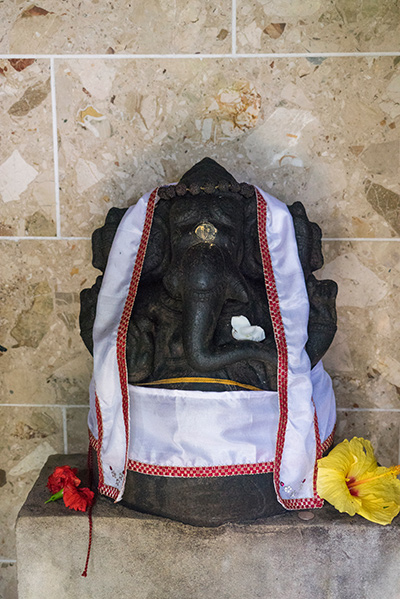
On the side of the temple\
s exterior is a parivara (side shrine Deity) of Lord Ganesha in the form of Mukkuruni Pillaiyar. This is the most common form throughout Tamil Nadu. Google image search \"madurai mukkuruni vinayagar\" to see Him in His truly massive form at Madurai Meenakshi Amman Kovil in Madurai, India. Our cute little Mukkuruni Vinayagar receives daily abhishekam and puja after the 3PM Ganesha puja inside the temple.'
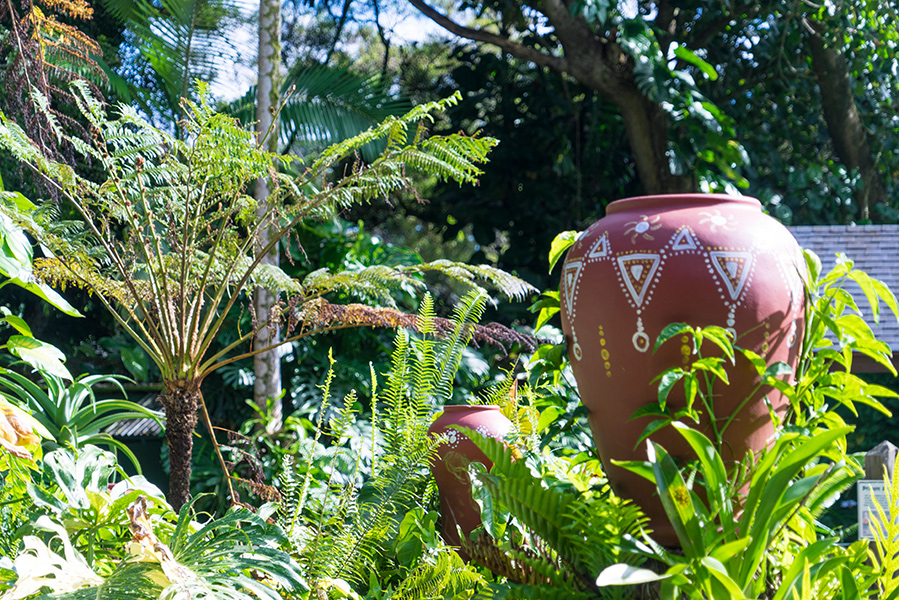
Painted decorative pots dot the landscape around the temple and front part of the monastery.
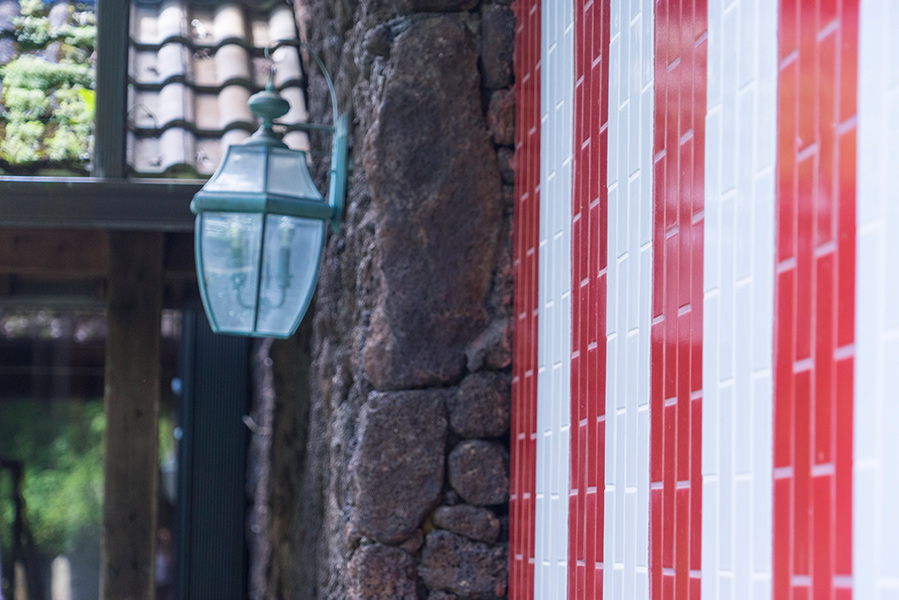
The classic red and white stripes seen on temples all over Tamil Nadu are here on Kadavul Temple, too. Usually painted, Gurudeva knew the wisdom of using colored tile in our climate. Paint would mold, crack, peel and discolor with all of our rain, humidity, and sun too often for us to keep up with. White is Siva, red is Sakti.
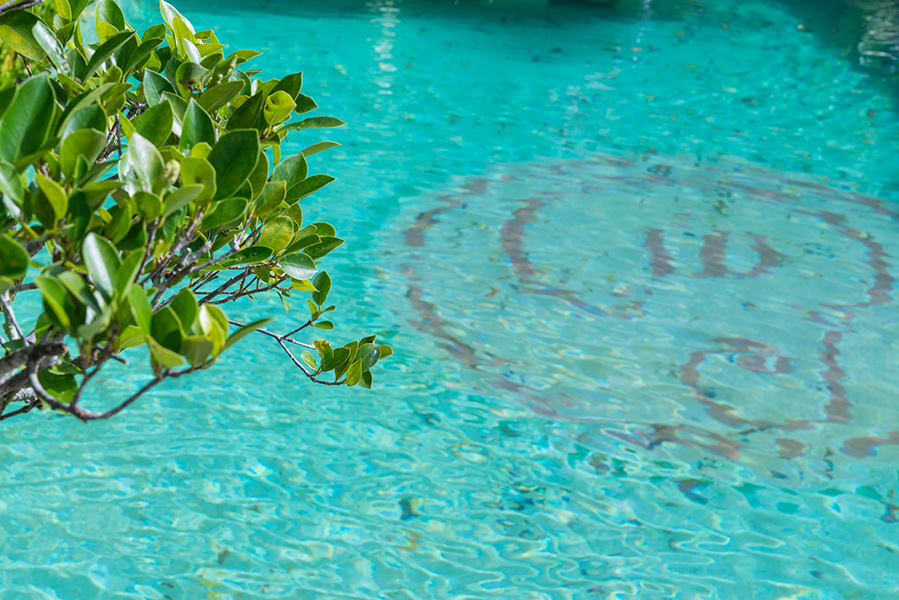
Our temple tank, with it\
s painted Omkaram in Tamil on the bottom, and a potted bonsai in the foreground. '
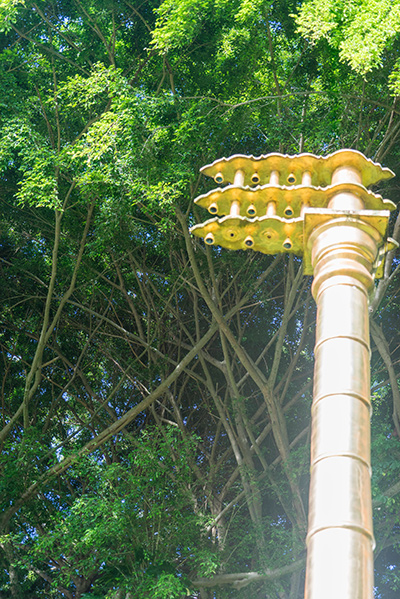
Kadavul Temple\
s kodimaram or dwajasthamba. You can\'t see him from this angle, but there\'s a little Nandi vahanam sitting way up top there.'
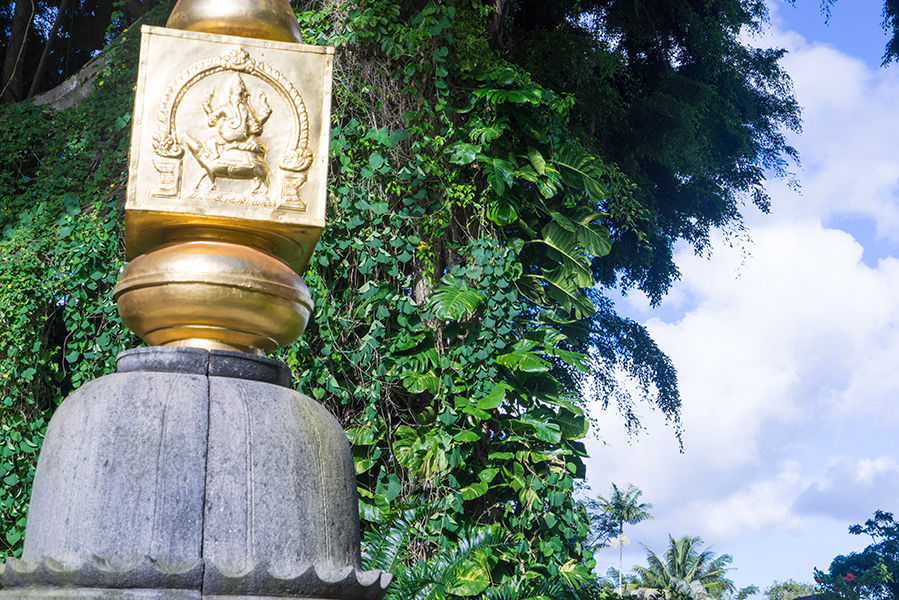
At the kodimaram\
s base are several engravings. On this side is Lord Ganesha seated on mushika vahanam. On the opposite side is Lord Murugan seated on mayil vahanam. On the remaining two sides are Lord Siva seated on Nandi vahanam and the Trisoolam.'
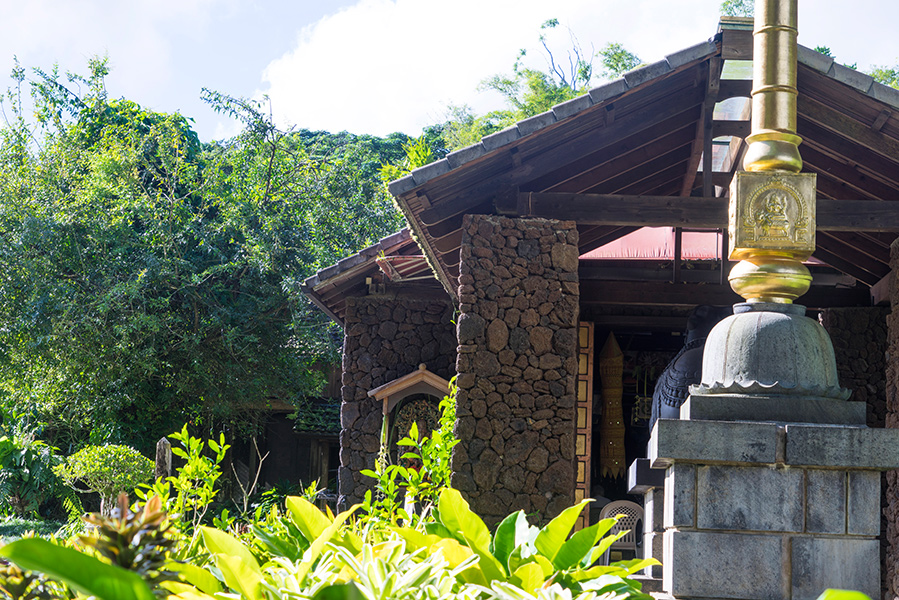
When the weather is agreeable, this time of day (late afternoon) is so beautiful. In the left of this photo is the temple\
s bilva tree.'
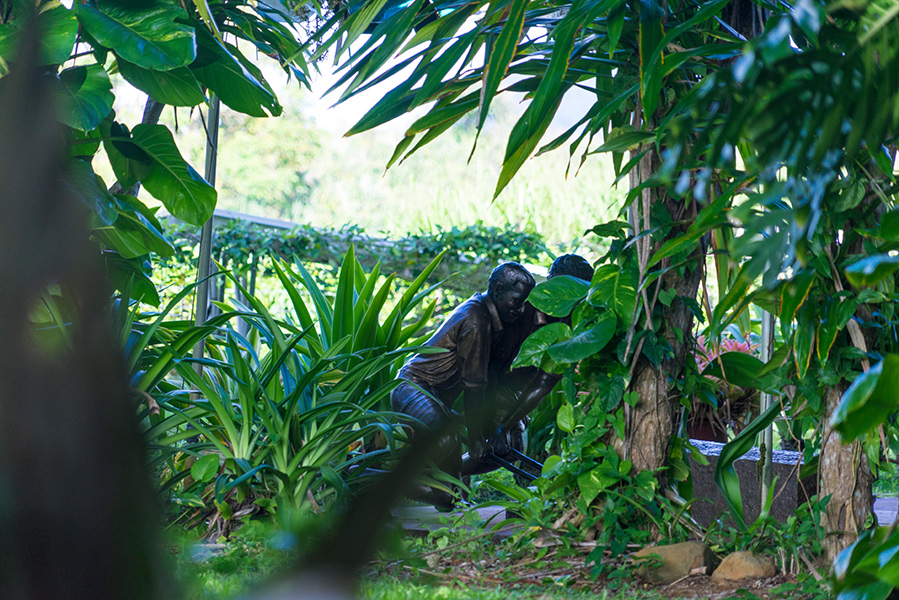
What\
s this? Are those silpis *still* trying to move that stone?'
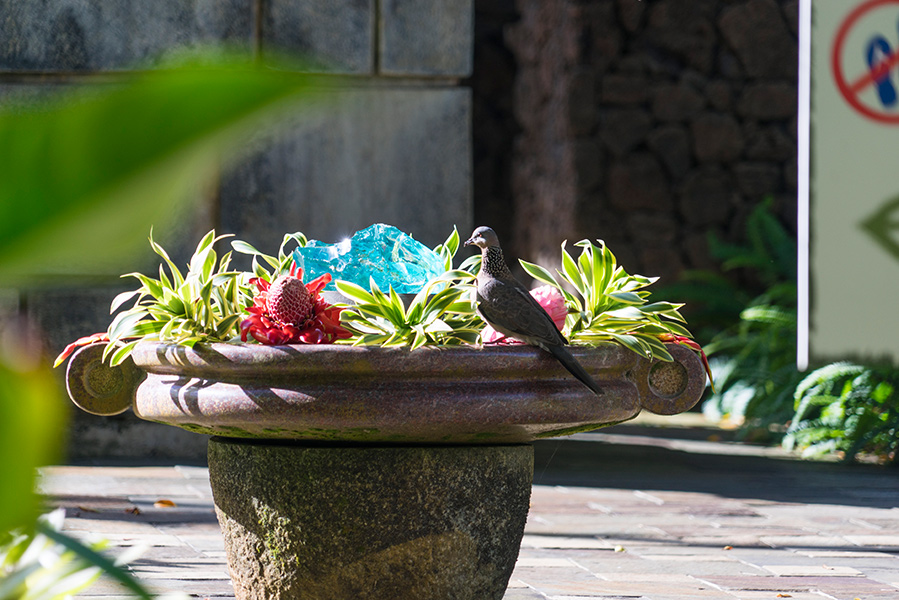
The temple hosts a small (nor not so small) community of birds, mostly common doves and pigeons.
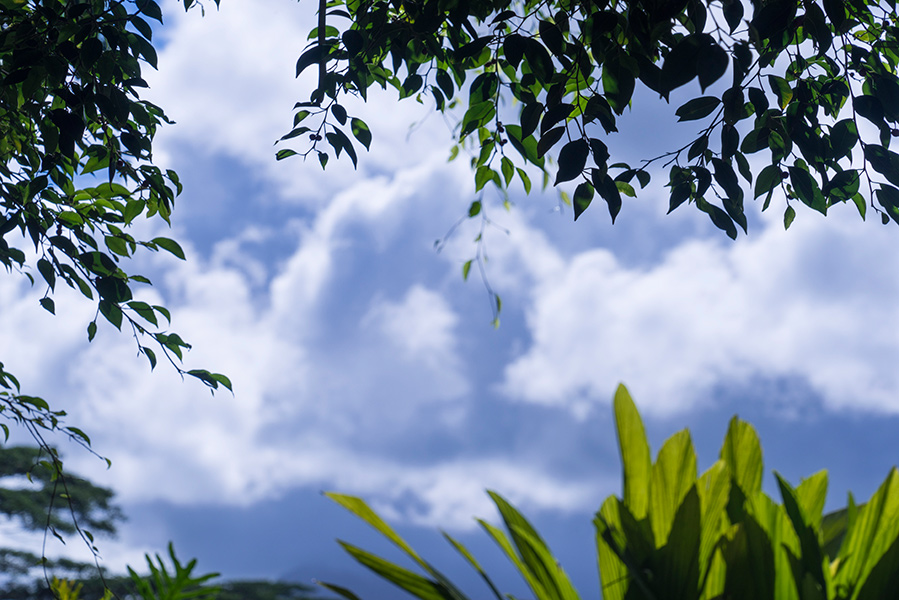
Looking up through the leaves of a banyan tree, our photographer admires that thin blue layer separating our atmosphere from outer space.
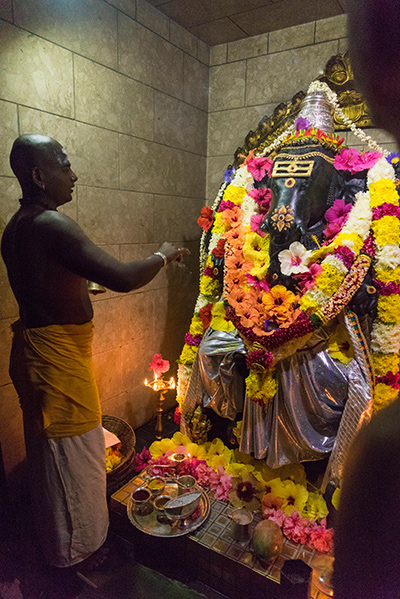
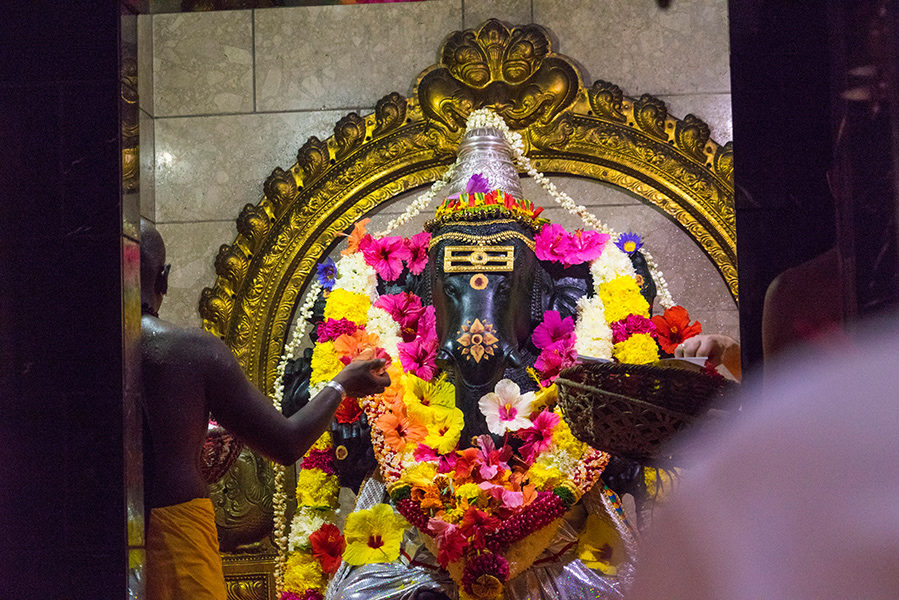
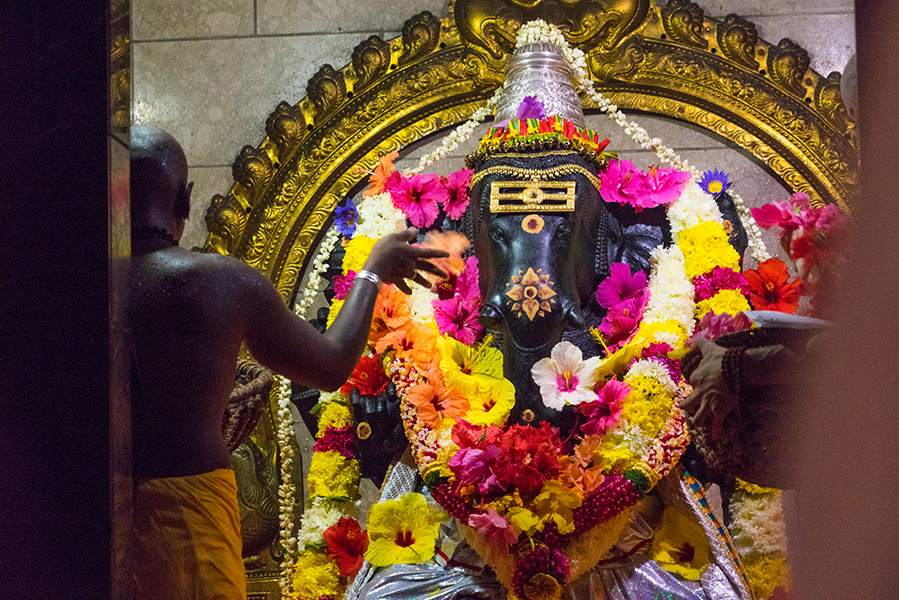
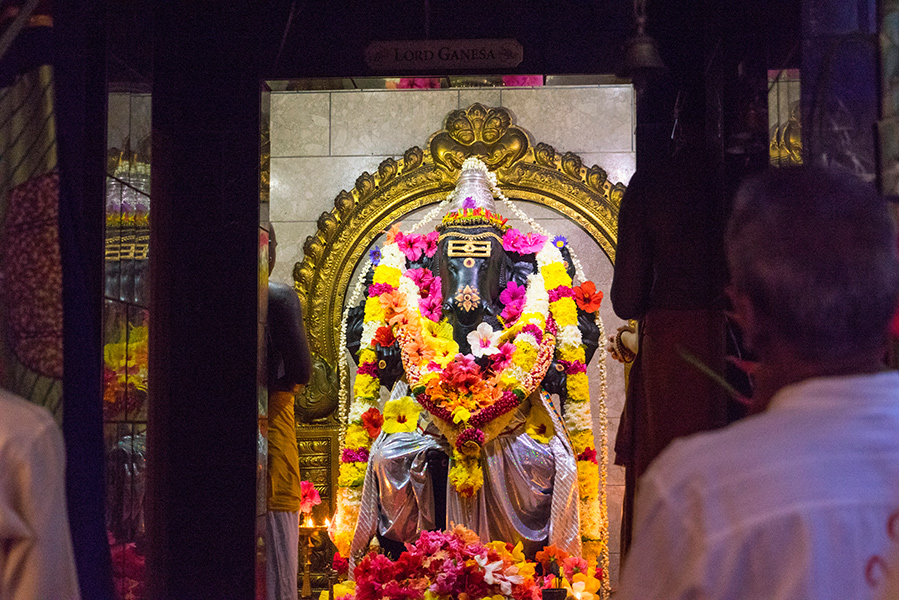
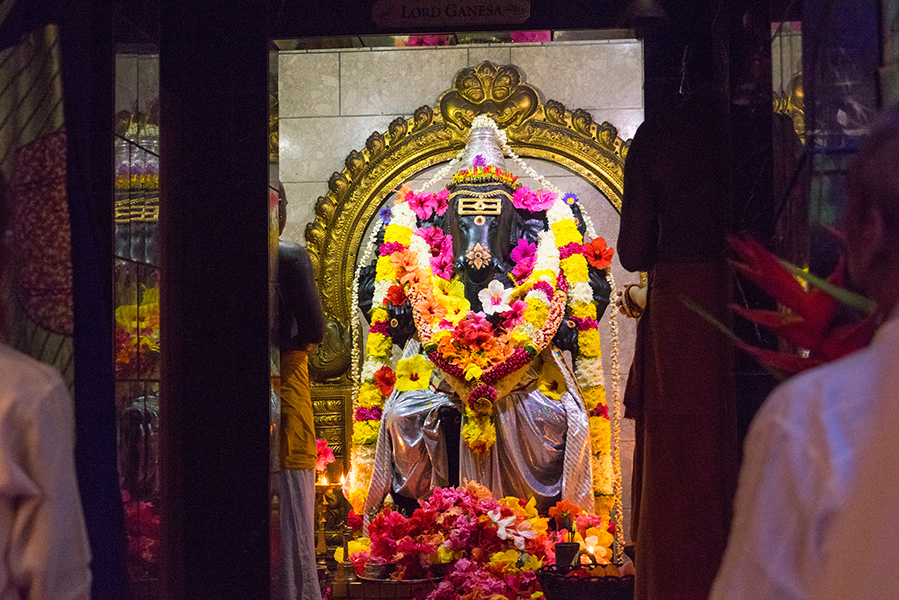
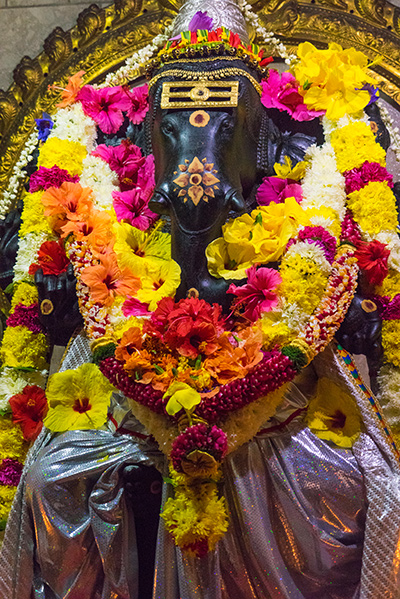
Back in the temple! Lord Vinayagar is dressed and ready for his close up. First, dhoopam is offered.
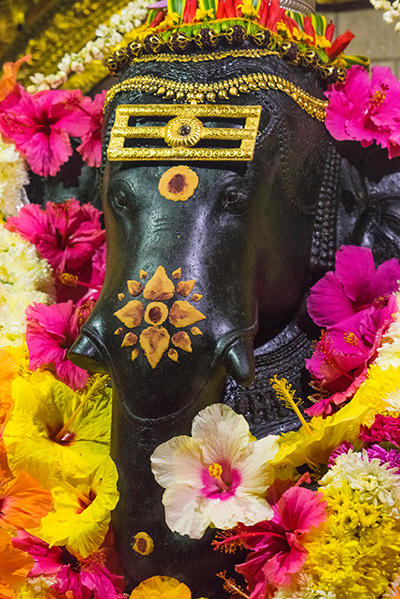
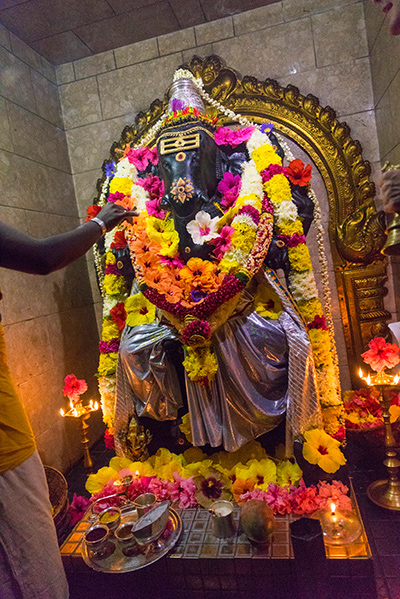
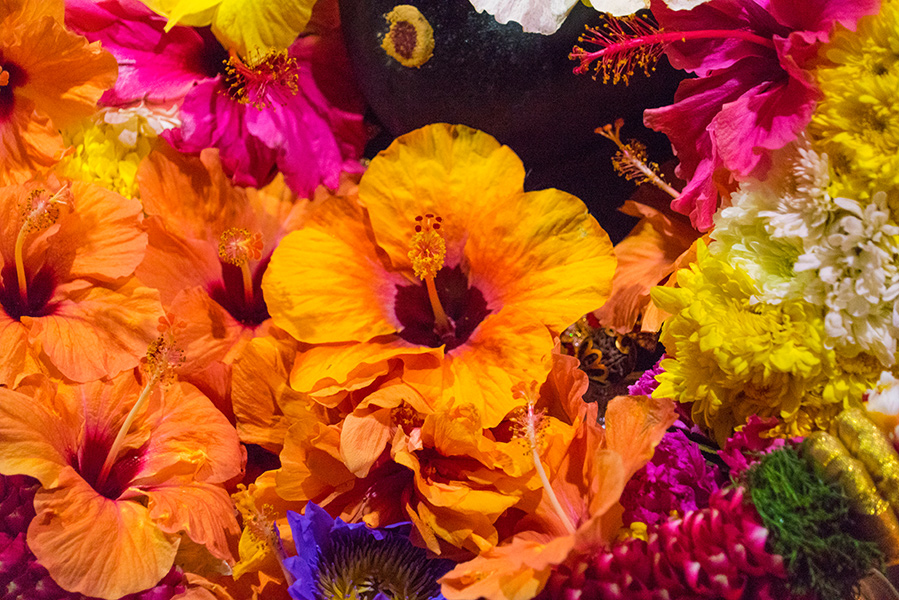
Hibiscus grow in abundance on Kauai. It\
s impossible to have too many, and they bloom year round.'
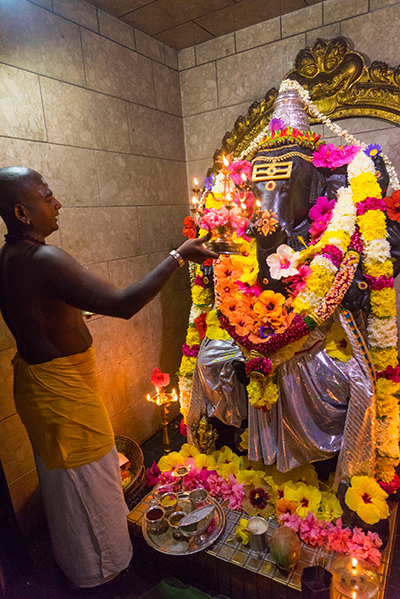
Alankara deepam.
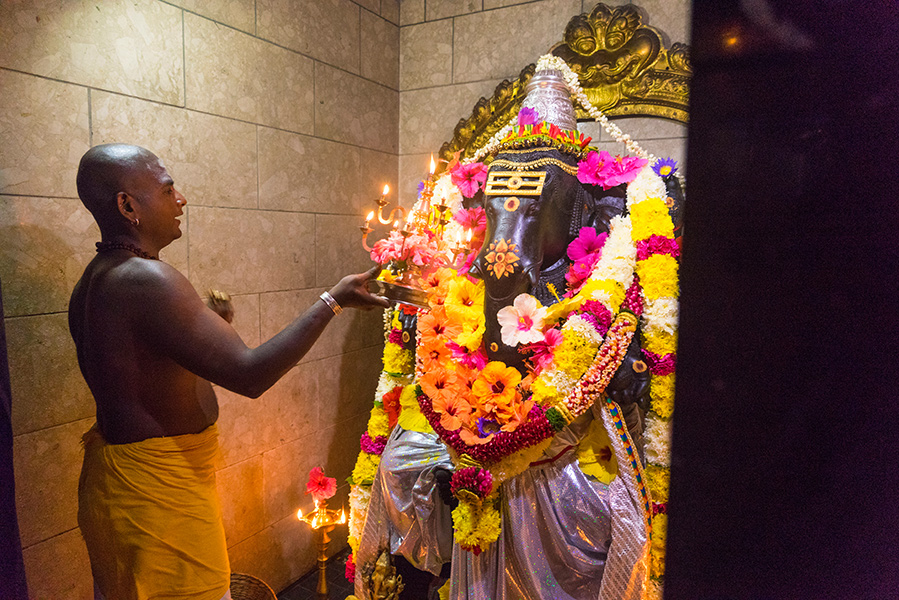
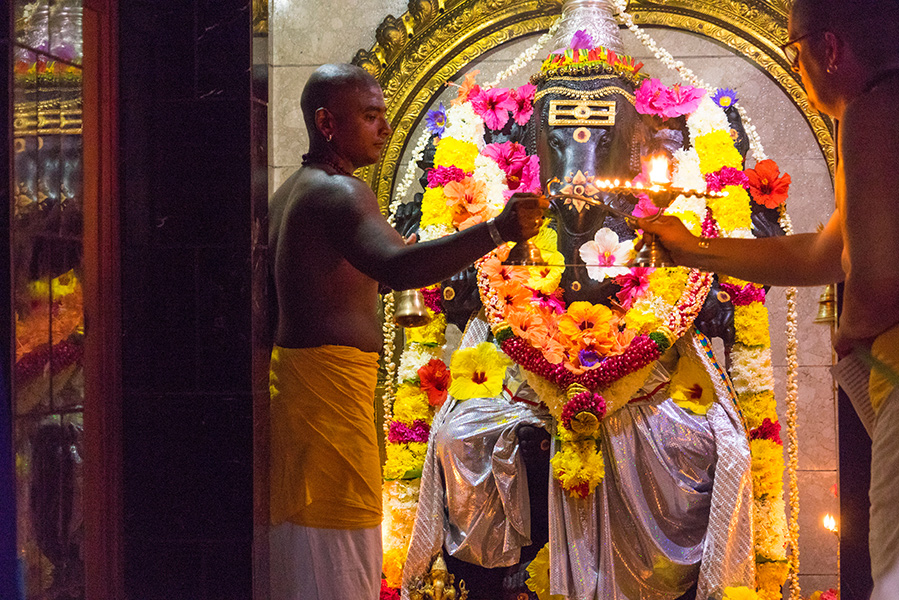
Nakshatra deepam. So called due to it\
s 27 individual lit wicks. There are 27 nakshatras.'
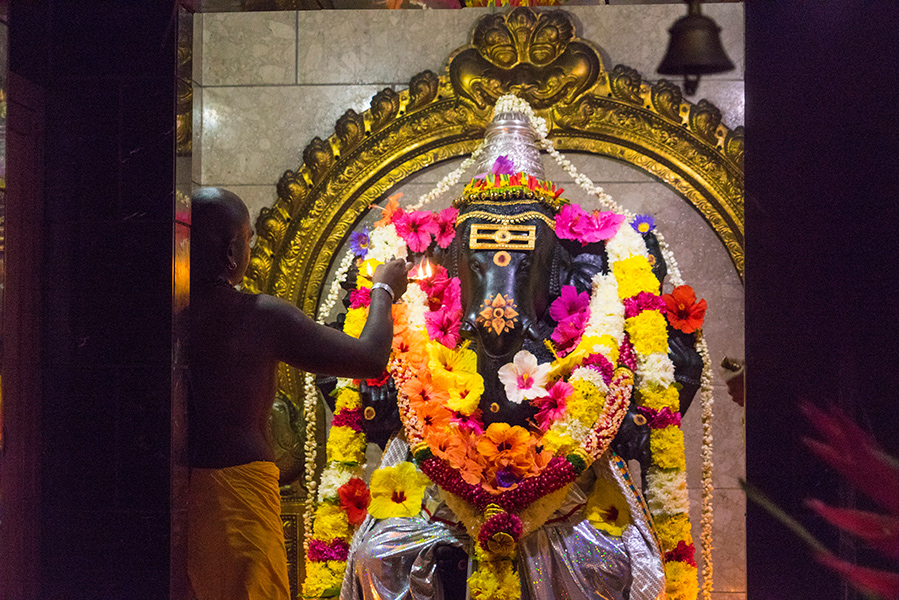
Naga deepam.
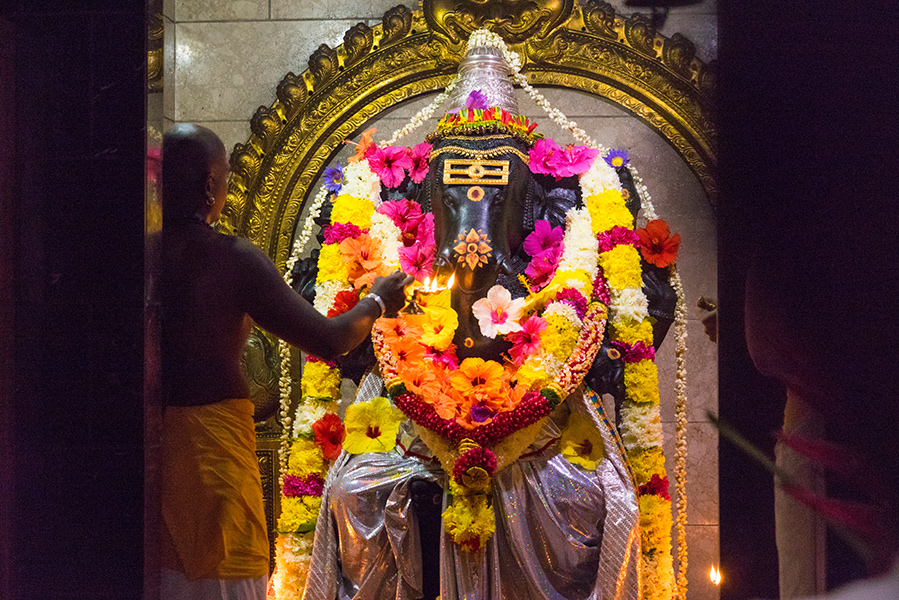
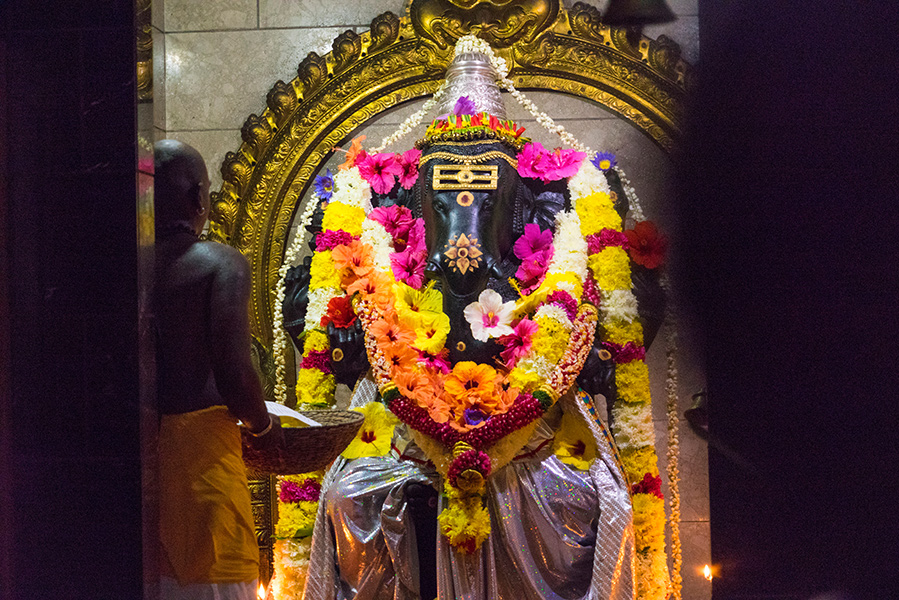
Archana of Lord Vighneswara\
s 108 names.'
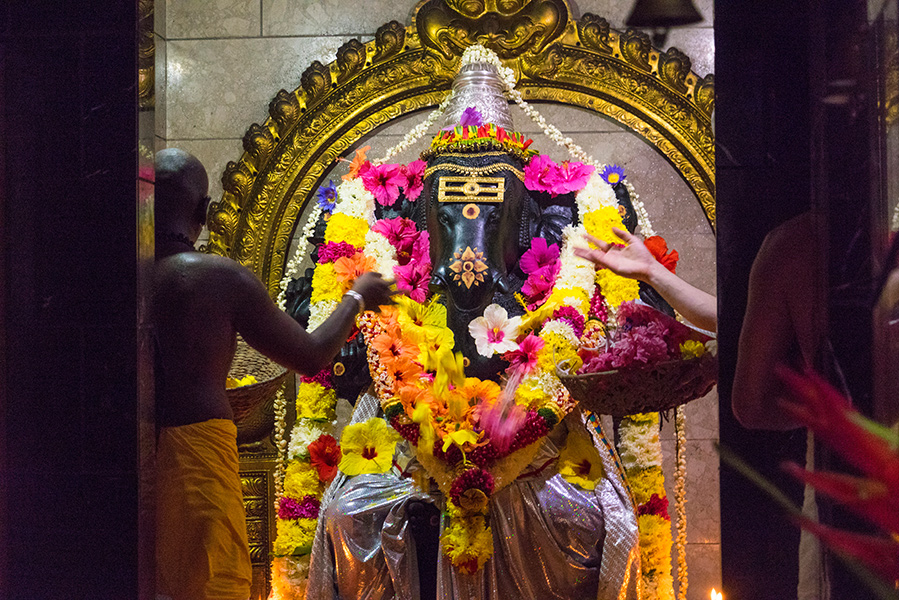
He who removes obstalces, He who loves wisdom, He who grants boons...
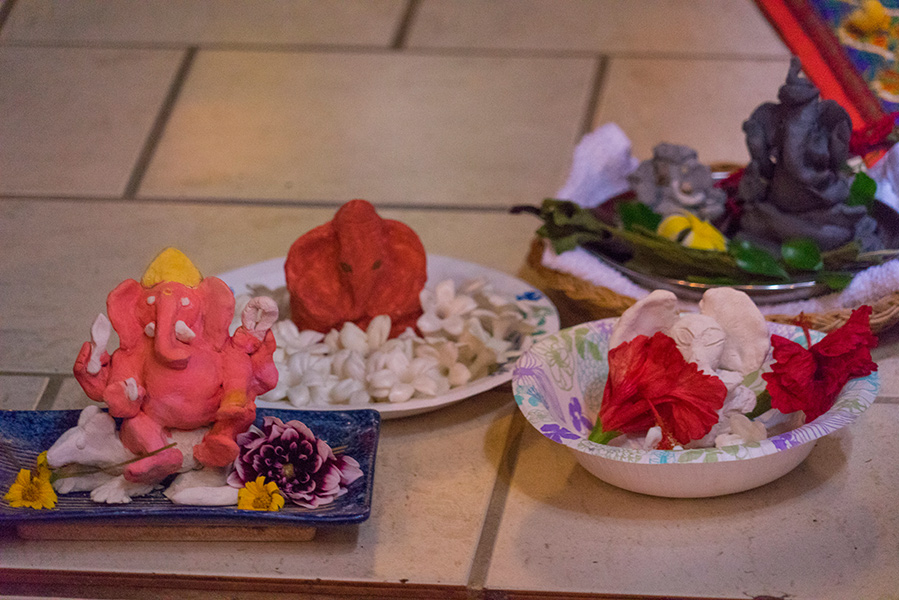
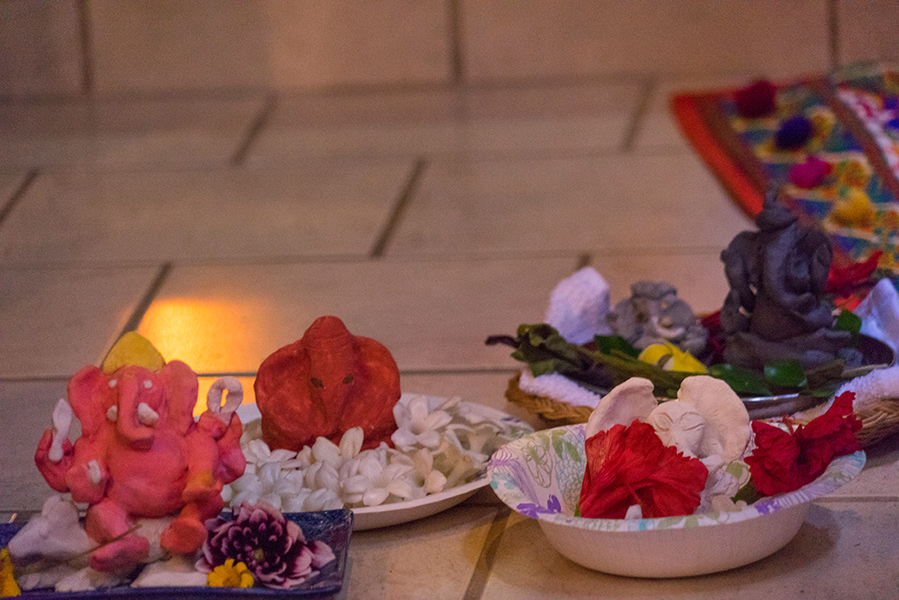
Adorable and loving made clay Ganeshas waiting for their visarjana.
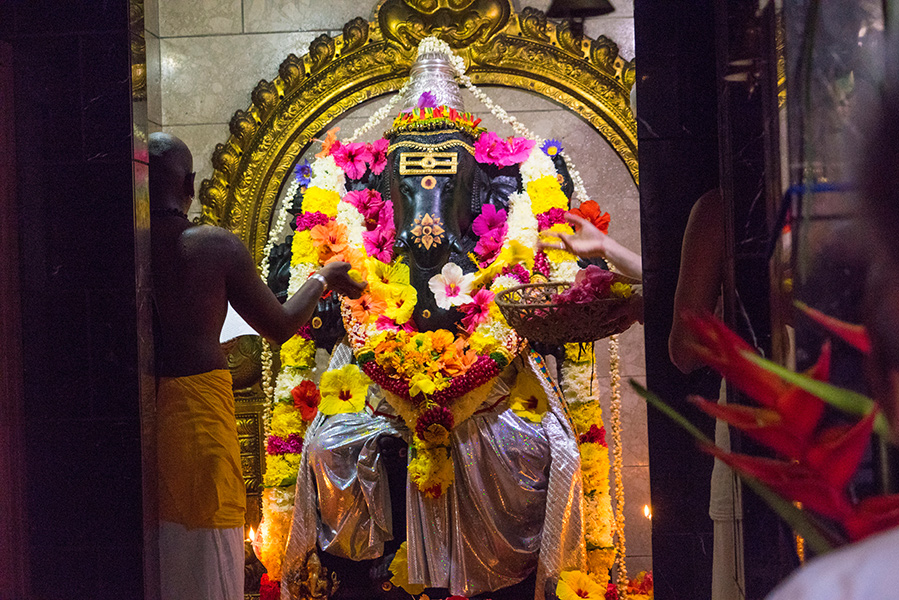
, He whose form is Satchidananda, He who grants all siddhis, prostrations!
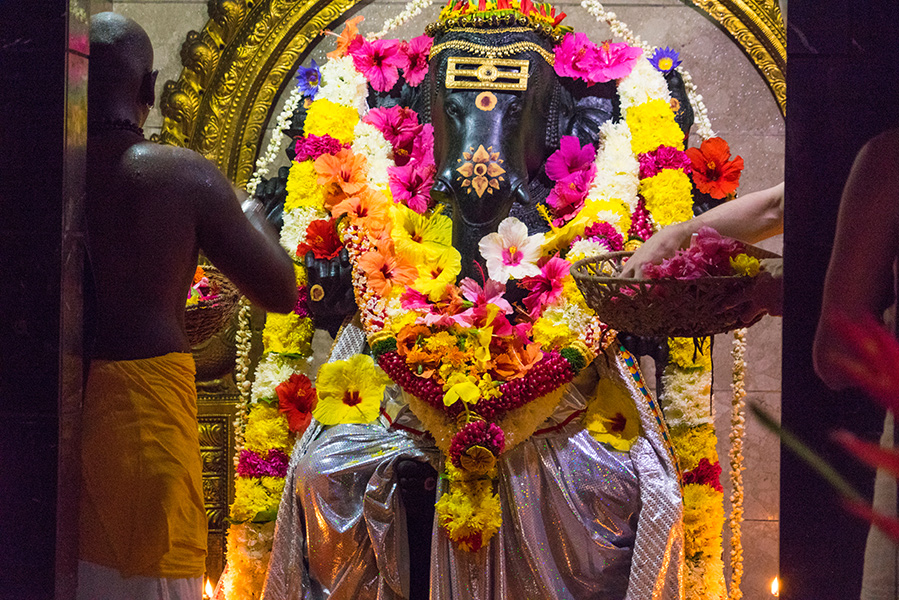
He who is the support of the entire world, He who is peace, He who destroys the results of misdeeds...
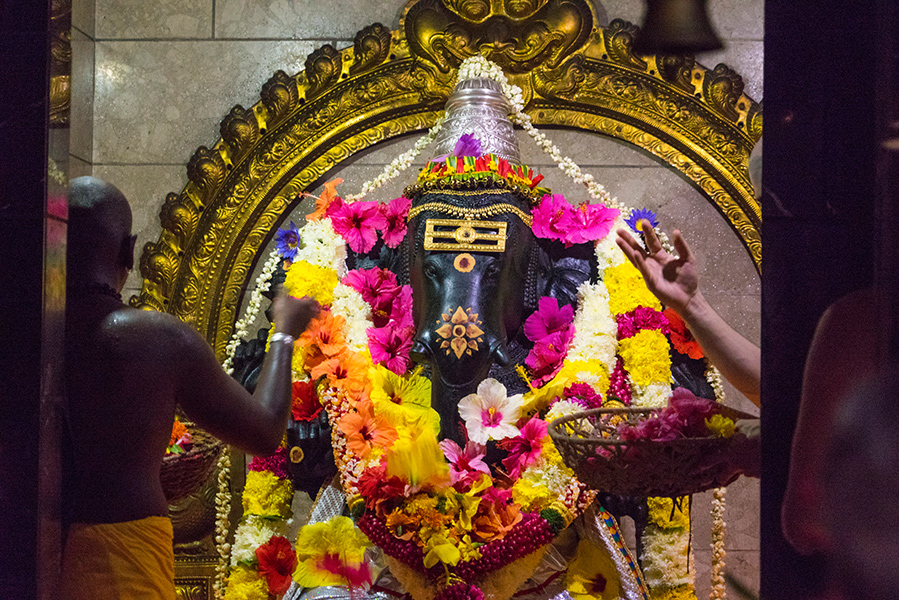
He who loves pomegranates, He who holds the noose and goad, He whose three eyes are sun, moon, and fire...
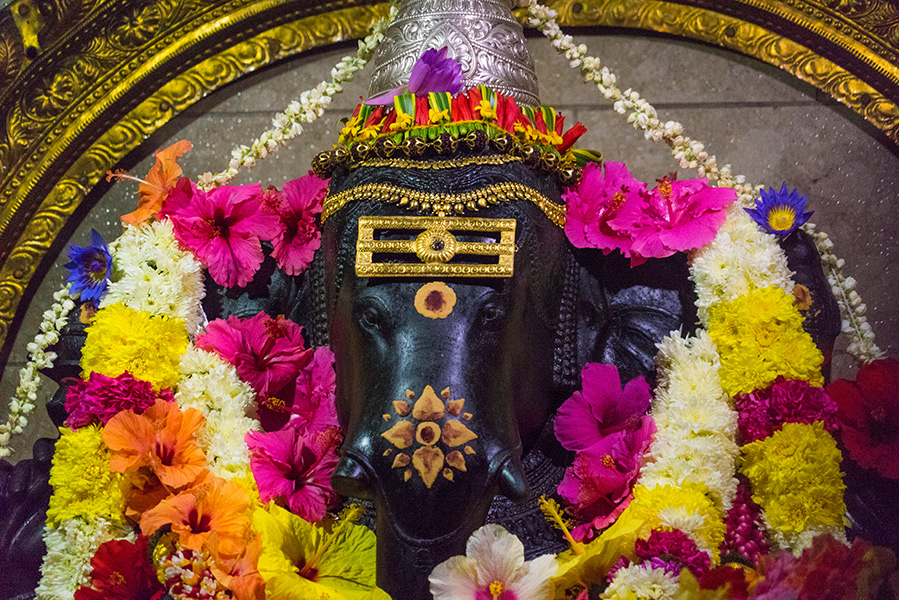
To He who destroys hardships for His devotees, we offer our praise.
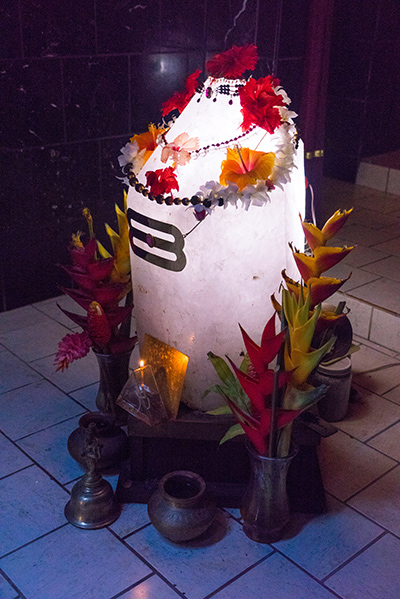
The future moolasthanam (main Deity) of San Marga Iraivan Temple, Mahasphatikamokshalingam
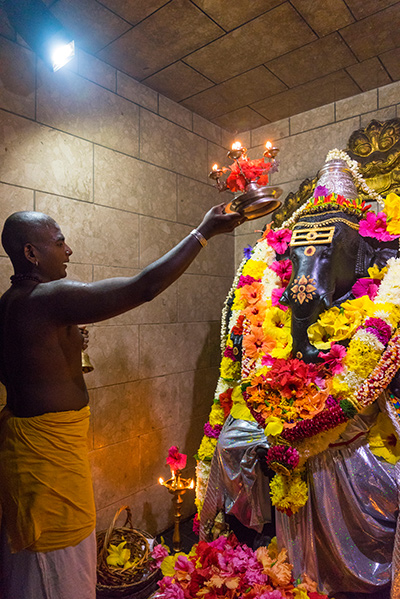
Namo vratapataye, namo ganapataye...
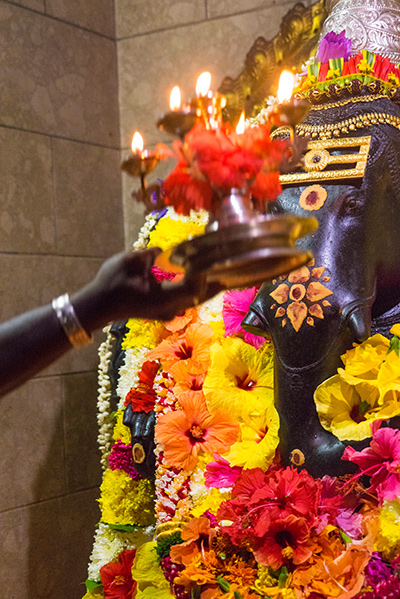
...namah pramathapataye, namaste astu lambodaraya...
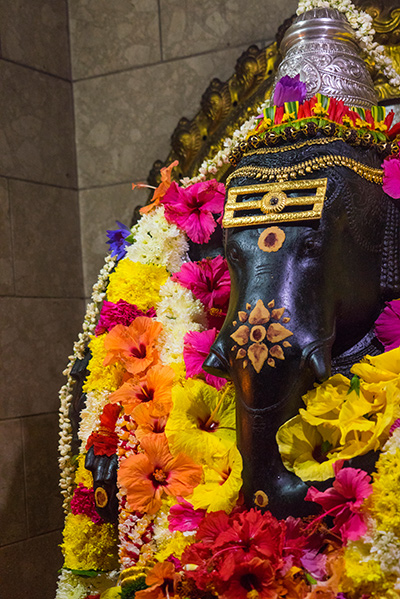
...ekadantaya, vighnavinashine...
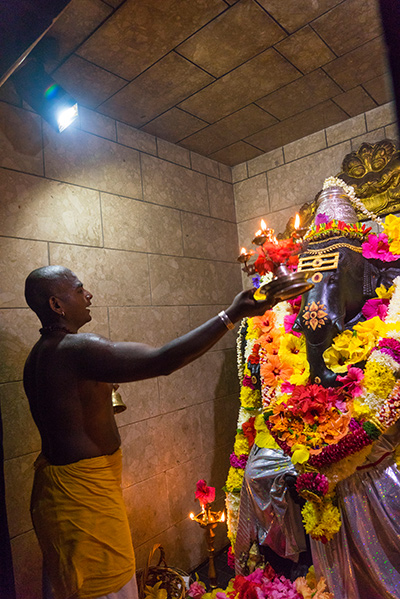
...sivasutaya, sri varadamurtaye namo namah!
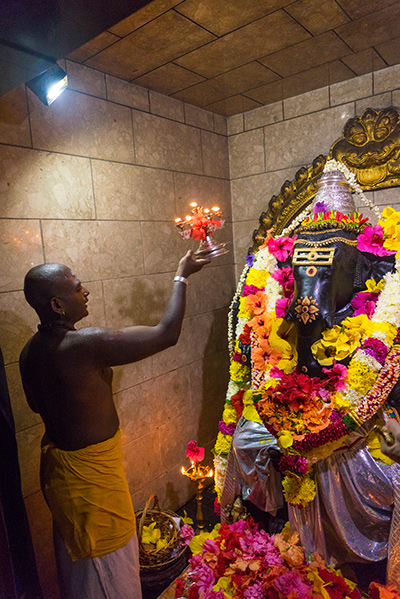
\"He truly binds [Hindus] together in His love. This great God is both the beginning of the Hindu religion and the meeting ground for all its devotees.\"
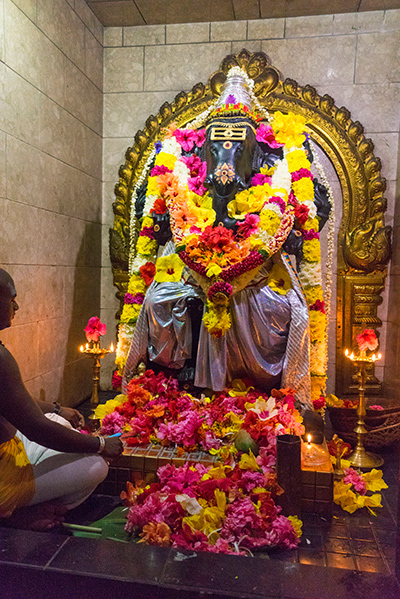
\"And that is only proper, inasmuch as Ganesha is the personification of the material universe. The universe in all of its varied and various magnificent manifestations is nothing but the body of this cheerfully portly God.\"
\"Once the connection is firmly established between the devotee and Ga∫e§a, all of the currents of the devotee\
s mind and body become harmonized. After that strong connection is made, should he falter on the spiritual path, he has gained divine protection.\" -- Gurudeva in \"Loving Ganesa\"'
}
];
transitionSpeed:150});