
Tropical Fruit Growers Conference
October 6, 2016The monks recently attended a day-long meeting of the Tropical Fruit Growers Association which was held on Kauai. Highlights of the day included a lecture on avocado cultivation by an expert from Japan. A quality avocado sells for $10 a piece in Tokyo! He had developed sophisticated pruning and support methods based on the guideline that the tree should be no taller than the owner. One such tree was producing 300 fruits a year. At the back of the room was a table with 75 different tropical fruits grown in Hawaii--the monastery has about 50 of them, and there were at least a dozen we had never seen before.
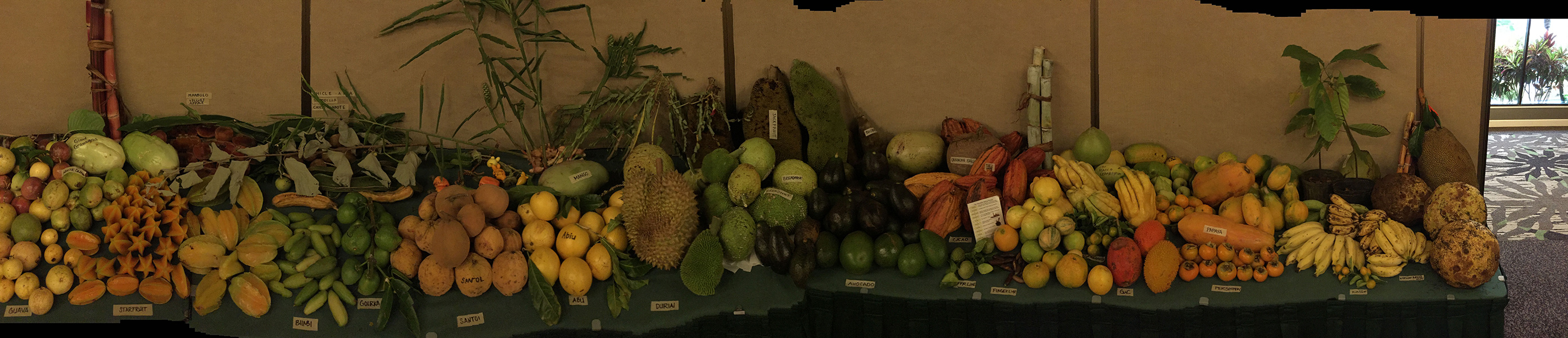
very wide panorama of half the fruit display (mouse left and right)
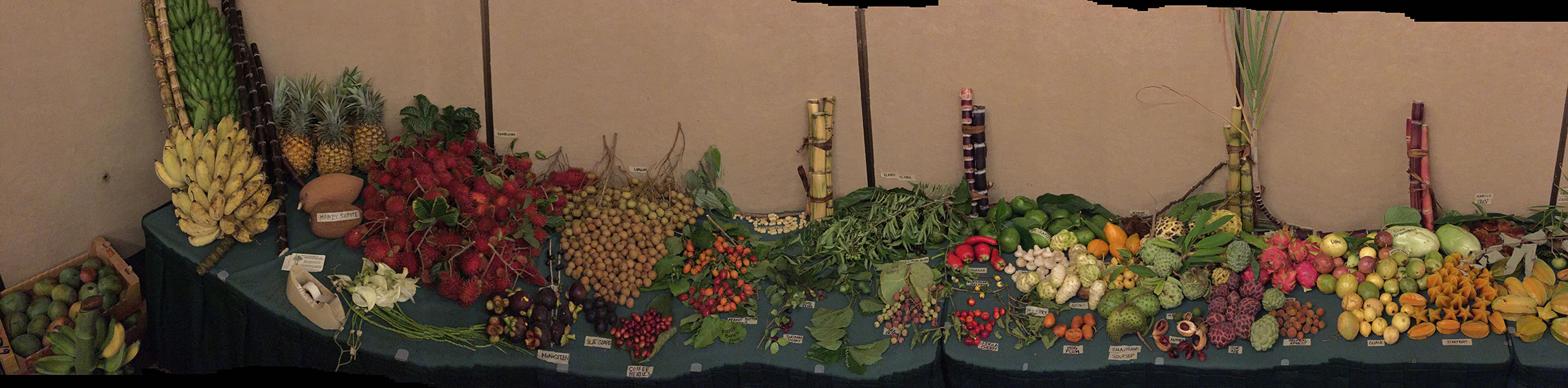
second half of the fruit display--scroll left and right
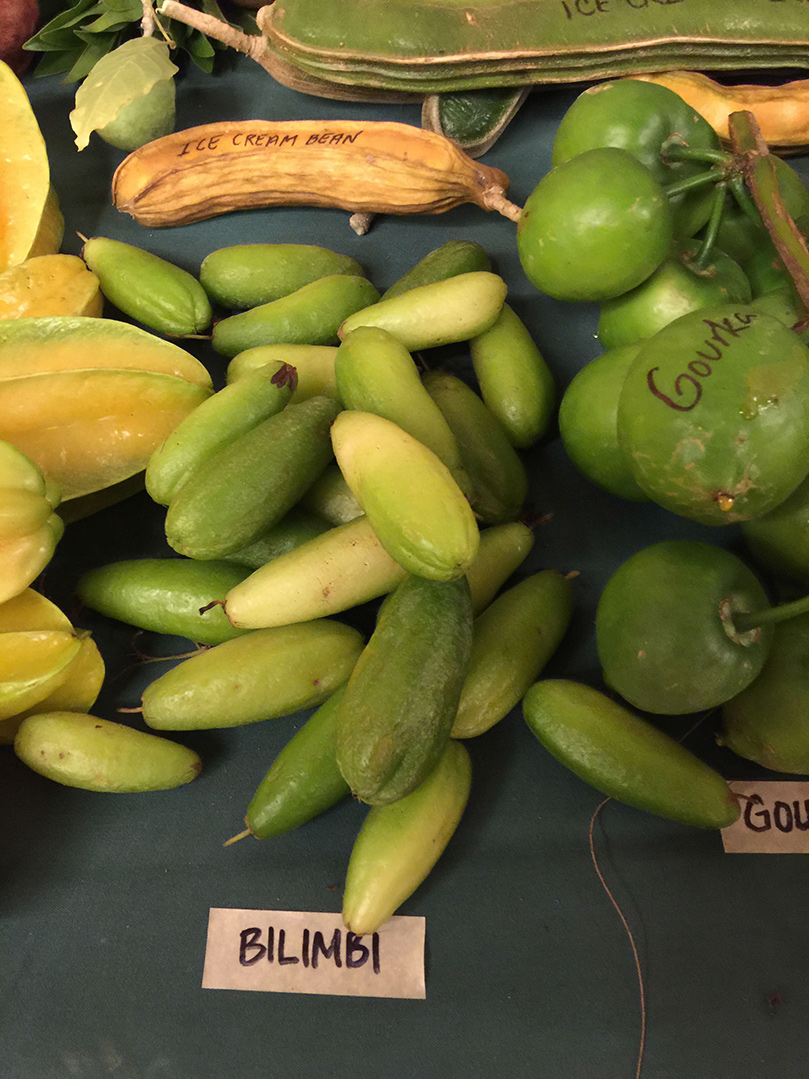
Bilimbi--never heard of it....
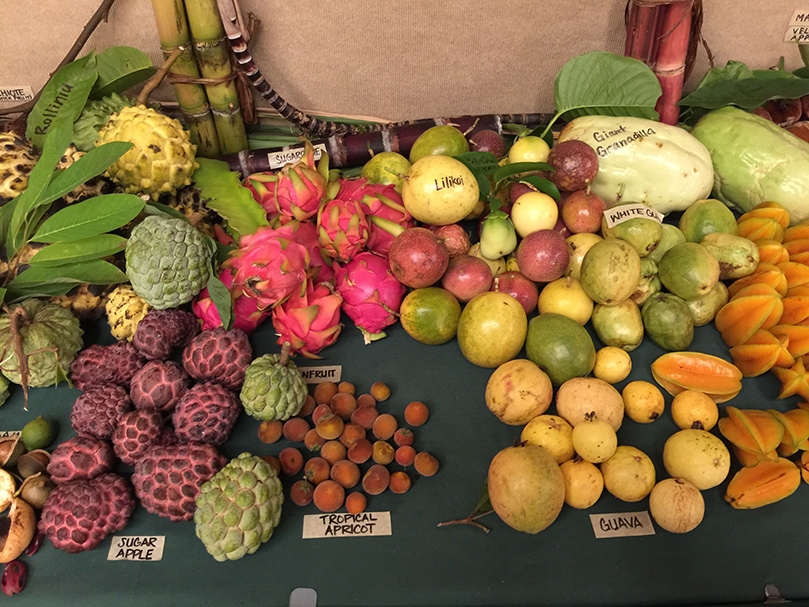
Aadheenam has most of these
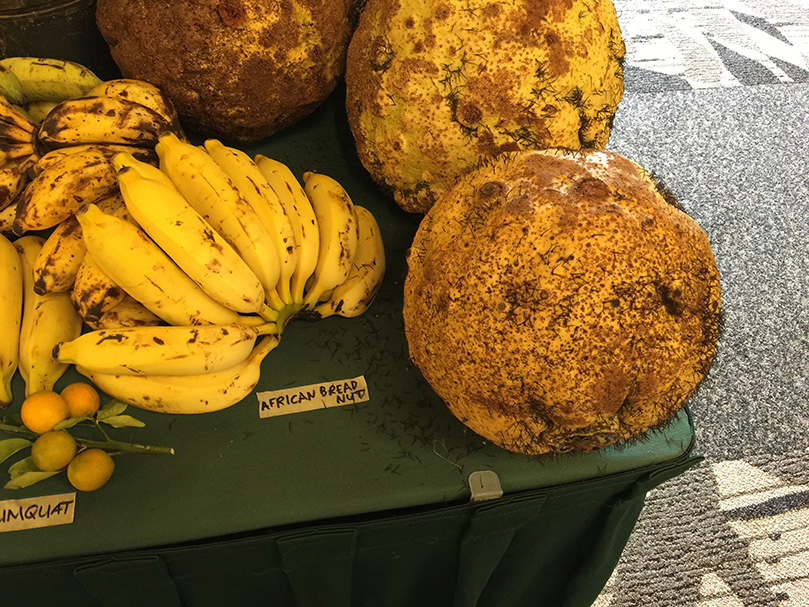
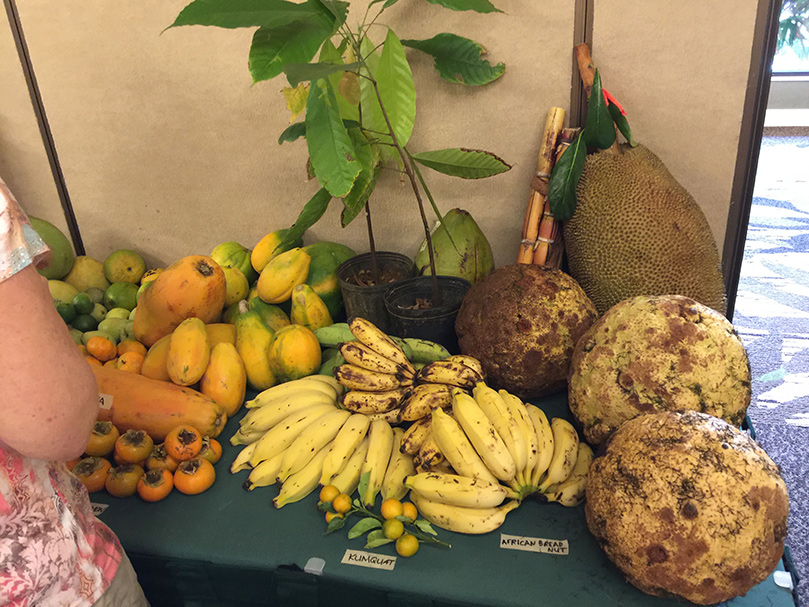
African breadfruit was new to us
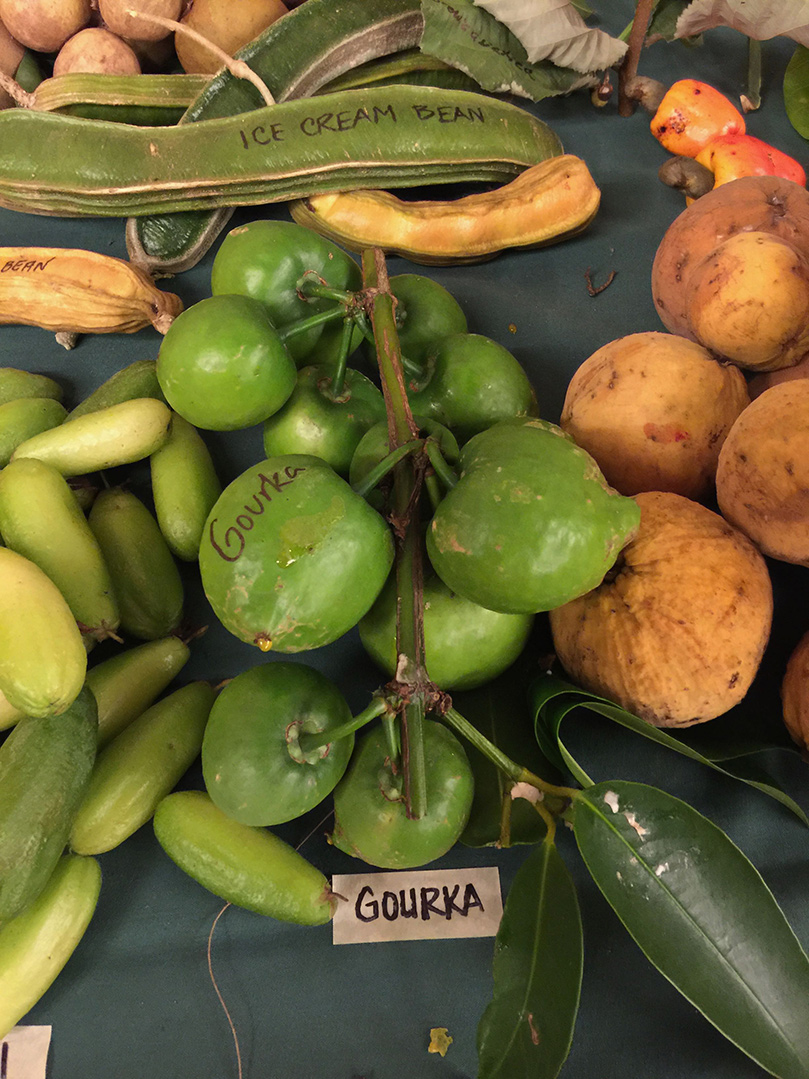
Gourka, garcinia xanthochymus, or yellow mangosteen (these are unripe), is found from India to Indonesia. Monastery also has these, and they are delicious.
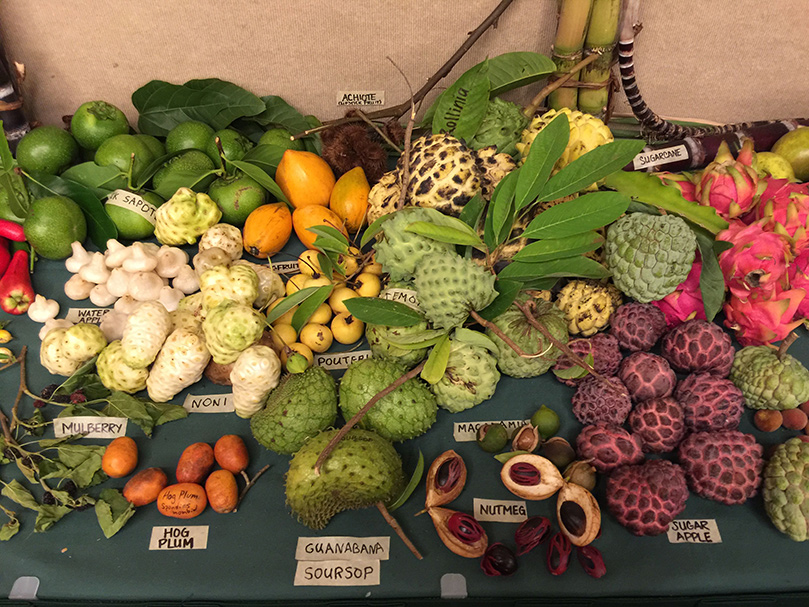
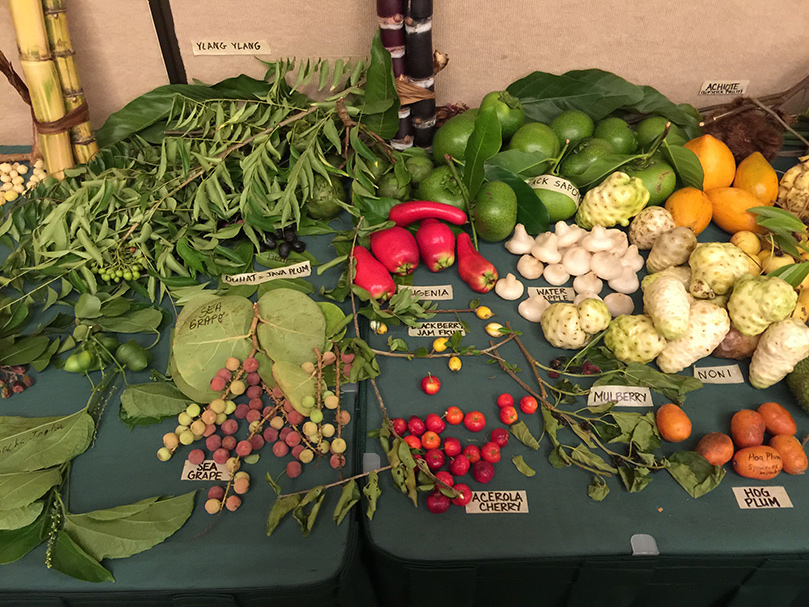
soursop, noni, nutmet, sugar apple, check, but \"hog plum\"?
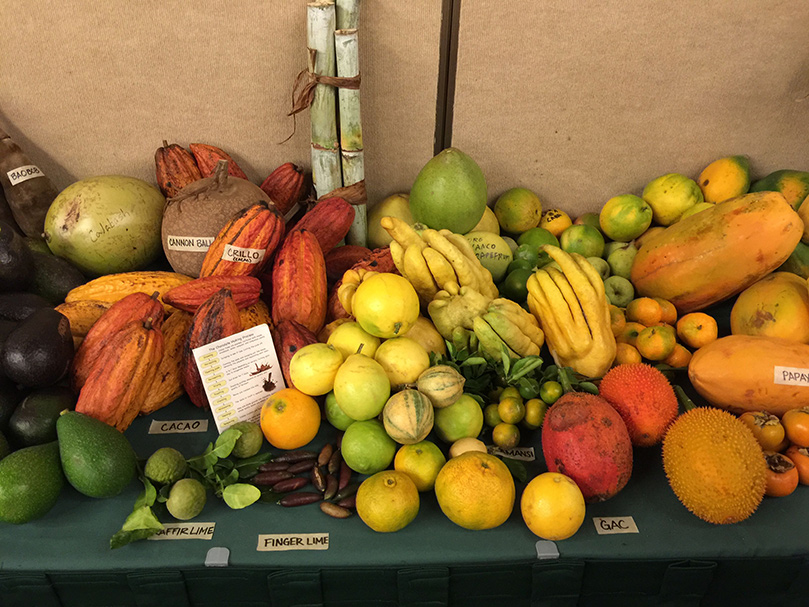
Finger limes (front left) were something restaurant chefs have an interest in. The strange looking fruit at right is \"Buddha\
s hand,\" one of the oldest cultivated citrus fruits and related to lemons.'
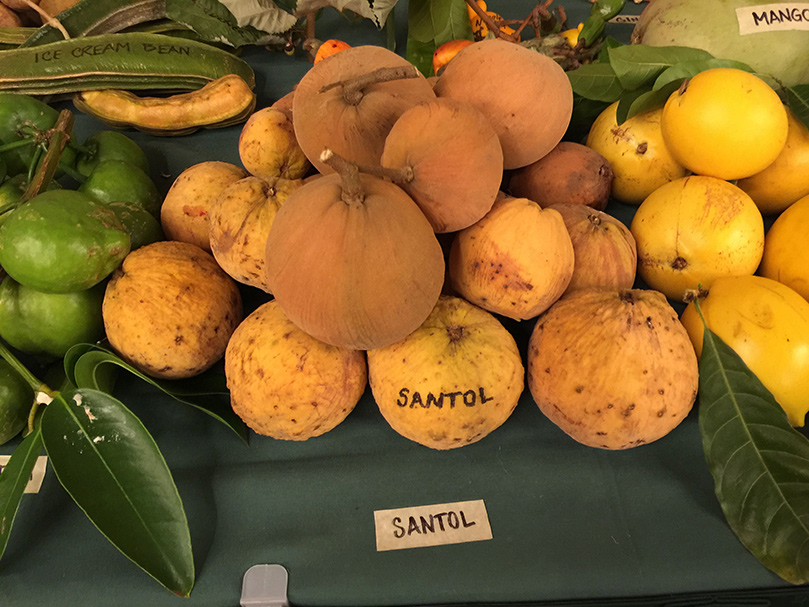
Santol\
s native to southeast asia'
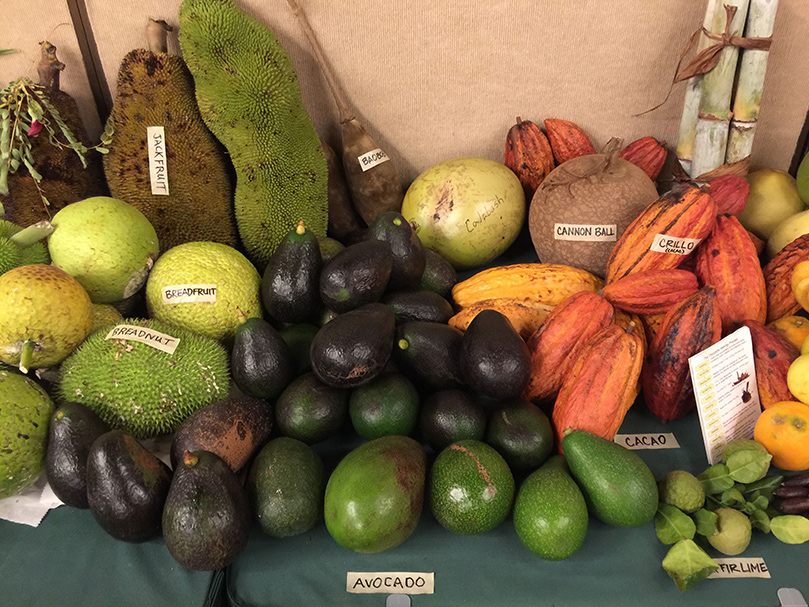
Cacao, at right, is possibly a good commercial crop for Hawaii.
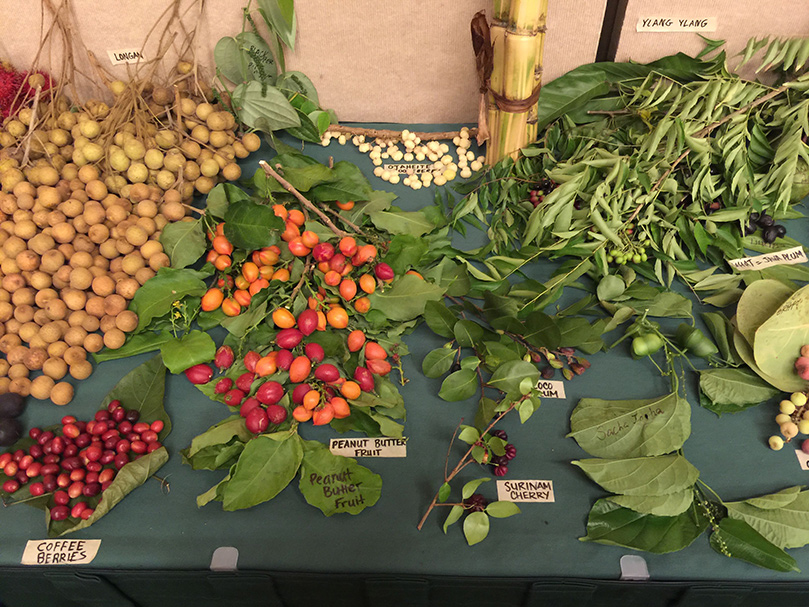
We have couple of trees of peanut butter fruit, which indeed smells just like peanut butter.
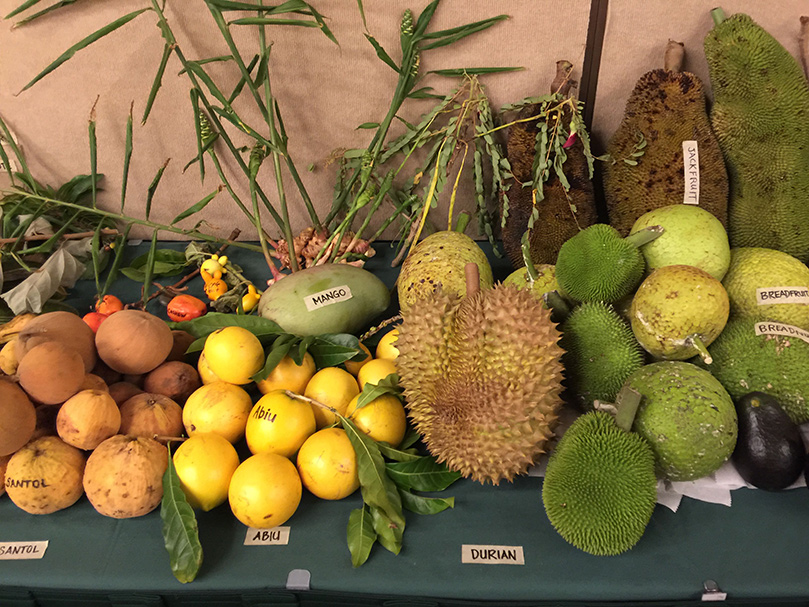
One speaker said a research study on durian found that \"Thai Town\" merchants alone in Los Angeles thought they could sell two million pounds a year.
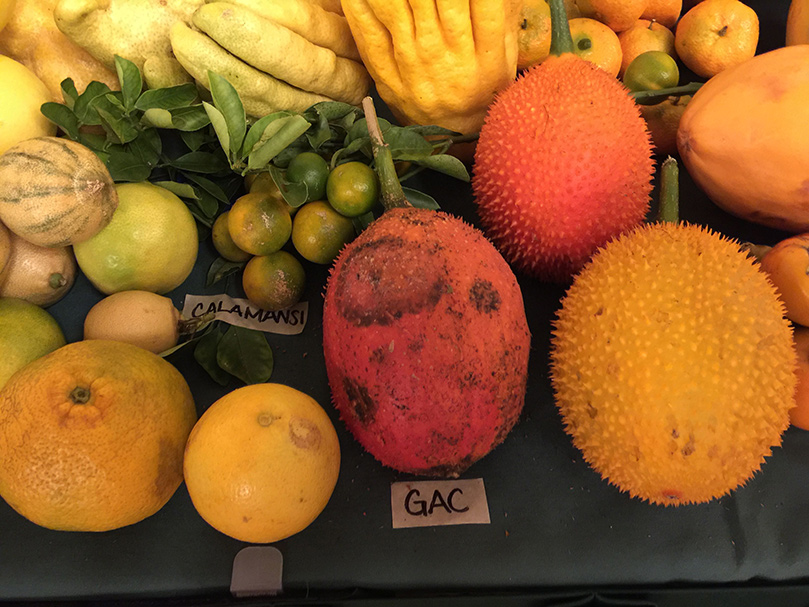
The vine grown gac fruit, popular in Vietnam, ,has attracted attention for its high content of beta-carotene, lycopene and other nutrients.
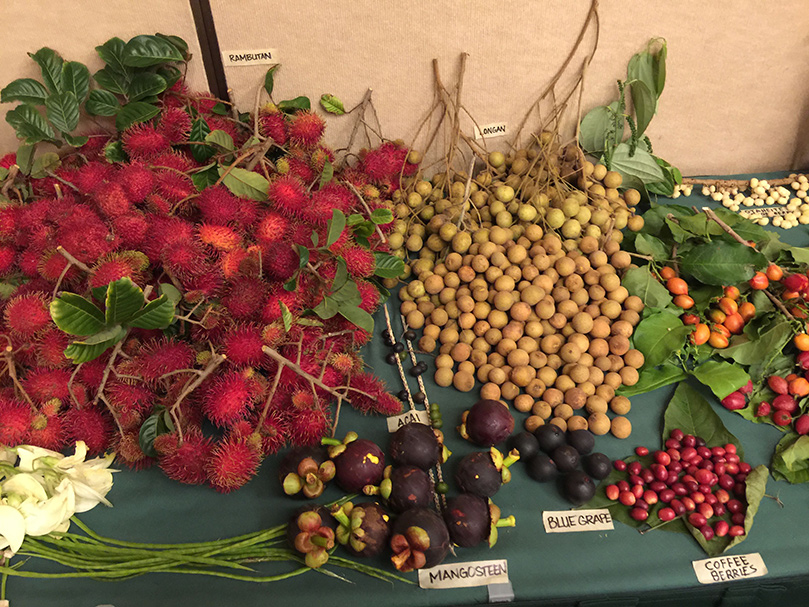
Blue grape, Myrciaria vexator, is a relative of jaboticaba (does that help?) and is a small, slow growing bush with dark purple fruits that taste somewhat like sweet grapes.
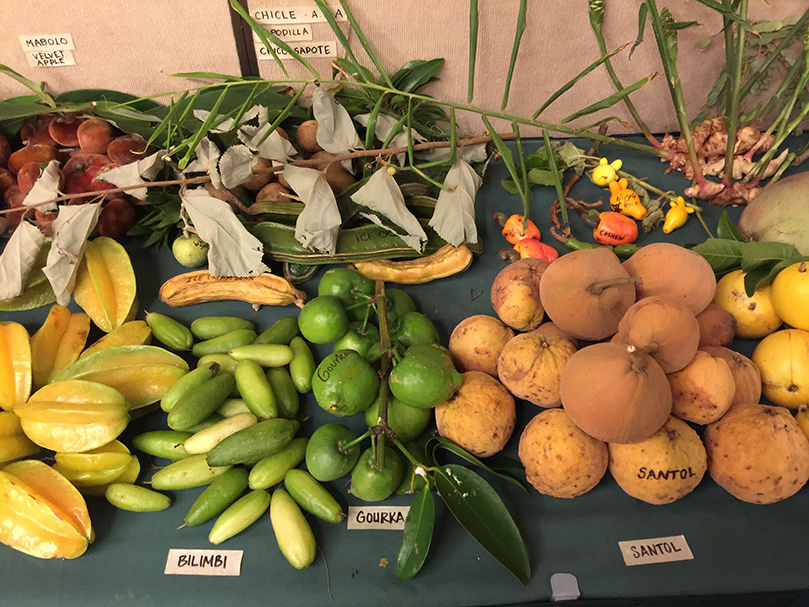
Blimbi, at left, is originally from Indonesia and commonly grown in the Philippines where it is eaten raw or with salt. It has a number of medicinal qualities, and is used in Thiruvananthapuram district in India to control obesity. Also works as a good stain remover.
}
];
width: 805,
transitionSpeed:150});