
Our Newest Supplicant: Sivanadiyar Kanthanatha
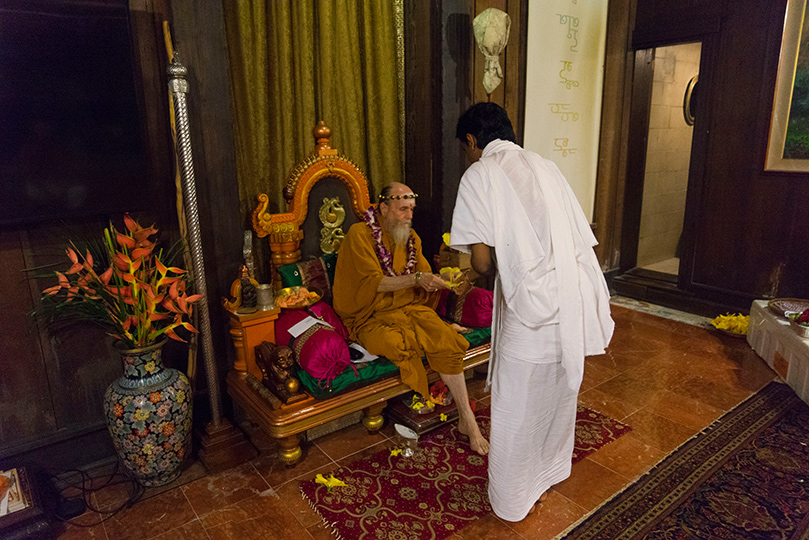
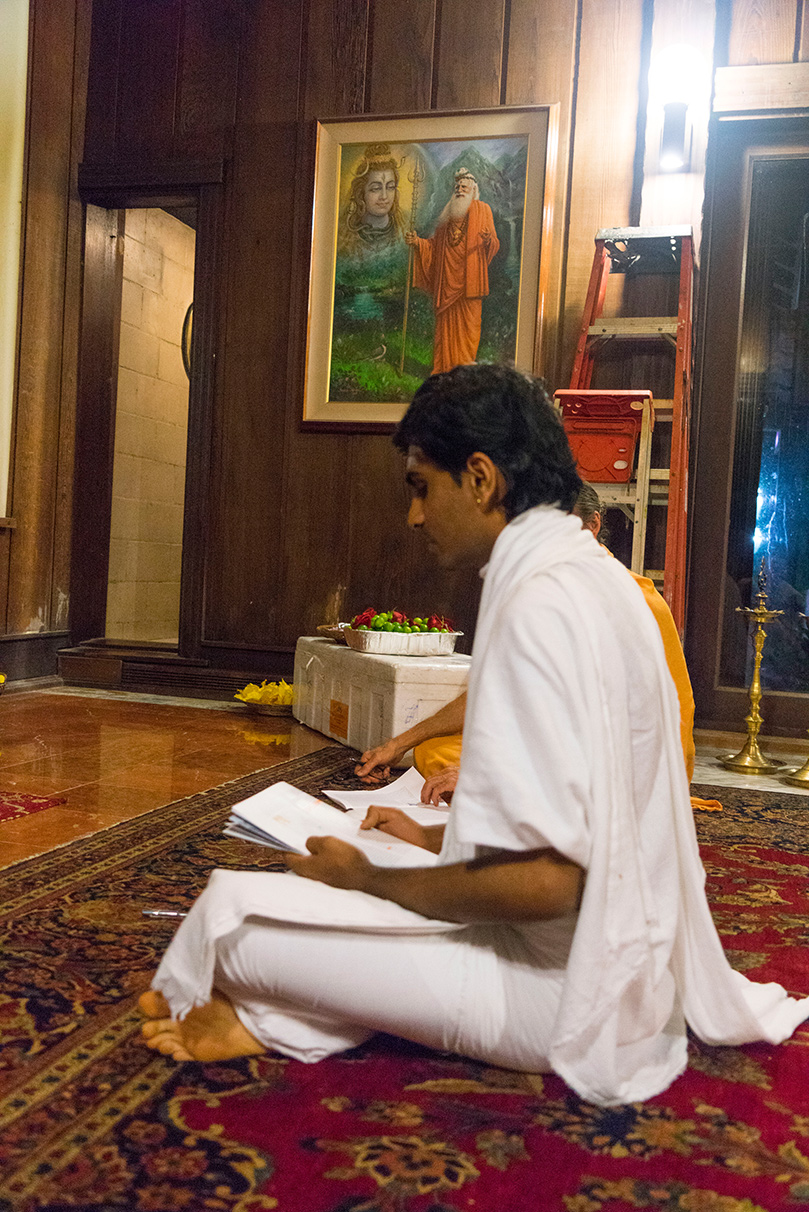
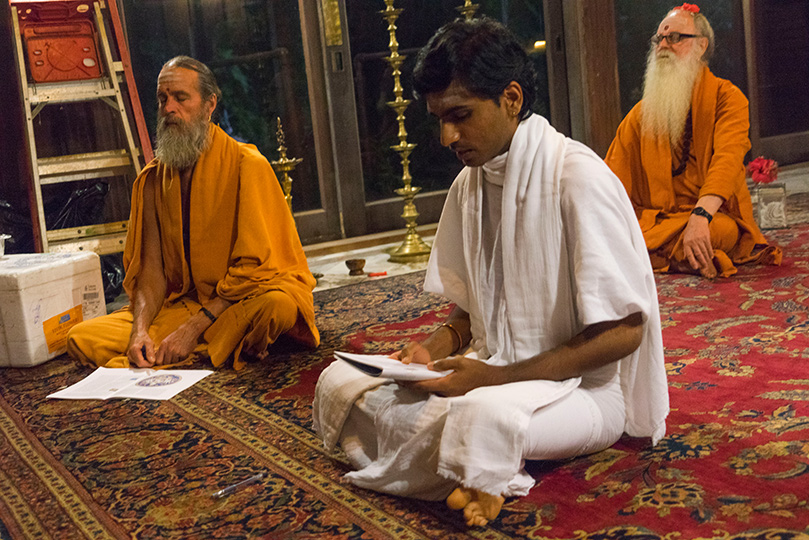
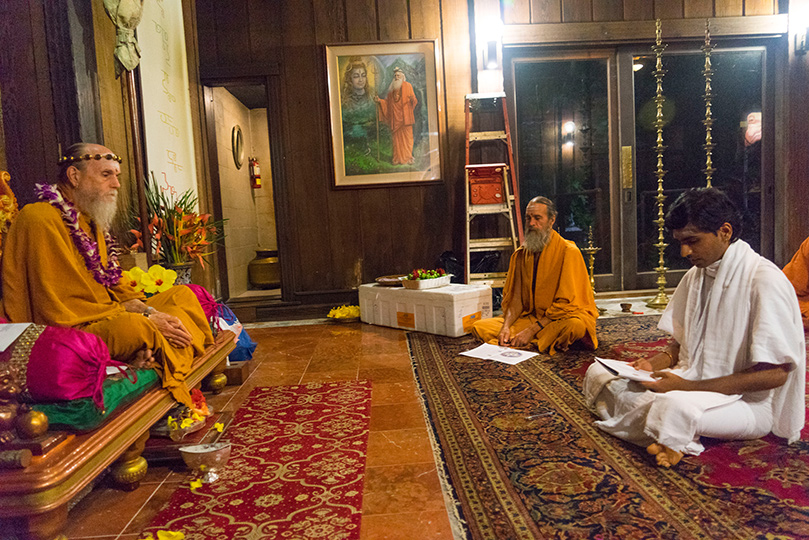
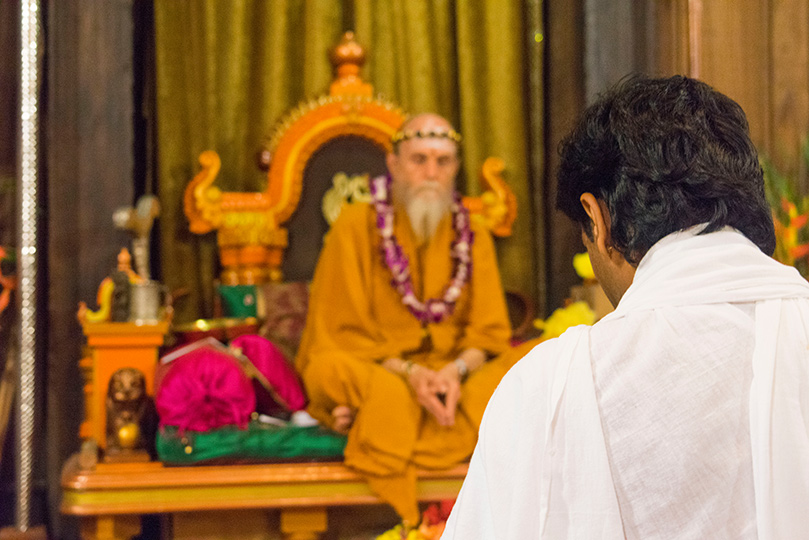
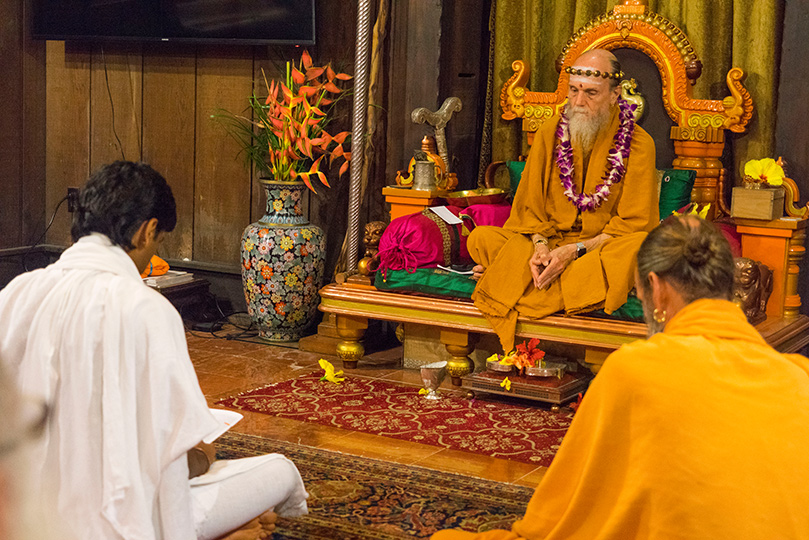
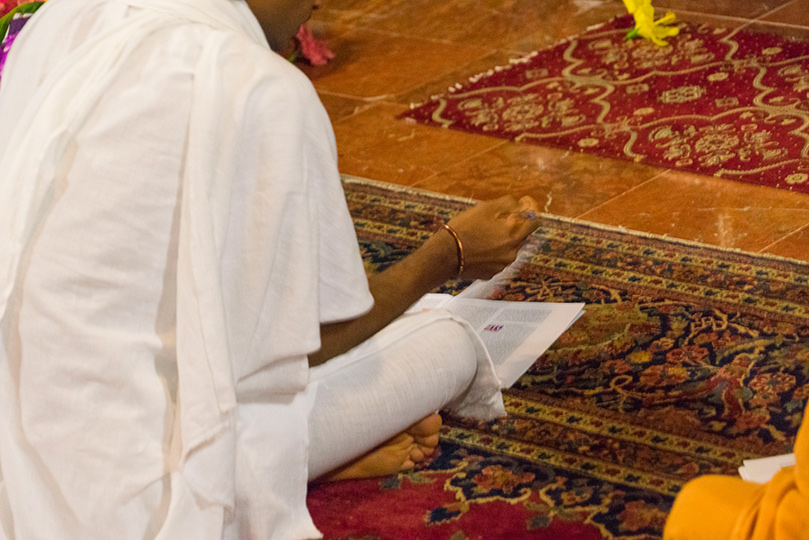
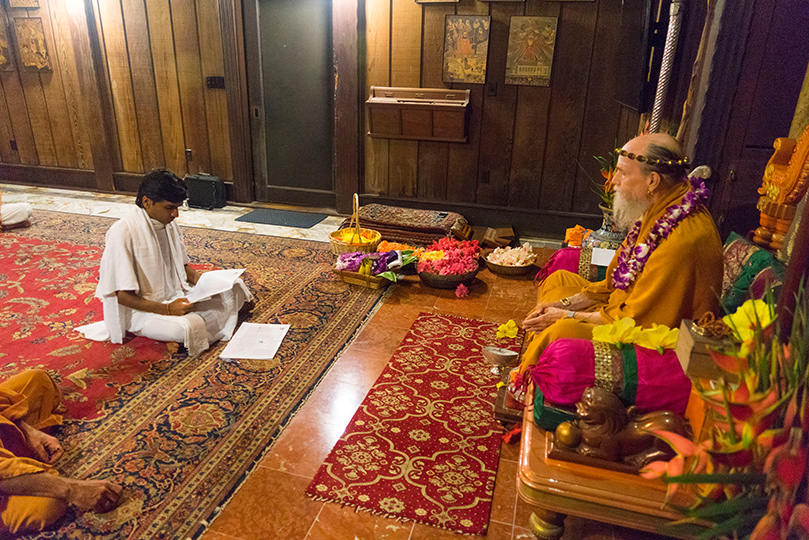
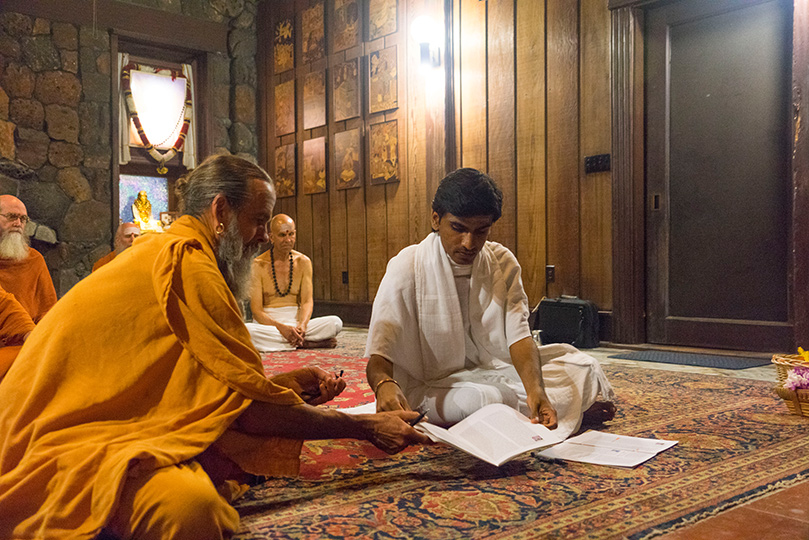
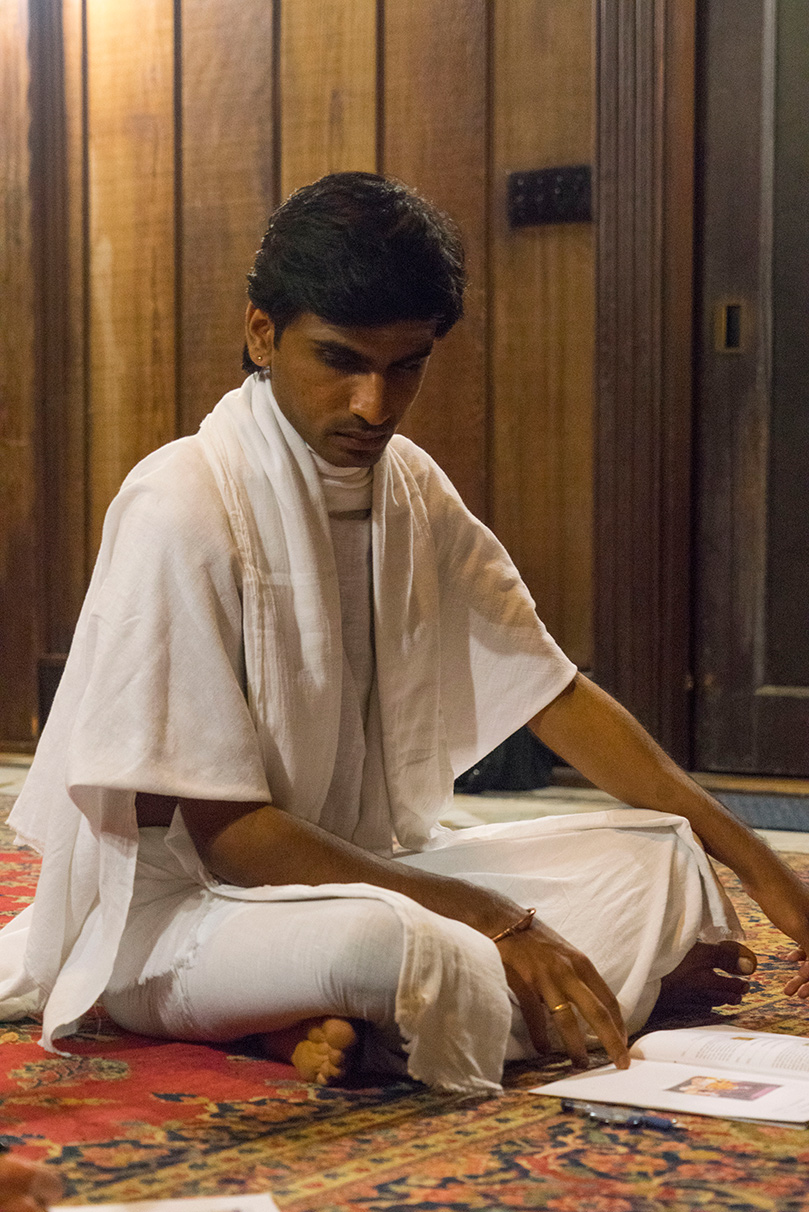
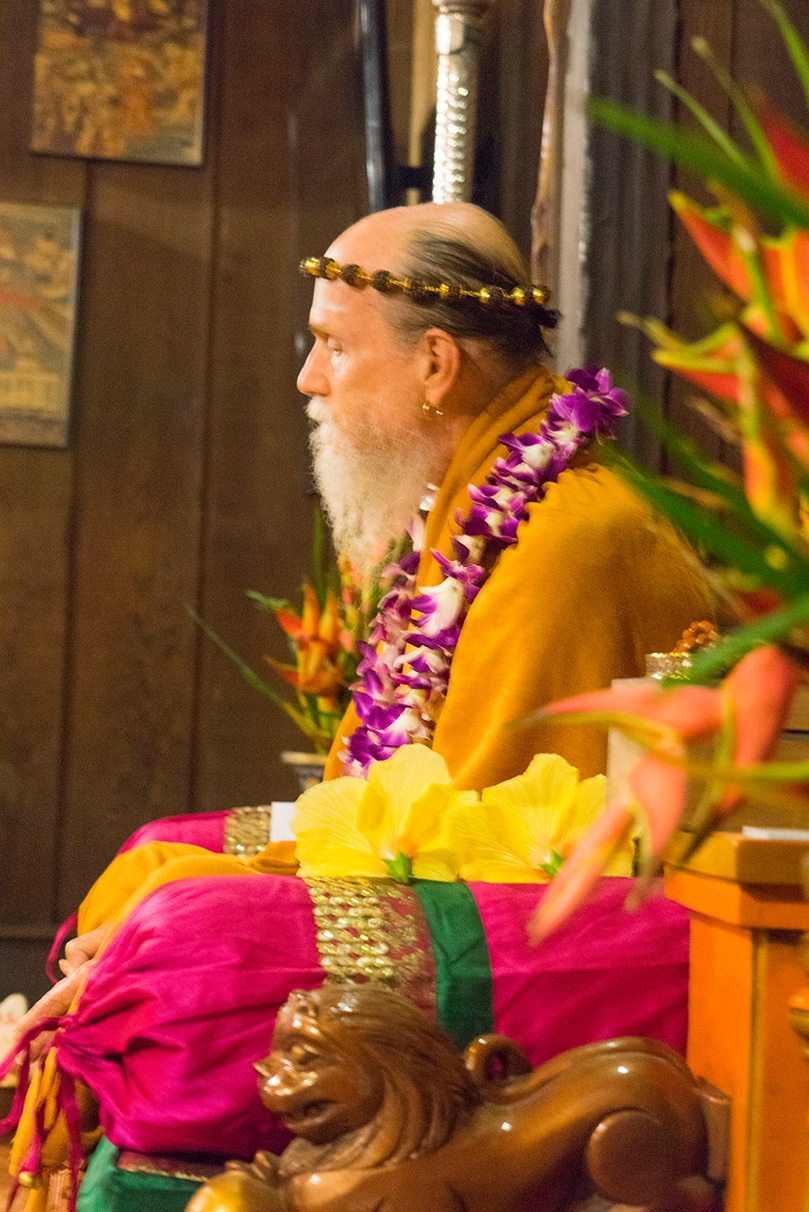
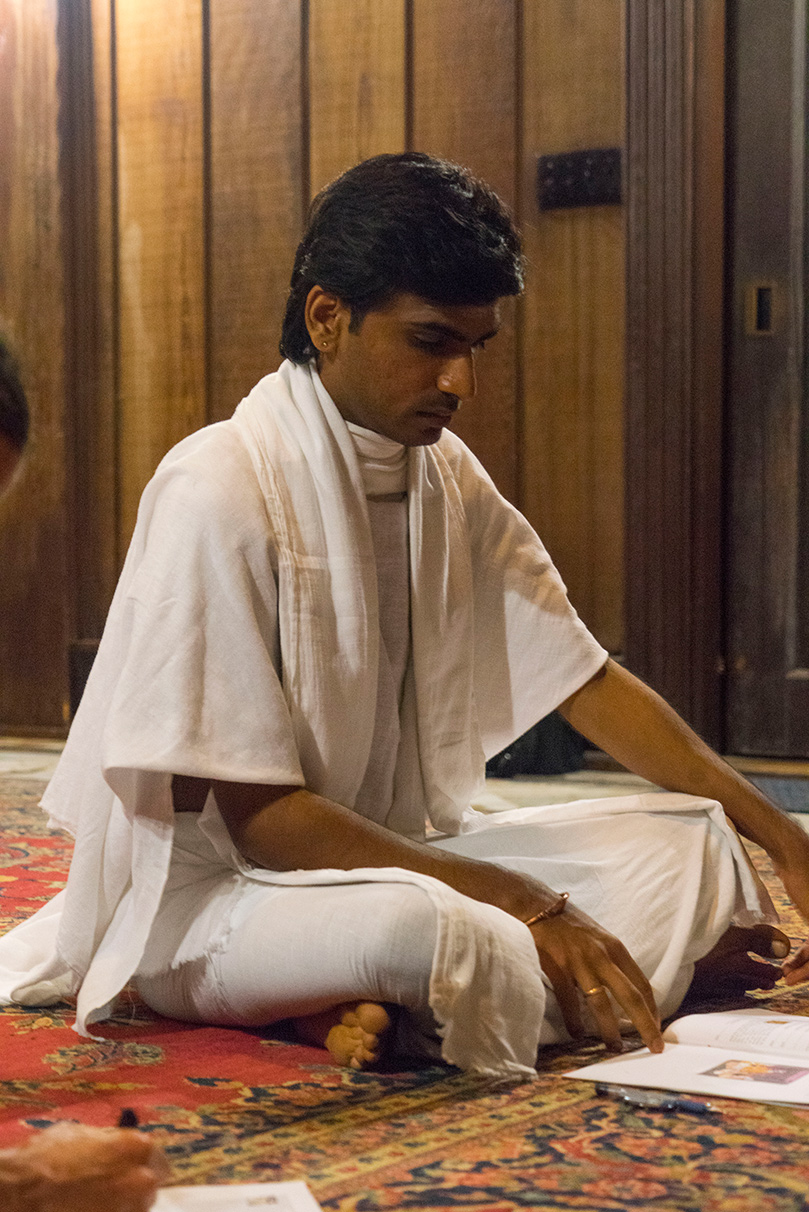
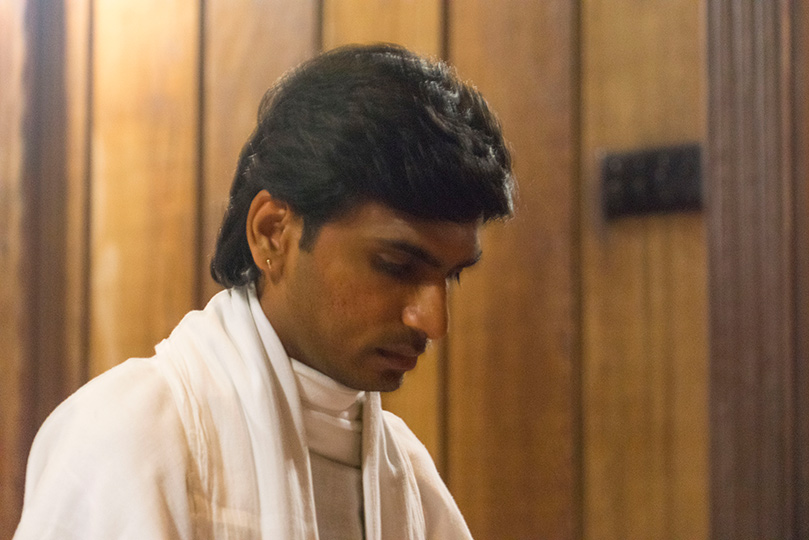
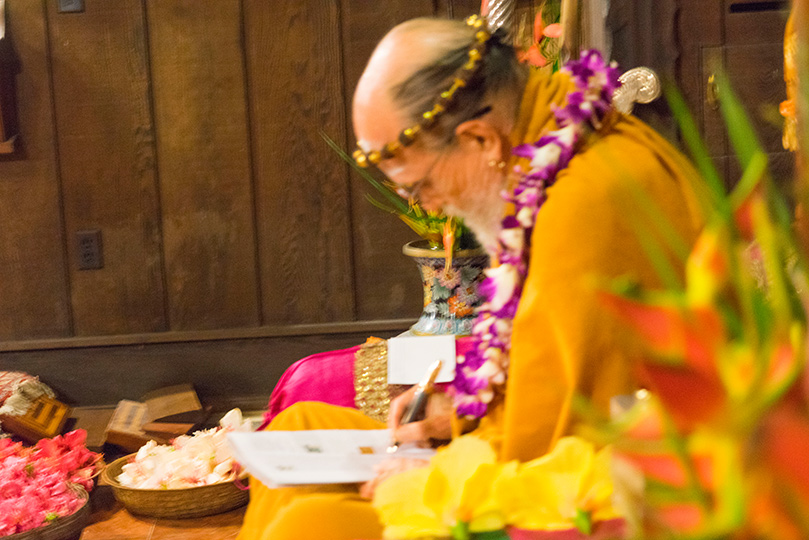
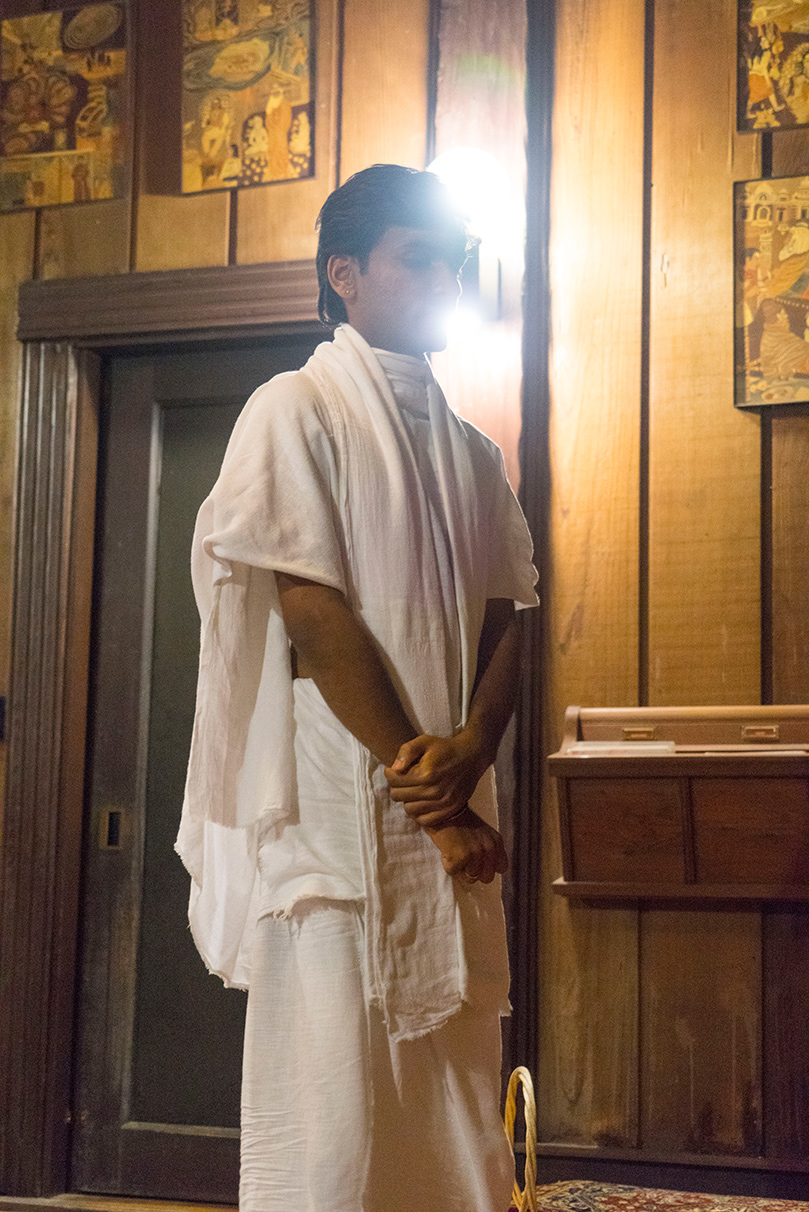
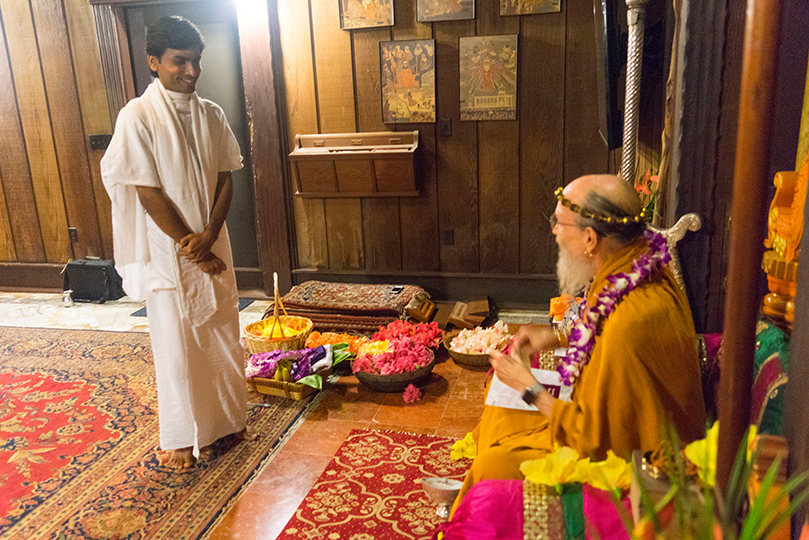
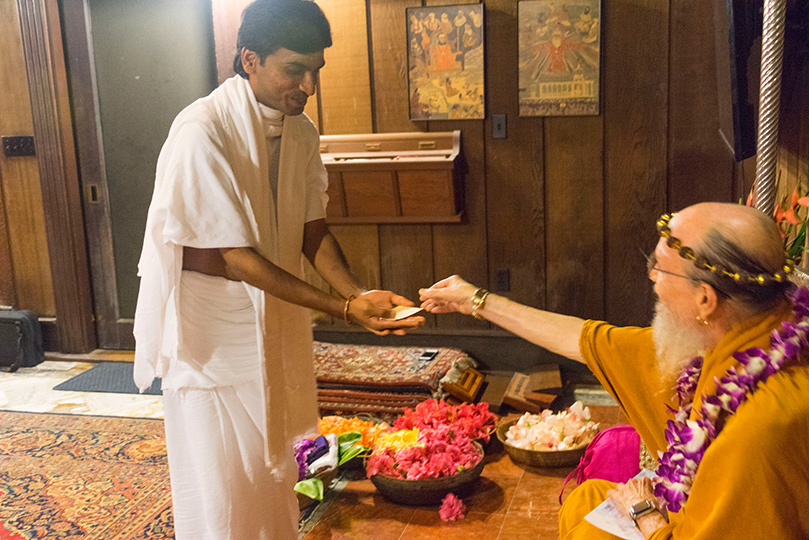
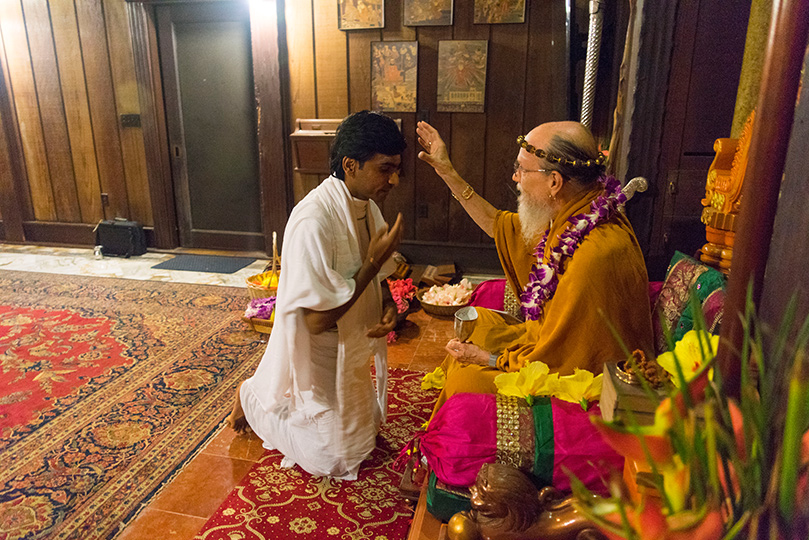
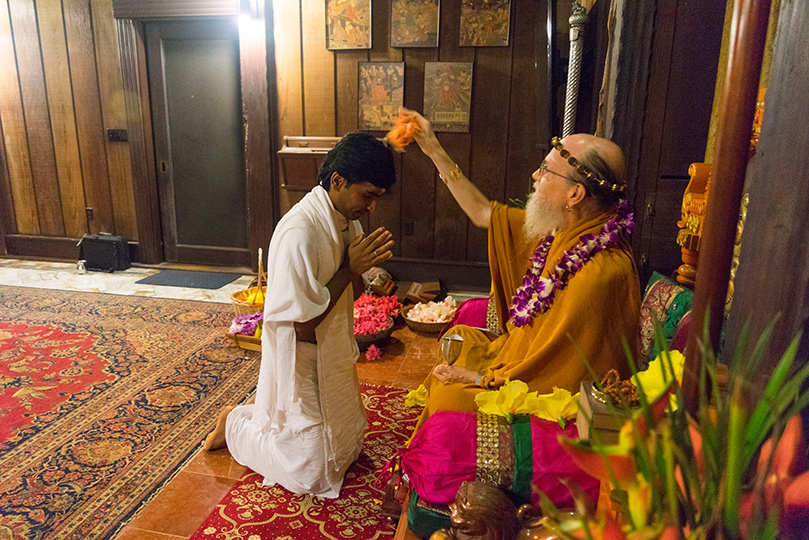
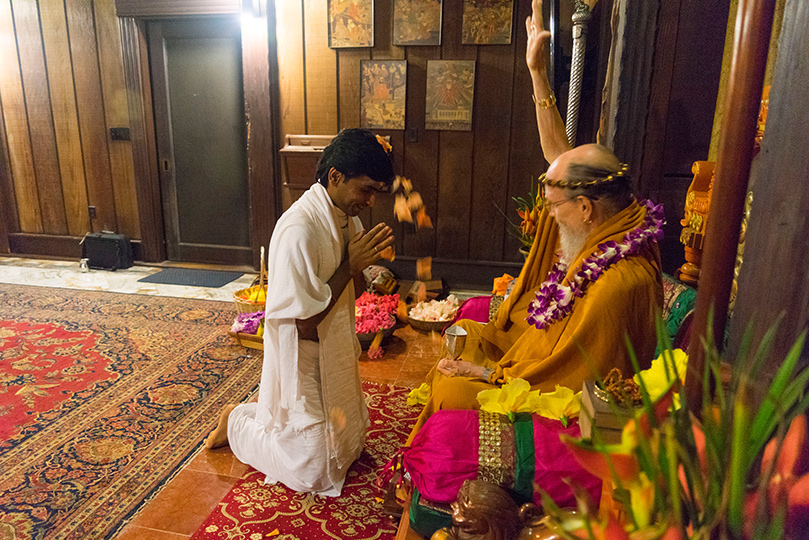
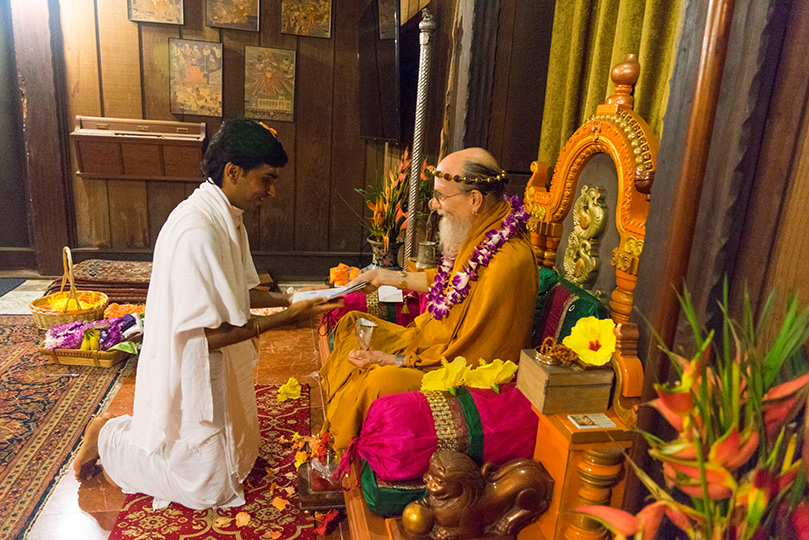
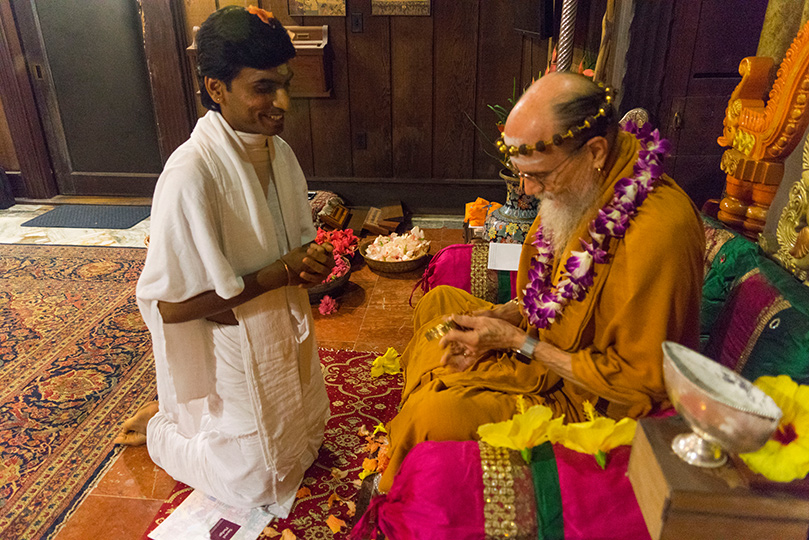
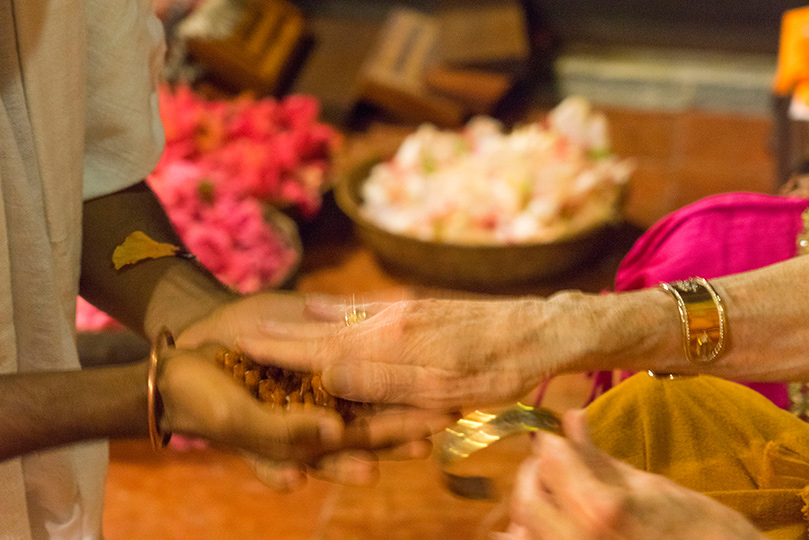
November 10, 2016During Skanda Shashti, just following the abhishekam to Lord Murugan, Brahmachari Raguram entered the guru peetham to sit with Satguru Bodhinatha Veylanswami and several other monks, to officially take his supplicancy vows. These vows of purity, humility and obedience are the next and final step before taking his vows as a postulant Sadhaka, and becoming an official monk in the order. After reading through and signing his vows, Brahmachari was given the new monastic name of Kanthanatha, as well as a japa mala and a "Namah Sivaya" bracelet. As a Sivanadiyar, Kanthanatha will continue his training in the aadheenam until he is ready to take his monastic vows. Here is an excerpt from his sacred pledge:
The supplicant's foremost objective is to strive for mastery of the charya marga, or path of service. This begins with the avoidance of wrongful actions and the overcoming of base instincts and emotions as he learns to transmute worldliness into the higher states of devotion and selflessness. At this stage on the path, the Saivite devotee is content not to strive for profound spiritual attainments but to work diligently with the faults and flaws that are stumbling blocks on the path, learning at the same time to depend not only on his own resources but on the limitless abilities of the Gods to resolve all difficulties and dissolve all obstacles. In "The Final Conclusions for All Mankind," Gurudeva has said, "In the stage of charya, similar to karma yoga, the devotee naturally awakens a desire to work for the sake of work, to serve for the sake of service. He does this in his daily life and through helping in the temple in practical ways--through sweeping the marble floors, polishing the brass oil lamps, weaving fragrant garlands for the pujas, helping other devotees in their lives and in general through a humble and unseen kind of service." The Supplicancy is a time of profound worship of Lord Ganesha, Lord Murugan and Lord Siva and of deepening commitment and service to Saivite Hinduism and to the Church. It is also a time of study, challenge and inner change. The supplicant is encouraged to strive for the perfection of service and for the monastic ideals of humility, industry and responsibility, renouncing personal needs for the benefit of others. In this service, he should strive for transparency, that quality of anonymous virtue in which the premonastic lives in full harmony with others, remaining centered within and not standing out or disturbing the surroundings. It is this ancient tradition of unseen service and unperturbable stability that the supplicant seeks to emulate, realizing that serving in unheralded ways and renouncing the fruits of even good deeds averts the pitfalls of the spiritual ego and nurtures the state of unpretentiousness. By putting great energy into premonastic life and by serving tirelessly for the benefit not of himself but of others, the supplicant opens himself to the inflow of Lord Siva's grace.

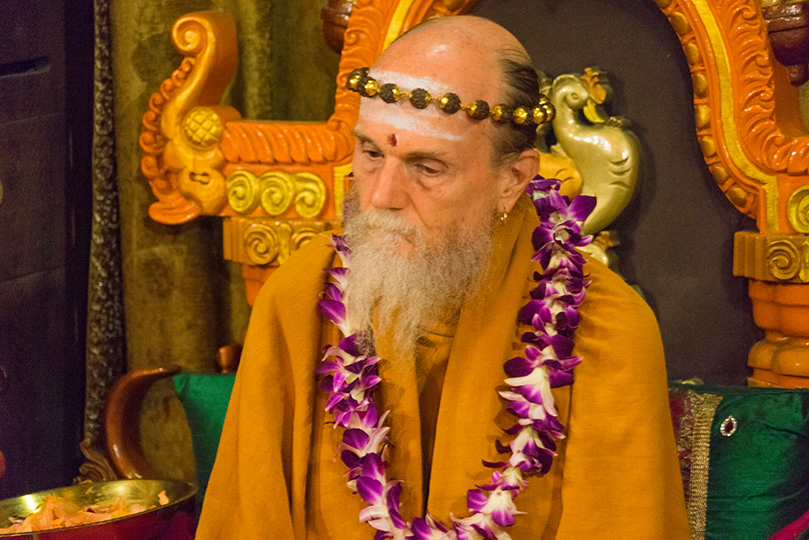
Satguru Bodhinatha Veylanswami and Sivanadiyar Kanthanatha
From the Clear White Light: \"The higher states of consciousness very few people are familiar with, having never experienced them. They are very pleasant to learn of, and yet out of our grasp until we have that direct experience of a higher state of expanded consciousness. The mind, in its density, keeps us from the knowledge of the Self. \"
And then we attain a little knowledge of the existence of the Self as a result of the mind freeing itself from desires and cravings, hates and fears and the various and varied things of the mind. I say \"things\" because if you could see hate, you would see it as a thing that lives with one as a companion. If you could see fear, you\
d see it as a thing, and as understanding comes, that thing called fear walks away down the road, never to return.'
As you unfold spiritually, it is difficult to explain what you find that you know. At first you feel light shining within, and that light you think you have created with your mind, and yet you will find that, as you quiet your mind, you can see that light again and again, and it becomes brighter and brighter, and then you begin to wonder what is in the center of that light.
\"If it is the light of my True Being, why does it not quiet the mind?\" Then, as you live the so-called \"good life,\" a life that treats your conscience right, that light does get brighter and brighter, and as you contemplate it, you pierce through into the center of that light, and you begin to see the various beautiful forms, forms more beautiful than the physical world has to offer, beautiful colors, in that fourth-dimensional realm, more beautiful than this material world has to offer.
And then you say to yourself, \"Why forms? Why color, when the scriptures tell me that I am timeless, causeless and formless?\"
And you seek only for the colorless color and the formless form. But the mind in its various and varied happenings, like a perpetual cinema play, pulls you down and keeps you hidden within its ramifications.
In your constant striving to control that mind, your soul comes into action as a manifestation of will, and you quiet more and more of that mind and enter into a deeper state of contemplation where you see a scintillating light more radiant than the sun, and as it bursts within you, you begin to know that you are the cause of that light which you apparently see.
And in that knowing, you cling to it as a drowning man clings to a stick of wood floating upon the ocean. You cling to it and the will grows stronger; the mind becomes calm through your understanding of experience and how experience has become created.
As your mind releases its hold on you of its desires and cravings, you dive deeper, fearlessly, into the center of this blazing avalanche of light, losing your consciousness in That which is beyond consciousness.
And as you come back into the mind, you not only see the mind for what it is; you see the mind for what it isn\
t. You are free, and you find men and women bound, and what you find you are not attached to, because binder and the bound are one. You become the path.'
You become the way. You are the light.
And as you watch souls unfold, some choose the path of the spirit; some choose the path of the mind. As you watch and wonder, your wondering is in itself a contemplation of the universe, and on the brink of the Absolute you look into the mind, and one tiny atom magnifies itself greater than the entire universe, and you see, at a glance, evolution from beginning to end, inside and outside, in that one small atom.
Again, as you leave external form and dive into that light which you become, you realize beyond realization a knowing deeper than thinking, a knowing deeper than understanding, a knowing which is the very, very depth of your being.
You realize immortality, that you are immortal--this body but a shell, when it fades; this mind but an encasement, when it fades. Even in their fading there is no reality.
And as you come out of that samadhi, you realize you are the spirit, you become that spirit, you actually are that spirit, consciously, if you could say spirit has a consciousness.
You are that spirit in every living soul. You realize you are That which everyone, in their intelligent state or their ignorant state, everyone, is striving for--a realization of that spirit that you are.
And then again for brief interludes you might come into the conscious mind and relate life to a past and a future and tarry there but for a while.
But in a moment of concentration, your eye resting on a single line of a scripture or anything that holds the interest of the mind, the illusion of past and future fades, and again you become that light, that life deep within every living form--timeless, causeless, spaceless.
Then we say, \"Why, why, after having realized the Self do you hold a form, do you hold a consciousness of mind? Why?\"
The answer is but simple and complete: you do not; of yourself you do not.
But every promise made must have its fulfillment,
and promises to close devotees and the desire that they hold for realization of their true being hold this form, this mind, in a lower conscious state.
Were the devotees and disciples to release their desires for realization but for one minute, their satguru would be no more.
Once having realized the Self, you are free of time, cause and change.
}
];
transitionSpeed:150});