
A Visit to an Ancient Hawaiian Village
November 18, 2016Recently several of our monks visited the site of a rediscovered ancient Hawaiian village known as Kanei‘olouma. This 13 acre complex contains numerous habitation, cultivation, sporting, assembly, and religious structures dating to at least the mid-1400's. The name, Kanei‘olouma (Kane-i- ‘olo-uma), can be understood to be ‘Kane', the God of fresh water and ‘awa (kava) inside an ‘awa serving bowl. ‘Olo (or kanoa) is a serving bowl for ‘awa, a traditional ceremonial drink. Uma is concave like the floor of the arena of Kanei‘olouma heiau.
The four principle Gods in Hawaiian tradition are Kane (God of creation and freshwater), Kanaloa (God of the ocean and the underworld), Lono (God of agriculture and fertility), and Ka (God of the forests and war). These Gods can be represented as wooden or stone figures or in other ways. The Gods Kane, Kanaloa, and Lono all were honored at the Kanei‘olouma Heiau, while the nearest Heiau for the God Ka was located in Koloa town. At times we have compared these four to Siva, Shakti, Ganesha and Muruga.
The monks were given a short tour by Kaeo, one of the primary members of the restoration project. He was quite knowledgeable about the site and had many interesting details to share. We discussed some of the similarities of Hindu and Hawaiian beliefs. One interesting item he shared was that the Hawaiian's believed we have three ways the soul can leave the body at death. Either through the top of the head, through the center between the eyes, or through the feet which is not ideal. He said even today, if someone is having a heart attack for instance, you might see older Hawaiians rush and grab their toes so that their soul doesn't exit there.
This project will be an important cultural center and resource for years to come. If you want to learn more or donate to the cause, see their website:
http://www.kaneiolouma.org/

Paramacharya gifts Kaeo a wooden bowl made by the monks and a donation for the restoration
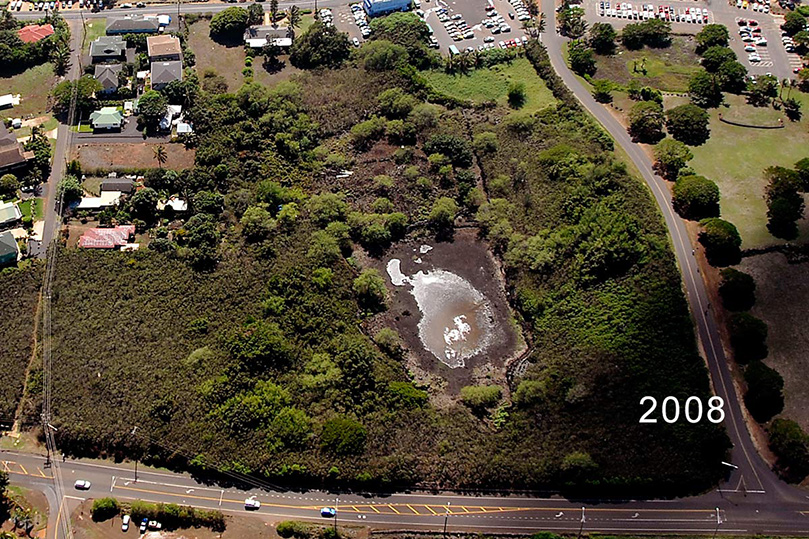
This is what the area looked like in 2008. The land and ancient structures to the right of the road were demolished to build the hotel. They\
ve apparently had odd occurrences there ever since.'
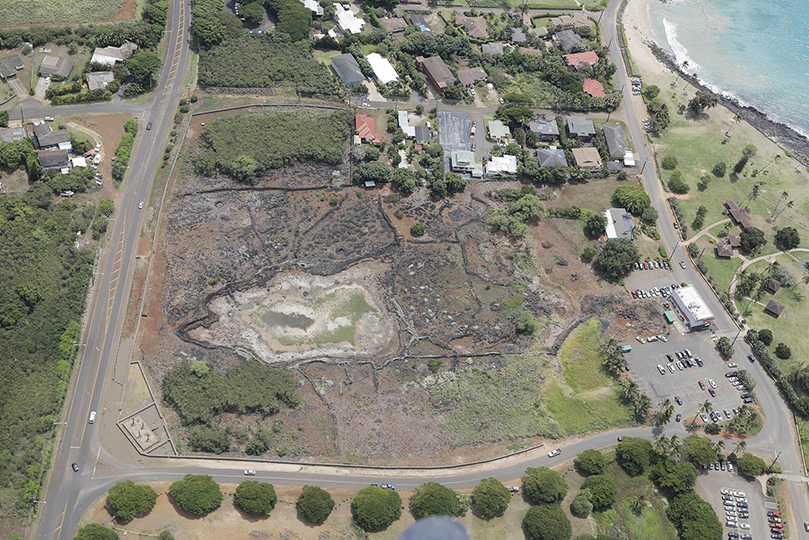
This is a rotated shot of the site after clearing. You can see how close it was to the beach
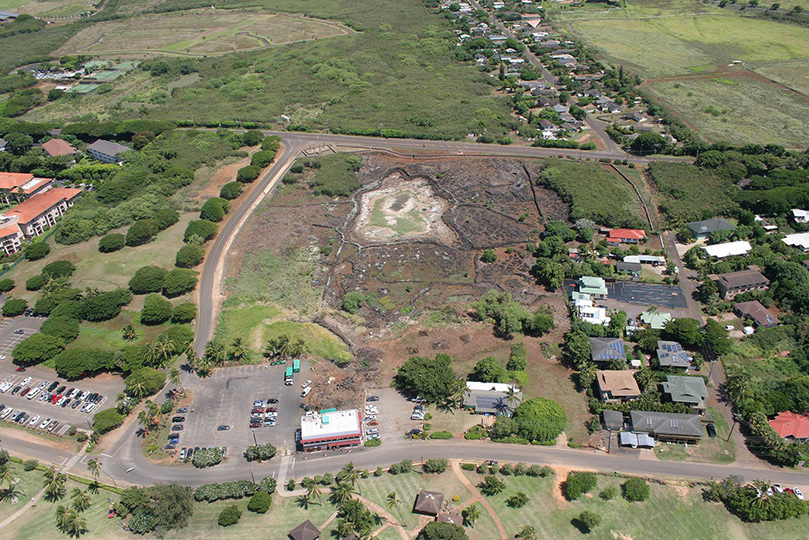
Much like Hindu Agamic temple\
s are built as the body of God, this temple to Kane emulated his form. '
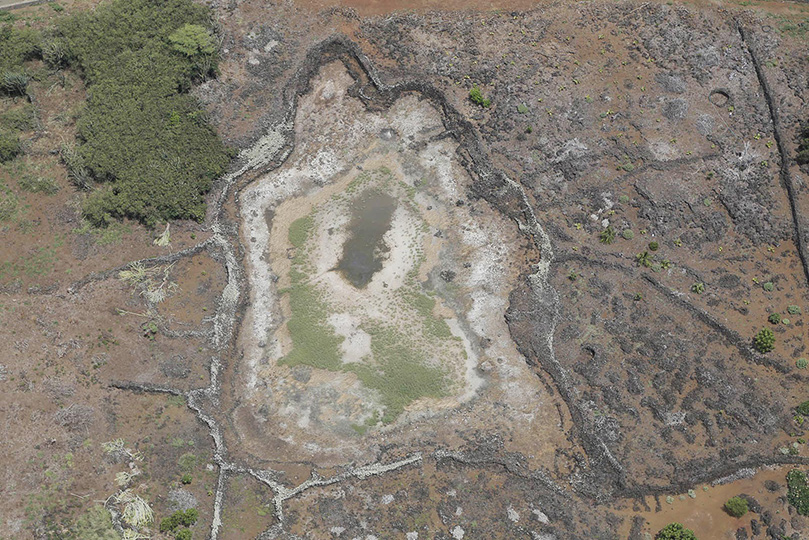
the central area is His chest, with the natural spring, for He is God of creation, the sun and fresh water. The two side section are His arms, and the small top section is His head. This is where many tiki\
s where found, and is essentially the inner sanctum of this temple complex'
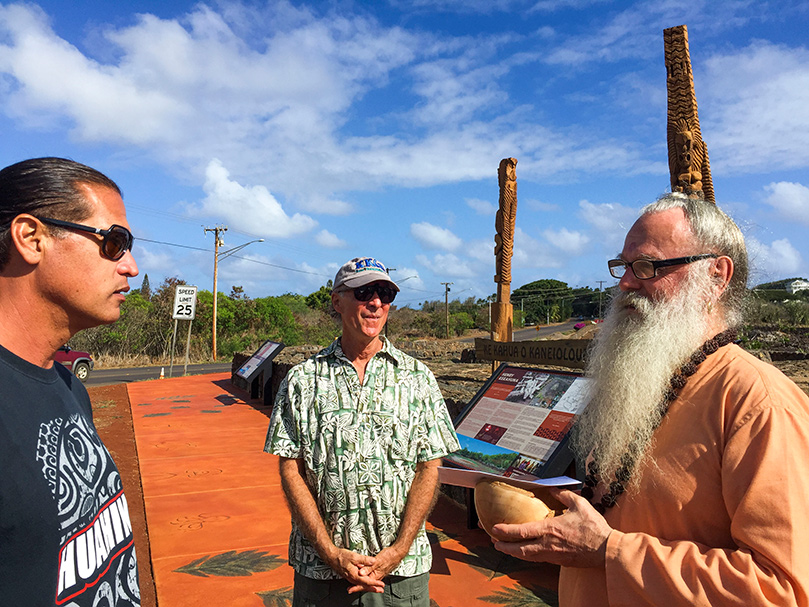
Behind Paramacharya are four of the Tiki\
s newly installed at this site. Just as Hindu Murti\'s only have their eyes carved once installed, Tikis must have a blindfold on until they are fully in place. '
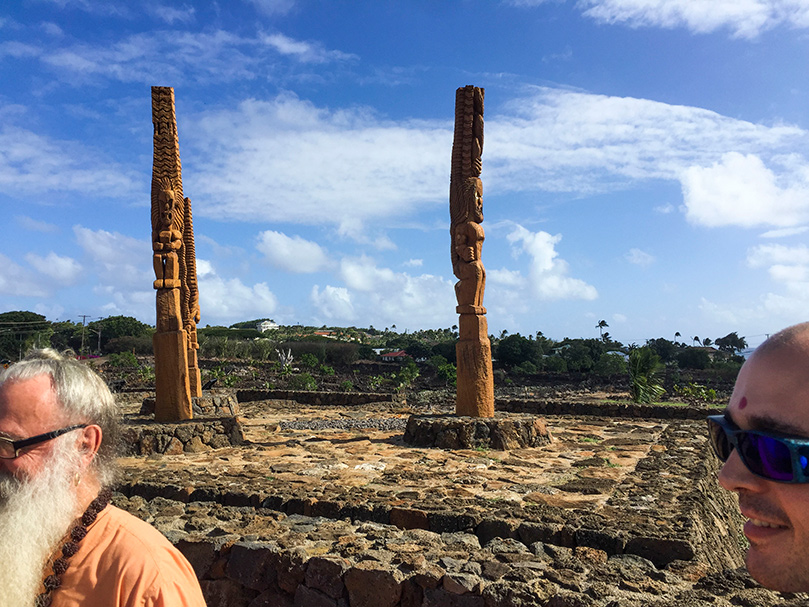
This newly built area also includes a wall which now circles the whole site
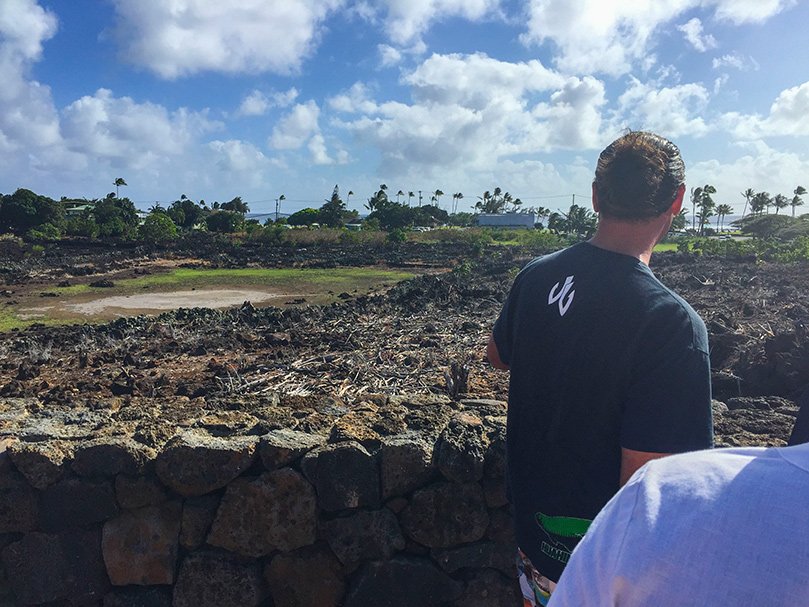
Kaeo points to some interesting features. Every walled stone section was once topped with a traditional Hawaiian thatched building
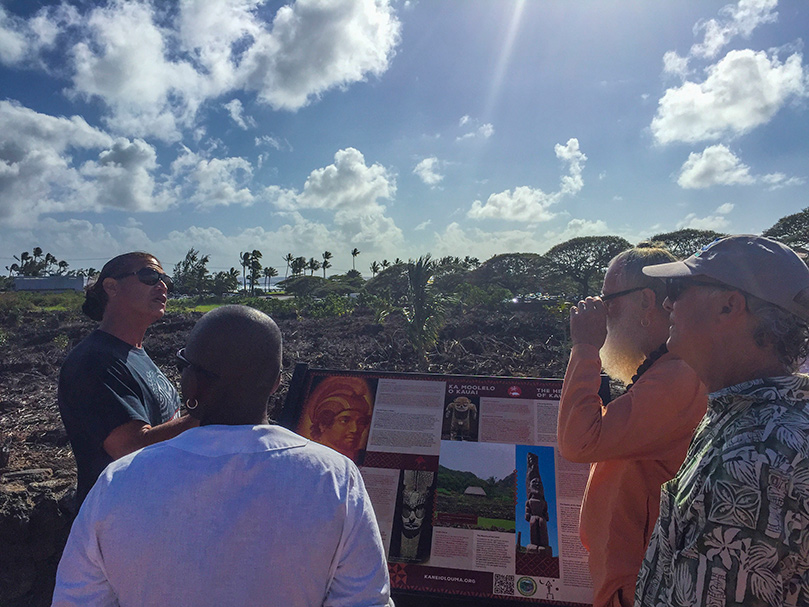
The tour includes information about the Hawaiian Lunar calendar and it\
s sacred days'
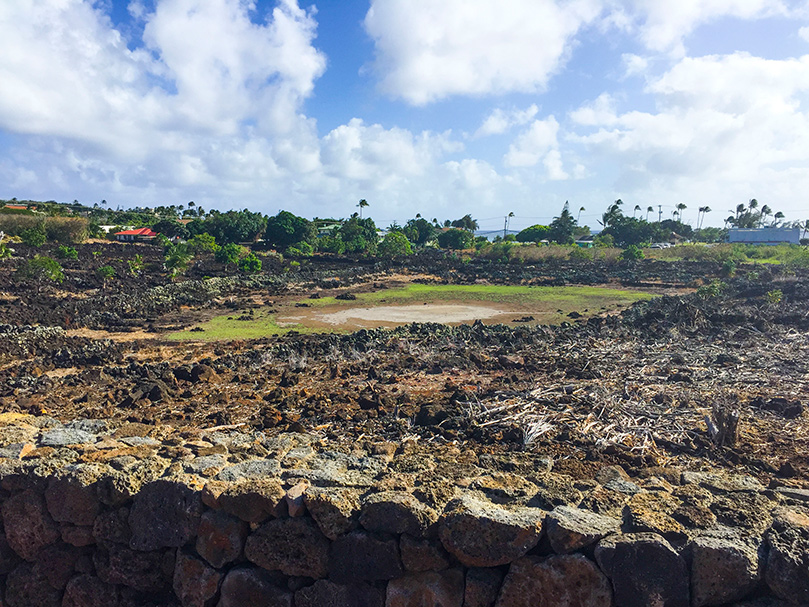
As well as a nice story about a native Hawaiian owl who landed at the site when they first started clearing. Normally nocturnal, he landed at high noon for three days straight and went around to each of the volunteers before flying away. High ceremony at this temple used to be performed at noon and these owls have long been considered sacred.
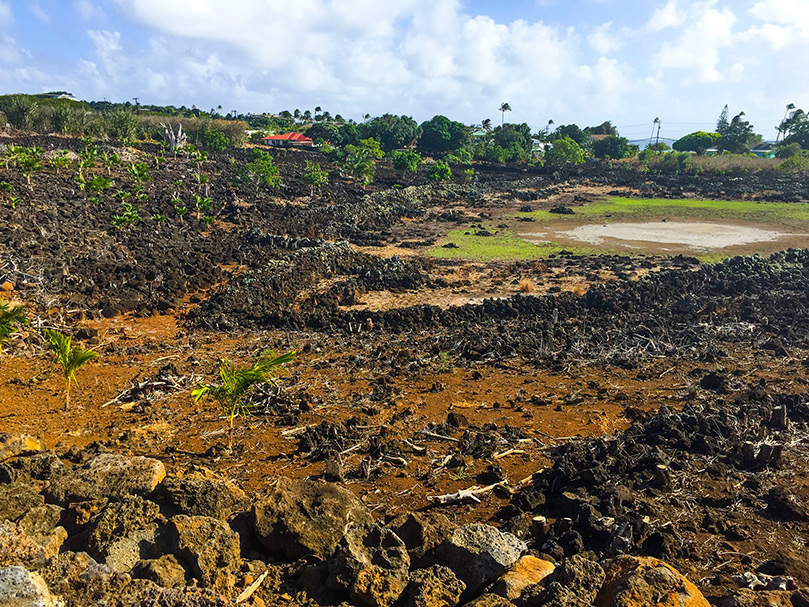
In the center of this image is the \"inner sanctum\" area, or Kane\
s head'
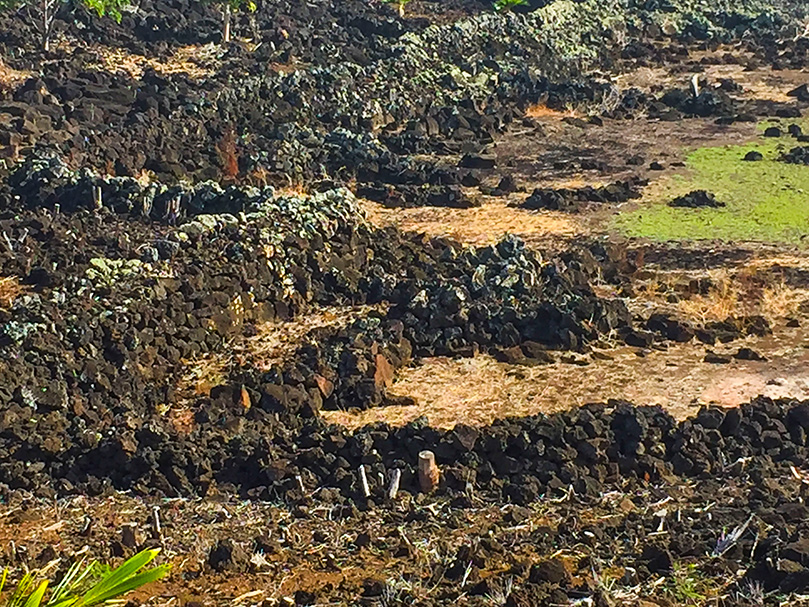
On the raised shelf to the left was where most of the toppled tikis were found
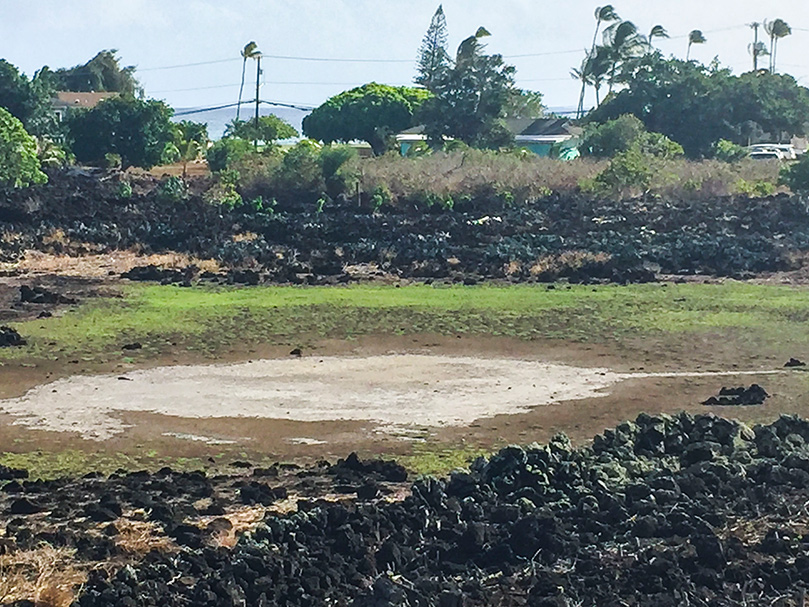
This spring, found in Kane\
s heart, is dry but spongy most of the year. In the rainy seasons it fills perfectly to the height of the ancient walkway which encircles it. '
}
];
transitionSpeed:150});