
Meet Our New Yogis
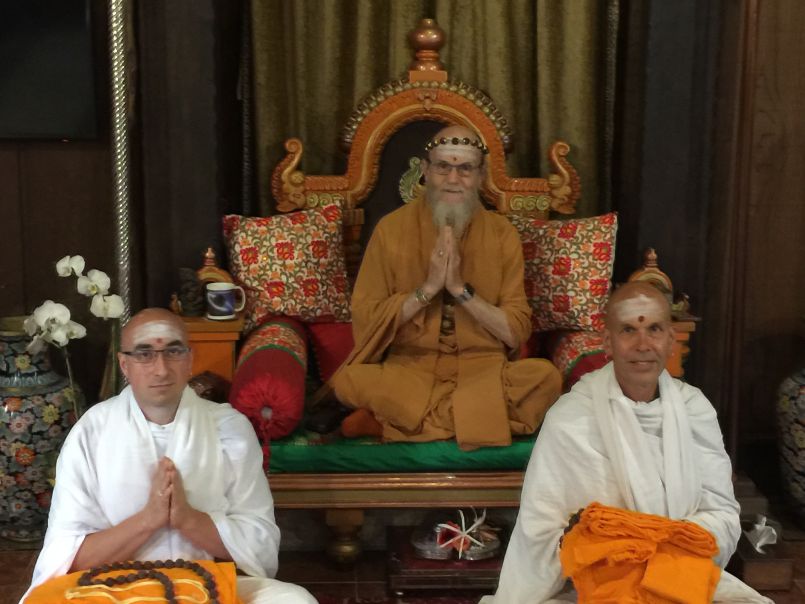
February 10, 2017During this year's Thai Pusam festival Adinatha and Rajanatha took Yogi vows and supplicated their aspirations in front of God, Guru and Acharyas. They read from the Yogi addendum of their sacred vowbook, received new robes, beads, a bamboo staff of tapas or danda, and the sacred thread called yajnopavita to be worn over the shoulder.
This also marks the time for a two-year retreat away from world events, family and over-externalization. The following captions in the slideshow are quoted from the Yogi Addendum from which the two read aloud for all to hear.
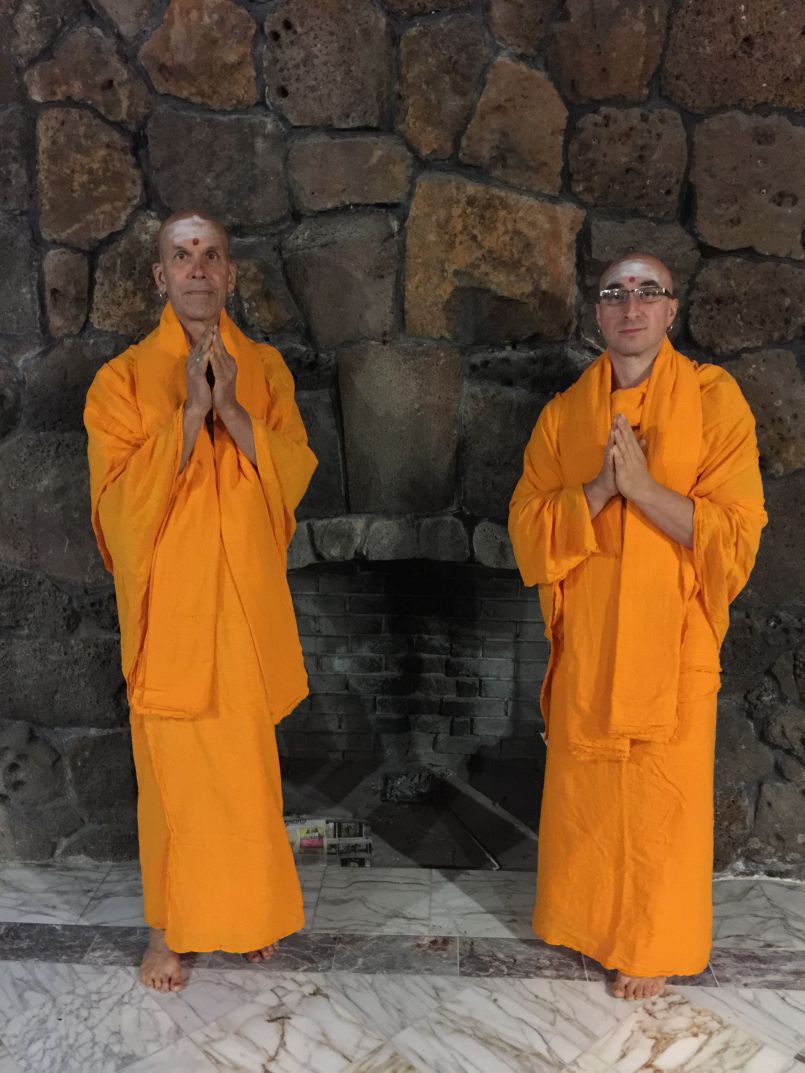
\"O yogi, without forethought dive into me. Without forethought I accept you for you are the other part of me - Parasivam, Satchidananda and all forms I flow through, contemplate or meditate.\" Kadavul Nataraja via Gurudeva
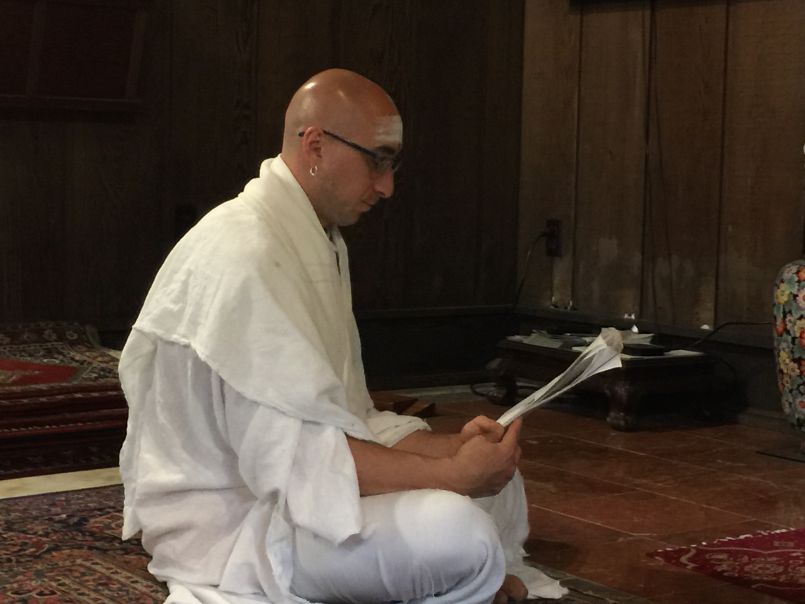
The path of the Saiva yogi is a difficult path. His striving is both inner and outer. Each yogi tapasvin is given a full complement of responsibilities in the monastery while at the same time being expected to ardently pursue his yogic practices. Each year as he masters his duties more responsibilities may be placed on his shoulders. He must be self-motivated and burning with desire for Self Realization to sustain the pressures of this life.
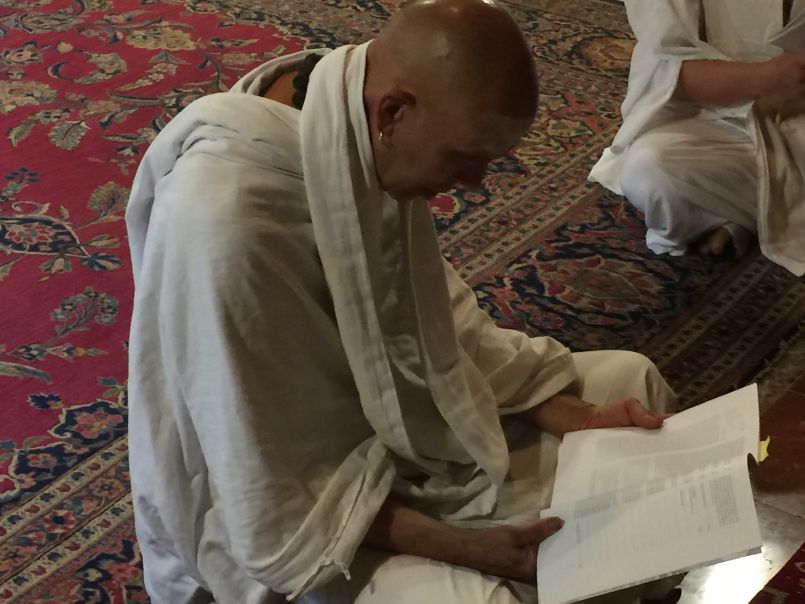
The outer responsibilities strengthen his will and sharpen his mind and he takes the thrust of this dedicated service into his meditations each day. During his daily yoga practice he disciplines his awareness strictly not pondering or planning his external duties and responsibilities but turning one-pointedly within pursuing progressively deeper levels.
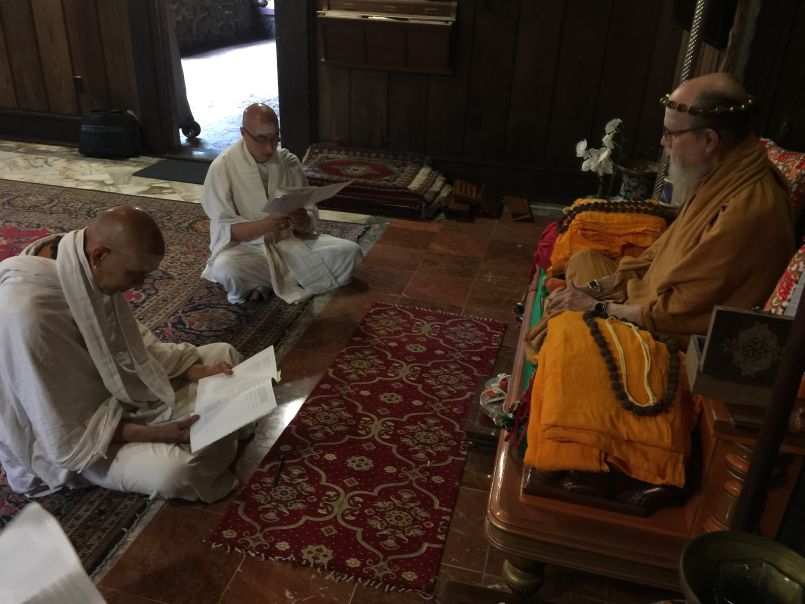
Thus the yogi\
s life is not one of constant worship and meditation but a dynamic balance of service and sadhana. Through all of his activities he is \"yoked\" to the within remaining affectionately detached from worldly events.'
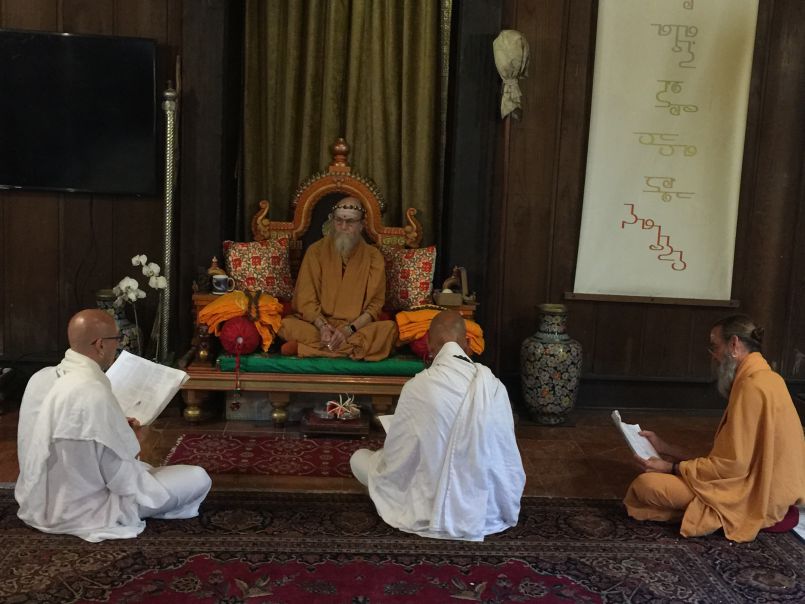
His life is a life of lessons--to gain the lessons from each experience is his goal. Thus meditation serves him in two ways--first as an anchor to the within and second to reap the harvest of a lasting knowledge from experience.
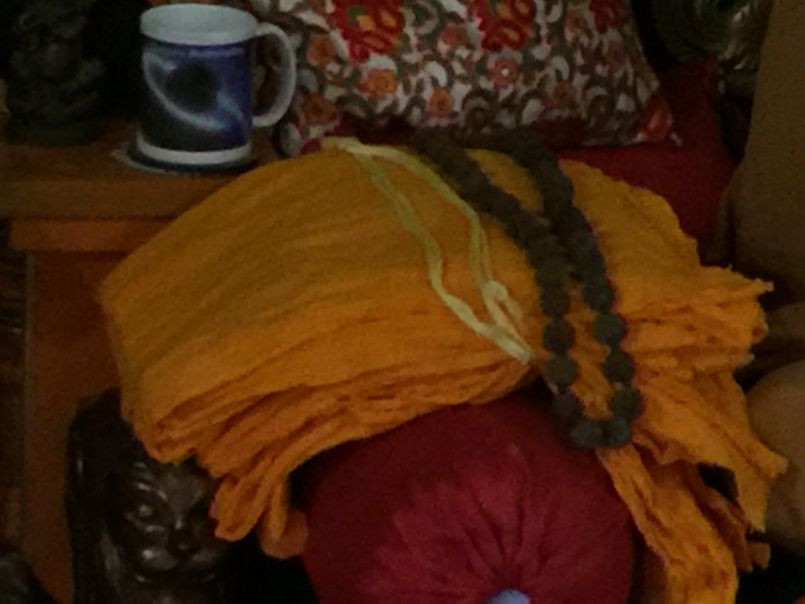
Tapas is both a pattern of Hindu monasticism and a state of being within that pattern when the kundalini is active.
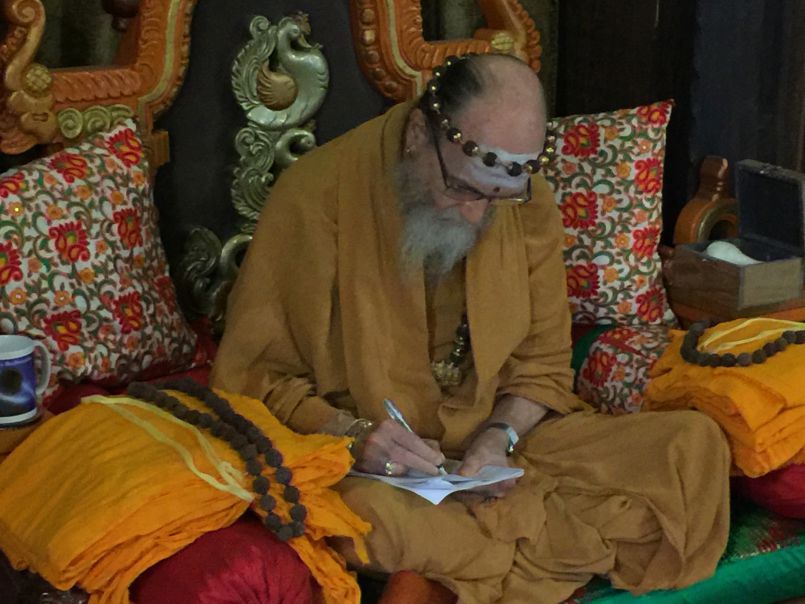
In speaking of this state of tapas Gurudeva explains: \"Being in a state of tapas is a volcanic condition. It is an introspective confrontation of the soul and the ego in its many subtle clever dimensions having been hardened and fortified by promiscuity dishonest dealings and other adharmic conduct in this or former lives.\"
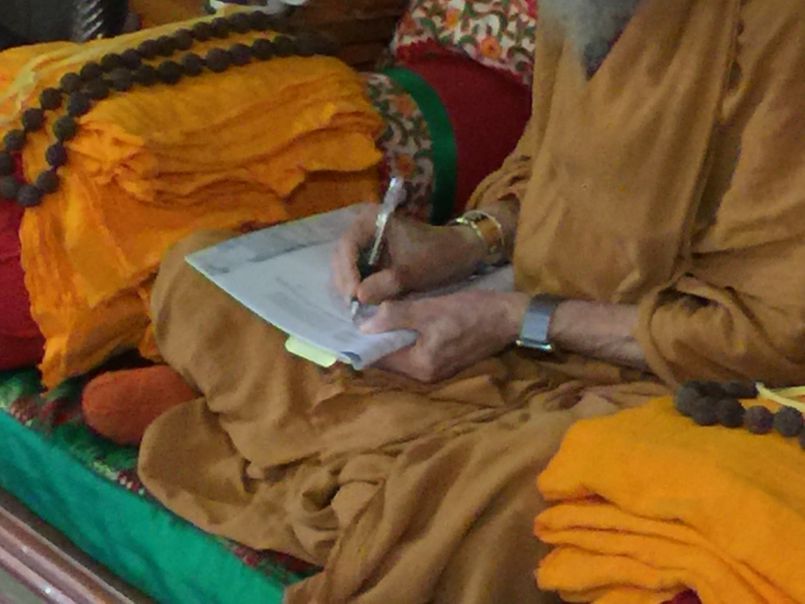
\" The crusty anava is audacious enough to claim itself as the soul. Naturally the fiery force of the kundalini burns through and separates ignorance from intelligence ego from soul. The fire of tapas is the unveiling grace of our Supreme God Siva.\"
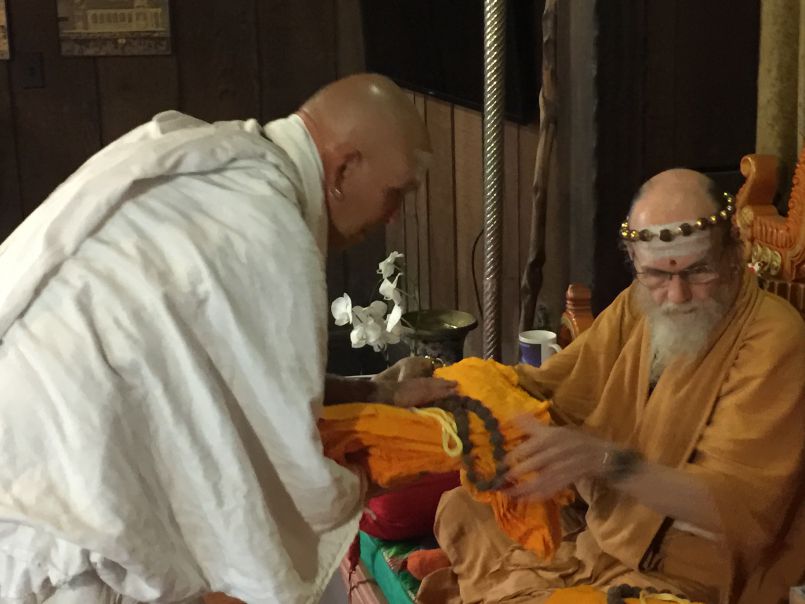
\" The ego or anava like the hardened stone can only be melted and remolded in the fiery furnace of tapas which only the yogi with permission and guidance from the guru can perform.\"
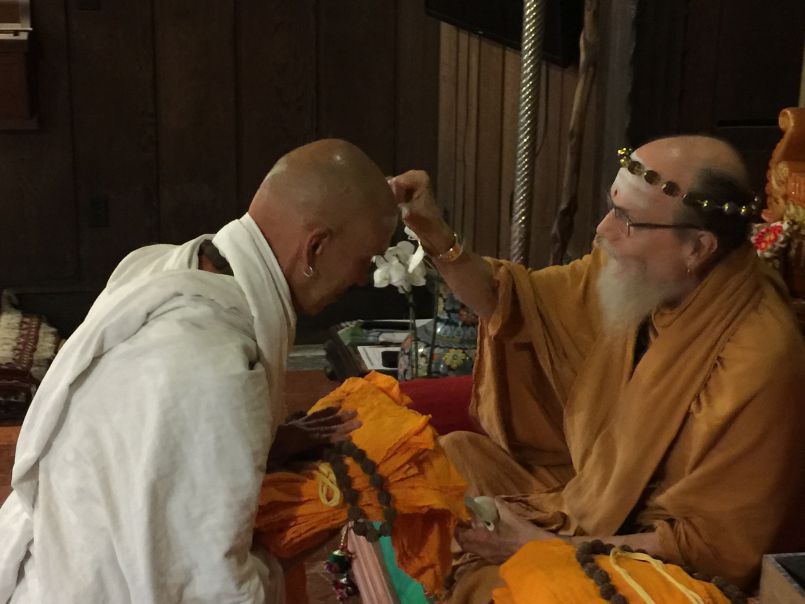
The yogi\
s life in the monastery is one of humble service worship and yoga .'
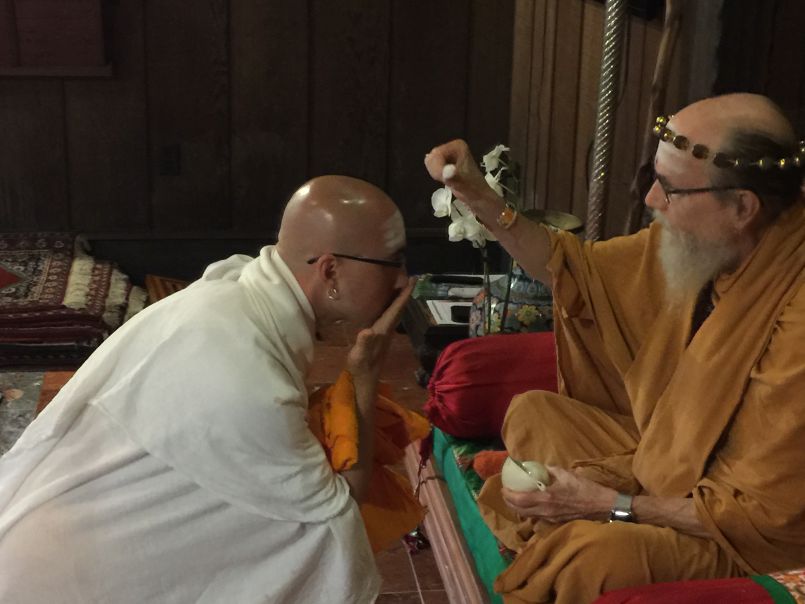
Gurudeva says of the yogi\
s focus on Lord Murugan and the depths of meditation \"To attain even the permission to perform yoga one must have the grace of Lord Ganesha and the grace of Lord Murugan. Lord Murugan is the God of the kundalini of the advanced yogic practices.'
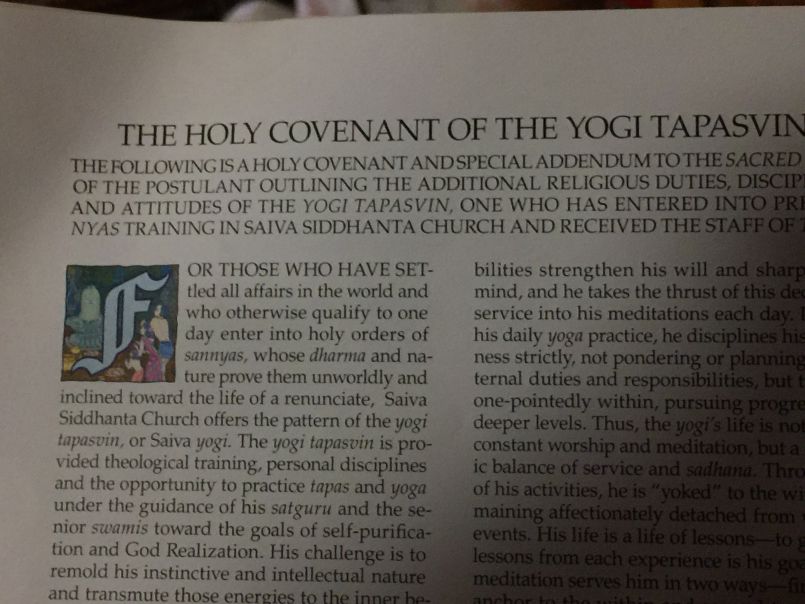
\" Unfoldment all happens within the kundalini and the chakras within our subtle bodies. Once a profound relationship is developed with Lord Murugan then with the guru\
s permission and guidance true yoga may commence.\"'
The heart of the holy trembles not in fear; All passions stilled it enjoys calm unruffled. Neither is there death nor pain Nor night nor day Nor fruits of karma to be experienced. That truly is the state Of the desire-renounced. Tirumantiram verse 1624
}
];
transitionSpeed:150});