
The Still Sadhu
April 1, 2017The monks schedule has entered sadhu paksha, a time of year that allows us to wander about in the early morning hours and remain alone and still. There is no mandatory roll-call at 5:30am, instead there is a mandatory call to dive within among the sacred grounds we call home. Before the sun rises, we begin our day's work and rise within the spine up to our highest potential.
This is also a good time for us to test our skills and see how we meditate without a guided group using Shum. After so many years one can use Shum intuitively and use the monthly mamsani at a different pace.
In looking through the archives to make this blog post, it becomes clear that we move so much throughout the year. Activities are never departed from our life and TAKA often reflects the various projects that we are involved in. But what sustains it all? The life-giving force behind our movement is our stillness. Like a battery on its charger, we gain power in the darkness of the morning before the city wakes and then unleash that energy right into the seva we set out to do. This dance, this sankalpa is performed without fail day in and day out, and our mission would not work without an inner fire being roused and fed with heavy loads of guru-given meditation.
So where does your day begin? Do you wake up as late as possible only to rush off feeling incomplete? The wholeness of being must be sought for in the silence within. This Self-expression must be exercised in order to live a life with meaningful permanence. All else is subject to the repetitive dual nature of prakriti. While we can not, and should not, avoid karmic law, we can arm ourselves with the virtuous qualities of the soul. We can wield the soul-nature without inner practice only so much. Eventually we need to become acquainted with our real selves.
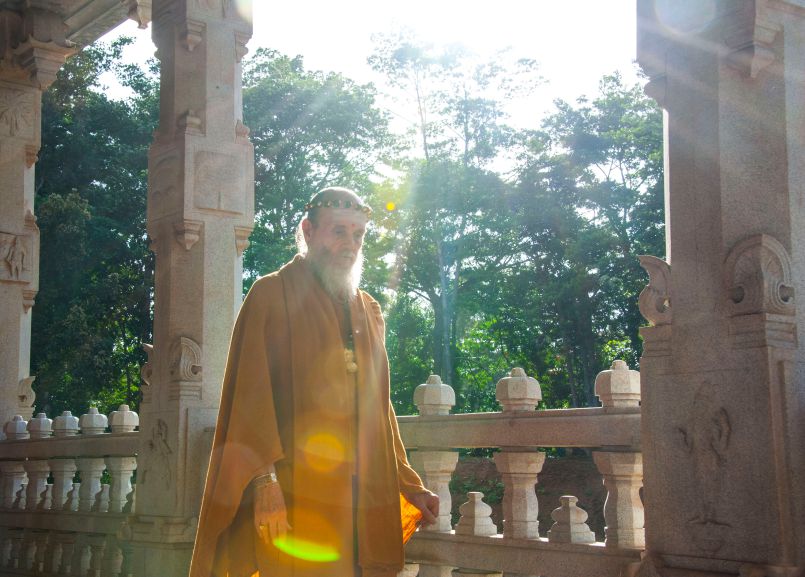
(Satguru Bodhinatha walks along Iraivan\
s inner wall as the sun steadily pokes out above the tree tops) What is meditation? The stillness that we seek for is enshrined in the teachings of Sage Patanjali. Meditation is yoga. Yoga is the restraint of mental activity. '
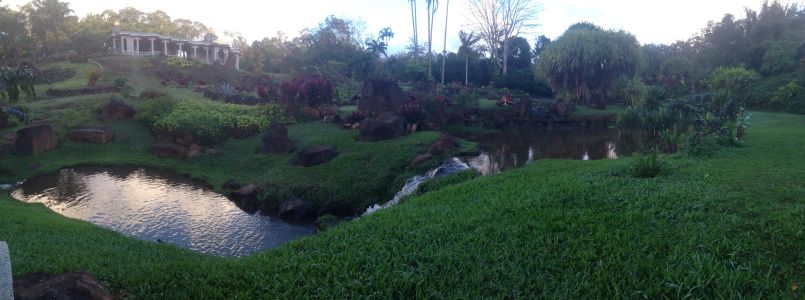
(an early morning shot of Iraivan\
s gardens) Knowing that yoga is the restraint of mental activities we can consciously work on subduing them. Correct knowledge, erroneous knowledge, fantasy, memory and sleep are the five birds that flutter in our mental aviary. '
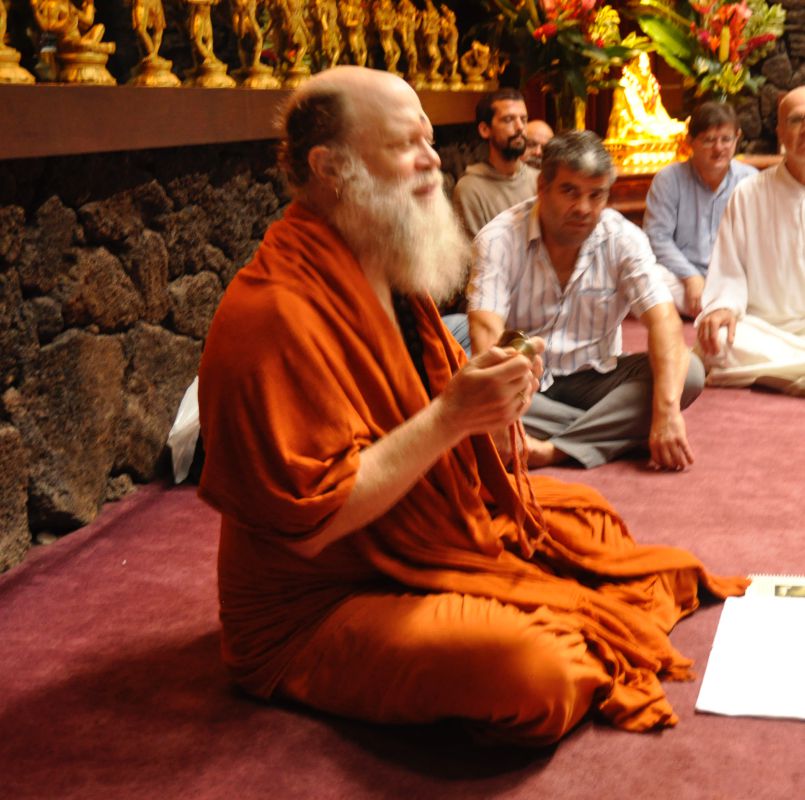
(Brahmanathaswami sings his way to bliss with a group of devotees) Success in meditation means opening the door and letting these mental birds fly off. Depending on your level of dedication determines the timeline of your success.
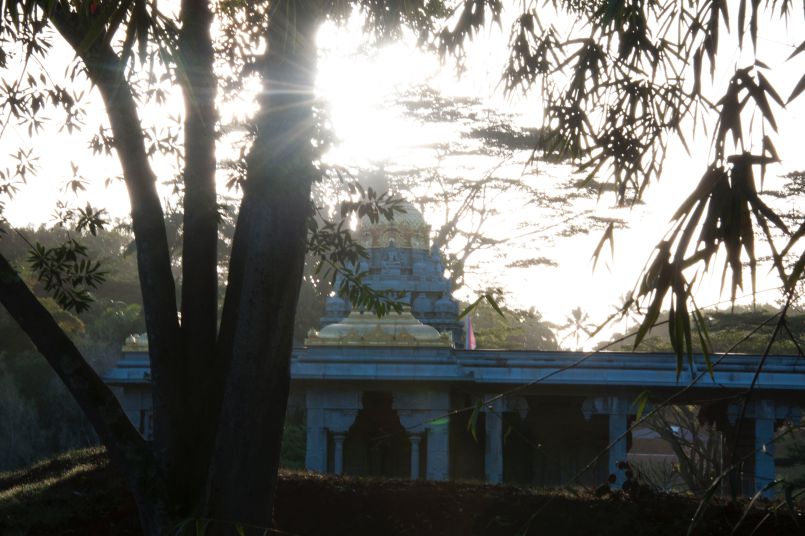
(the sun attempts to outshine Iraivan\
s gold capstone) In Patanjali\'s system there are two samadhis that one aims for: Samprajnata and Asamprajnata samadhi. One is with form, the other is without. '
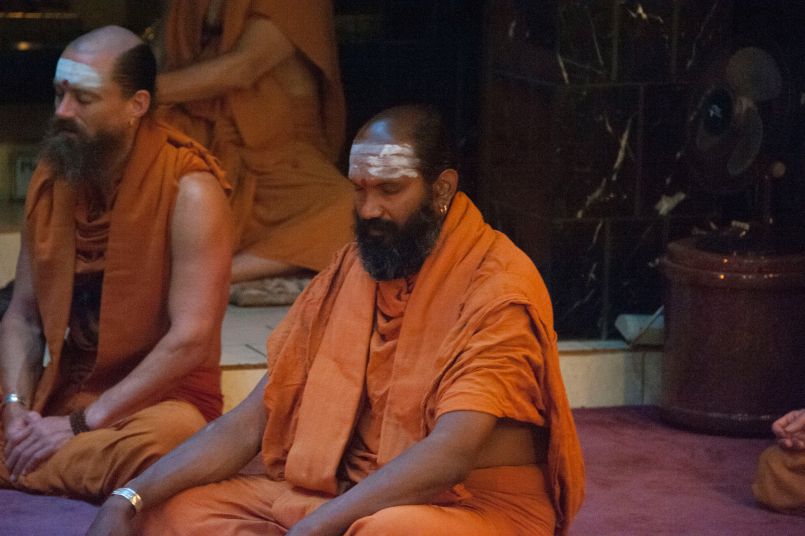
(Yoginathaswami slips away during a powerful Kadavul homa) \"At other times awareness takes on the form of the activities.\" Awareness is either with activities or it is in yoga. Bodhinatha stresses that the awareness of the activities, especially memory, can support the restraint process. It is much easier to find that which you know exists and then pursue its removal during your practice.

(a sadhu paksha morning is not complete without a lookout photo) Practice and dispassion are needed in your meditation trials. \"Dispassion can be recognized to have been mastered by those who have no desire for what is seen or heard about.\" The ultimate state is known as paravairagya. One no longer \"thirsts for the gunas\" but instead is attracted to stillness. We have the will to achieve mental calm, but we must want it more than the impending thoughts.
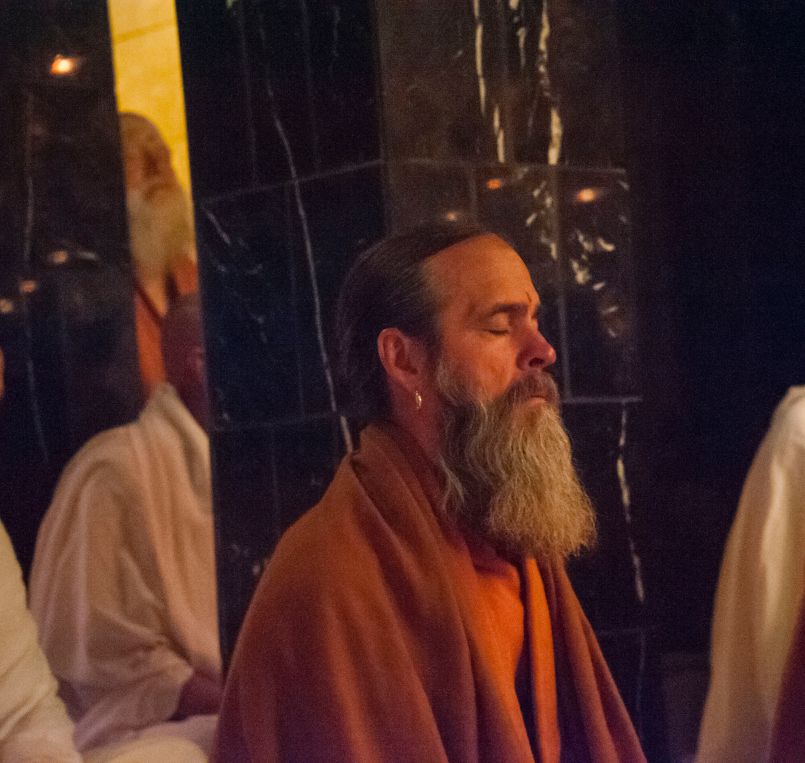
(Kumarnathaswami takes advantage of the moment and remains still) Bodhinatha says, \"When the spiritual awakening takes place of the purusha experiencing its own nature, there is a natural loss of interest in all of prakriti\
s manifestations.\" Sometimes we need the worship of Ishvara for all this to work right, sometimes we need to just let go in prapatti and surrender. The mind often appears stronger than we are but it is not true. The mind casts a large shadow when in reality it is but a light-play of appearances. '
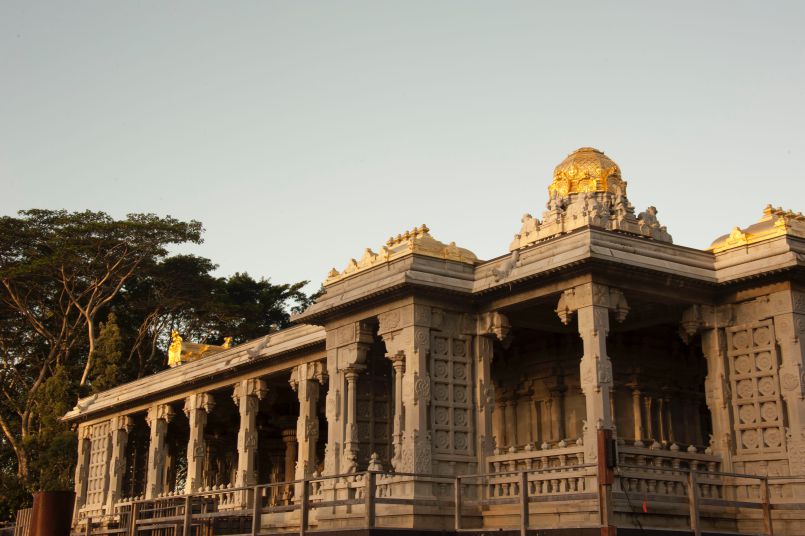
From the Agamas, \"The third sakti, which renders the sadhaka to be steadfast in his path and to be like a fixed pillar, is known as Stambhini. Even when he is troubled by extemporaneous obstacles or afflicted with likes and dislikes, he remains unperturbed and is capable of observing all the austere activities which are to be undertaken after diksha. If he is unable to perform those sadhanas due to unfavorable circumstances, he would be subjected to mental anguish. Still, he remains firmly motivated towards the attainment of Sivatva and never falls down from the initiated state. Such firmness is this stambhini-sakti, comparable to a pillar.\"
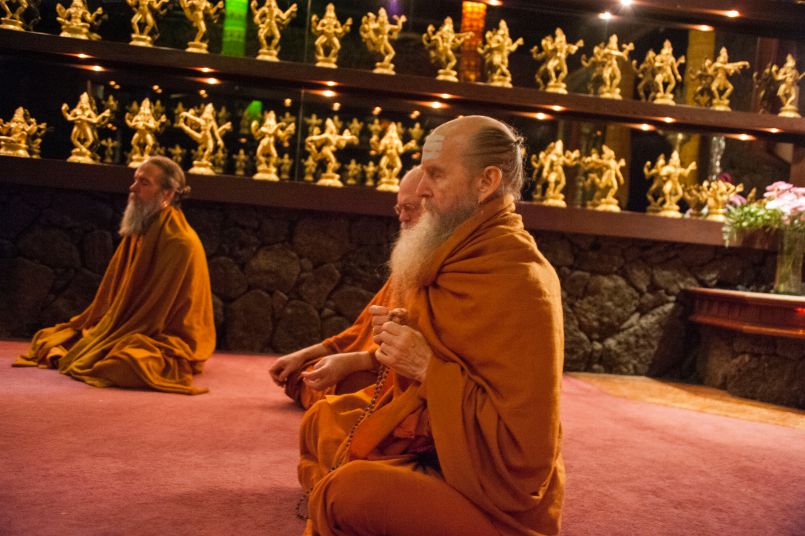
From Satguru Bodhinatha, \"There are a number of meanings attributed to the mantra AUM. One of them can be chosen to keep in mind while performing japa of the mantra. For example, AUM is explained in the the Mandukya Upanishad as standing for the whole world and its parts, including past, present and future.\"
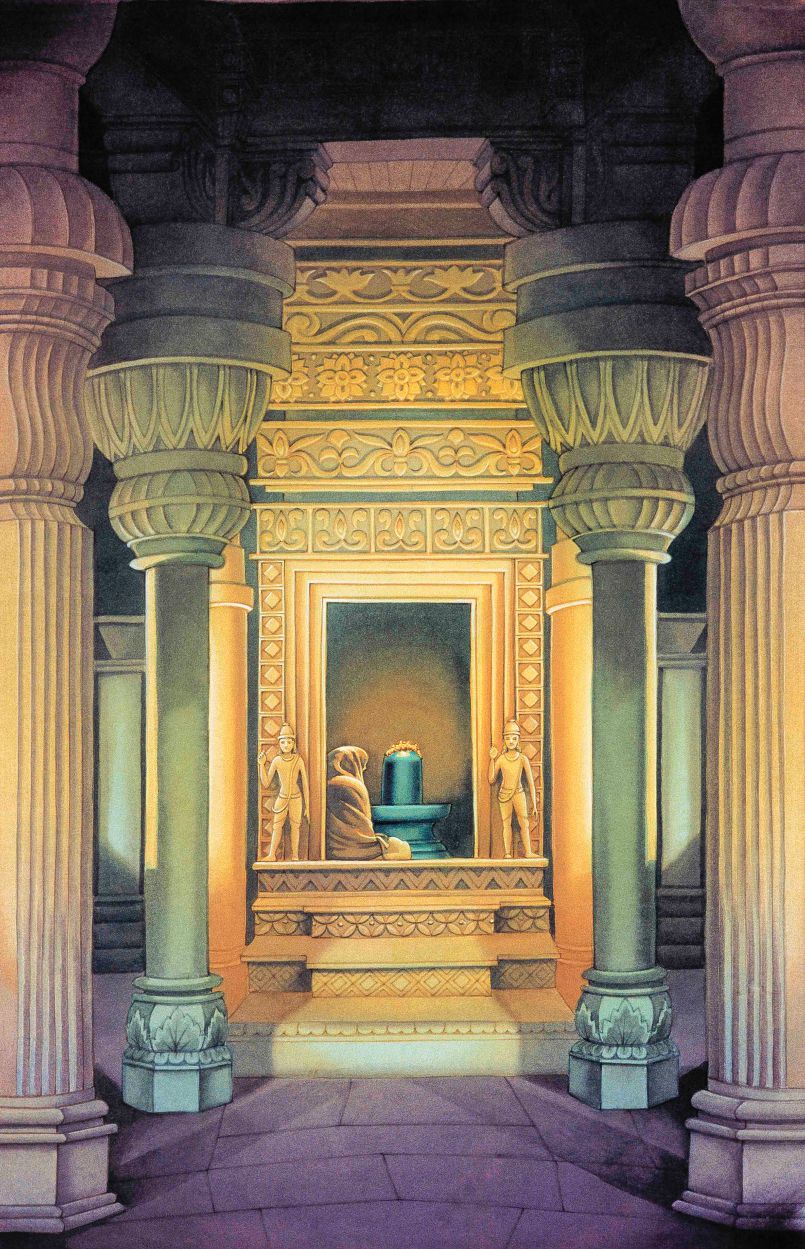
(a seeker contemplates the absolute in Pieter Weltevrede\
s painting) Our successes in meditation builds upon each other. We create samskaras from our practice that block other samskaras. '
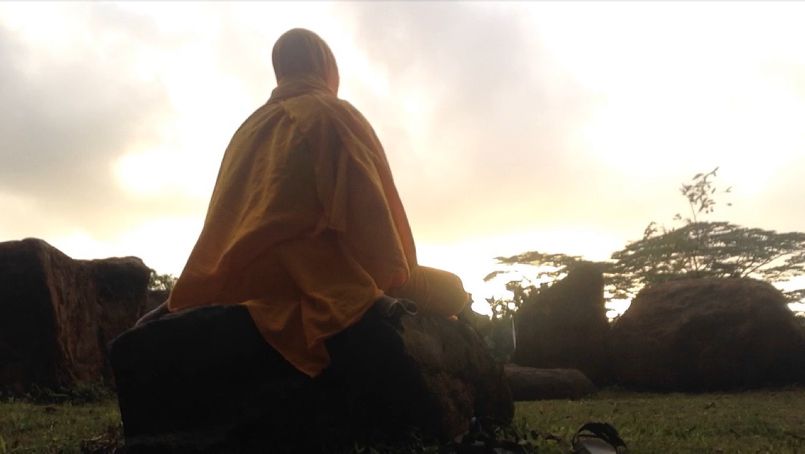
(a yogi sits in People\
s Park, a new meditation site at Iraivan) Bodhinatha explains the previous caption: \"Samskaras are imprints left on the subconscious mind by experience. However, they are also activators, constantly propelling consciousness into action. In this regard they are described as subliminal activators. The idea here is that through practice of unified contemplation a new samskara has been created that is more powerful than others and that it is of the nature to draw us inward in deep meditation rather than outward into external activities.\"'
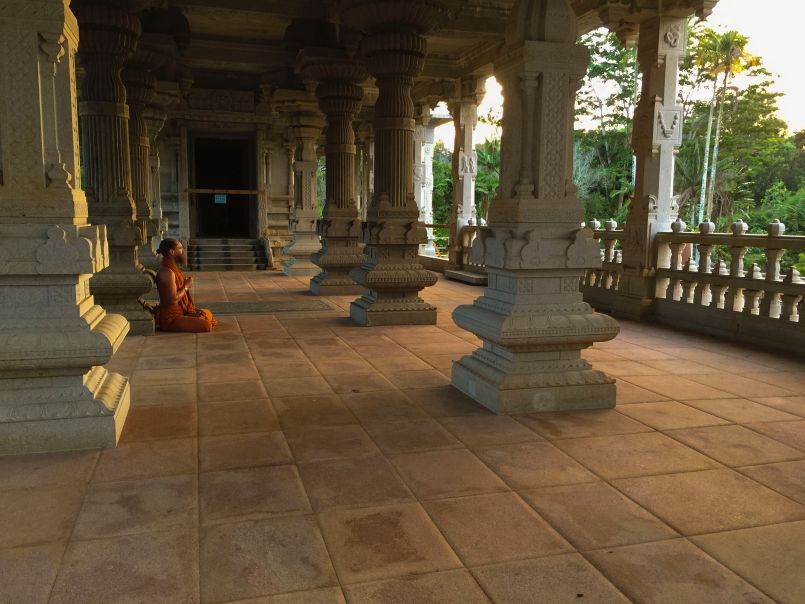
(Saravananathaswami can be found at Iraivan\
s main mandapam during sadhu paksha) Gurudeva takes us the rest of the way. \"In your constant striving to control that mind, your soul comes into action as a manifestation of will, and you quiet more and more of that mind and enter into a deeper state of contemplation where you see a scintillating light more radiant than the sun, and as it bursts within you, you begin to know that you are the cause of that light which you apparently see. And in that knowing, you cling to it as a drowning man clings to a stick of wood floating upon the ocean.\"'
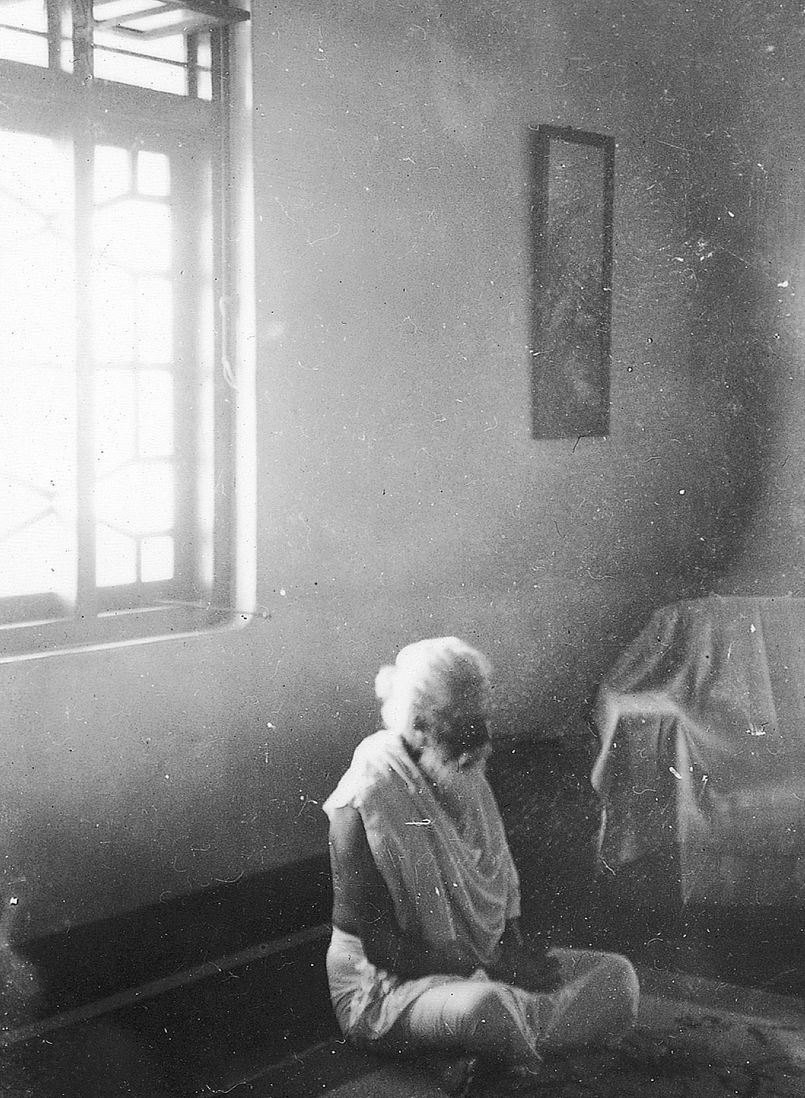
(Sri Yogaswami sat for three days at a time, then rested for a day and went another three) \"You cling to it and the will grows stronger; the mind becomes calm through your understanding of experience and how experience has become created. As your mind releases its hold on you of its desires and cravings, you dive deeper, fearlessly, into the center of this blazing avalanche of light, losing your consciousness in That which is beyond consciousness.\"
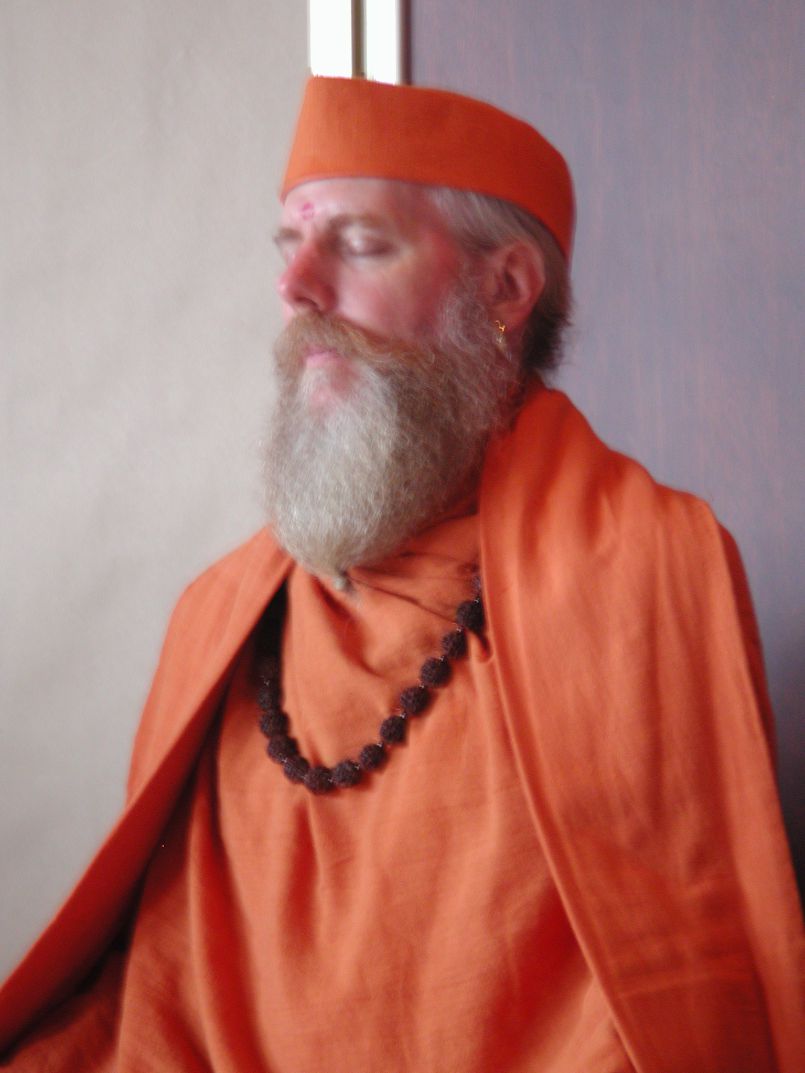
(Paramacharya Sivanathaswami enjoys an inner break on the European Innersearch) \"And as you come back into the mind, you not only see the mind for what it is; you see the mind for what it isn\
t. You are free, and you find men and women bound, and what you find you are not attached to, because binder and the bound are one. You become the path. You become the way. You are the light.\"'
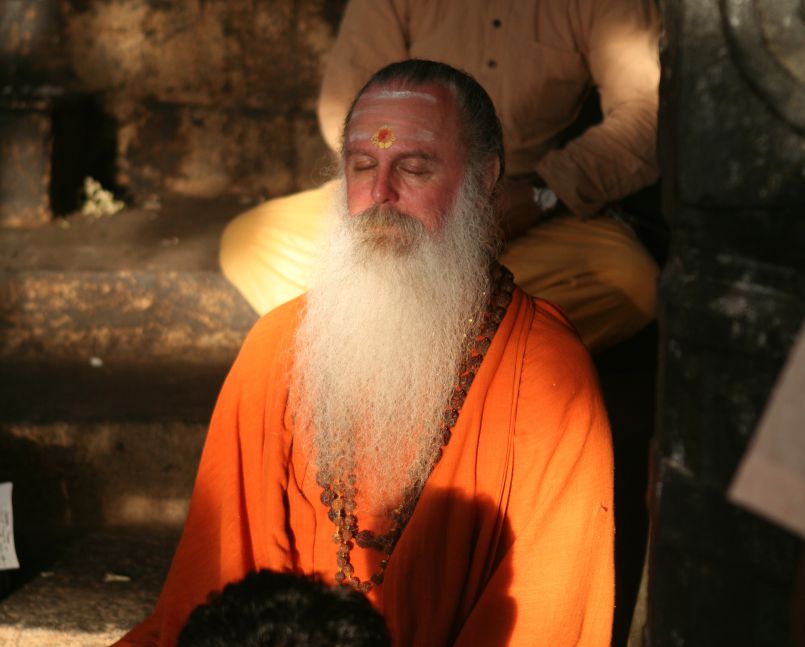
(Paramacharya Sadasivanathaswami sits in stillness on the Cambodia Innersearch) \" And as you watch souls unfold, some choose the path of the Spirit; some choose the path of the mind. As you watch and wonder, your wondering is in itself a contemplation of the universe, and on the brink of the Absolute you look into the mind, and one tiny atom magnifies itself greater than the entire universe, and you see, at a glance, evolution from beginning to end, inside and outside, in that one small atom. \"
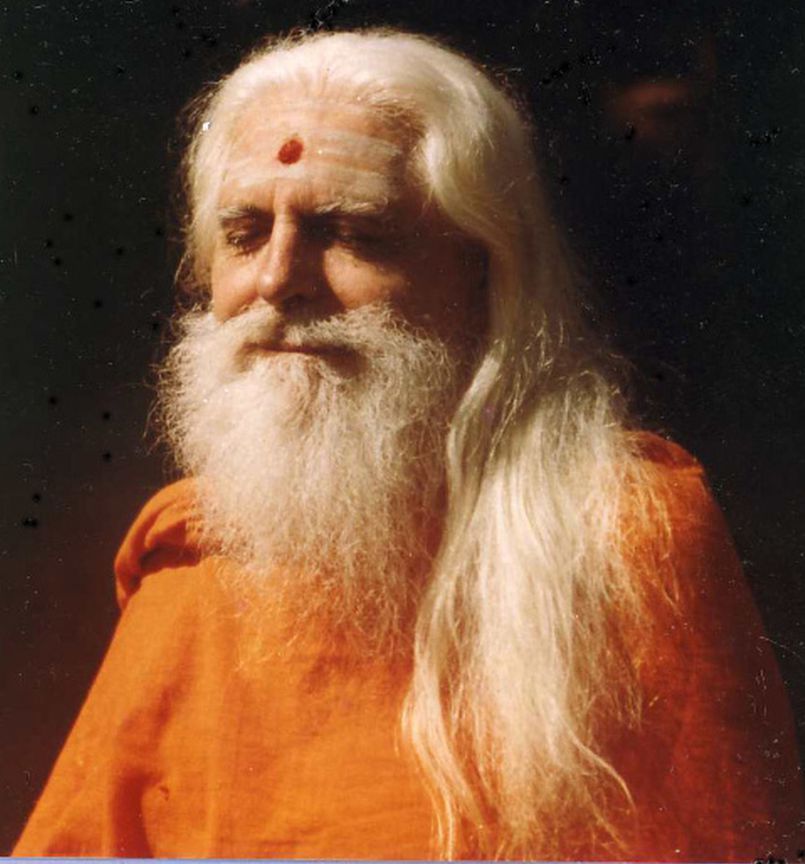
(Jivanmukta) \"And as you come out of that samadhi, you realize you are the spirit, you become that spirit, you actually are that spirit, consciously, if you could say spirit has a consciousness. You are that spirit in every living soul. You realize you are That which everyone, in their intelligent state or their ignorant state, everyone, is striving for--a realization of that spirit that you are.\"
}
];
transitionSpeed:150});