
Arriving in India
June 22, 2017Our traveling monks report:
Years ago we looked at an empty piece of land and contemplated the inconceivable task of constructing a temple that would be hand carved from granite in India, then shipped and constructed in Hawaii. Now we look ahead a short distance into the future and we can see the day when the last chisel will have been sharpened, the last stone placed, and the last scaffolding removed. It is such a rare opportunity and blessing to participate in the carving of a Siva Temple and especially one established by a Parampara of Satgurus with the impetus of the centuries behind it.
In about 1990, Gangadharanathaswami, the spiritual leader for a large population in Karnataka state, visited the Palaniswami Temple in San Francisco. At Gurudeva's request, several monks showed him the plans for our Iraivan Temple and asked for his assistance. Without hesitation or even discussion he offered his assistance.
He made available a large piece of land outside of Bangalore, the carving site was set up and carving commenced. We were desperate for a qualified person that we could trust to run the carving site. Gurudeva asked Jiva Rajasankara, a long time devotee living in Malaysia if he would take on this task. Jiva agreed without reservation. In January 1994 he packed up his family and belongings and left for India.
For more than twenty years this family has supervised the carving and shipping of each stone in the temple, a monumental task. Jiva's two young sons, Senthil and Thurai, grew up, found wives in India and became experts in the many aspects of managing a carving site. They have participated in a number of temples in India and their company, Artha Enterprises, has become the "go to" firm for anyone in India who wants exquisite custom carved granite signs, works of art or decorative blocks for their home, garden or office.
Almost all of Iraivan's final carving has been completed and the next step is to bring a team of carvers, silpis, to Hawaii to do the final fitting and installation of the stones. Yoginathaswami is visiting the Rajasankara family in Bangalore to discuss all the details of bringing over the next team of silpis and coordinating the final construction.
Another unequivocal supporter of Iraivan has been Mahaswamigal Tiruchiswami, an important and popular Swami in Bangalore and throughout the Hindu world. Upon his Mahasamadhi, his successor Sri Jayendrapuriswami has been equally supportive so one of our first stops in Bangelore is Kailas Ashram to visit Swami.
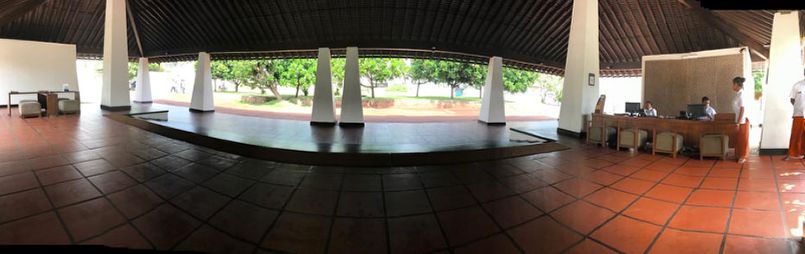
After the long drive from Jaffna we spend the night at the Jetwing Lagoon Hotel in Negombo, just outside of Colombo. Our flight is late in the afternoon the following day, so we spent some of our time checking out this hotel and its facilities in preparation for next year\
s Innersearch.'
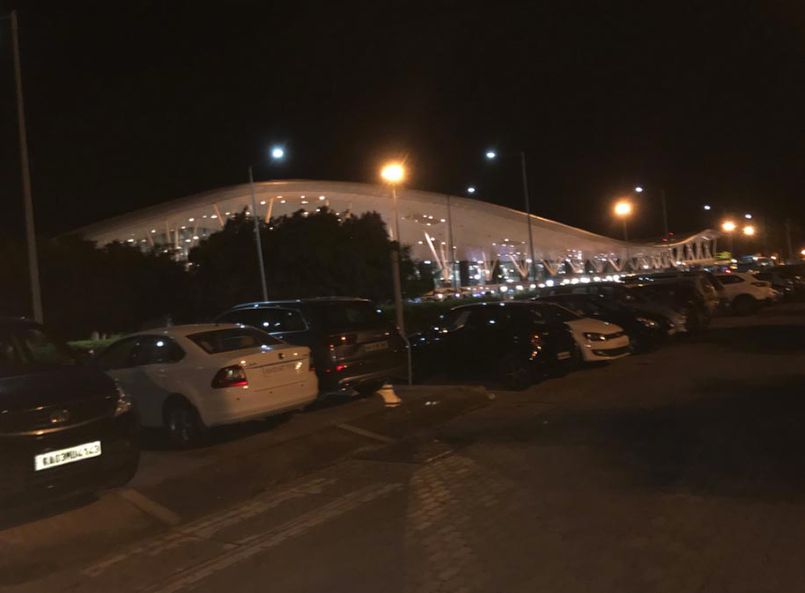
When we passed through the Bangalore Airport in 1995 it was a typical Indian concrete block building with just a few gates and minimal maintenance. Now as we land we are greeted by a modern bustling airport. At night it is more a work of art than a building. We are greeted by Thurai, his wife Swapna and daughter Chinmayee.
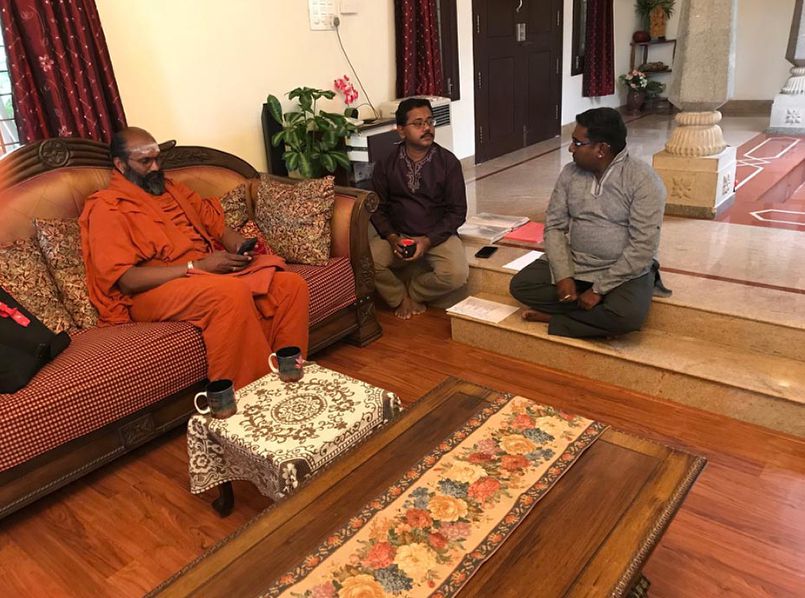
The work begins. After spending the night in the Rajasankara home, we get up early to attend the daily family worship, a wonderful breakfast, and then Yoginathaswami sits with Senthil and Thuraisingham to start planning the completetion of Iraivan. A great many decisions are worked through in a short time, then we are off to visit Sri Jayendrapuriswami, our dear friend and head of the Kailas Ashram. Both he and his Guru, Sri Tiruchi Mahaswamiul have been invaluable help in moving Iraivan forward.
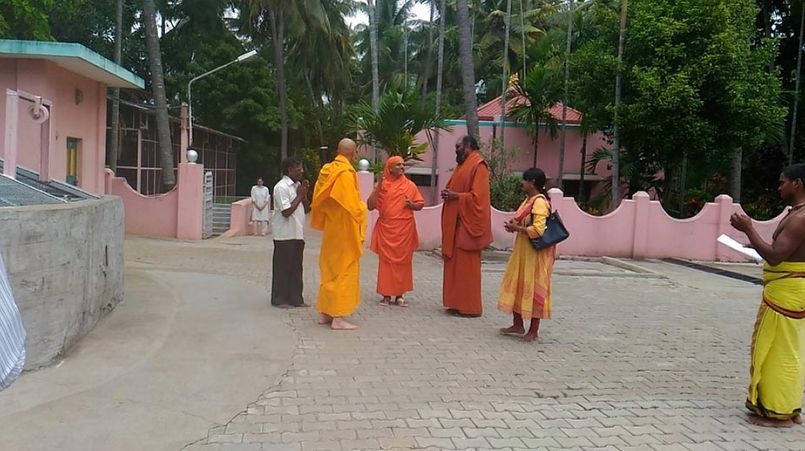
Upon arrival at Kailas Ashram, Jayendrapuriswami rushes out to meet us.
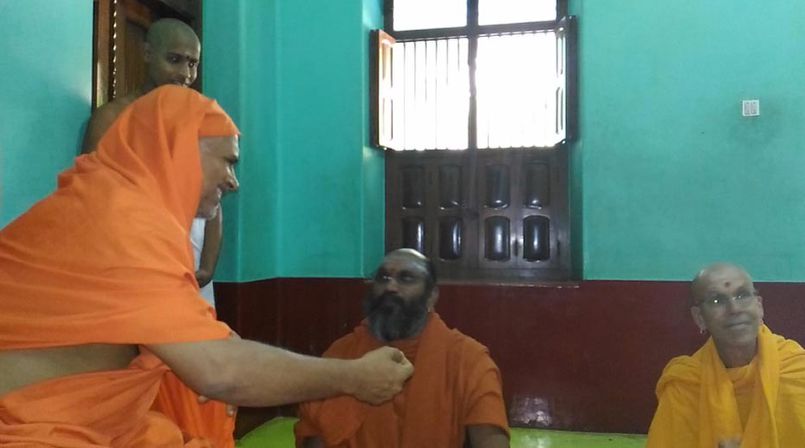
We inform Swamiji that we have commitments and can only stay for an hour. He protests that we have to stay at least two days. We compromise and agree that we will spend the rest of the day.
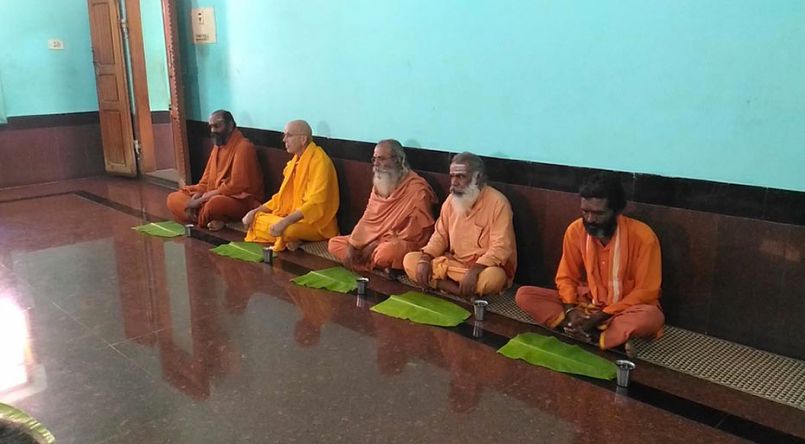
Swami continues the tradition, established by his Guru, of feeding all who come, including any Swamis who might be staying at the ashram. During the meal bramachariya from his padasala, priest training school, take turns chanting Sanskrit verses.
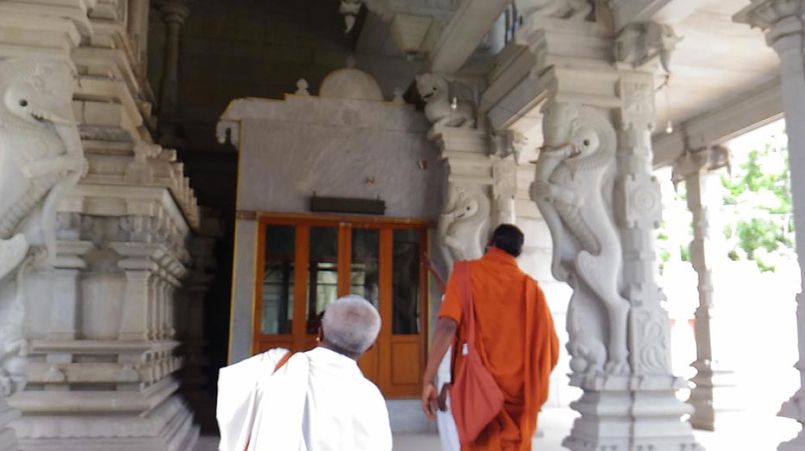
Next we are taken to see an outer mandapam that is under construction adjacent to the present Ashram Rajarajeswari Temple. Yoginathaswami supervised much of the building of Iraivan Temple and is ever curious about methods of temple construction.
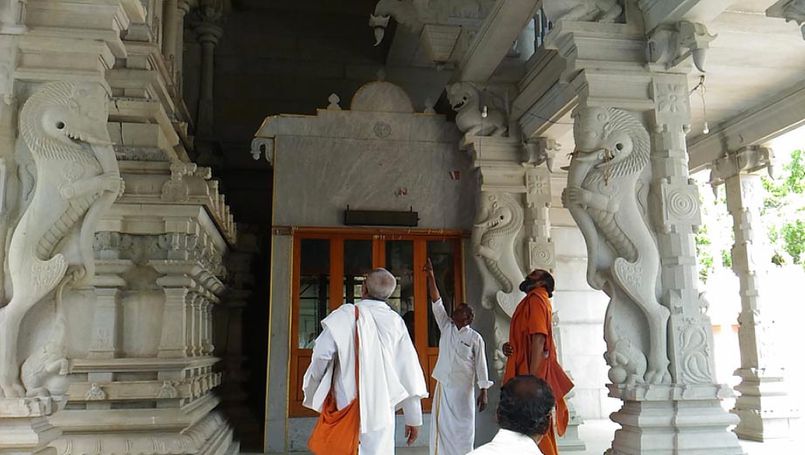
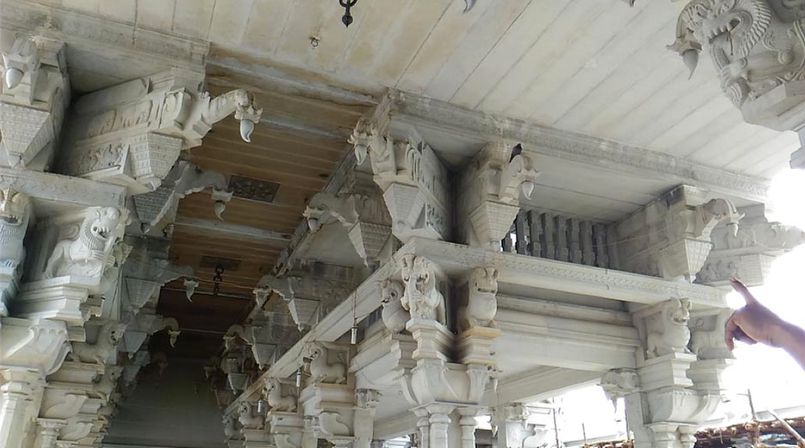
This mandapam or hall under construction has some very interesting and unusual work. The supports on top of the pillars jut outward and upward far more than normal, then many tons of roofing stones are placed upon the supports without having them tip over. How do they do it?
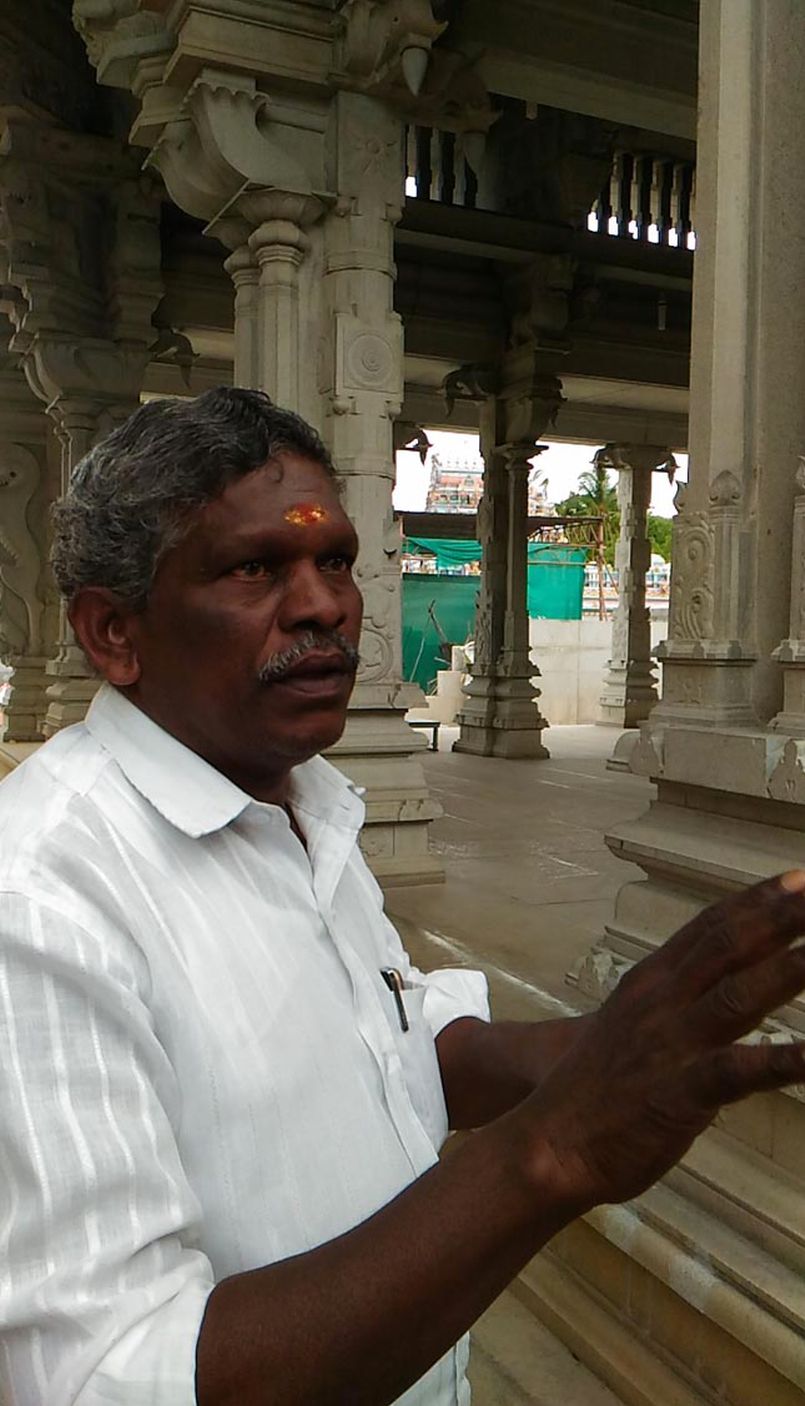
The sthapathi or architect in charge of this whole project spent more than an hour explaining the details of how it is designed.
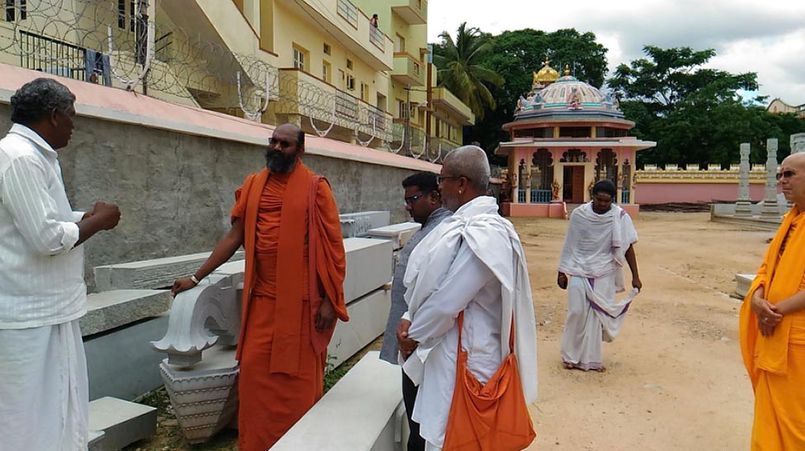
The secret is in the carving of the support stones which sit atop the pillas. Normally they are quite short but for this project many of them are quite long and very heavy, providing a counter balance for the roofing stone.
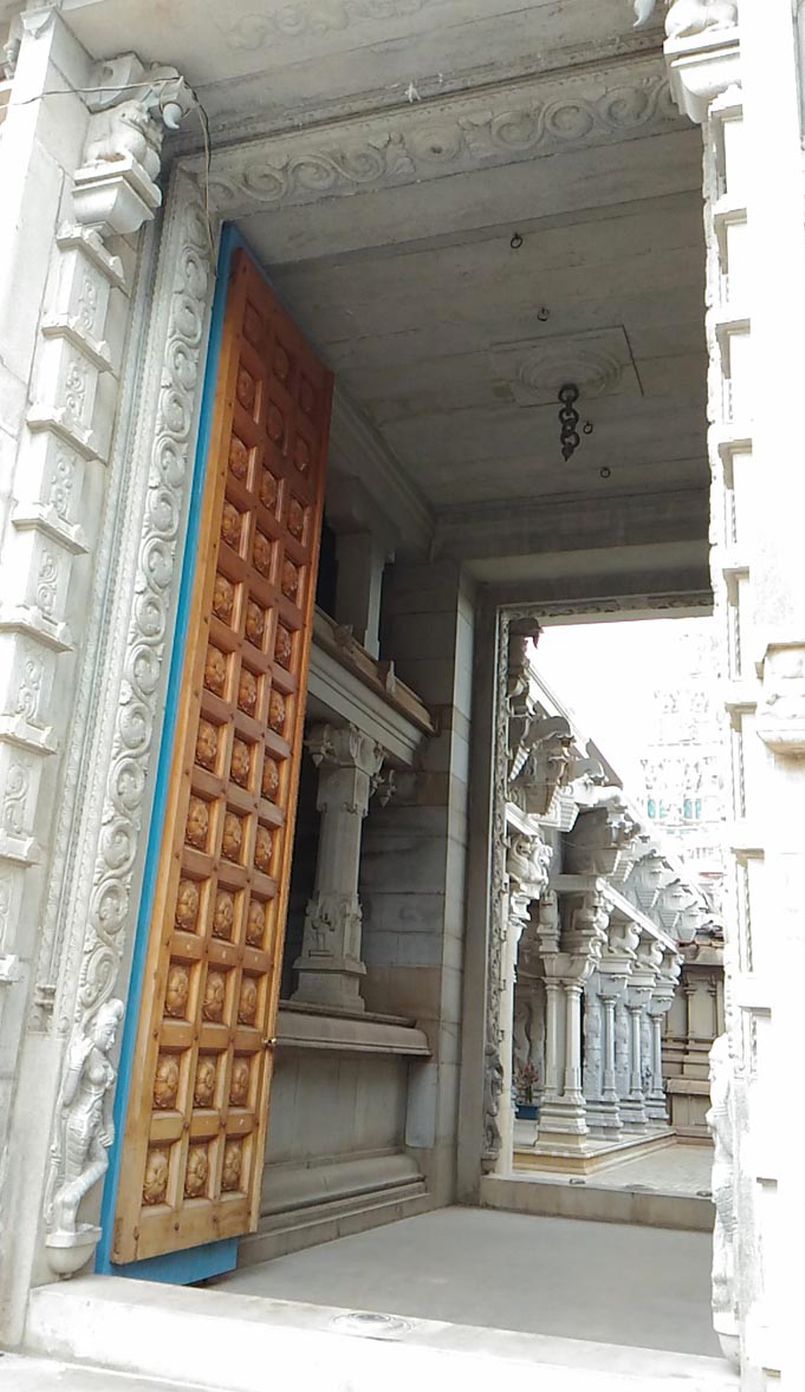
Another look at the project from the street, looking through the existing Rajagopuram.
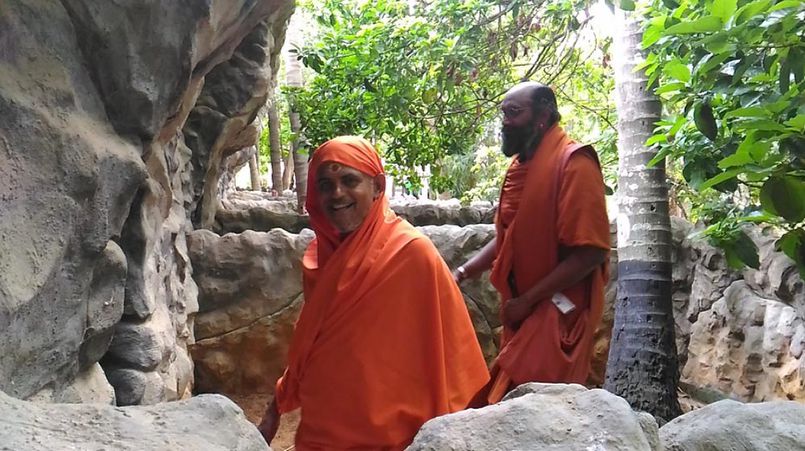
Swami took us to his meditation caves, a series of rooms which are made to look like caves where devotees can come and stay for a period of time, cut off from the sights and sounds of the outside and can find the experience of solitude.
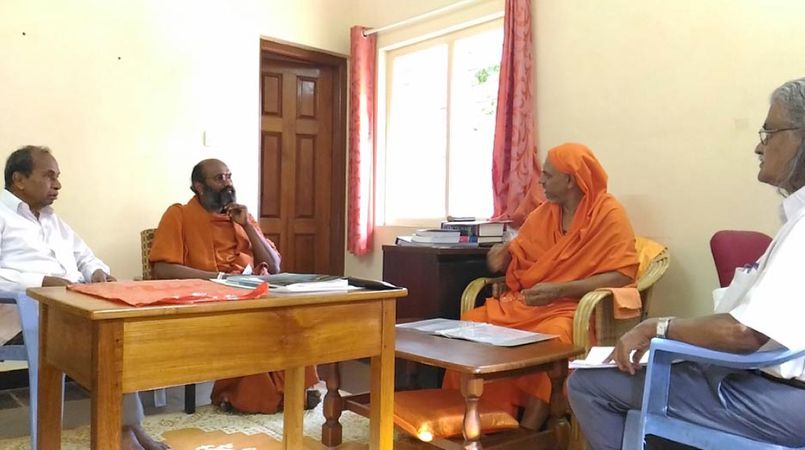
Every afternoon, Swami meets with several scholars to work on a translation of the Pancha Tantra from Sanskrit to English. He has modeled this after the daily editing sessions that are held at Kauai Aadheenam. Also during the day we saw solar panels, water reclamation filters, a language lab, a hall for yoga, a pyramid shaped meditation building, gardens, milk cows, various ayurvedic clinics, a bookstore for religious books and more. Then on to the temples.
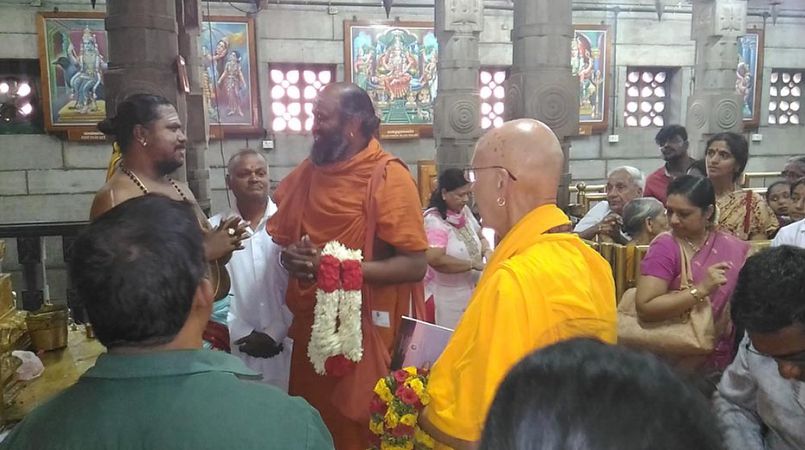
After puja, Yoginathaswami talks with the priest at the Rajarajeswari Temple.
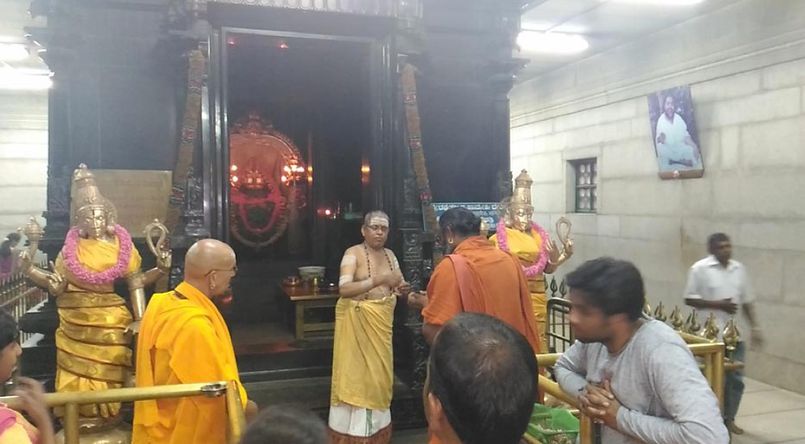
The Sri Chakra Temple, also built and maintained by Kailas Ashram. The entire inner sanctum is hand polished black granite and is unusually striking.
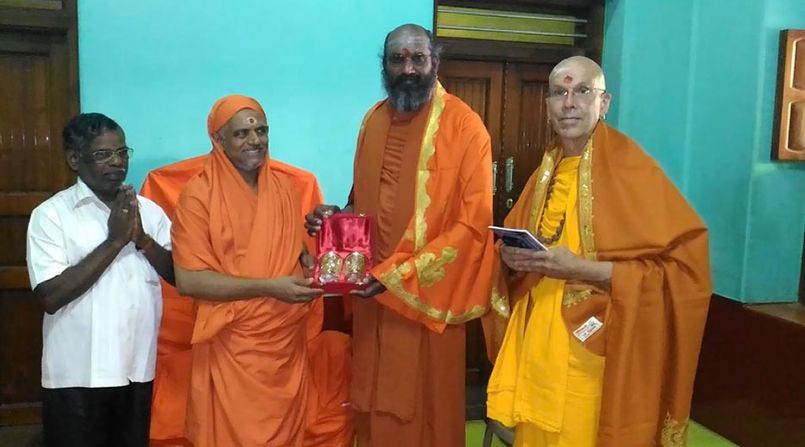
Before we return home, Swami gifts a set of gold plated cups to be used in our ceremonies for Lord Nataraja. An unexpected end to an amazing day.
}
];
transitionSpeed:150});