
The Huntington Library, Art Collections and Botanical Gardens
September 14, 2017Join Paramacharya as he walks through The Huntington: a collections-based educational and research institution established by Henry E. Huntington(1850-1927). In addition to the library, the institution houses an extensive art collection with a focus in 18th and 19th-century European art and 17th to mid-20th-century American art. The property also includes approximately 120 acres of specialized botanical landscaped gardens, most notably the "Japanese Garden", the "Desert Garden", and the "Chinese Garden" (Liu Fang Yuan).
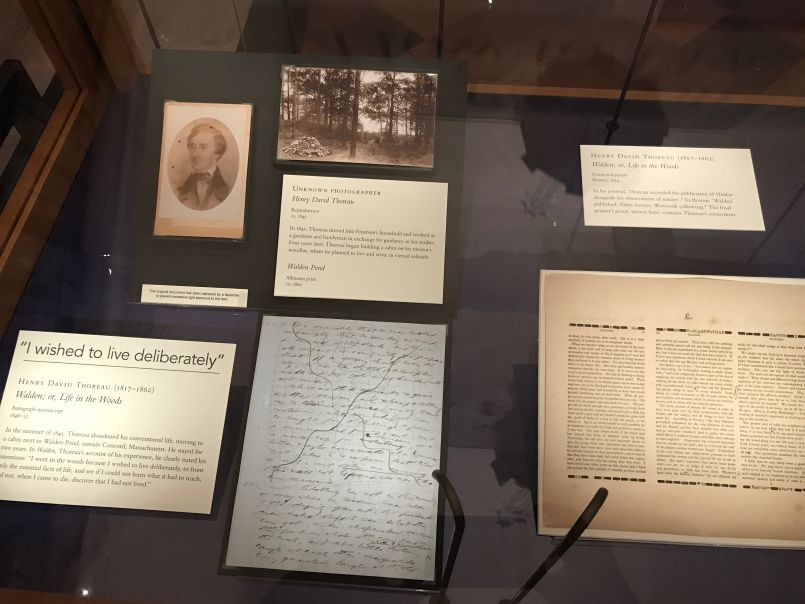
The Library building was designed in 1920, by the southern California architectMyron Hunt in theMediterranean Revival style. The library contains a substantial collection of rare books and manuscripts, concentrated in the fields of British and American history, literature, art, and the history of science. Spanning from the 11th century to the present, the library's holdings contain 7 million items, over 400,000 rare books, and over a million photographs, prints, and other ephemera. Highlights include one of 11 vellum copies of the Gutenberg Bible known to exist, theEllesmere manuscript of Chaucer ca. 1410, and letters and manuscripts byGeorge Washington,Thomas Jefferson,Benjamin Franklin, andAbraham Lincoln. It is the only library in the world with the first two quartos ofHamlet; it holds the manuscript ofBenjamin Franklin's autobiography, Isaac Newtons personal copy of his Philosophiae Natural is Principia Mathematica with annotations in Newtons own hand. the first seven drafts of Henry David Thoreau's Walden, John James Audubon's Birds of America, and first editions and manuscripts from authors such asCharles Bukowski, Octavia E. Butler. Jack London, Alexander Pope, William Blake, Mark Twain, and William Wordsworth.
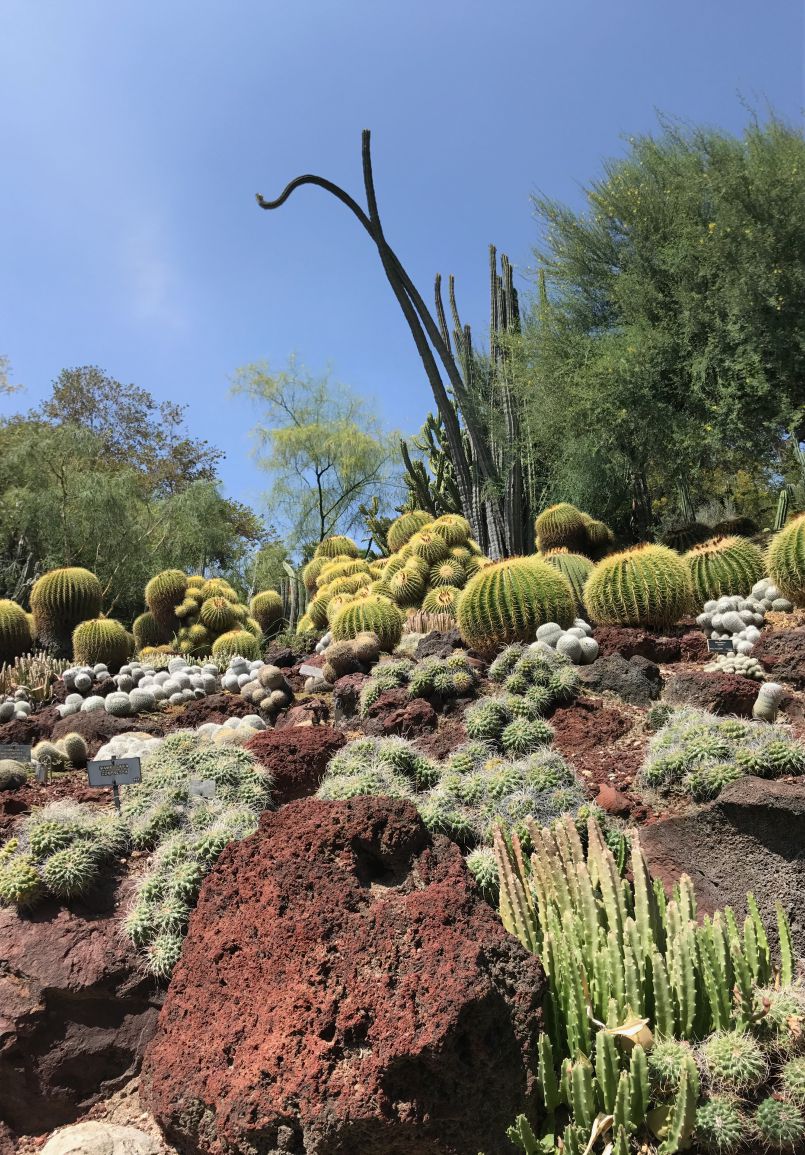
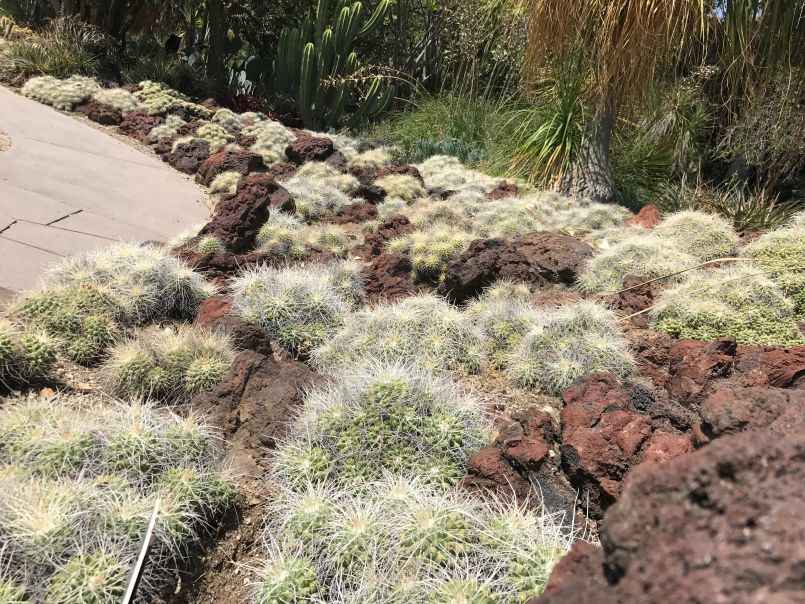
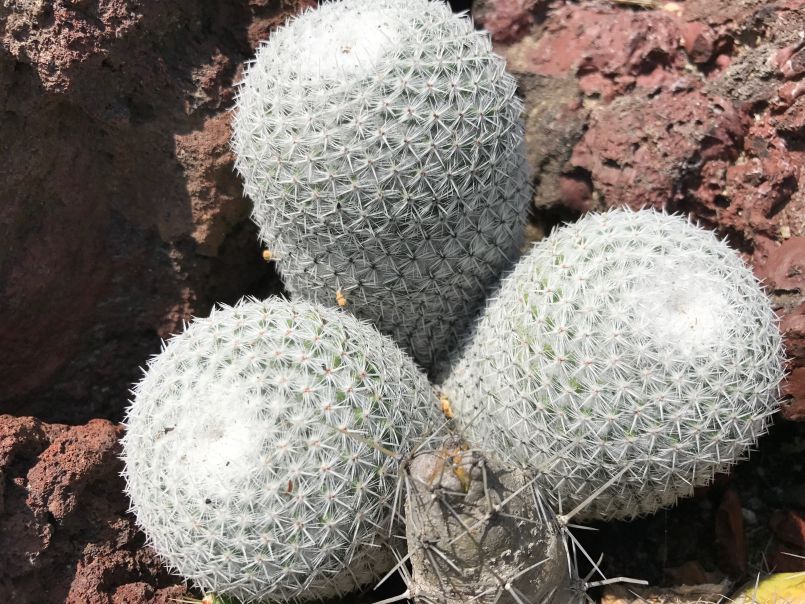
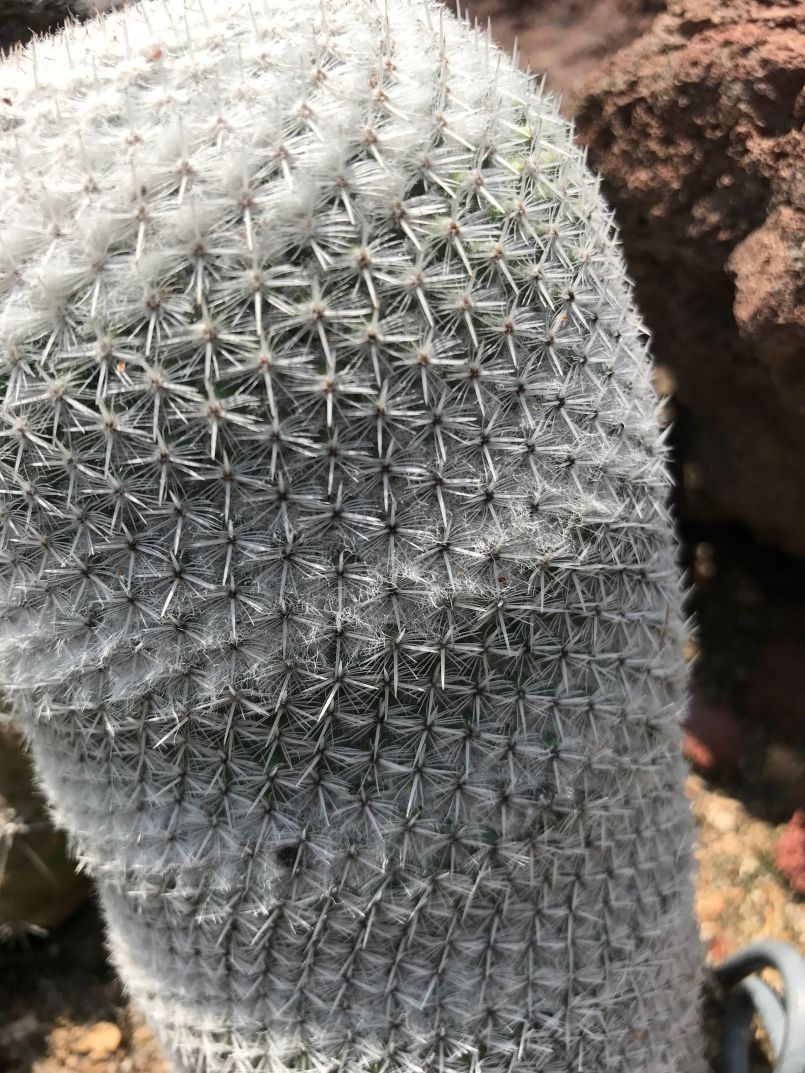
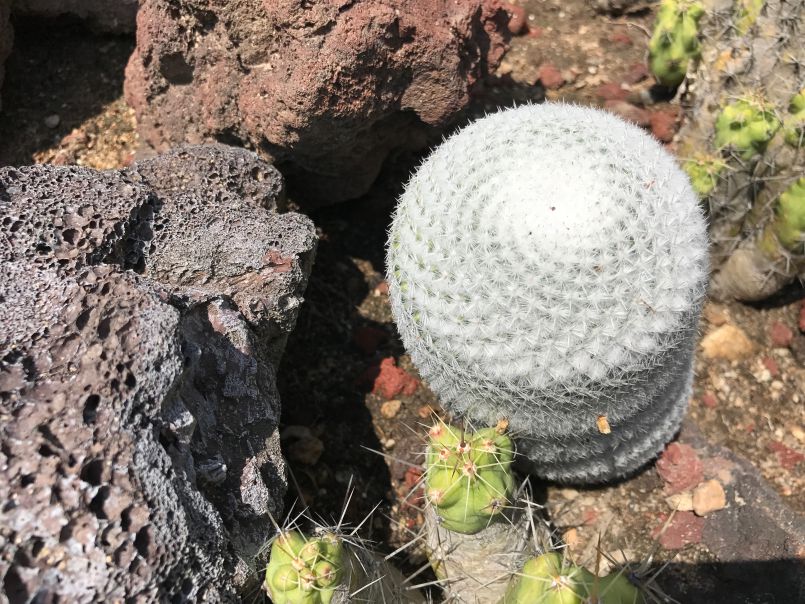
The Desert Garden, one of the world's largest and oldest outdoor collections of cacti and other succulents, contains plants from extreme environments, many of which were acquired by Henry E. Huntington and William Hertrich (the garden curator). One of the Huntington's most botanically important gardens, the Desert Garden, brings together a plant group largely unknown and unappreciated in the beginning of the 1900s. Containing a broad category of xerophytes (aridity-adapted plants), the Desert Garden grew to preeminence and remains today among the world's finest, with more than 5,000 species.
For more info check out their wiki at: https://en.wikipedia.org/wiki/Huntington_Library
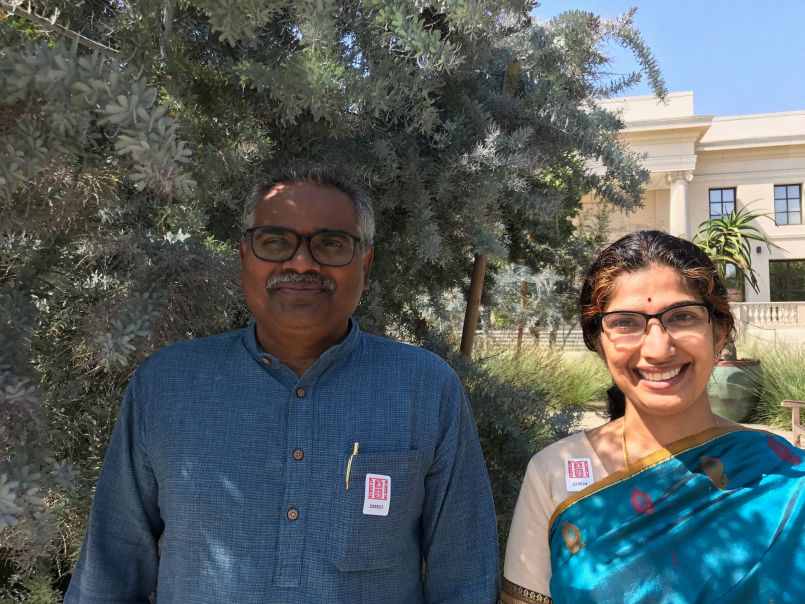
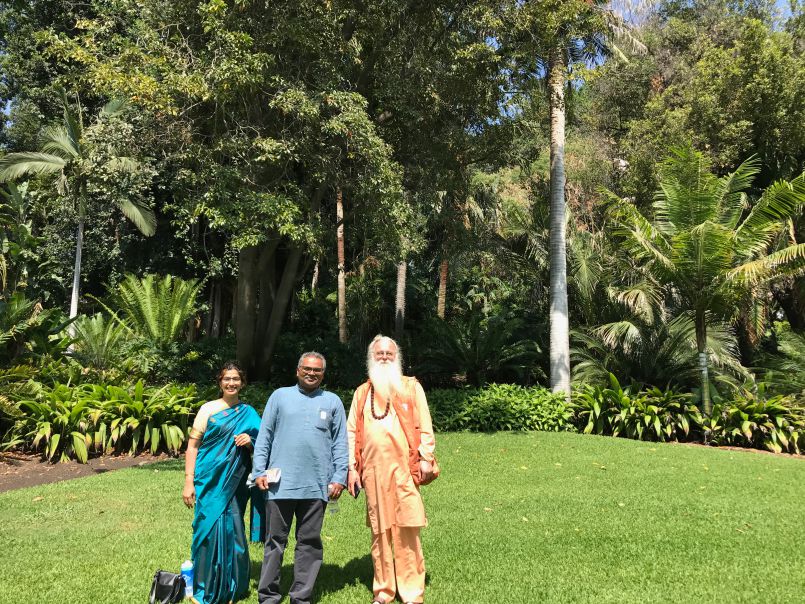
Ravi and Sheela Visswanathan drive and guide us to the plants. Thank you both.
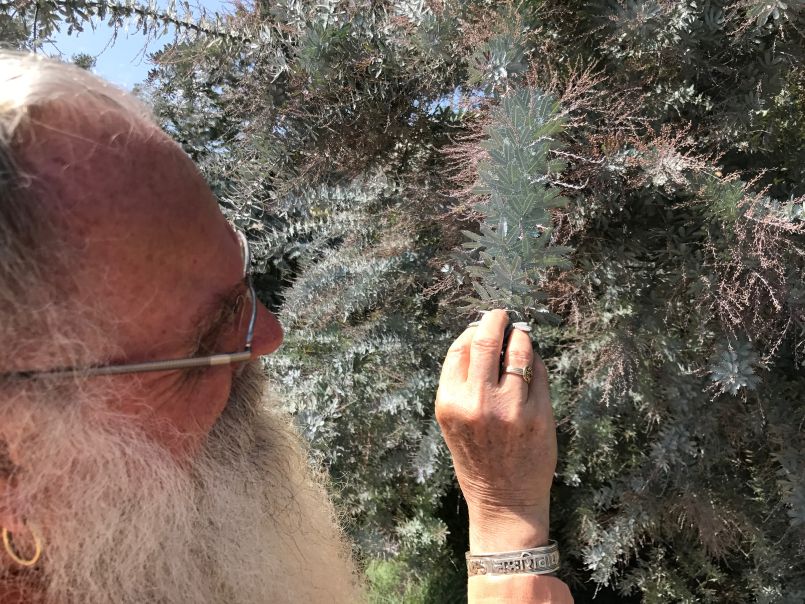
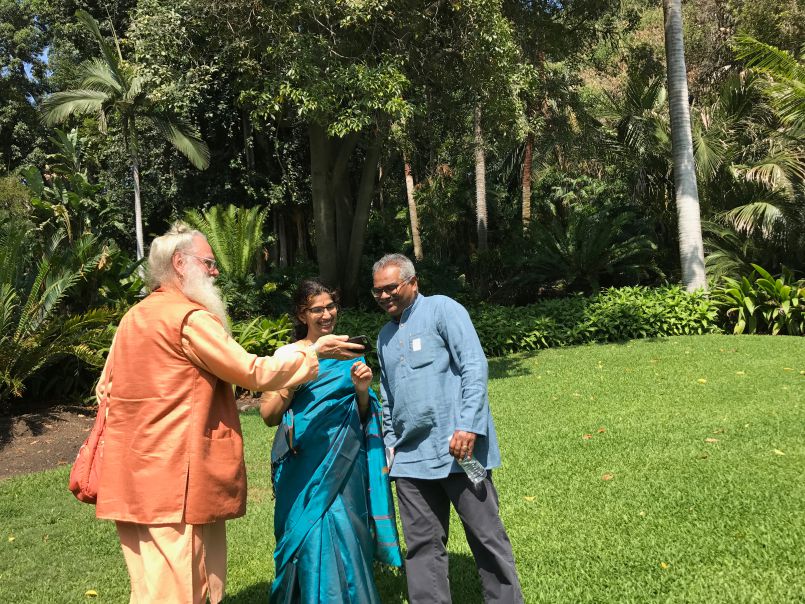
Paramacharya begins dissecting the plants, taking pictures and gathering data for his work at the monastery. His goal today is to identify species that would add to Siva\
s Sacred Garden on Kauai. This Acasia was A-listed. '
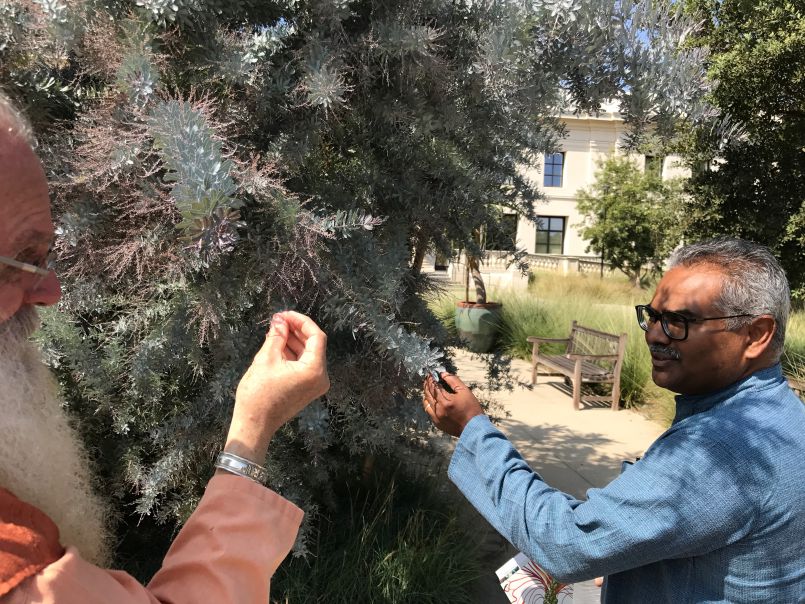
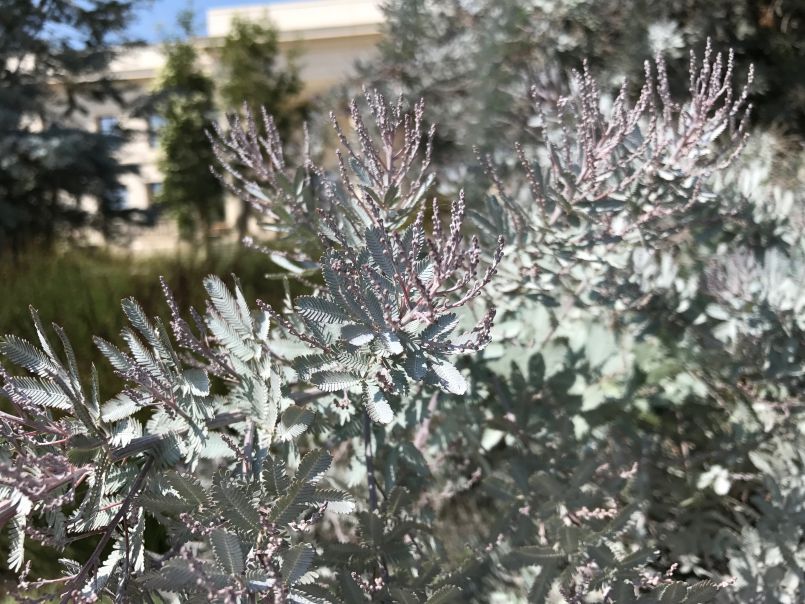
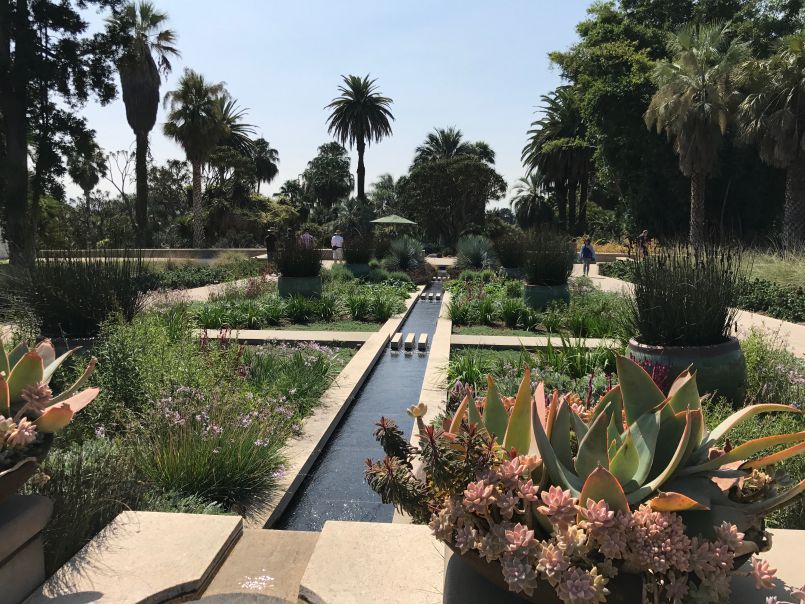
The Garden entrance beckons.
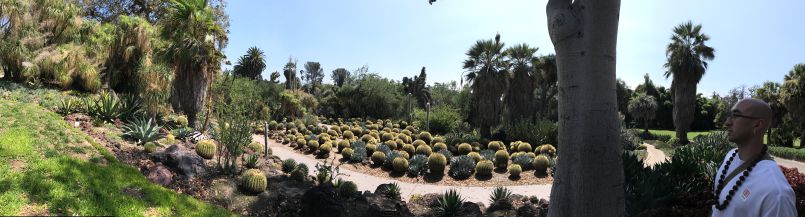
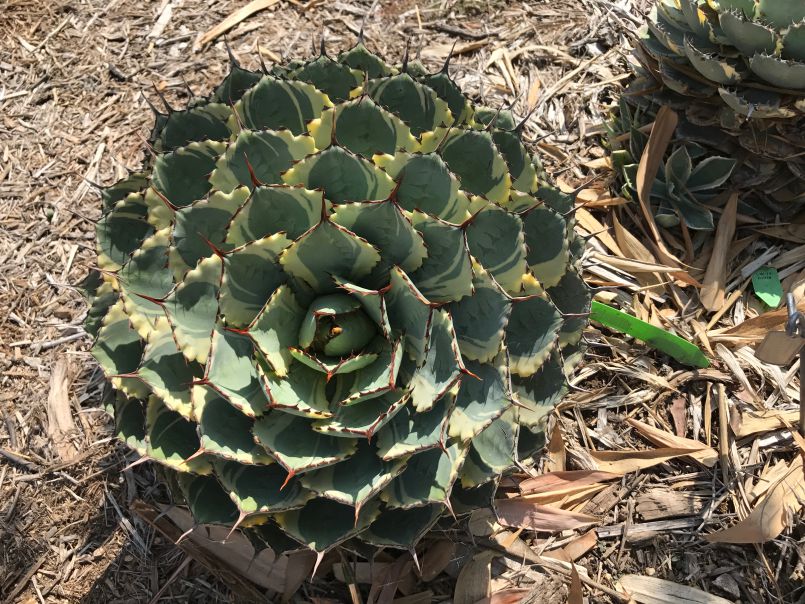
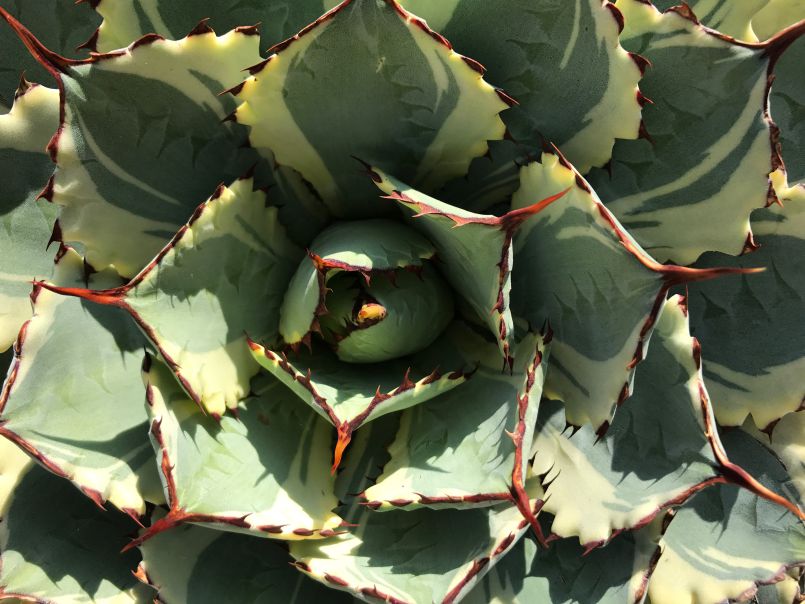
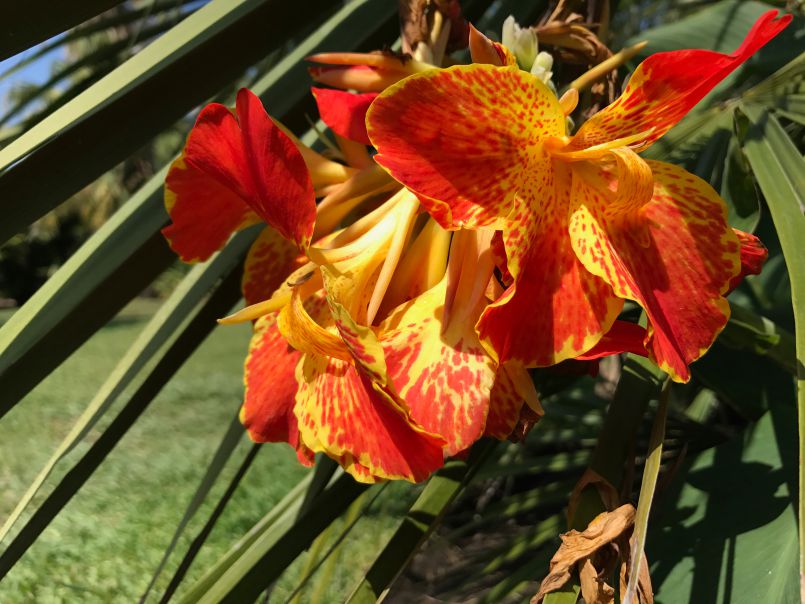
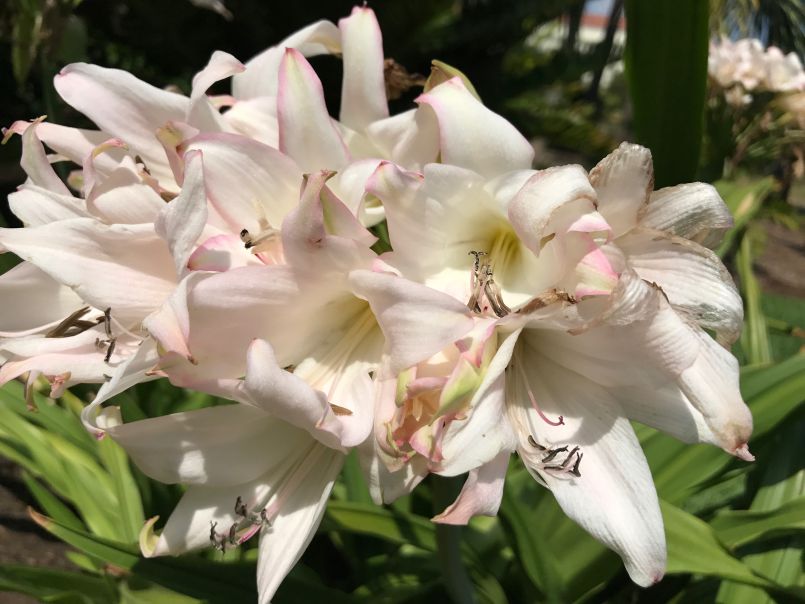
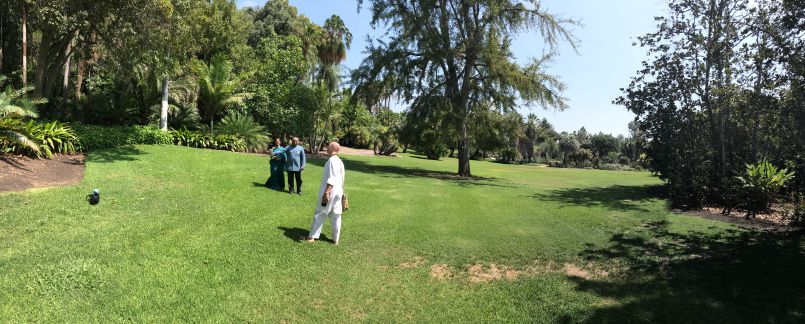
Paramacharya takes a pano in a rare open area.
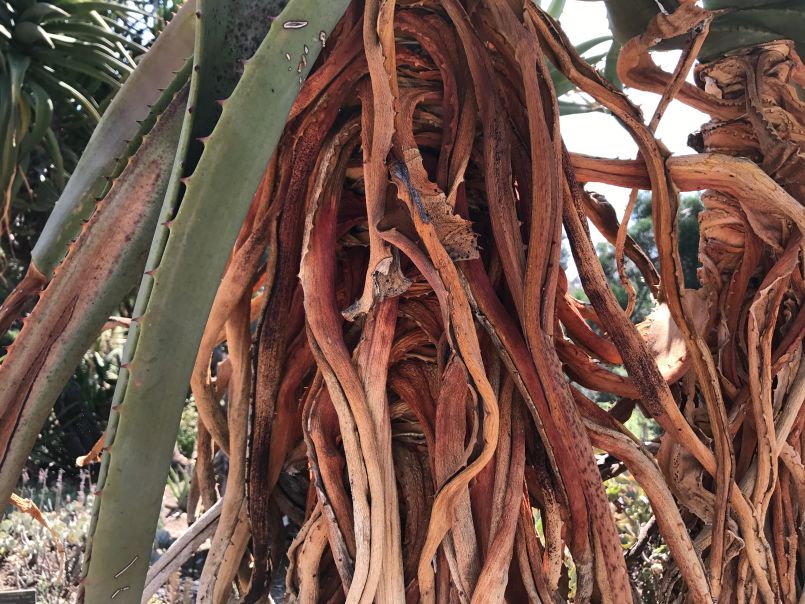
An aloe all dried up below
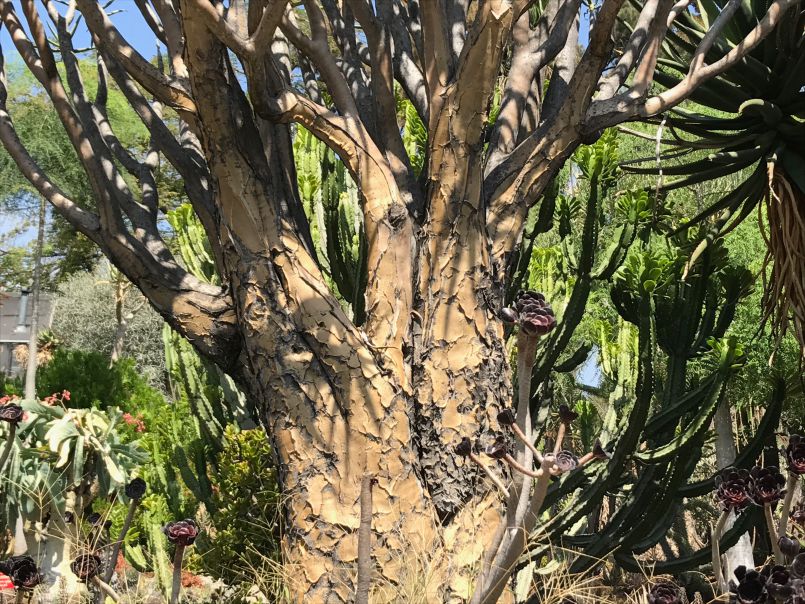
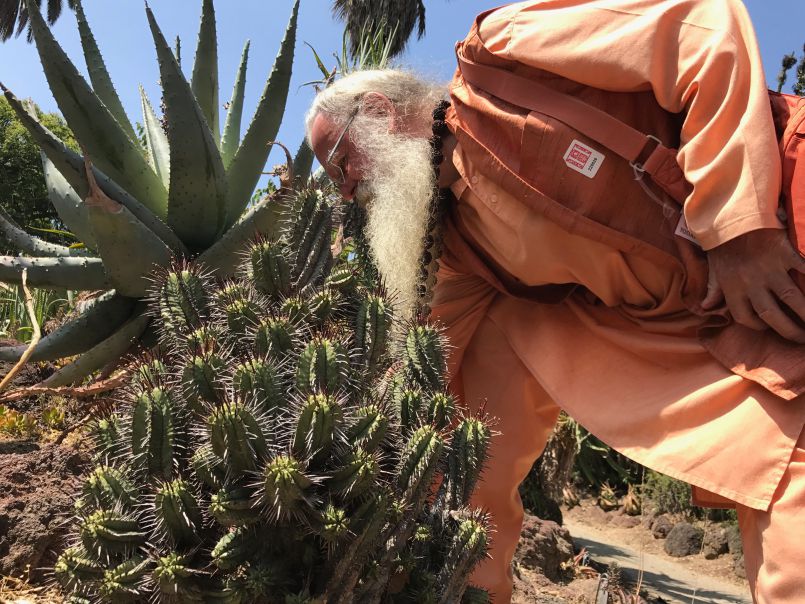
There was some poking involved as Swami looked for the name tags
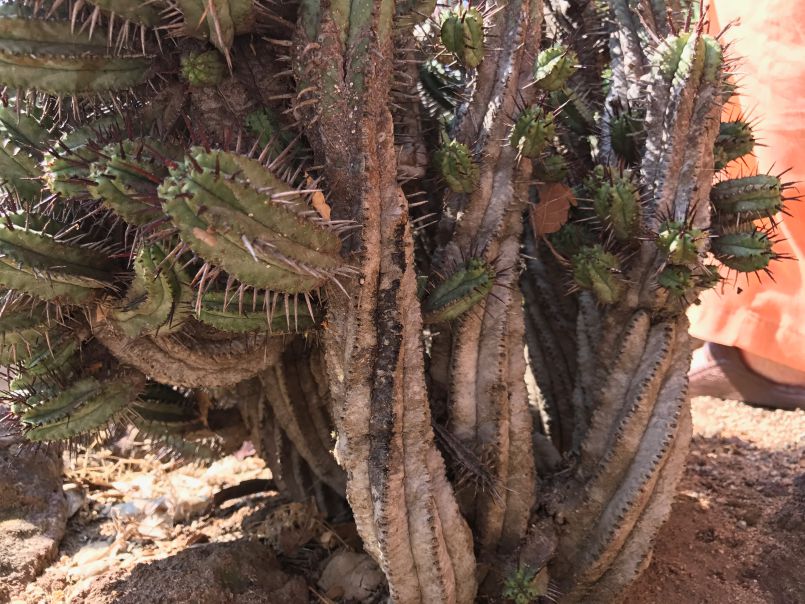
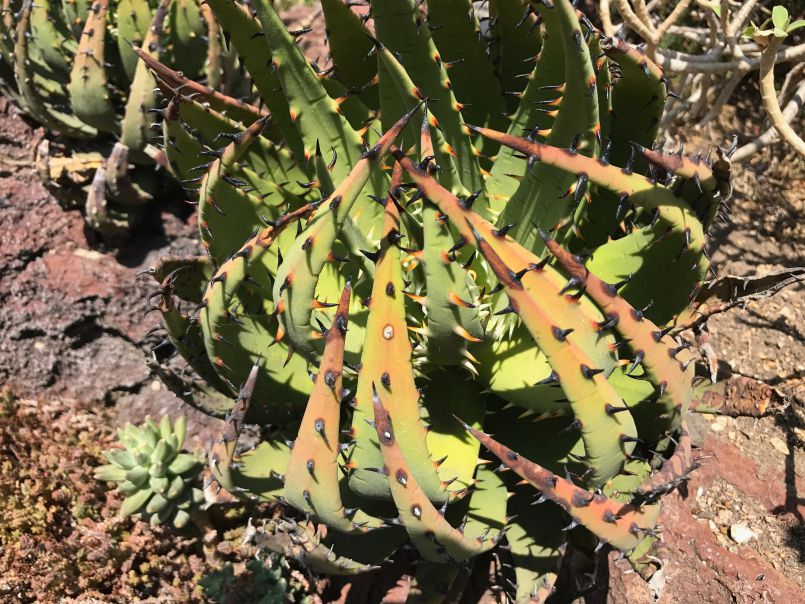
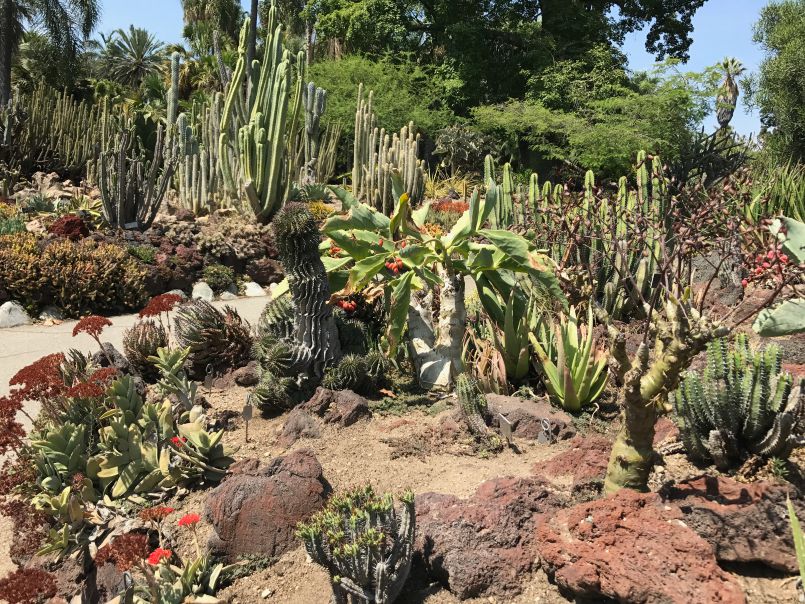
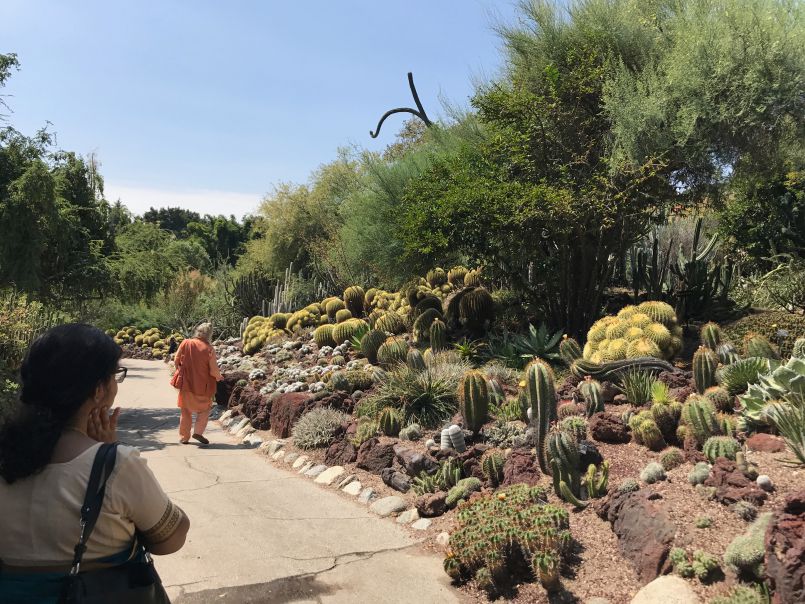
We soon saw why it is regarded as the finest desert garden on the planet.
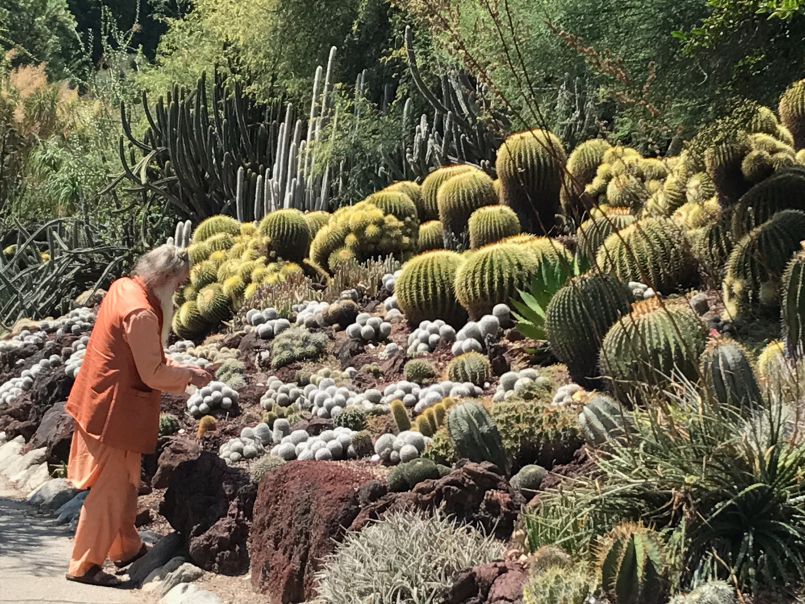
I\
ll take this one, and that one and....'
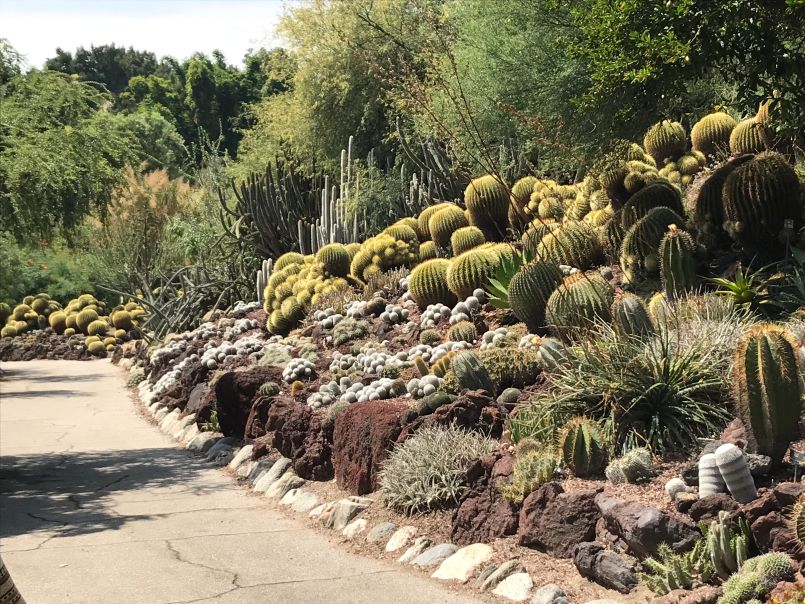
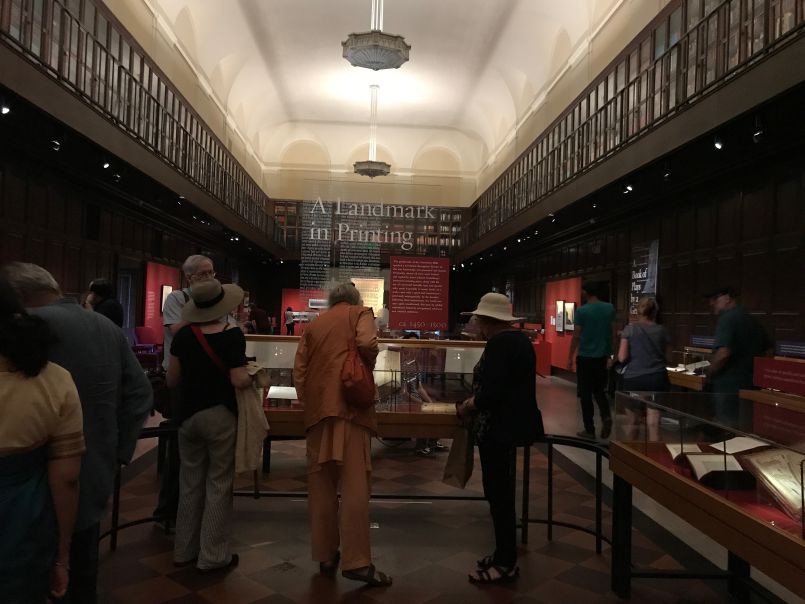
We come upon the library and are awed, silenced and stupified all at the same time.
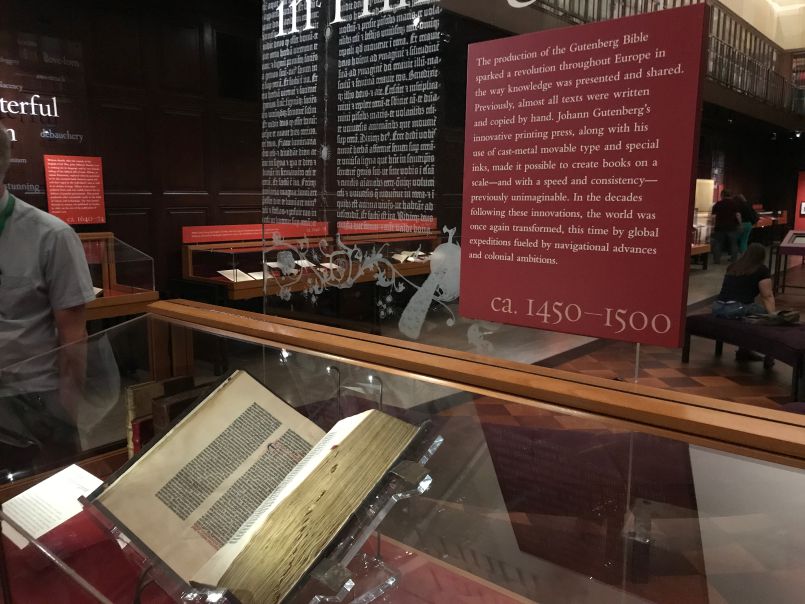
What begins is roughly 30 minutes of looking into the past, into other times when people wrote great words (on parchment and vellum) and changed the landscape for the future of literature, book manufacturing, nature, character and civil rights
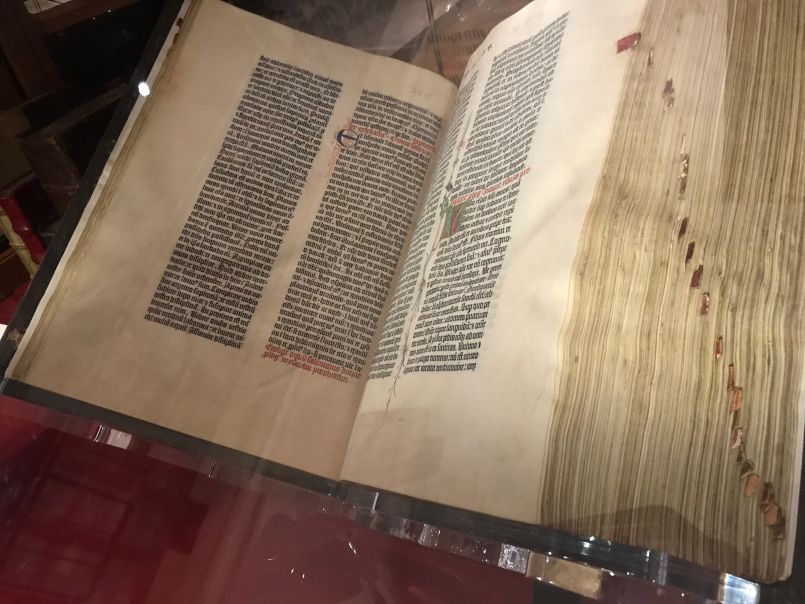
This is the Guttenberg Bible. Only 11 exist today. This is not a copy, but the actual book hand typeset and illuminated.
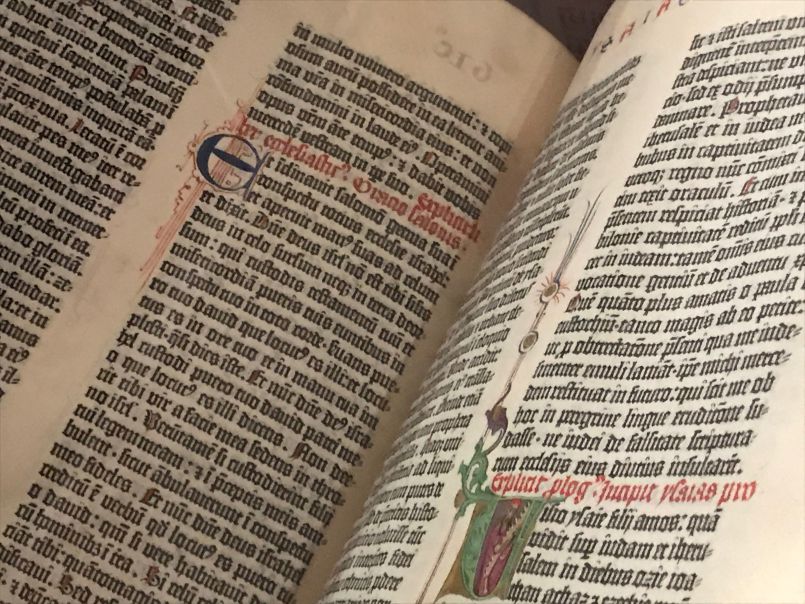
He made the metal type and set it, leaving blank spaces for the red colored chapter names that were added by hand later.
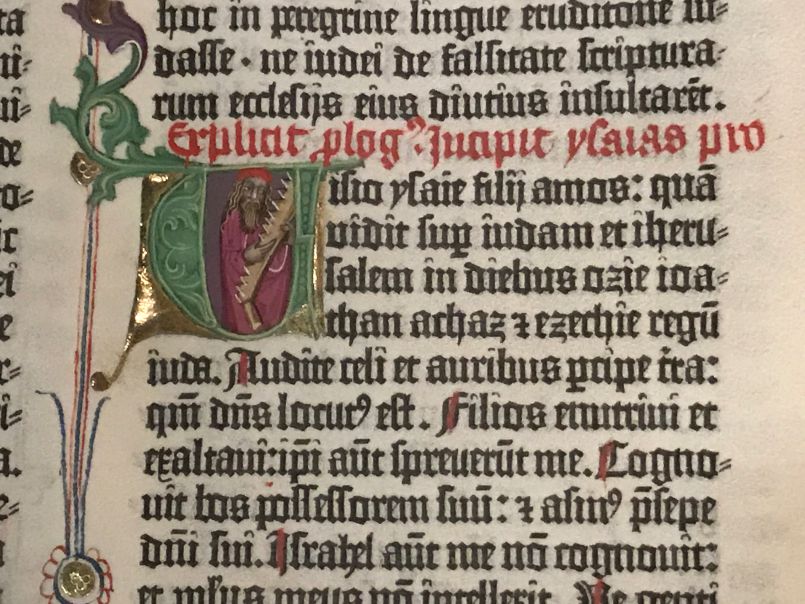
And hand-illustrated using real gold. We are looking at a new technology, the equivalent in its day to the invention of the internet.
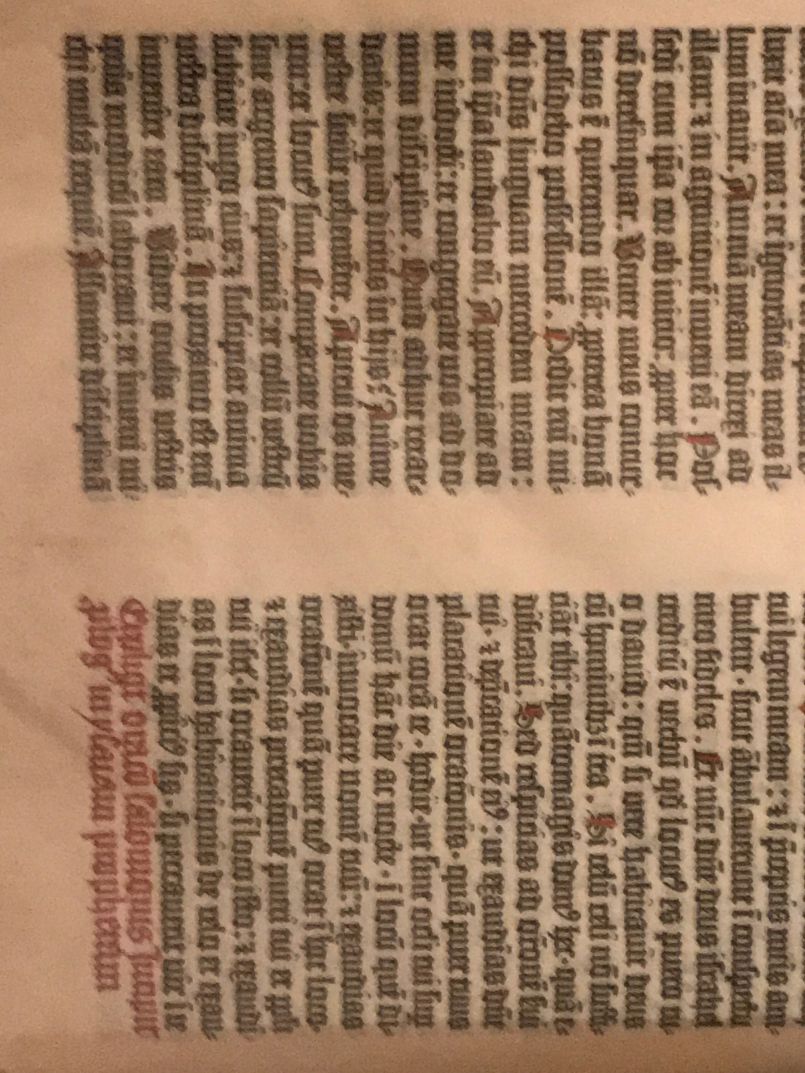
His press changed history.
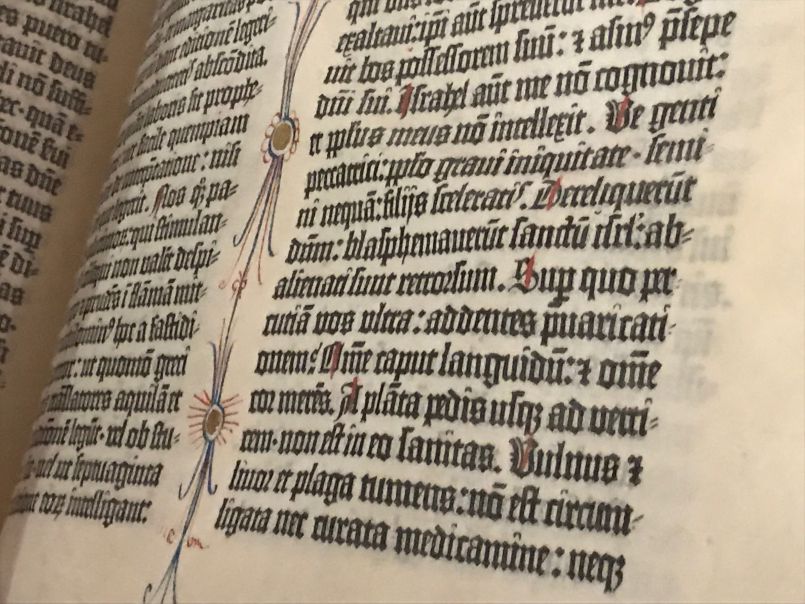
No longer would hundreds of scribes have to hand copy books for people to read.
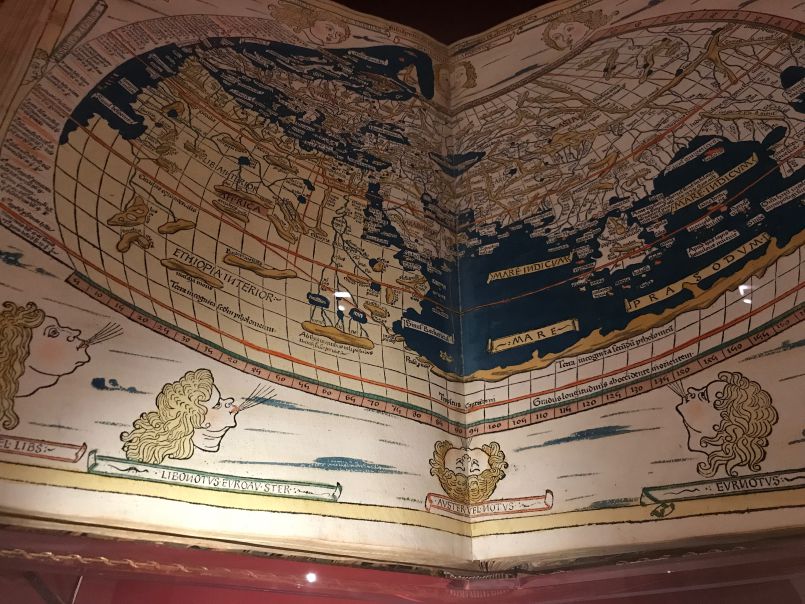
The library has maps and photos, evereything.
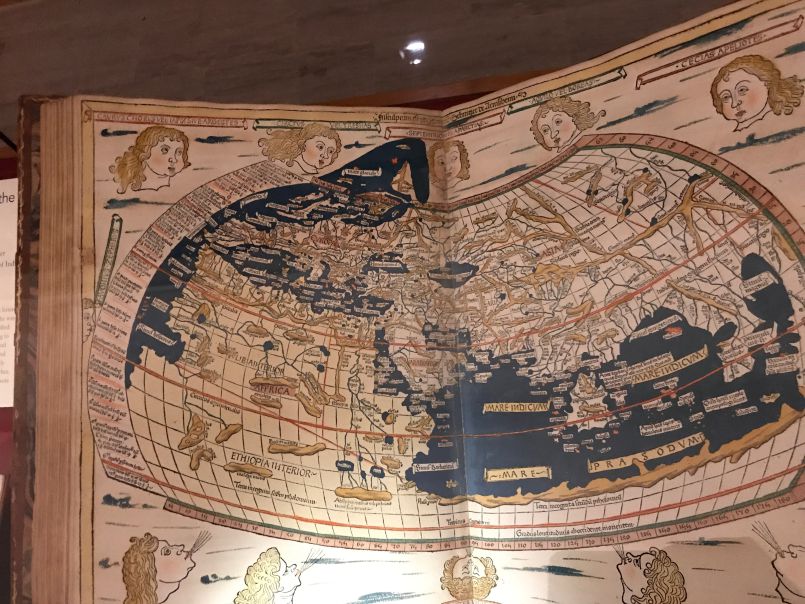
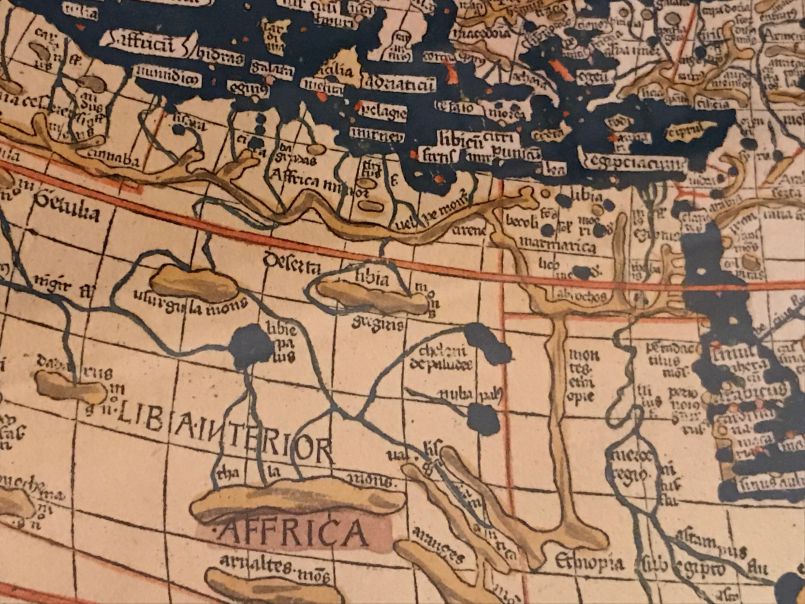
These again are the originals, not copies.
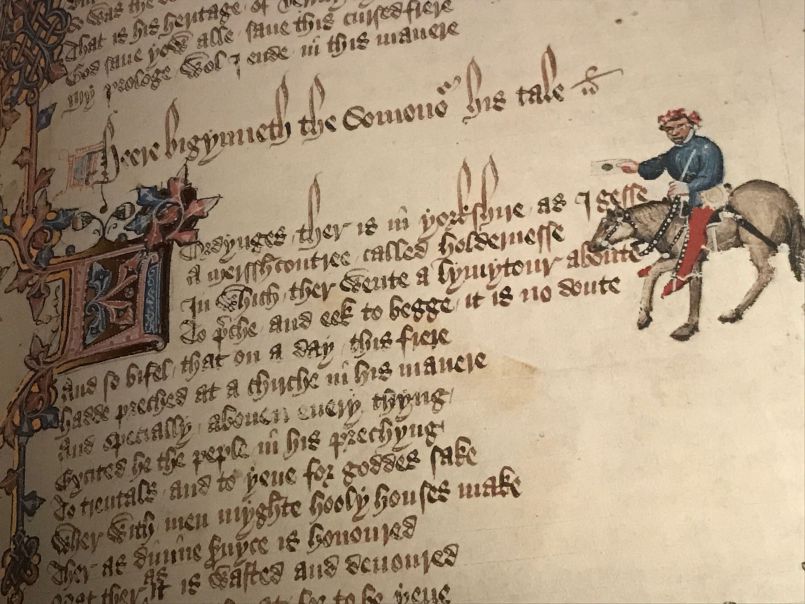
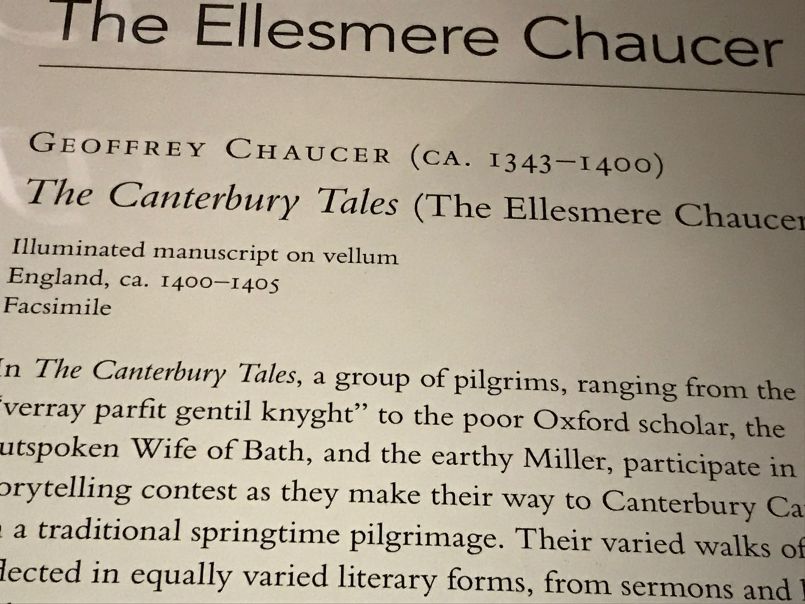
This may be a hand-written page from Canterbury Tales
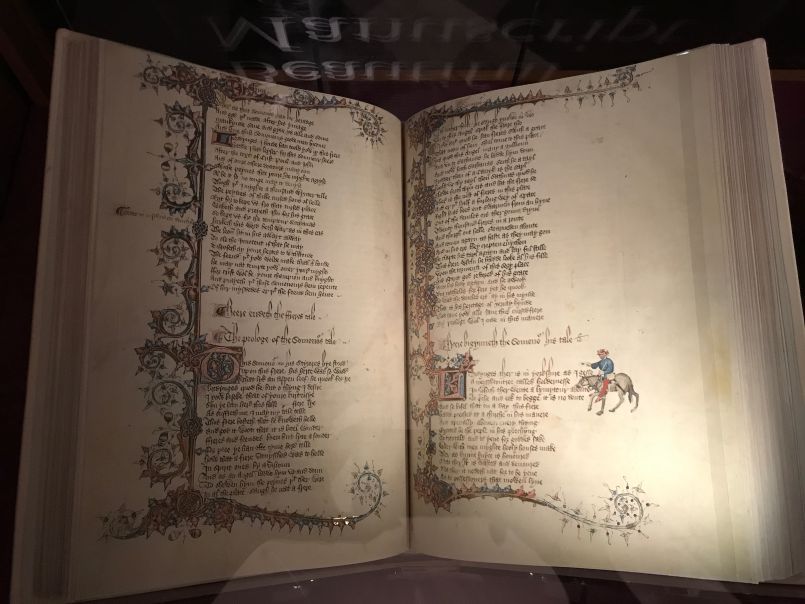
Imagine the effort to make one book by hand.
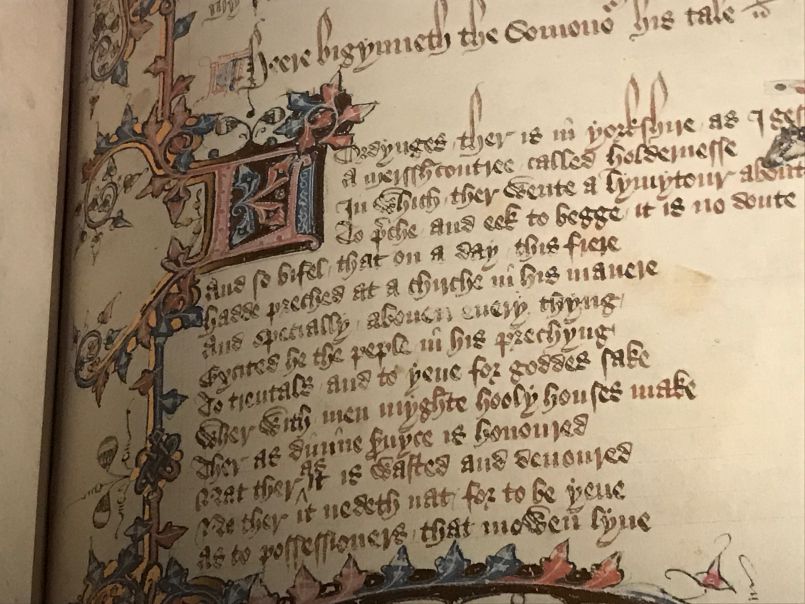
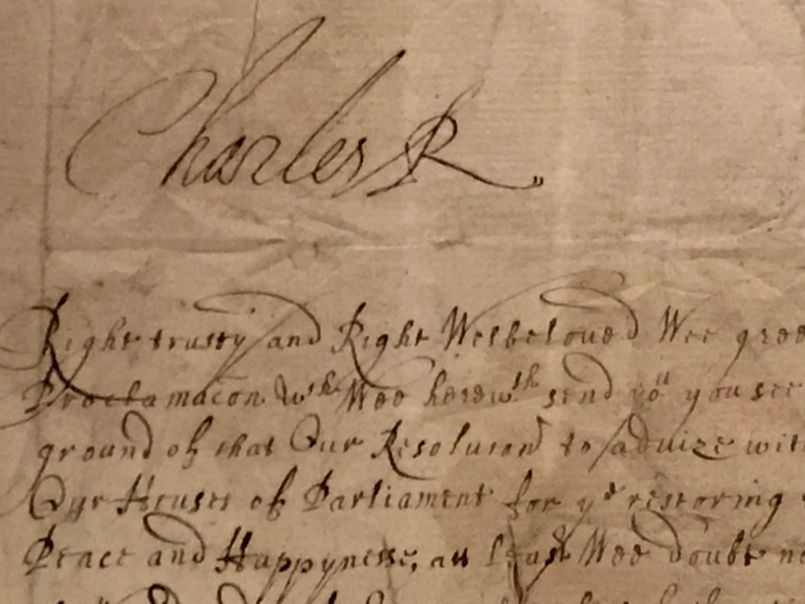
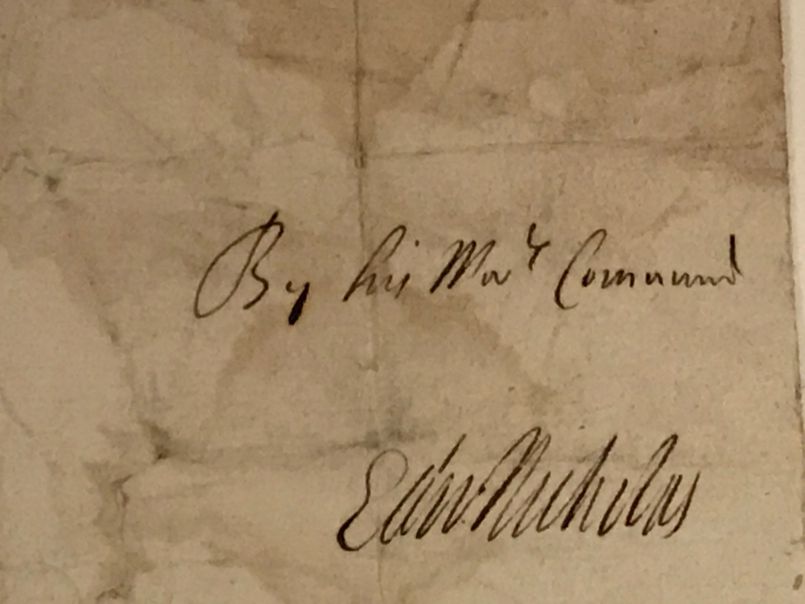
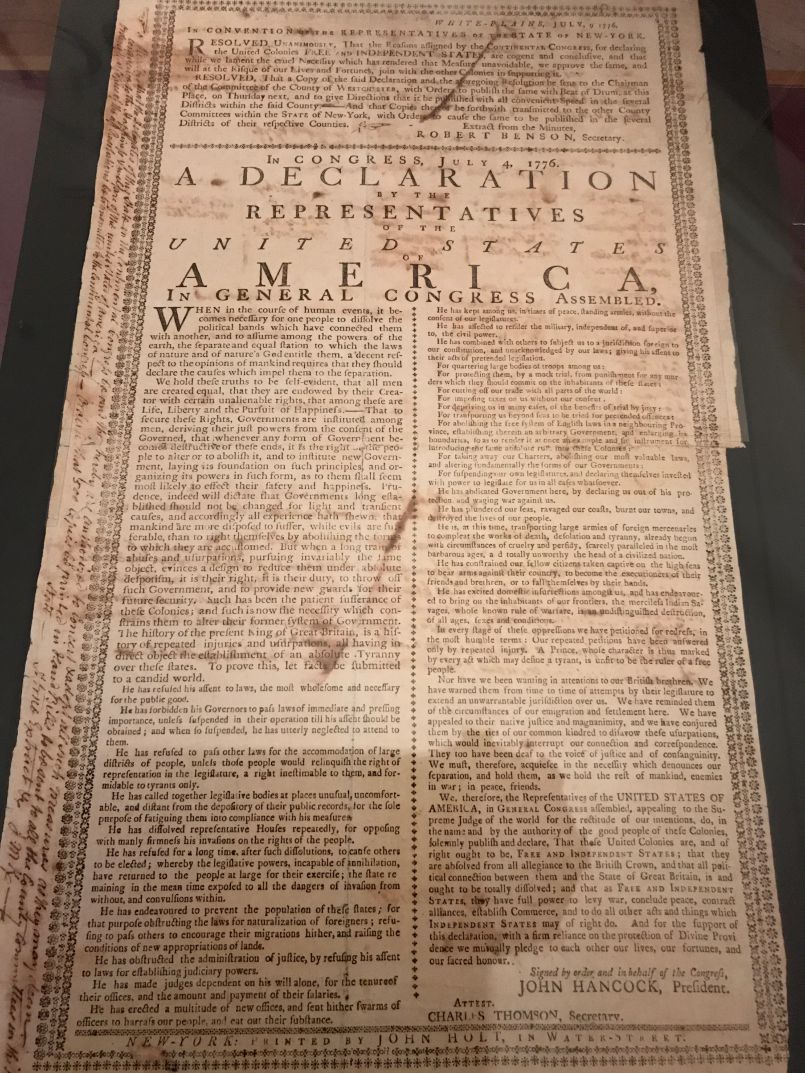
A copy, one of 50 printed, of the US Declaration of Independence.
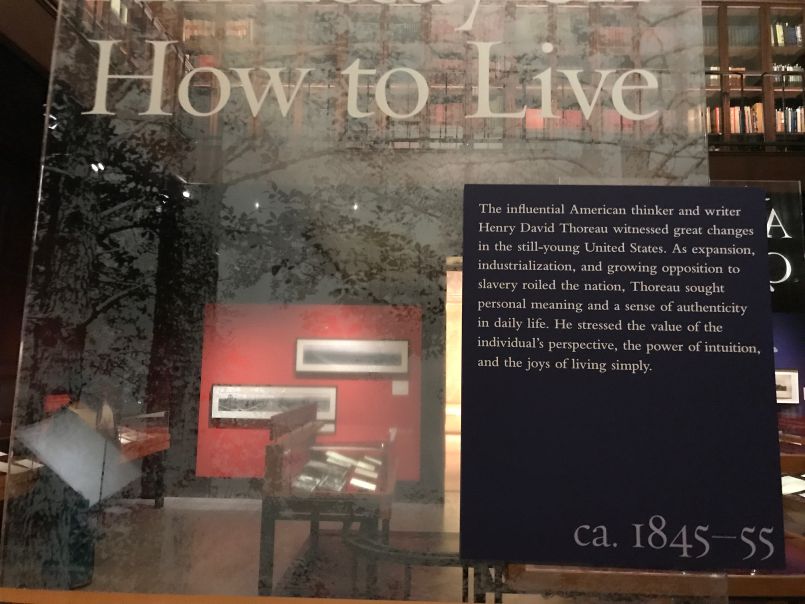
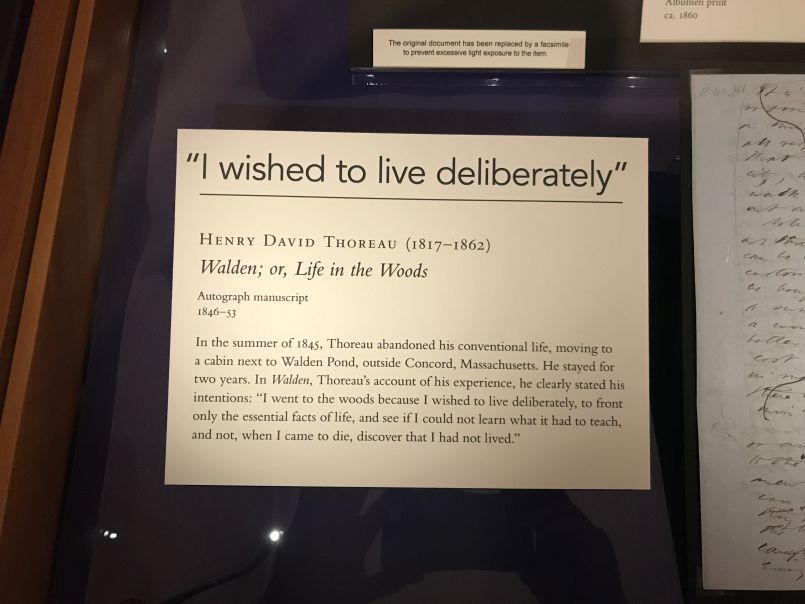
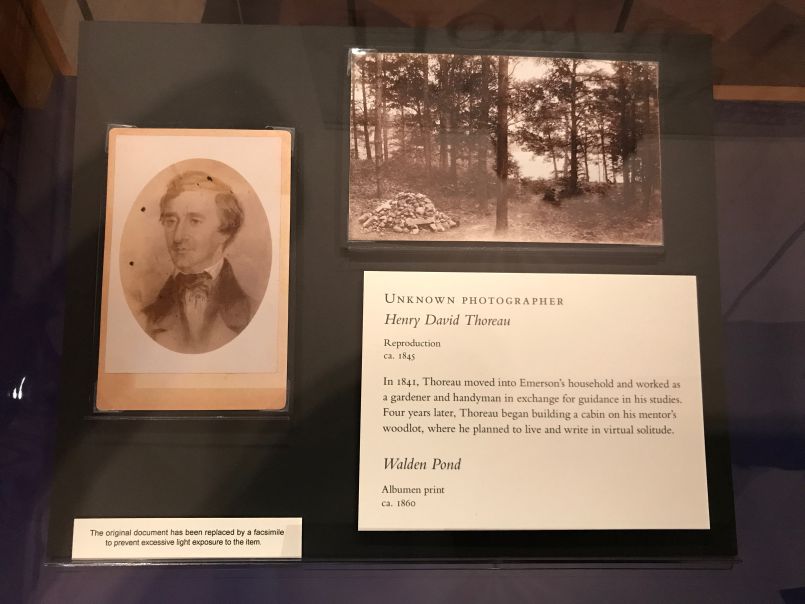
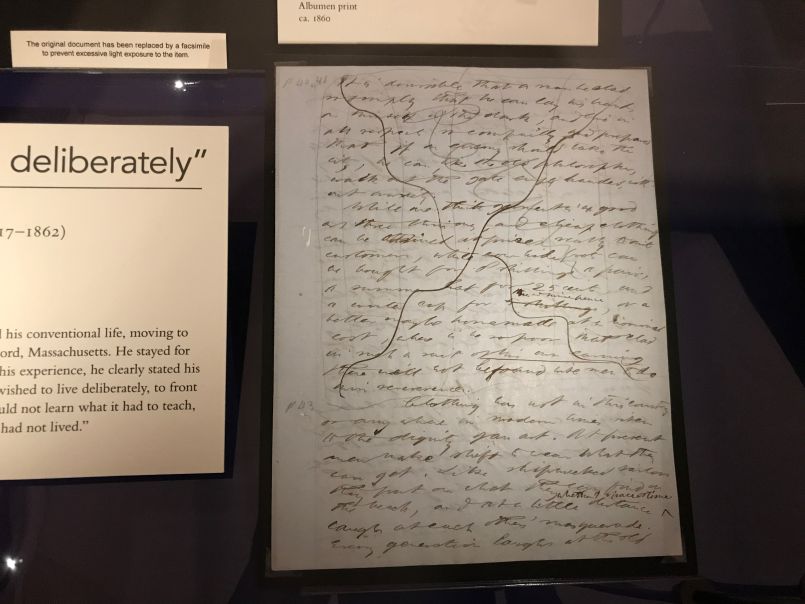
There are seven copies of drafts that Thoreau wrote before he published Walden, or Life in the Woods.
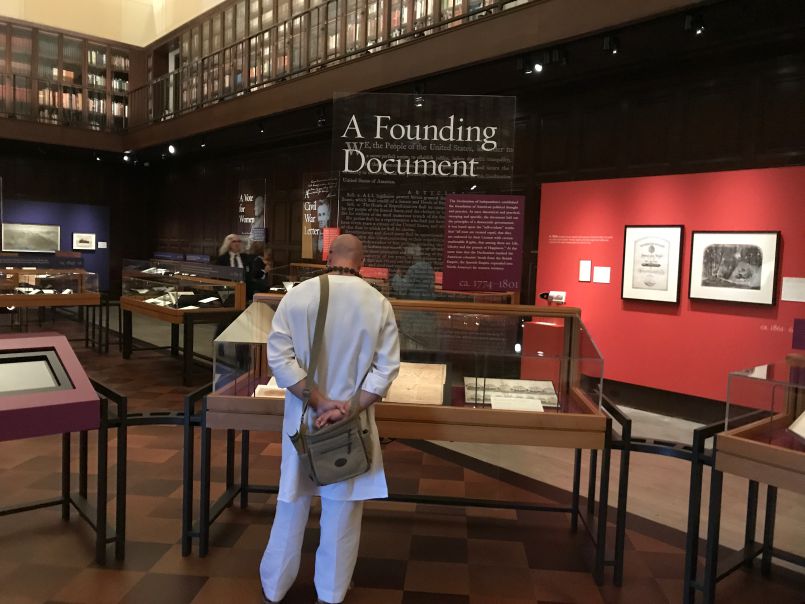
Yogi is captured by the Declaration of Independence. It fell into some family\
s hands for years, and they wrote notes to their heirs in the margins! \"We don\'t know if this is real or valuable, but....\"'
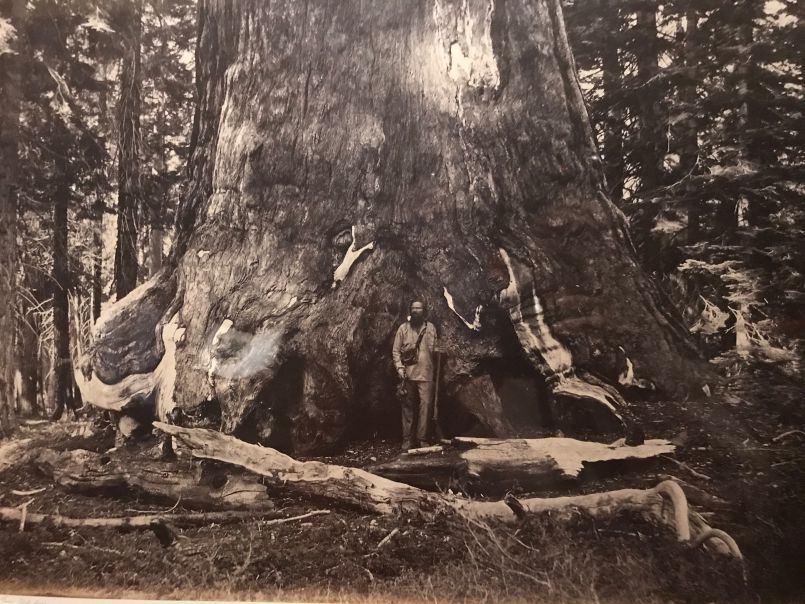
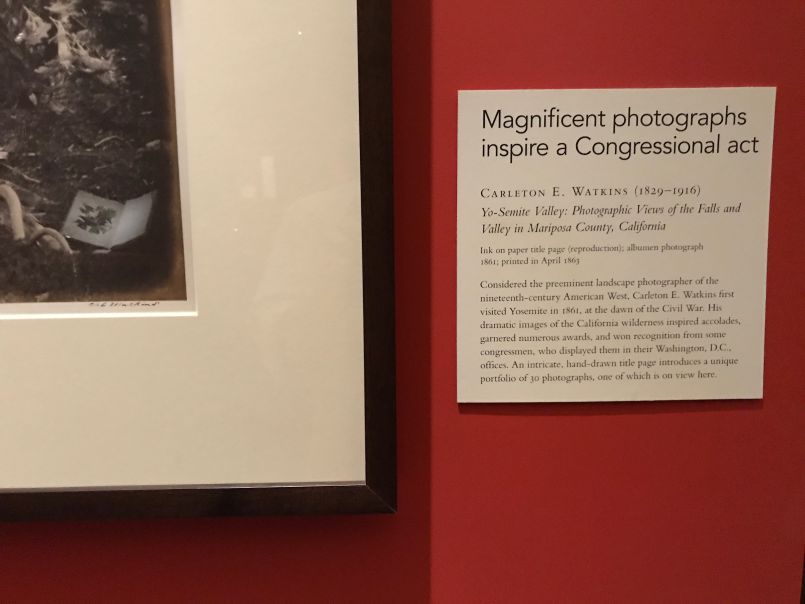
A redwood in Yosemite. President Lincoln\
s documents preserving it forever are kept here. '
}
];
transitionSpeed:150});