
A Brotherhood in New Jersey
September 20, 2017A divine friendship between two orders--BAPS Swaminarayan Fellowship of over 1,000 sadhus and the small Nandinatha Sampradaya--was celebrated during an event with thousands of devotees in attendance. When the BAPS monks heard that Hinduism Today's editor, Paramacharaya Sadasivanathaswami, was coming to New York, they reached out to share that the timing was amazing. Satguru Mahant Swami Maharaj, successors to Pramukh Swami Maharaj, was completing three months in America and they hoped Paramacharya could honor Mahant Swami on the stage on his final night when he was to say farewell and return to India.
The night was also special in that a major scriptural text was being released, and the author, Swami Bhadreshdas, has been working with Paramacharya on projects for about two years. Bhadreshdas has also visited Kauai Aadheenam when he presented an earlier 11-volume work to Satguru Bodhinatha Veylanswami.
It was a true confluence of the highest nature. This humble slideshow portrays only a fraction of the astounding love and bhakti that the BAPS Fellowship brings wherever they go. The sheer number of monks and sincere devotees in one place is intoxicating. Our hope is that you get a sense of the detail and perfection that this order puts into their temples, their gatherings and their teachings. Jai Swaminarayan! Jai Kailasa Parampara! May we keep this bond for yugas to come.
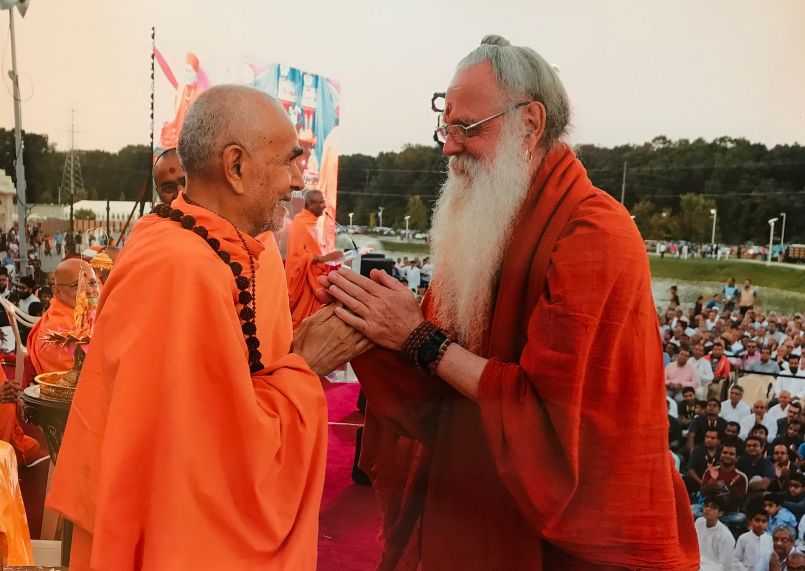
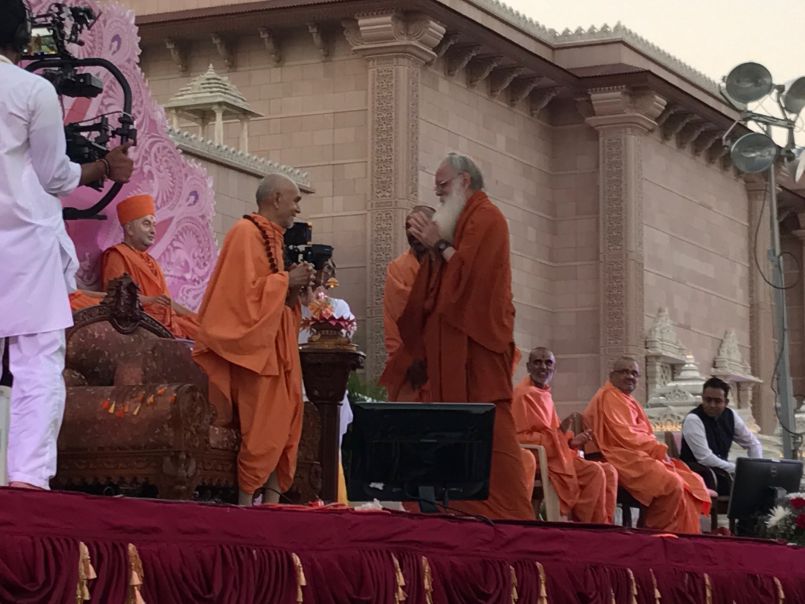
Paramacharya Sadasivanathaswami presents a hand-made rudraksha mala to Mahant Swami Maharaj, the successor to Pramukh Swami Maharaj. In a similar event held three years ago, in the same location, a Kauai mala was given to Mahant Swamiji and then awarded to his guru Pramukh Swami. The sadhus felt it was time to award and honor Mahant Swami with a mala that he can finally keep for his own.
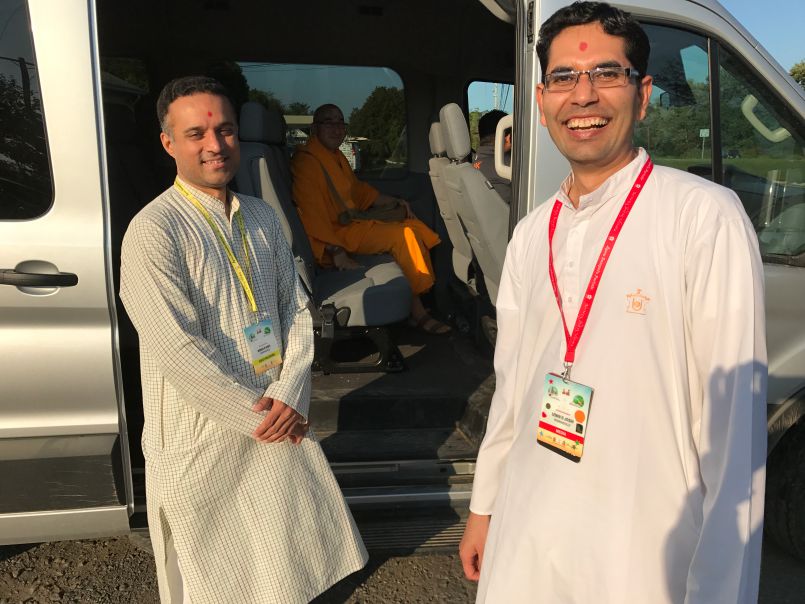
The story really begins with our two tireless caretakers for the day, Ninad Dave, left, and Lenin Joshi, right. We were picked up from Mackey\
s Towing in a small town just outside of Robbinsville due to our Uber breaking down on the highway. The two gracefully rescued the stranded monks as soon as they heard of the trouble and brought us to the stage. '
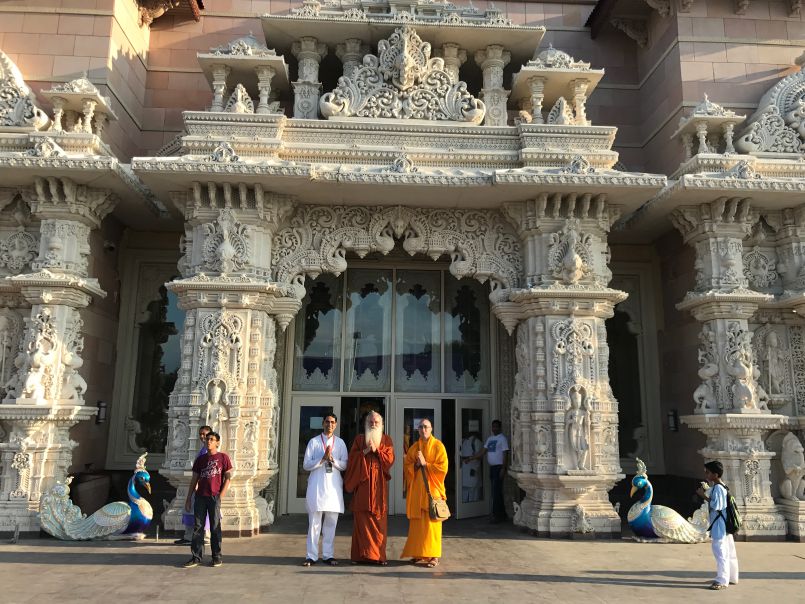
First a tour of the Robbinsville entrance mandapam. I didn\
t say Maha Mandapam because this extraordinary and breathtaking building is not even close to the size of the main hall. This is simply a short darshan before getting to the unfinished main temple--for which construction is underway nearby. '
As Paramacharya makes his way to the stage where he is to speak, we are greeted by countless sadhus who extol glorious tales of their visits to Kauai Aadheenam and their sweet interactions with the famous Sivaya Subramuniyaswami. The mandapam and the stage are only two minutes walking distance apart, yet our walk was extended to twenty minutes or so with tales and hugs. We were also lovingly scolded for not stopping at all the other BAPS centers along our adventure throughout the US; so much solidarity can be felt with the sadhus and our order.
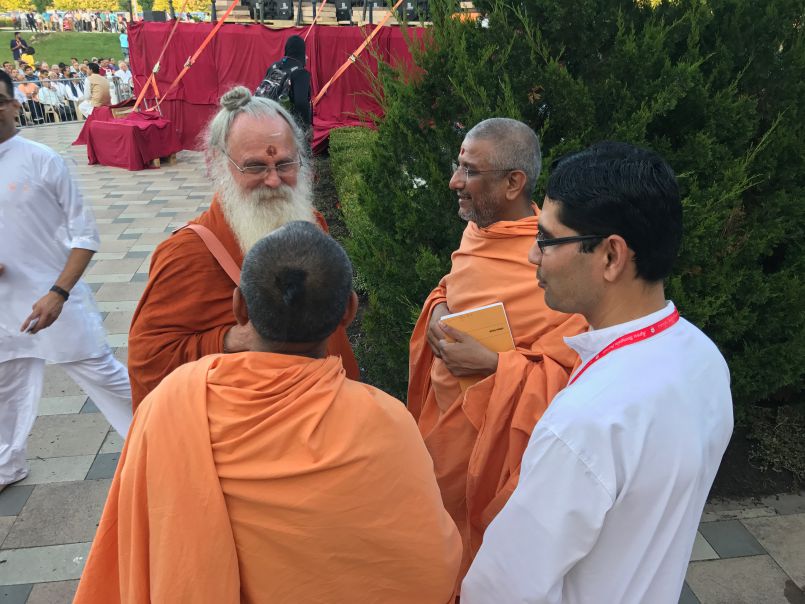
One monk recalls the famous story of Gurudeva in 1996 where he told the monks at the BAPS headquarters in Saharanpur, India, the passionate and meaningful words: \"Obey your guru, obey your guru, obey your guru.\"
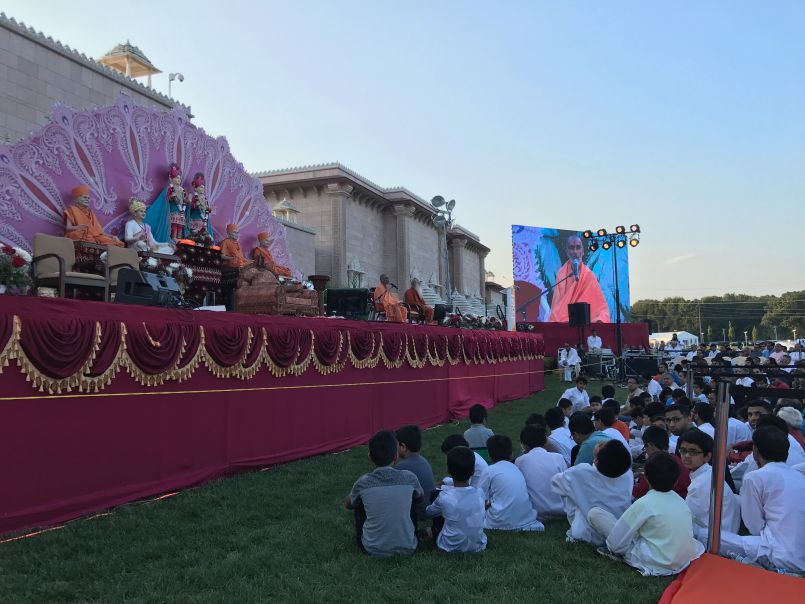
The crowd is seated and one monk is giving discourse. Monks begin to trickle in and get seated on the stage and in the sprawling grass.
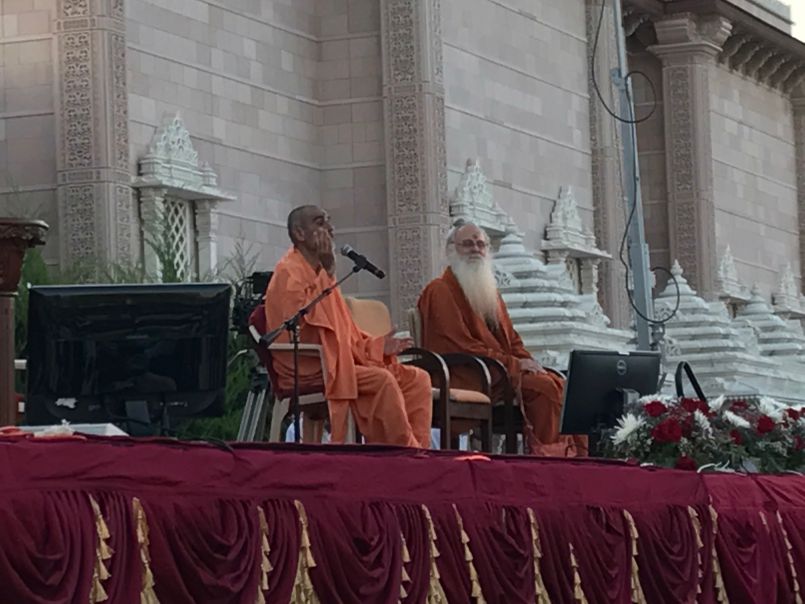
Most of the discourses and speeches were in the Gujarati language. Two monks, one sitting near Paramacharya and another by me on the grass, translated.
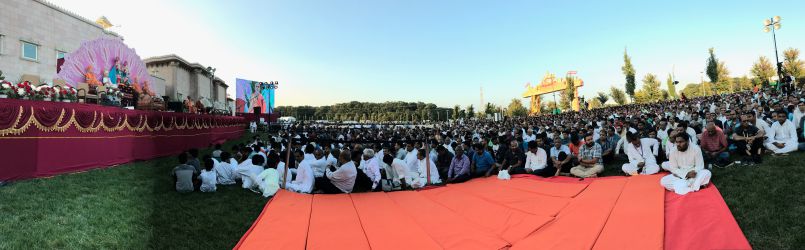
An attempt at documenting the crowd. For some reason my phone cannot capture the immense size of the crowd.
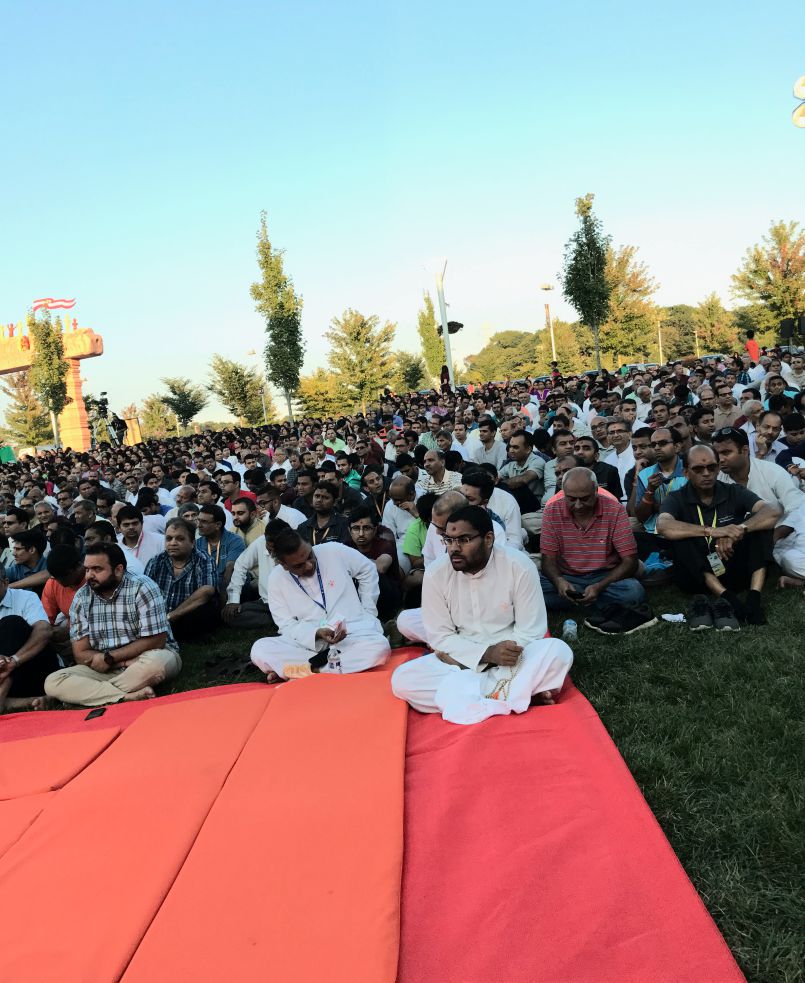
There is such discipline among the grihasthas. Everyone sat motionless for hours
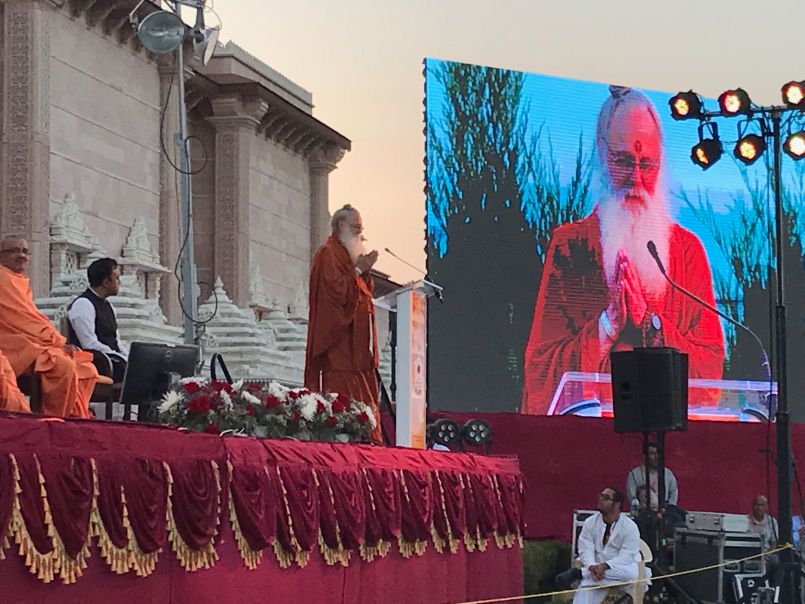
Paramcharya gives his five-minute speech. Auspiciously, halfway through Satguru Mahant Swami Maharaj ascended the stage and took his seat. Paramacharya halted while the Satguru was seated, then continued with his tale of Gurudeva\
s historic speech at Pramukhswami\'s 75th birthday in Mumbai, where 50,000 had gathered. Gurudeva spoke bravely to all gathered, repeating the \"Obey your guru!\" repeated three times. Sadasivanathaswami then took a moment to explain in detail the greatness of the guru and defined what Gurudeva meant by Obey your Guru. '
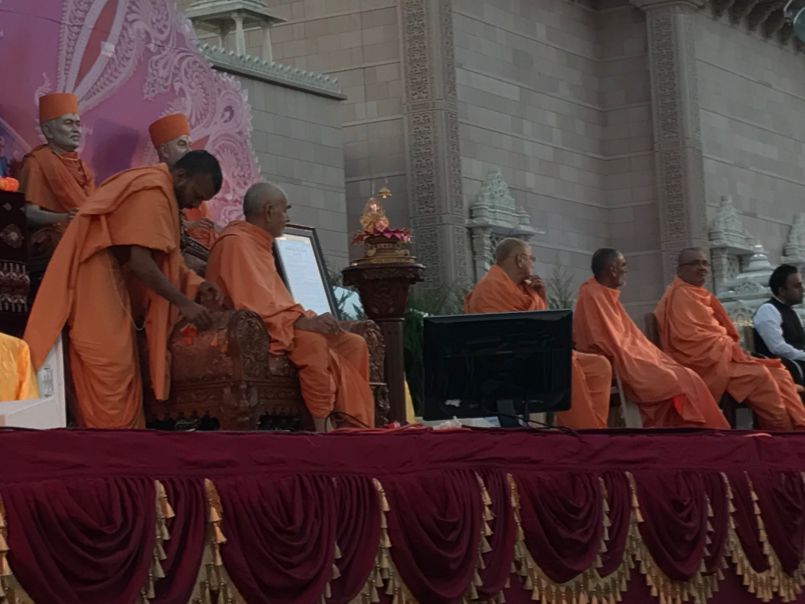
When Mahant Swami was guided to center stage partway through Paramacharya\
s speech, we all thought it an auspicious sign. The two monks paused, one as he was being seated and the other standing at the podium. Both were in anjali mudra, their eyes locked as they remained still for a moment, acknowledging one another. '
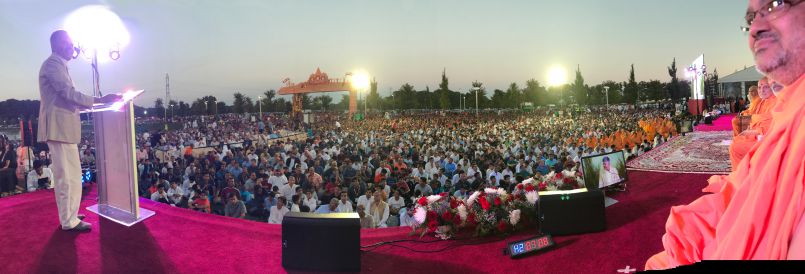
Paramacharya took this pano from his seat on the stage. That is Bhadresh Swami on the far, seated next to Paramacharya. He is the author of the work being released on this night. One after another Sanskrit scholar came forward to sing his praises.
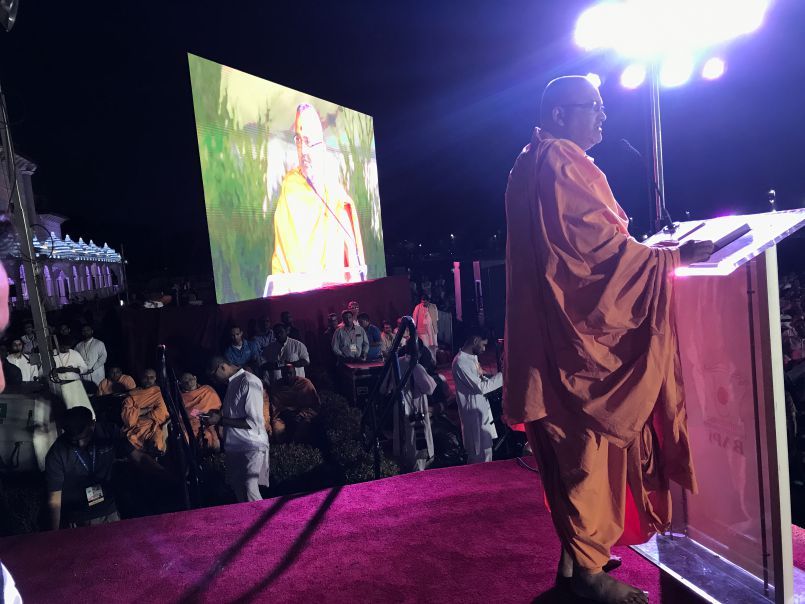
Bhadresh Swami stands to speak and explain what his newest work entails. The book, Vaad Granth in Gujarati and Swaminarayan Siddhant Sudha in Sanskrit, is a philosopical bhashya on his earlier 11-volume work which established the Swaminarayan school of Vedanta as a modern and authentic expression of Vedanta. It is in effect a summary (if anything 500 pages long could be called that)of the newly recognized Vedantic school. The two books place the Swaminarayan philosophy on the highest pedestal.
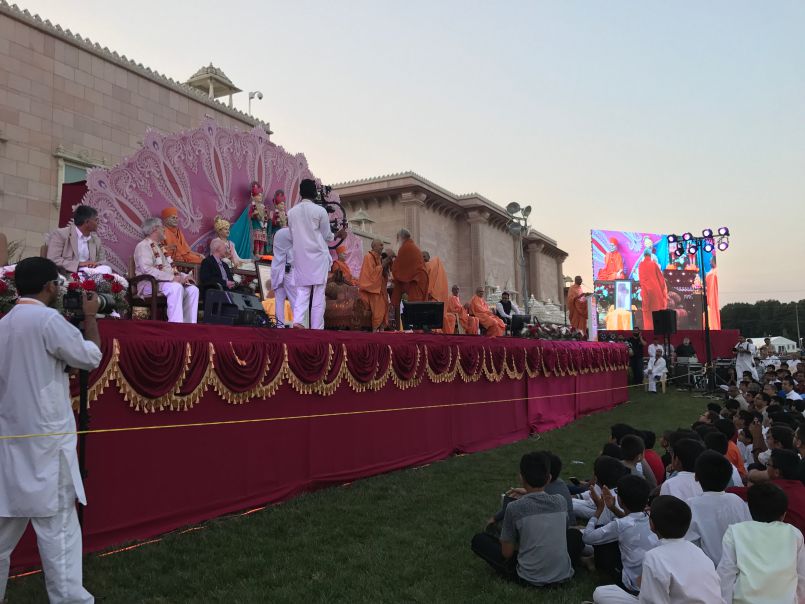
Paramacharya places the Rudraksha mala on the Satguru\
s neck. Loud cheering runs through the large crowd as a big smile appears on the soft-spoken Mahant Swami Maharaja\'s face.'
Hinduism Today has been honored by this event.
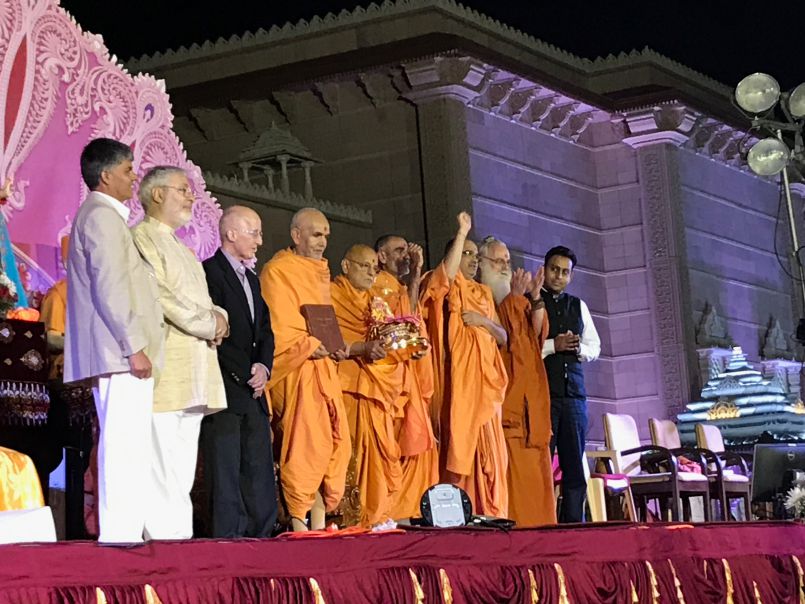
All stand for group photo.

The crowd raises their fists in adulation. \"JAI SWAMINARAYAN\" is chanted and the earth underneath our feet rumbles with excitement and love of the Guru.
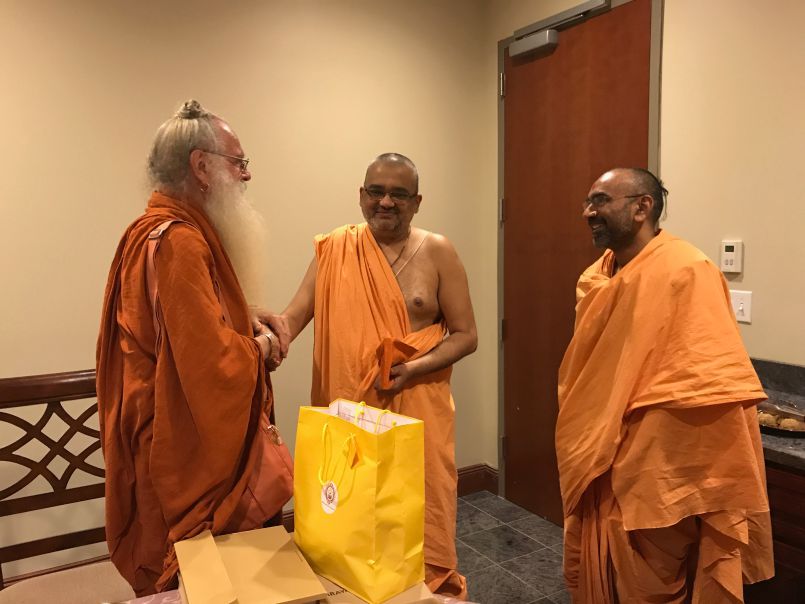
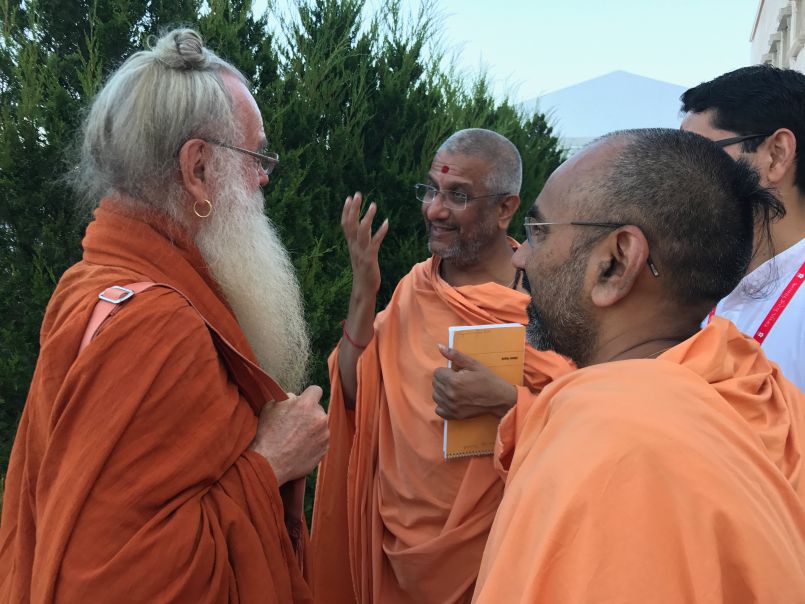
After the long and thrilling presentations and awards, the sadhus feed the traveling monks. We share a quiet moment with Bhadresh Swami and Chaitanyamurtidas Swami, in the middle and right respectively.
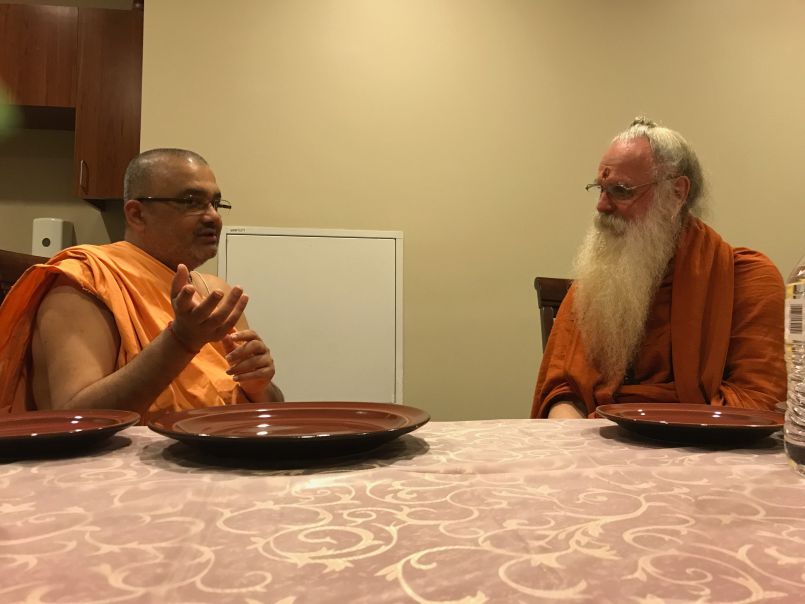
Bhadresh Swami explains some deeply intricate values of what his work means and what it means to have an inner knowing of jnana. \"True knowledge must be born from an internal experience of the Divine. Only then can one understand the intellectual aspect taught in scripture. That is true jnana.\" A long ride back to Manhattan puts our Kauai monks to bed at 1am.
}
];
transitionSpeed:150});