
Dialogue in Victoria, Canada
October 4, 2017The second annual Victoria dialogue for 2017 went smoothly as Paramacharya Sadasivanathaswami discussed our views on death and dying, specifically how to approach it through the real-life stories of enlightened masters.
The subject was discussed for several weeks by the Ganapati Kulam staff because of the delicate nature of people's fear of the unknown. But, what better way to get rid of fear then to face it head on.
We all watched as Paramacharya researched, meditated and slaved over his presentation for months, only to toss it aside a few days before the event. Why? He decided the elaborate graphics he had prepared would stand between him and the audience and he wanted a more personal, less professional talk.
In a future YouTube video you will be able to see and hear his unscripted approach to reaching that final moment that we all must face one day and how to best view it. He also tells us he has a plan to put the talk in Hinduism Today format. Lots to do when we get home it seems.
Meantime we share one of the ten stories and one of the ten reasons, so you have a little glimpse.
Story #7
When the Chinese monk, wanderer and eccentric Master P'u-hua sensed that his end was near, he announced to the people of the nearby town that he would go the next day to the Eastern Gate and die there. Wishing to be at this extraordinary event, the whole community went in a procession behind him and assembled to pay their final respects. P'u-hua then announced: "A funeral today would not be in accord with the mythical Blue Crow. I will pass away tomorrow at the Southern Gate." The next day most people followed him again, but upon his arrival he decreed, "It would be more auspicious to leave by the Western Gate tomorrow." On the third day fewer people came, and he decided on the North Gate instead. On the fourth day he picked up his own coffin and carried it to the Northern Gate, where just a few people were waiting. Ringing a small bell, he entered the coffin and passed away. Some say this was his way of having only the most ardent followers attend his Great Departure and not just the curious.
The Third Reason Not to Fear Death Is that
releasing the body is the way of things. All that takes form eventually dissolves that form. Mountains rise quickly and slowly erode. Stars are slowly assembled and swiftly explode. Even galaxies form and perish. All that lives ultimately dies.
In the case of human life, it is the return of the mortal to the immortal, the time-bound to the infinite source. Some describe it as a river flowing back to its source, the ocean. The water is not destroyed in that merging. That which was two becomes one again.
Studies on near-death experiences reveal it is a time of elevated consciousness, unity, light and love. It can also be accompanied by great mental lucidity and out-of-body awareness. Those who have returned from death report they have a changed view of the world, a more forgiving nature, a more loving attitude. Death, they say, changed them for the better.
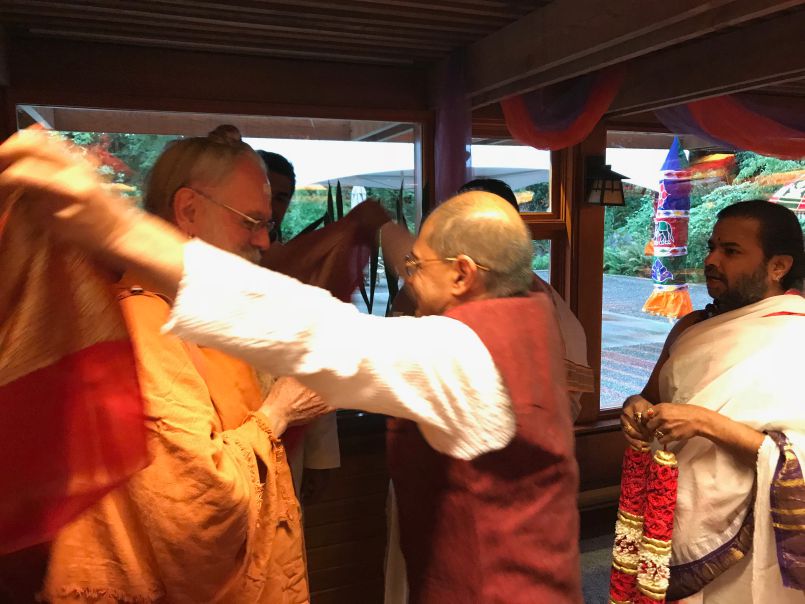
Not only is Swami greeted in the traditional way, he is honored several times with multiple shawls and garlands! Mrunal Patel offers the first.
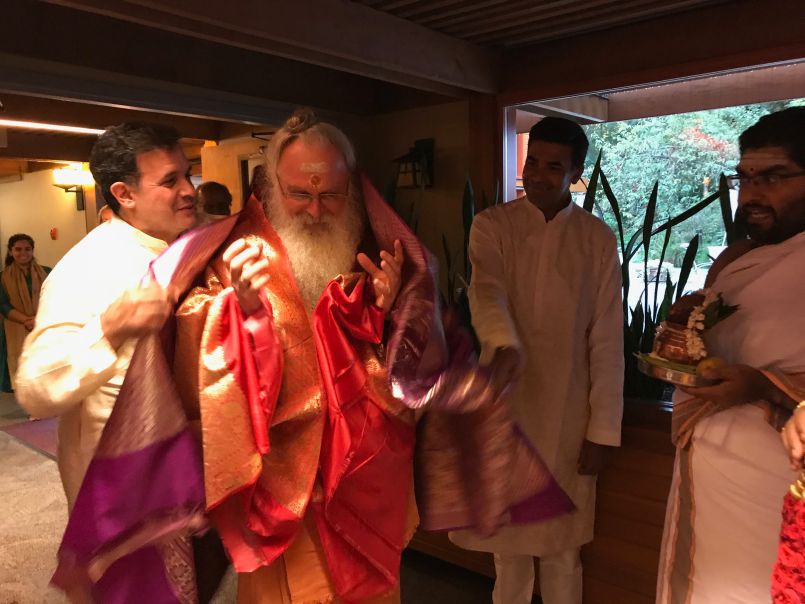
Rudi Tanzi the second...
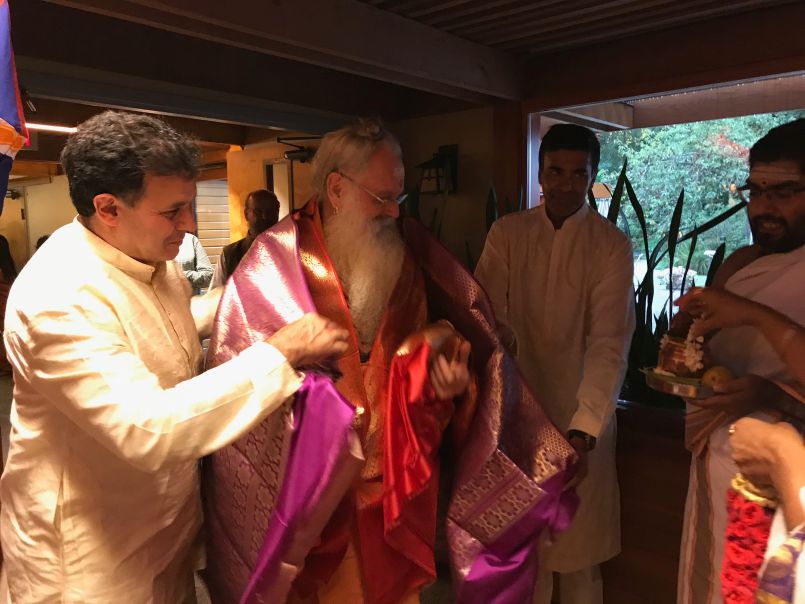
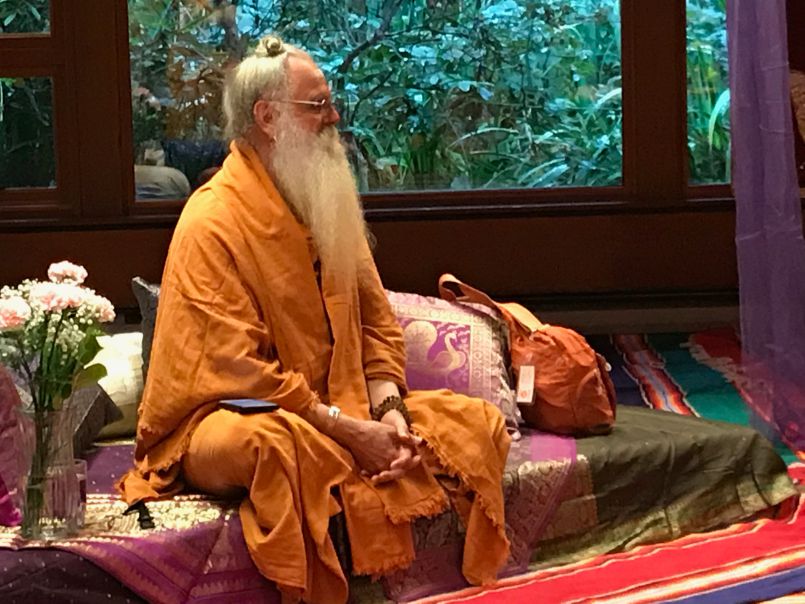
Paramacharya is a bit overwhelmed by this wild welcome.
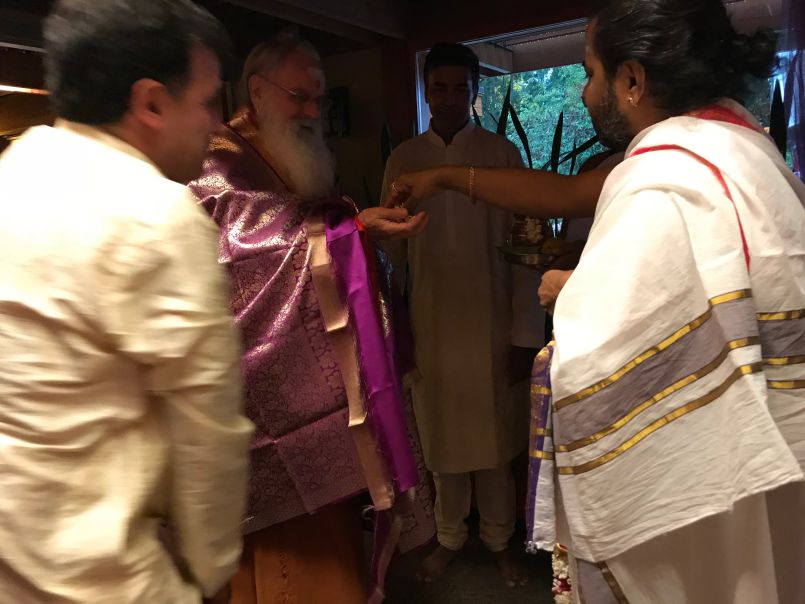
A flower from Chandrashekera Gurukkal and flowers of slokas as the priests chant the traditional slokas of greeting.
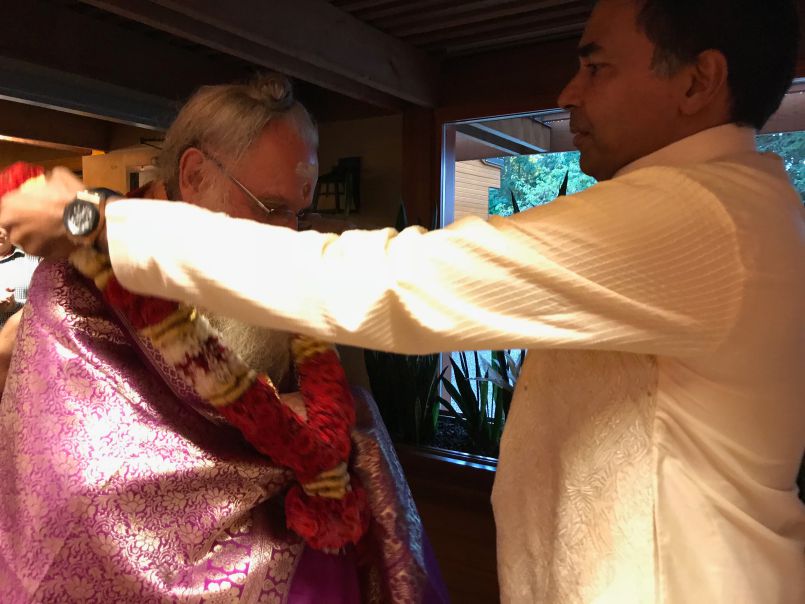
And a garland from Nagarajan Pillay. Nagarajan spent months with his wife Shamini preparing for the dialogue.
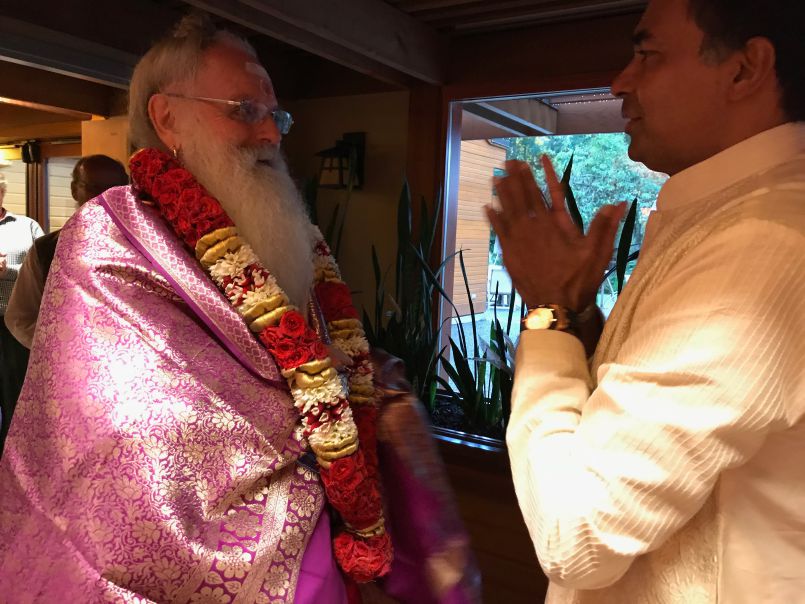
May the event officially begin!
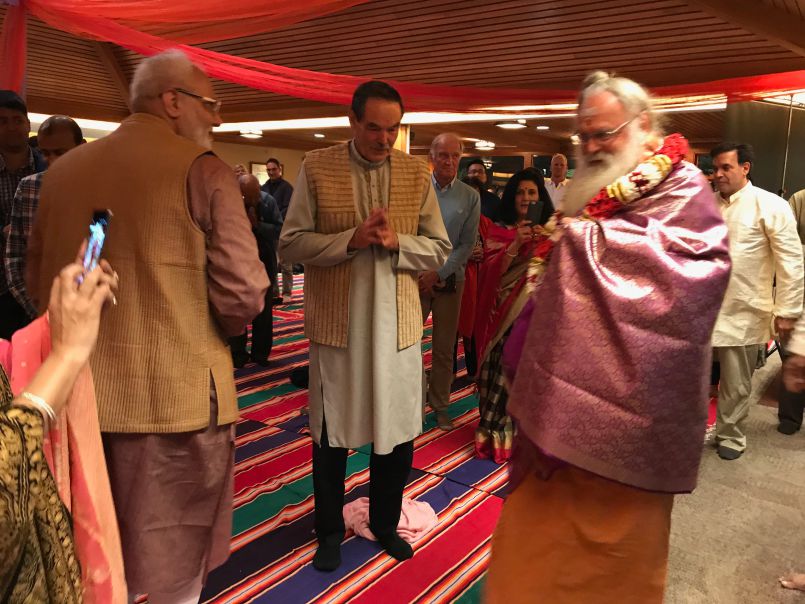
Paramacharya makes his way to the stage covered in appreciation.
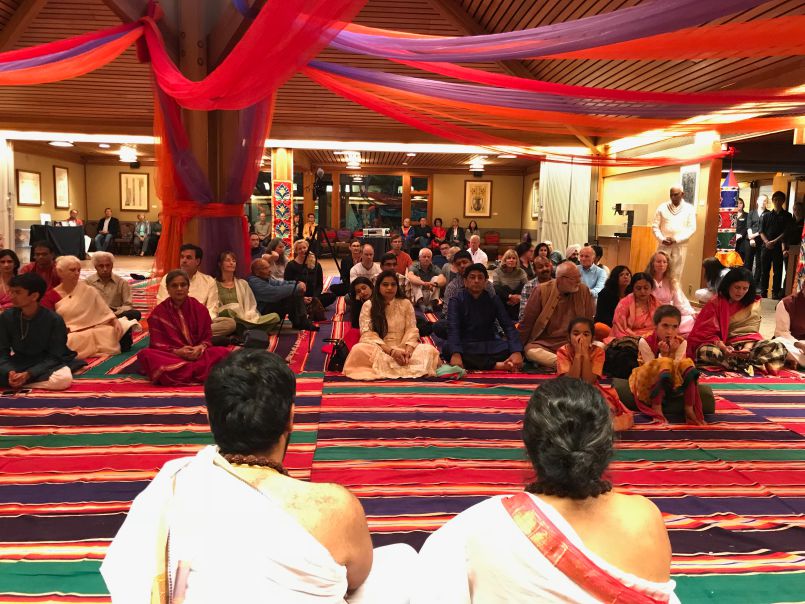
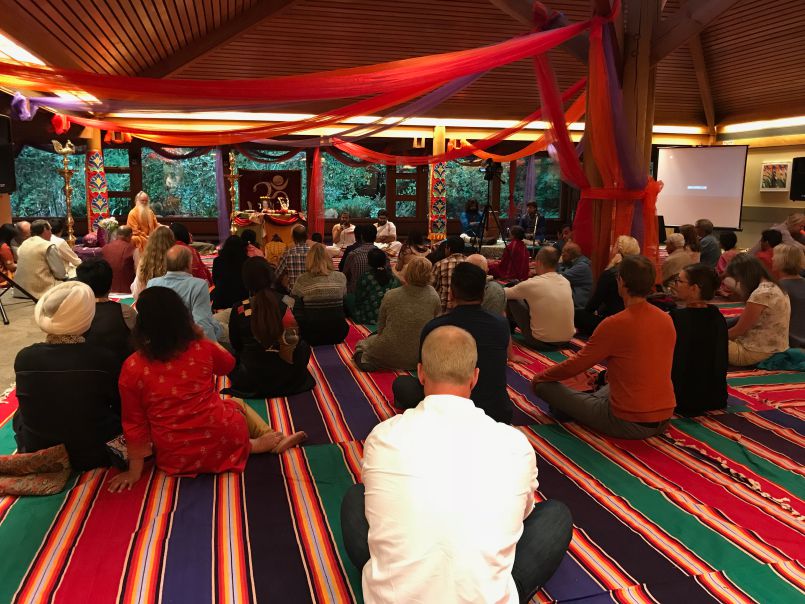
Before the presentation begins, our two priests who flew here from Toronto chant Sri Rudram to set the tone and vibration of the space. All present are swept into the consciousness of India.
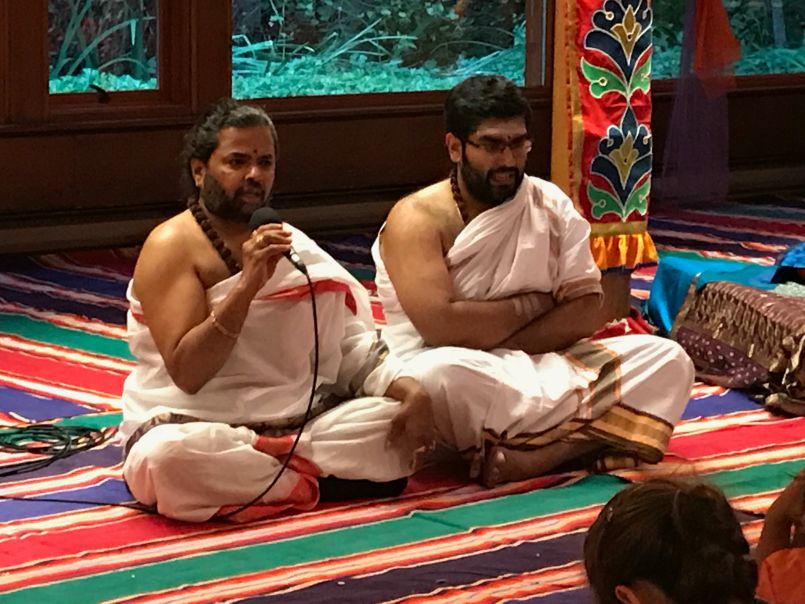
On the left is Chandrashekara Gurukkal and his student sits on the right.
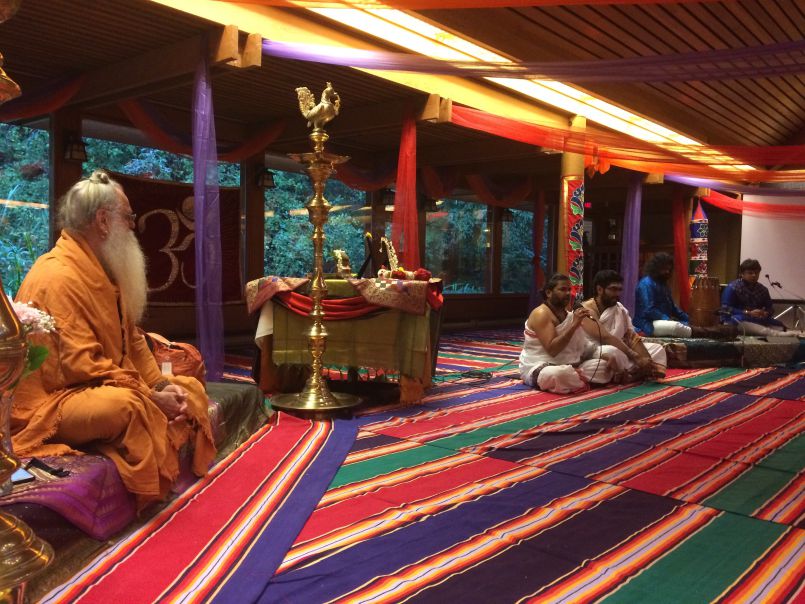
All listen as the room fills with piercing Sanskrit chanting.
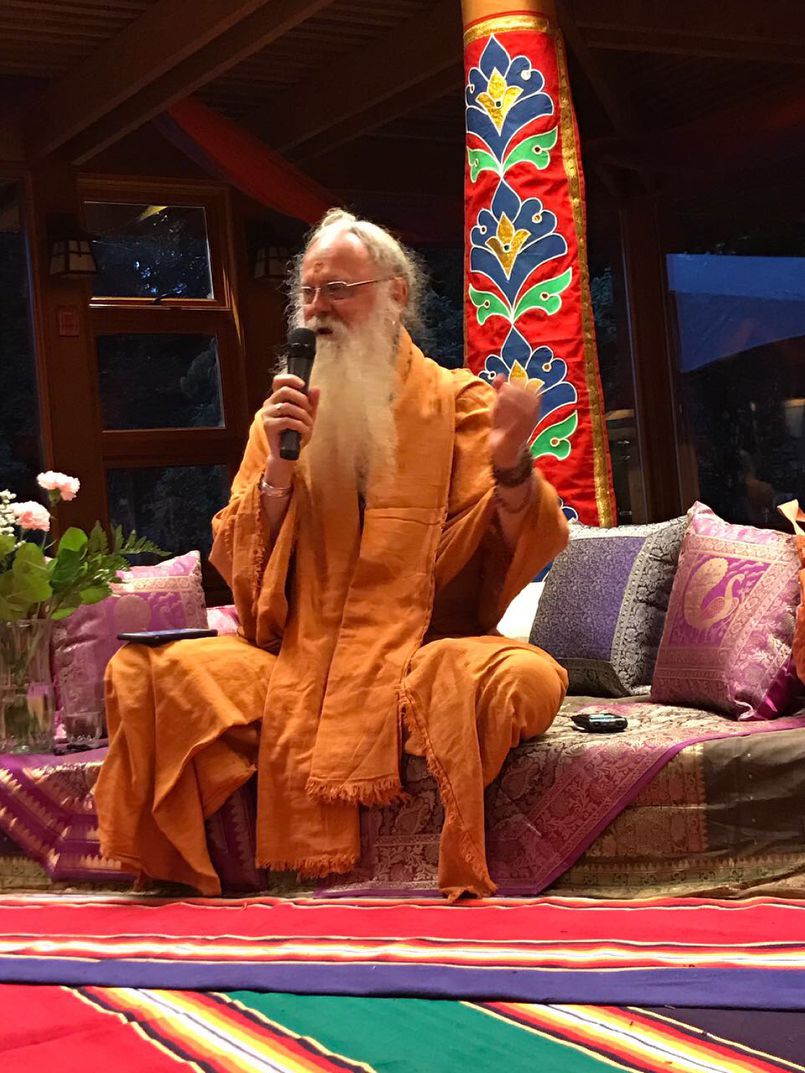
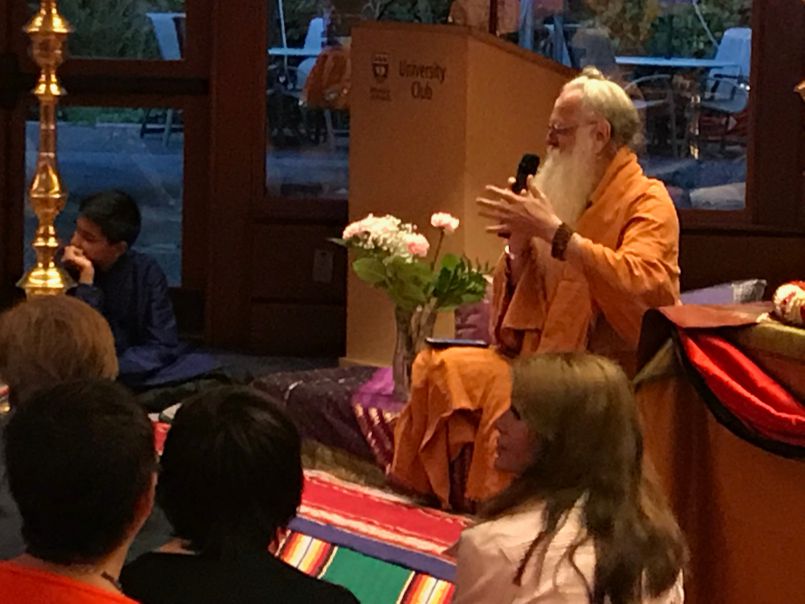
Paramacharya begins by mentioning a few words about the Sanskrit chant Sri Rudram. Its power is undeniable but not many present intellectually know the deeper meanings.
As Shawshank spontaneously (they did not reherse this back and forth) plays a melody of sadness, the audience and swami turn to him to listen.
Paramacharya begins with a story of a Maharaja who has a terrible dream that leaves him uncertain about his true identity. He then turns to Shawshank across the room (just above his head in this photo) and asks the musician to tell everyone with the flute what the king\
s suffering sounds like.'
Back to the story, the king finds a sage who might help him overcome his uncertainty.
Swami asks the flute genius to play a song of hope and optimism.
The king finally learns his true identity as the Self in all, eternal and immortal and swami has Shawshank play a final song of illumination. All enjoy this opening tale in words and music.
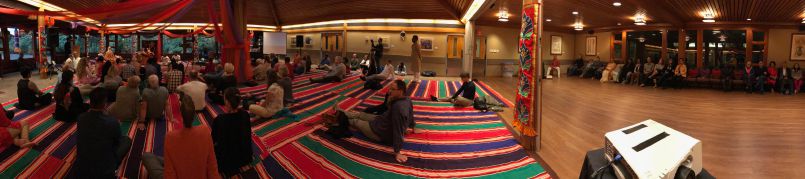
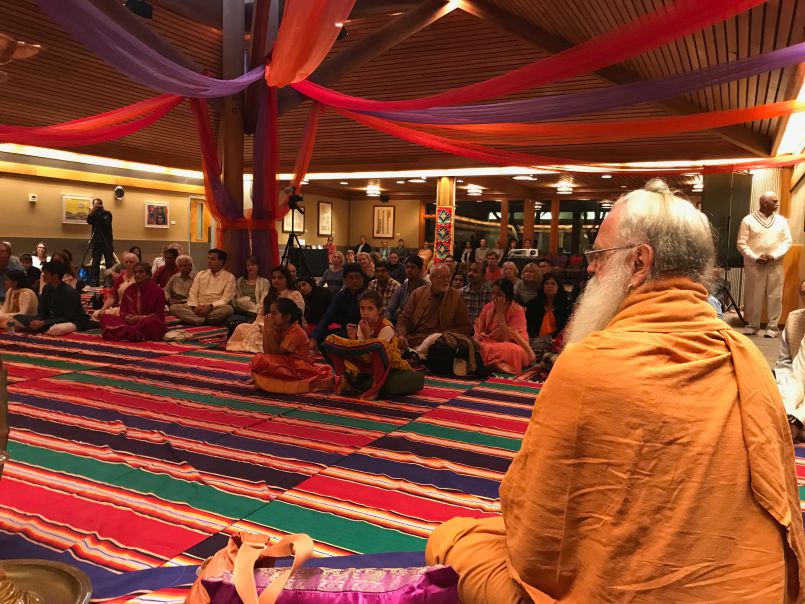
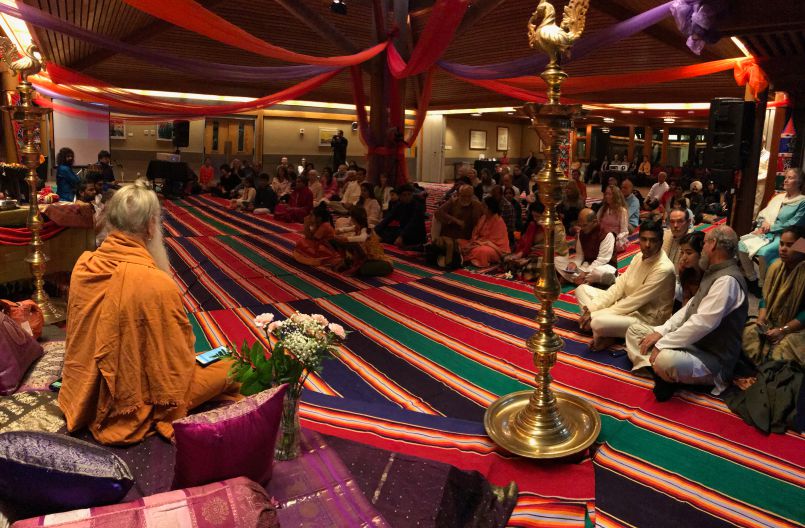
Swami goes on with his main topic, \"How Enlightened Beings Die.\" Above is the university room, turned into an Indian-style space by a dozen giant colorful carpets from Chennai.
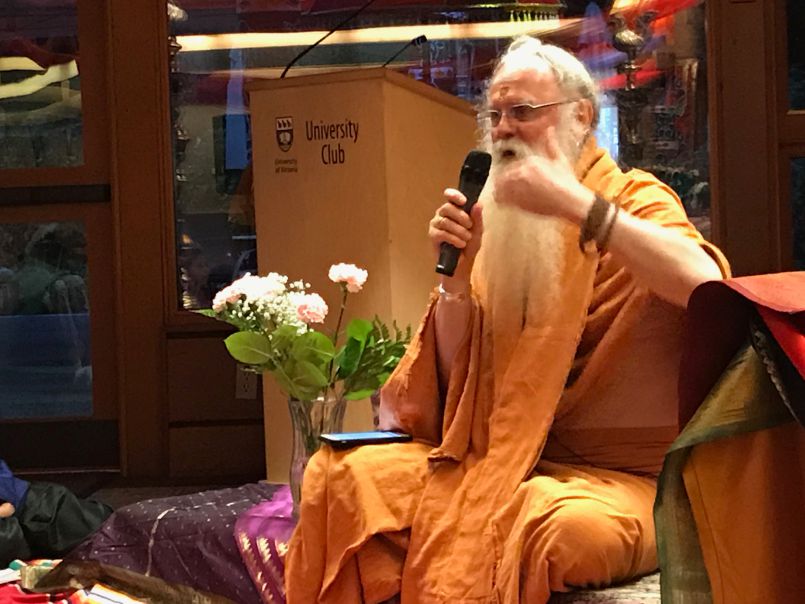
Swami has ten stories to share, and he begins with Ramana Maharishi\
s passing, how egoless he was, how he allowed all to witness his slow march to the end. Swami mentions that here is no word for death, as such, in Indic languages. We use terms like Mahaprasthana, Great Journey or Great Departure, for death is an elevated transition. '
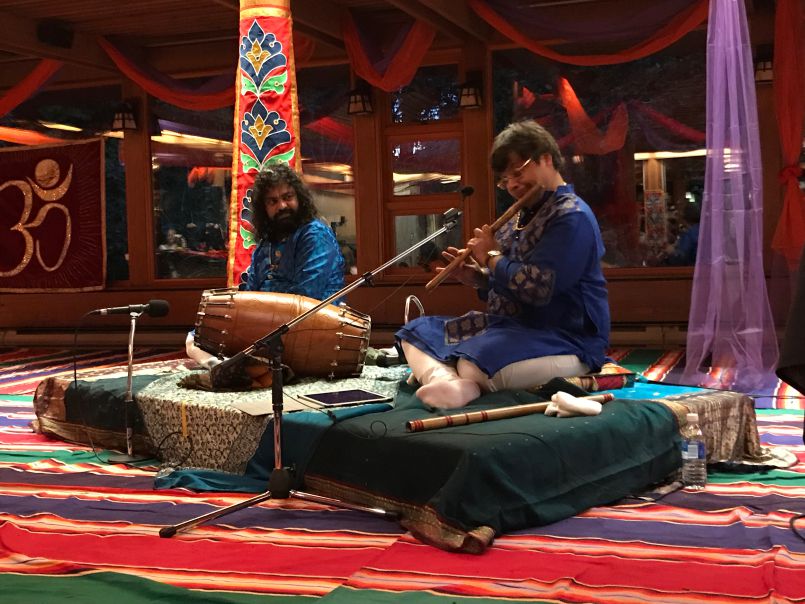
Shawshank interprets swami\
s words.'
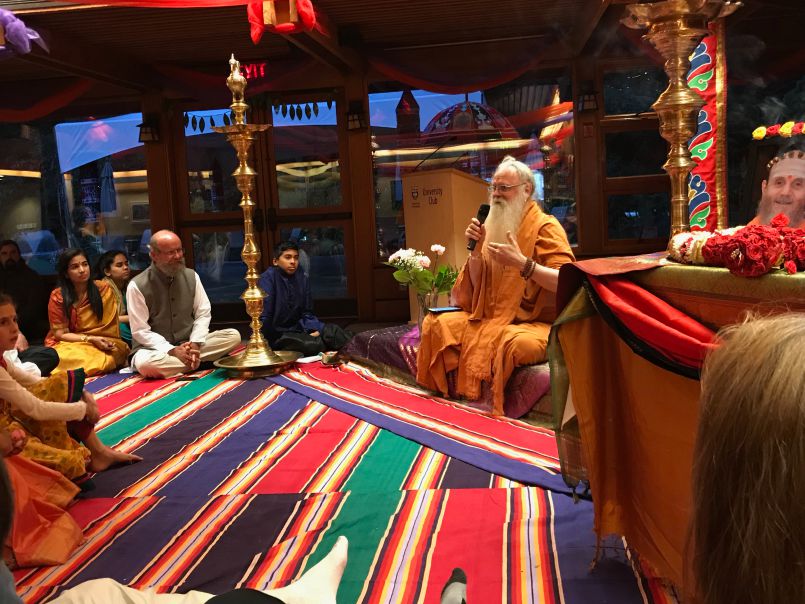
Swami also shares ten reasons that Hindus have no fear of death.
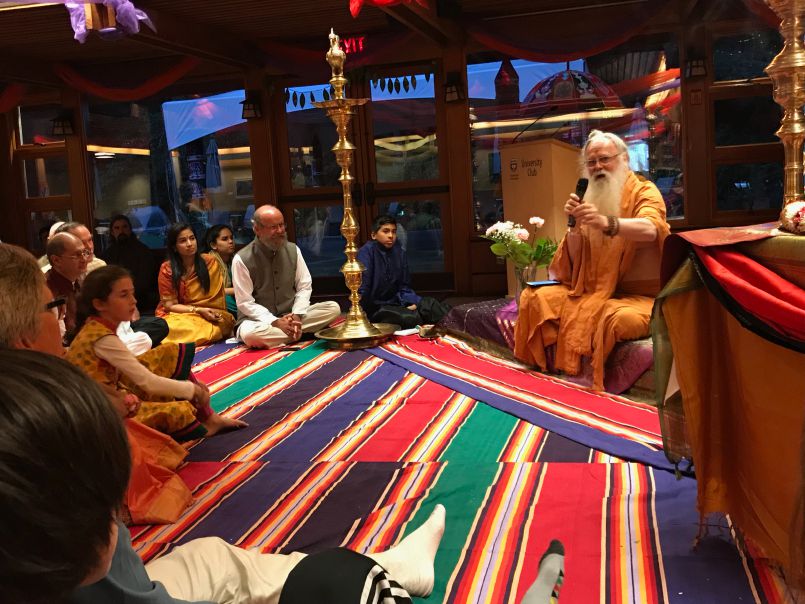
He makes the potentially dark subject interesting and more full of life than of death.
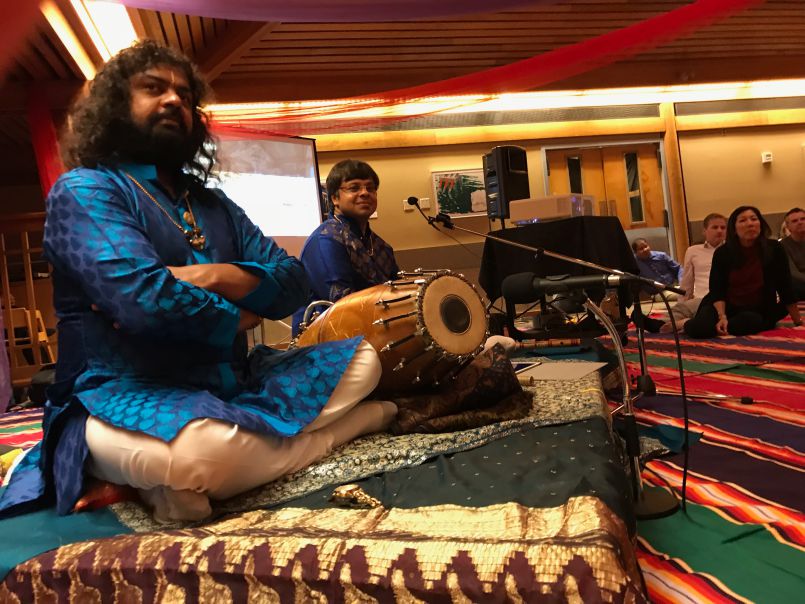
The drummer, Patri, especially enjoys the talk and later shares he never heard this subject covered in all his life in India.
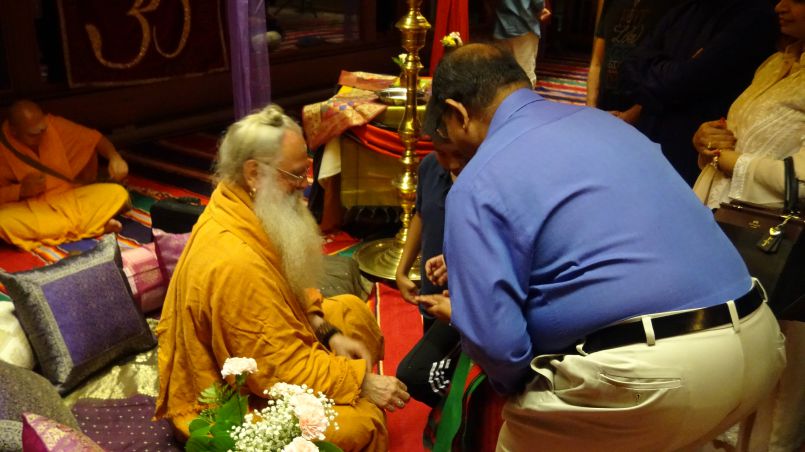
After the talk, many come forward for vibuthi and to share their own stories and ask the Hawaiian monk questions.
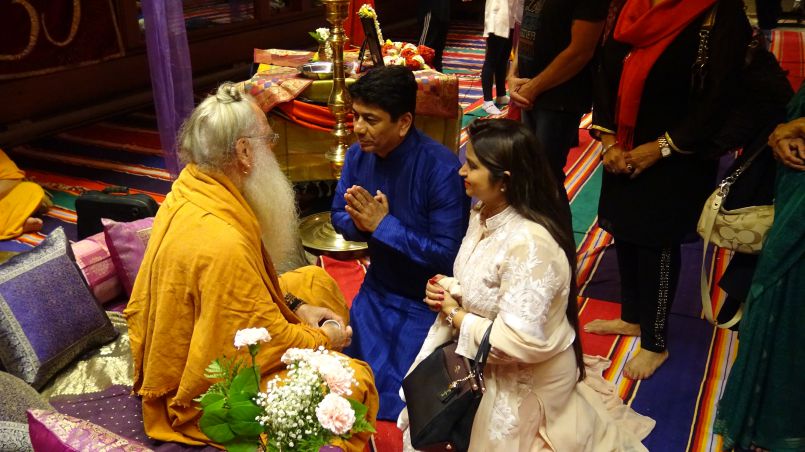
Ajay brought his wife and daughter from Delhi for the event.
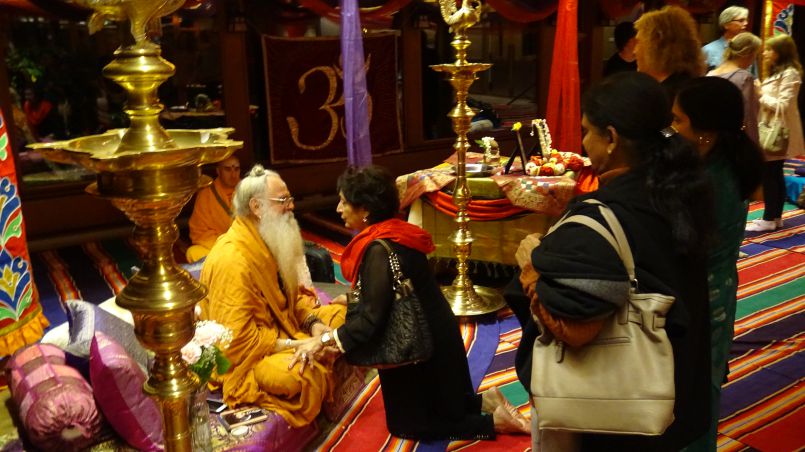
So many stories. So many beautiful questions.
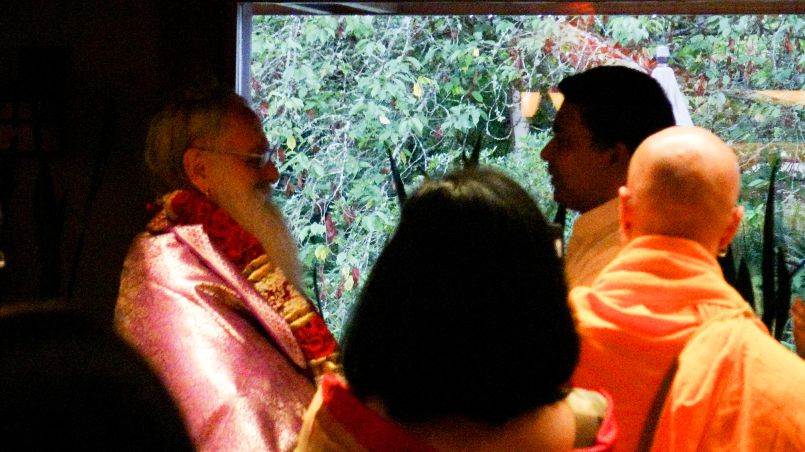
Jai Gurudeva! Jai Bodhinatha! Jai to the Nandinatha Sampradaya!
}
];
transitionSpeed:150});