
Our Island Aumakua
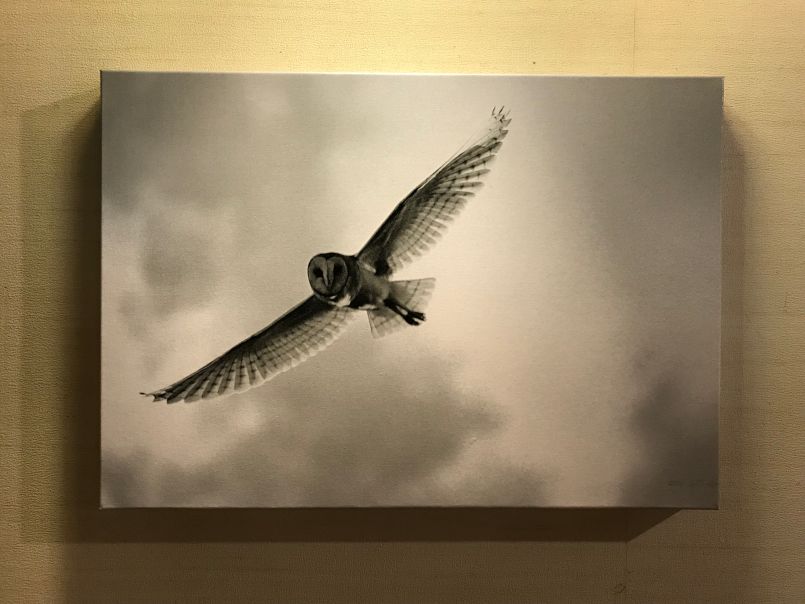
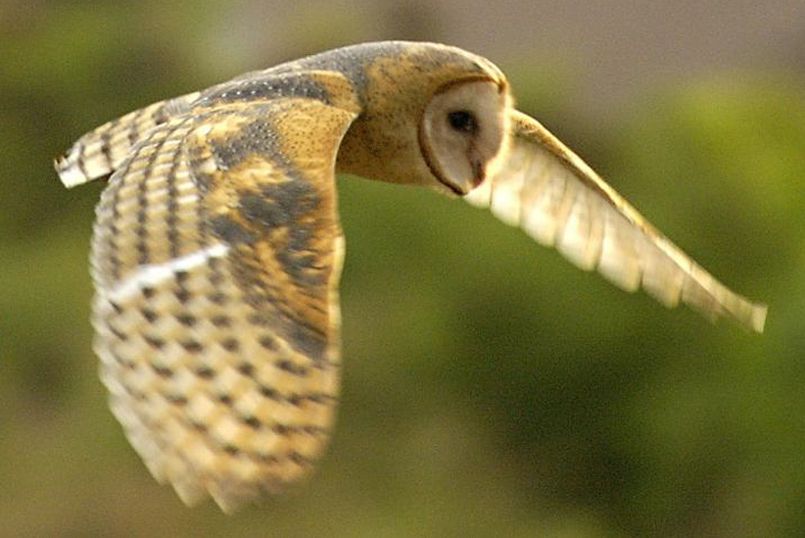
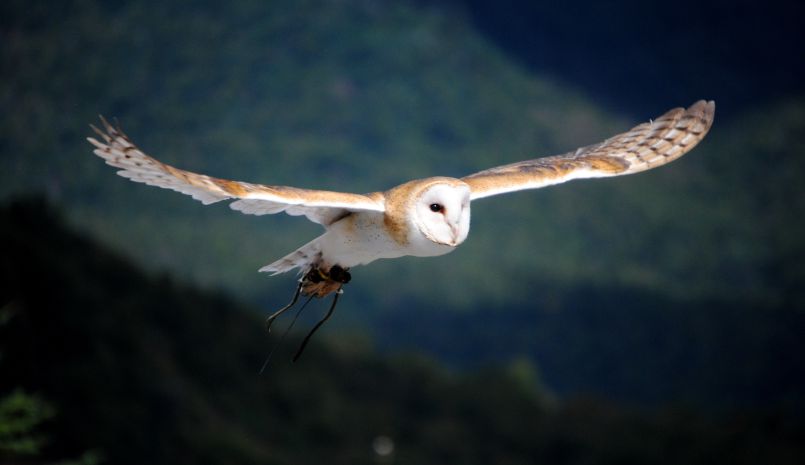
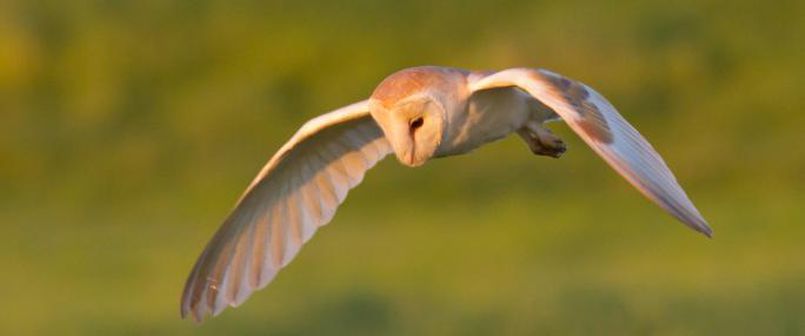
February 12, 2018The monastery was recently gifted a stunning photo on canvas showcasing the beautiful wingspan of a Barn Owl, Tyto alba, mid-flight. The owl is among the many animals in the Polynesian islands lovingly known as Aumakua or "family god, deified ancestor."
According to Wikipedia's definition of the Hawaiian mythology regarding Aumakua, "Aumakua frequently manifested as animals such as sharks or owls. Na aumakua (plural) were worshipped at localities, often rocks, where they were believed to "dwell". The appearance of an animal one regarded as an aumakua was often believed to be an omen of good or ill. There are also many stories of na aumakua in animal form intervening to save their descendants from harm. It was extremely bad luck to harm a manifested aumakua."
Wikipedia continues, "Na aumakua were thus animals, places or rocks, and people. Ancient Hawaiians would have seen no contradiction in a powerful spirit being able to appear as all three, switching from form to form as convenient--as is indeed seen in many stories of gods and demigods.
A symbiotic relationship exists between person and aumakua, the personal guardians of each individual and their family and the ancient source gods from whom Hawaiians were descended.
Aumakua can manifest in nature. The form varies family to family. Whatever its form, the aumakua is only one specific shark, owl, etc. However, all members of the species are treated with respect by family members.
If family aumakua, these manifestations were not harmed or eaten; in turn, aumakua warned and reprimanded in dreams, visions, and calls."
Aumkua could appear as:
honu, sea turtle
mo'o gecko, lizard, or dragon
pueo, owl (on Manoa, Oahu, Kauai and Puna)
mano, shark (all islands)
'alala, crow (Big island)
'io, hawk (on island of Hawaii)
'elepaio, monarch flycatcher(also the goddess of canoe makers)
'i'iwi, honeycreeper (whose feathers were used extensively in featherwork)
'alae 'ula, Hawaiian gallinule (whose cry was considered a bad omen)
he'e, octopus
puhi, eel
'iole li'ili'i, mouse
'iole, rat
'ilio, dog
pe'elua/'enuhe/nuhe/'anuhe/poko, caterpillar
pohaku, rock
leho, cowry
ao, cloud
mea kanu, plant
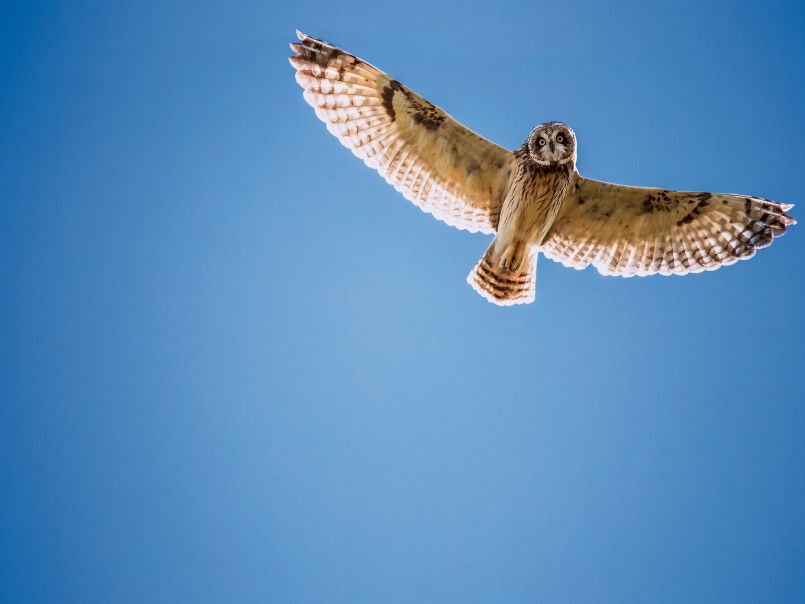
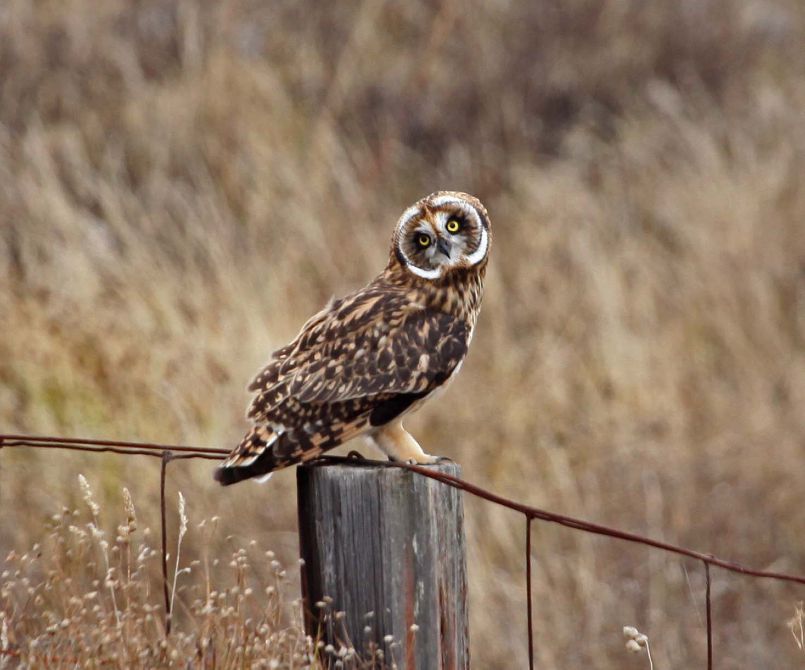
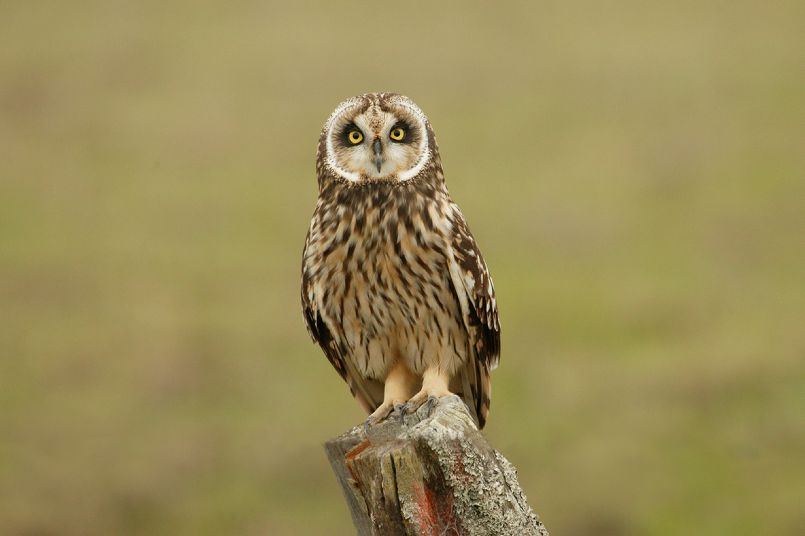
Another owl that dwells around the islands but seen less frequently is the Pueo owl. \"Endemic to Hawaii, the pueo is one of more famous of the various physical forms assumed by aumkua (ancestor spirits) in Hawaiian culture.\"
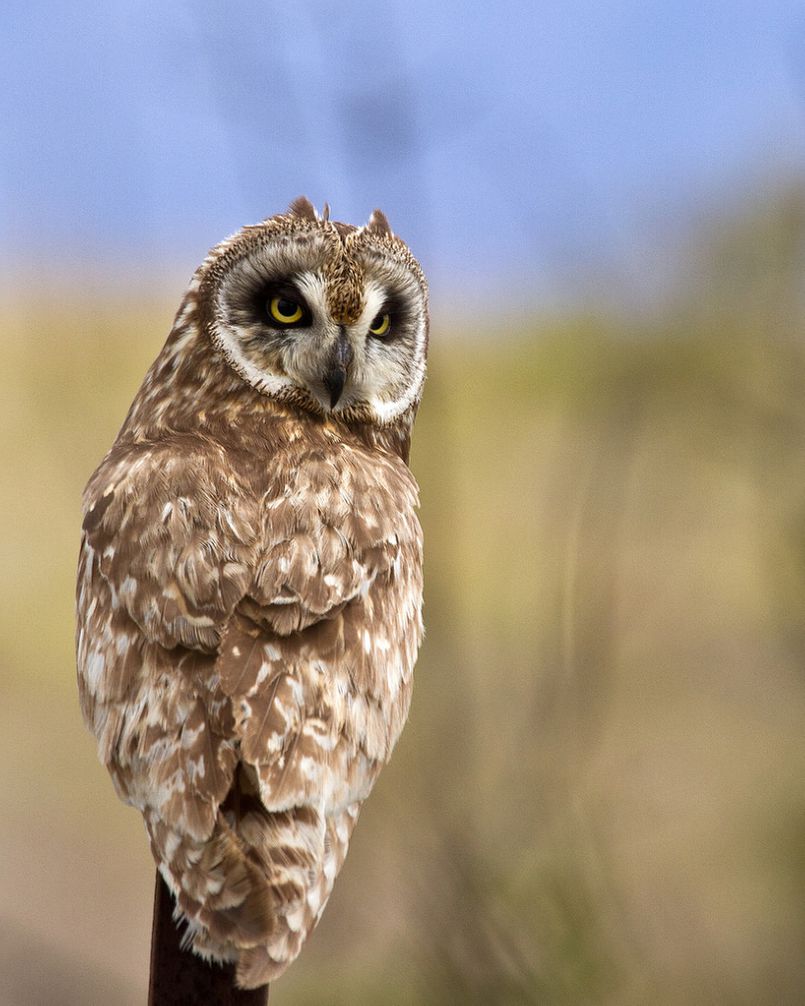
\"Pueo inhabit forests and grasslands throughout the islands of Hawaii, although their numbers seem to be declining, particularly in the last two decades, and especially on the island ofOahu, upon which they were at one time numerous.\"
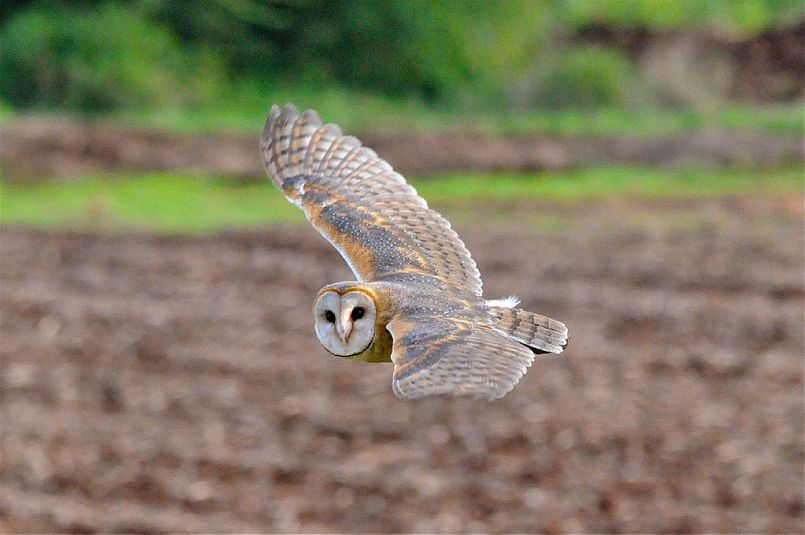
\"The barn owl (Tyto alba) is the most widely distributed species of owl and one of the most widespread of all birds.
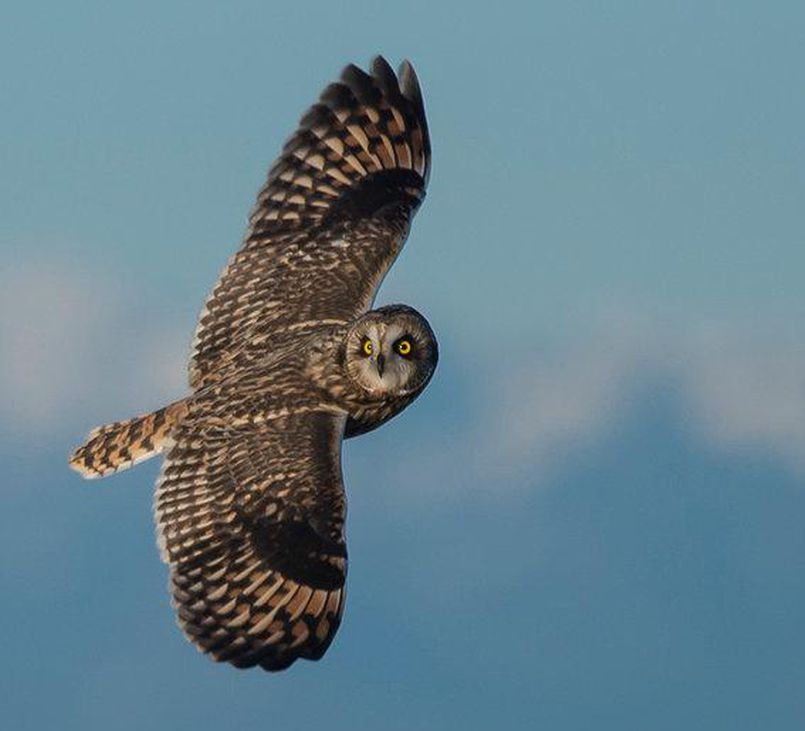
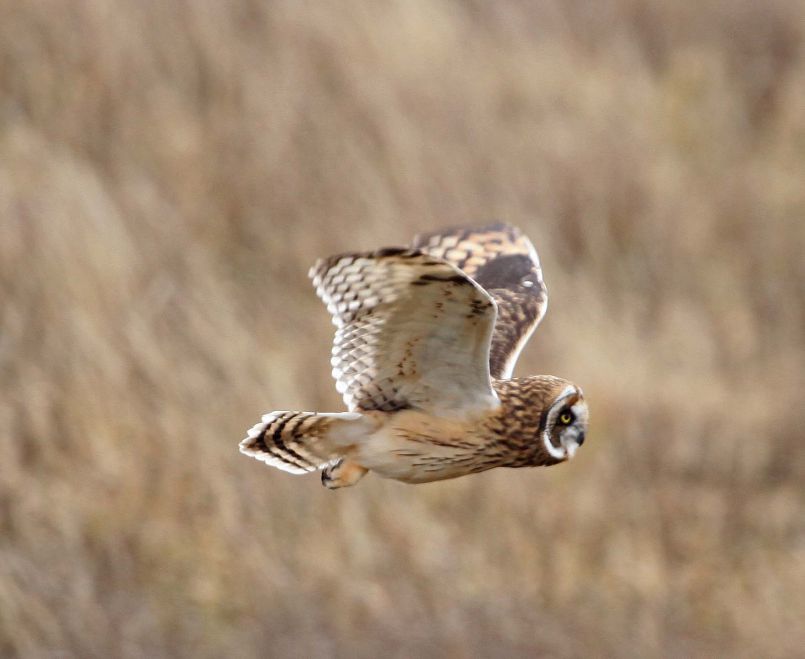
\"Pueo is listed by the state of Hawaii as an endangered specie son the island of Oahu\"
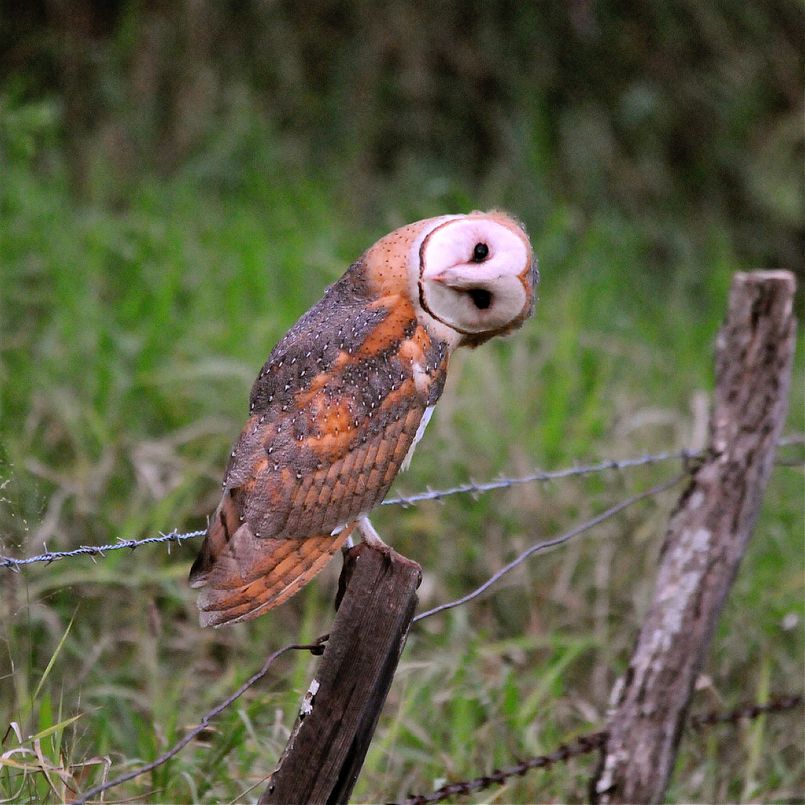
\"The barn owl is nocturnal over most of its range, but in Britain and some Pacific islands, it also hunts by day. Barn owls specialize in hunting animals on the ground and nearly all of their food consists of small mammals which they locate by sound, their hearing being very acute.\"
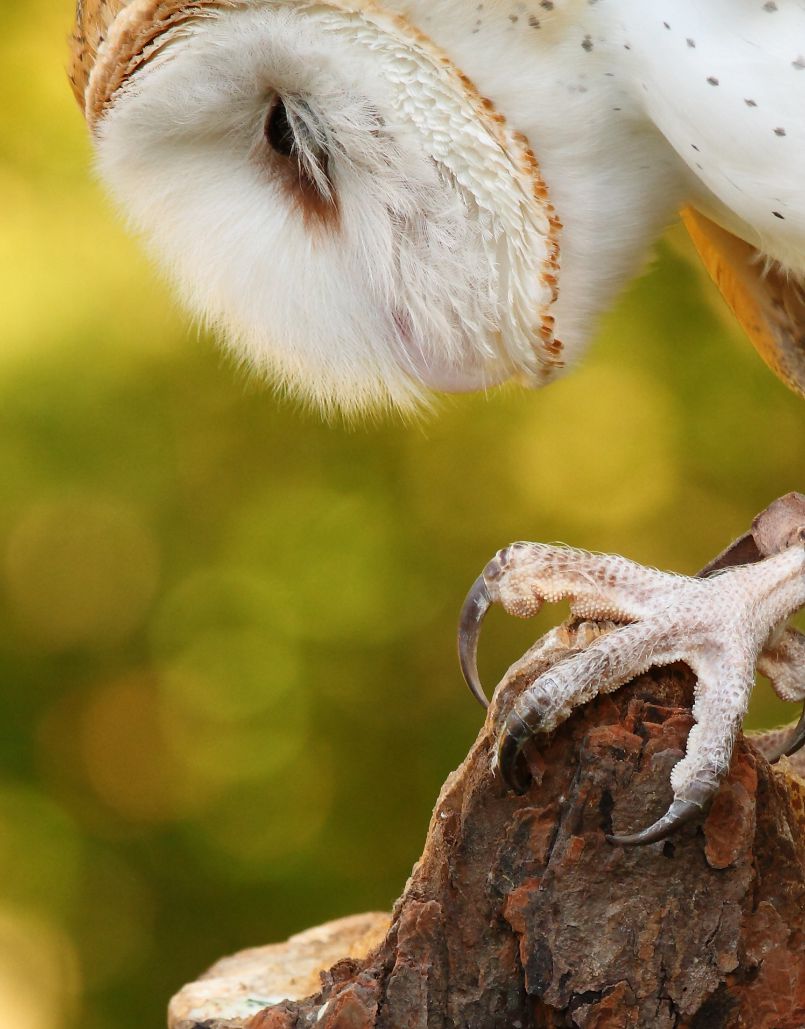
\"These owls (barn) don\
t \"hoot\" but emit raspy screeches and hissing noises or that their white face and underbelly feathers that are visible as they fly overhead make them look \'ghostly\'.\"'
}
];