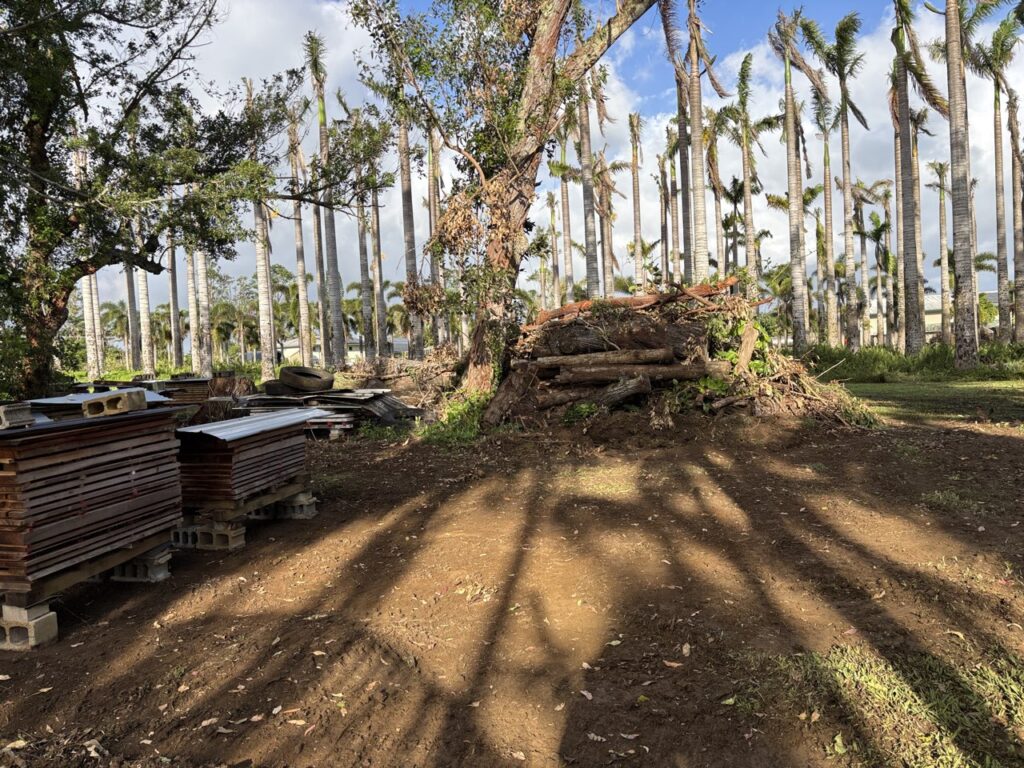
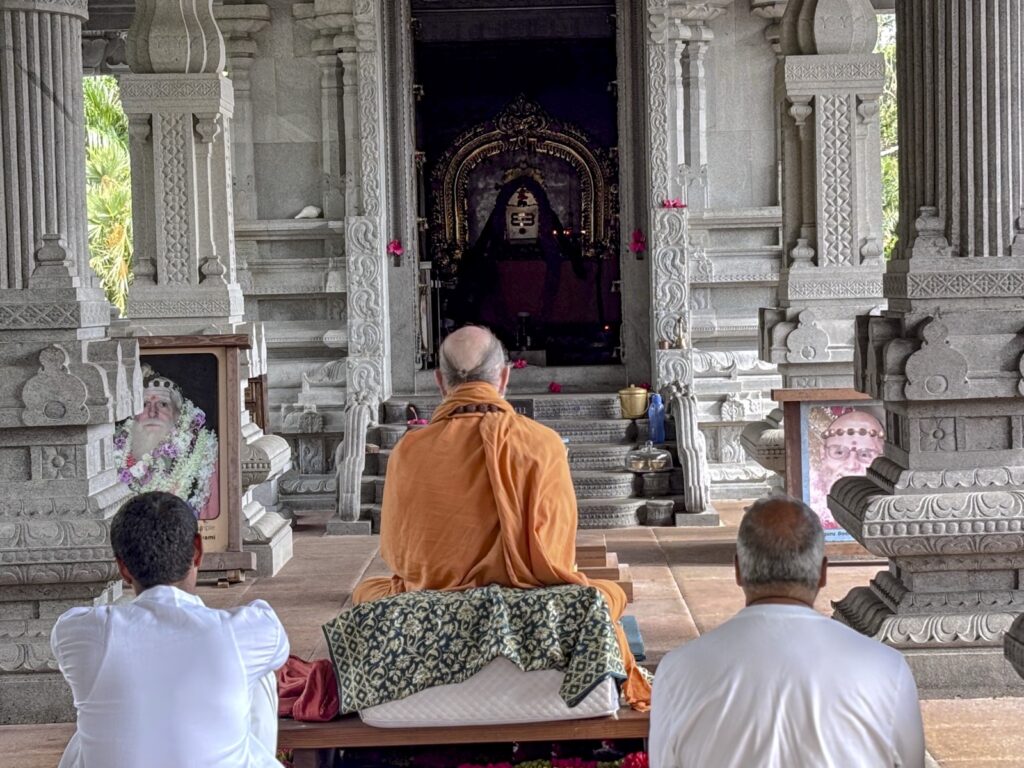
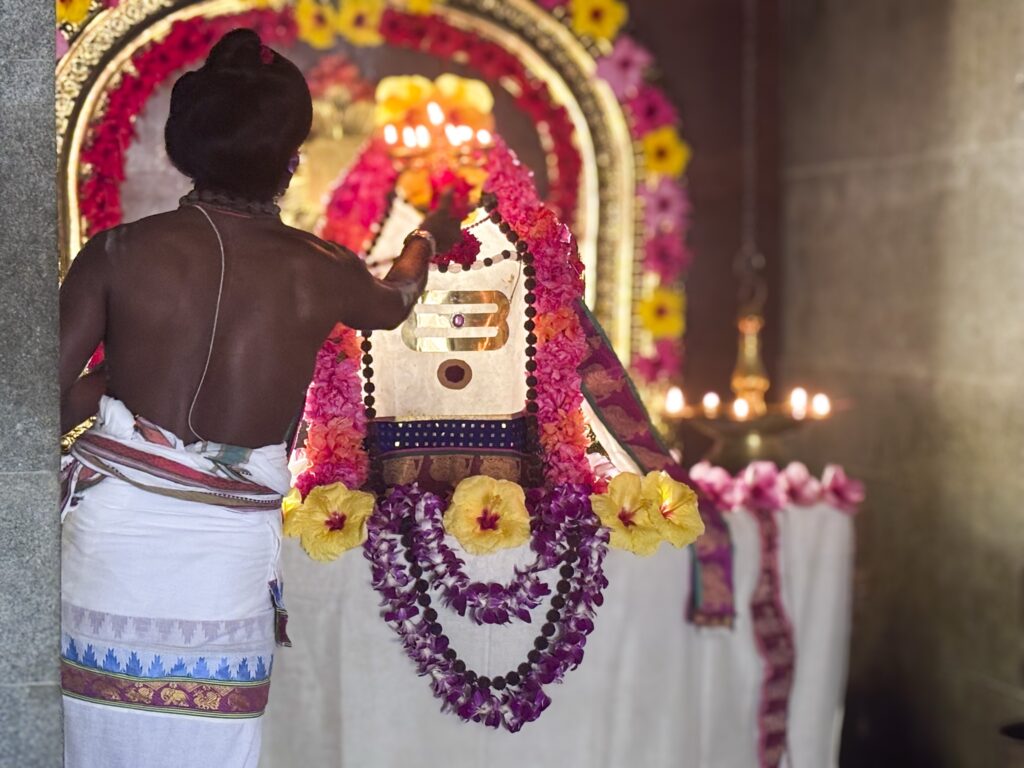
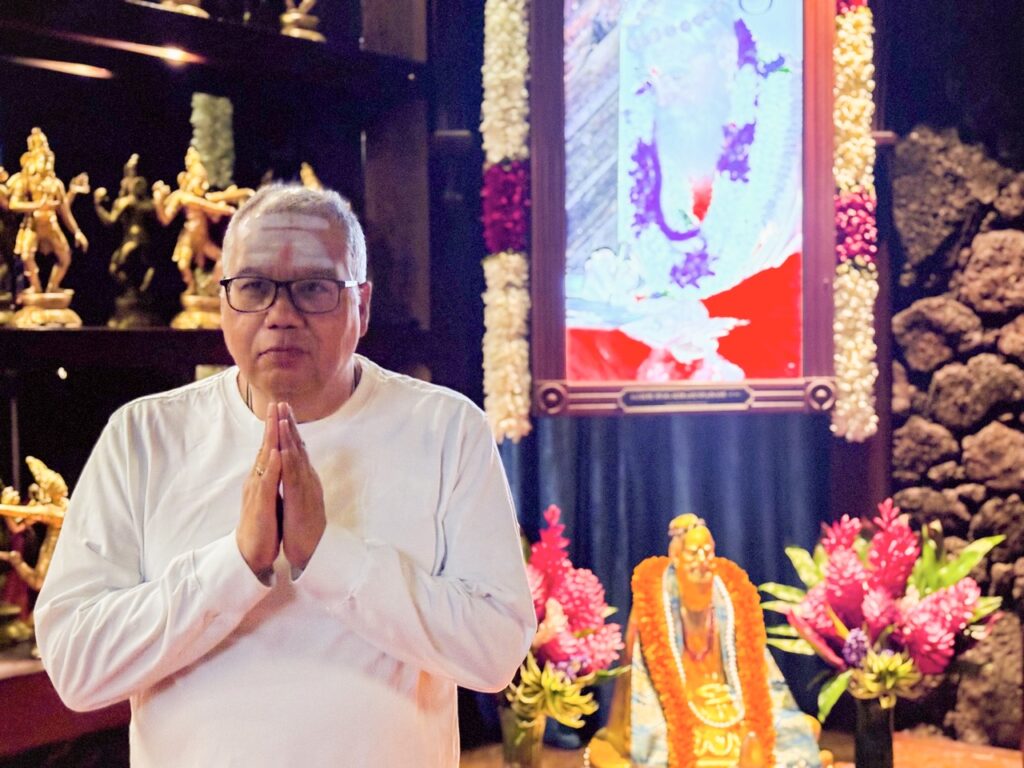
Today at Kauai Aadheenam

Malaysia Dharma Camp 2.0

Jai Ganesha!

Over the past week, Yoginathaswami and Nirvana Tejadevanatha have been traveling throughout Malaysia, conducting Path to Siva workshops and connecting with youth and attending statsangs with devotees. One of the highlights of this journey was Dharma Camp 2.0, a three-day youth retreat held at the beautiful Templer Park Rainforest Retreat. It was a record created by the team, conducting nearly 20 workshops in 19 days.

Day 1

The camp began with a relaxed morning as Yoginathaswami and Nirvani Tejadevanatha checked out of the PJ Sheraton and traveled a short distance to Templer Park. Nestled amid lush rainforest and manicured gardens, the retreat’s treehouse-style villas provided a peaceful setting for the weekend’s activities.

After a brief yoga session, they joined the camp participants for introductions. The gathering included 60 youth members and several adult coordinators, with ages ranging from 4 to their 40s. During introductions, participants shared what they hoped to gain from the camp. Many expressed a desire to deepen their understanding of Hinduism, while others spoke of finding inner peace and learning more about dharma.

The afternoon featured a variety of non-competitive team-building games that helped participants become acquainted and build a sense of community. Yoginathaswami and Nirvani Tejadevanatha observed the activities before preparing for the evening program.

Following dinner, the group assembled for the first workshop session. Participants gathered in small groups to discuss the question, “When do you feel at peace?” Responses included singing, performing puja and completing examinations. The discussion also led to thoughtful questions about karma, and one participant asked Yoginathaswami what inspired him to become a monk.

The first day proved to be a wonderful beginning to the camp, setting the stage for a weekend of learning, reflection and spiritual growth.

One memorable feature of the retreat was the abundance of stuffed tiger figures placed throughout the property. The tigers serve a practical purpose, helping to discourage the local monkey population, which is known for creating mischief around food areas and rubbish bins. Several monkeys were spotted during the drive up to the retreat, and one even paid a visit outside Yoginathaswami’s room. While certainly charming to observe, the monkeys have earned a reputation for being clever opportunists, making the stuffed tigers a surprisingly effective deterrent.


Day 2

The second day of Dharma Camp 2.0 began with a beautiful morning puja conducted by Yoginathaswami on the retreat’s rooftop deck. Surrounded by the peaceful sights and sounds of the rainforest, it was a special and uplifting way to begin the day.

Following breakfast, Yoginathaswami and Nirvani Tejadevanatha met with the camp’s older youth, ages 13 to 30, for an intimate question-and-answer session. The participants asked a wide range of thoughtful questions, including why Hindus apply vibhuti, whether women can become monastics, the challenges of leaving family to embrace the monastic life and how one ultimately realizes moksha. The sincerity and depth of the questions reflected the participants’ genuine interest in understanding and applying Hindu teachings in their lives.

The morning continued with one of the camp’s most creative activities—a treasure hunt designed and organized by the youth leaders. Teams worked their way through five stations, solving clues and completing challenges along the way. At one station, participants carefully observed a series of hatha yoga postures and then attempted to recreate them from memory. After successfully completing every task and solving each clue, the teams finally arrived at the teaching room, where they discovered that the ultimate treasure awaiting them was Yoginathaswami himself. Each participant received a vibhuti blessing, and the teams were rewarded with a variety of delicious treats. The activity concluded with group photos and plenty of laughter, becoming one of the most memorable highlights of the camp.

After lunch and a short period of rest, the monks returned for another question and answer session, this time addressing questions that had been submitted by participants prior to the workshop. The discussions covered a variety of spiritual topics and provided an opportunity for deeper reflection and learning.

Following dinner, the group gathered for the day’s final session. The evening concluded with the Vasana Daha Tantra practice, a perennial favorite among participants. The powerful exercise offered everyone an opportunity for introspection and personal growth, bringing a fitting close to a full and rewarding day.

Activities concluded around 10:00 p.m., with participants looking forward to one final day together at Dharma Camp 2.0.


Day 3

The final day of Dharma Camp 2.0 began with another beautiful morning puja conducted by Yoginathaswami, accompanied by the powerful chanting of Sri Rudram. The sacred atmosphere provided a fitting start to the camp’s concluding day.

Following breakfast, participants began packing their belongings before gathering for a special question-and-answer session focused on reflecting upon their experiences during the retreat. As part of the discussion, Yoginathaswami asked the youth a simple but profound question: “What are you taking back from the camp?”

The responses revealed the meaningful impact the weekend had made on many of the participants. Several spoke about the value of the Vasana Daha Tantra practice, noting that even when emotions do not immediately arise, perseverance eventually allows deeper feelings and insights to emerge. Others shared their appreciation for daily worship, describing puja time as a personal sanctuary that helps bring clarity and balance to the entire day. Participants also reflected on the benefits of color meditation for improving concentration and spoke of feeling inspired to strengthen their daily spiritual disciplines and sadhana practices.

Following the discussion, each participant came forward to receive vibhuti and ask any final questions they wished to share with the monks. The camp then gathered for a group photograph before enjoying lunch together and saying their farewells. Later that afternoon, Yoginathaswami and Nirvani Tejadevanatha returned to the PJ Sheraton.

Dharma Camp 2.0 proved to be a deeply transformative experience for many of the youth in attendance. Several participants admitted that they had arrived feeling nervous, either because they knew few people at the camp or because they expected the classes to be uninteresting. By the end of the weekend, those same youth had formed meaningful friendships, gained practical spiritual tools and developed a deeper appreciation for Hindu teachings and practices.

One sentiment was shared again and again throughout the closing discussions: participants were already looking forward to next year’s camp. In fact, the most common complaint was that the camp had ended too soon.

The monastery extends its appreciation to the organizers, volunteers, parents and youth whose enthusiasm and dedication helped make Dharma Camp 2.0 such a memorable and inspiring success.


Testimonials

Both Senthil Velan & Seyon Velan just participated a 3 day Dharma Youth Camp with Yoginathaswami and Sadhaka. They returned happily saying they enjoyed very much, especially Swami’s talk, activities  and superb food. This is thier first time and surprisingly they are asking when is the next camp, Bodhinatha.

I have to say, the youths are doing tremendous job, with dedication. Boys are so happy with the male youths whom they regatd as elder brothers. 

Thank you Bodhinatha for the camp, and for sending Swami to run it. Youths are so fortunate. We pray for more such continuous activities to keep our Gen Zs abd Alpha kids at bay.

– Kulamata Ahila Devi Ganesan

This dharma camp conducted by Yoginathaswami was a truly enriching experience. His Q&A session was a blast. Swami’s answers were sharp, concise, clear, relatable, and presented in an inspiring manner, making even deep spiritual concepts accessible and meaningful. Swami, being a Malaysian, knows to keep us engaged throughout his sessions.  The Siva pooja that was conducted also was really a powerful one that all of us felt so divine and charged up.

– Shamadevi

What touched me most was seeing how deeply the participants connected with the camp. Even though it was a 3 days and 2 nights program, many youths became emotional that it ended so quickly. Several of them personally shared with Swami that they are already looking forward to a NextGen 3.0 in the future. To witness their enthusiasm, transformation, and sincere interest in dharma was truly fulfilling and heartwarming.

– Aran

The youths requested for Dharma camp 3.0, with longer days. Being in the committee, all of us are working adults with so many things ahead, but the fullfillment of having done a svadharma is unimaginable. Contributing to community and teaching religion the fun way is great. As a person myself, i learned so many new approaches and how i can give myself an extra 15 minutes for my inner self. 

– Hemavalli

Many of spoke expressed their desire for a camp with a longer duration next year, as well as friends who would definitely be interested to join such camps as well. The participants also spoke about how we, the organizers were fun, warm and friendly and how they could be themselves without being judged. I think it was truly helpful to have a young team of organizers who themselves were proactive, dynamic and creative.

– Ratnavathy Sivalingam

These reflections capture the spirit of Dharma Camp 2.0 far better than any report could. What began as a weekend gathering became an opportunity for youth to deepen their understanding of Hinduism, form lasting friendships and discover practical spiritual tools they can carry into daily life. The enthusiasm for a future Dharma Camp 3.0 and requests for an even longer camp speak volumes about the impact the experience had on everyone involved.

Malaysia Dharma Camp 2.0 Read More »

Mostly Hibiscus

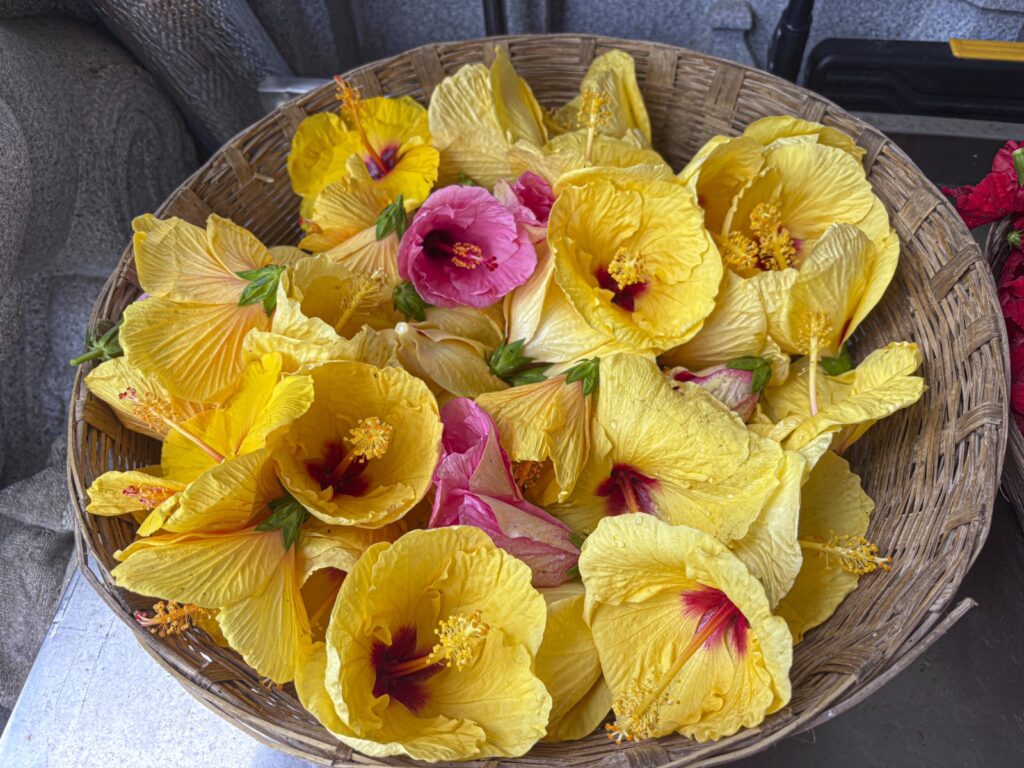
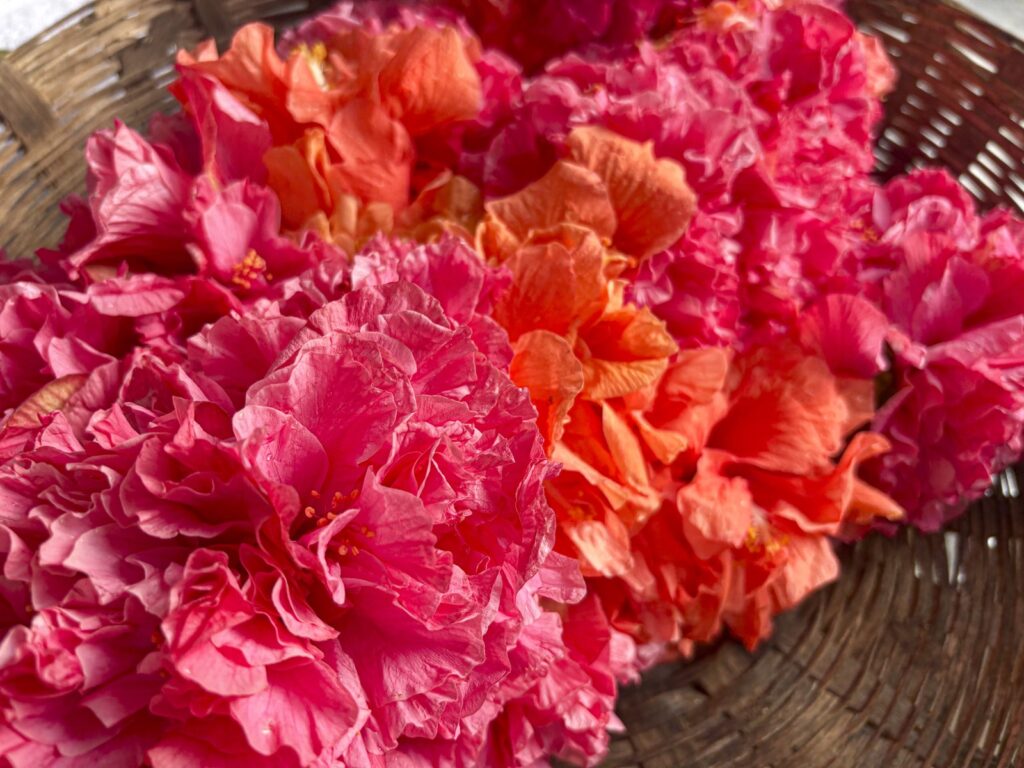
Hibiscus is the national flower of Malaysia and South Korea, and the state flower of Hawaii. It has great meaning in many cultures. In the Hindu tradition, hibiscus (especially Hibiscus rosa-sinensis, the red hibiscus) is sacred. Its five petals are interpreted as representing the five senses, the five elements, and even the five potencies of God Siva. The flowers are offered to Kali because their deep red color resembles divine power and the life force. They are also offered to Ganesha in many regions. They symbolize Shakti, energy and devotion and, for some, the transience of life, since their blooms, while stunningly beautiful, are brief, reminding us to be present in every moment.

The fancy hybrids are not as productive as the workhorse flowers that we collect daily by the bushel. They are far more spectacular, as though the plant puts all of its effort into the extra attention given to color, shape and form of the blossom. We show a few of the hybrids and a few of the more productive flowers that are the monks’ daily offerings to the deities in our two temples. Enjoy this short slideshow.

Mostly Hibiscus Read More »

Jnanis & the Path They Teach, Part Three

Satguru Bodhinatha Veylanswami gives his weekly upadesha in Kadavul Temple at Kauai’s Hindu Monastery in Hawaii. It is part of a series of talks elaborating on the inspired teachings of Satguru Śivaya Subramuniyaswami as found in his book Merging With Śiva.

It is the disciple’s duty to understand the sometimes subtle guidance offered by the guru, to take the suggestions and make the best use of them in fulfilling the sādhanas given. Being with a satguru is an intensification on the path of enlightenment—always challenging, for growth is a challenge to the instinctive mind. If a guru does not provide this intensification, we could consider him to be more a philosophical teacher. Not all gurus are satgurus. Not all gurus have realized God themselves. The idea is to change the patterns of life, not to perpetuate them. That would be the only reason one would want to find a satguru. 

Jnanis & the Path They Teach, Part Three Read More »

Salangai Poojai at Iraivan Temple, Path Timelapse

Young budding bharatanatyam dancers from the Hawaiian island of Oahu, flew to Kauai with their teacher and parents so they could perform the Salangai Pooja at Iraivan Temple. Sarithra and Piyusha are fourth and fifth graders and officially received their bell anklets today from their teacher acharya, Dr. Janani Lakshmanan. They were accompanied by special guest dancer, Kavya Bhagawatula. The family prepared a beautiful pamphlet to commemorate the occasion. Below is a description of the Salangai Poojai from the pamphlet–

“A Salangai Poojai is a sacred milestone in classical Indian dance, Bharatanatyam. It is the auspicious ceremony where a student receives and wears their salangai (ankle bells) for the very first time, symbolizing their readiness to transition from a beginner to a practicing dancer. In Bharatanatyam, the salangai is treated as a divine instrument of the art which consists of small metallic bells tightly woven onto a cotton or leather strap. The ringing bells are said to awaken the divine energy within the dancer and connect their rhythm to the cosmic rhythm of Lord Nataraja (the Lord of Dance).

“The event usually takes place on an auspicious day at a temple or a dance studio, often in front of family, friends, and invited guests. The ceremony begins with an invocation (usually a pooja dedicated to Lord Ganesha) to remove obstacles from the dancer’s journey. The ankle bells are placed on the altar and blessed through sacred chants. The Guru (teacher) personally ties the salangai onto the student’s feet. This highly symbolic act represents the passing down of knowledge, tradition, and the Guru’s blessing. After the bells are tied and the Guru grants their final approval, the dancer gives their first performance indicating the dancers ability to match rhythm. The Salangai Poojai remains a soulful, spiritual celebration of the teacher-student bond and the dancer’s lifelong commitment to the art.”

Here is a short clip of their dancing today–

We also just received this short timelapse created by drone footage of the concrete path recently constructed around Iraivan Temple. It is best viewed as a visual representation of the process rather than a frame-by-frame record of the actual construction sequence.

Salangai Poojai at Iraivan Temple, Path Timelapse Read More »

A Digital Solar System

https://www.himalayanacademy.com/planets

Aum Namah Śivaya

We’ve recently built this free Vedic astrology tool that runs in your browser. You can open the live solar system and click on any planet, sign, or lunar mansion to read about it. You can also set the time manually to see what the planets will be doing at any given time. On the solar system page you can select your rising sign (which you can calculate on the birth chart page if you’d like), so if you click on a house, nakshatra, or a planet, it will give information adjusted for your chart. There’s also a “Find Events” button which will show major celestial moments for a given year—if you click on one it will reorient the solar system to that very moment. On the Birth Chart page you can enter your birth details and receive a full chart with your planetary placements, your janma nakṣatra, your Vimshottari daśā timeline, and a long-form classical interpretation of every planet’s position written in plain English—which you can save or download as a PDF. There’s also a Saṅkalpa drawn live from Kauai Aadheenam’s pañchāṅga service for those who need it for a puja.

Please note that—while this is a rather technically advanced tool—it’s best not to rely on it for anything more than a fun and a simple education in Jyotish (as in, please don’t use it to make major life decisions). The deeper purpose to reading the stars isn’t really about prediction. You are ultimately one with Śiva and the whole Universe. Thus the planets aren’t external powers acting upon you, but rather outward reflections of motions already moving within you. The Sun above mirroring your soul’s light, the Moon your receptive mind, Rahu indicating the karma that draws you in this life, Saturn’s slow turn is the patient labor of your own discipline, Mars the spark of your boldness, and Jupiter your expanding blessings.

These planetary positions come from Swiss Ephemeris—the same engine that powers Drik Panchang, Jagannath Hora, and every serious Vedic tool—sub-arcsecond accurate, defaulting to Lahiri ayanamsa. For the full daily pañchāṅga and Saṅkalpa for your location, please use the printable Mini Mela Pañchāṅga.

A Digital Solar System Read More »

Our New Sivanadiyar!

Jai Ganesha!

Jai Kailasa Parampara!

A wonderful day for Brahmachari Arinein as he makes his Sacred Pledge as a Sivanadiyar. This pledge declares his intention to pursue a life of monasticism as he begins the final stage of preparation for becoming a Postulant. From the Sacred Pledge:

“The supplicant’s foremost objective is to strive for mastery of the charya marga, or path of service. This begins with the avoidance of wrongful actions and the overcoming of base instincts and emotions as he learns to transmute worldliness into the higher states of devotion and selflessness. At this stage on the path, the Saivite devotee is content not to strive for profound spiritual attainments but to work diligently with the faults and flaws that are stumbling blocks on the path, learning at the same time to depend not only on his own resources but on the limitless abilities of the Gods to resolve all difficulties and dissolve all obstacles. The Supplicancy is a time of profound worship of Lord Ganesha, Lord Murugan and Lord Siva and of deepening commitment and service to Saivite Hinduism and to the Church. It is also a time of study, challenge and inner change. The supplicant is encouraged to strive for the perfection of service and for the monastic ideals of humility, industry and responsibility, renouncing personal needs for the benefit of others. In this service, he should strive for transparency, that quality of anonymous virtue in which the premonastic lives in full harmony with others, remaining centered within and not standing out or disturbing the surroundings. It is this ancient tradition of unseen service and unperturbable stability that the supplicant seeks to emulate, realizing that serving in unheralded ways and renouncing the fruits of even good deeds averts the pitfalls of the spiritual ego and nurtures the state of unpretentiousness. By putting great energy into premonastic life and by serving tirelessly for the benefit not of himself but of others, the supplicant opens himself to the inflow of Lord Siva’s grace.” Aum Namah Sivaya. 

Our New Sivanadiyar! Read More »

Scroll to Top