
Hawaiian Conservation District Visit
July 9, 2016The Hawaiian Islands have been divided into conservation districts, each with a local board comprised of farmers, ranchers, other agriculturalists and state and federal agricultural officials.
Each year all the boards come to one island for their annual meeting and then visit some of the interesting conservation oriented projects on that island. This year the first site they visited was the Hindu Monastery Koa grove. To understand the significance of this one must understand that the Hawaiian Islands were once covered with rich forests containing large amounts of Koa, sandalwood and other hardwoods. Much of this has disappeared over to time, to be replaced with pastures and tangled jungles of imported species.
Koa, often associated with Hawaiian royalty, was especially treasured for its beautiful dense wood and was used for canoes and many other purposes. The trees served as a home to a rich variety of birds and other creatures and are close to the hearts of native Hawaiians and of many who have come to the islands. But the trees have not only been cut by man for many uses, but a virus has come to the islands which sickens and at least partially destroys about 80% of the Koa living at low elevations.
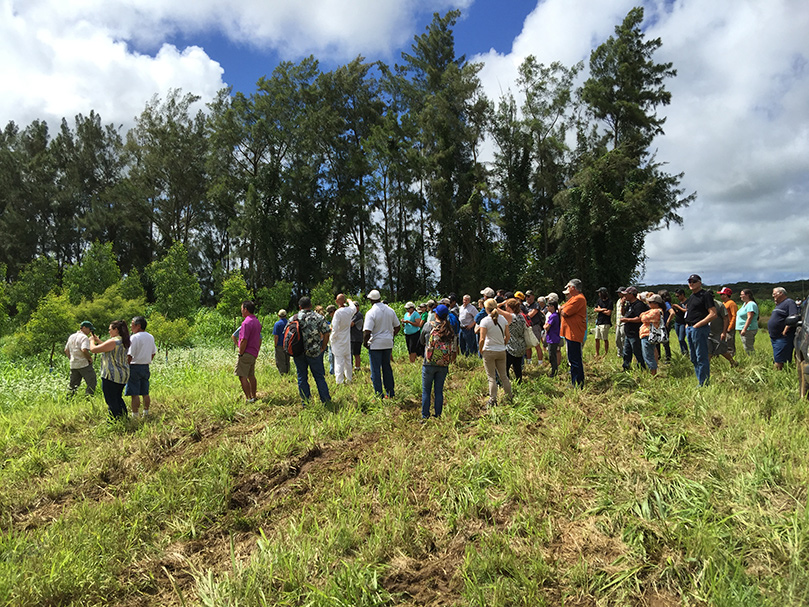
Nick Dudley, a local forester, spent many years developing virus resistant strains of Koa but was unable to find any tree farmer willing to risk the planting of medium to large scale production plantings of low altitude Koa until Jan 2015 when the Hindu Monastery planted 5 acres. It will take 10 to 15 years to find out how successfully resistant these trees are, but for the present time they are flourishing. Also, just in time for the visiting conservationists, a beautiful cover crop of annual rye grass and white flowered buckwheat was planted between the trees.
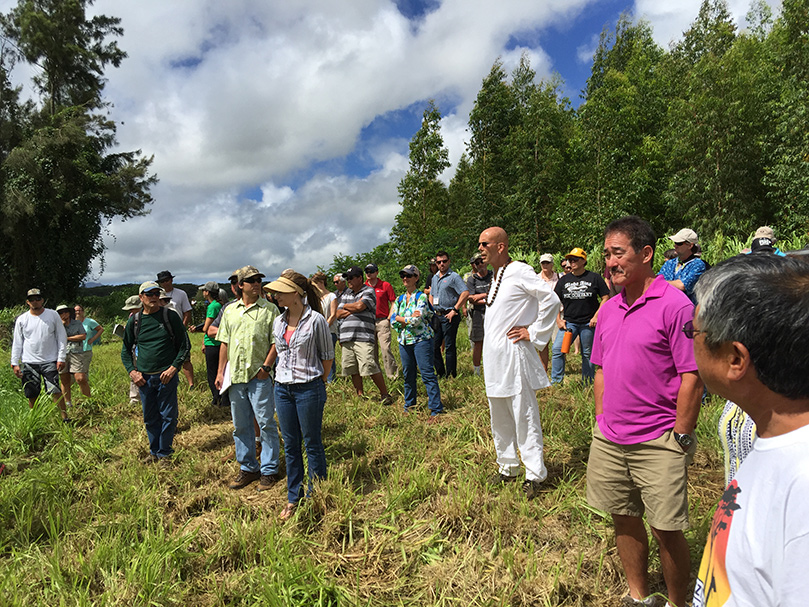
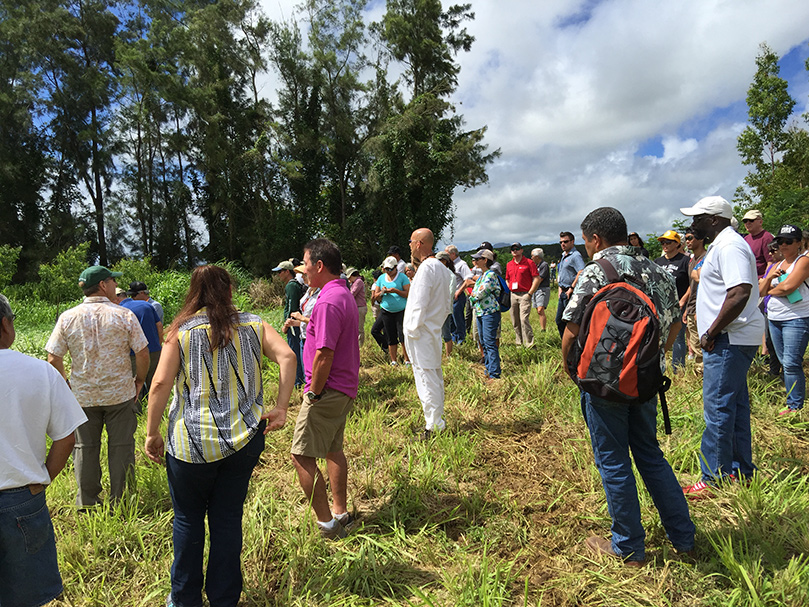
Nirvani Adinatha shows the group our Koa field
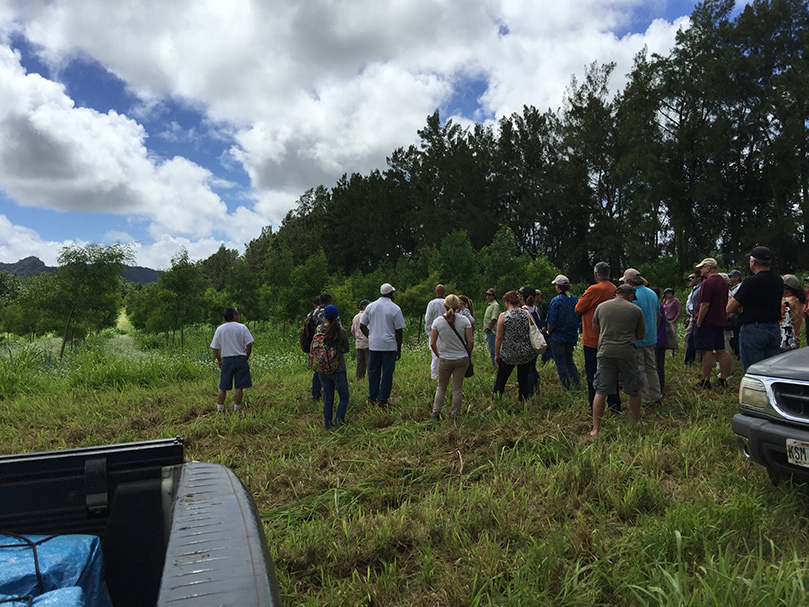
Those smaller trees in front of everyone are the koa trees
}
];
transitionSpeed:150});