
Iraivan Carbide Chisels: Who, What, When, Where, Why...and How?
February 6, 2018Iraivan Temple is built with chisels--there's no getting around that fact. This all important tool just got a facelift and the timing couldn't be better. With the last containers making their way to our island, and the last batch of silpis, the temple construction is coming to an end with a massive emphasis on final carving and polishing. Let's go through this chisel upgrade and explain what all the fuss is about.
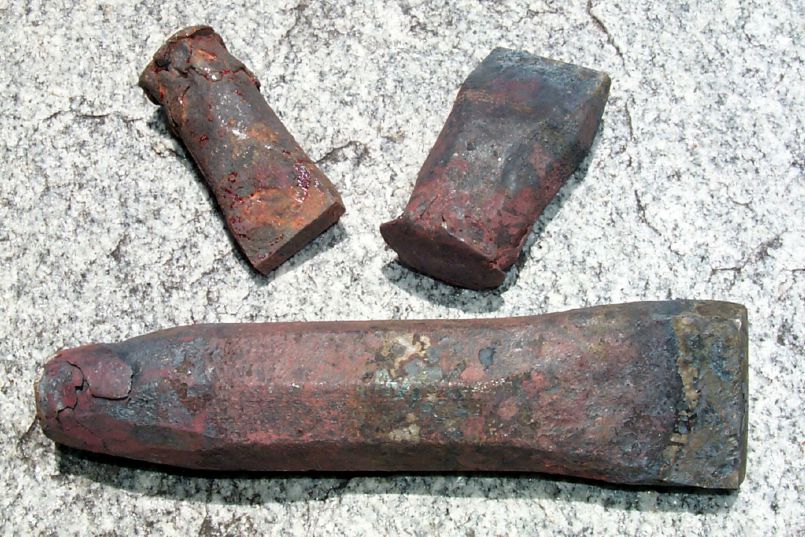
This is an old-school set of chisels. They may look tired, rough and rusted, but these small chunks of metal helped form one of the greatest granite structures in the Western Hemisphere: Kauai\
s Iraivan Temple. But can they be improved? Yes.'

Starting from the beginning...This is a young silpi in Bengeluru, India, transporting worn out chisels from the carvers to the pattrai--the ancient Indian forge.
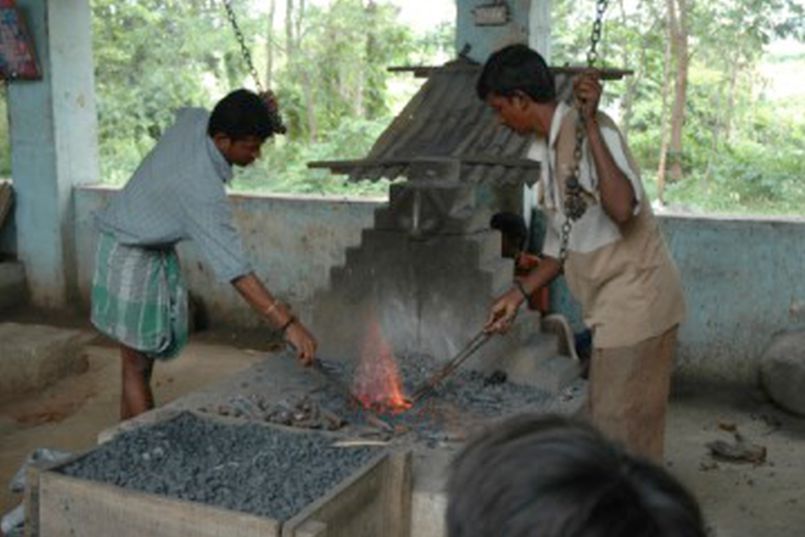
Here the chisel tips go through a melting process in order to be softened, hammered, shaped and cooled. The process is speedy and on an active worksite hundreds of chisels are reformed everyday.
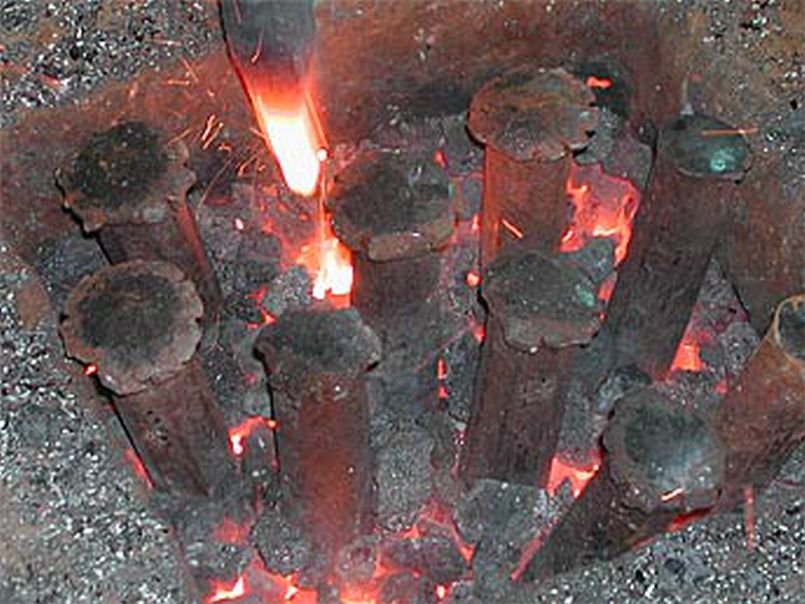
The red glow of the metal shows a fully heated tip and the previously worn-out chisel is ready to be sharpened
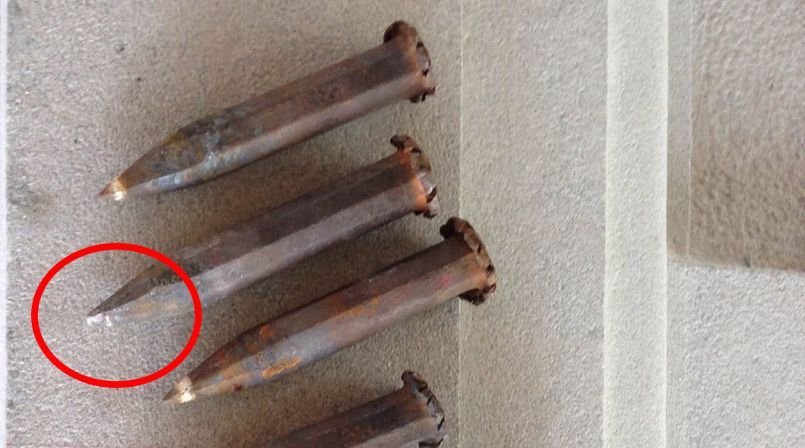
The middle chisel is our tool, ready to enter the granite for another few minutes. The silpi only gets a few good moments with the new tip before needing a replacement. This system was good and it built fortresses, temples and granite structures throughout time, but in order for production to increase, production capability must increase first.
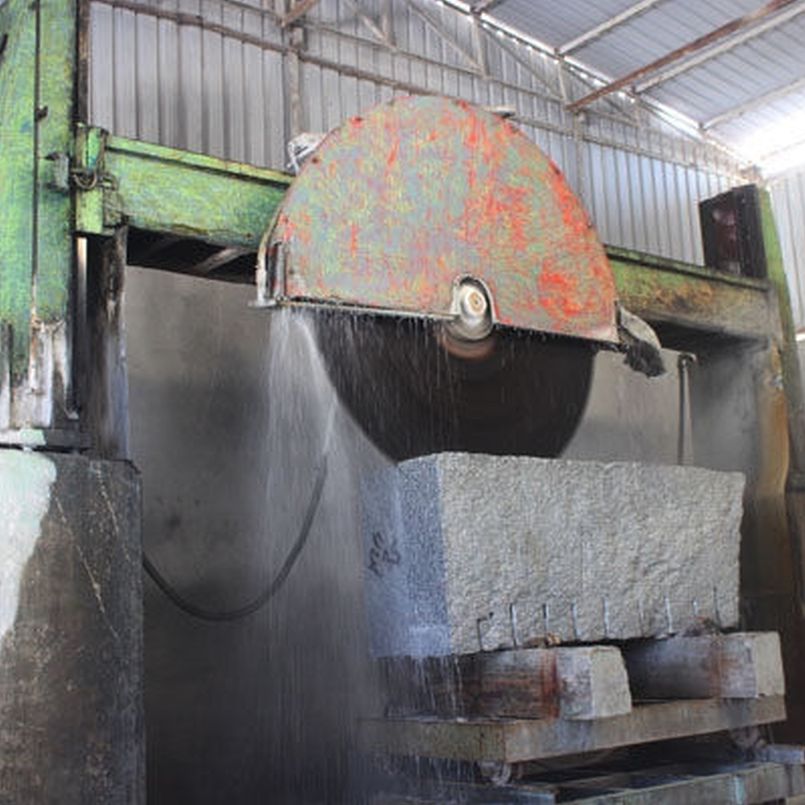
That\
s where this mega-saw comes in. The saw that is cutting granite above is using what\'s known as tungsten carbide teeth. Carbide in and of itself is a complicated subject, so for simplicity we will just say that the most basic form of tungsten carbide is a fine gray powder, but it can be pressed and formed into shapes for use in industrial machinery, cutting tools, abrasives, armor-piercing rounds, other tools and instruments and jewelry.'
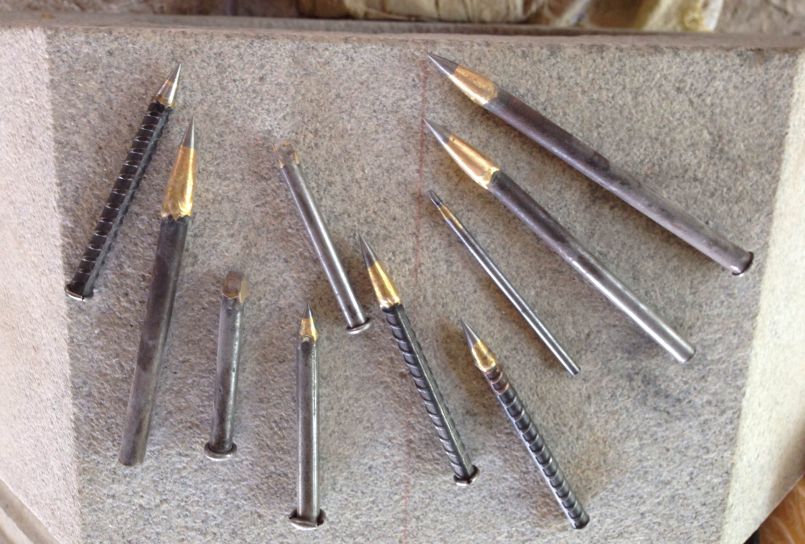
Someone came up with the genius idea of cutting off those carbide saw teeth and repurposing them to go on the end of a chisel, thus making a super-juiced up chisel that no longer needs a forge to be sharpened. Awesome right? What used to take an entire forge and several men to process the tips now takes one silpi a few grinds on a stone and boom--sharp tip ready for carving. The tip also lasts exponentially longer, possibly only needing to be sharpened once a day instead of once every few minutes.
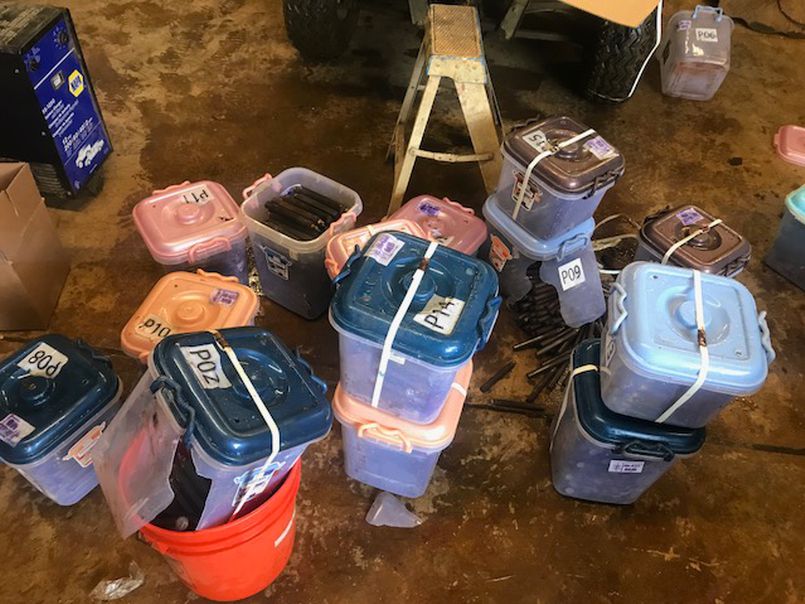
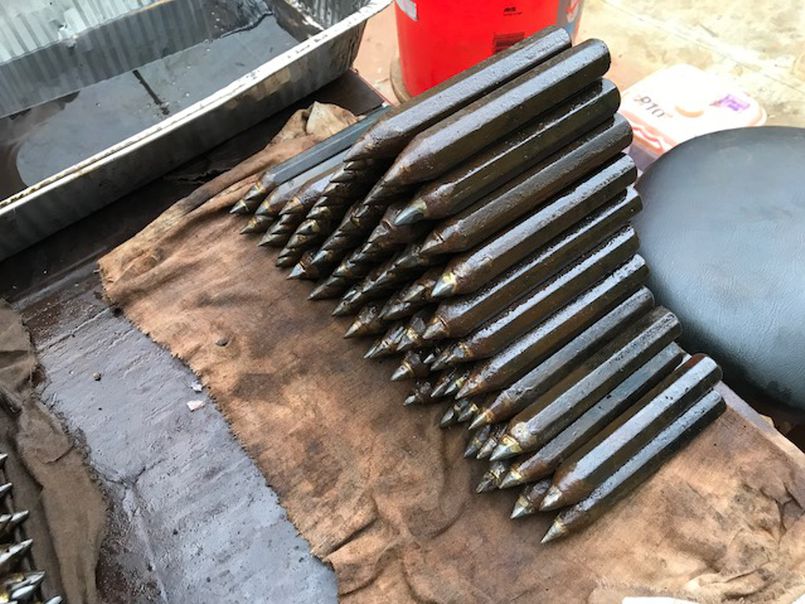
Now we get to present day Aadheenam and we see what the latest container from India has brought us. What you see in the photo is the last batch of chisels that will finish Iraivan Temple.
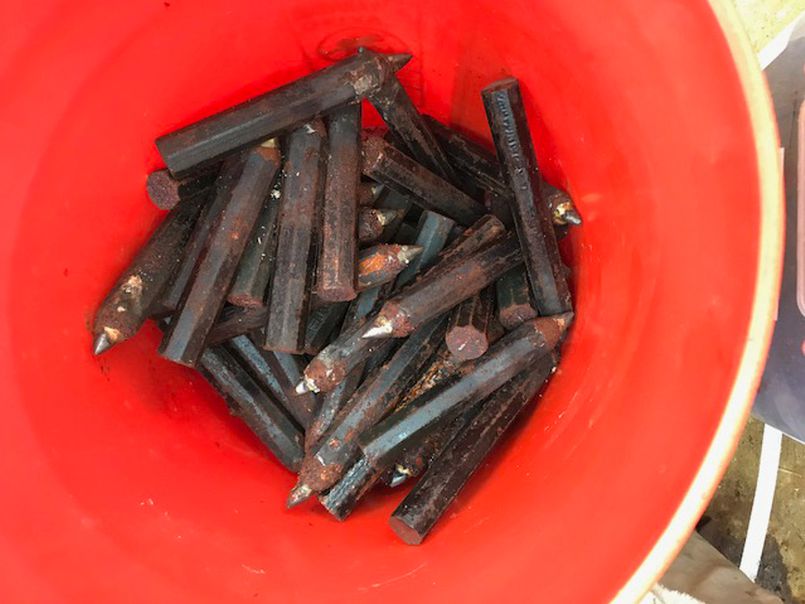
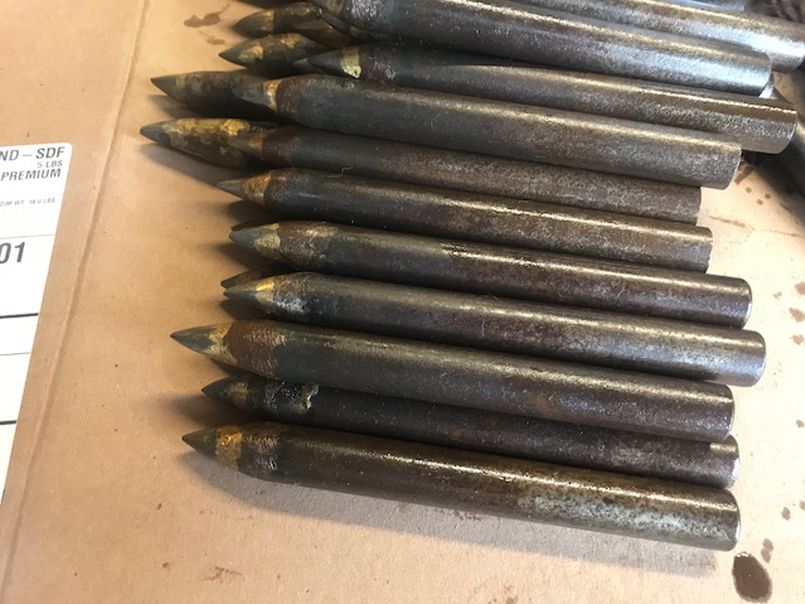
But the chemical spray in the container that is needed for safety in wood crate transport caused the new chisels to age considerably, causing rust and decay on the body of the chisel
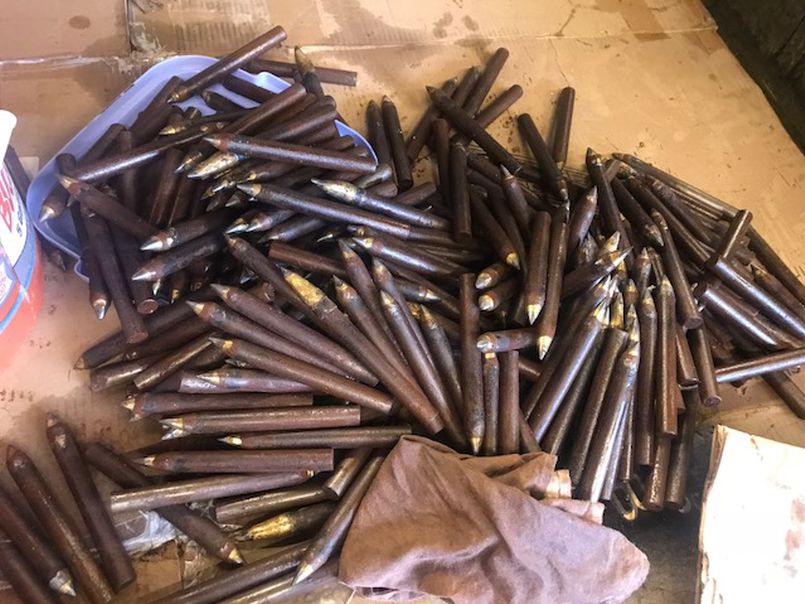
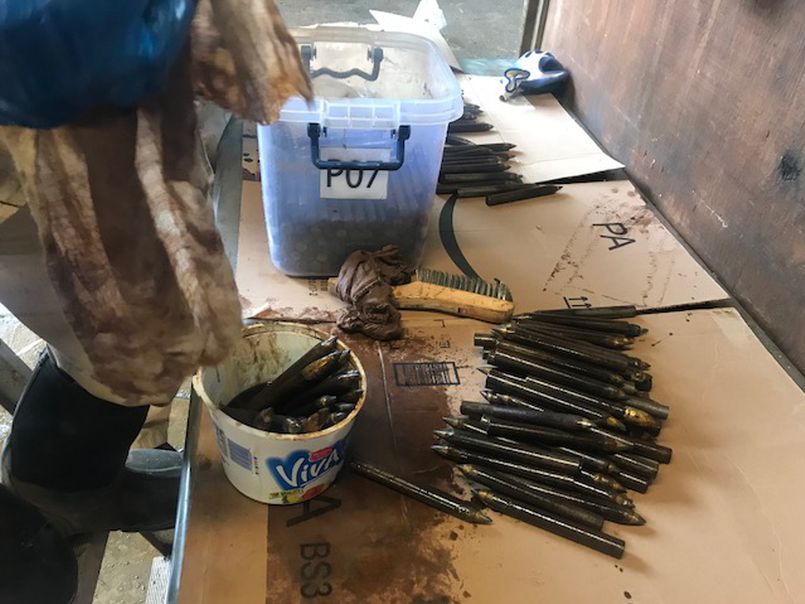
Splayed out on the workbench like rounds of ammunition, hundreds of chisels need to now be inspected, cleaned and stored for use in the coming weeks
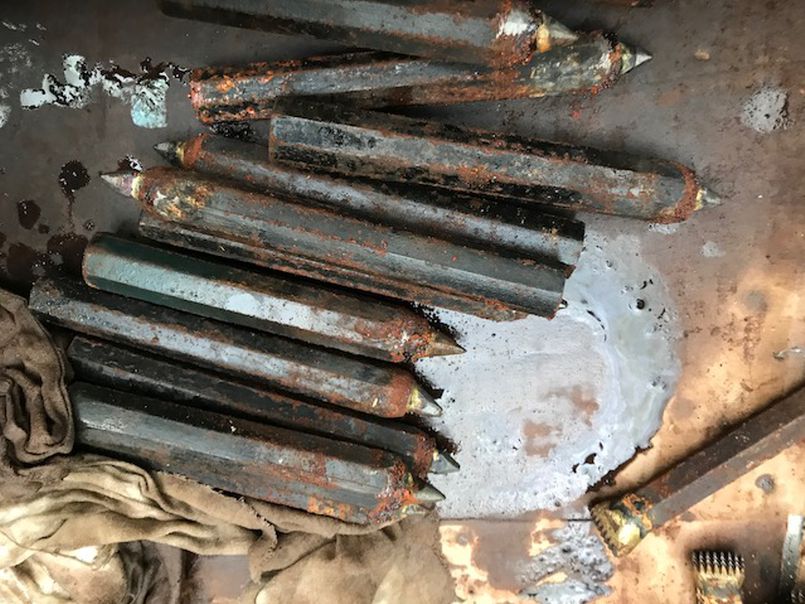
The damage close-up. These chisels are in need of some TLC.
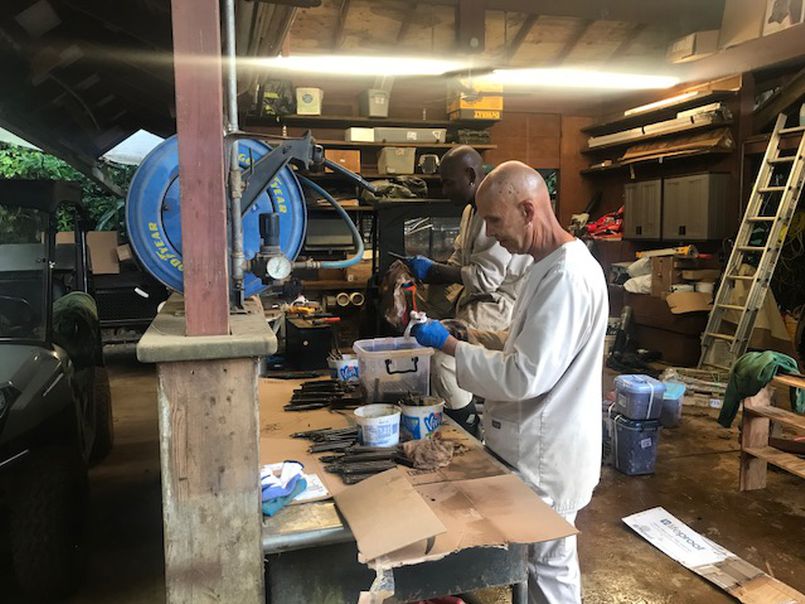
The mighty Siddhidata Kulam is on the job and spends an entire morning getting their hands dirty in order to get these chisels clean
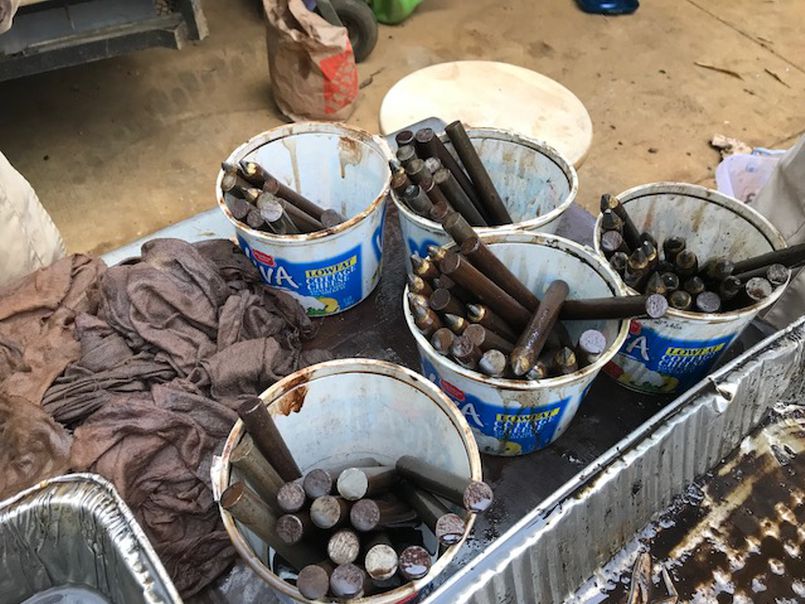
Oiling, polishing, drying and storing
Slowly these tools reveal their true nature
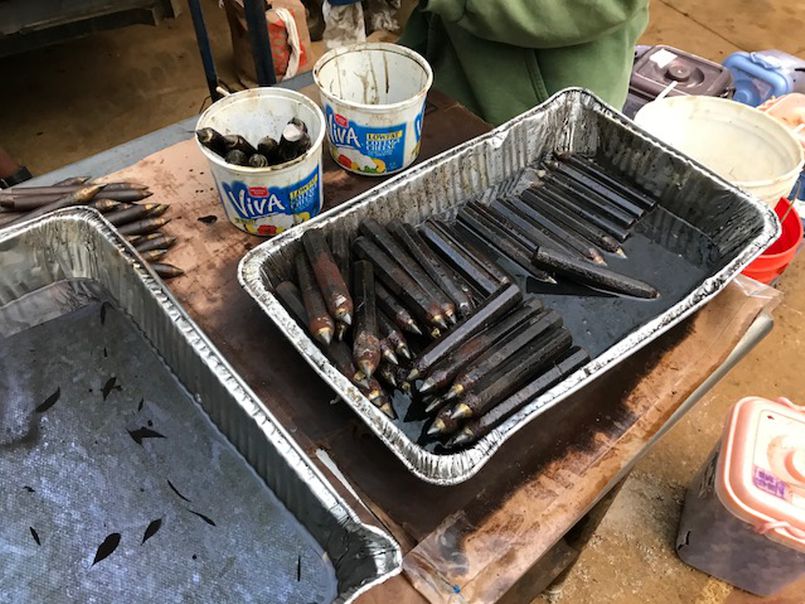
What was once beautiful golden oil is now swamp soil, muddied with rust, dirt and debris
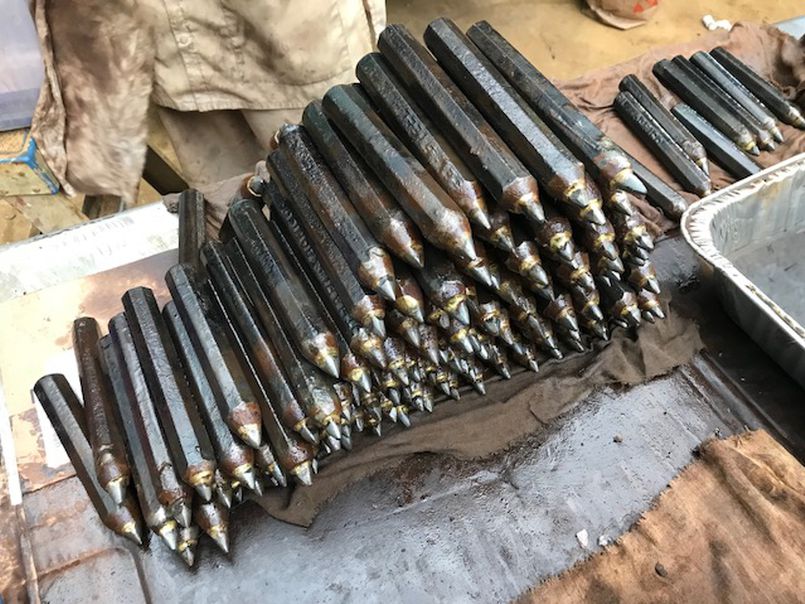
The final product: A carbide tipped chisel ready for the skilled hands of a master stone carver
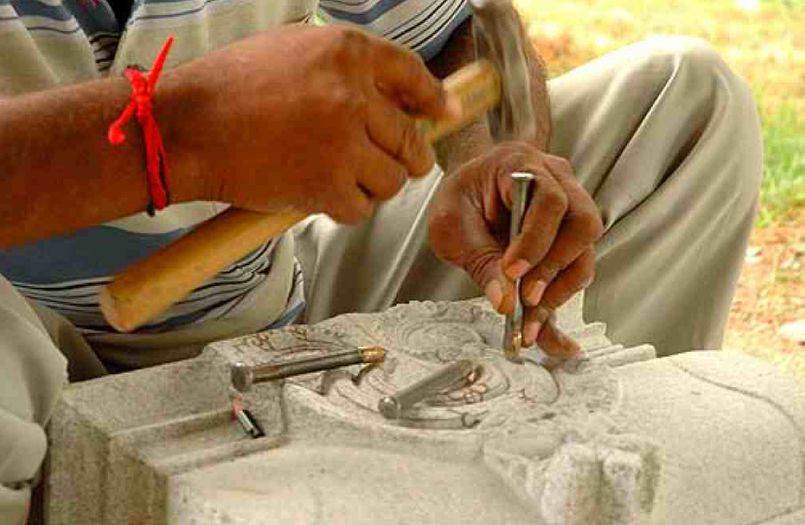
A photo from the Bengeluru with the in-house carbide tipped chisels in action
}
];