Last year the devotees in Singapore reached out to Kauai Aadheenam wanting to create a special edition of the Know thy Self booklet for introducing the new generations of Singaporeans to Gurudeva’s teachings and to Saiva Siddhanta. After months of back and forth, two days back the first copy was printed (on a digital press so one copy is possible). This morning a few small corrections were made. We thought you would enjoy a peek at the pages. Aum Namasivaya!
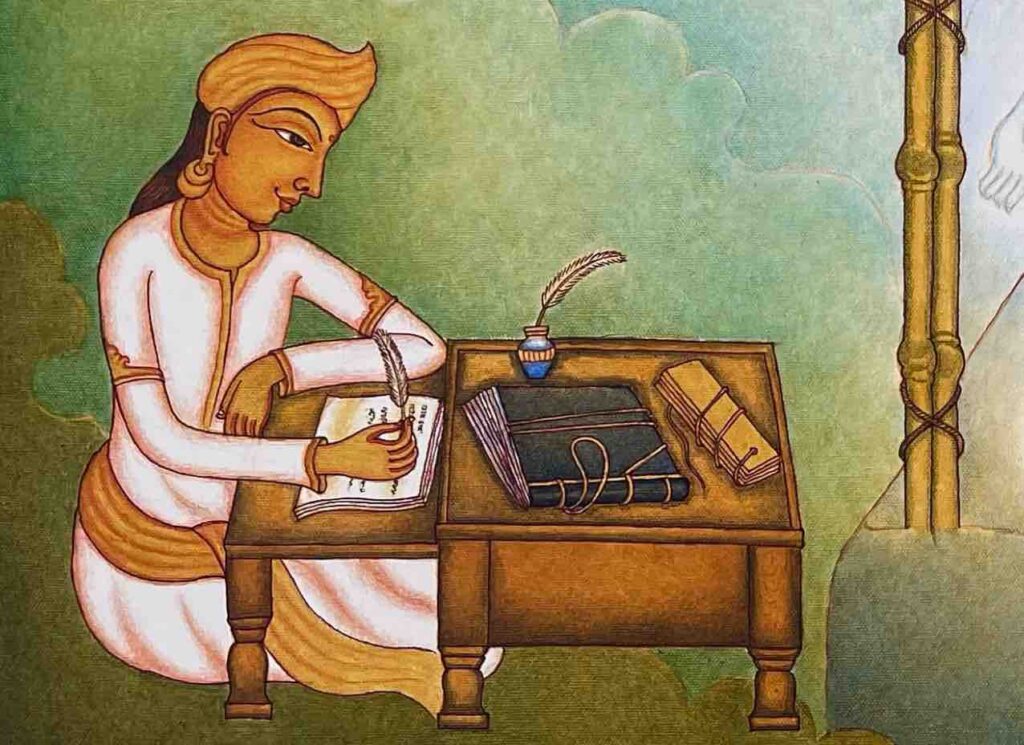
The saint served in his early years as the accountant for the king.
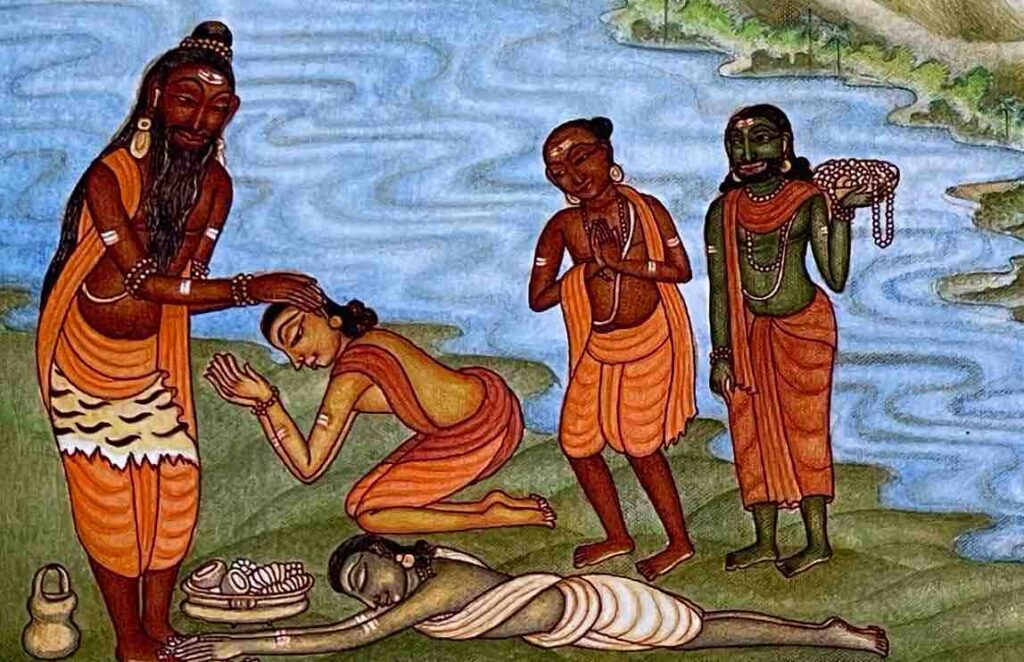
He is given diksha by his guru, Maunaguru, who was ever silent.
As many of you know, the monks have been (and continue) working on a new book, an English edition of the 1,454 songs of Saint Tayumanavar, the Tamil poet and philosopher who lived from 1705 to 1742. His songs to Siva are revered in South India and memorized by children in annual competitions. Imagine, learning so many songs by heart.
When in Singapore two years back, we met an Oduvar, Vivek Raja, whose temple singing is deeply spiritual, completely traditional. We commissioned him to sing the Tamil songs in his trained style, and when he returned to India he made great progress, though there is much yet to be done.
Today we share the first song for you to enjoy, along with the Tamil and the meaning of the lyrics in English. Click the sound baar under the slideshow to hear this first song. Below is the English rendering:
What is it that is immeasurable effulgence, perfect bliss, filled with grace? What is it that willed to contain the countless universes in boundless space and there flourishes as the Life of life? What is it that stood transcending thought and word? What is it that remained as the ever-contentious object of countless faiths claiming, “This, my God,’’ “This, our God’’? What is it that exists as omnipresent and omnipotent, love-filled and eternal? What is it that knows no limits of night and day? That indeed is what is agreeable to thought. That indeed is what fills all space in silentness. That indeed is what we in meekness worship.
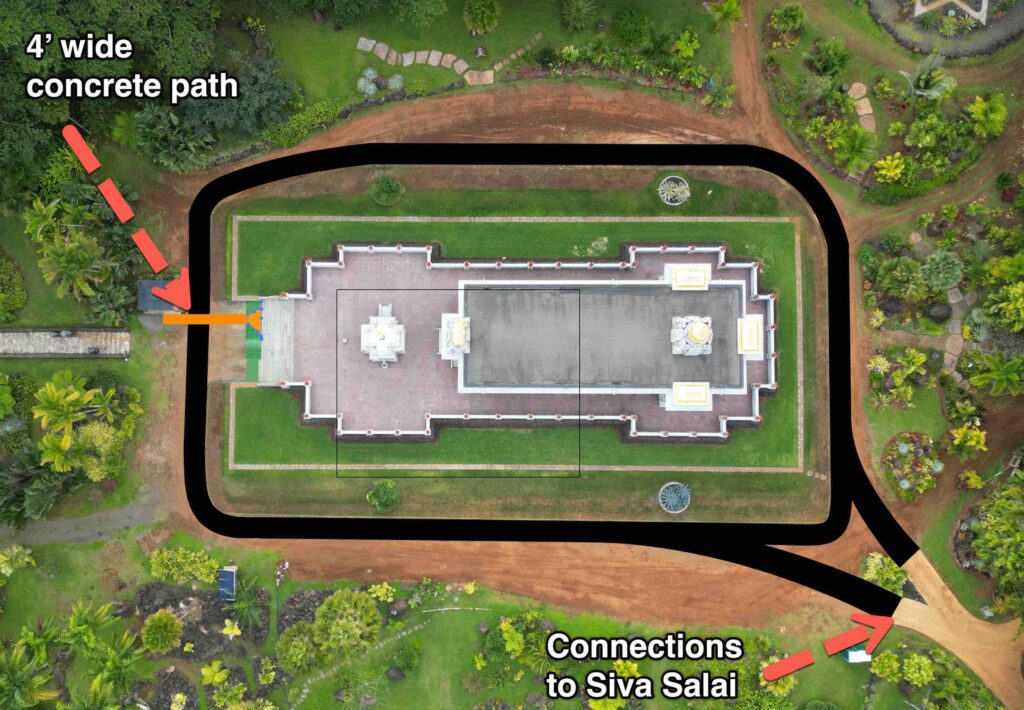
The black line shows the placement of the new path around Iraivan Temple
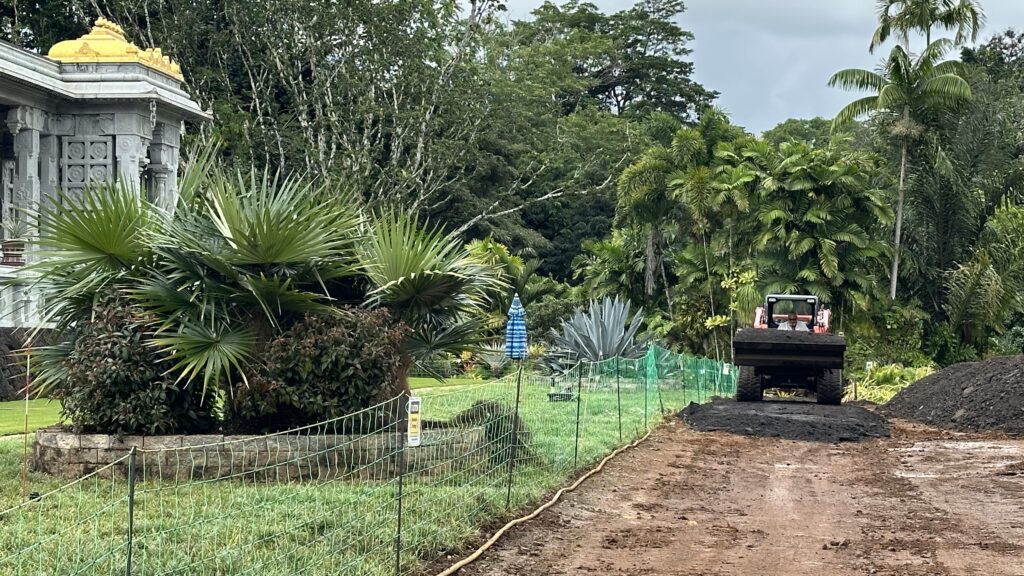
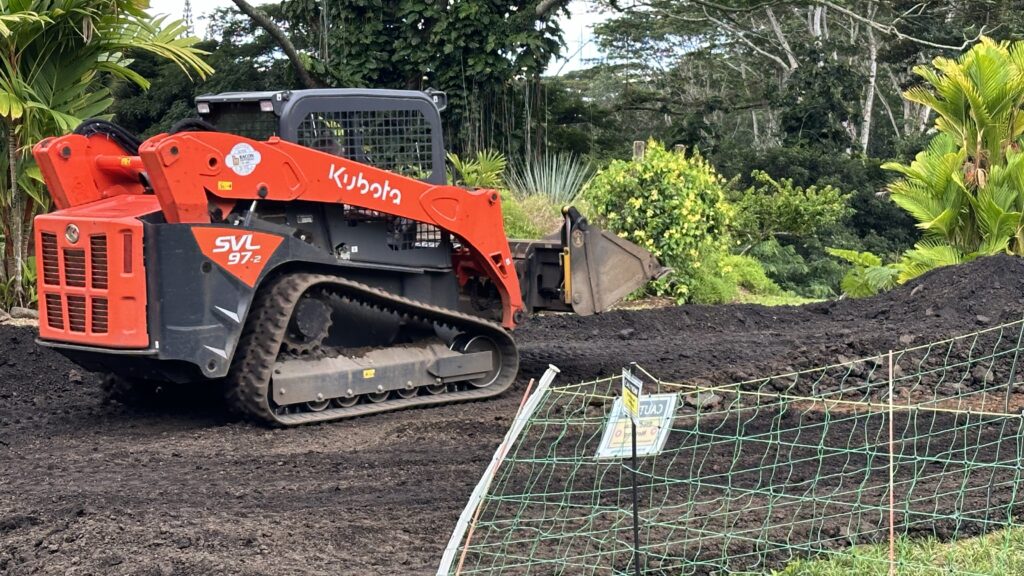
Here we see the old dirt road, and the arrival of asphalt to build the new one.
Many hundreds of loads were required over the months.
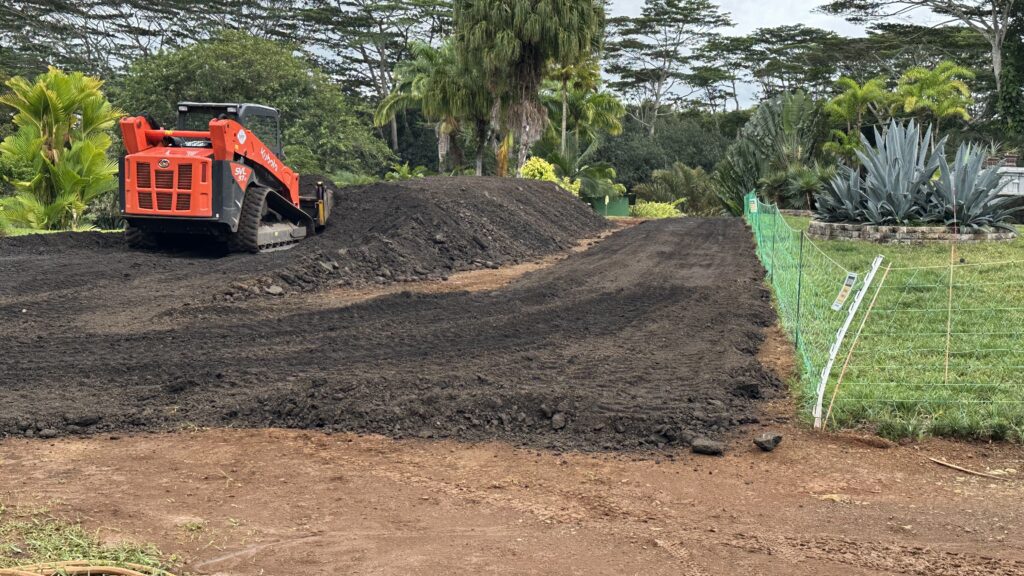
The material was stockpiled nearby then carefully placed. It lifts the elevation of the road, providing good watershed even in strong rains.
After the 12-ton compactor has pounded the material.
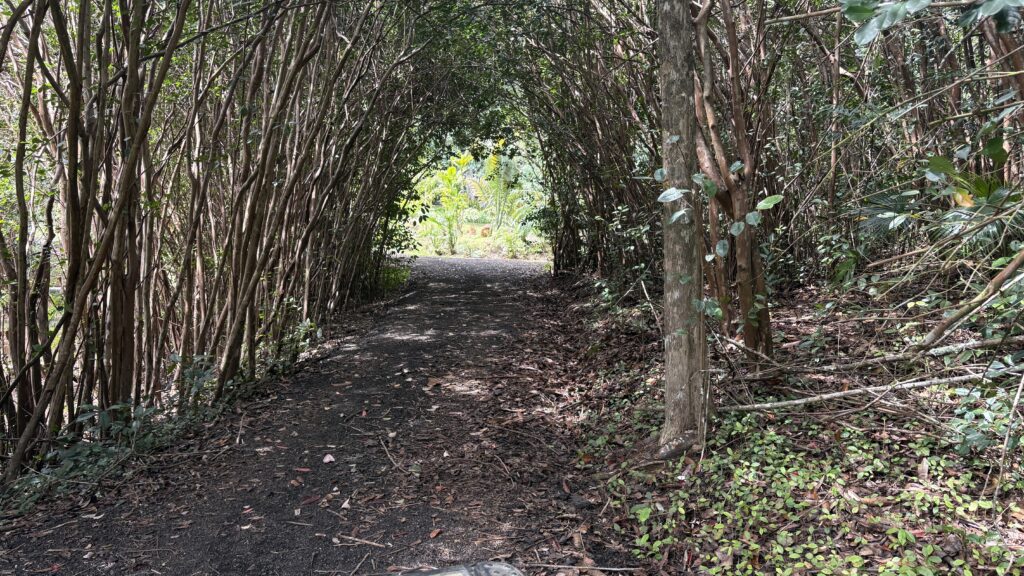
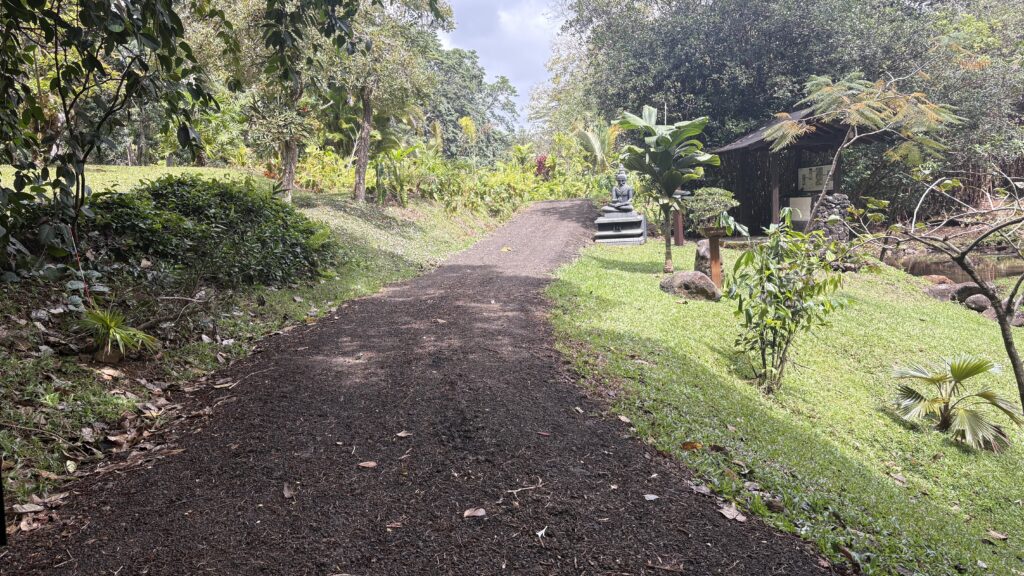
The new road through the wild guava.
Up a small hill to Tirumular’s murti.
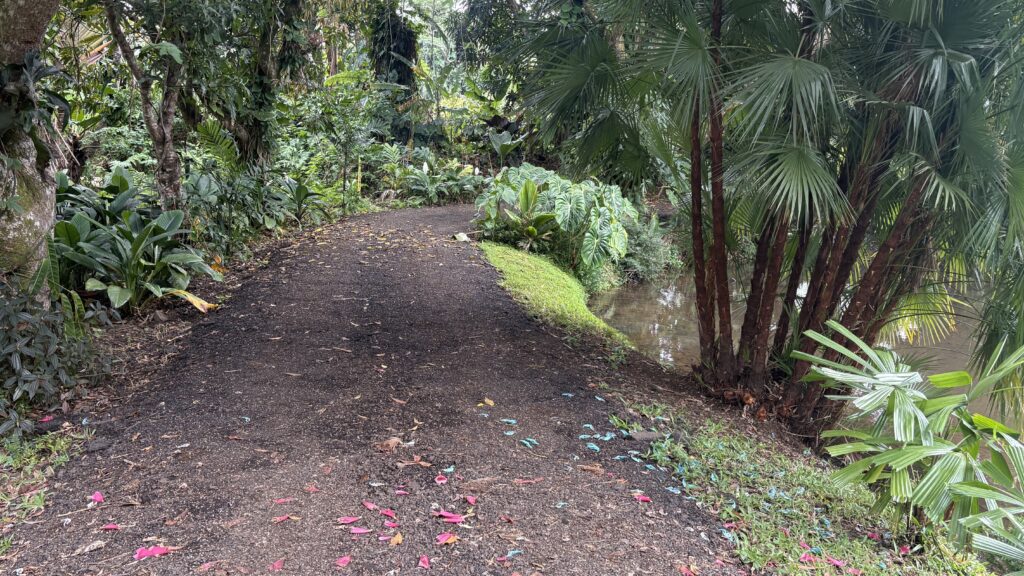
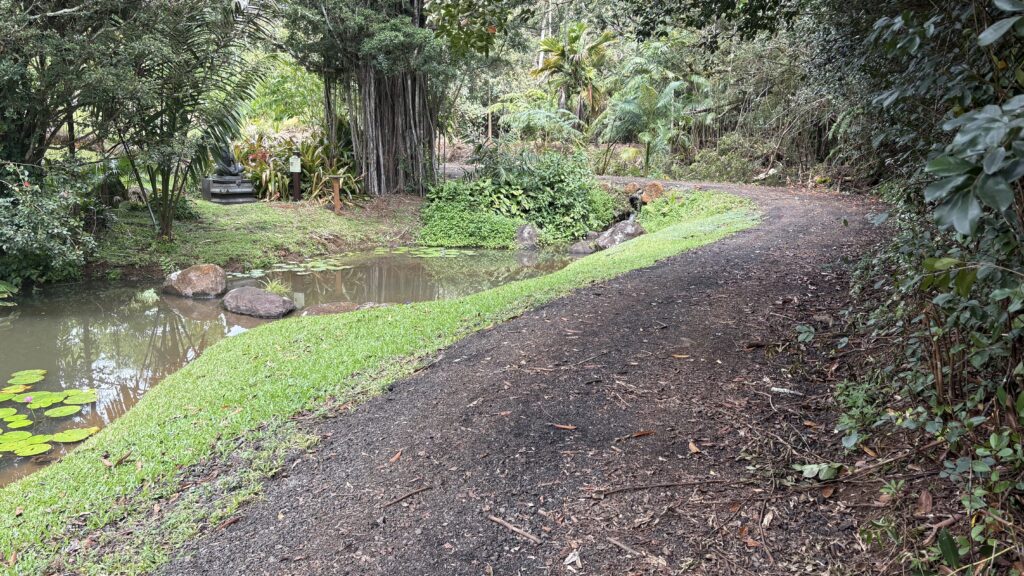
Past Mango Pond and around a corner.
Chellappaswami keeps an eye on this section.
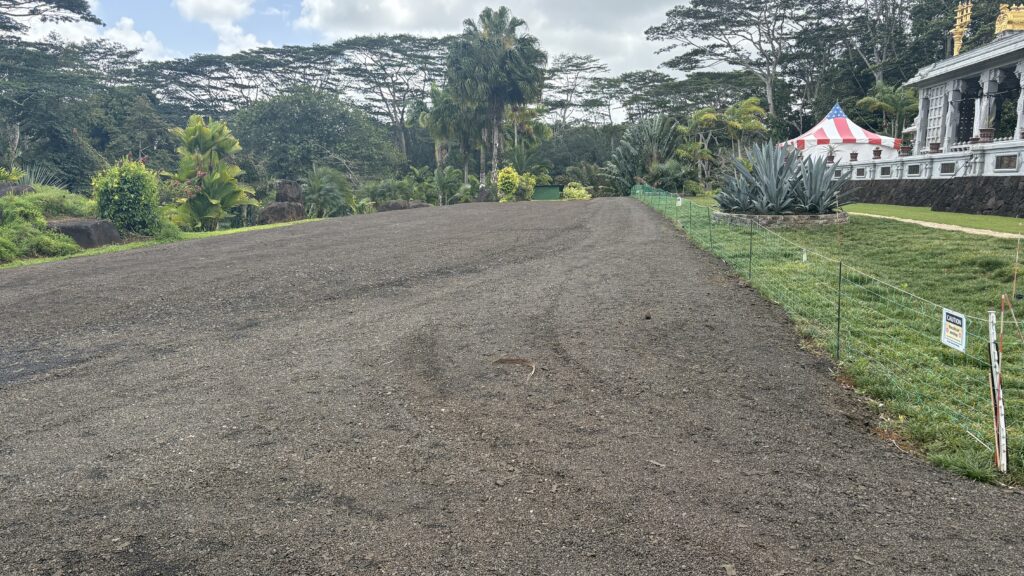
Slide to show the asphalt path before and after
Paths and roads have been the great enablers for the Romans, the Vedic explorers, the early American pioneers, indeed all who wanted to go more than a hundred feet in a day. And the evolution from cow path, to walking trail, to dirt road to paved highway has marked mankind’s progress. So it will surprise no one that paths at the monastery are similarly evolving. For decades we had unimproved dirt paths and roads. A few years back we were able to upgrade a the major arteries, but until recently most access around the land (and visitor parking) was on unimproved dirt, often pitted with potholes that filled with water and mud whenever it rained, which is often as you know.
Fast forward to today. The monks are still getting used to proper asphalt paths, made possible by an unexpected gift. In the past 3 months we have paved virtually all roads and paths, several miles worth, so even on rainy days we can drive safely and comfortably around the monastery. It has changed our life in the same way cross country highways changed the dynamics of transportation in all nations. The slideshow shows the progress and the slider gives a BEFORE & AFTER of the path that now circumnavigates Iraivan Temple.
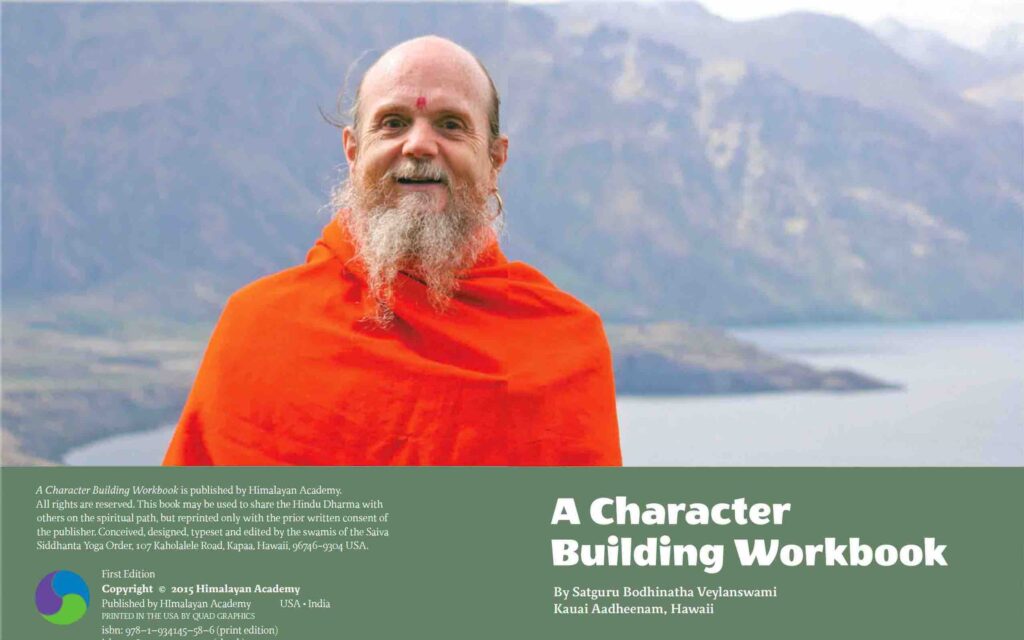
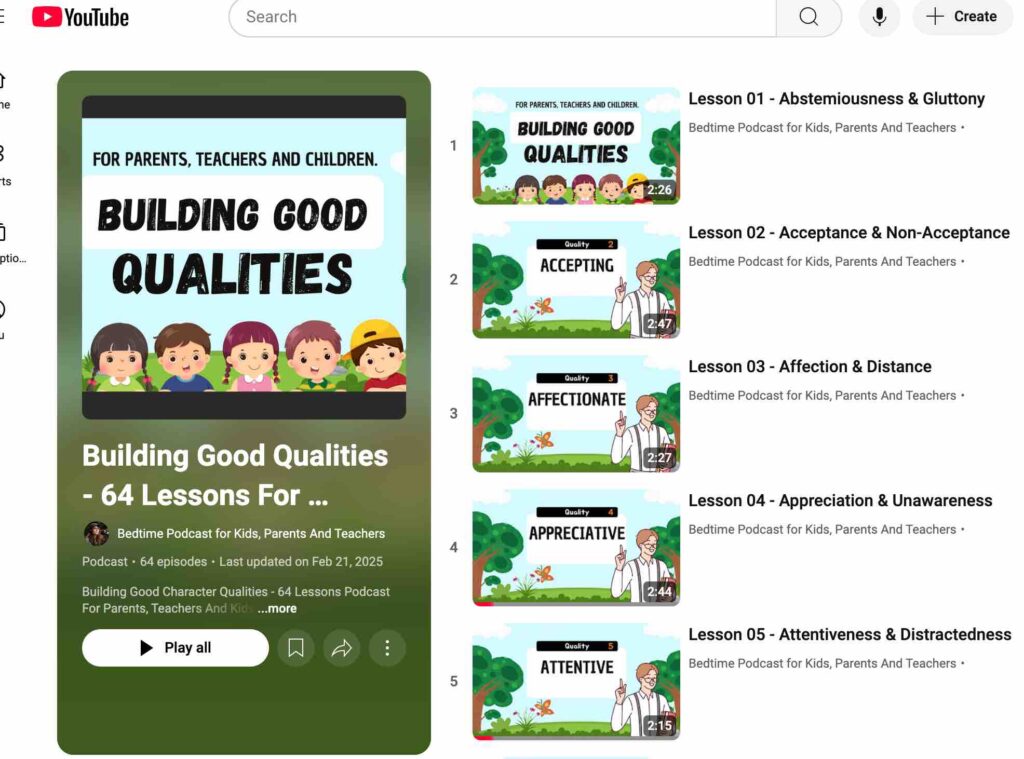
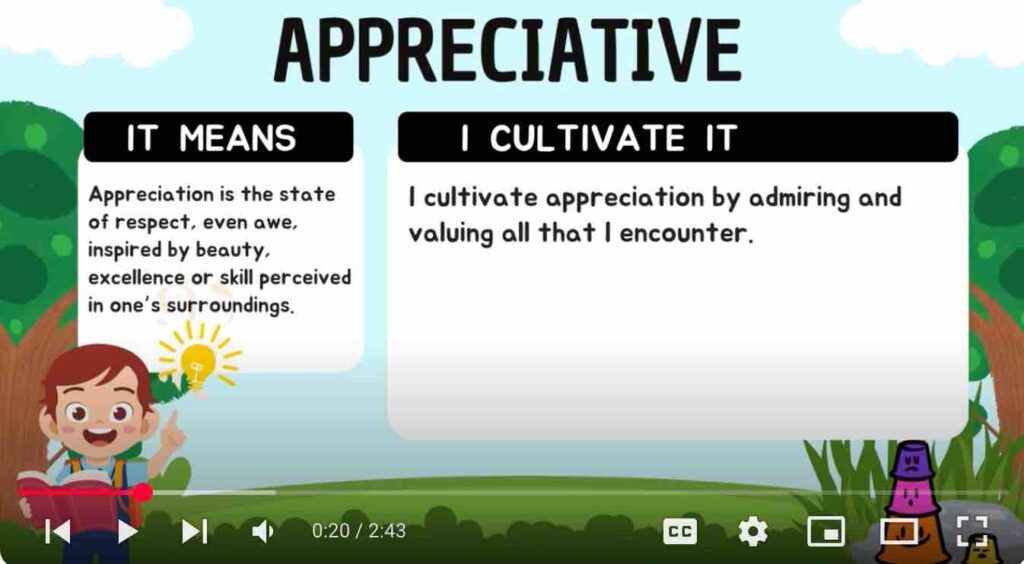
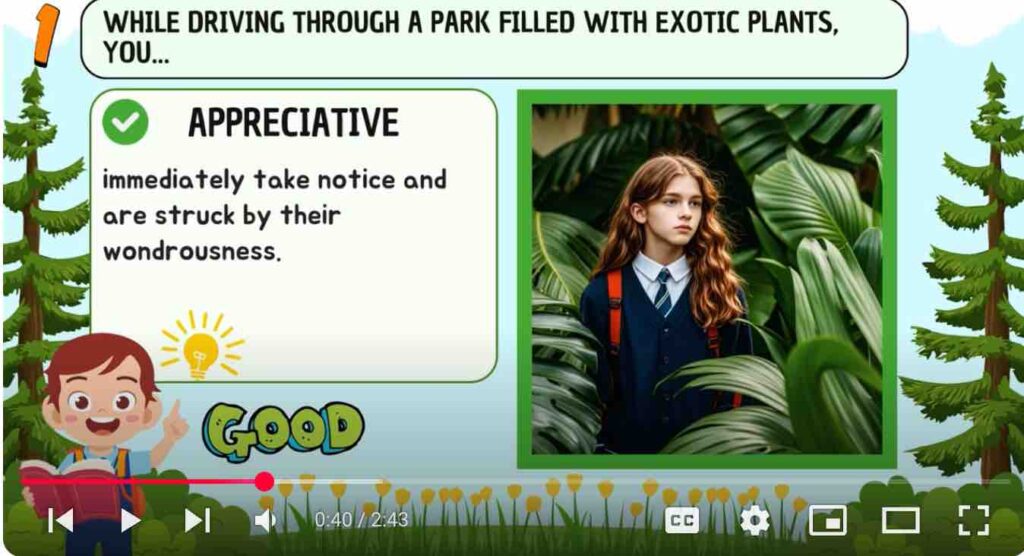
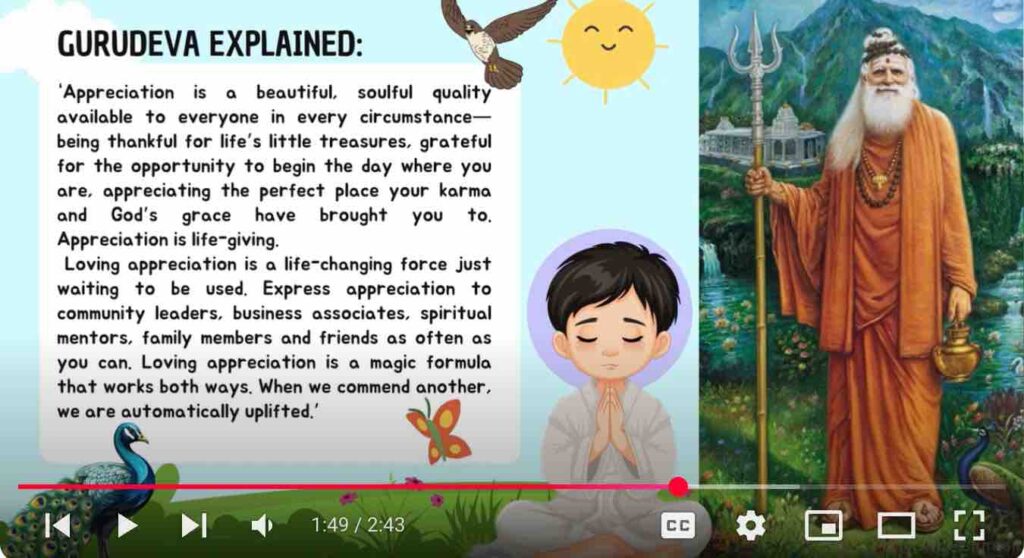
A devotee in Australia was inspired to create a series of podcasts and videos for his young son and all children, teaching them the 64 qualities discussed by Satguru Bodhinatha Veylanswami in his Character Building Workbook. Such a great way to introduce the young ones to the qualities they need to develop into a fully-functioning human being. Of course, it’s a lifetime of work, but starting them now will set them on the Good Path early in life.
We have just received a surprise award for our two blogs. Of the 60 best Hindu blogs of the year 2025 Hinduism Today is number 4 and this TAKA blog is number 6. Not bad.
Hi Kauai’s Hindu Monastery Team,
My name is Anuj Agarwal, I’m the Founder of FeedSpot.
I would like to personally congratulate you as your blog Kauai’s Hindu Monastery Blog has been selected by our panelists as one of the Top 60 Hindu Blogs on the web.
This is the most comprehensive list of Top 60 Hindu Blogs on the internet and I’m honored to have you as part of this!
We’ve created a badge for you to share with your audience. You can display it on your website or post it on social media to showcase this amazing milestone.
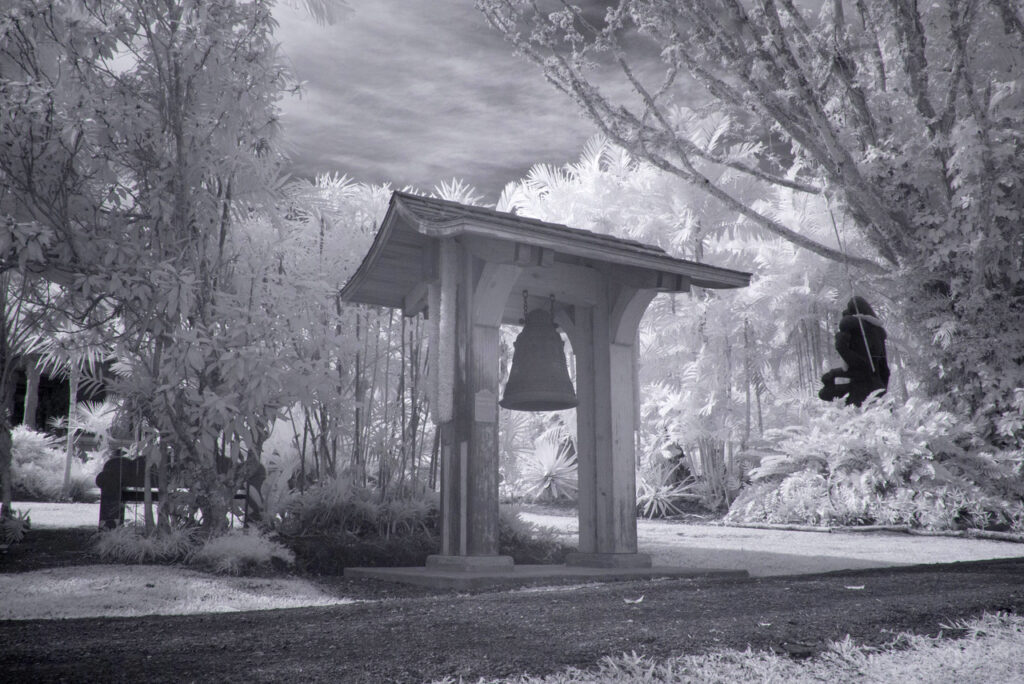
The Stone Bell and Dakshinamurti on the right (who said it never snows on Kauai island?)
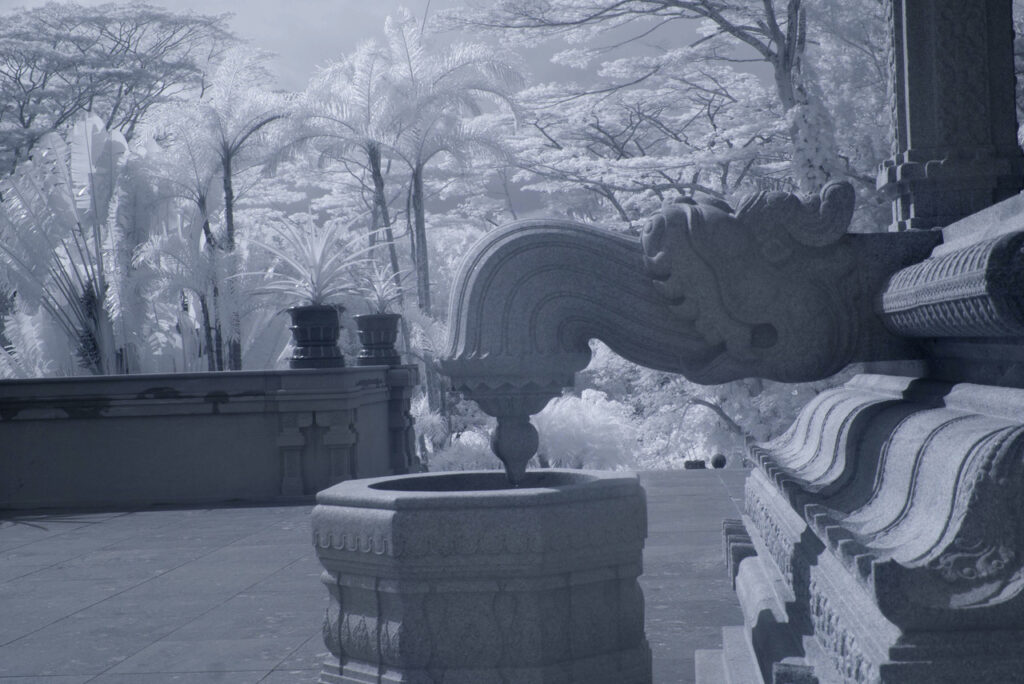
Nandi Mandapam gomukai with palms in the distance
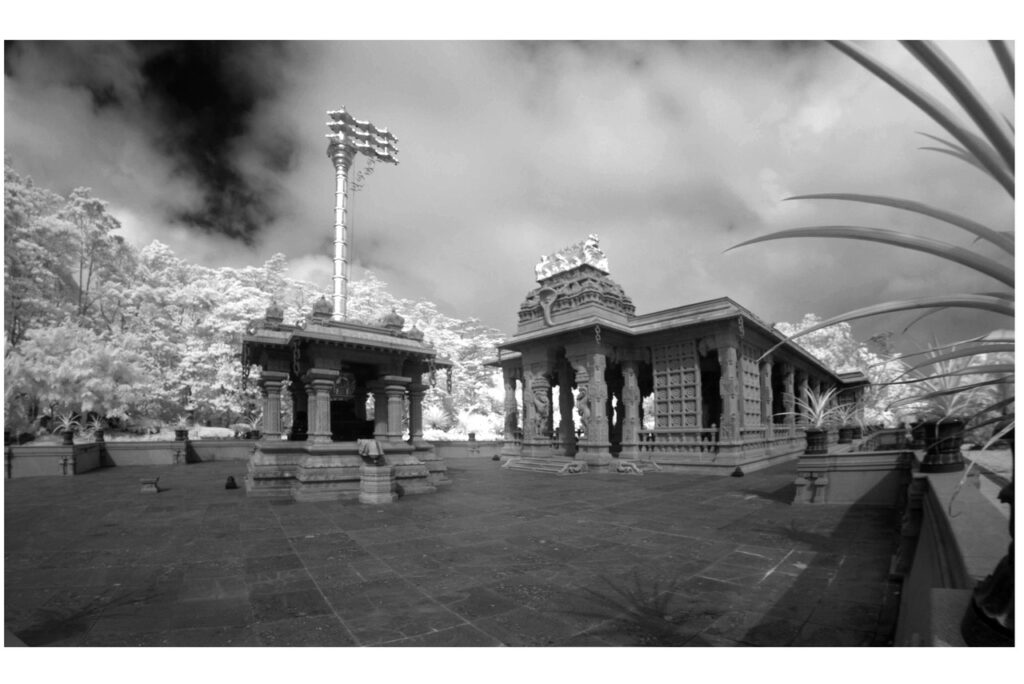
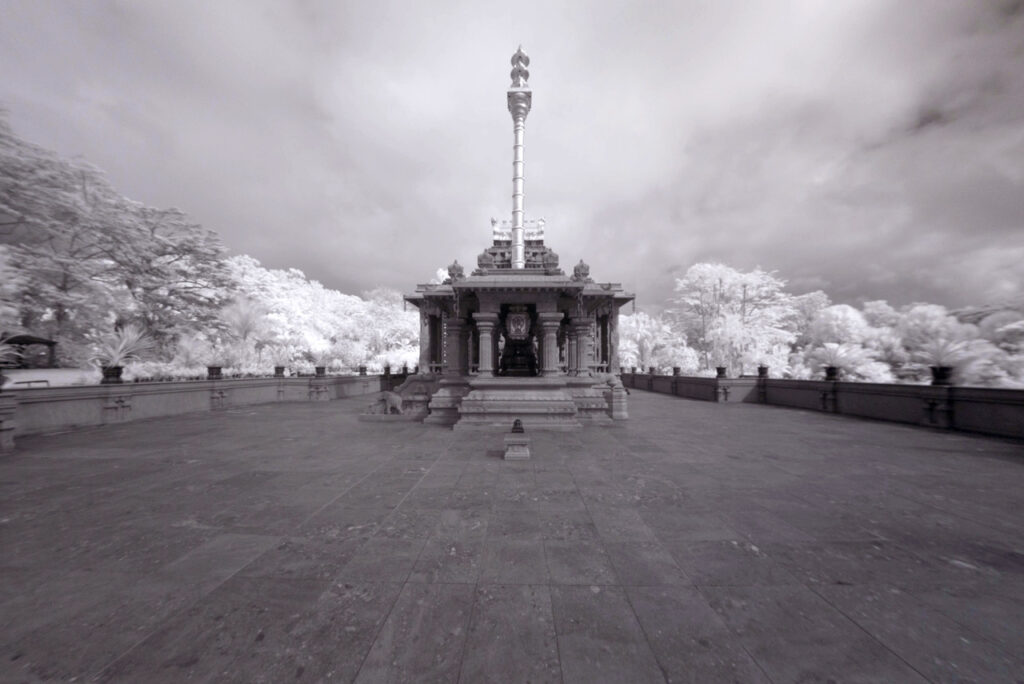
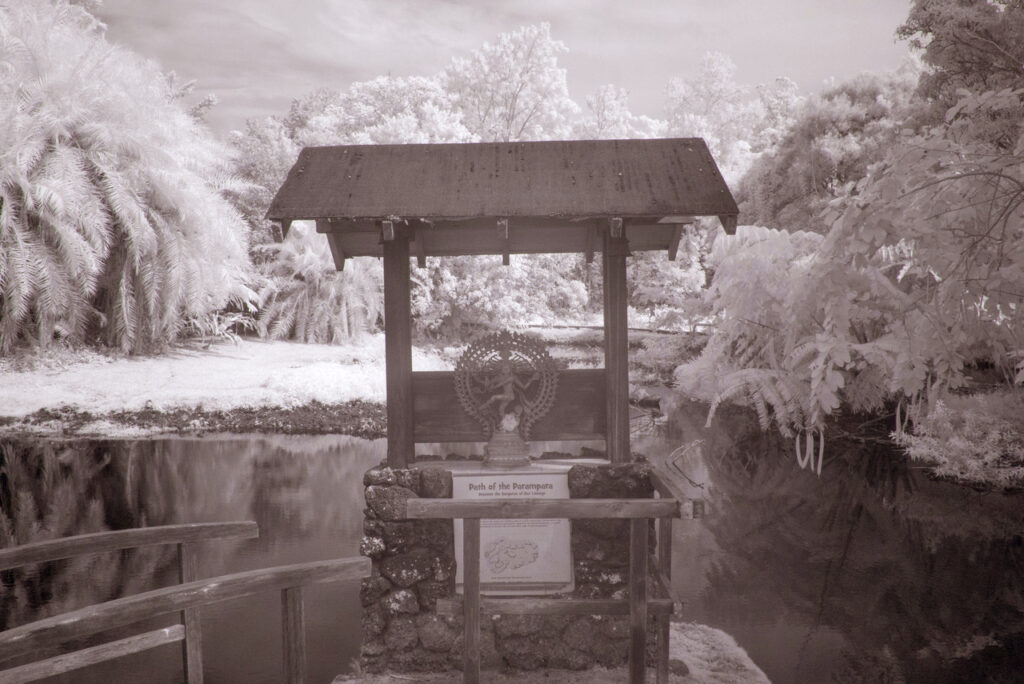
Infrared photography sounds like a secret spy technique, but it’s actually an amazing way to see the world through a whole new lens—literally! Recently a pilgrim with advanced photography skills captured previously unseen parts of the temple with her special lens.
This cool photography style captures light from the infrared spectrum, which is invisible to the naked eye. Here’s how it works: normal cameras capture the light you and I see every day, but infrared cameras use special filters to block visible light and only capture infrared light. This results in stunning photos with a surreal, dreamlike quality. Trees and grass turn snowy white giving our gardens the look of a deep winter in Norway. Skies can appear dark and foreboding, and everything looks just a bit magical.
Infrared photography has some practical uses too! It’s a handy tool in fields like environmental studies to monitor vegetation health, as healthy greenery reflects more infrared than the unhealthy or dead ones. (our trees are vibrant and robust, and thus the brilliant white look). Art historians use it to see underlayers of paint in old masterpieces to discover hidden secrets. Whether it’s for artistic expression or scientific investigation, infrared photography opens up a hidden world of unseen beauty and practical discoveries. It certainly gives a fresh look at Siva’s Sacred Gardens.

 Front and back cover