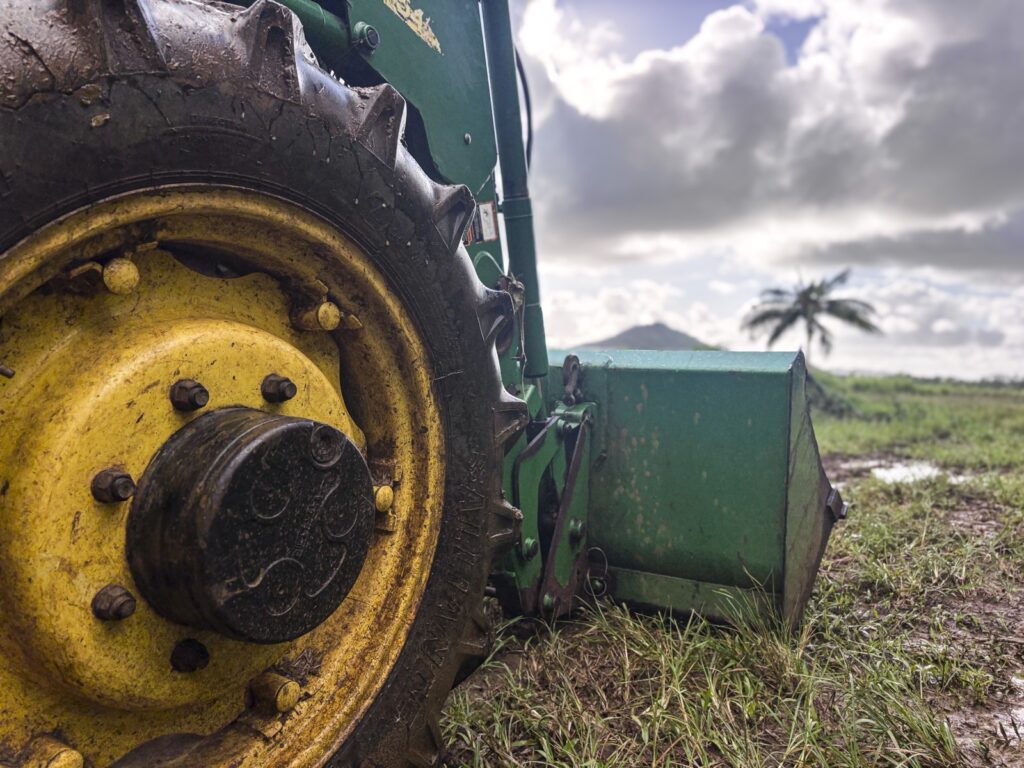
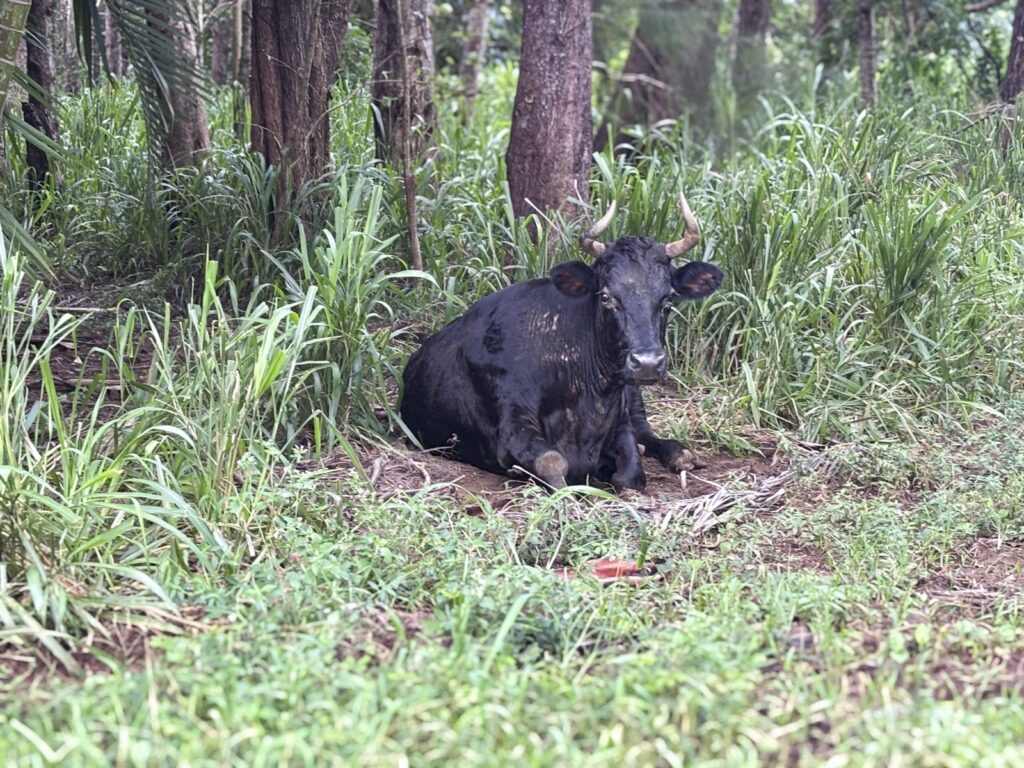
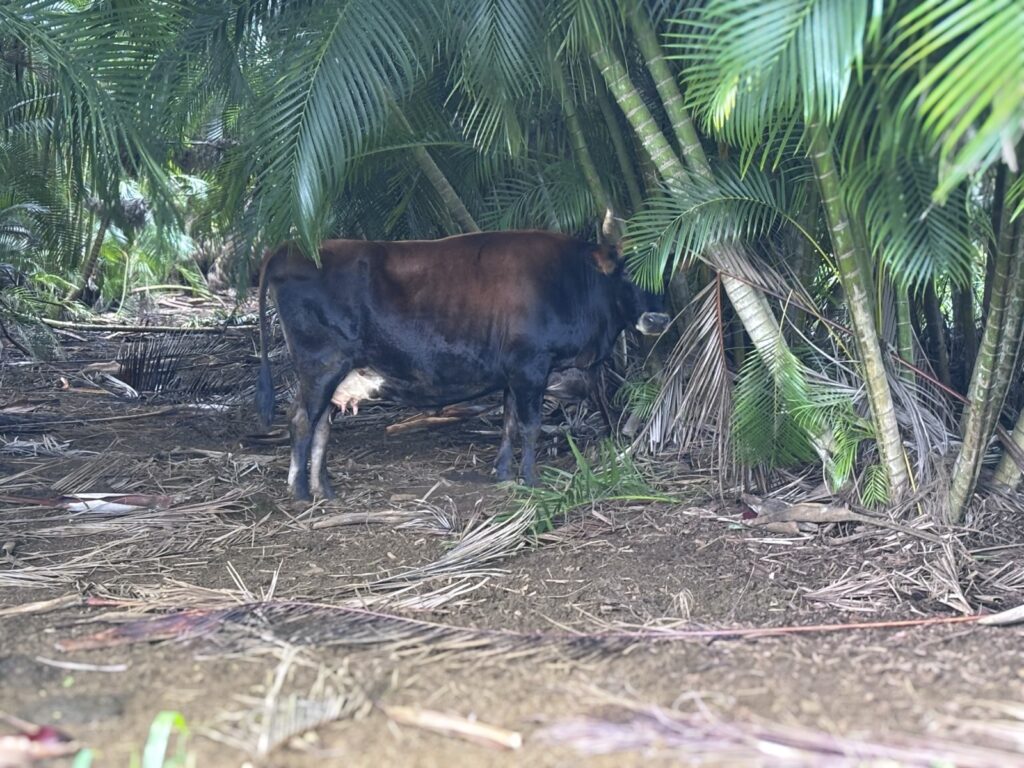
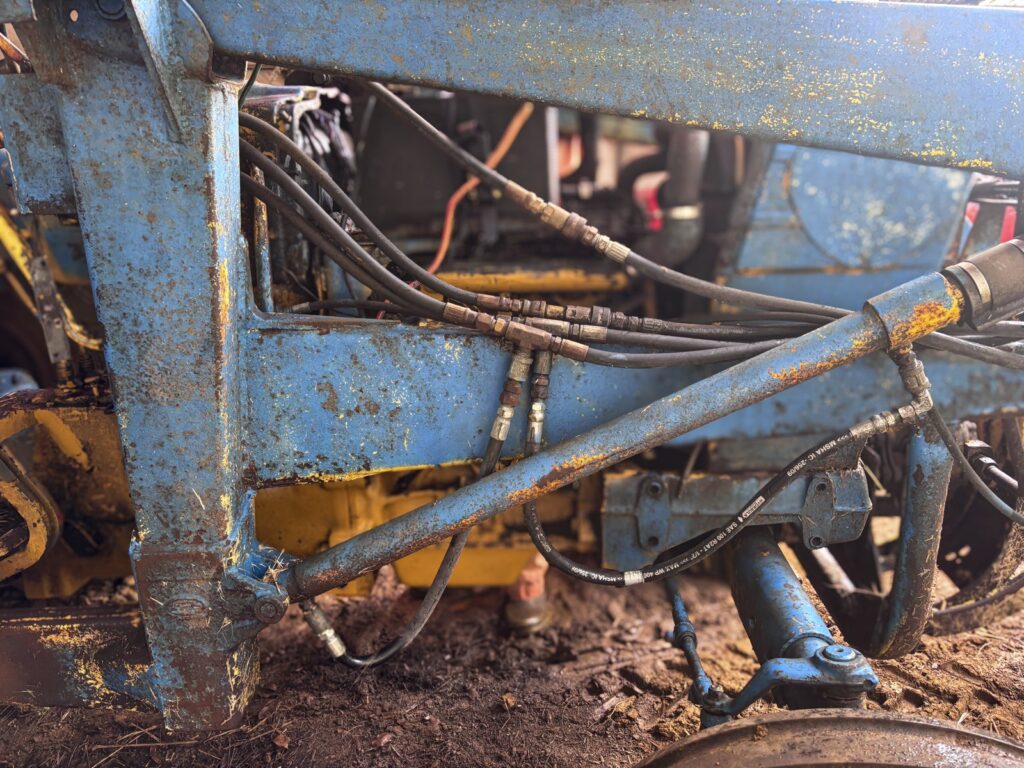
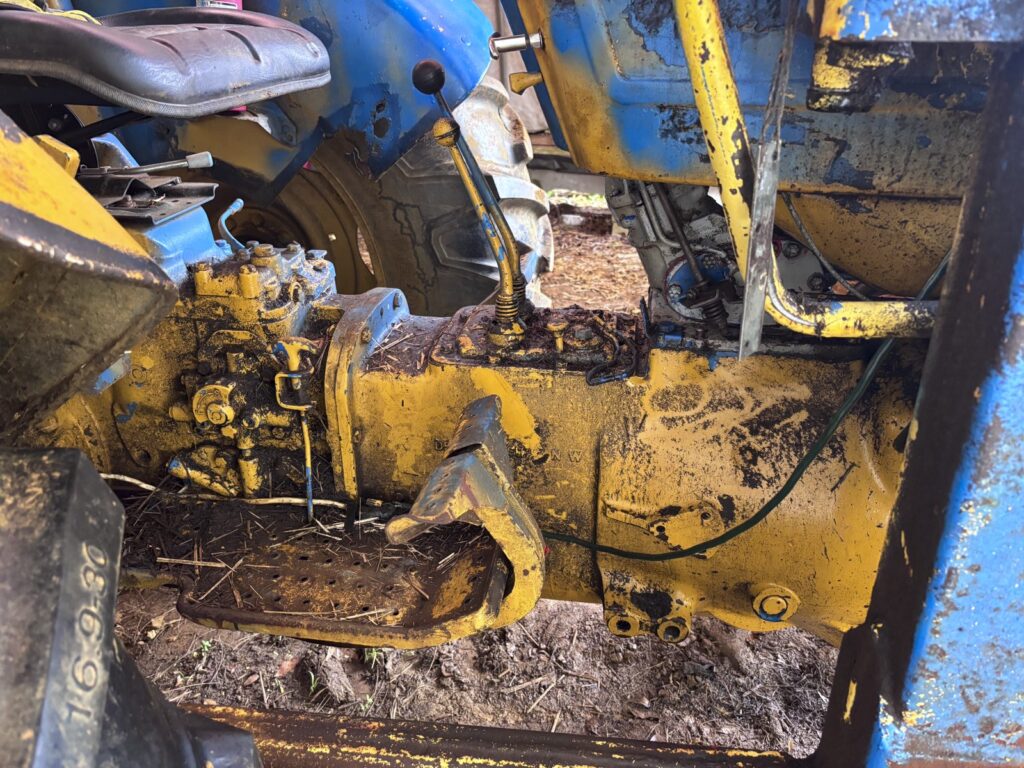
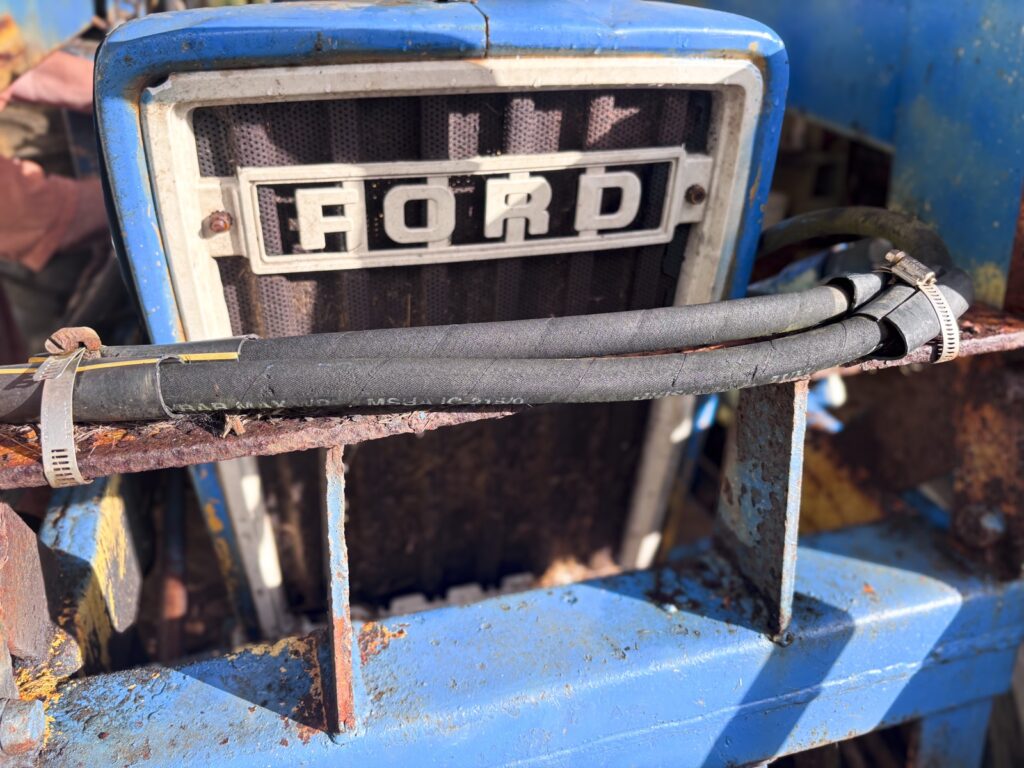
Recently, monks went over to Himalayan acers to maintain and mow the noni orchards. here we showcase some photos captured by Natyam Shankaranatha. He saw friendly cows and the heavy duty equipment used daily to maintain the lands. The ford tractor caught his eye most due to its age and photogenic colors.
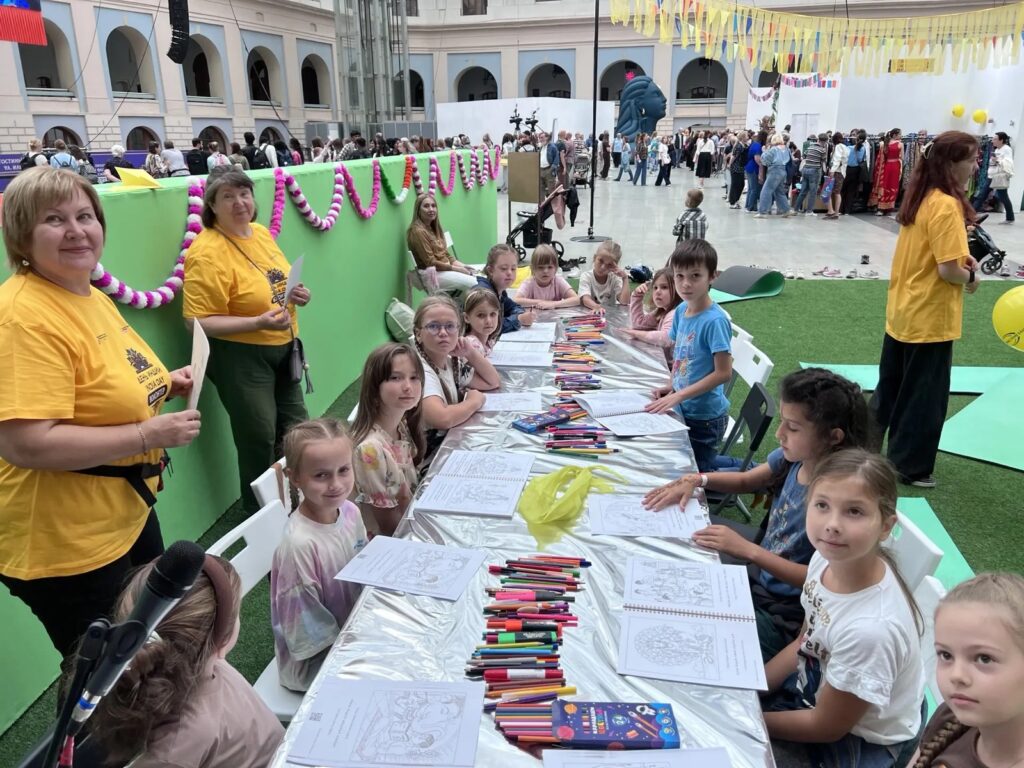
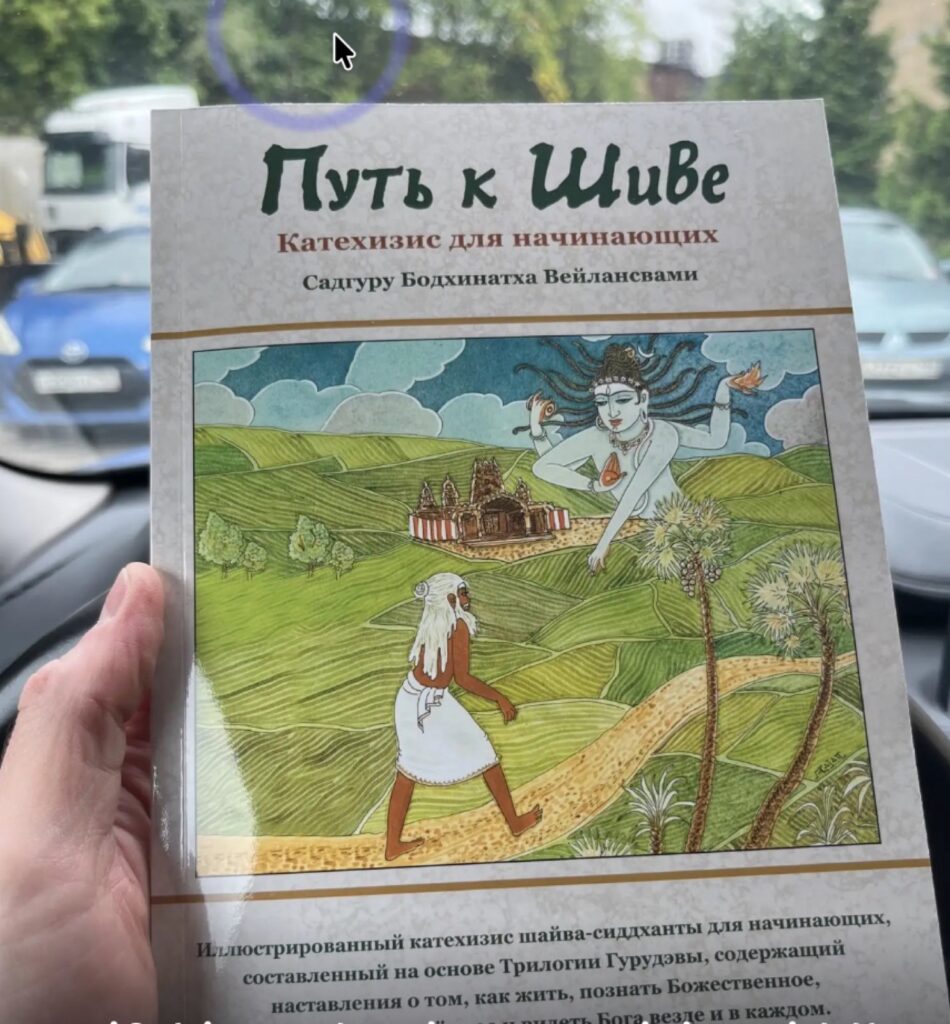
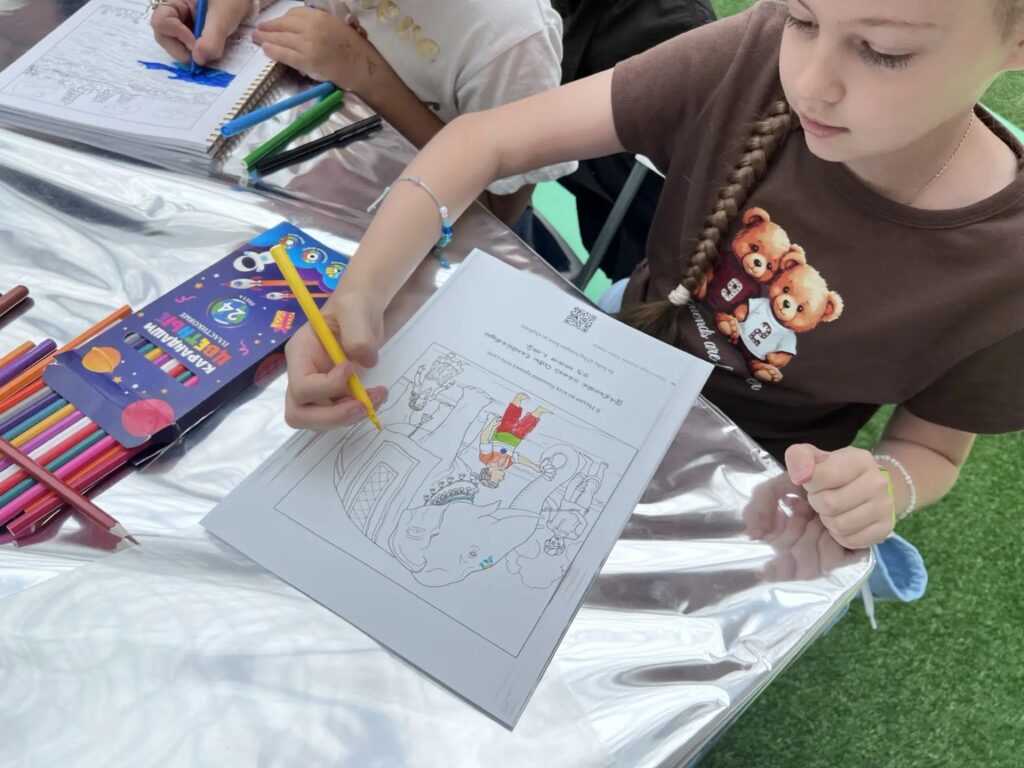
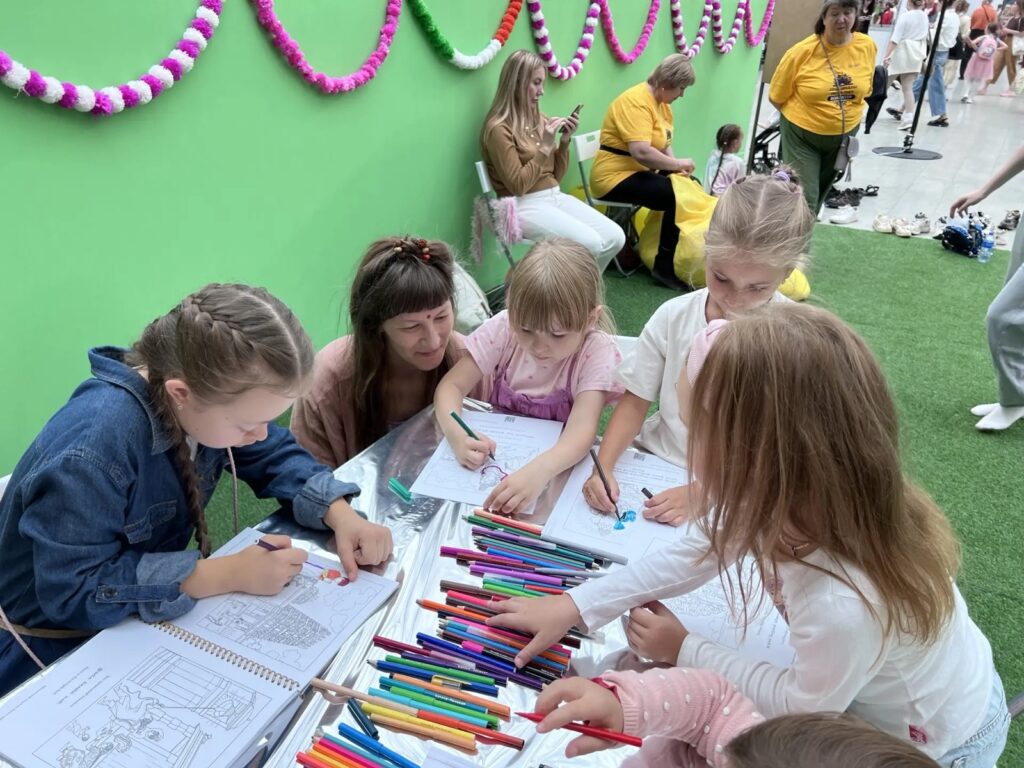
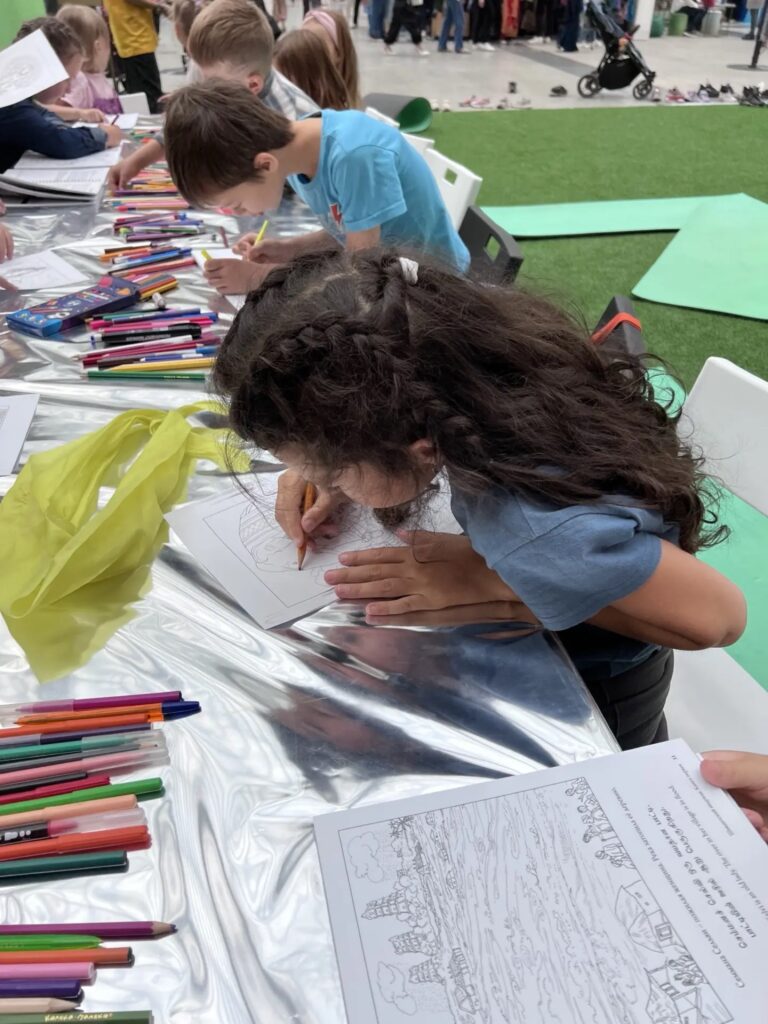
Our Moscow team set up a corner for children to color the images in the recently published Saivite Hindu Religion in Russian
It’s a coloring book with all the basics of Saivite culture and philosophy for little ones.
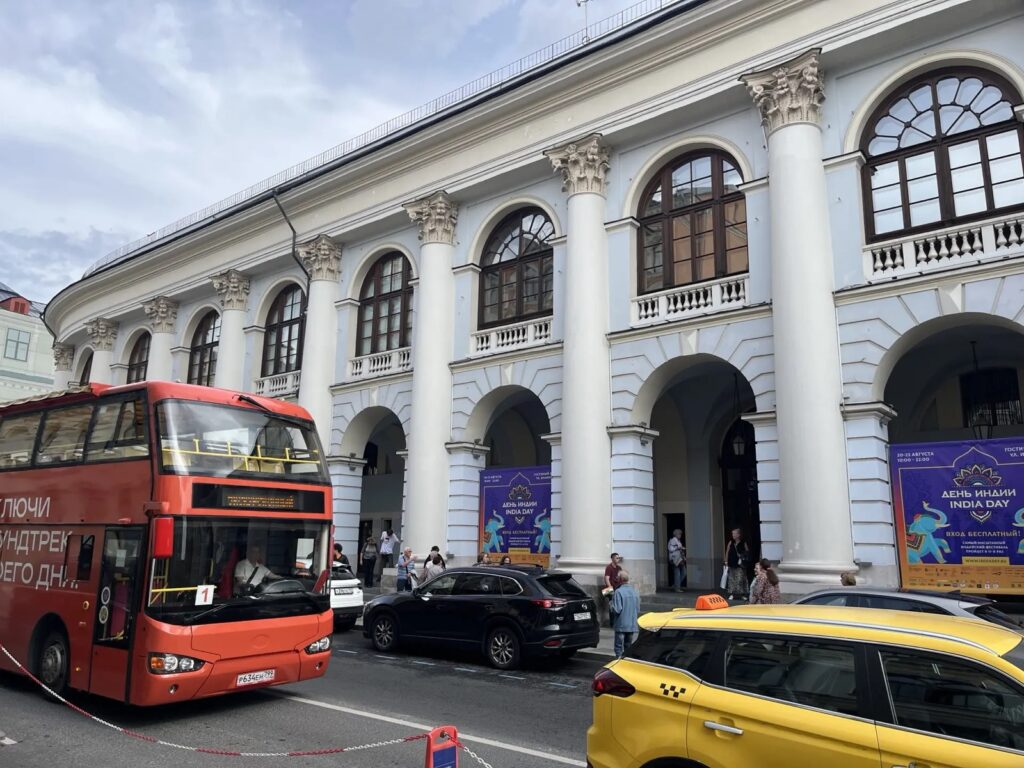
This is the entrance to the conference hall.
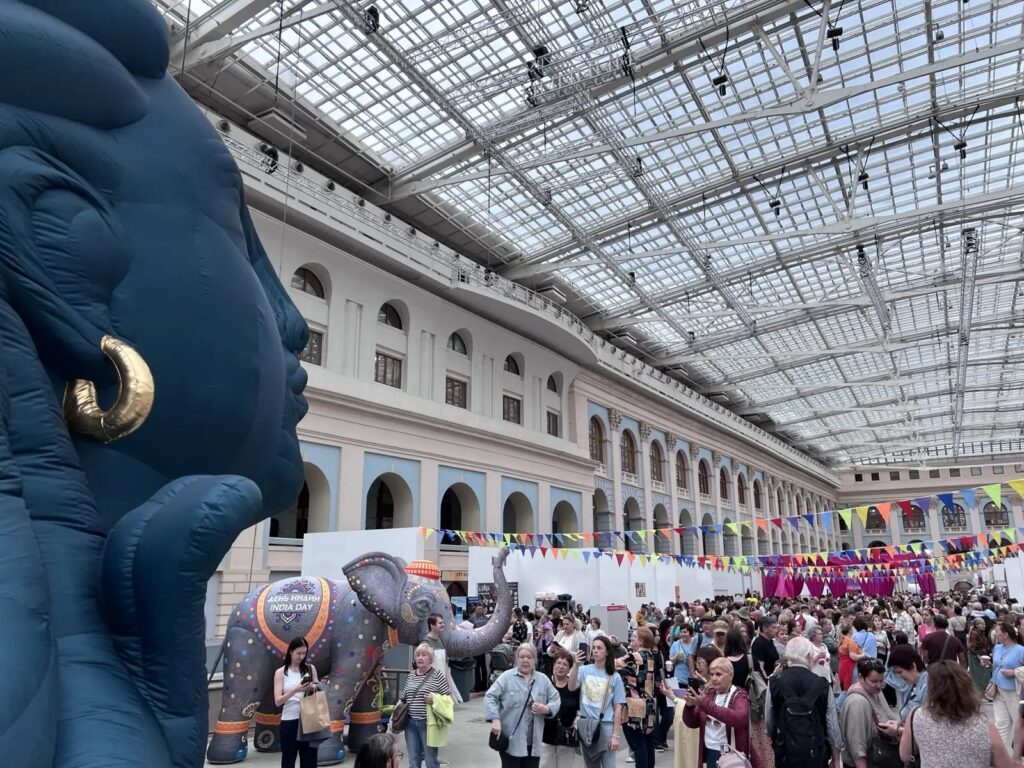
Inside the massive chamber with Siva looking on.
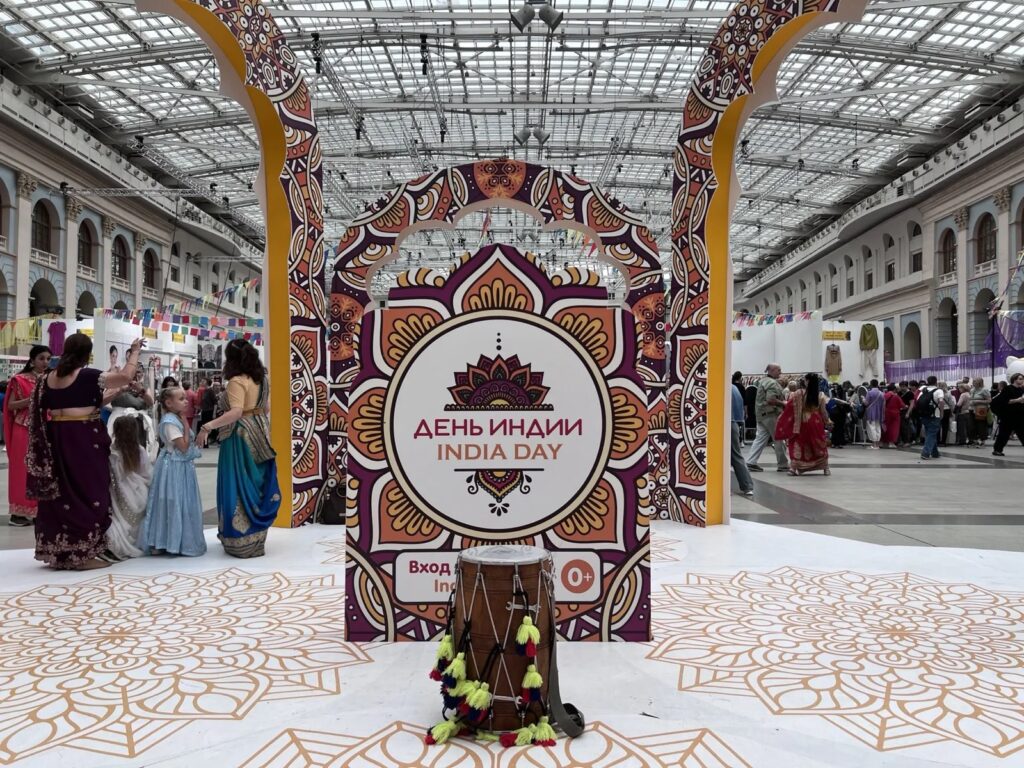
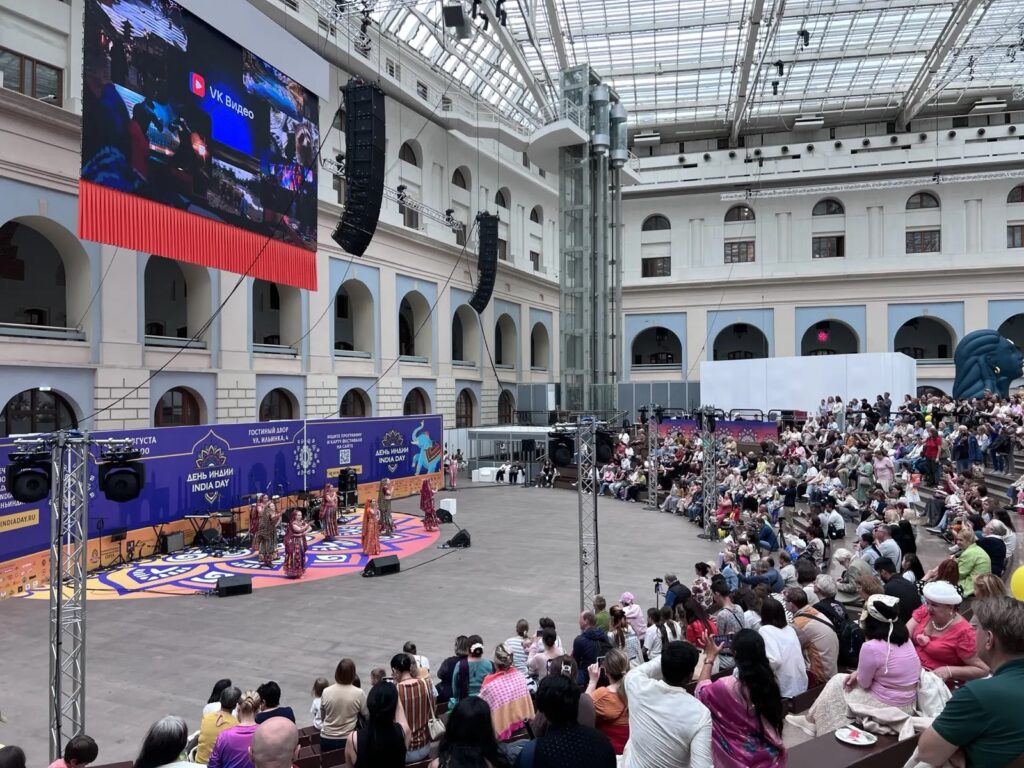
It’s India Day
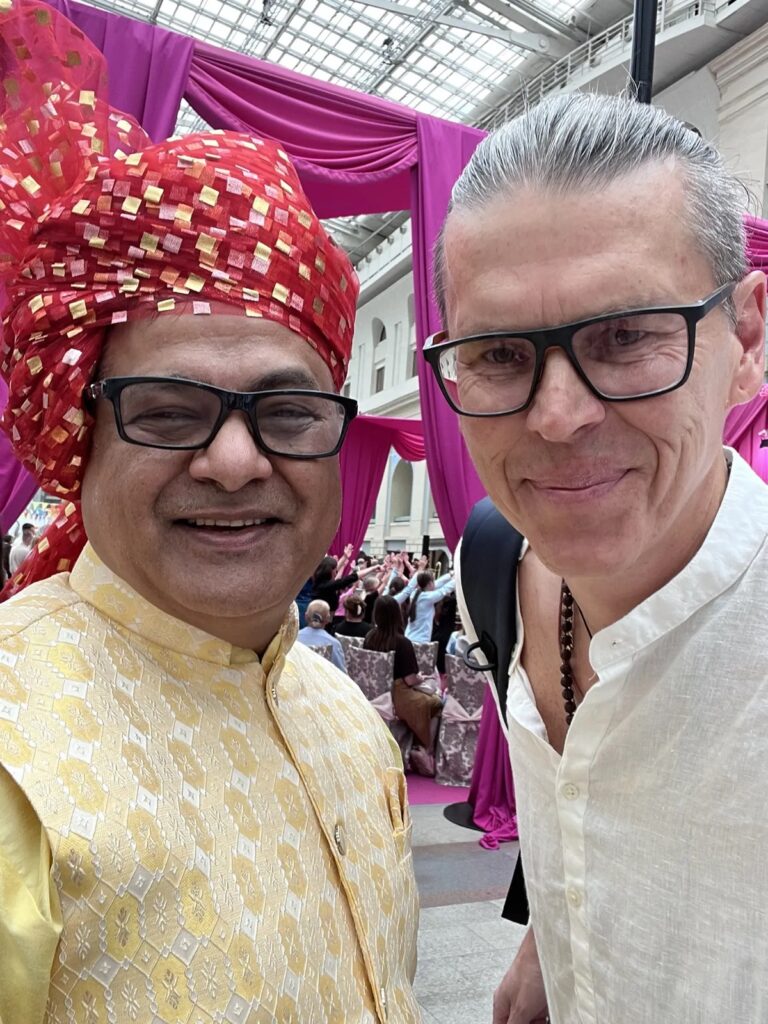
Our Editor-in-Chief Dinanatha Bodhinatha with the festival organizer, Sammy Kotwani
Music, song fill the stone chamber
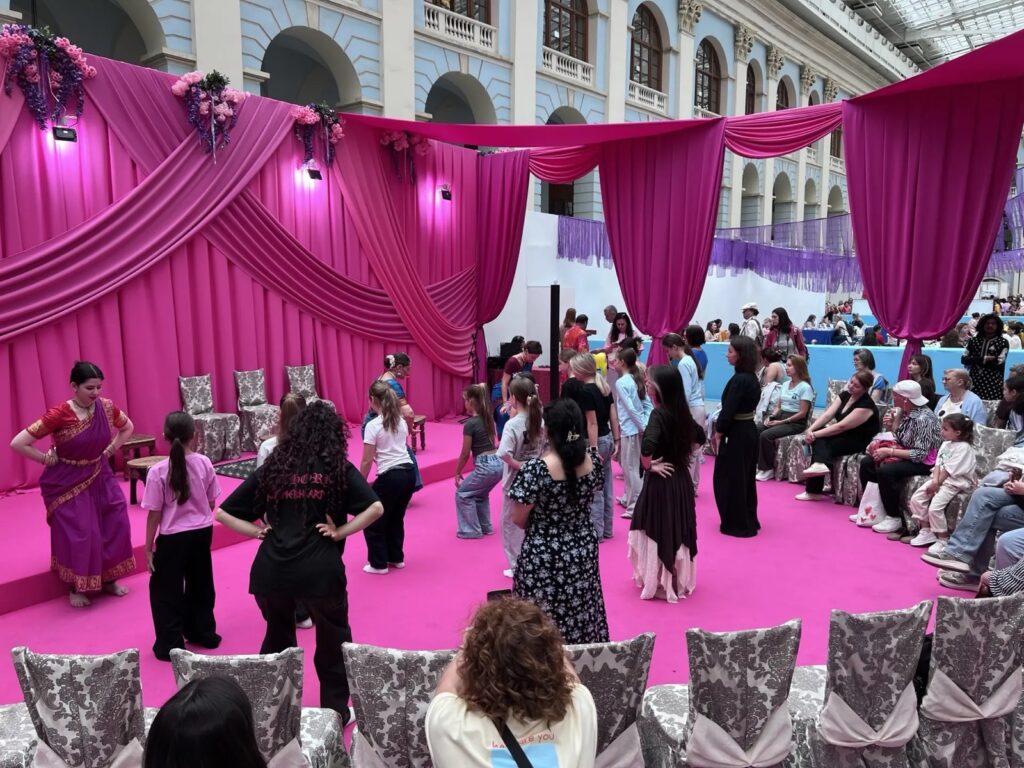
And in another corner, learning some dance moves
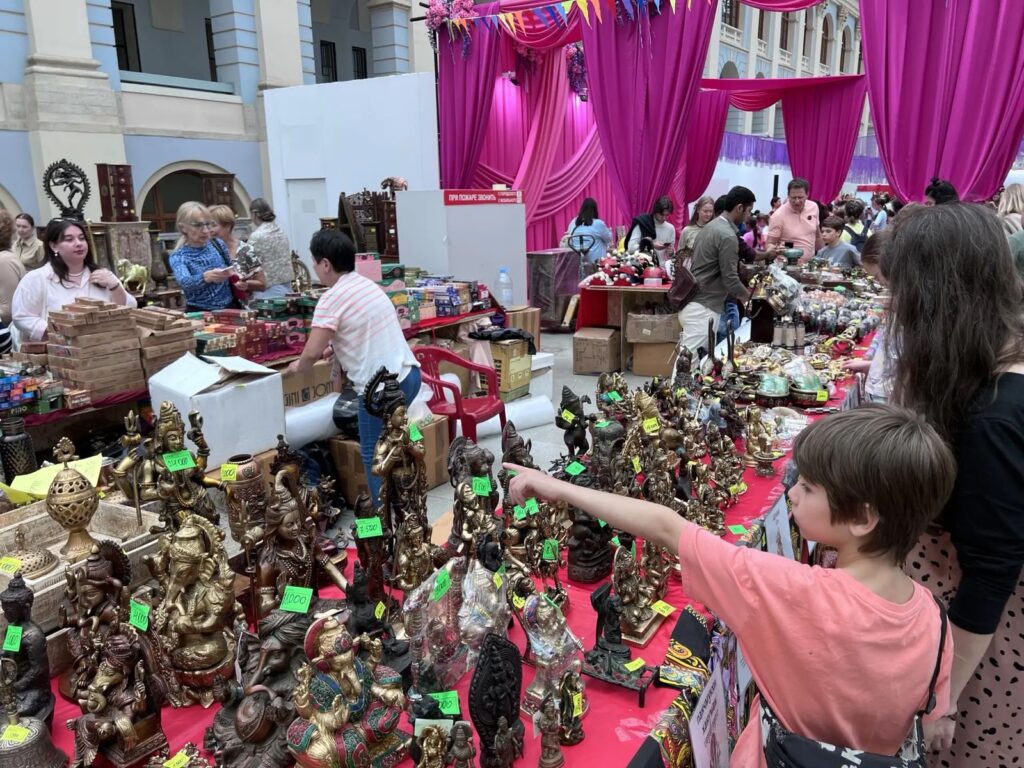
The Gift Shop with murtis, lamps, tapestries and such.
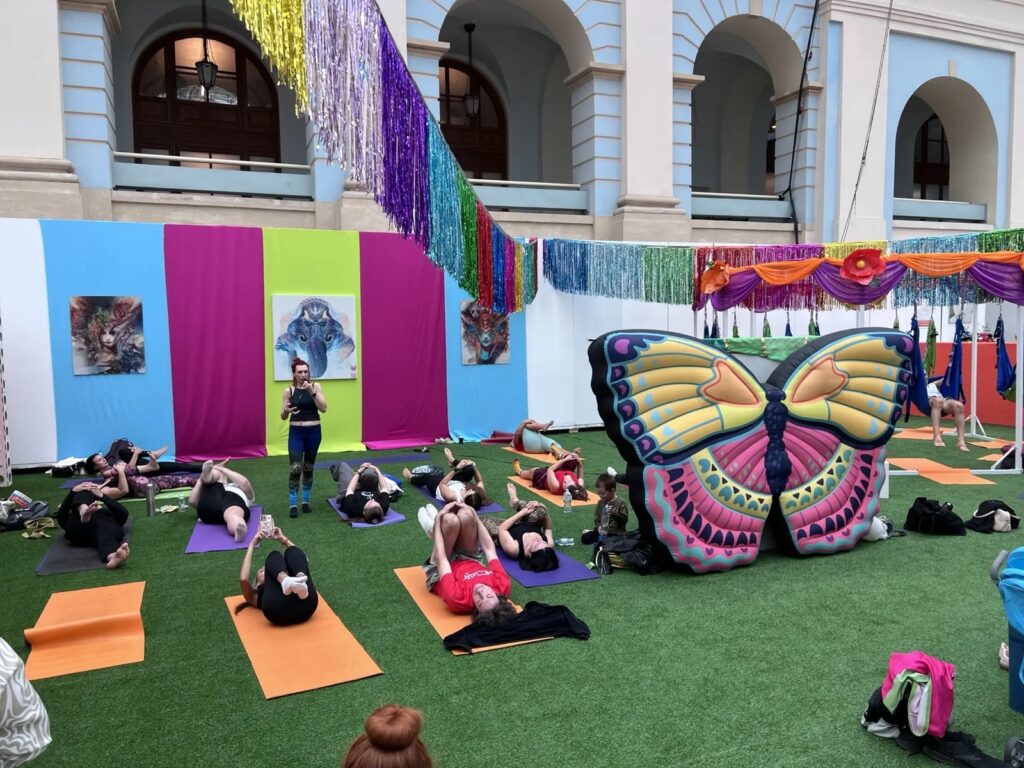
Yoga was a popular activity.
Coloring in the book.
Lots of interest in the art.
Such a creative way to introduce Hindu ideas.
August 20-23
The 11th India Day Festival is underway in Moscow, and our Himalayan Academy team is there in full force. Here is Dinanatha Bodhinatha’s short report sent to Kauai this morning with some great photos.
Namaste, dear Swamis!
We are having a wonderful event…
The 11th India Day Festival in Moscow is taking place at Gostiny Dvor (a historic 17th-century exhibition center in the center of Moscow near Red Square). This is the largest Indian cultural festival in Russia, created for those who appreciate Eastern traditions and seek inspiration: yoga enthusiasts, Ayurveda enthusiasts, fans of Indian cuisine, and all who believe that India is not just a country, but an entire world of wisdom, beauty, and spiritual discovery.
“Hinduism Today” in Russia held an event at the Festival’s children’s playground, providing the recently published book “Saivite Hindu Religion” for children’s creativity…
I am enclosing photos of the event and general plans of the Festival and the Gostiny Dvor building, including a photo of myself with the founder of the India Day Festival, Mr. Sammy Kotwani, President of the Indian Business Alliance (IBA) in Russia.
Baani captures Nandinatha meditating amid the frigid Himalayas
Here at the Aadheenam we have a black granite murti of him. Notice his kamandalu, the sadhu’s ever-present water jug.
We begin a series introducing you to new portraits of the Satgurus of our Nandinatha Sampradaya. Appropriately, we begin with the first known master, Nandinatha of the Himalayas, who lived some 2,200 years ago. Naturally, our image of him is based on tradition. His was an austere life as you can imagine. No electricity, no central heating, no Internet, no modern travel or amenities. Rugged. Pure. Simple. Profound.
A few years back we commissioned Baani Sekhan from North India to render portraits of the Satgurus. In the months ahead we will share others. This will be the first time all of the great ones will be presented in a similar manner. They become more realistic as we move forward in time and photography is invented!
You can read about Nandinatha’s life in The Guru Chronicles here: https://nall.ai/nandi
For five years in the late 1990s, Gurudeva met monthly with leaders of the island: mayors past and present, business leaders, agriculturalists, real estate managers, university administrators and more. He was the only spiritual leader invited to the table and he ended up being the primary motivator of the group. Their work was to informally create a vision for the island’s future. The Sunday evening gatherings were called “Vision Kauai 2020.”
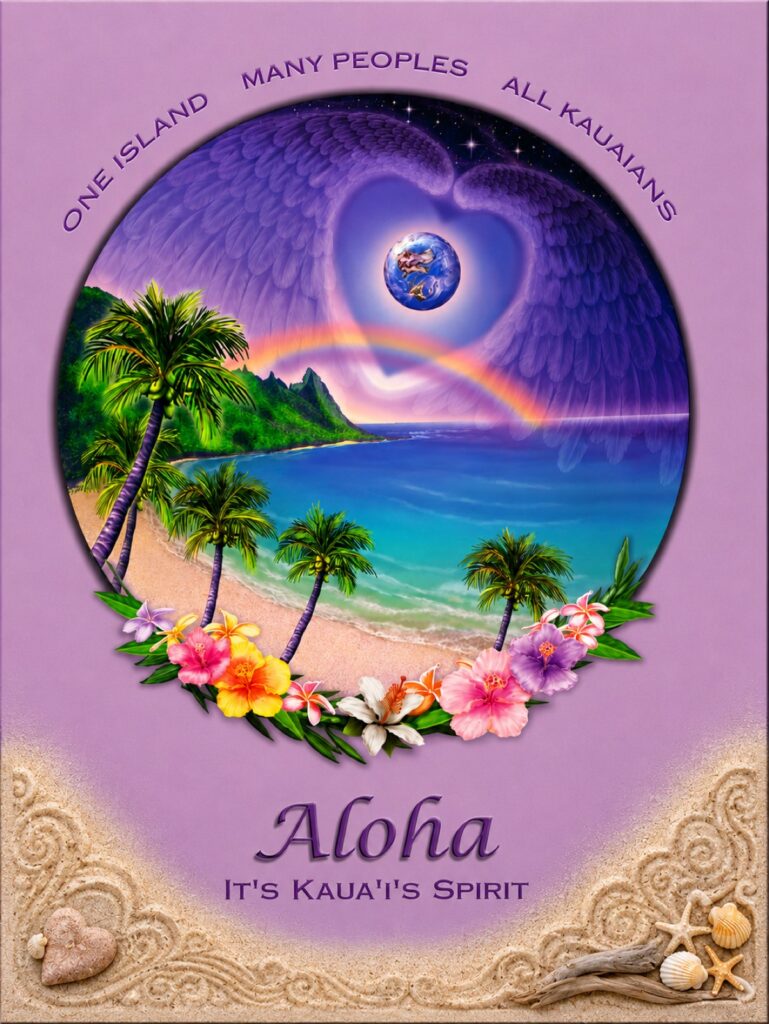
One of Gurudeva’s important contributions was to push for a shared identity for the diverse groups: Native Hawaiians, Chinese, Filipinos, Haoles and more. They did not have a shared tribe name, like Californians or Texans. So he proposed using “Kauaians,” and that started a slew of projects to get the word out. And it did get out, with his help in printing and in making granite signs for the county, carved in India.
This led to many expressions of the idea of our oneness. Natalie and Jim Levin took his idea, and while he was fasting in October 2001, they made a “Thank you, Gurudeva” poster which the monks presented to him during his final days. Gurudeva saw the art and, with a smile, lifted his hand and traced the rainbow with his finger, first left to right and then right to left. Then he smiled and asked the monks, “How do they know which way a rainbow goes?”
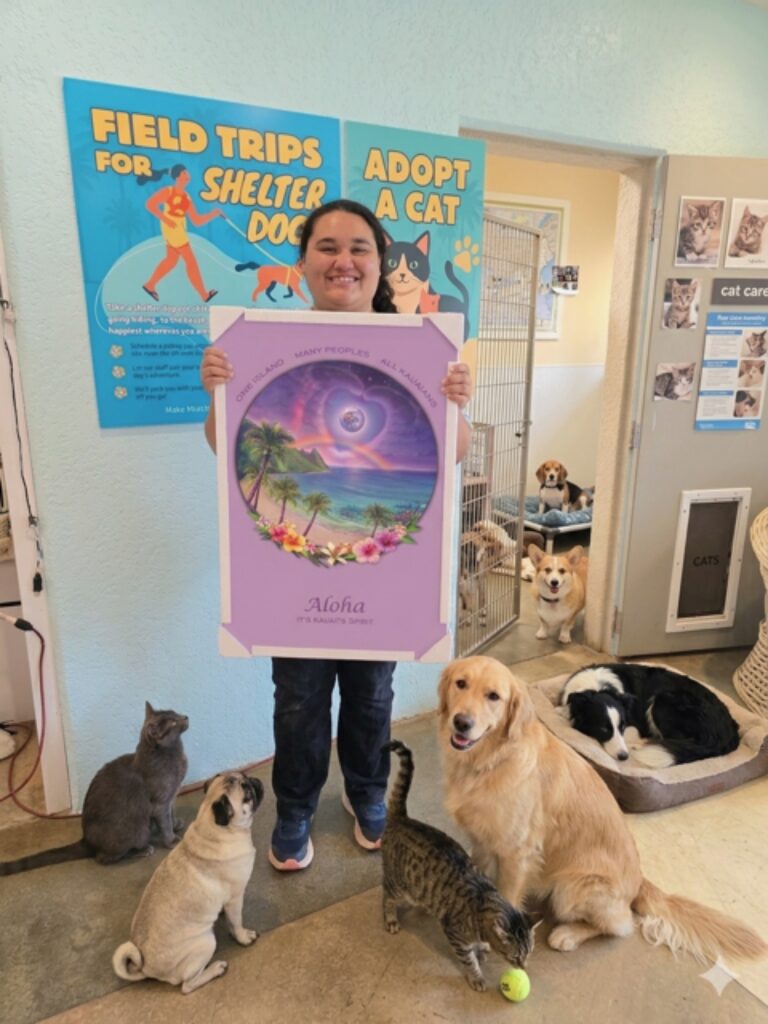
The Levins later produced posters and cards to spread the idea to all corners of our small island. Recently, ten of the larger framed posters were passed around the island by a local leader, Paradise. She sent us photos of two of the small businesses she gave the posters to: an animal shelter and a clothing shop. Gurudeva’s idea of our unity and shared identity lives on!

 The John Deere is ready to work