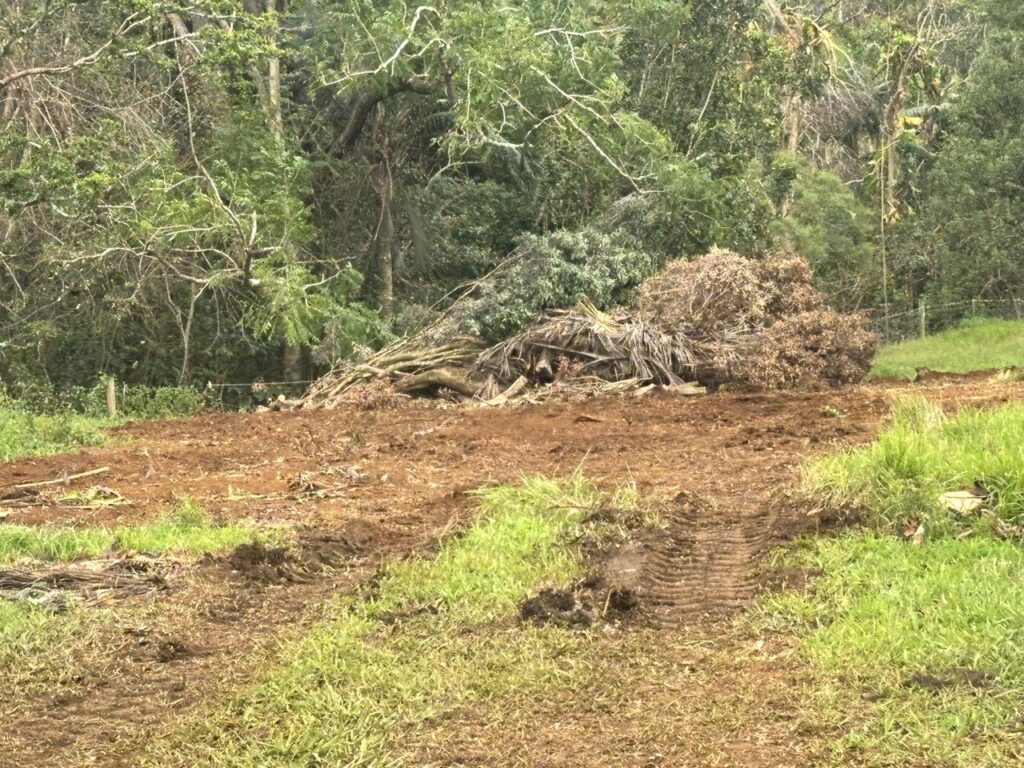
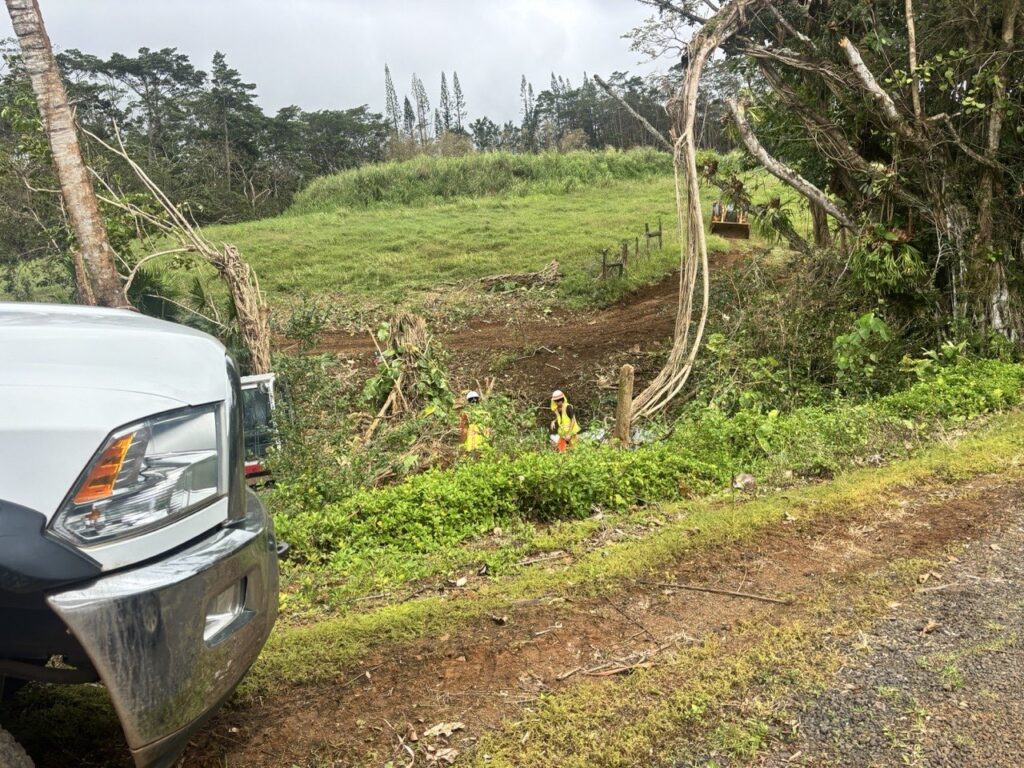
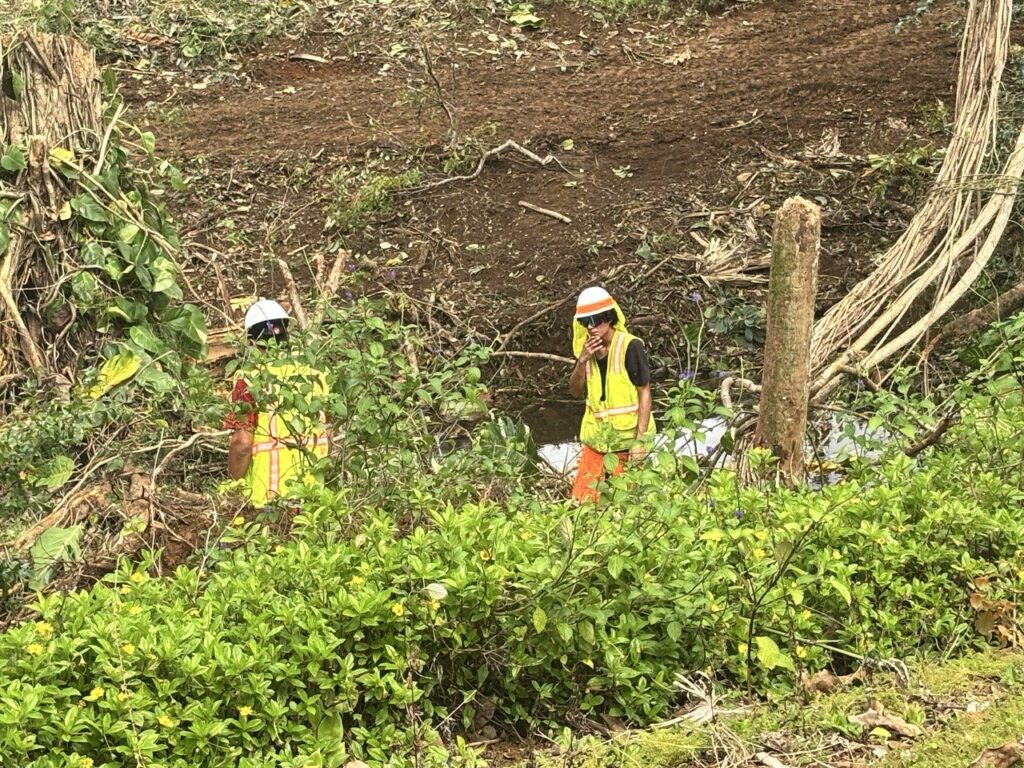
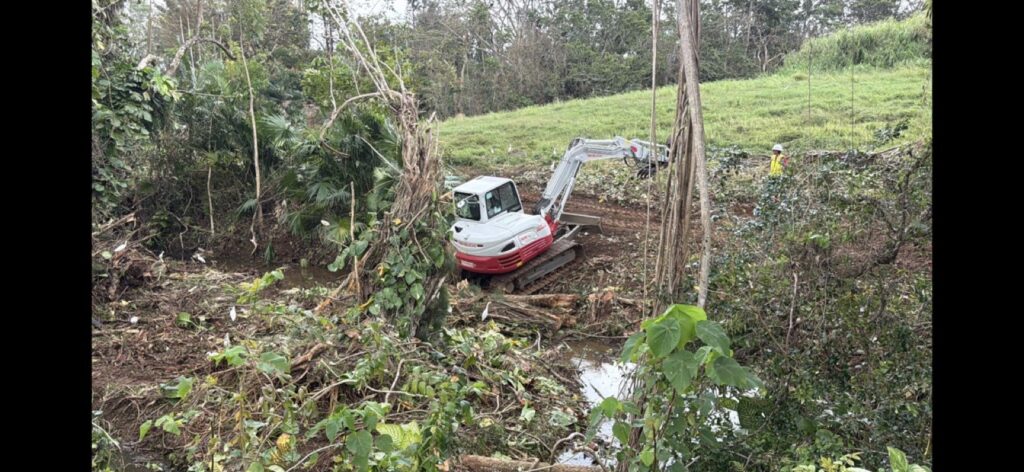
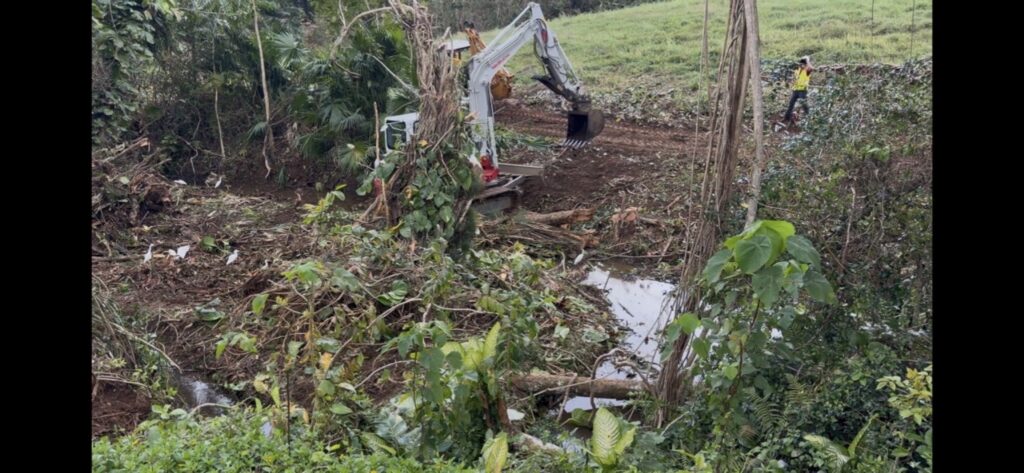
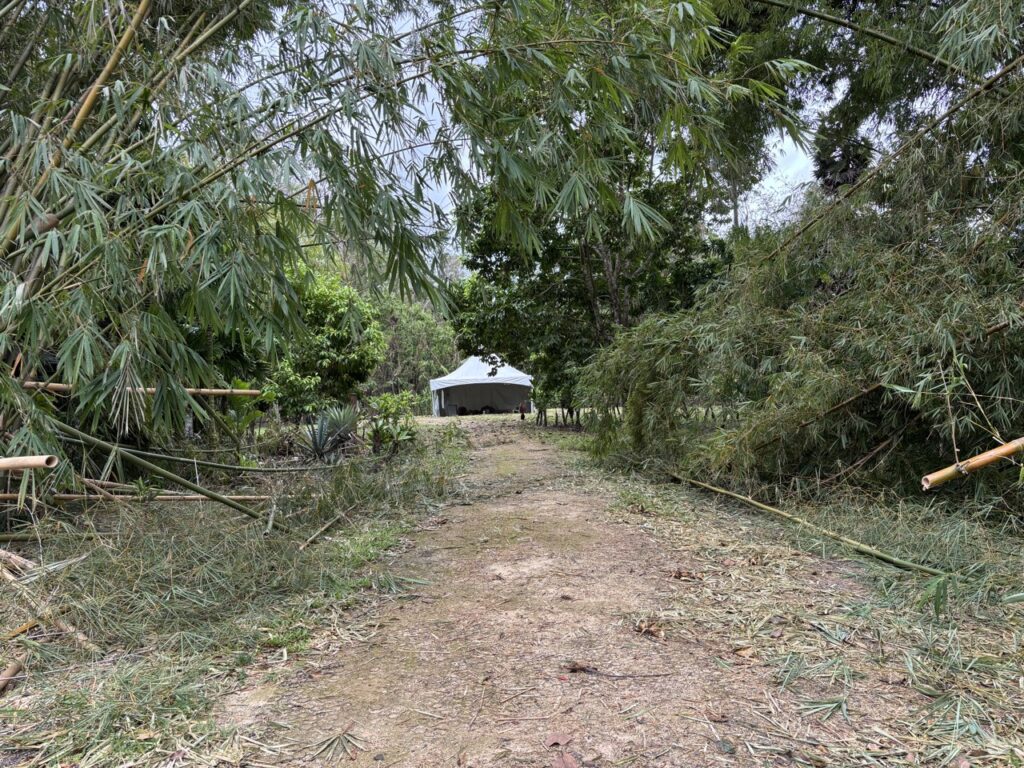
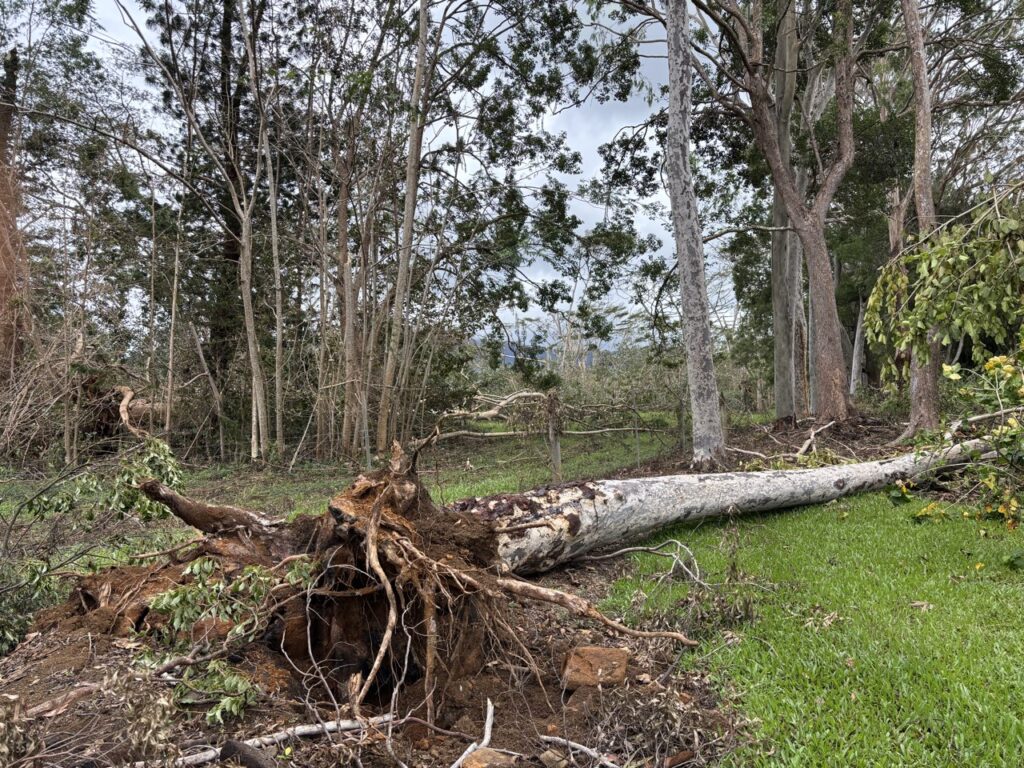
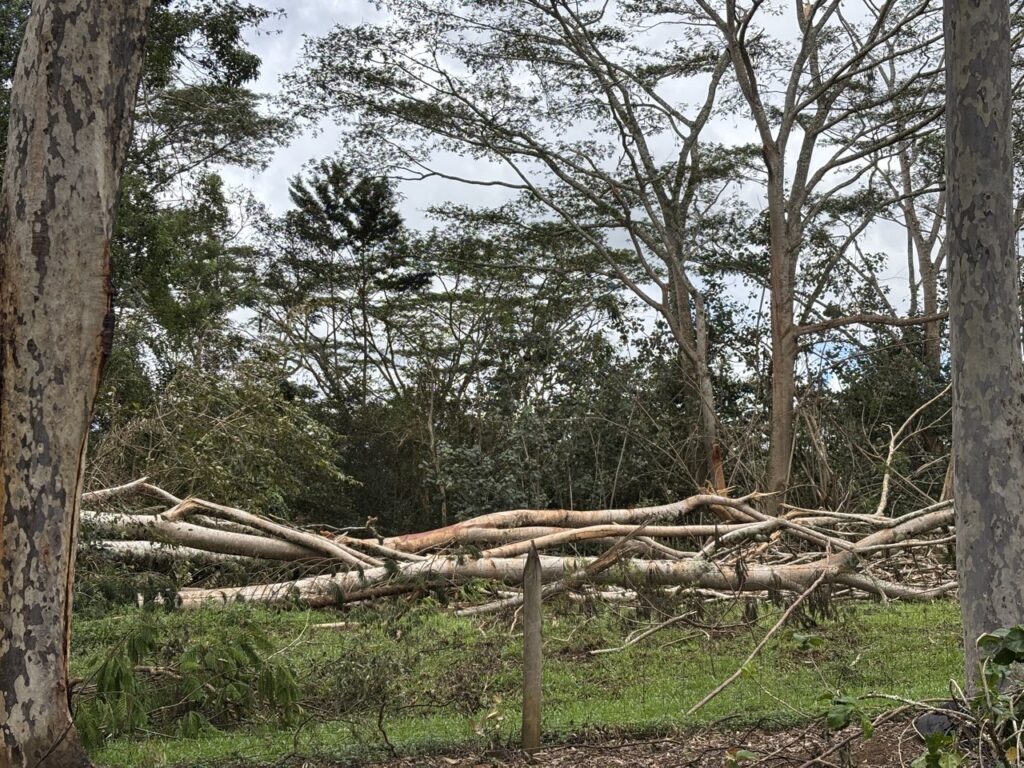
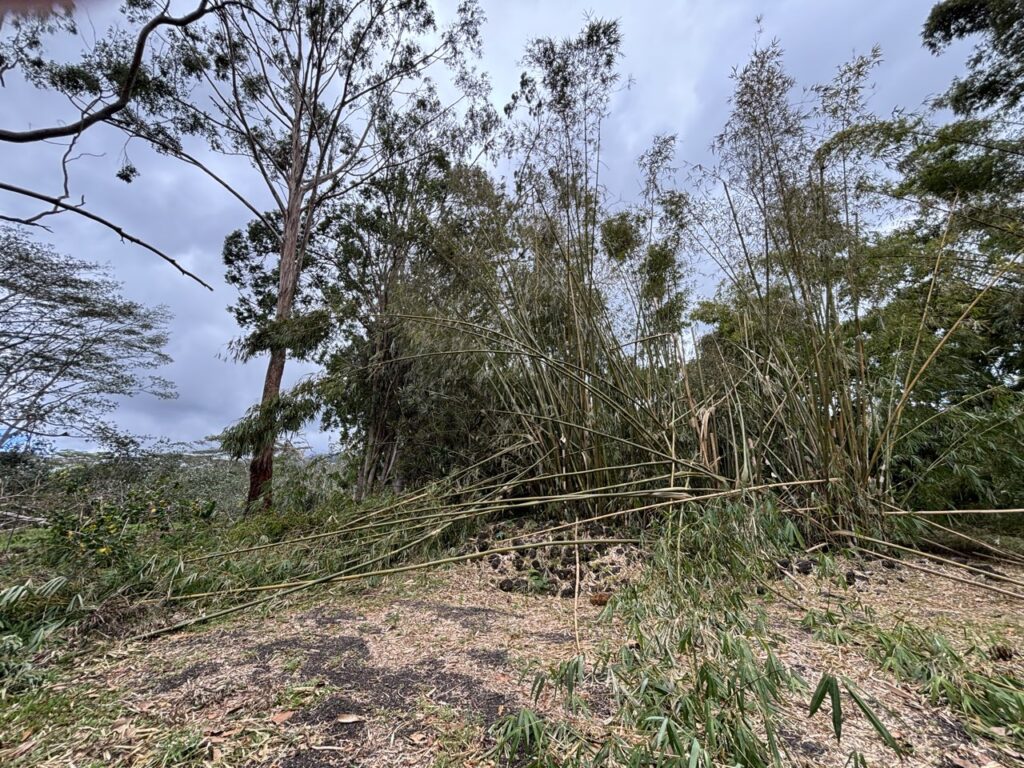
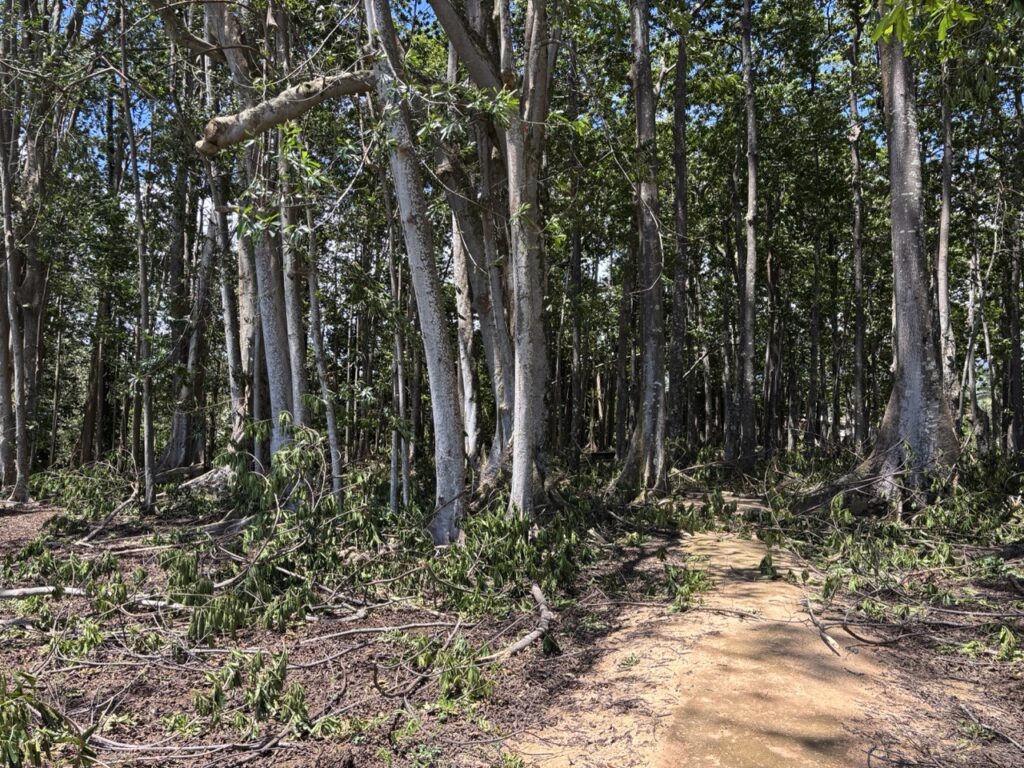
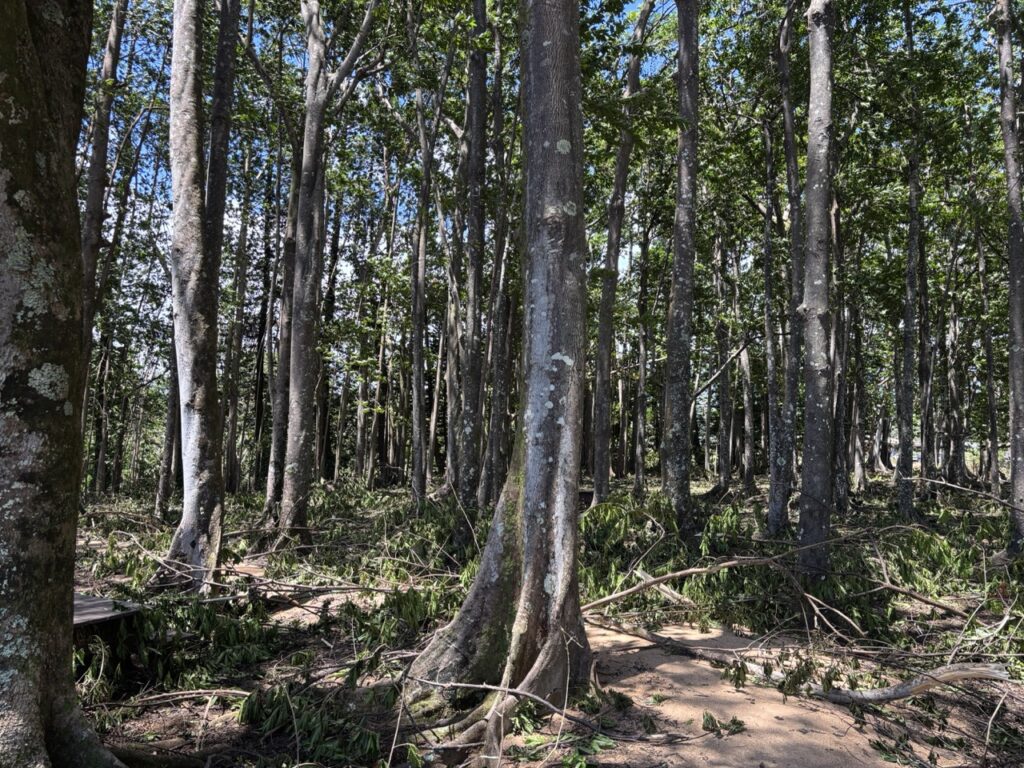
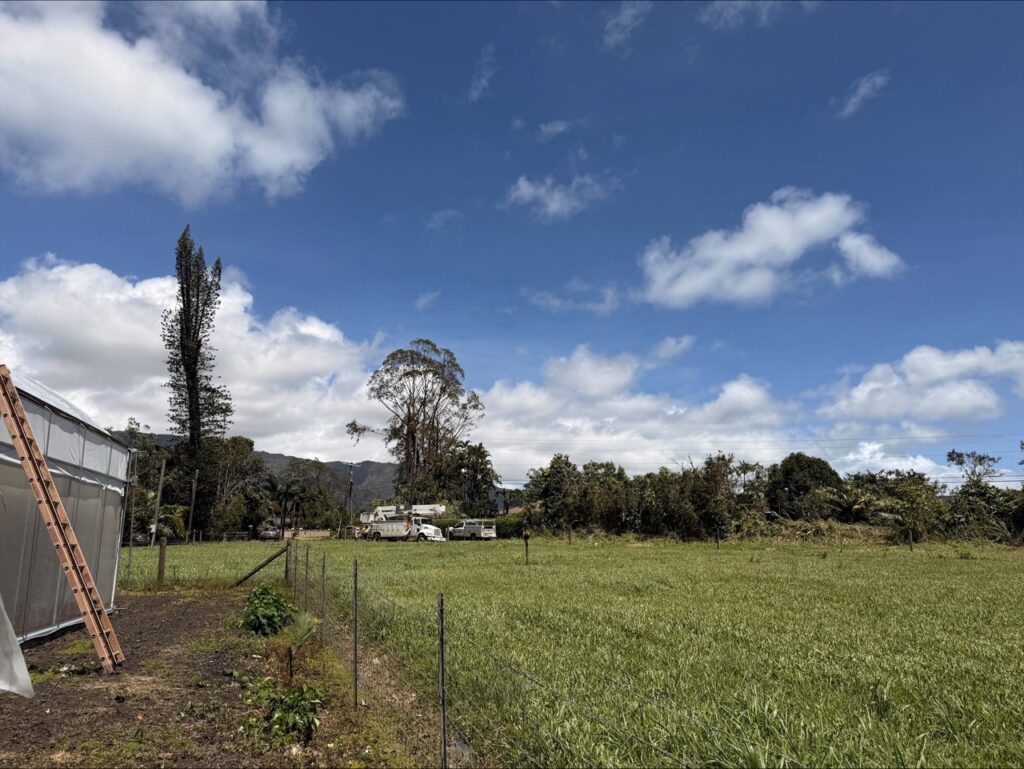
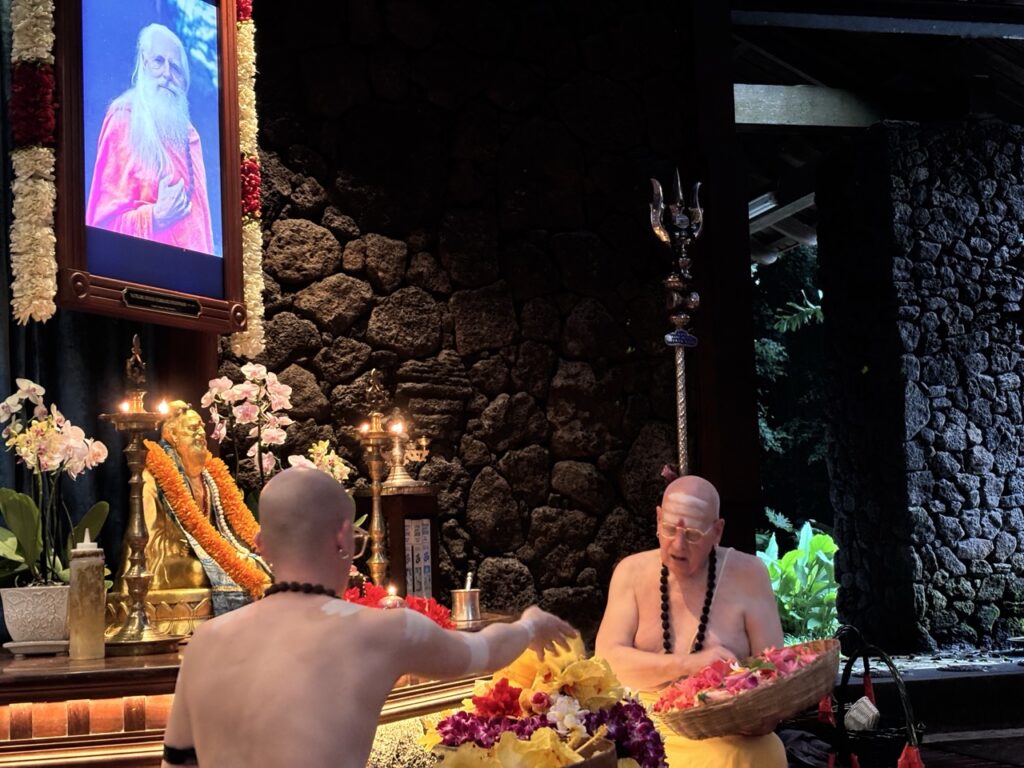
While Pradeep operates the excavator, his helpers chainsaw and use the backhoe
Pradeep operates the large excavator
Vel Muruga!
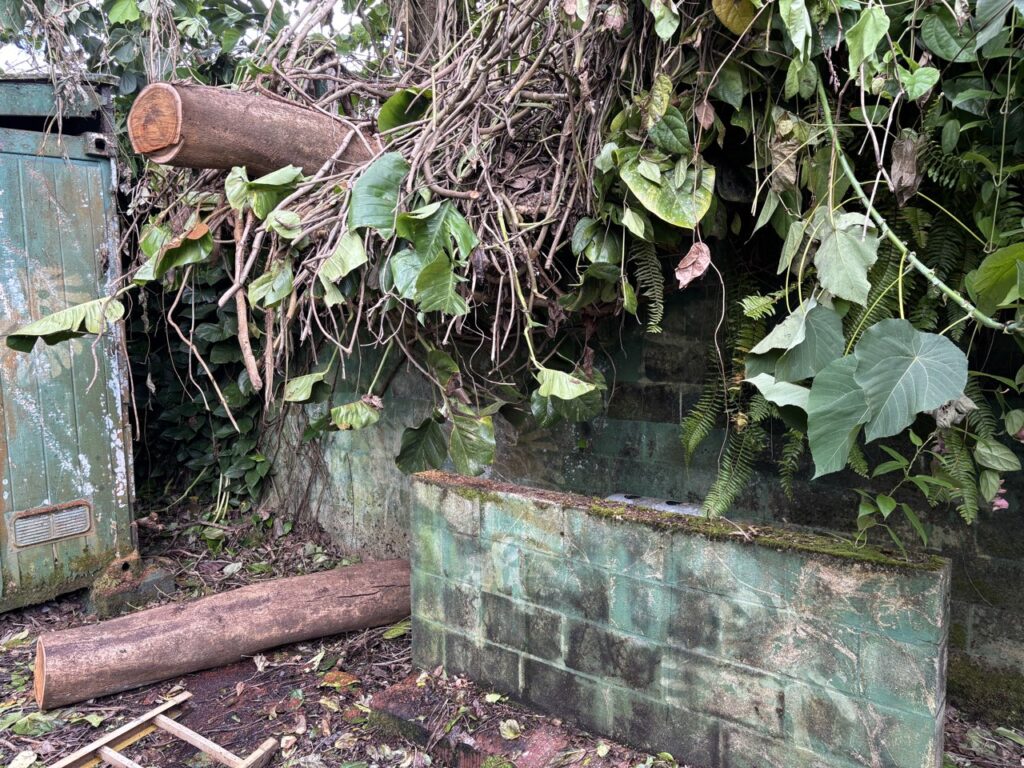
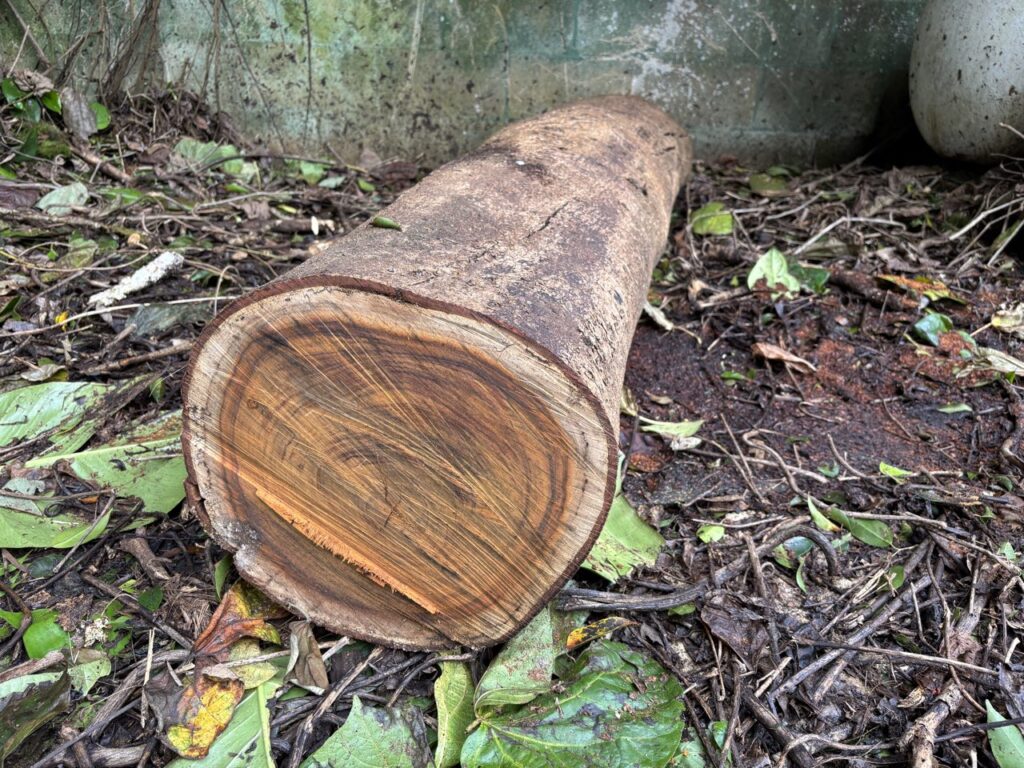
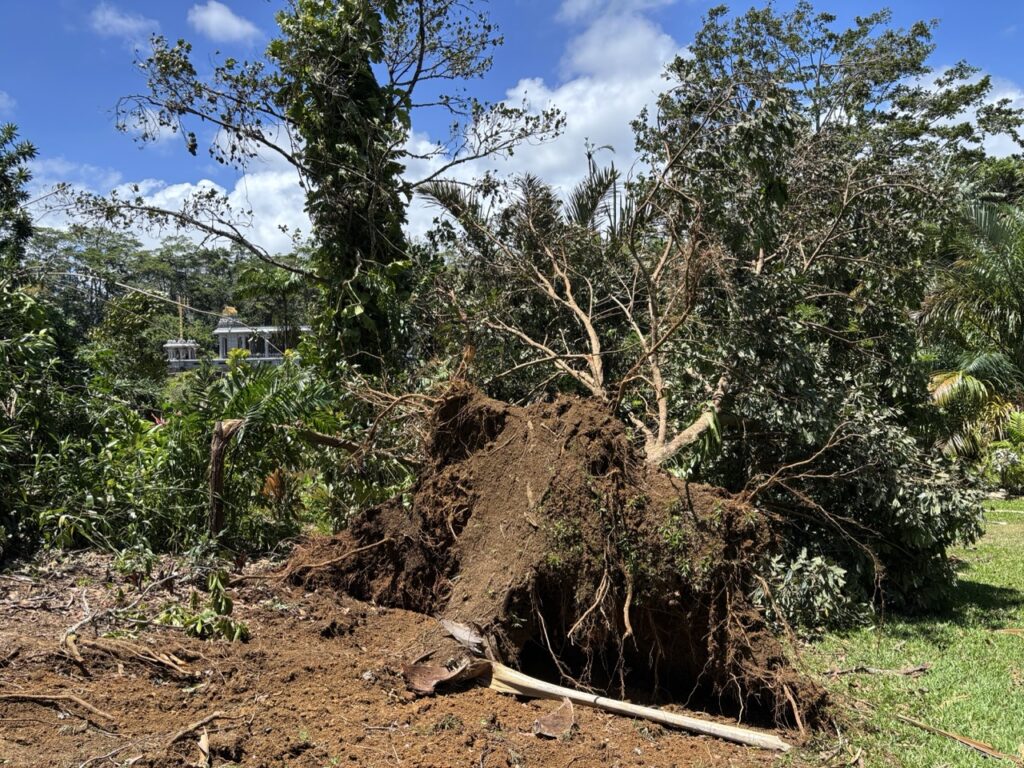
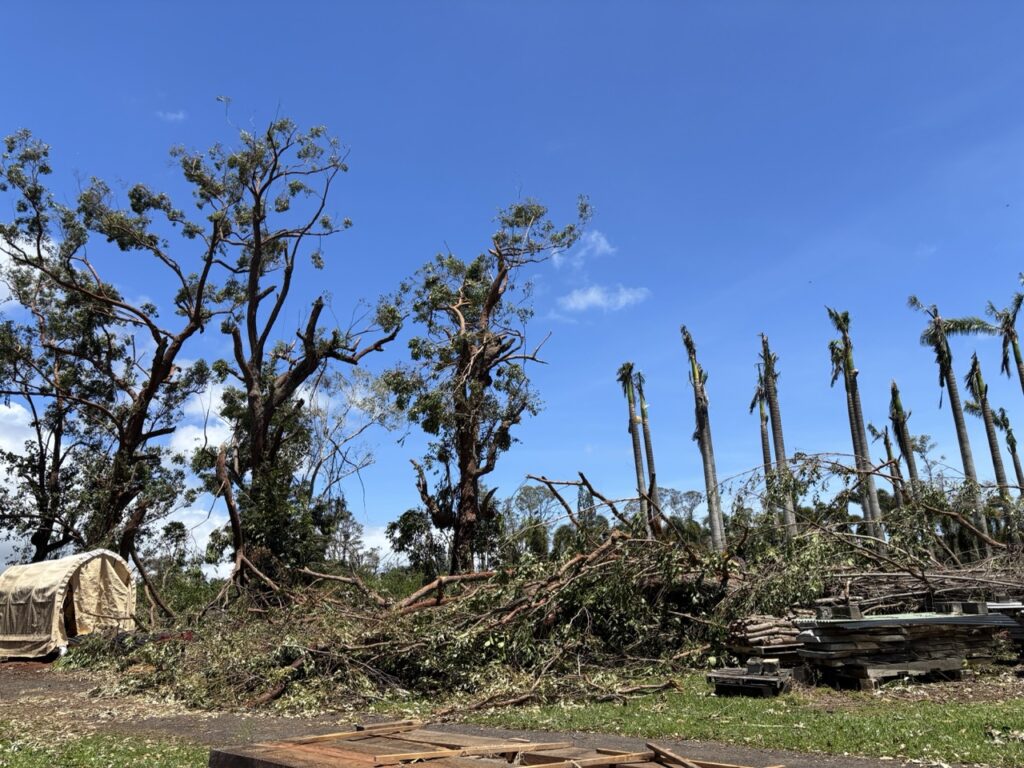
Pradeep and his two helpers continue to clear fallen trees on the Aadhenam property. Today, they are working on trees located in the cow pasture area. They skillfully chainsaw fallen banyans and palms. They freed up the pasture area so the tractor can mow and cows can roam again. Cleaning these areas brings back access for the monks to care for the animals. After the pasture was cleared, two major trees were handled that fell over the ditch. The area was very narrow for the excavator to access so his helpers started by clearing the way through.
After many hours of chainsawing, Pradeep needed to get across the ditch to access the fallen branches on both sides in order to move them. Pradeep used cut sections of the fallen banyan as a bridge to maneuver across. It was amazing to see his ingenious idea accomplished safely and effectively.
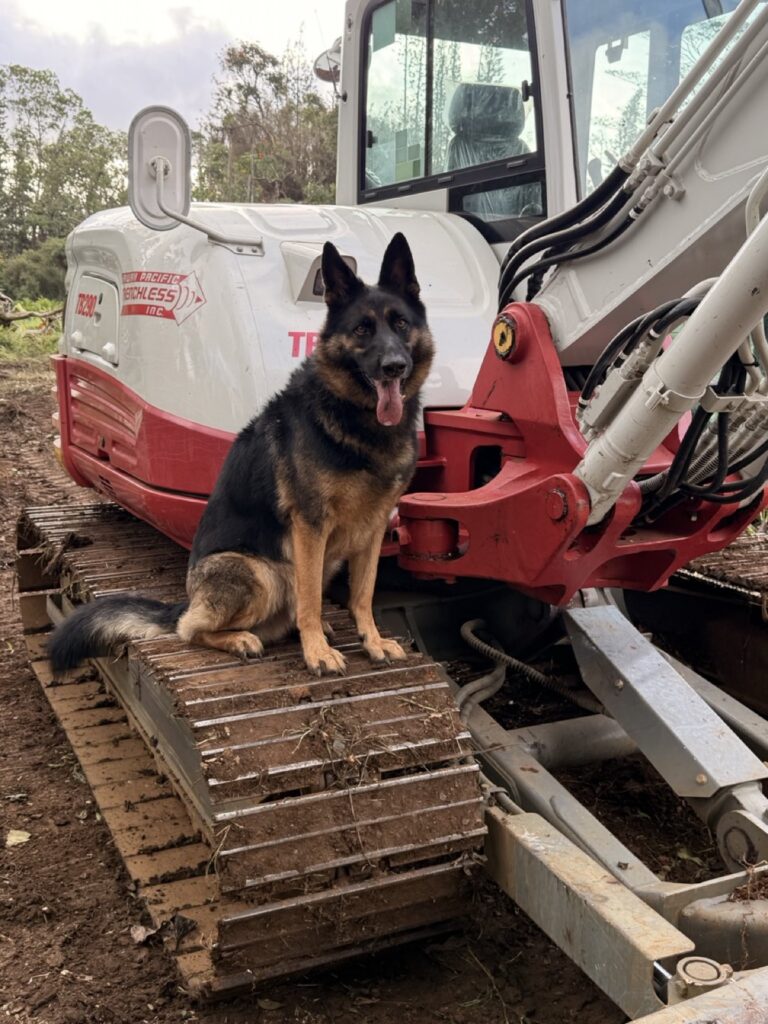
Our German shepherd, Bhairava, inspects the excavator that Pradeep operates during the day. He is very happy with the progress. After a productive phase for all the kulams, the monks head into a full moon retreat to replenish their pranas and prepare for another phase of dancing, living, and merging with Siva!
“Karma is not fate, for man acts with free will, creating his own destiny. The Vedas tell us, if we sow goodness, we will reap goodness; if we sow evil, we will reap evil.“
“Flow with the river of life and merge in Siva’s ocean of oneness.“
“Of course if you love Siva, obviously you have to love everyone else. Love brings forgiveness. Love brings understanding. Love brings feeling.“
“Self Realization is finding That which is beyond even superconsciousness itself, beyond the mind—timeless, causeless, spaceless.“
“Yogaswami, said, ‘It was all finished long ago.‘” – Gurudeva
“Hope for a future life makes this life worthwhile, joyous, contented and happy, because the Hindu can live and deal with current problems, knowing that they are transitory problems, that they will not last forever; nor will they affect us forever.“
Jai Ganesha!
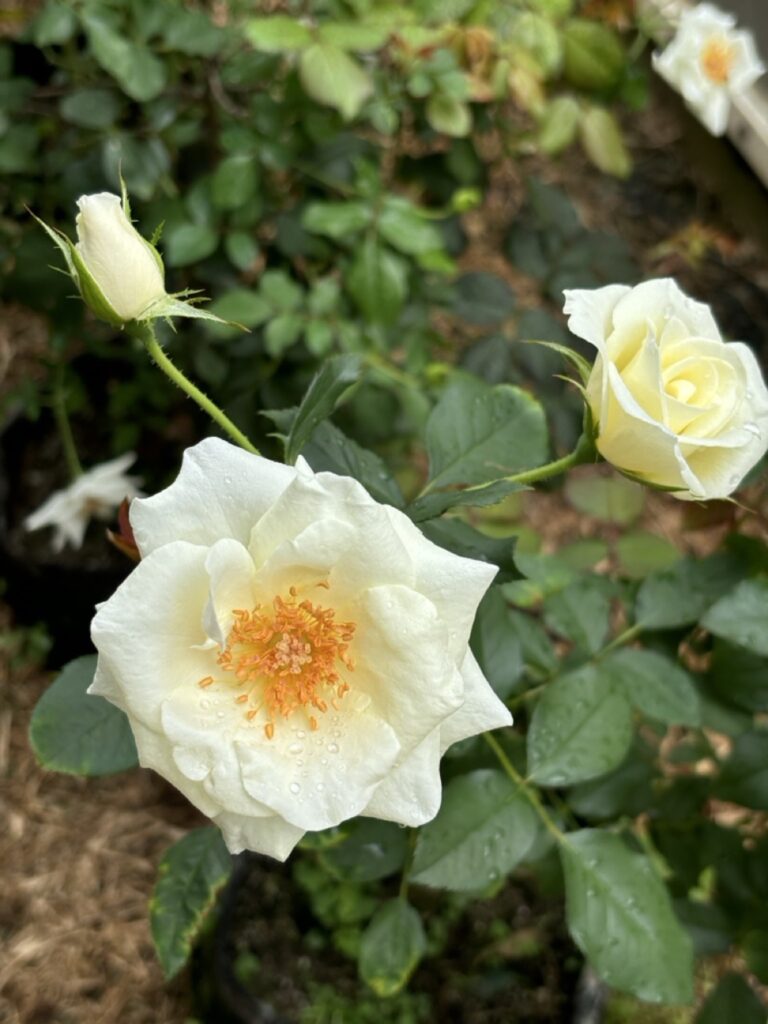
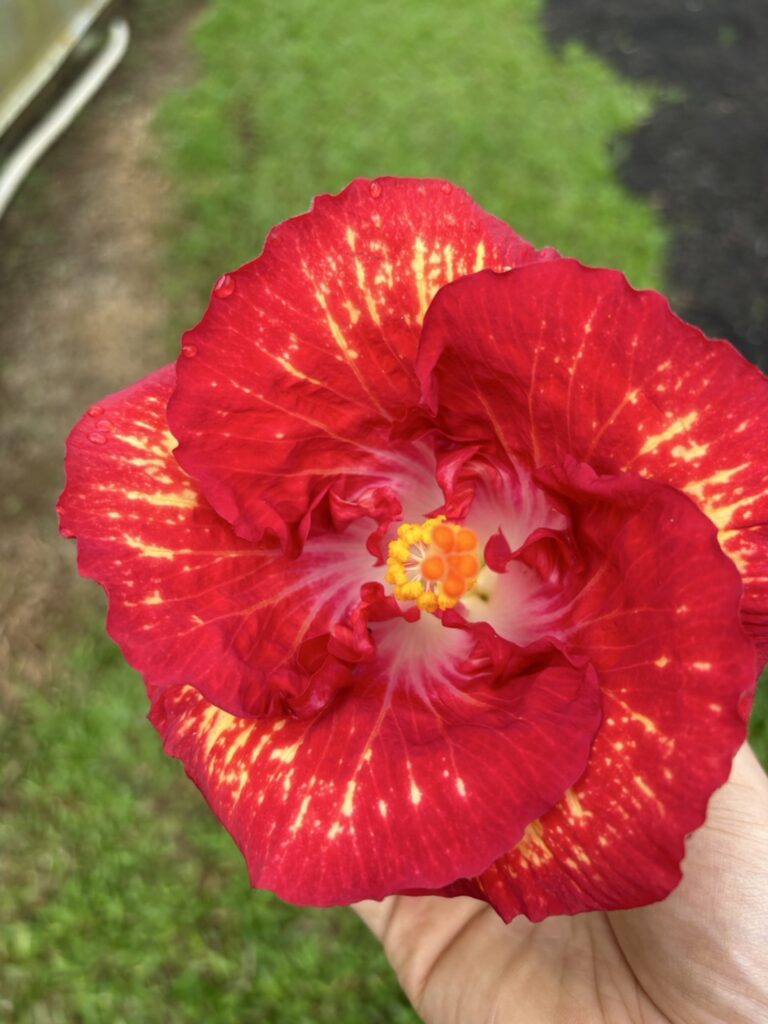
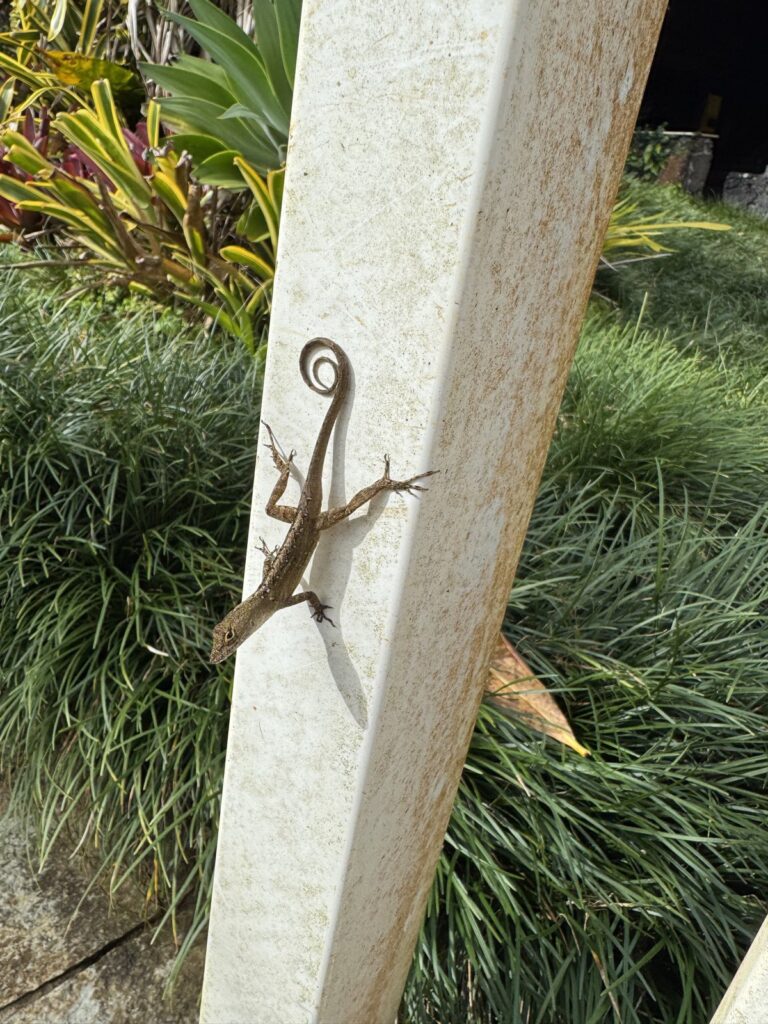
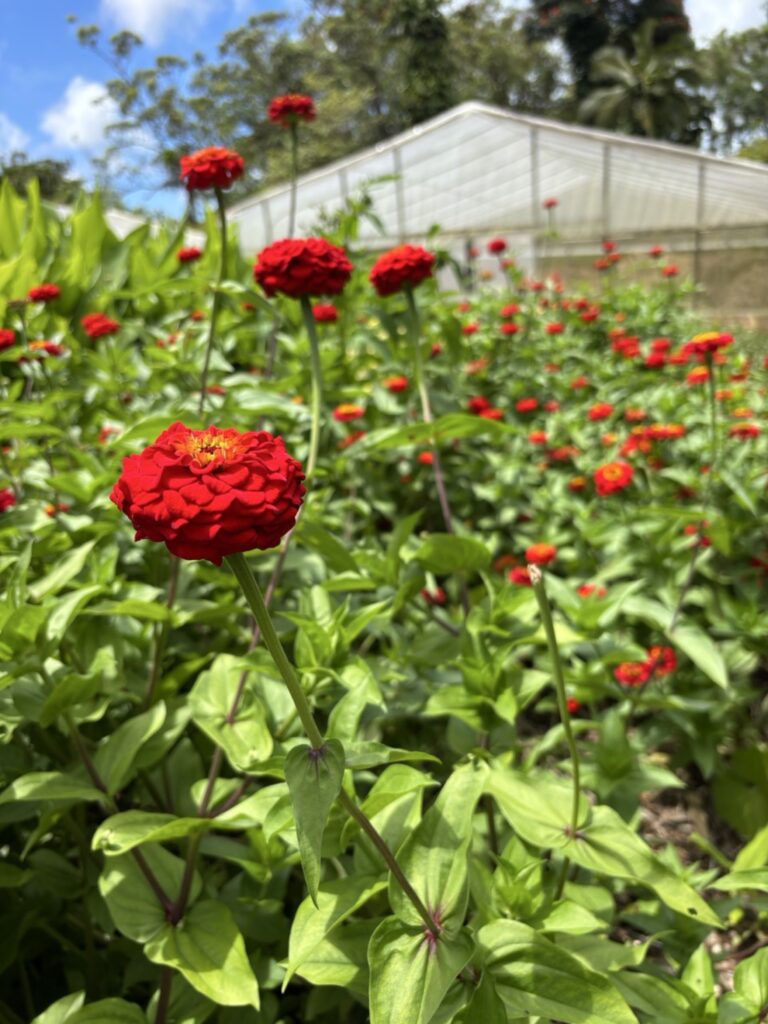
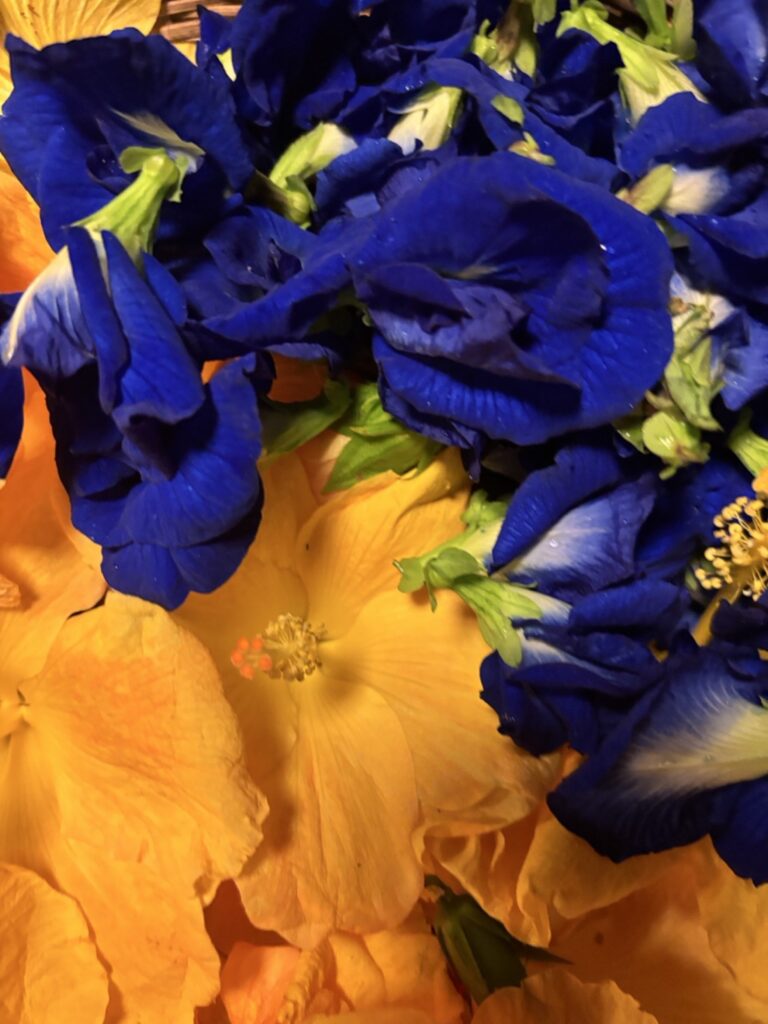
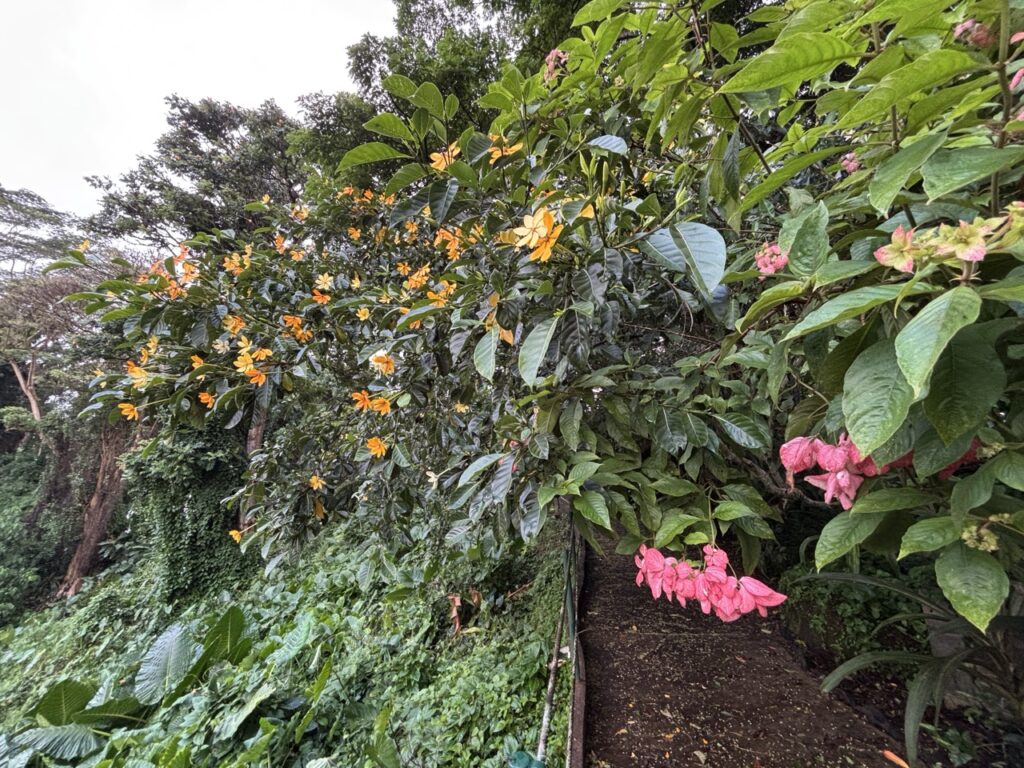
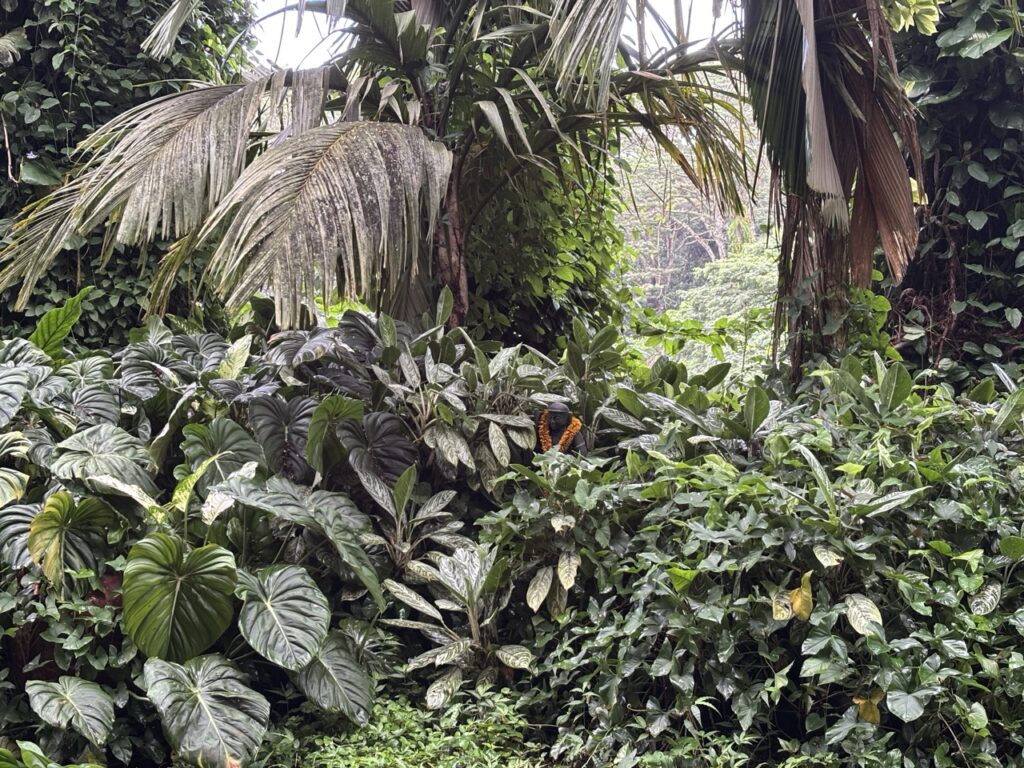
Today is a bright, sunny day at the aadheenam. The flowers are blooming and the lizards our out enjoying the warming light. We thought you’d all enjoy some photos of seevral of the amazing new flowers that we’re growing for the temple.
“Your journey on this Earth has only one goal, Self Realization. You are here to attain the highest possible states of consciousness. You are not here to react to the petty incidents that occur in the valley of the subconscious.” – Gurudeva
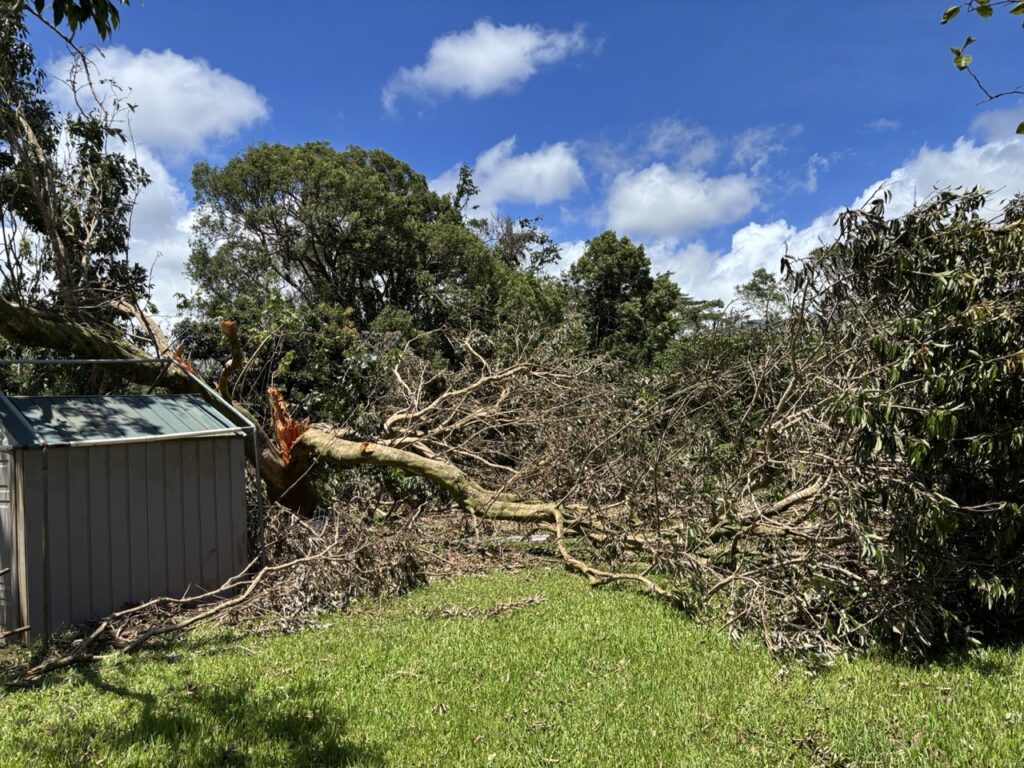
This tree that fell over from the neighbor’s property missed the Media Studio roof by inches. It was blocking one of our storage containers and got cleared over the past couple days.
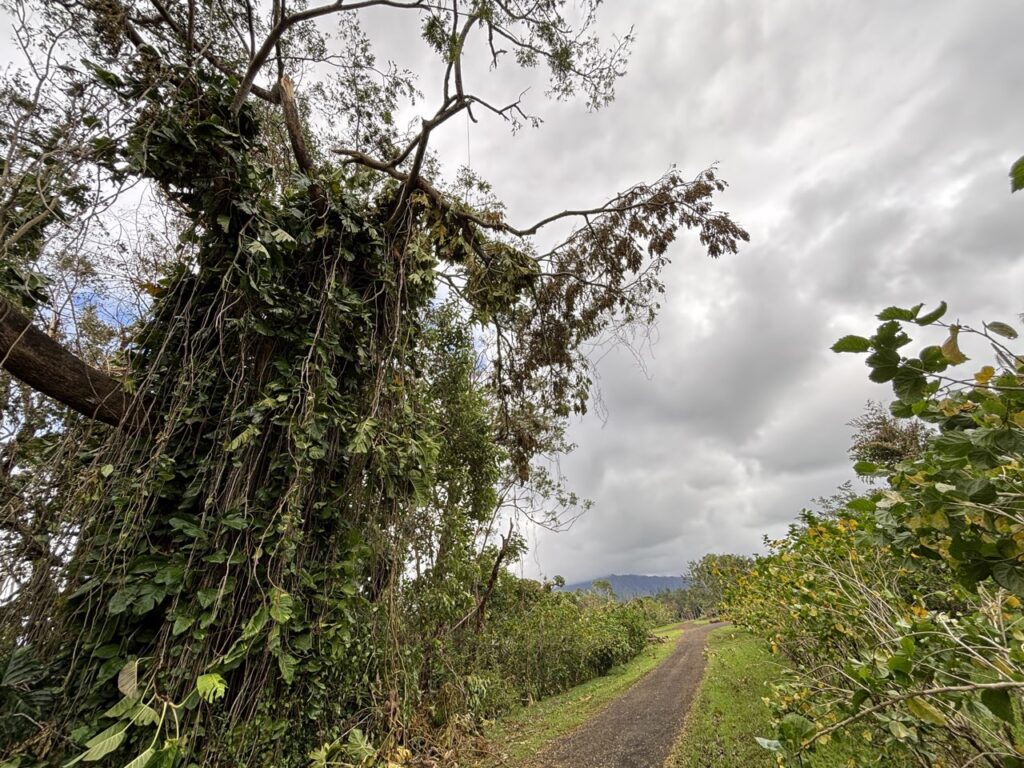
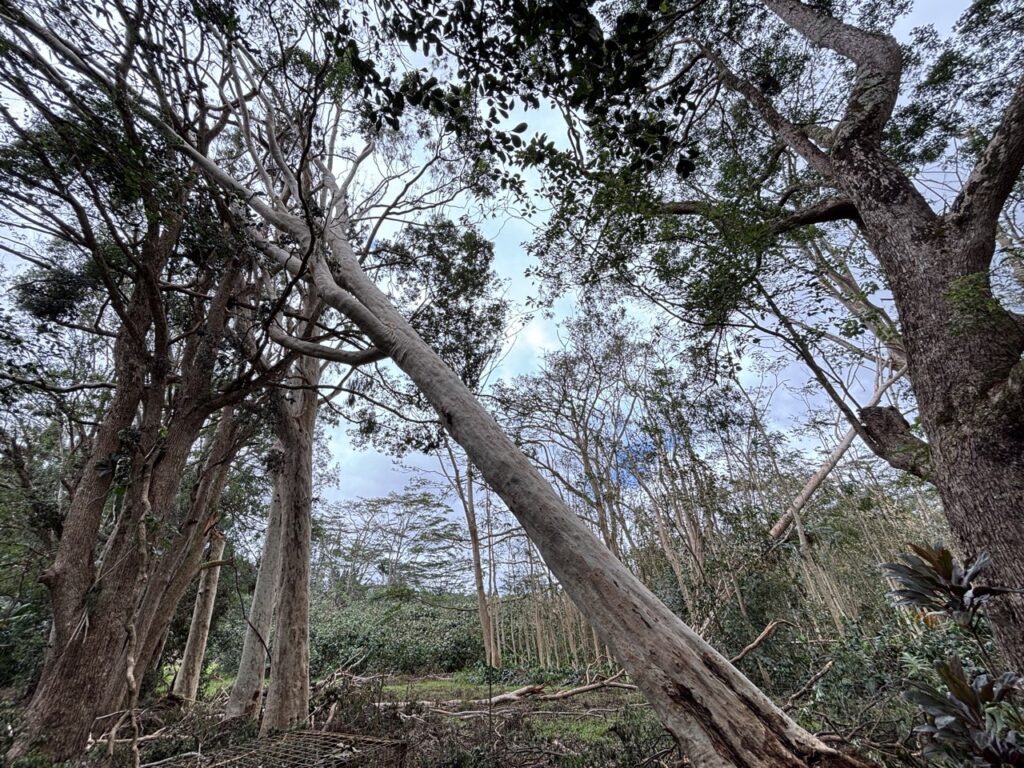
A broken branch over our back road is suspended high up, barely held by the tall tree
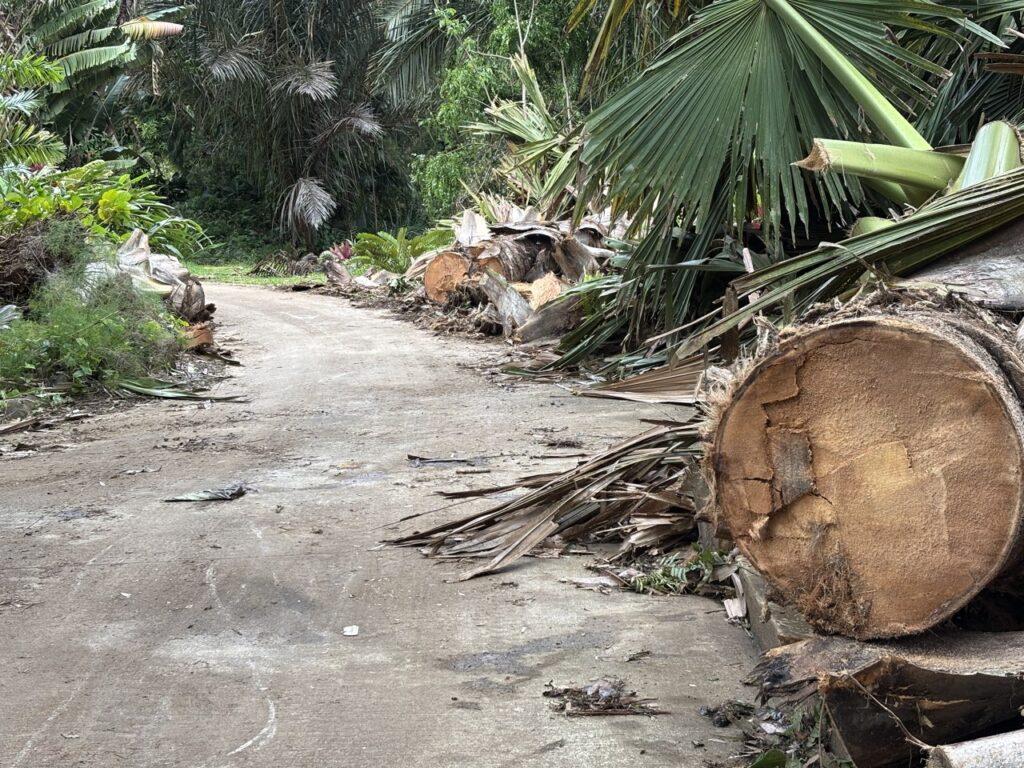
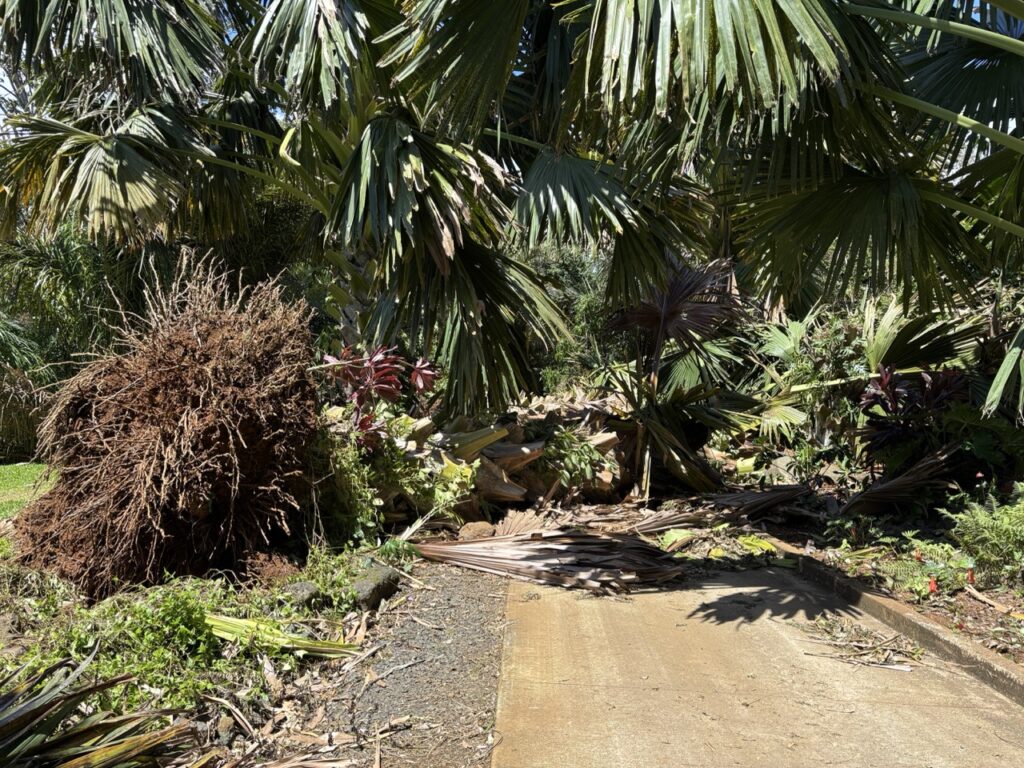
Our monks were able to cut through the talipot palms to open a single narrow lane on the concrete road leading to Iraivan Temple, thereby saving us time to reach that side of the property
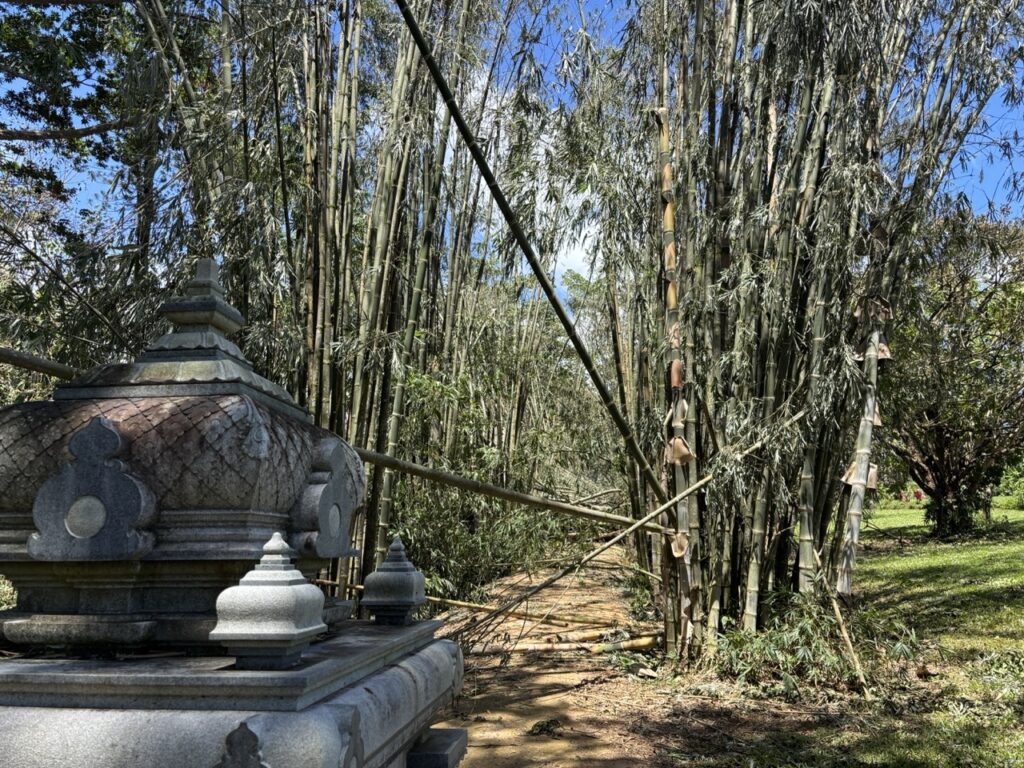
The monks cut through fallen bamboo to open another driving lane near the svayambhulingam mandapam
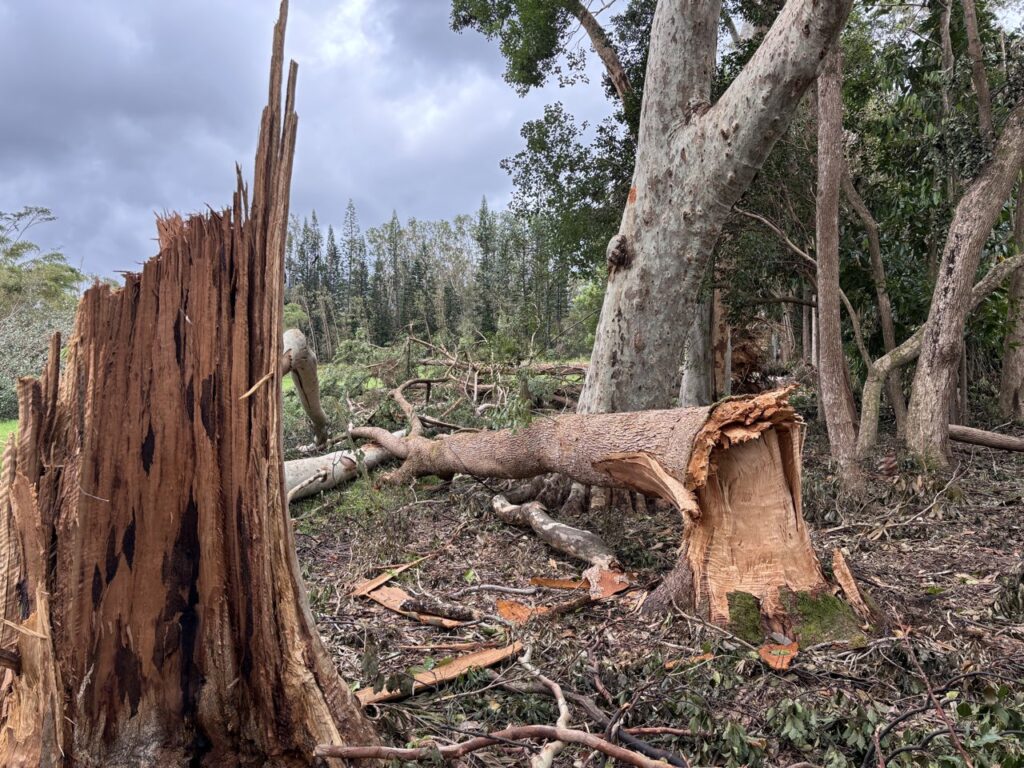
This and the next five photos show current scenes adjacent to and beyond the San Marga Path along our fenced property line that borders the University of Hawaii Agricultural Research Station. Our property line has many tall blue gum and swamp mahogany trees.
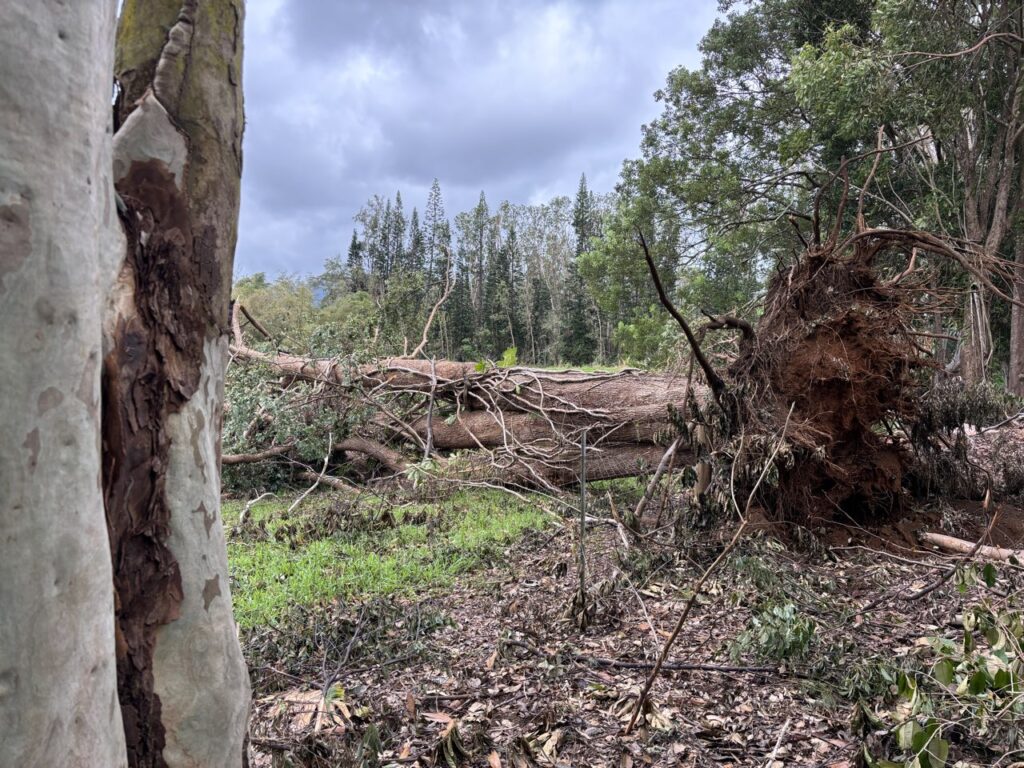
Some of the numerous downed albesia trees on the university side
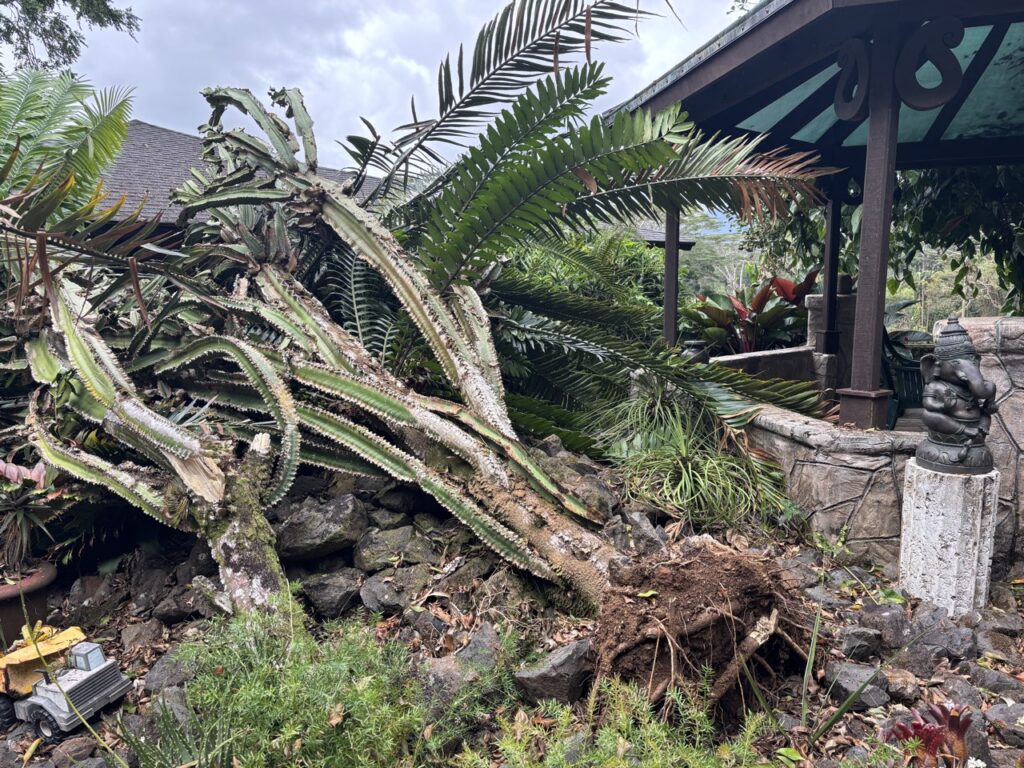
Uprooted sections of the cactus garden outside the Media Studio
Today we view some of the progress in opening up various access points and driving lanes on the grounds, along with images of what happened along the property border beyond Iraivan Temple and adjacent to San Marga Path, where we have many tall trees along the fenceline.
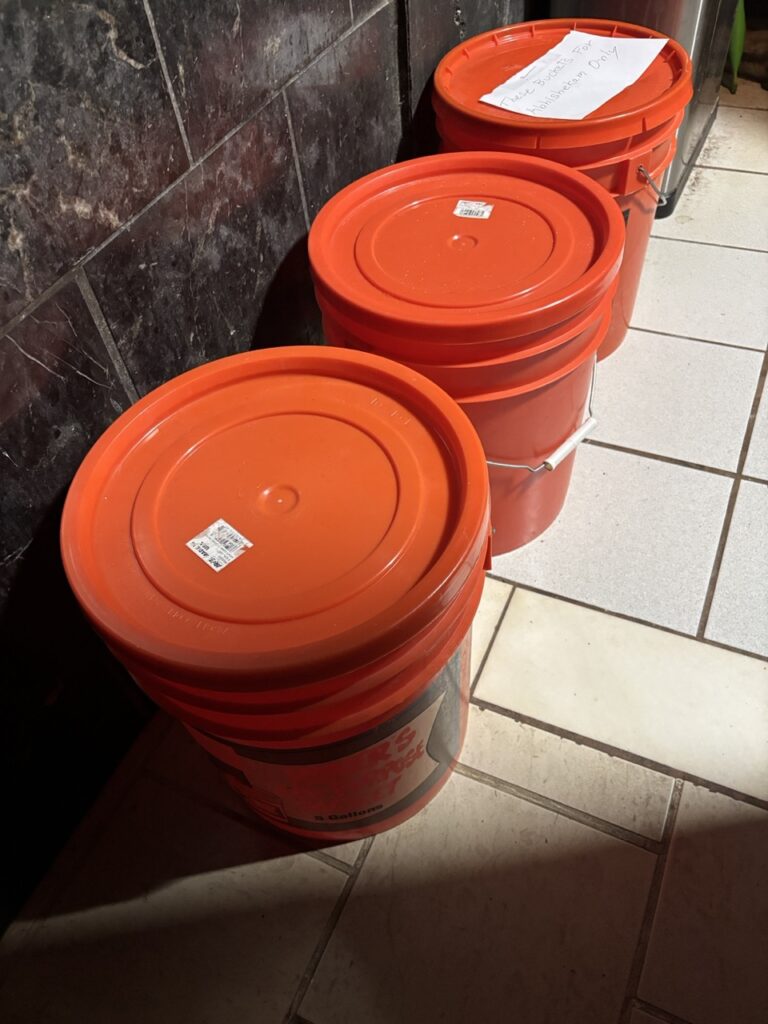
Water to use sparingly for abhishekam and cleaning puja tray in Kadavul Temple. Another set of buckets are brought to Iraivan Temple.
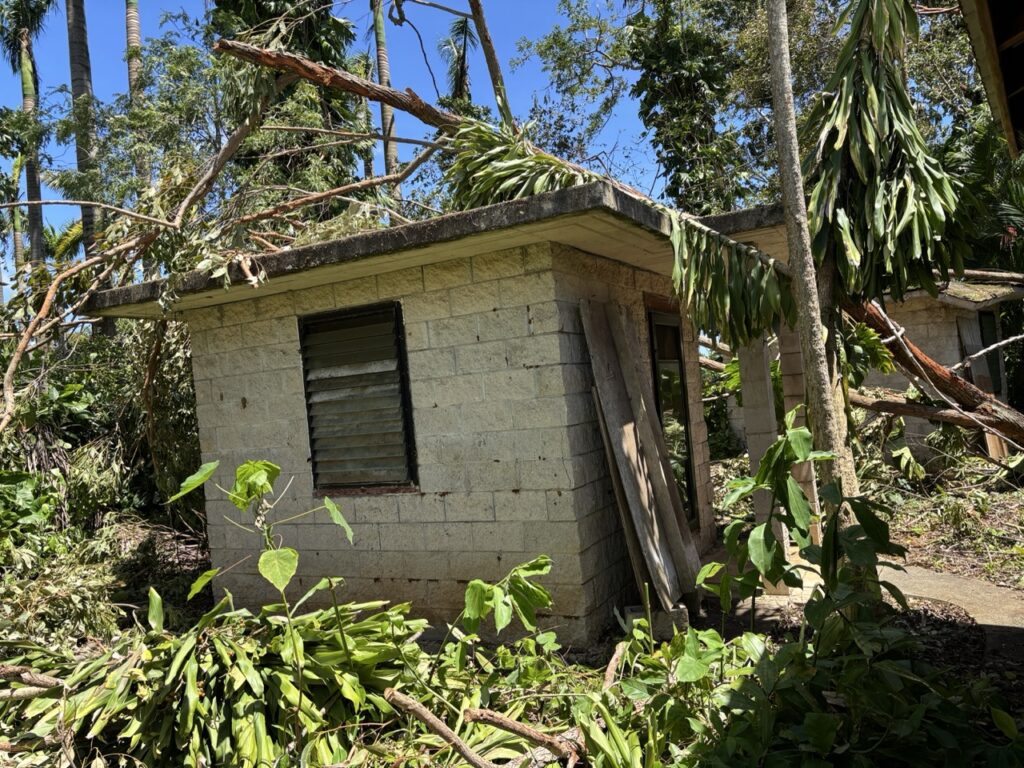
Example of trees landing on our guhas (monks’ sleeping huts)
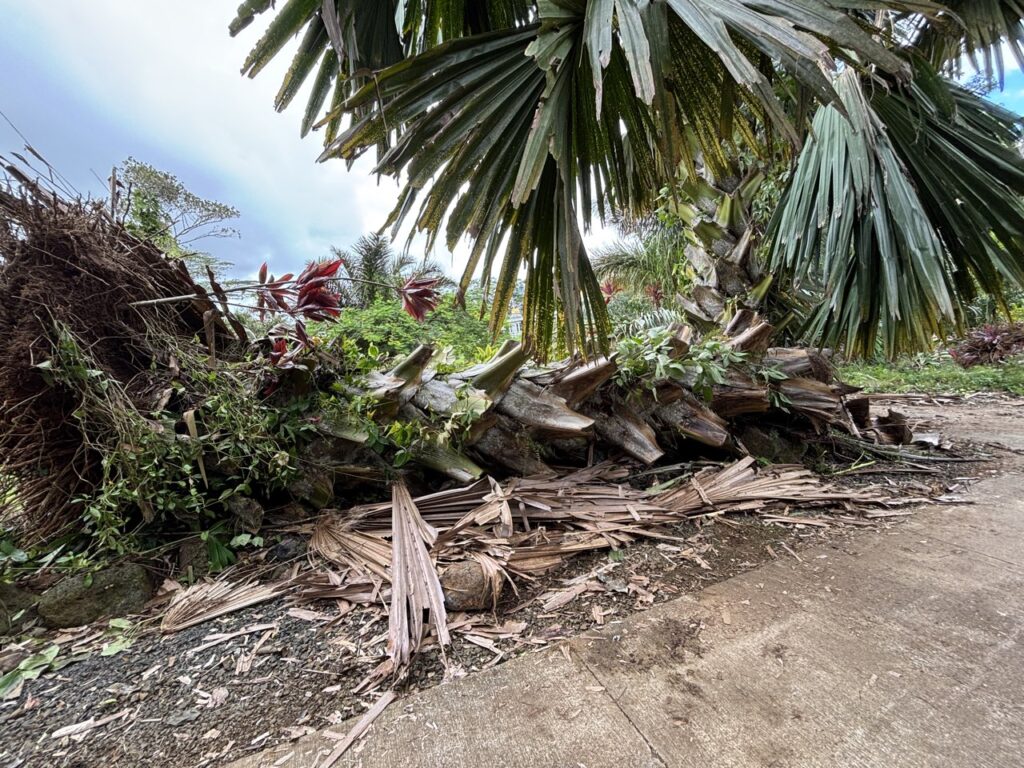
Two large-diameter uprooted talipot palm trees completely blocking the main road to Iraivan Temple
Uprooted large lychee tree nearby the flagpole (except there is no longer a flag; it was ripped off and disappeared)
Many downed branches from swamp mahogany trees
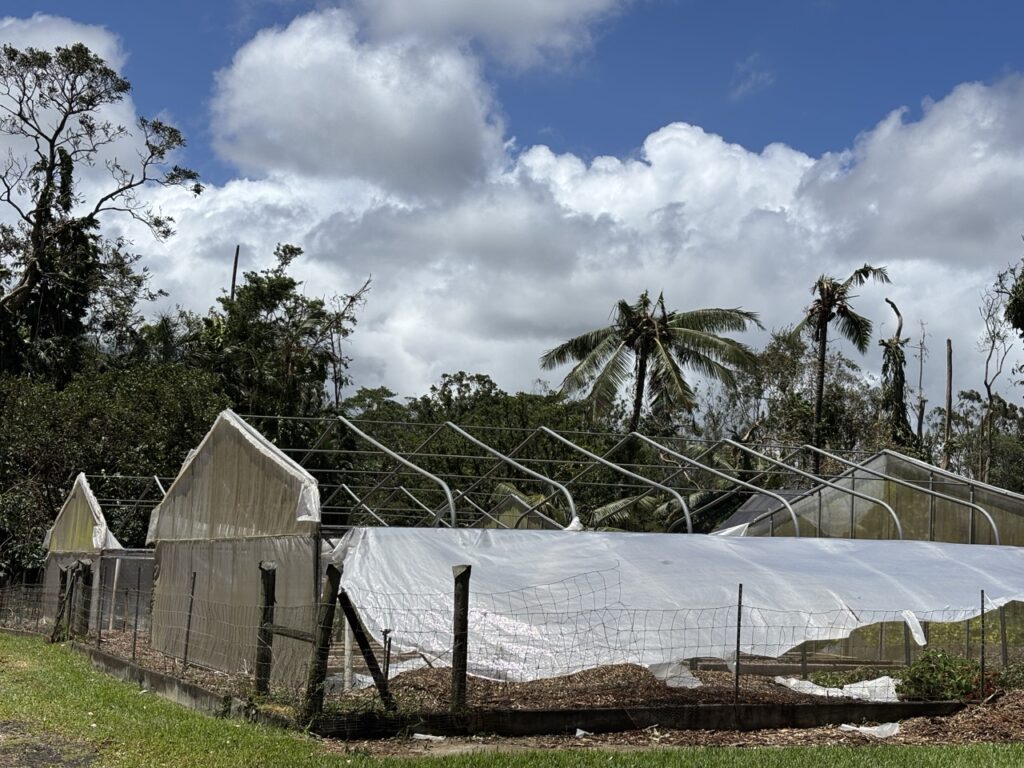
Greenhouse covers blown off in Annapurna vegetable garden
Another downed lychee tree next to Annapoorna Garden
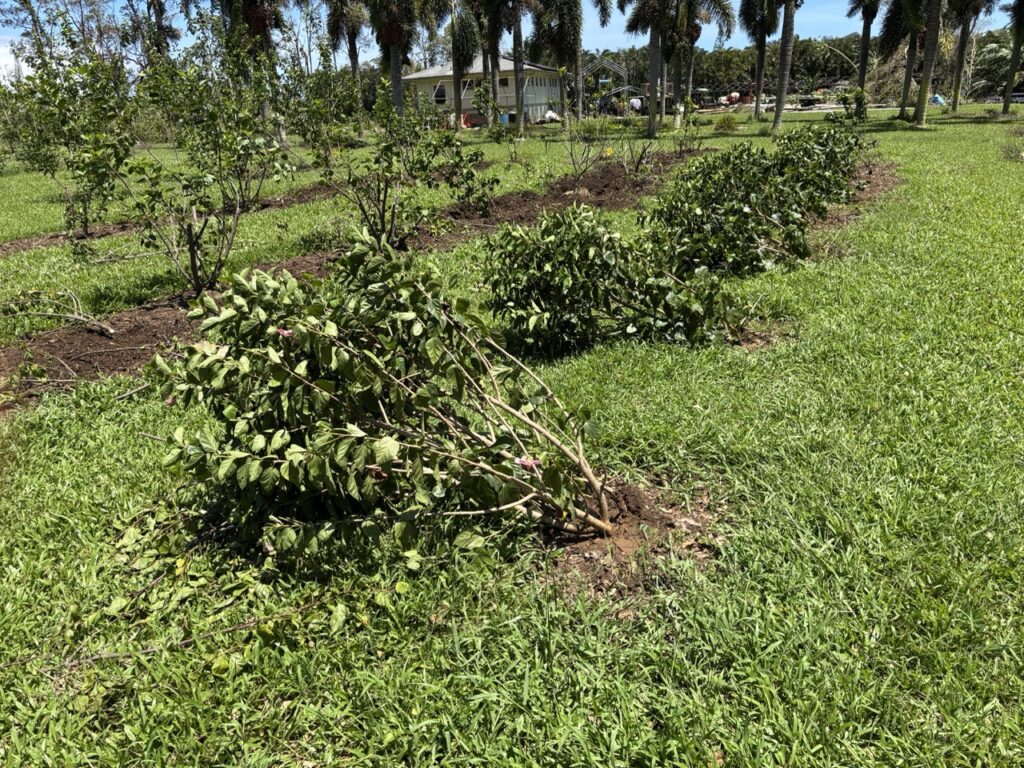
Many hibiscus plants providing flowers for the temples were blown over but the roots are fortunately still in the ground.
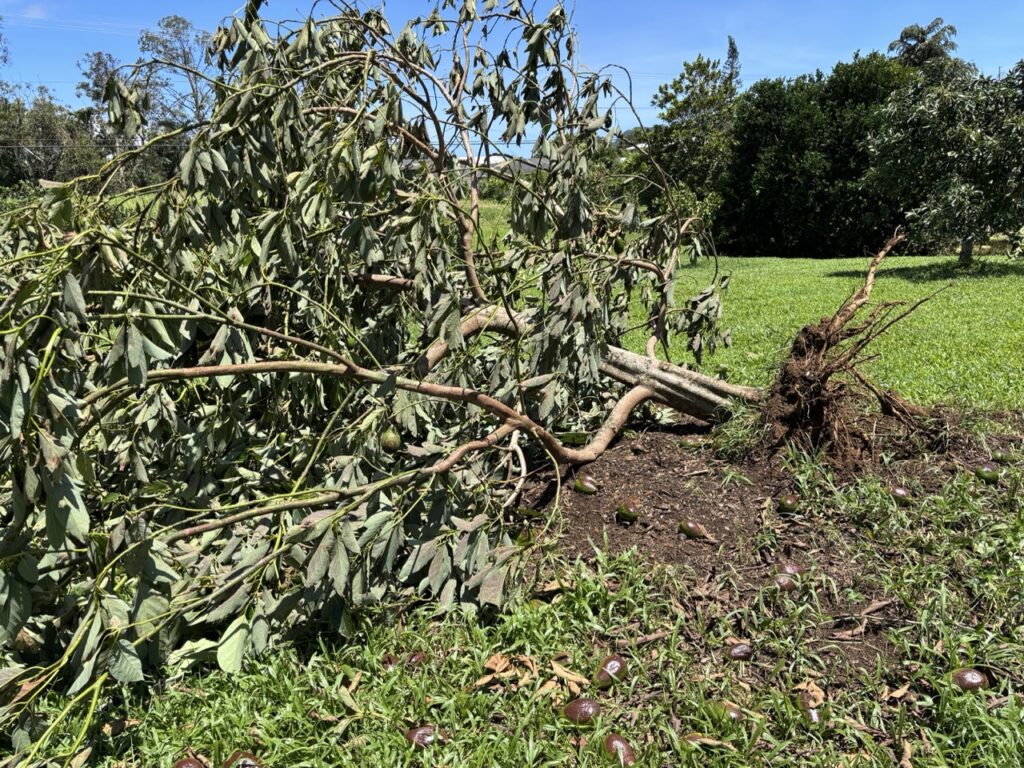
Many uprooted avocado trees in our fruit orchard
Large downed tree across the San Marga path, just before Muruga Hill
View from San Marga path small Ganesha shrine towards the rudraksha grove, with massive uprooted bamboo clumps over the path in the distance
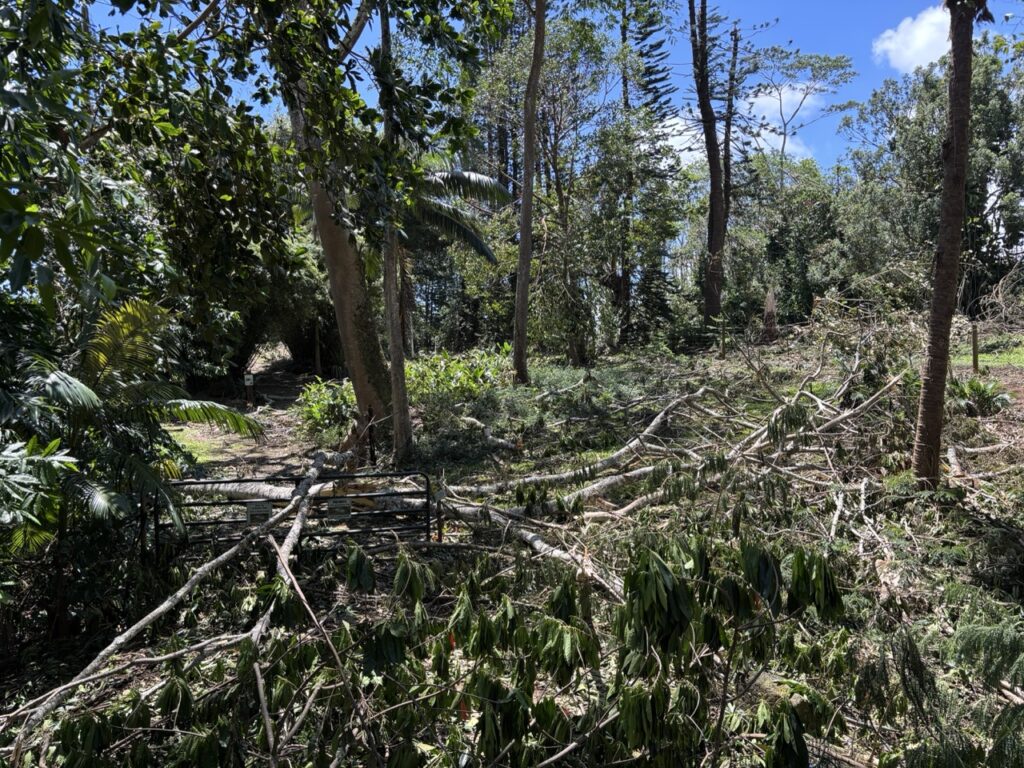
Branches strewn throughout the rudraksha grove
Electric company truck inspecting power lines near our property
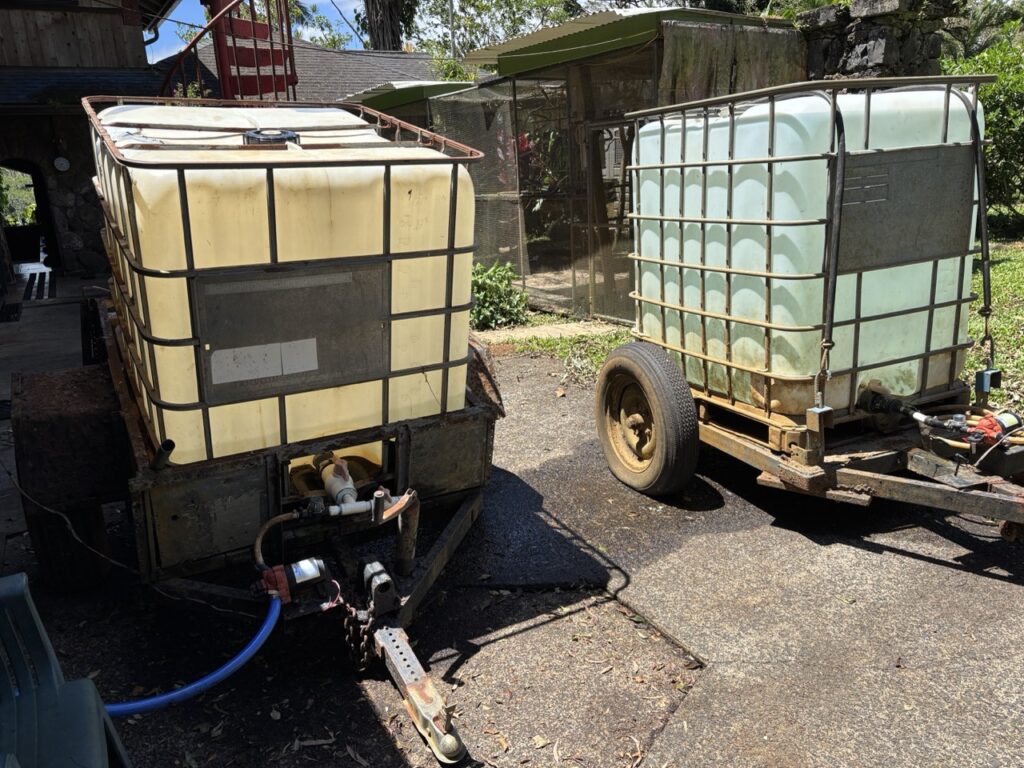
We embarked an another very clear, sunny, hot day as is the typical weather for a while after a hurricane. Much coordination occurred with mobile washing and cooking water supply totes from our rain-catchment tank, including bring a trailer tank of water over to the house where our temple priest and cook stay. Our chainsaws revved up again to clear more small trees from pathways. Additional trees had fallen since the night of the hurricane, weakened by the winds. We hear that the airport has reopened, though running on generator power. The electric company and county department of water are working hard to assess damages and start to restore power and clean water supply to the island. Portable generators have to be staged in various locations to pump water from tanks while the power is still out. Extra tree trimming contractors were brought to Kauai before the hurricane struck, so enough teams could be ready to fan across the island in the aftermath. Around 15-20 souls braved their limited living conditions to come up and pray in Kadavul Temple, some with suitcases in hand. One local devotee said he was woken up at night in his house during the hurricane by a tree branch piercing through the roof and ceiling of his bedroom.
Photos above include a larger sample of downed trees around the property, giving a sense of the tremendous cleanup process ahead of us.
Below is a video showing some of the island damage, mostly on the south side coast from the storm surge.
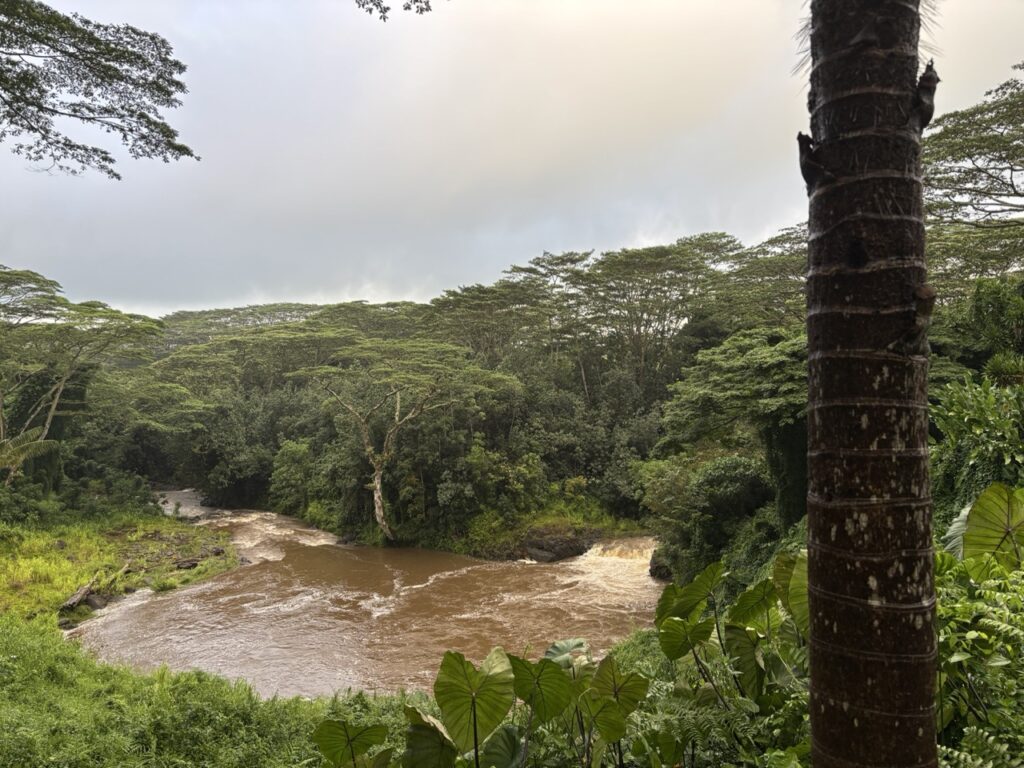
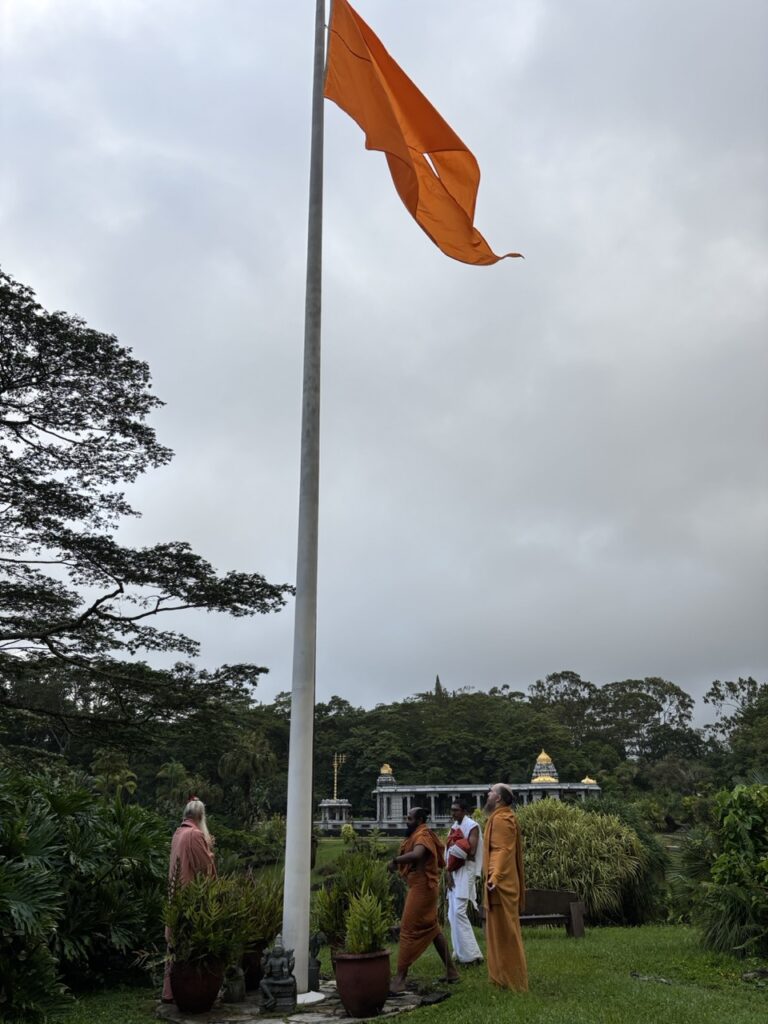
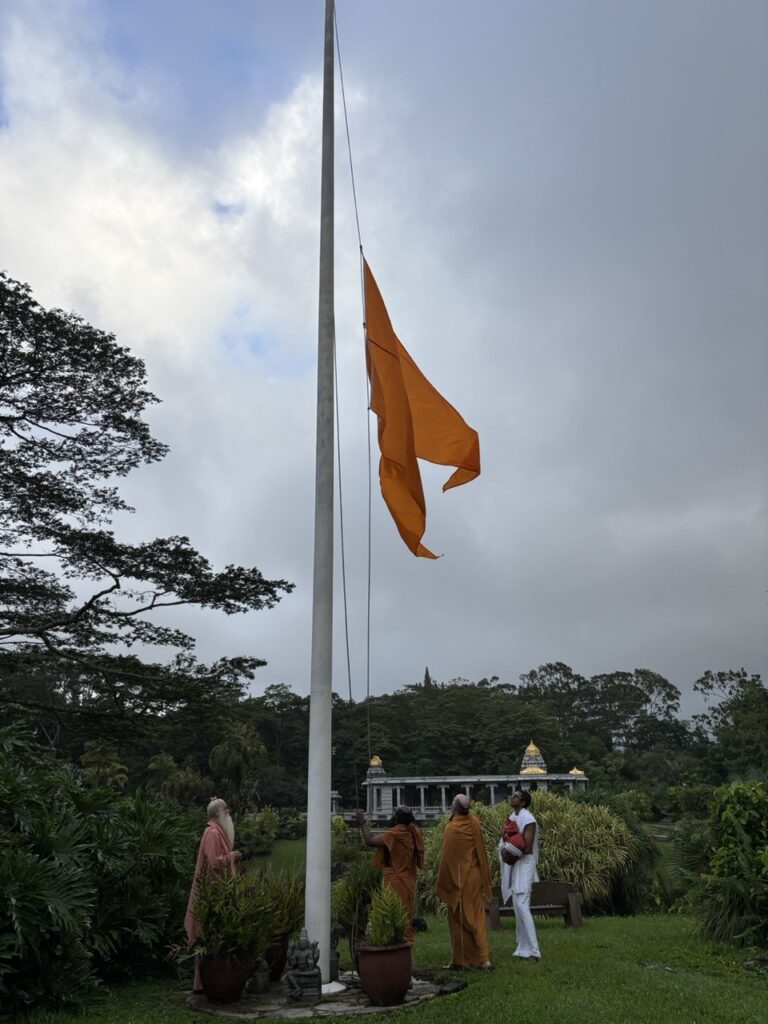
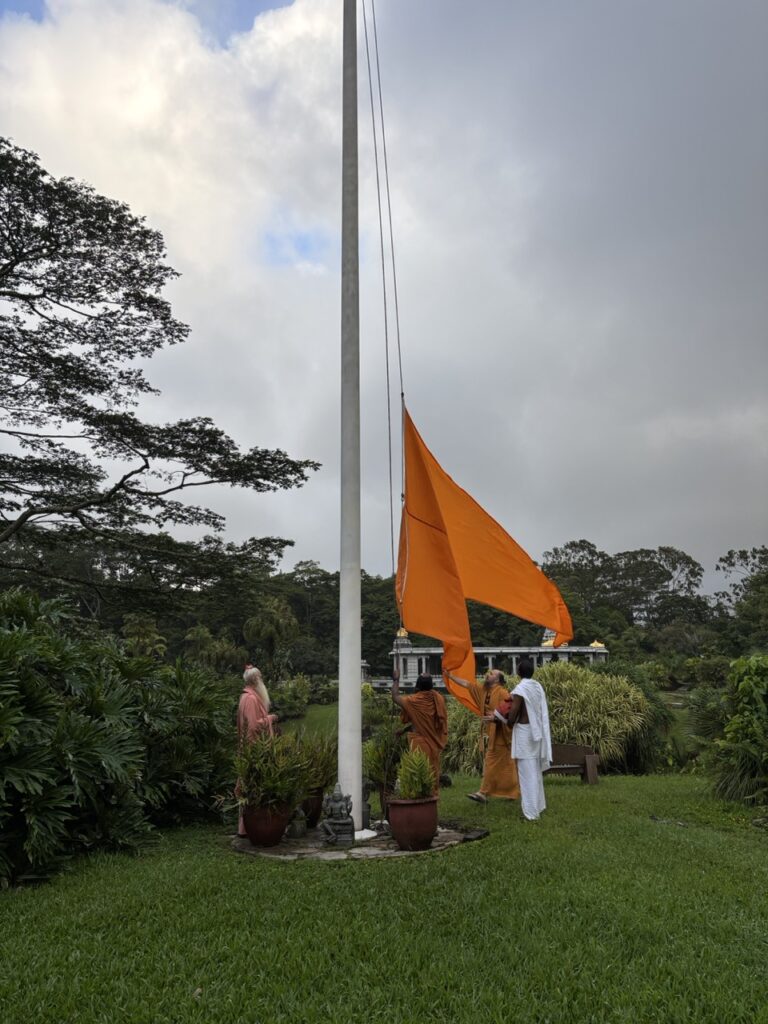
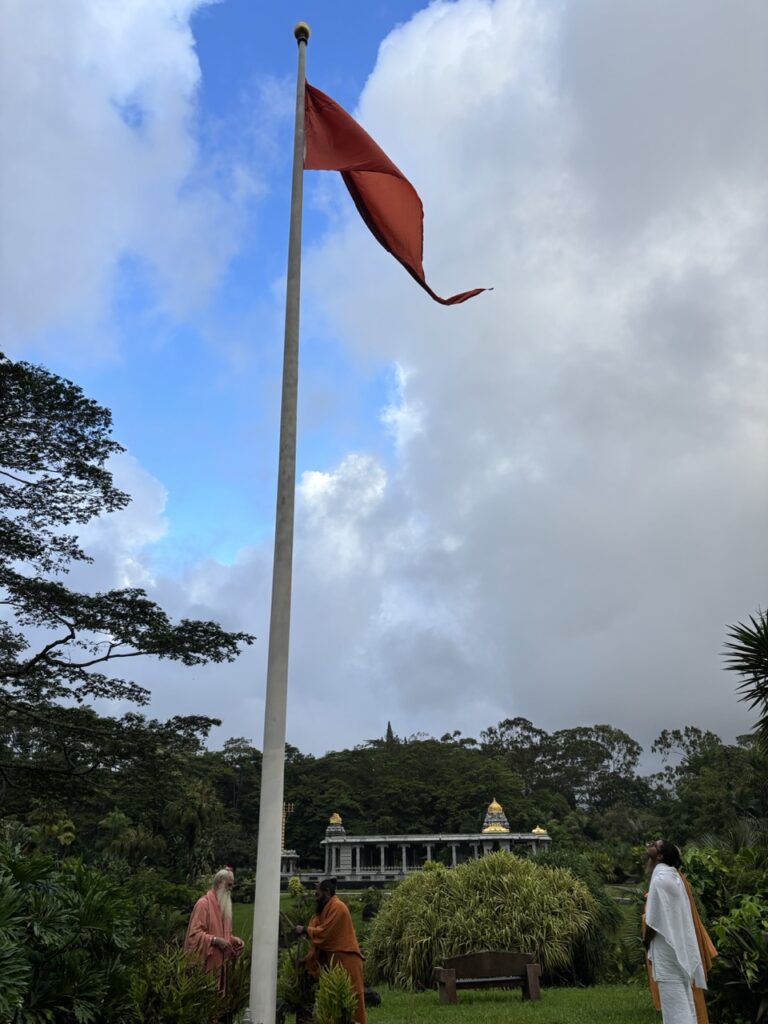
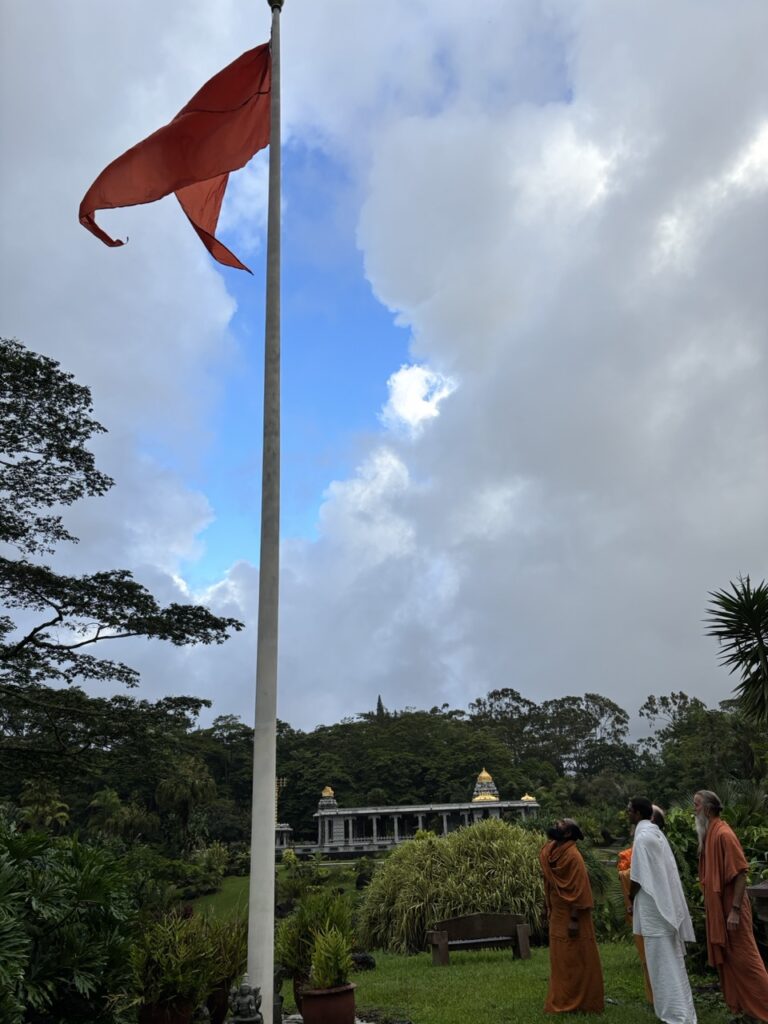
As Mother Nature quieted down in the aftermath of the Lala tropical storm, small patches of blue sky began to peek through still-dense-but-fast-moving clouds as we enjoyed another Gurudeva Chitra nakshatra padapuja in the early morning. The puja coincided with the ending of our restful Sadhu Paksha period and entering the season of Jivana Ritau. Hence a small parade then occurred to change the flag. Sometimes there is little wind and the flag doesn’t unfurl as we change it, but the tropical storm leftovers brought a majestic unfurling in multiple directions.
Excerpts from Saiva Dharma Shastras about the this time of year: “Beginning with Hindu New Year in mid-April, three seasons of the year divide our activities into three great needs of humankind the learning of scripture in the first season, Nartana Ritau; the living of culture in the second season, Jivana Ritau; and the meditating on Siva in the third season, Moksha Ritau. Thus we are constantly reminded that our life is Siva’s life and our path to Him is through study, sadhana and realization. In ritau one, we teach the philosophy; in ritau two, we teach the culture; and in ritau three, we teach meditation.
During Jivana Ritau, the rainy season, from mid-August to mid-December,Living with Siva: Hinduism’s Contemporary Cultureis the primary text. The key word of this season is work. The colors are rust, copper-maroon and all shades of red rust for earthy preservation, copper-maroon for fulfillment and red for physical energy. The Aadheenam’s flag pole flies the rust-colored dhvaja, symbolizing environmental care. Copper-maroon and all shades of red adorn our smaller flags. This is the season of honoring and showing appreciation for those in the vanaprastha ashrama, life’s elder advisor stage. The focus is on preserving what has been created, manifesting goals and fulfilling plans made in the past. Inwardly the emphasis is on direct cognition and caring for the practical details of the external world. Practicality is a word much used this season.”
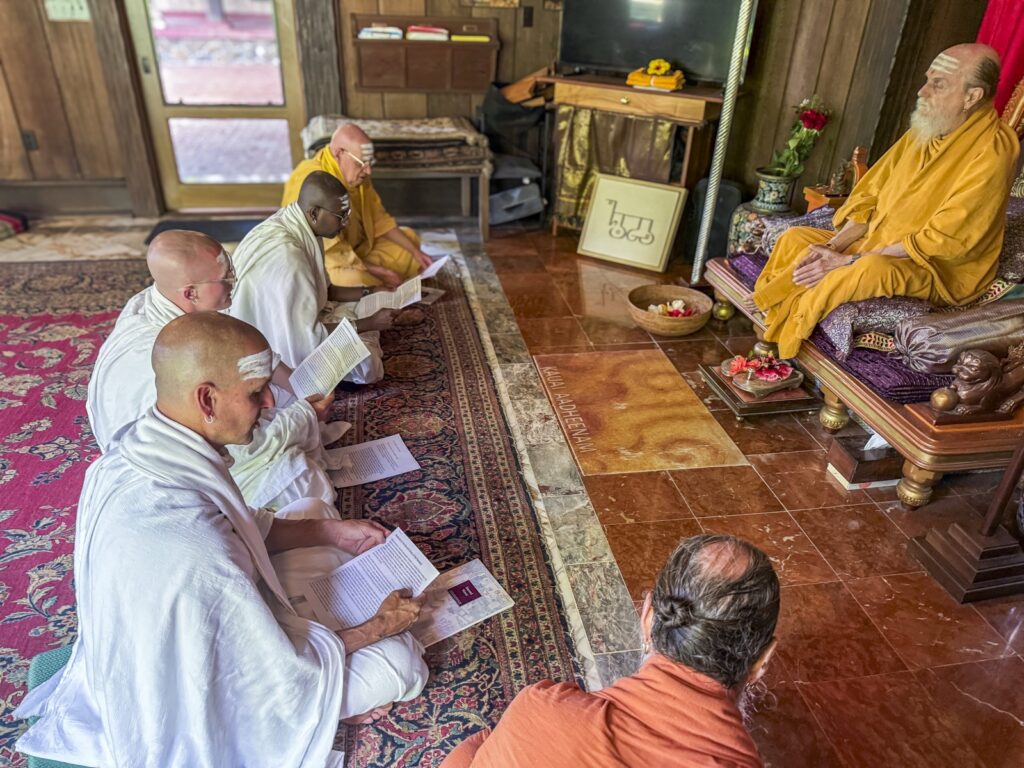
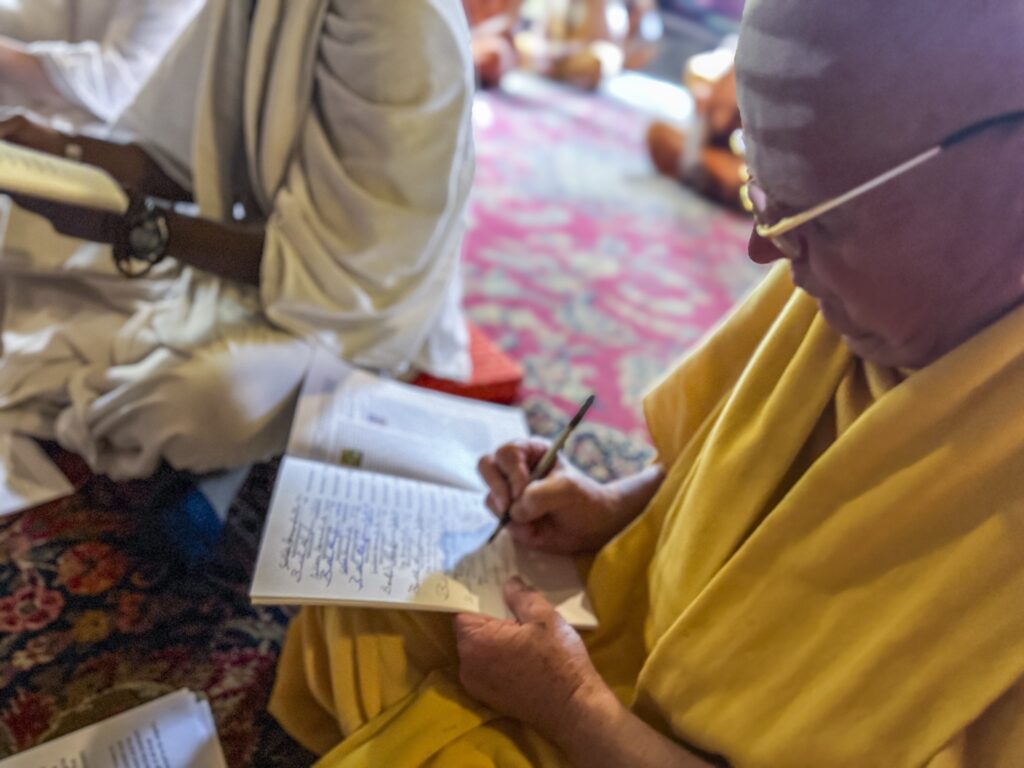
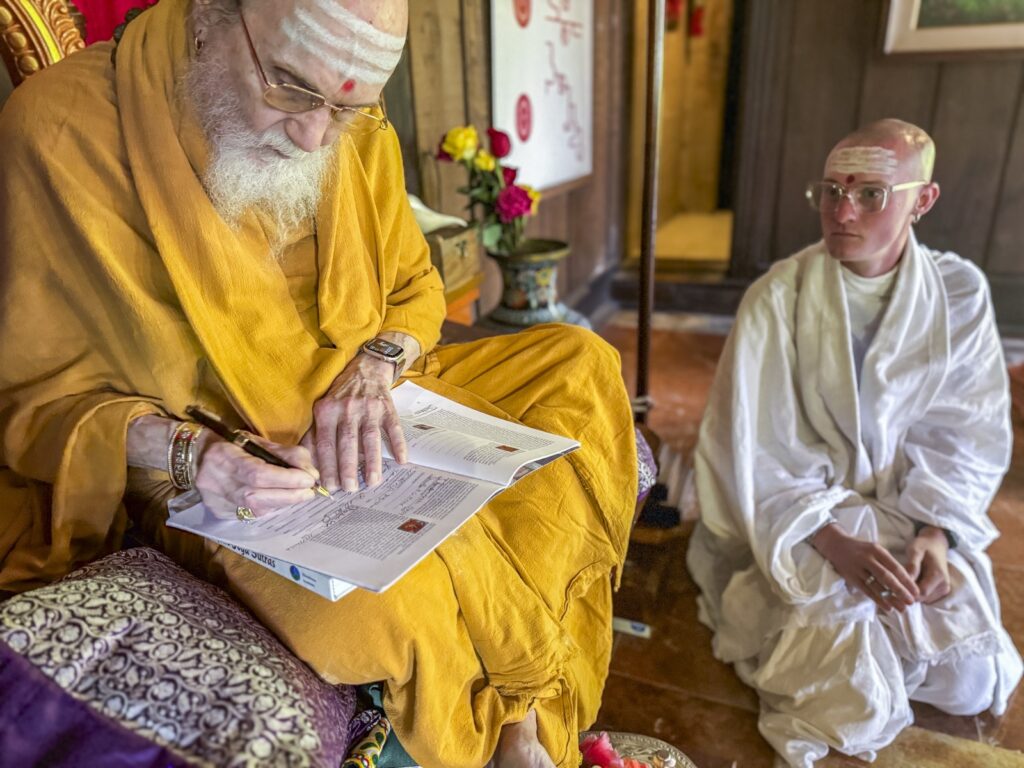
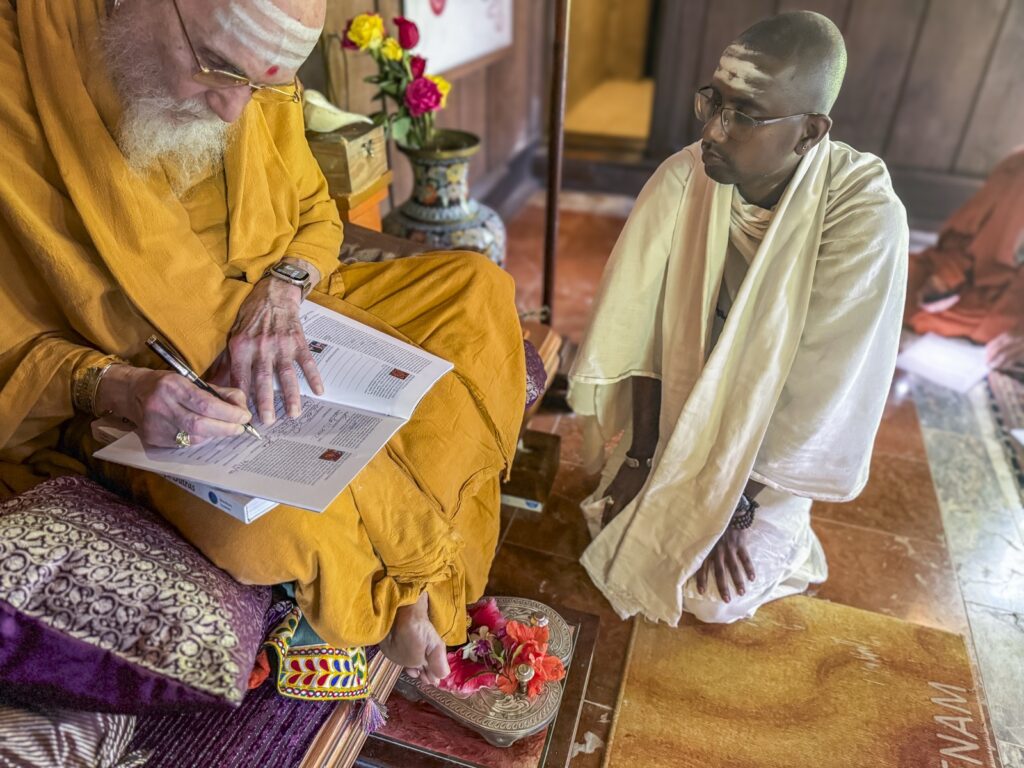
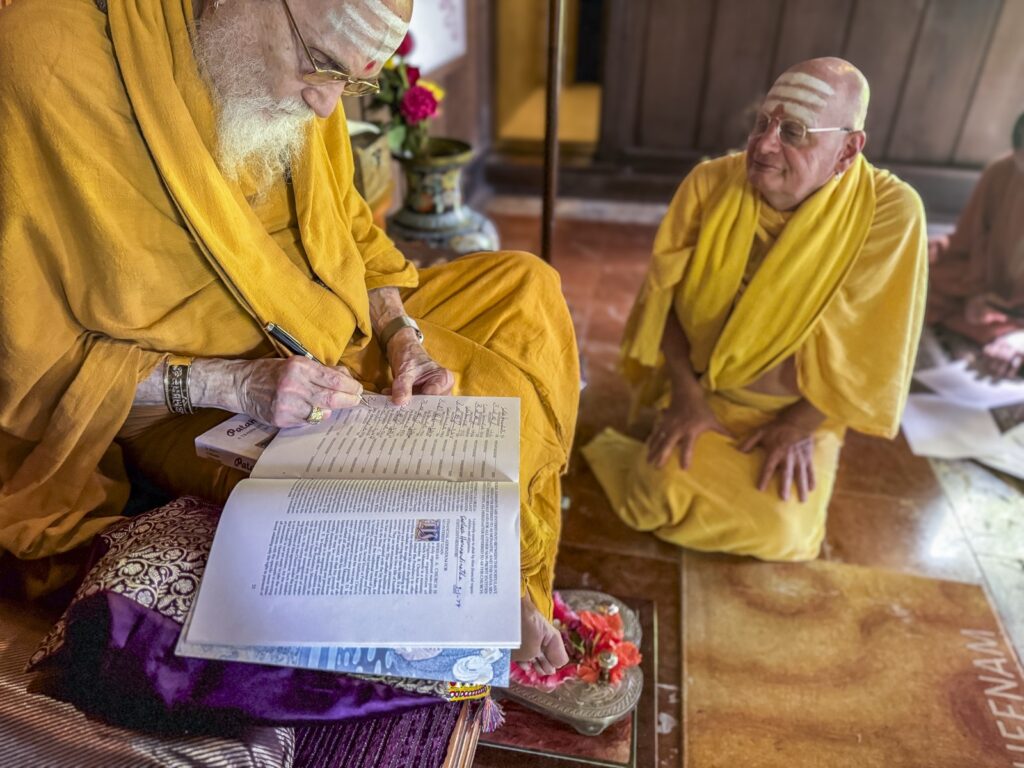
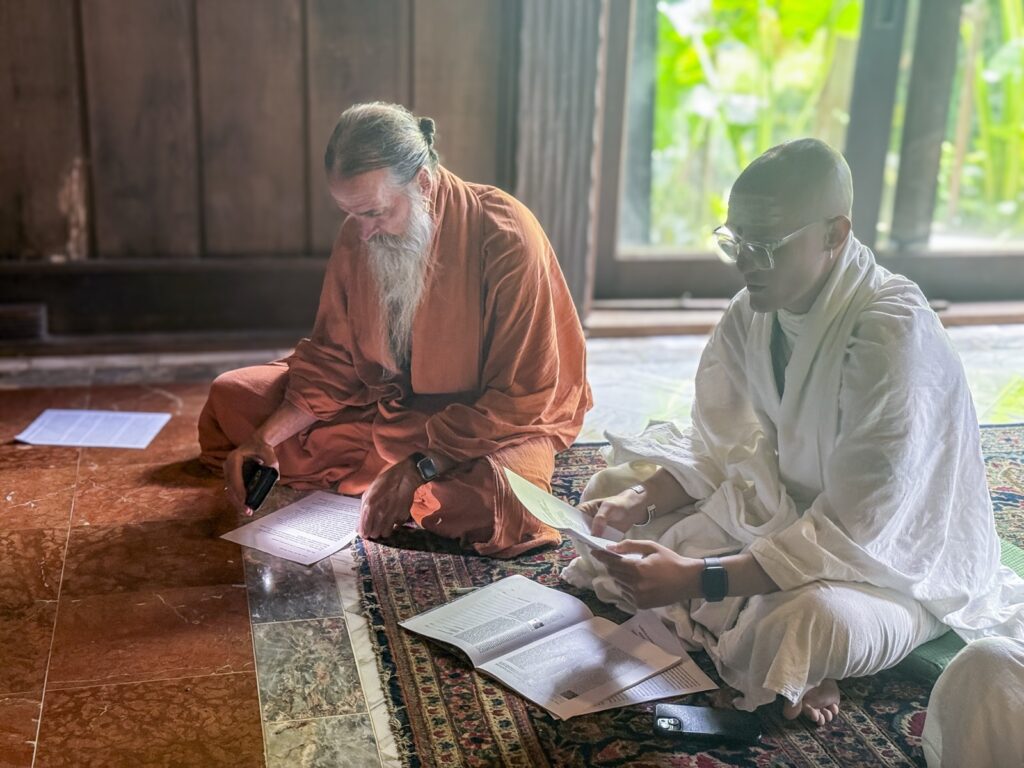
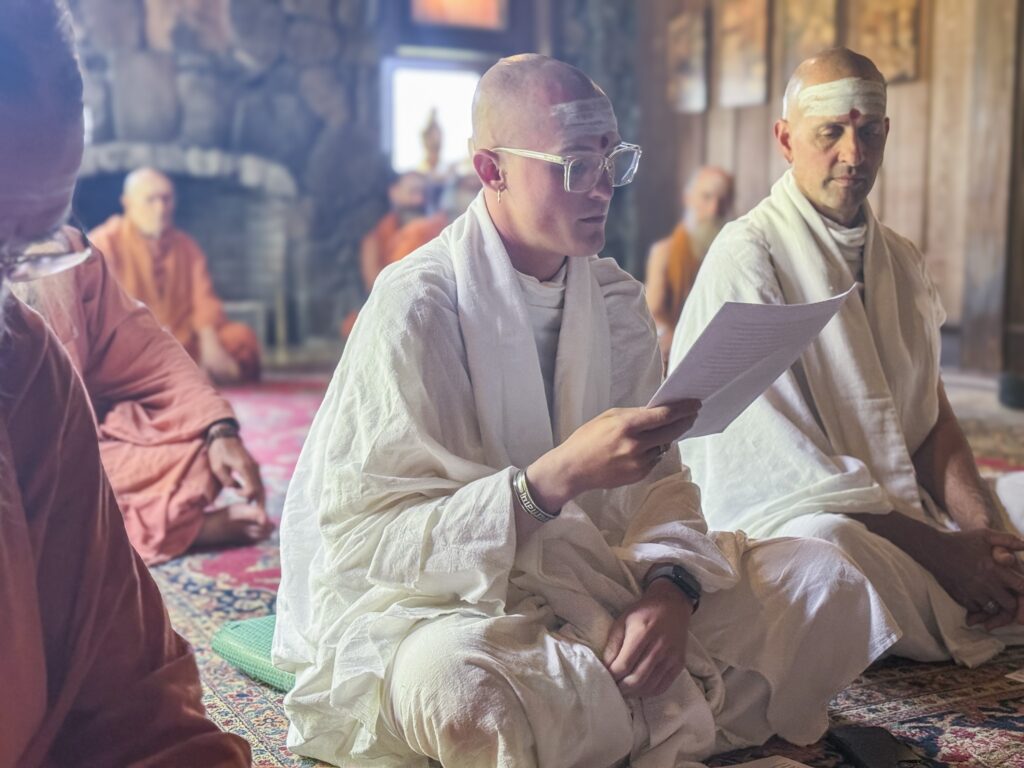
Each read through their vows before signing them again for the coming years
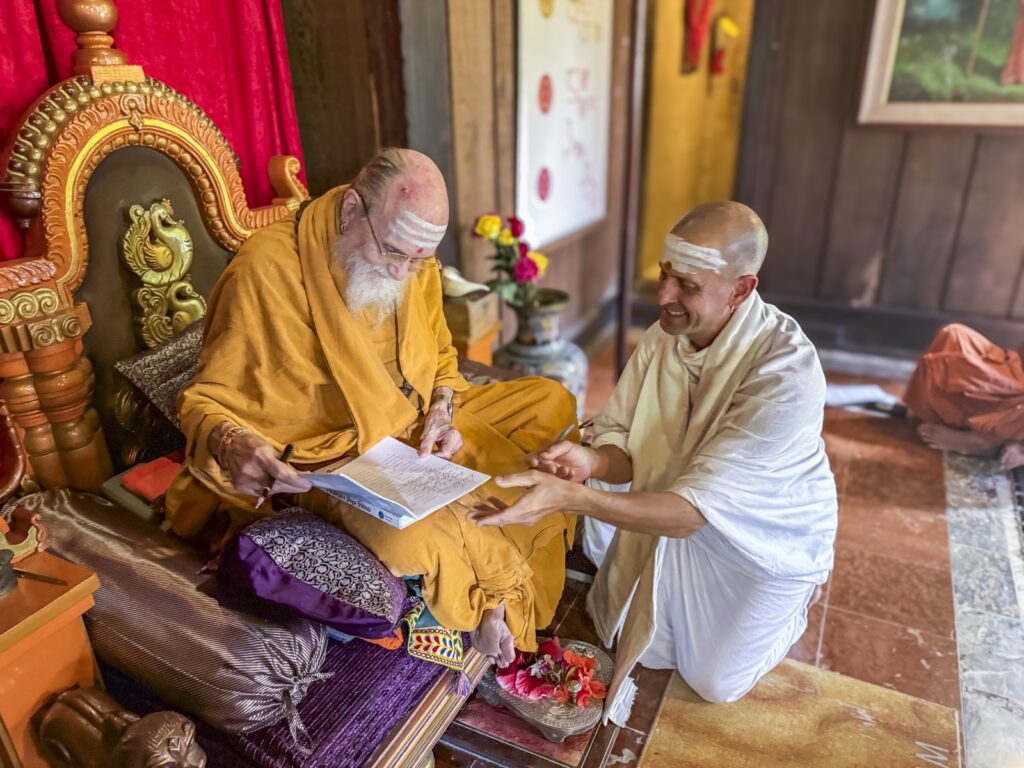
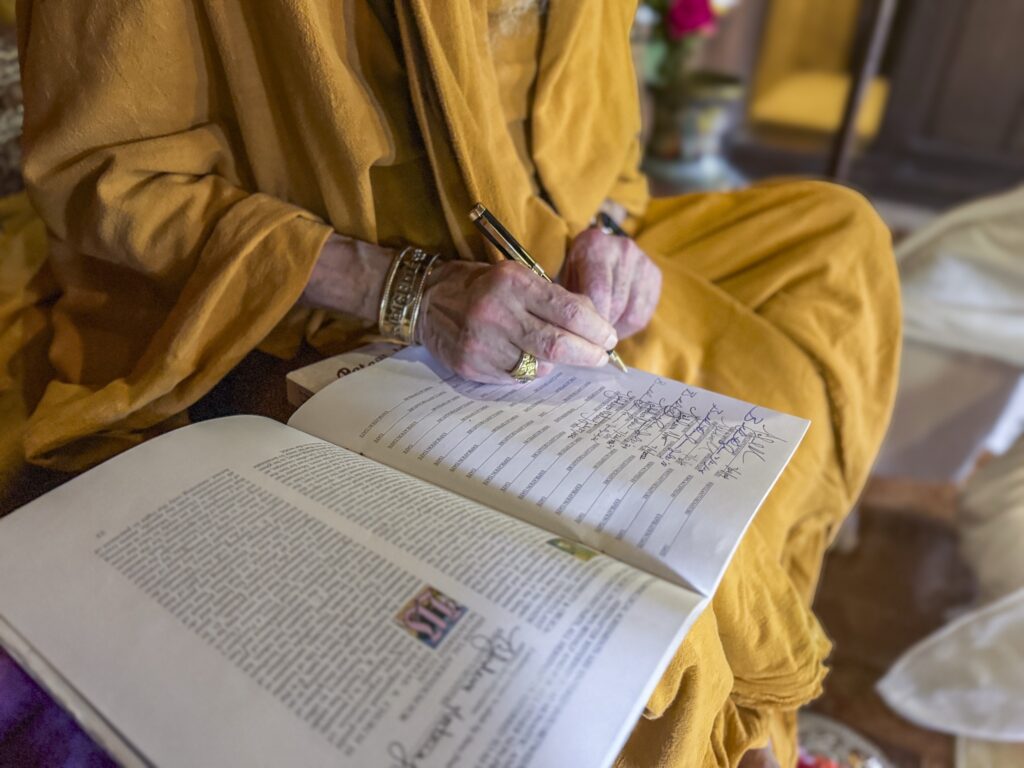
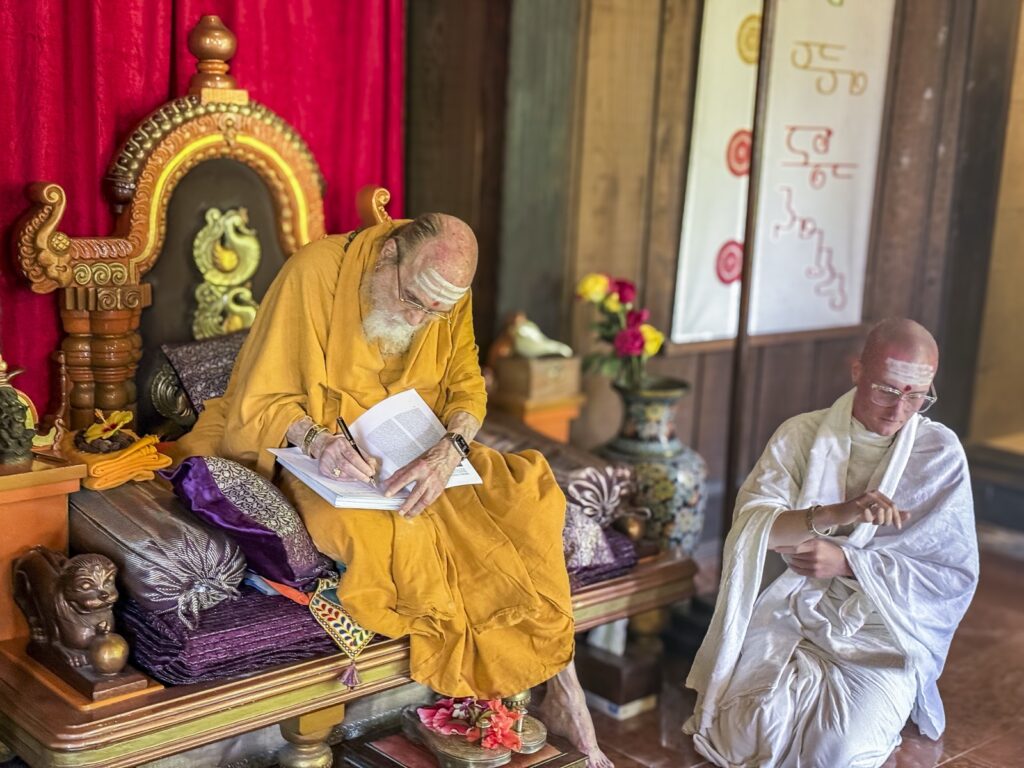
Next Satguru appends his signature
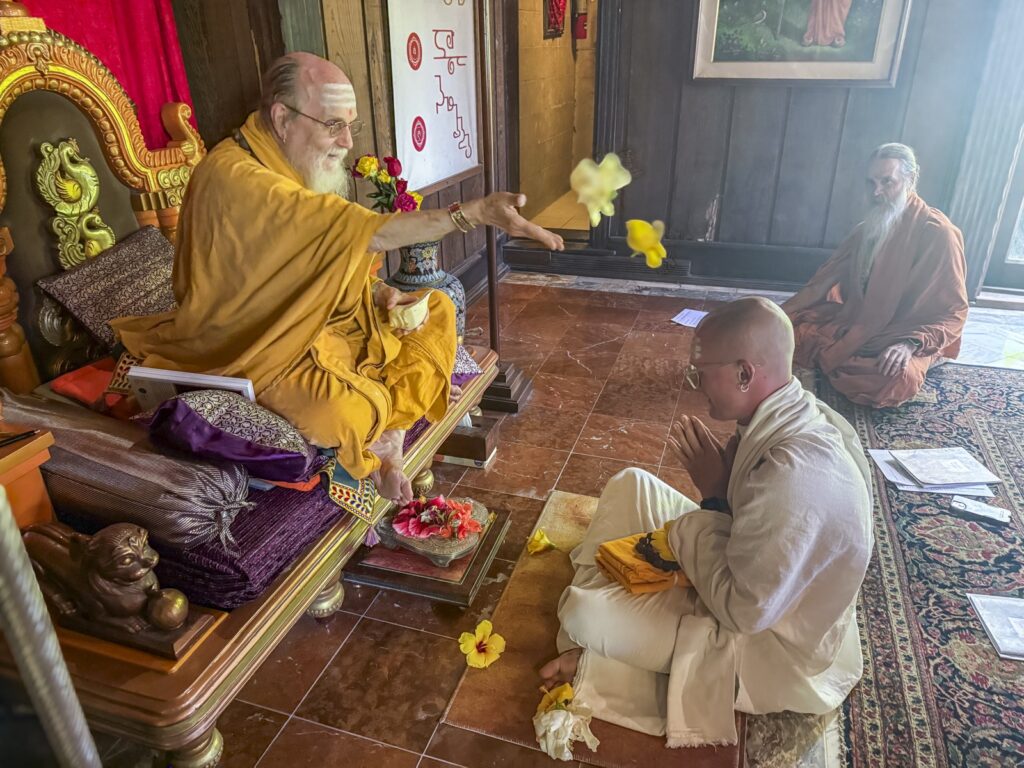
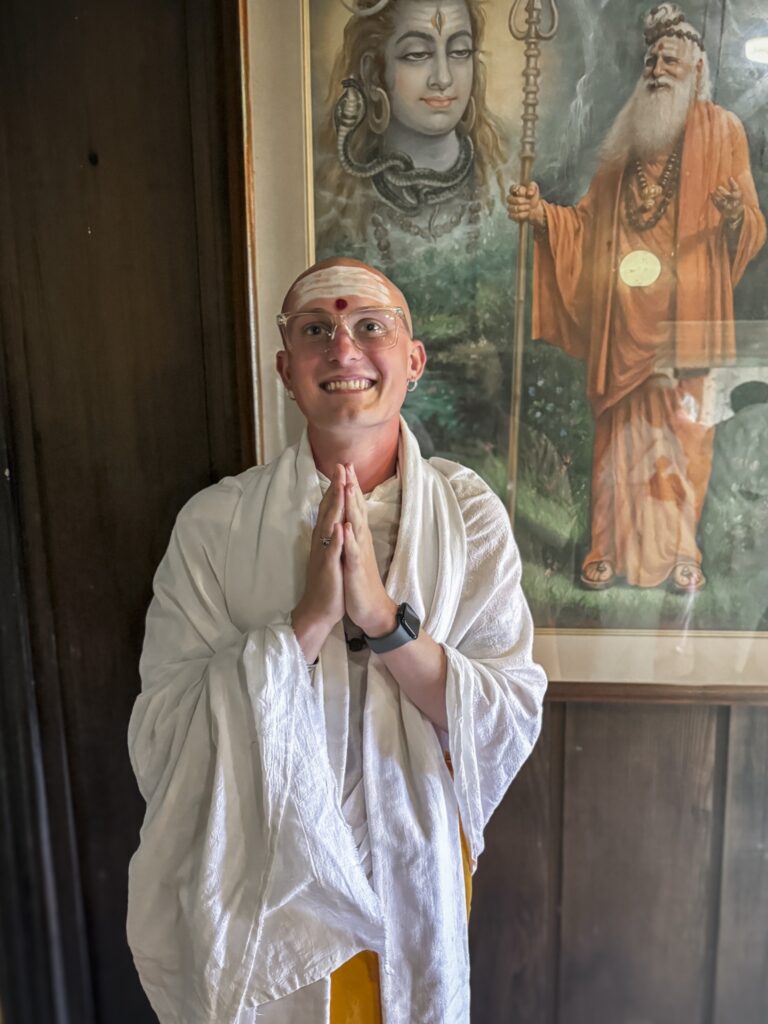
Also today Shankaranatha becomes a Natyam
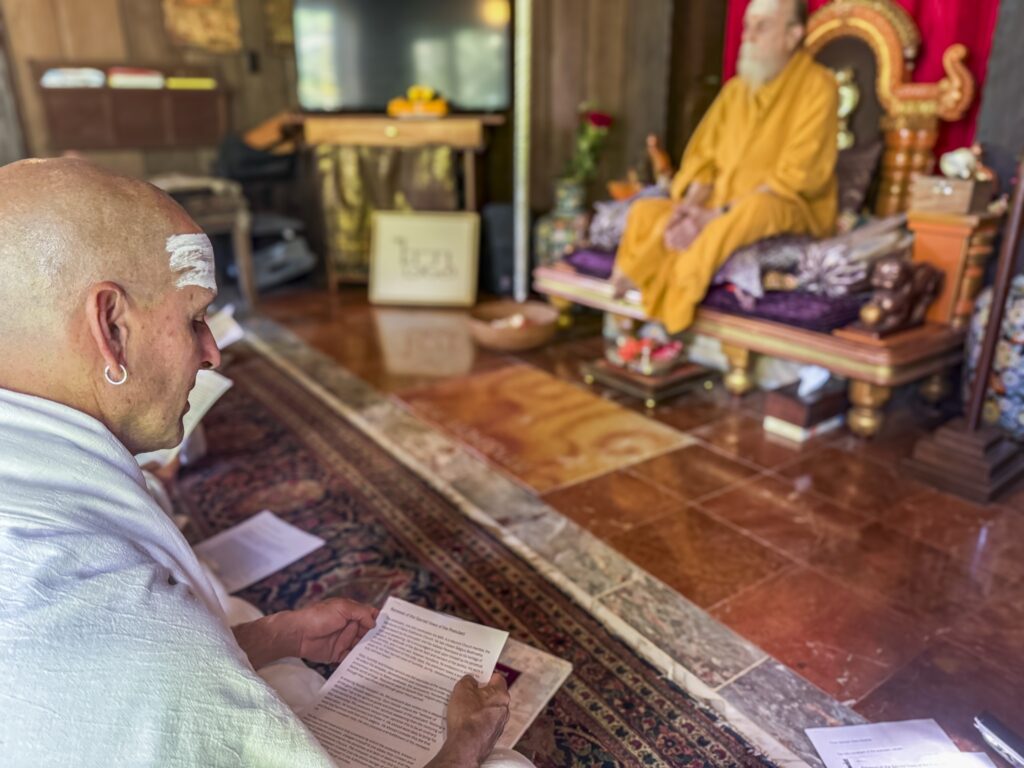
He reads the vow addendum
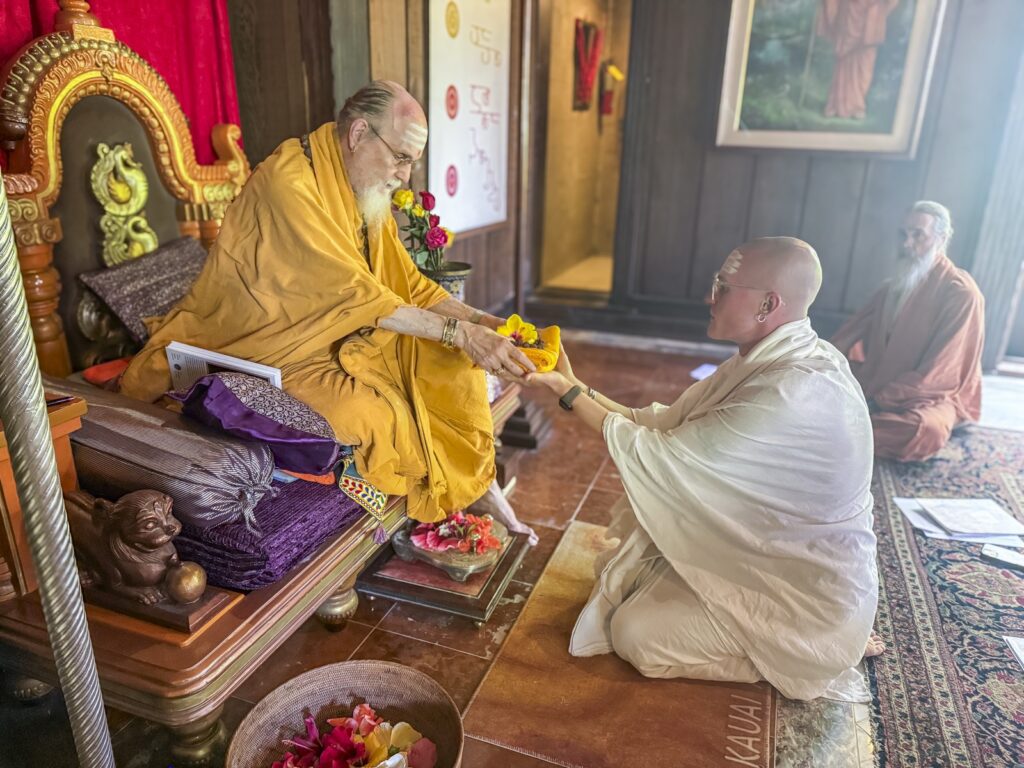
Natyam receives his yellow sashes.
This is the first stage of tapas, leading towards the vows of the yogi tapasvin in the coming years
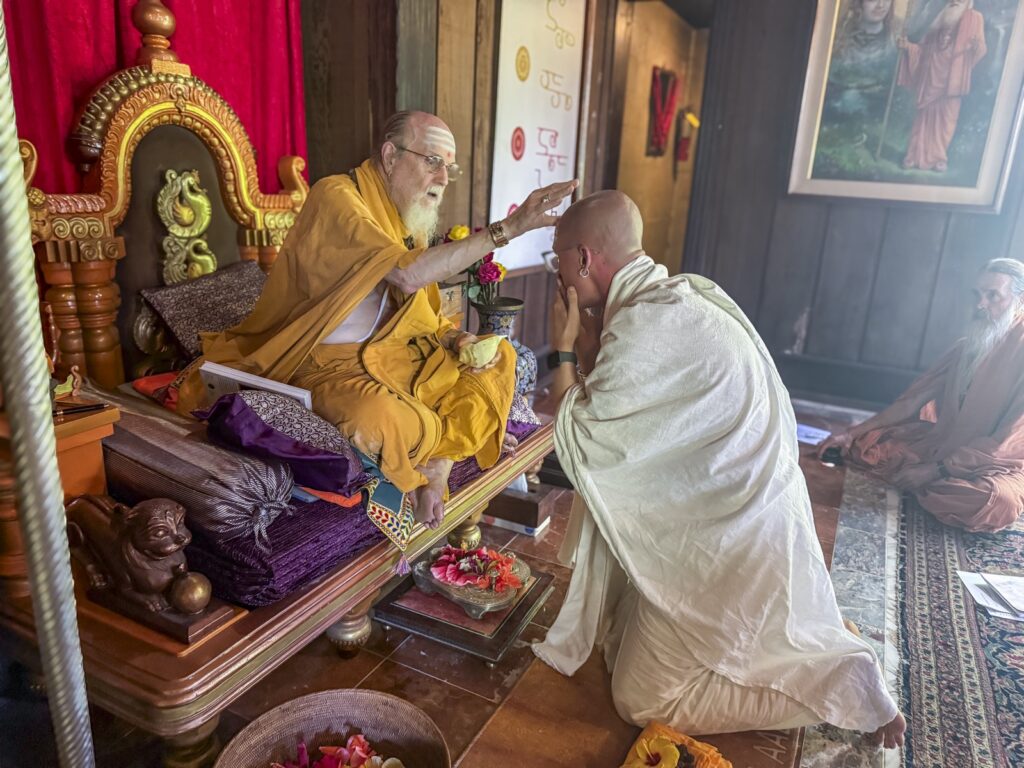
Blessings from Satguru for his intensified disciplines
Aum Namah Sivaya
Aum Namah Sivaya
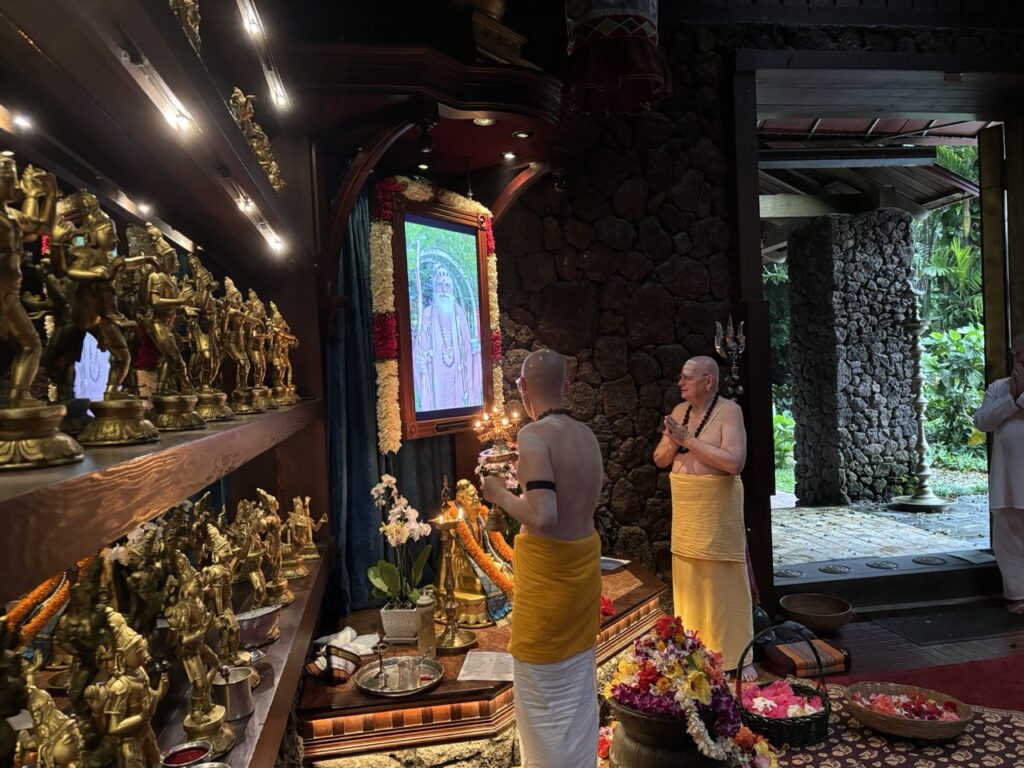
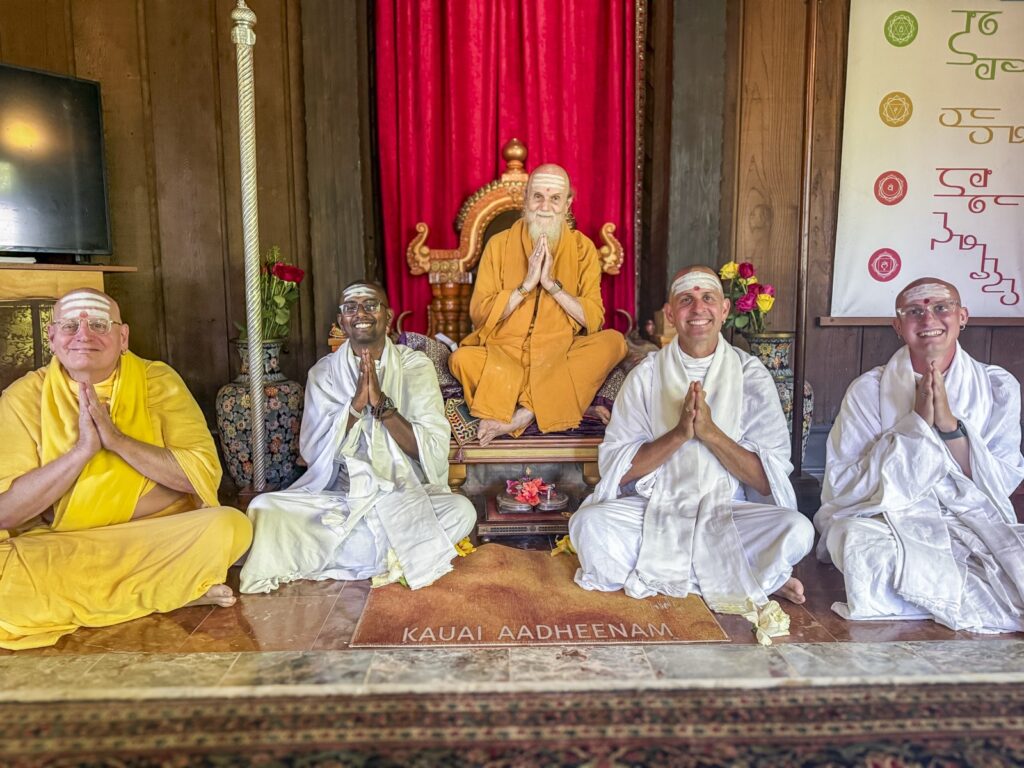
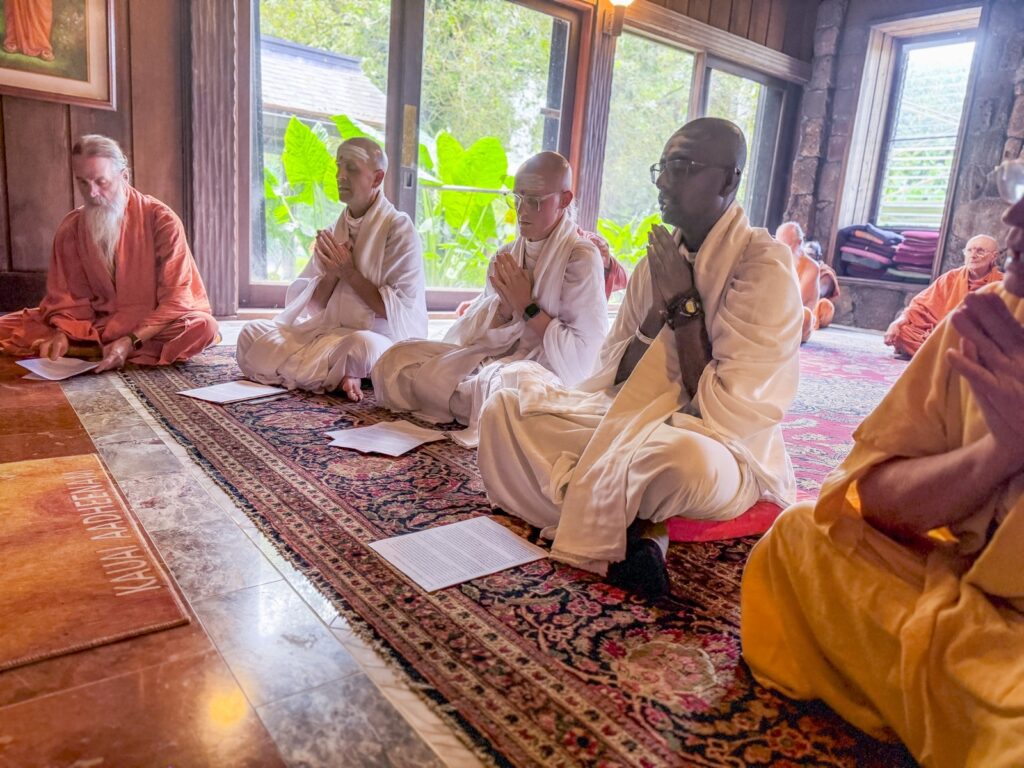
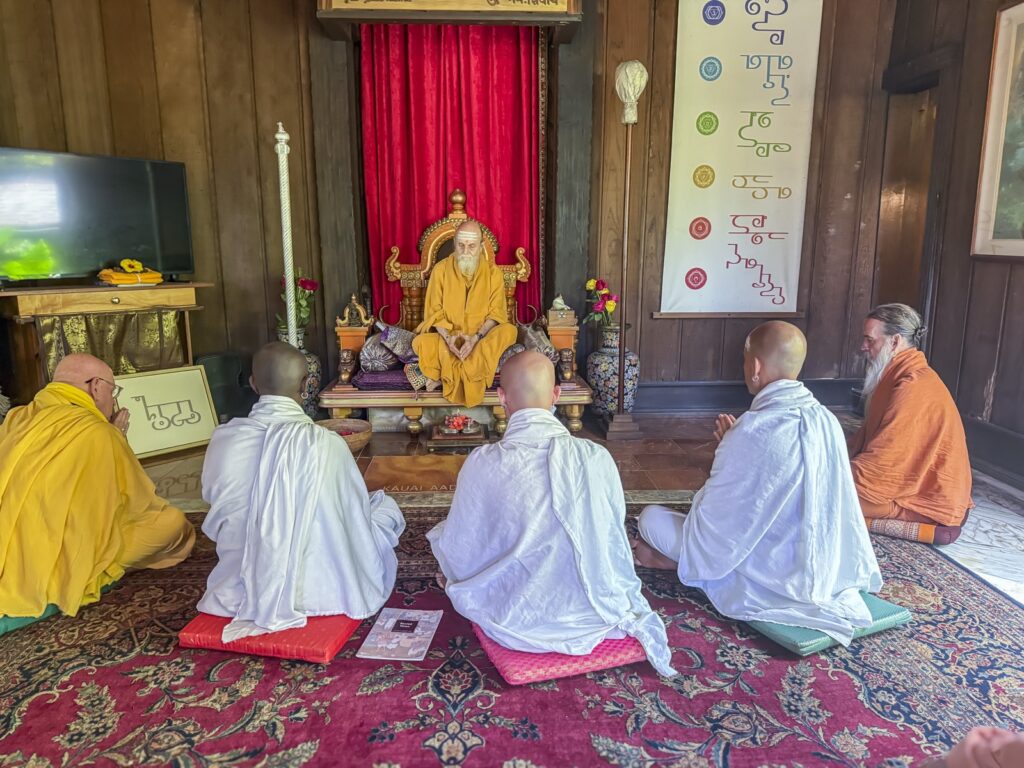
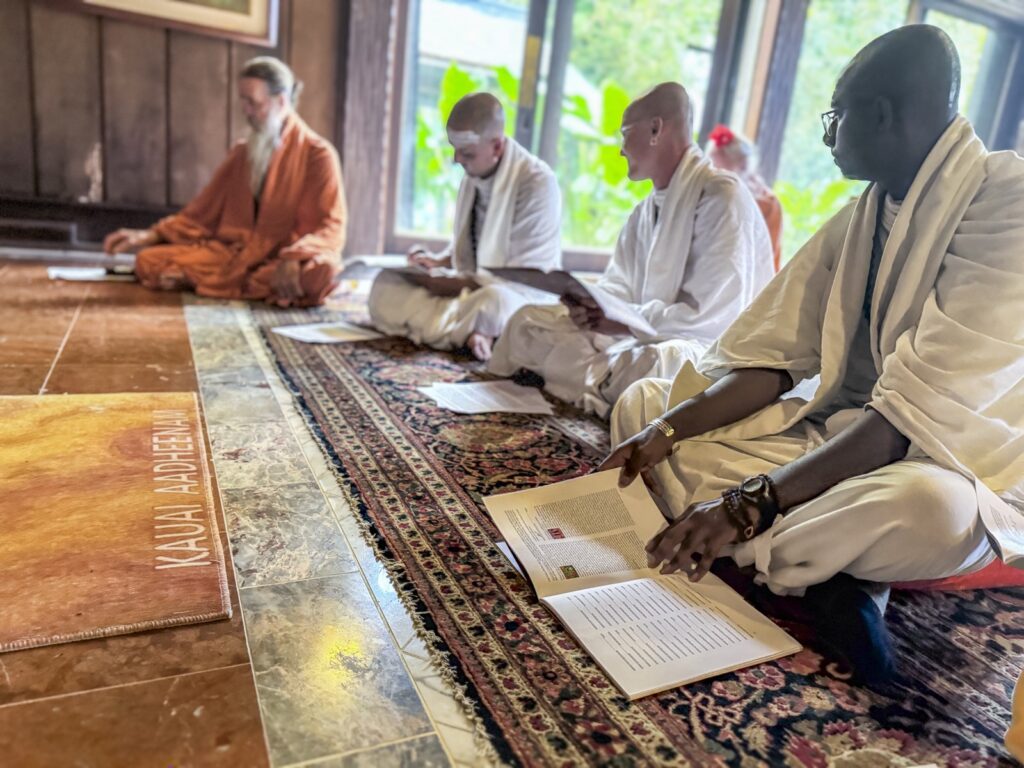
In our monastic order, a monk can only take lifetime vows once they become a sannyasin. Until then they are under short term vows that must be renewed every two years on the auspicious occasion of Guru Purnima. This year our postulants all gathered in the Guru Temple to renew their four vows of humility, purity, obedience and confidence. Below our the introductions to each vow. Also this year, Sadhaka Shankaranatha took his Natyam vows, the next step before eventually becoming a Yogi Tapasvin.
HUMILITY IS THE STATE OF profound maturity in which the soul, immersed in the depths of understanding and compassion, radiates the qualities of mildness, modesty, reverent obeisance and unpretentiousness. There is an analogy in the Saivite tradition that compares the unfolding soul to wheat. When young and growing, the stalks of wheat stand tall and proud, but when mature their heads bend low under the weight of the grains they yield. Similarly, man is self-assertive, arrogant and vain only in the early stages of his spiritual growth. As he matures and yields the harvest of divine knowledge, he too bends his head. In the Tamil language this absence of pride or self-assertion is known as pannivu. Pannivu also means “jewel.” In the Tirukural it is said that “Humility and pleasant words are the jewels that adorn a man; there are none other.”
PURITY IS THE PRISTINE and natural state of the soul. It is not something which the monastic attains as much as that which he already is, and which becomes evident as the layers of adulterating experience and beclouding conceptions are dissipated. Purity is clarity and clearness in all dimensions of being. It is innocence as opposed to familiarity with the ways of the world. It is for monastics the observance of chastity, called brahmacharya. In Tamil purity is given its fullest expression in the term tirikarannasutti, which means “purity in mind, speech and body.” These three–also called thought, word and deed–convey the fullness of the ideal of purity.
OBEDIENCE IS THE STATE OF willingness and cooperation in which the soul remains open and amenable to enlightened direction. For the monastic it is an unbroken pledge of trust in and surrender to the satguru, the guru parampara and the mystic process of spiritual evolution. In the Tamil language this definition of obedience is expressed in the term taalvu enum tanmai, which denotes “the quality or state of humble submission.” Obedience does not consist in blind submission and yielding to authority, nor in weakening our own will that it may be dominated by the will of another. Yet it is, in another sense, submission to a sacred purpose and the divine authority of the Second and Third Worlds. It is, for the monastic, an inner quality that allows him to remain consciously tractable and responsive.
CONFIDENCE IS THE STATE of trust in which the sacred teachings and sensitive or personal matters are not divulged to others. Spiritual matters must be protected and preserved by those to whom they are entrusted, never wantonly or indiscriminately revealed. When we confide in another, we do so with the assurance that sensitive and serious information will not be inappropriately disclosed. In the Tamil language confidence is known as rahasiyam, meaning “secret or mystery.” Confidence as applied to these Sacred Vows does not mean “certainty,” “a belief in one’s abilities” or “self-confidence.” Rather it is a confiding, a trusting and a relying upon. It is the controlled sharing of privileged teachings or information that should not be disclosed, but held in confidentiality. In its most simple form it is the keeping of a secret. Confidence for the monastic may be defined as wisdom in handling information.

 Bhairava inspects the excavator