Siva’s Garden is a daily wonder, reminding pilgrims of the beauties of life, the soft nurturing that surrounds us if we can just be still enough to see it. Today we bring you a small collection of the botanical creatures that live with us here at the monastery and are showing off, trying to impress pilgrims, to remind them of Siva’s infinite, and sometimes odd, forms.
Kavi Kat finds a quiet corner among the Calocasia Green Shield under the Bilva tree
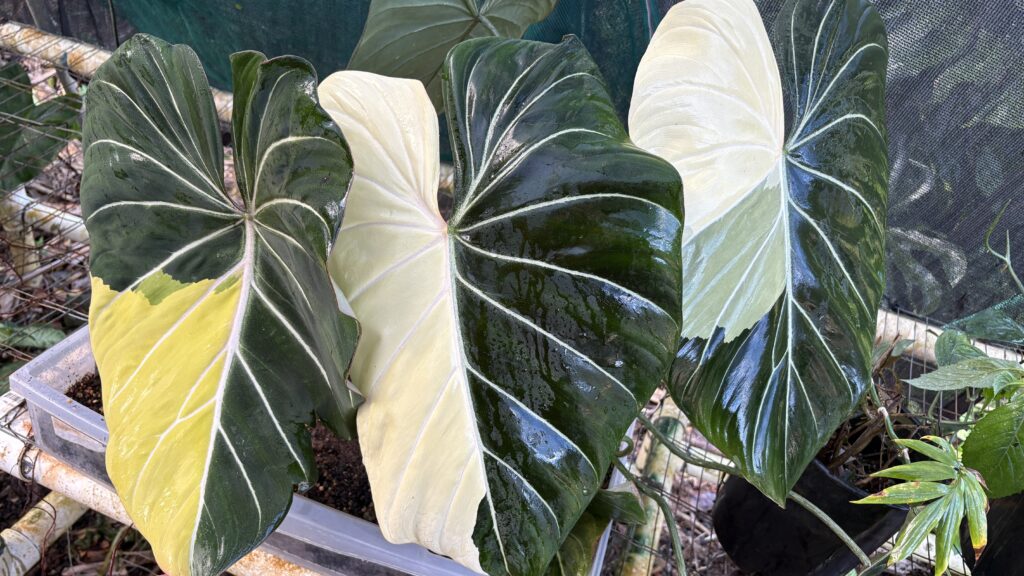
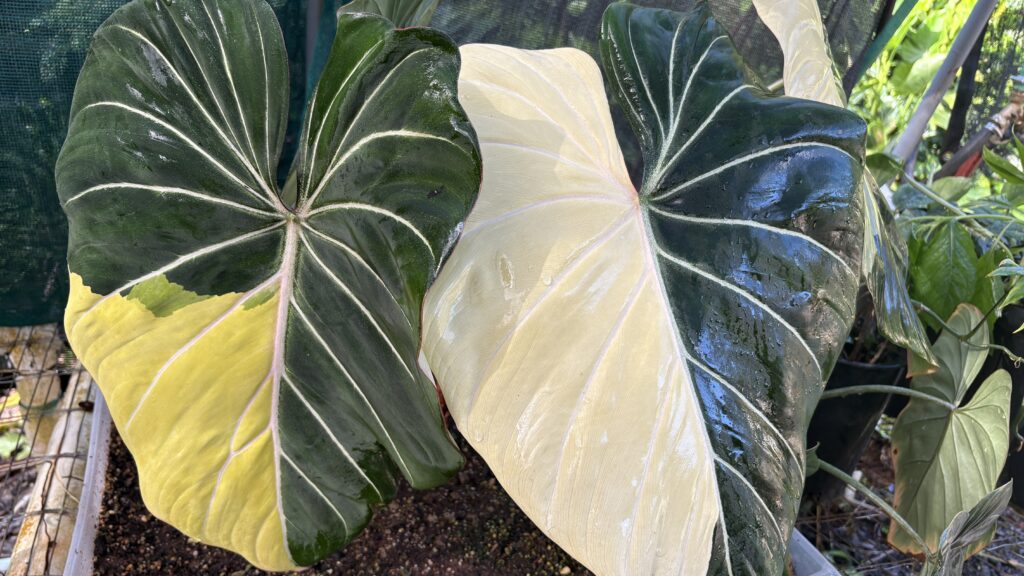
A new arrival, Philodendron Gloriosum,
It is one of the most sought-after rarities in the botanical world today and we are working to make more copies.
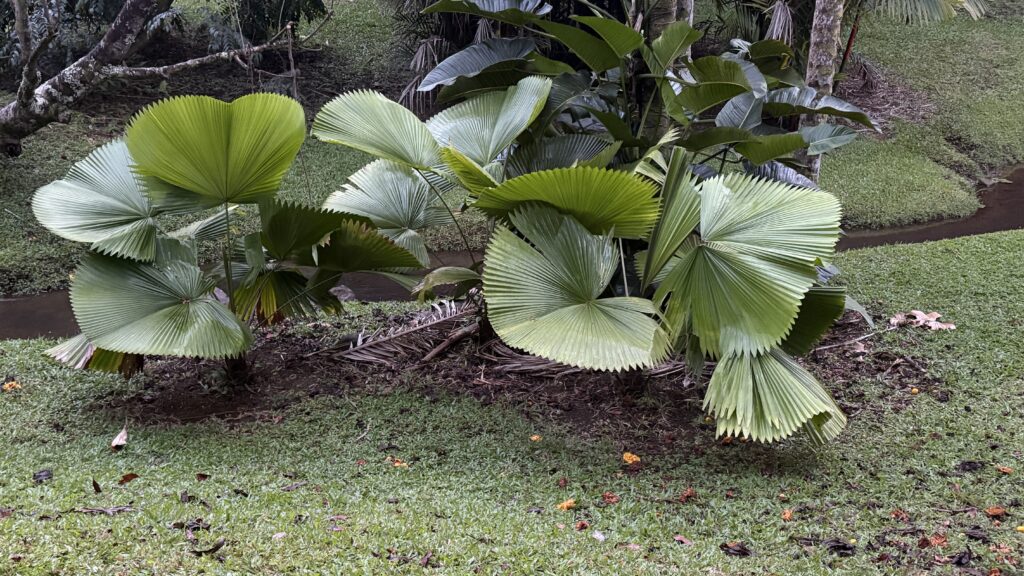
Licuala cordata, a palm with almost perfectly round fronds
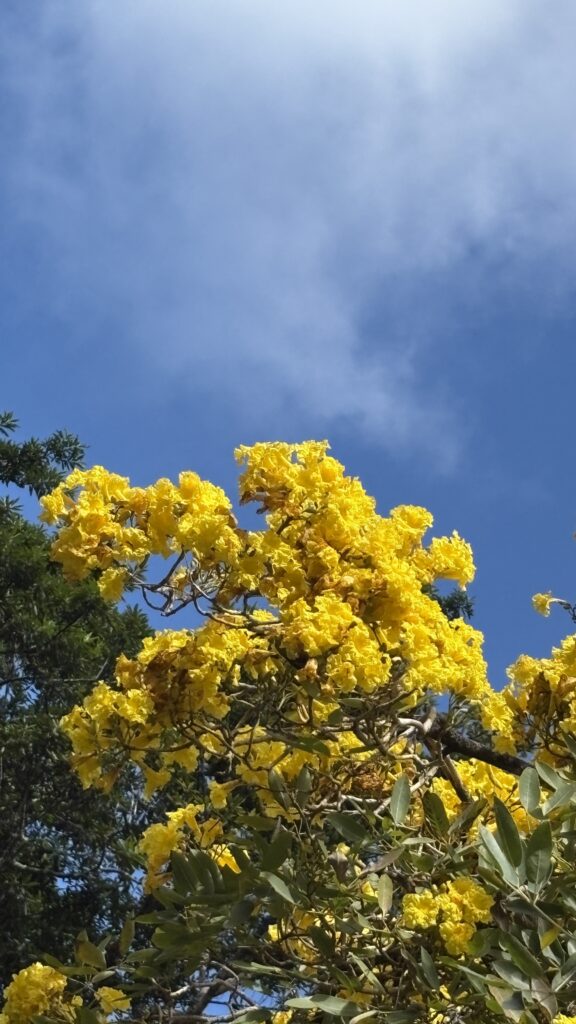
The Gold Rain tree in full bloom
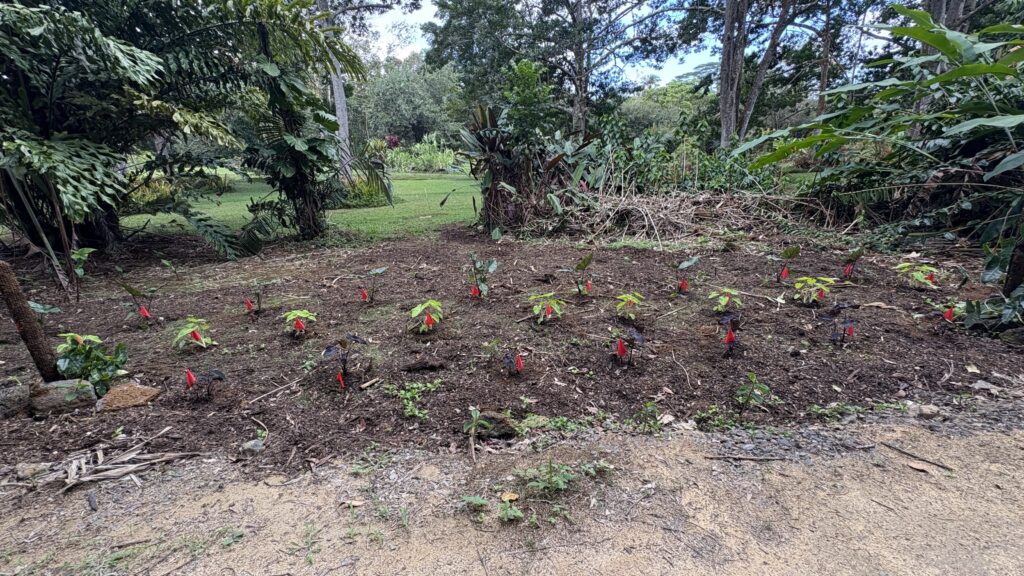
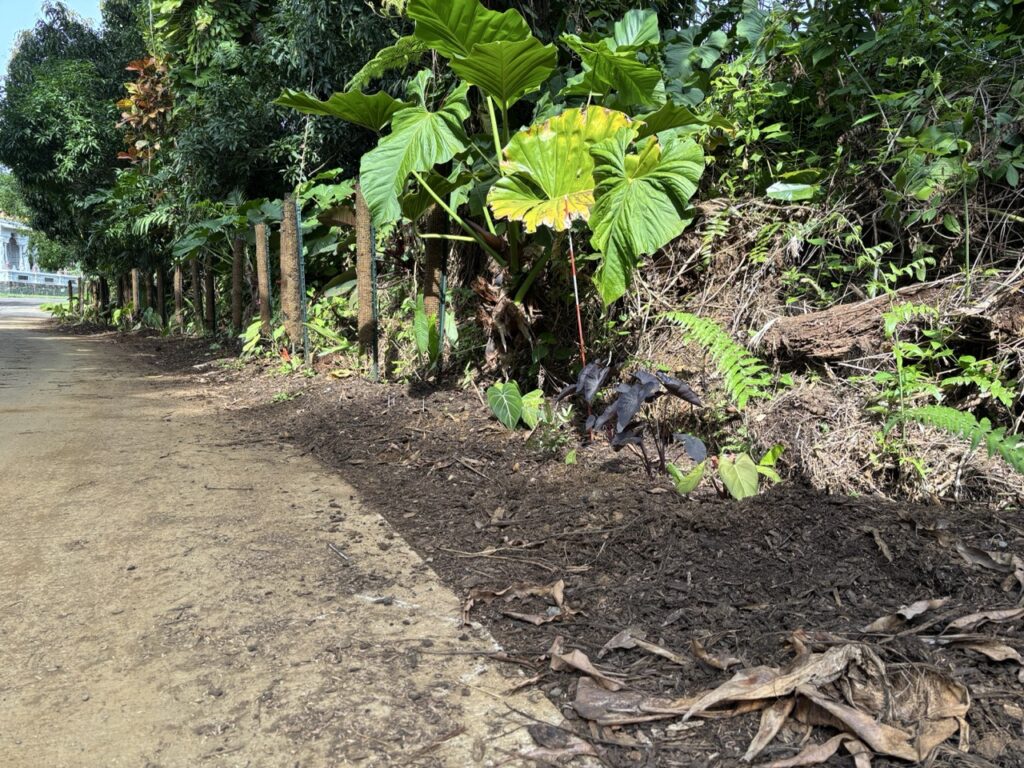
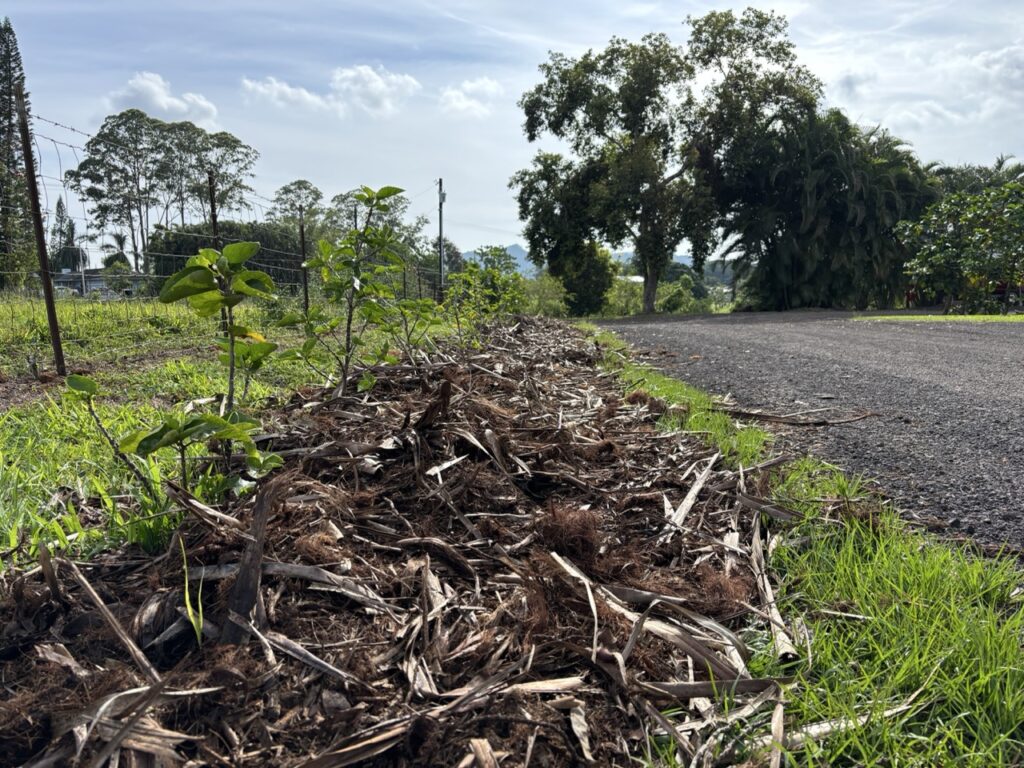
New plantings along the San Marga path. Not impressive today, but they will be.
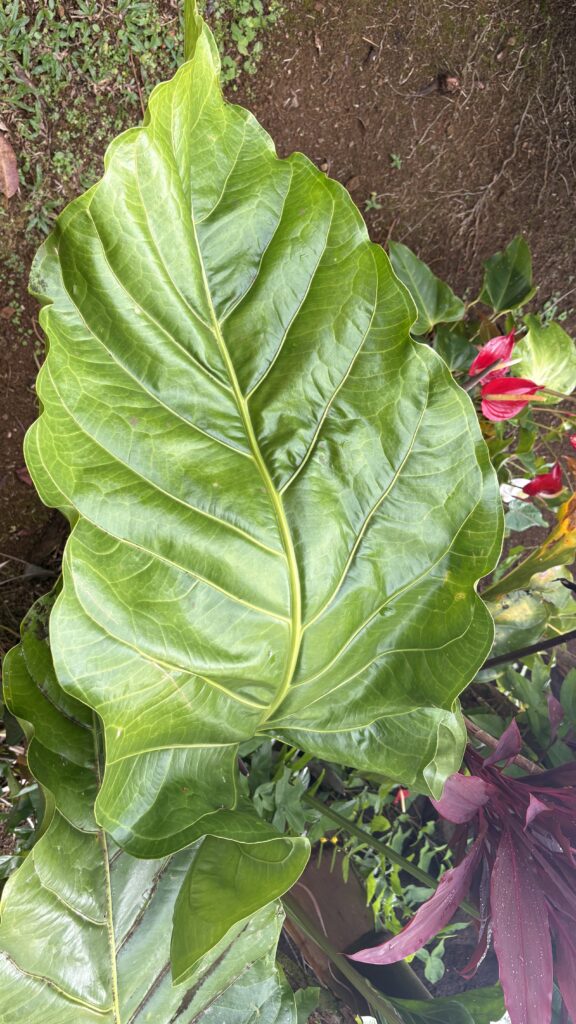
The leaf of a large anthurium
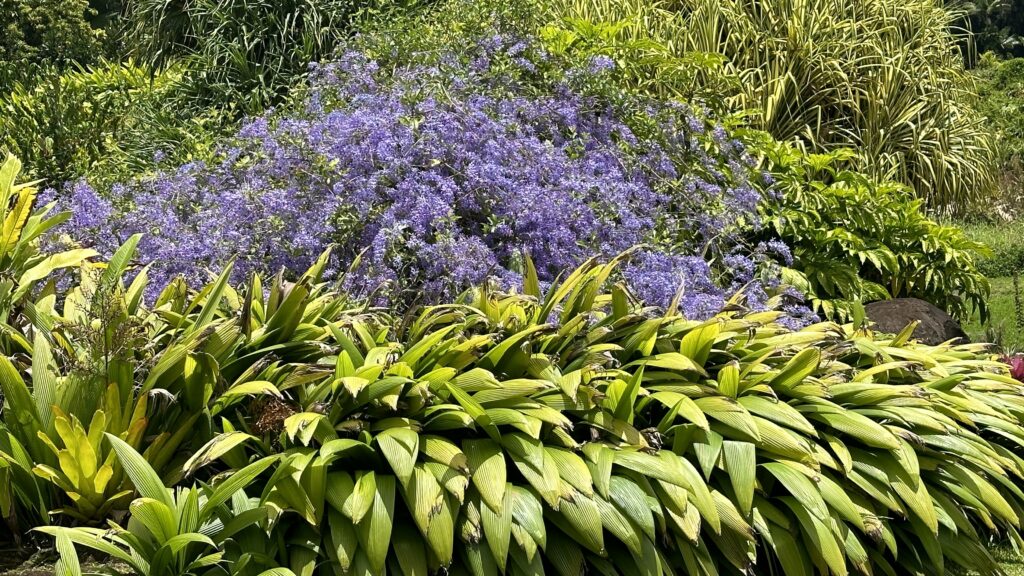
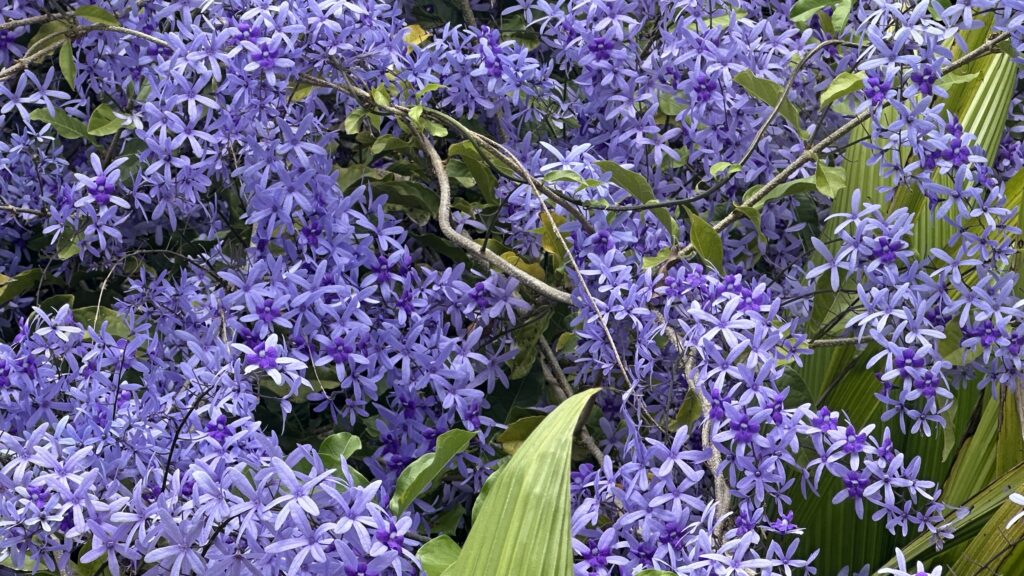
The purple is Petrea volubus or Queen’s Wreath Vine, with palm grass in the front.
It’s name tells the story of its abundance of flowers
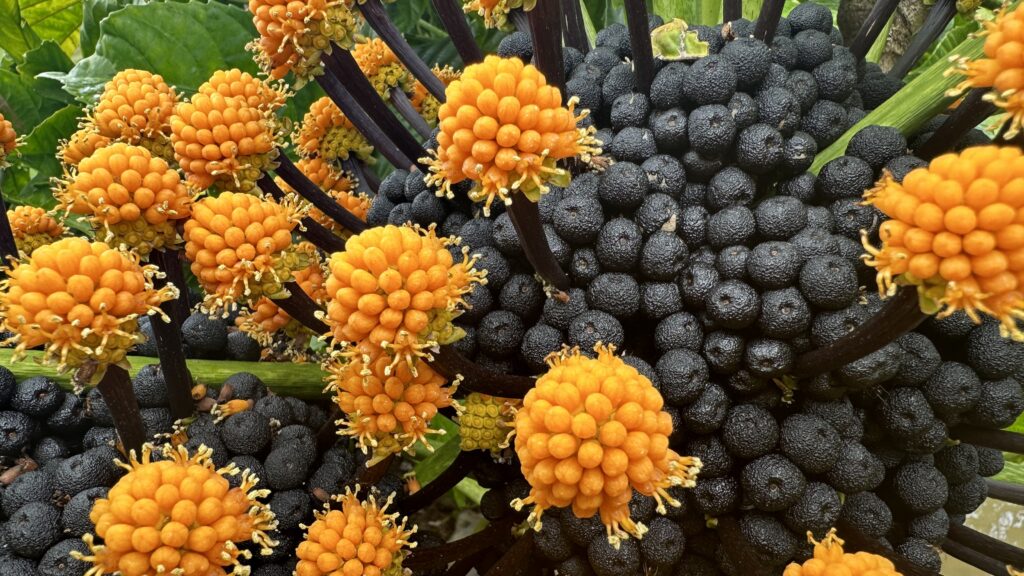
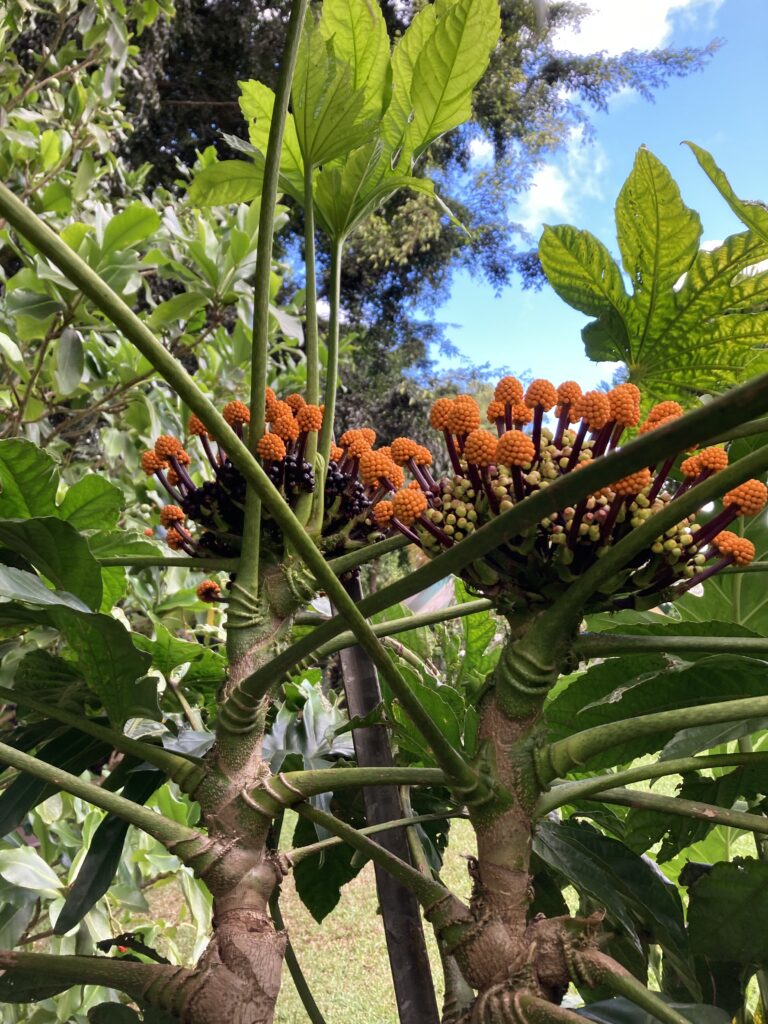
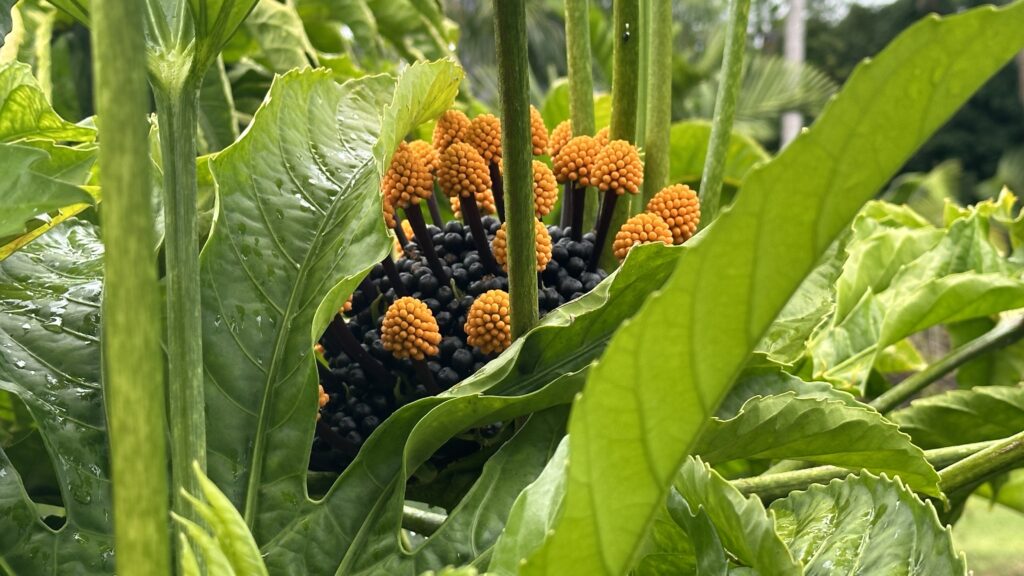
Wow! A False Fruit tree shows its other-worldly look.
We have an outdoor workshop adjacent to the carpentry shop whose tent frame and cover was worn down after many years. Yesterday we replaced the entire frame with larger, sturdier pipes and installed a new tent cover. The A-frame is now taller and steeper than before, no longer fitting under the carpentry shop eave, so we have to cut into the eave and pull the frame into it, then build a protective covering. The end result is that rain water draining off the carpentry shop eave will fall on the tent and then off the sides to the ground.
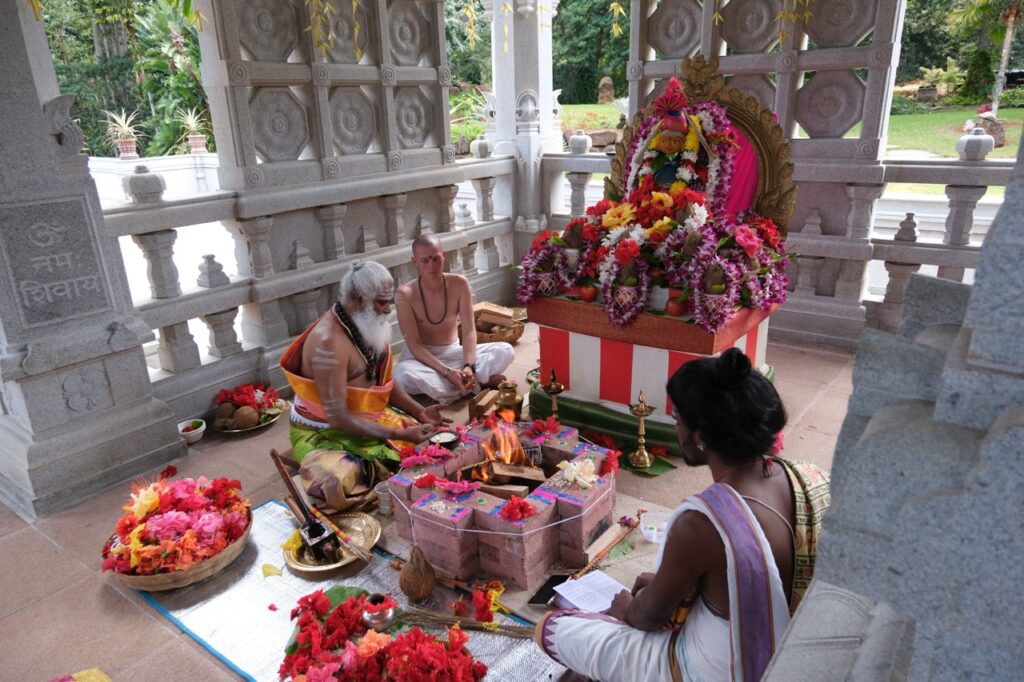
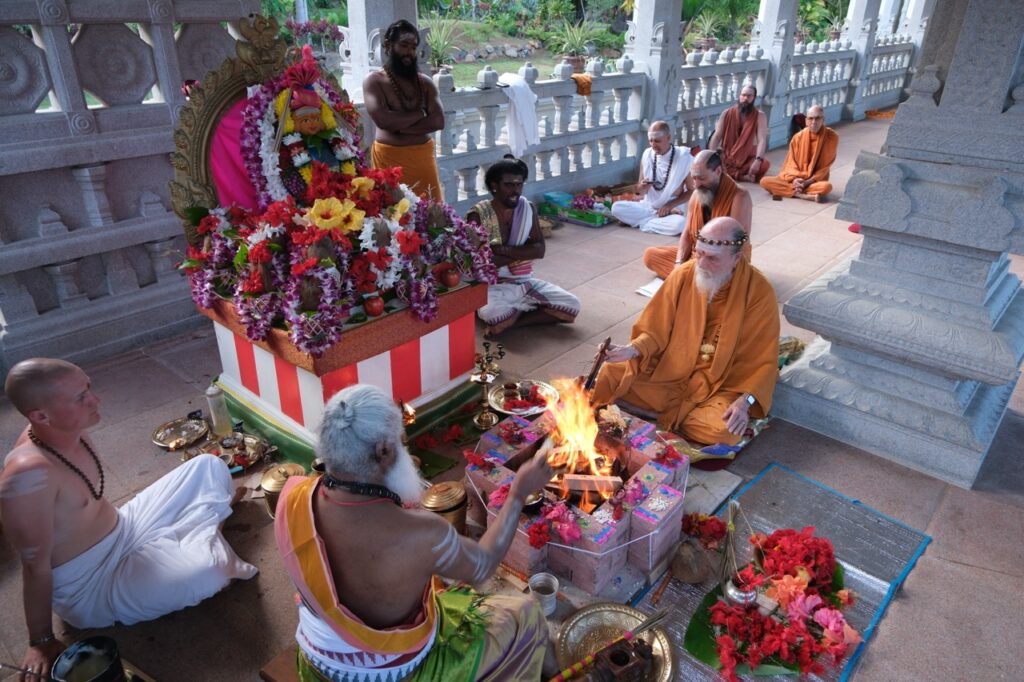
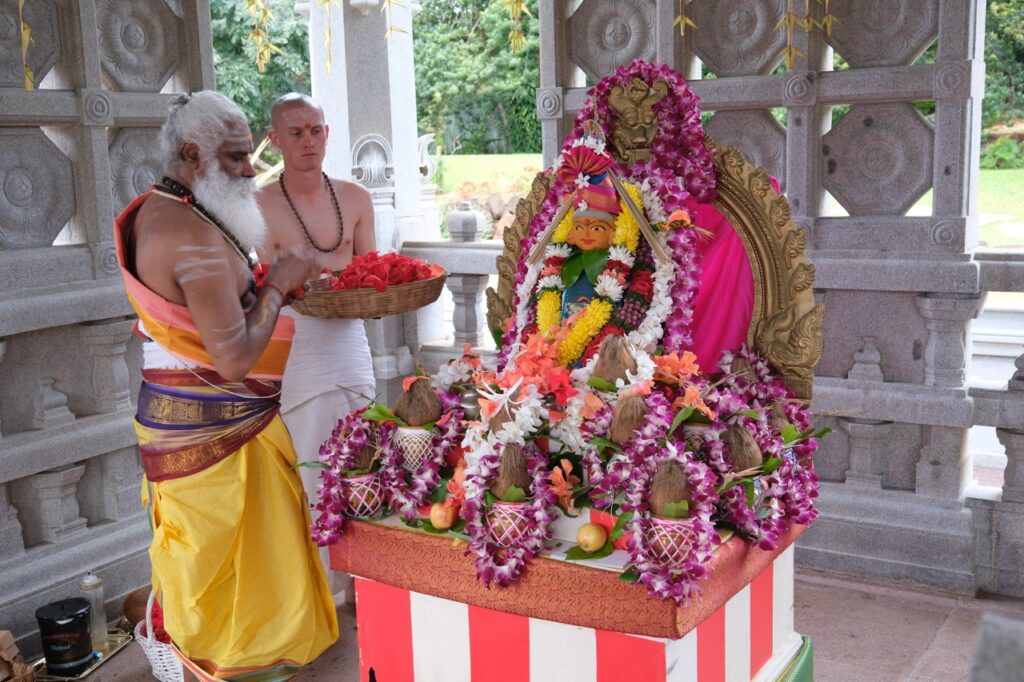
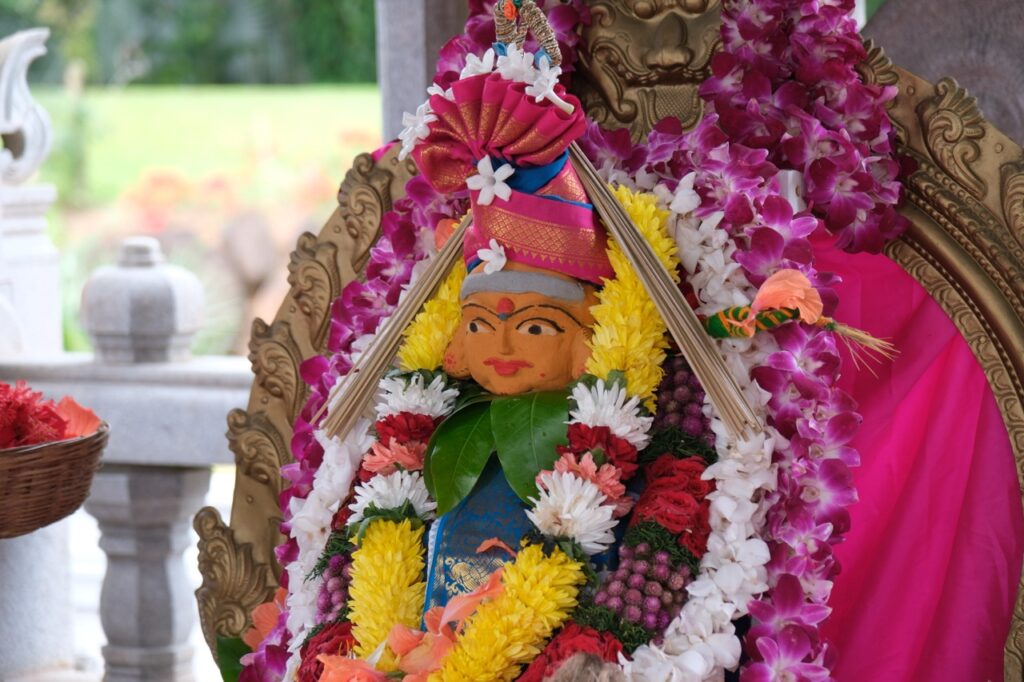
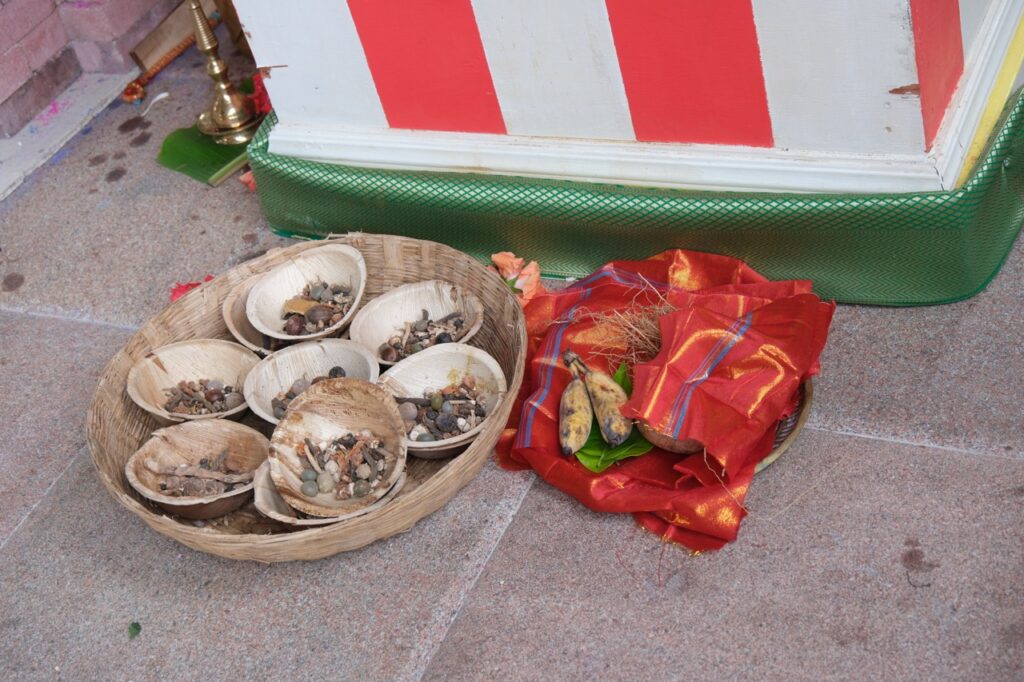
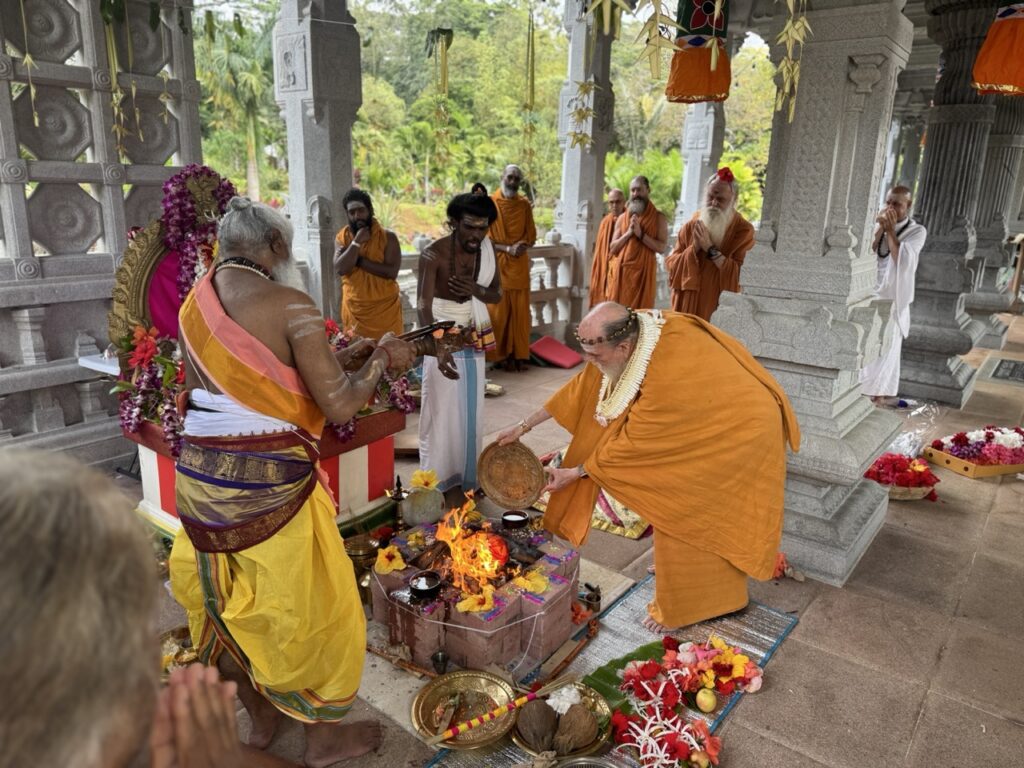
The annual temple festival puja concluded with final abhishekam yesterday, which was livestreamed. We also took still photos of the preparatory homas to energize the main kumbha water for Mahalingeshvara and smaller kumbhas representing various shaktis and Siva’s five-fold powers of Isana, Tatpurusha, Aghora, Vamadeva and Sadyojata.
Today, April 1st, we officially began the Samvatsara Puja, starting with the Krittika Homa in the morning. In the afternoon, the Samvatsara Homa commenced in the presence of Satguru. Tomorrow is the final day, and we will be live-streaming the concluding puja. The link above is for everyone to click and join. Aum.
A devotee in Australia has been inspired to bring the monastery’s teachings to the youth, inspired by the needs he sees in his own children. His latest work is now available on YouTube. He calls it “Bedtime Podcasts for Kids, Parents and Teachers.”
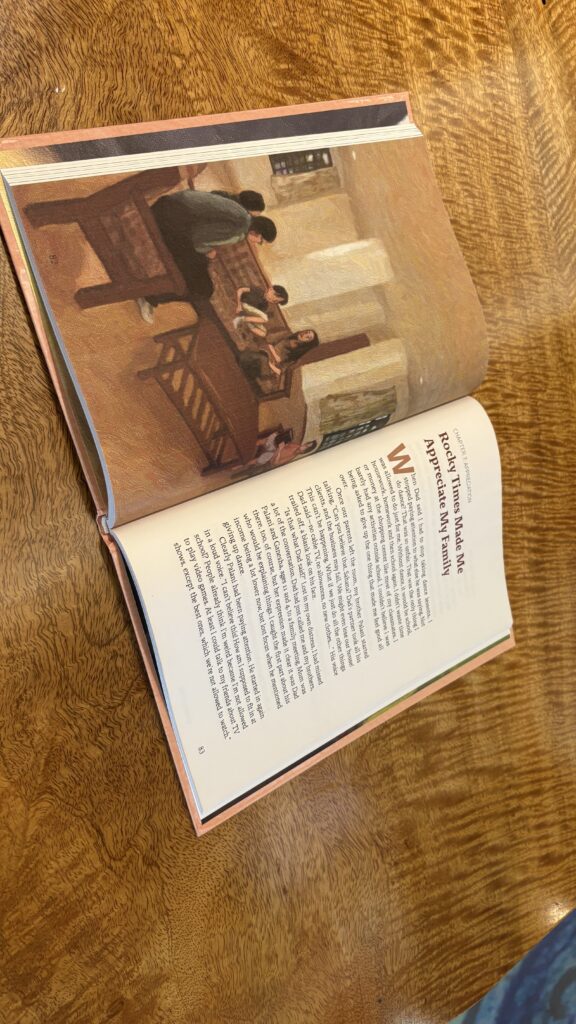
He has taken the wonderful book that Satguru Bodhinatha Veylanswami inspired and used a special AI to narrate the text. There are 11 stories in all, and they render as podcasts of 18 to 30 minutes. Each is a life lessons for a teenager. The topics are real-life issues, problems and challenges faced by young ones these days. They all teach teens how to cope. Great for sharing with teens in your community. In the video below is the first chapter, called “Friendship Endings.” If you want to see the entire playlist, click on the small hamburger icon on the upper right corner.
The playlist on YouTube accessible with the link above.
The book cover
It’s a hardcover book now. You can order the book at Minimela.com. printed by Amazon.
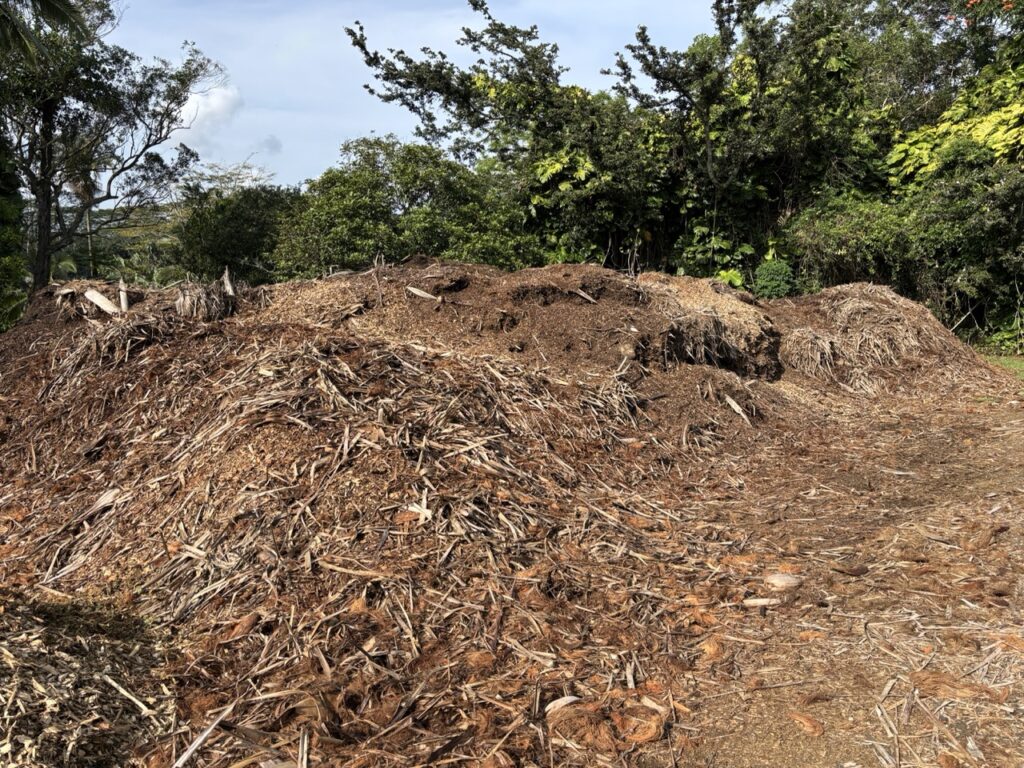
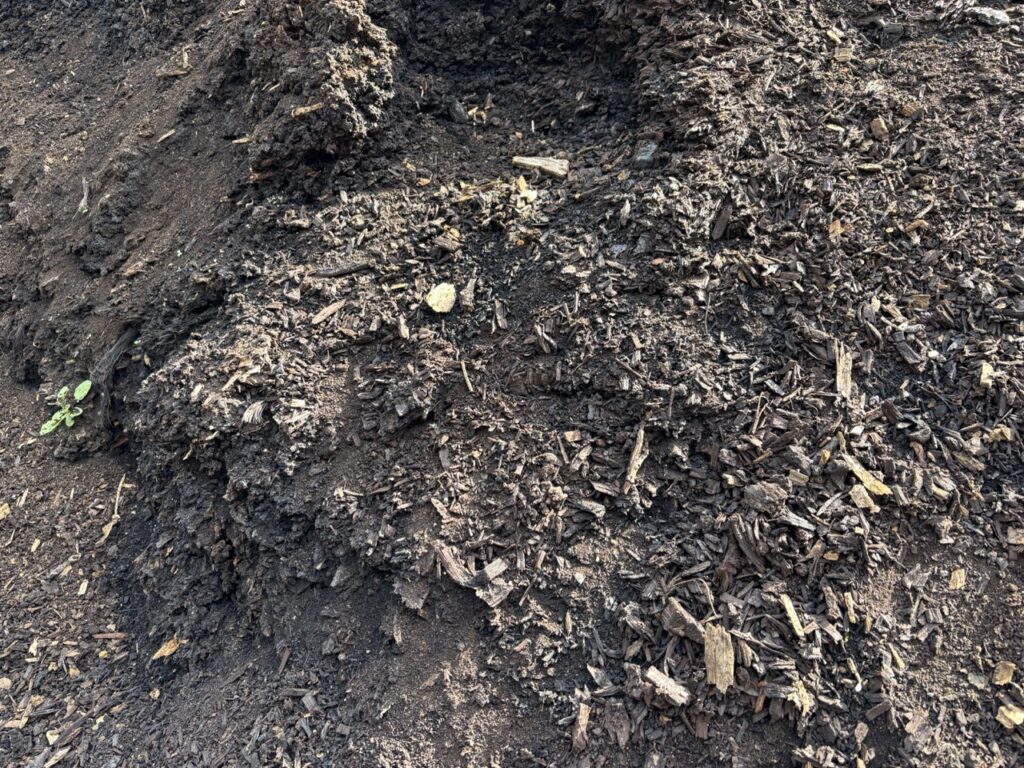
The longer the material stays in a pile, the more it breaks down into rich dark soil
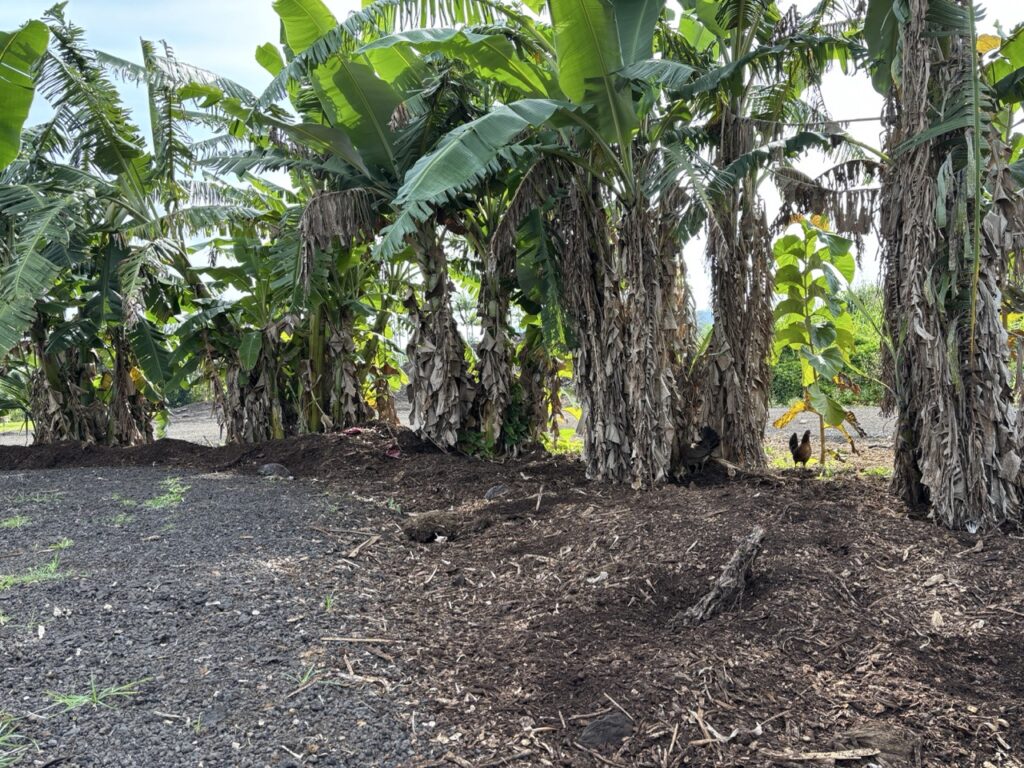
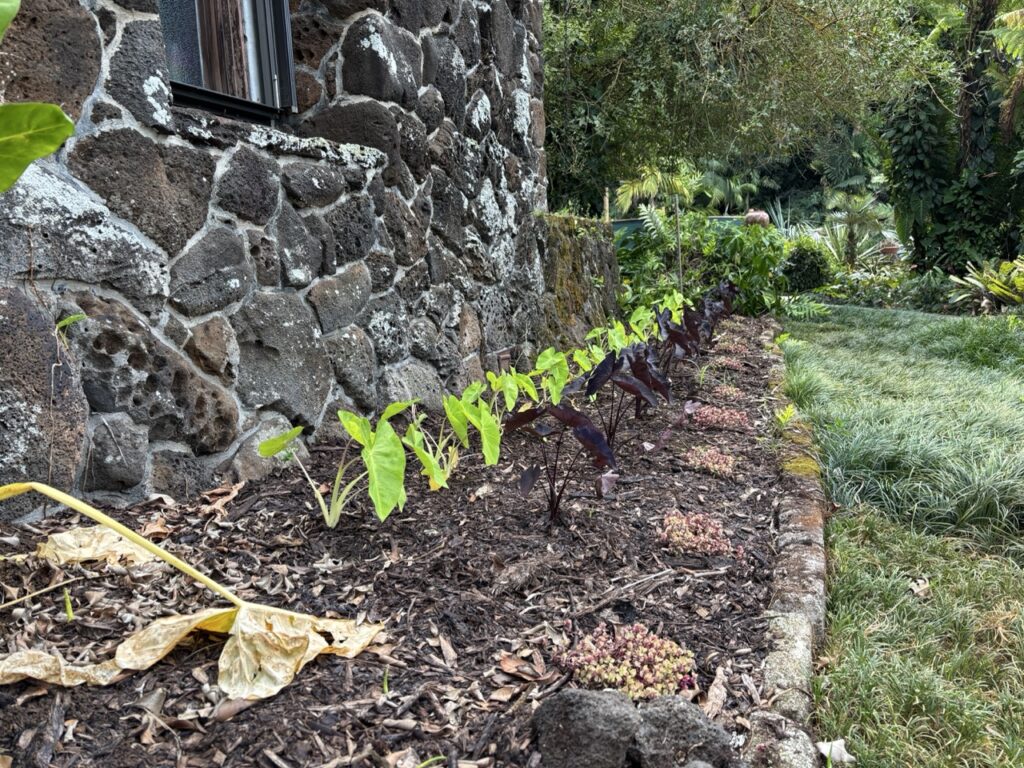
Various plantings recently covered with mulch
Probably not!
Mulch is defined as “material (such as decaying leaves, bark, or compost) spread around or over a plant to enrich or insulate the soil.” Much of our monastery land has a small layer of topsoil and then hard clay underneath, so enriching it is very helpful. Though we have a large property, even if we collected up all the leaves and chewed up all the fallen branches (which would be a huge job), it would barely make a dent in our needs for mulch. As we’ve interacted with tree trimming companies over the years, a great boon came our way, whereby nowadays all the companies who are trimming trees in our general vicinity will deliver the ground-up material to us for free. If they took the material to a county refuse transfer station they would have to pay a fee, so it’s a great deal for them too.
Besides keeping our vegetable garden beds and fruit trees covered which you’ve seen in the past, mulch is used for many plantings on the grounds, basically as much as we have time to transport.