
 The Satguru conveys the timeless teachings with Dakshinamurti presiding.
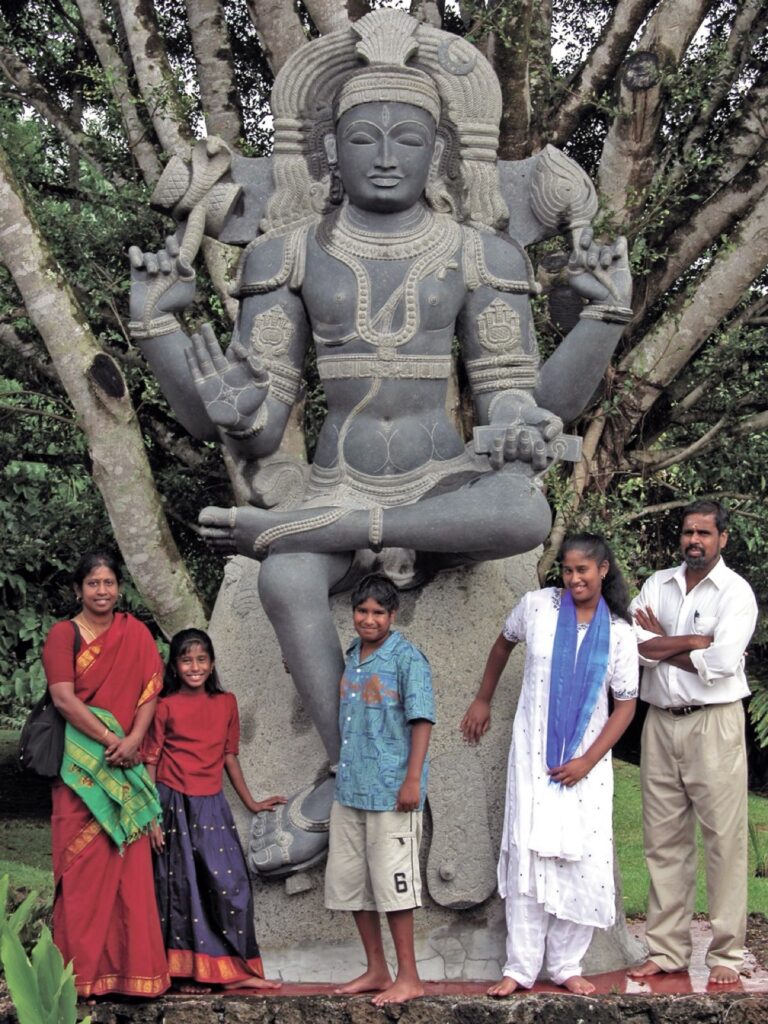
- Siva sits under a banyan tree south of Iraivan Temple.
- Beautifully crafted in Mahabalipuram, India.
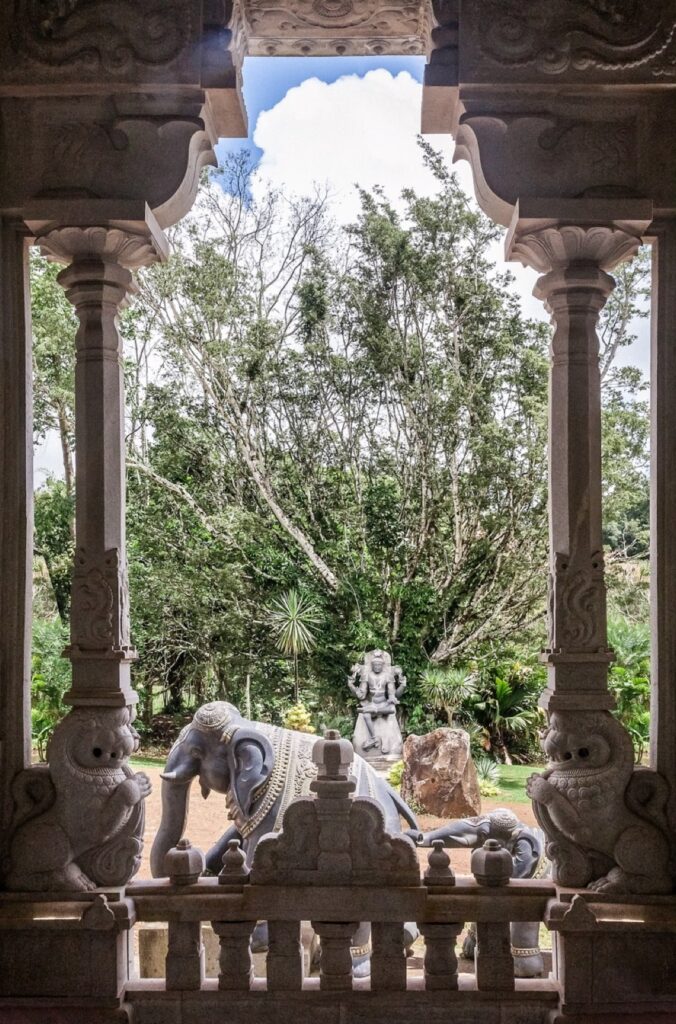
- View from Iraivan.
- The sages receive the Grace of silent knowing.
- He is 12 feet tall.
- The Vedas in His left hand.
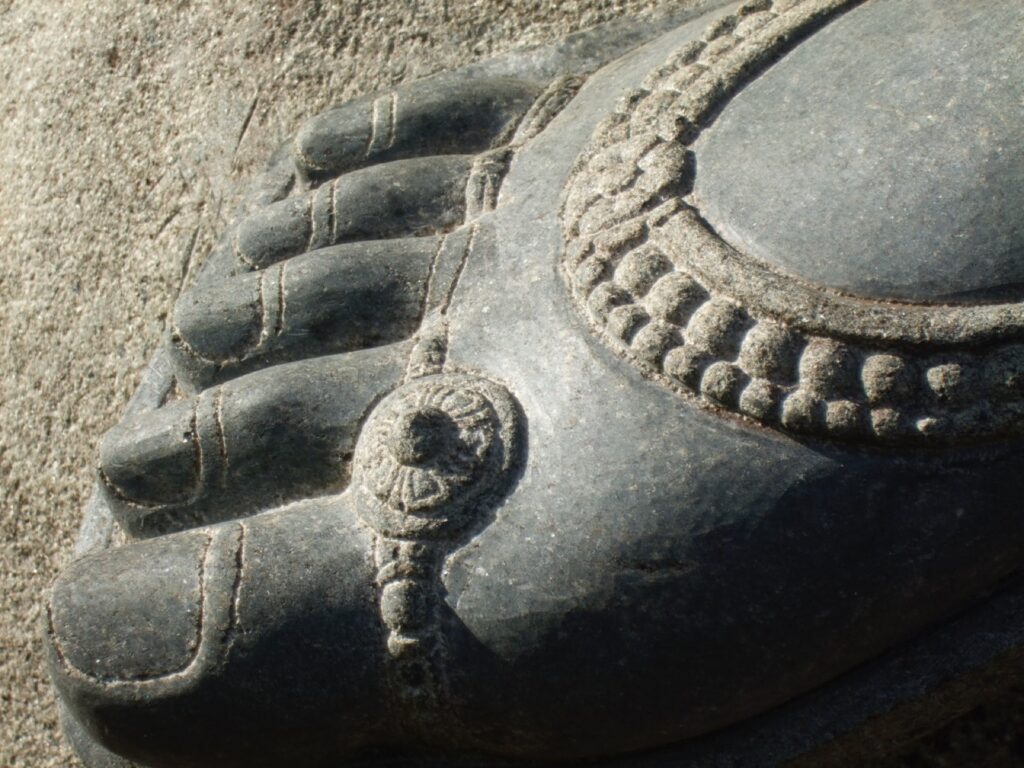
- The foot of Arul and Grace.
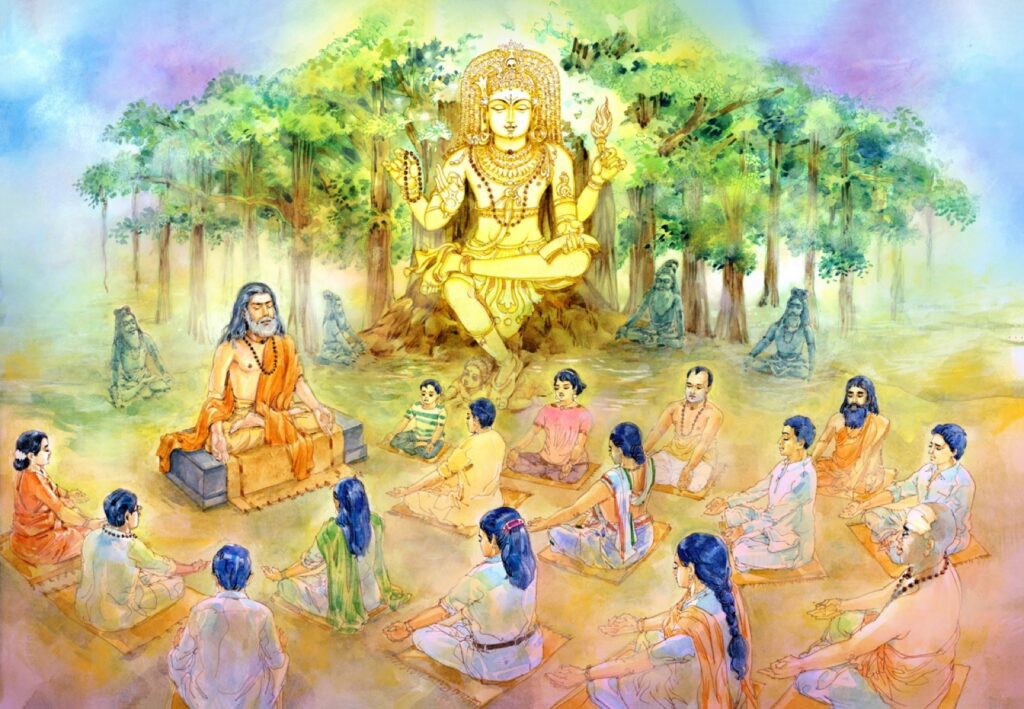
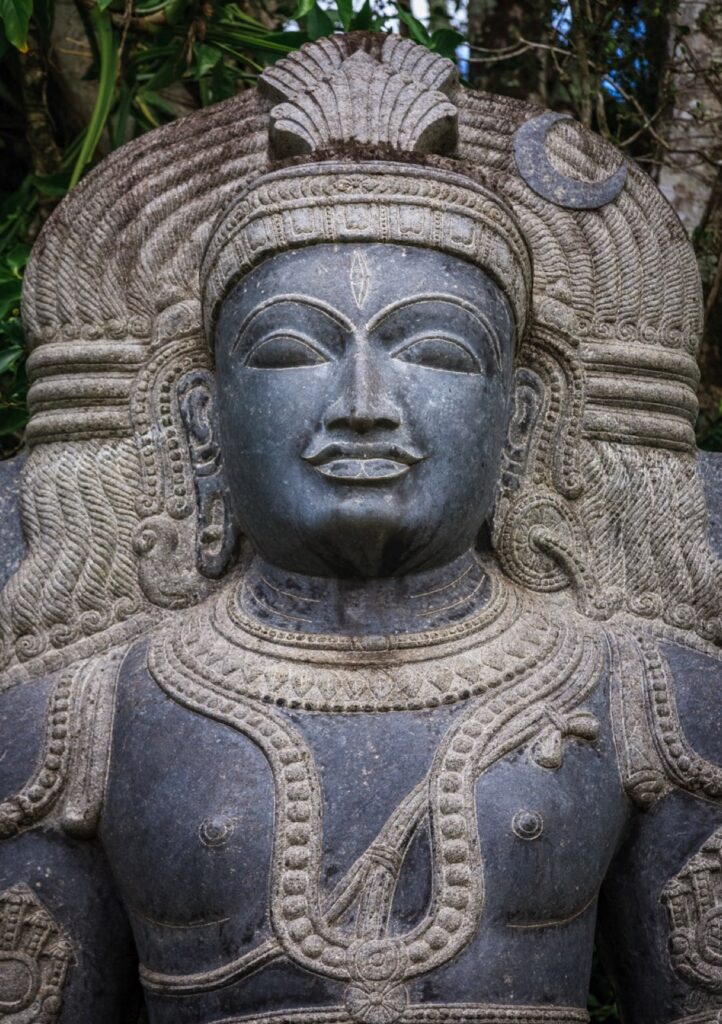
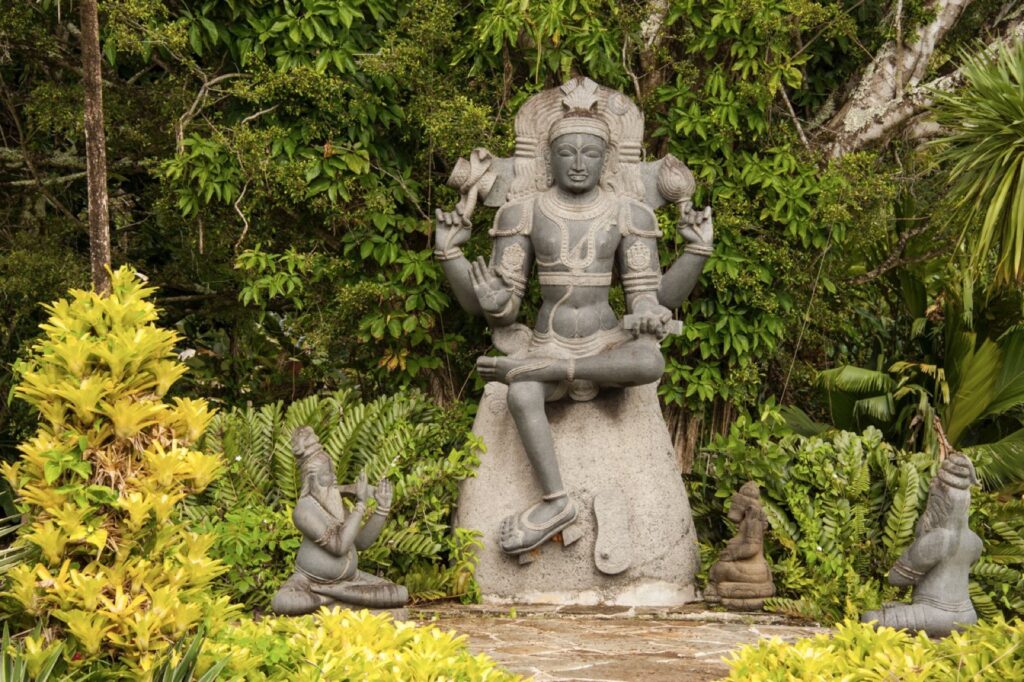
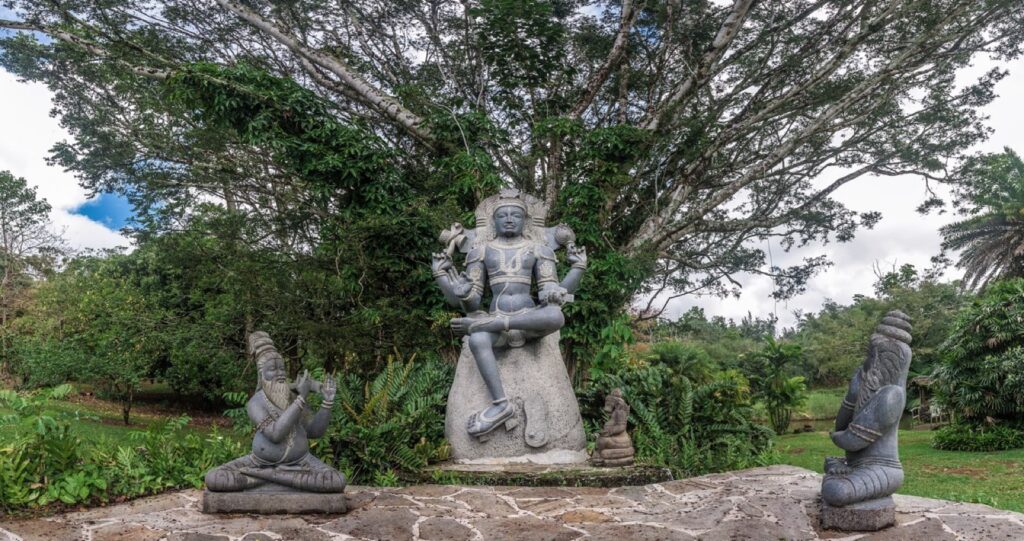
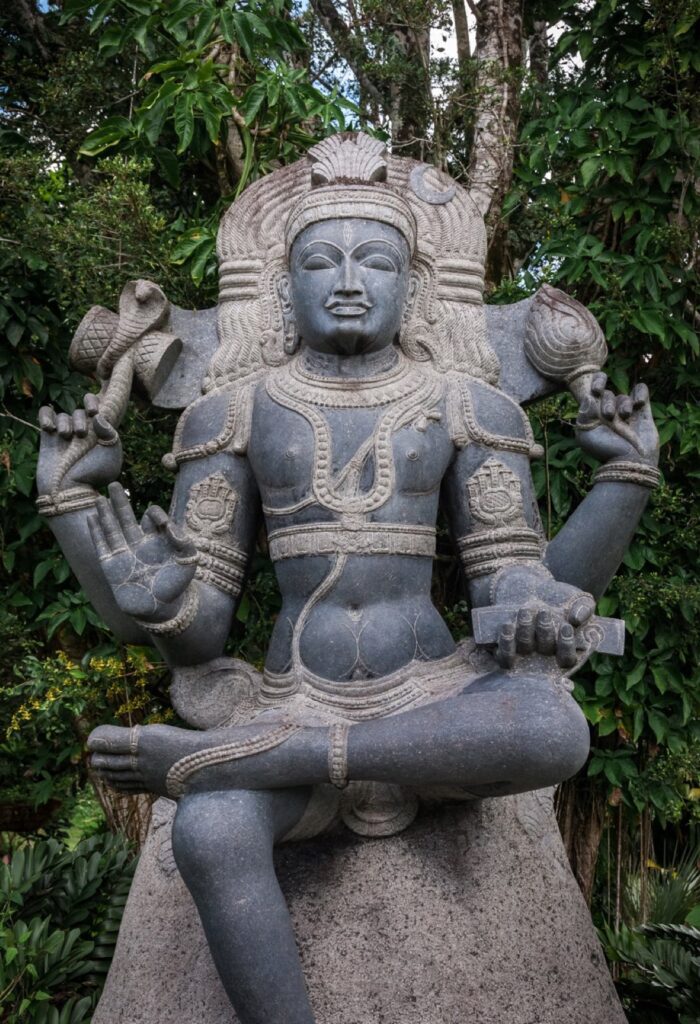
Dakshinamurti literally means “south-facing form.” Dakshinamurti is Lord Śiva depicted sitting under a banyan tree, teaching four rishis at His feet through mauna, silence, while showing the chin mudra with His right front hand. In chin mudra, the tips of the thumb and forefinger are joined to form a circle while the other fingers are kept open and extended. The palm faces outward. It is a gesture of imparting spiritual knowledge and is also known as jnana mudra. The joining of the two fingers symbolizes the realization that jiva and Śiva are in nondual union. The index finger represents individual consciousness, the jivatma, while the thumb symbolizes supreme consciousness.
The Dakshinamurti Sadhana for Pilgrims
Among the many sadhanas that pilgrims can perform, one of the sweetest is the Dakshinamurti Sadhana, honoring the Silent Guru within. Dakshinamurti teaches not through words or intellectual instruction. Rather, His silence is the force that awakens the spiritual knowledge already resident within us.
Sadhana Practice
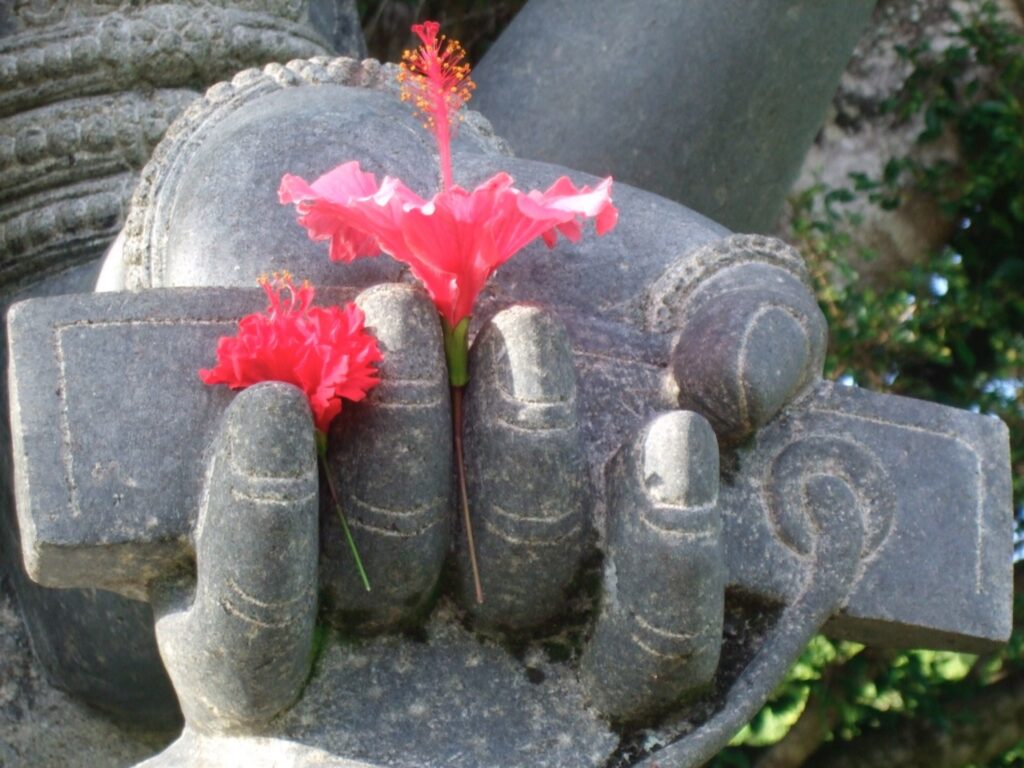
Standing before Dakshinamurti, north of Iraivan Temple, offer flowers and chant a simple Dakshinamurti chant three or more times.
Below is a simple chant that may be used. If you prefer another traditional chant to Dakshinamurti, it may also be recited. Afterwards, sit quietly and reflect upon Dakshinamurti’s silent revelation of the nondual union of jiva and Śiva.
Guru Brahma! Guru Vishnu!
Guru Devo Maheswaraha!
Guru Sakshath Parabrahma
Tasmaisree Gurave Namaha!
Gurave Sarva Lokanam
Bhishaje Bhavaroginam!
Nidhaye Sarva Vidyanam
Sri Dakshinamoorthaye Namaha!
Quote from Gurudeva
“Once freed by God’s grace from these bonds—which do not cease to exist, but no longer have the power to bind—the soul experiences nirvikalpa samadhi. This is the realization of the Self, Atattva Parabrahman—timeless, formless, spaceless—a oneness beyond all change or diversity.”