
Building a New Kind of Beehive!
December 8, 2021Earlier this year we began construction on a prototype for a kind of beehive known as a horizontal or "topbar" hive. While it's new for us, this is actually a classic style of hive that has long been common throughout much of Eastern Europe and Serbia. Today, it is becoming more popular throughout the world for its ease of use, especially for the non-commercial beekeeper.
Unlike the common Langstroth hive, where heavy bee boxes are stacked to form space for bees, the horizontal hive is a stationary long box. Here, the bees are encouraged to build their comb across more than up, much like they might do in a horizontal log. The top bars are laid down across the space for the bees to build on. There is a follower board so that one can control exactly how much space the bees have at any given time. Too much space and they have trouble regulating the temperature for the their brood, and aren't as able to defend themselves against other insects (like hive beetles) which have the potential to collapse their whole operation.
On one end is the entrance, which the bees build their brood nest near. As they build down the length of the box, further from the nest, they begin to build the further comb purely for honey storage. So all you have to do to harvest some is open up one end of their hive and remove the furthest bar. Aum.
Click through the slideshow to see the process.
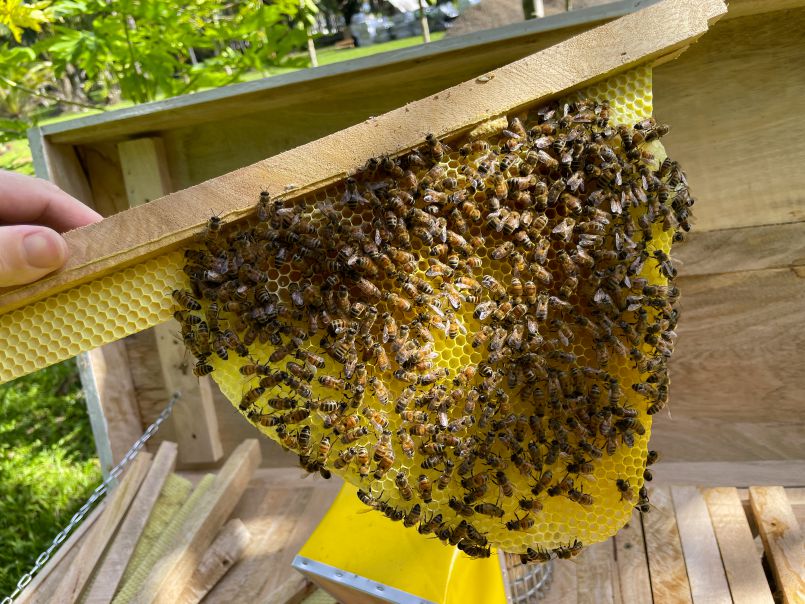
A new comb being build on a topbar in the horizontal hive
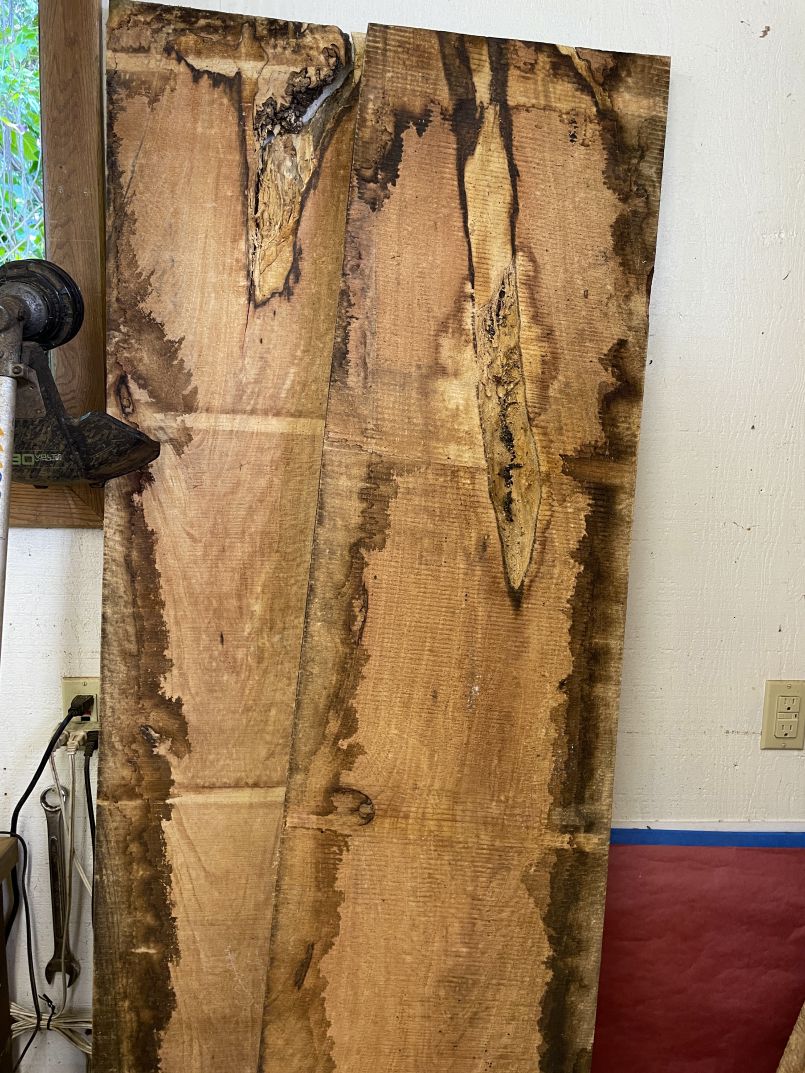
It all starts with the raw lumber. Some aging mango slabs will do.
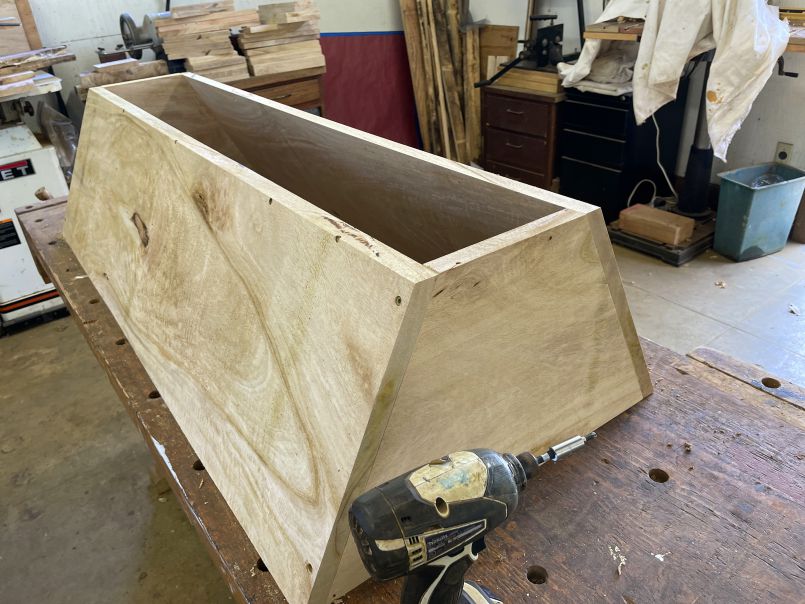
After some processing, they\
re made into the body of the hive. It as a 45 angle because that\'s the angle bees build their comb at naturally.'
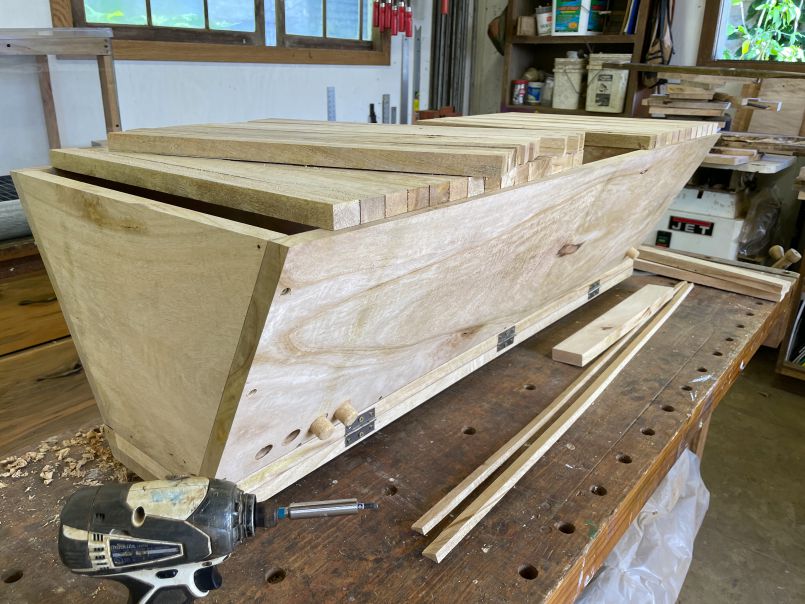
Flipped over, the top bar pieces are assembled and fitted
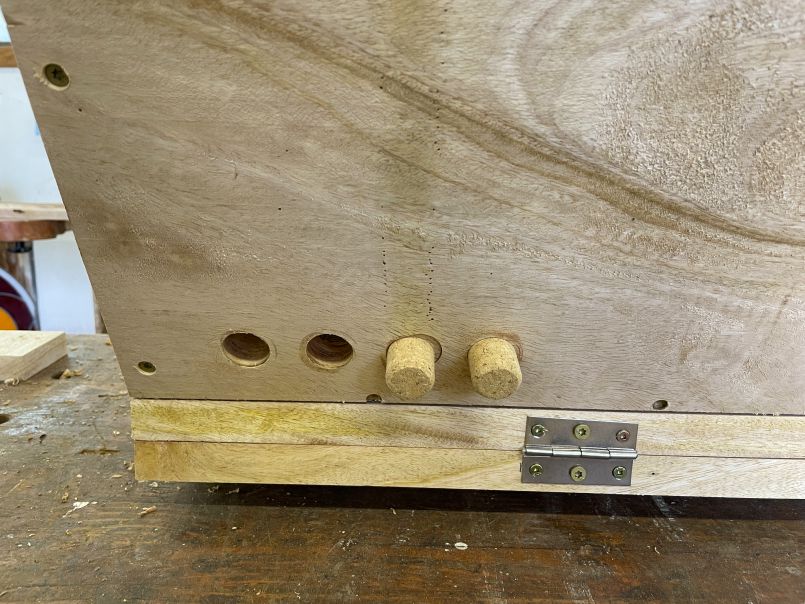
Holes for entrances are made, and some plugged with corks. Being able to adjust their entrance space is important.
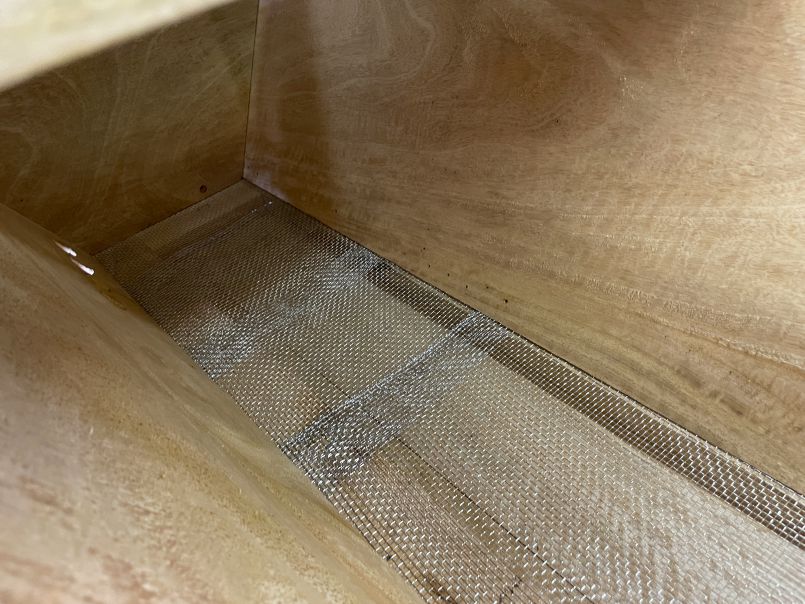
On the bottom is a mesh that other insects can fall into but the bees can\
t. It can also be used for summer ventilation.'
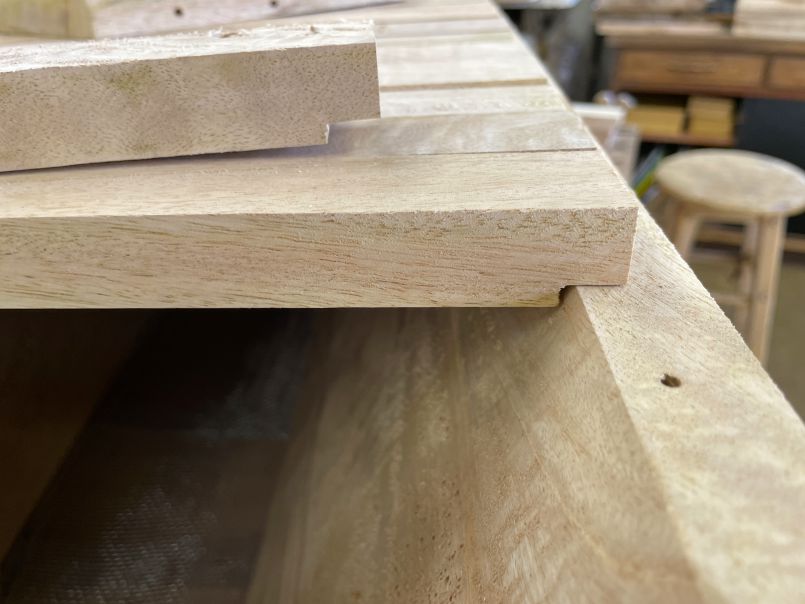
The top bars are cut to length
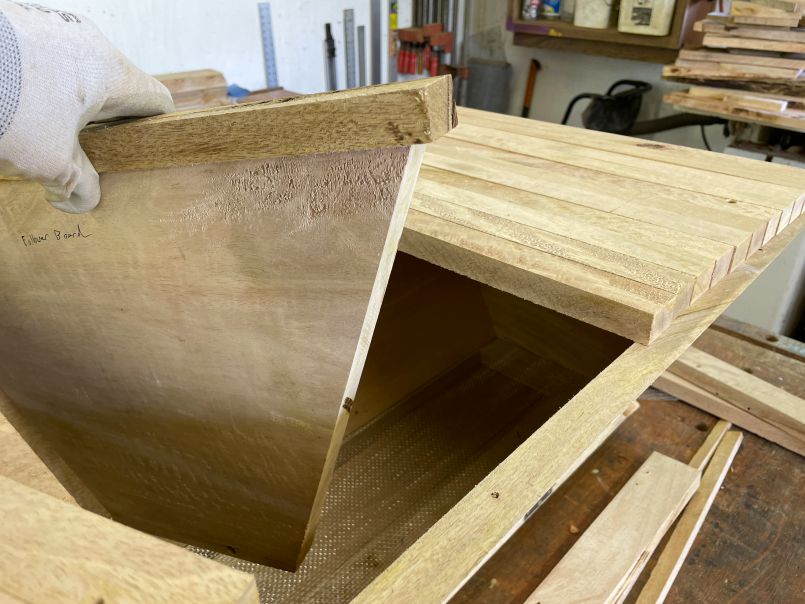
A follower board allows easy adjustment of the space for the bees.
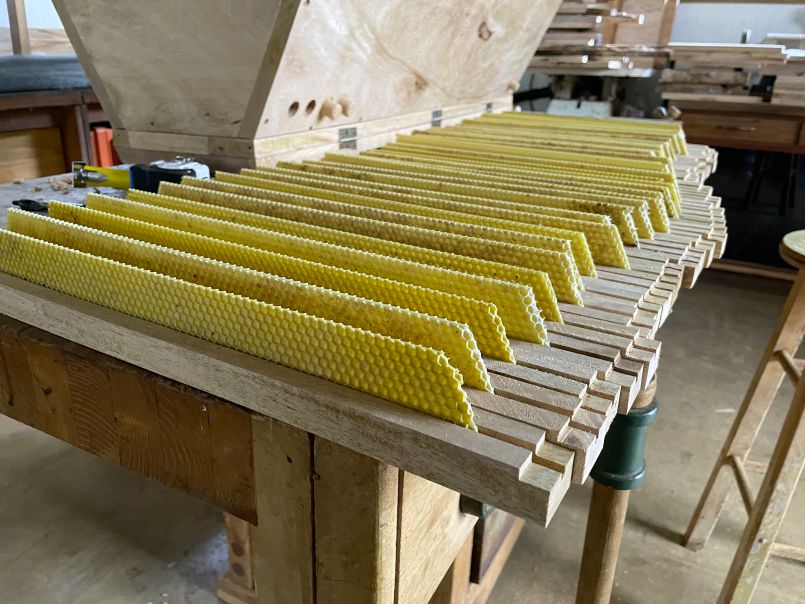
Old comb foundation pieces are cut into strips and added to give the bees guidance in building their comb (we like straight lines!)
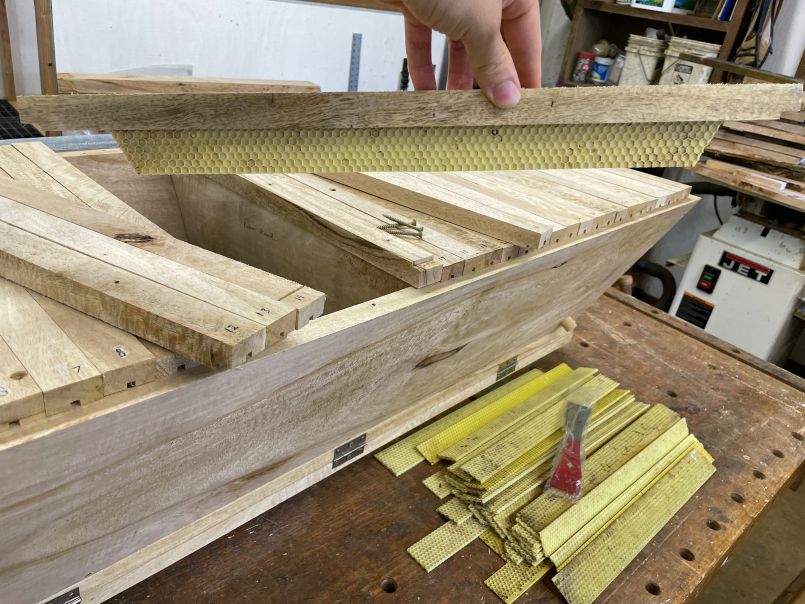
They also have 45 degree angles
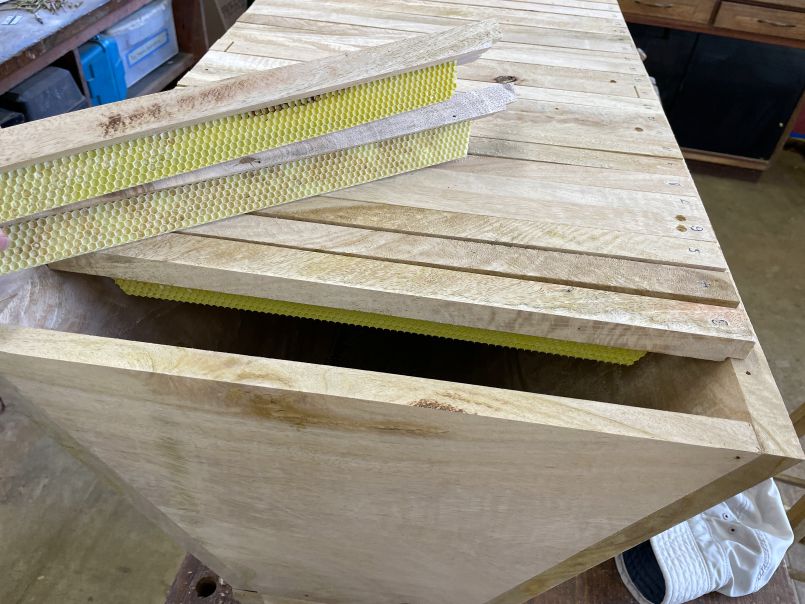
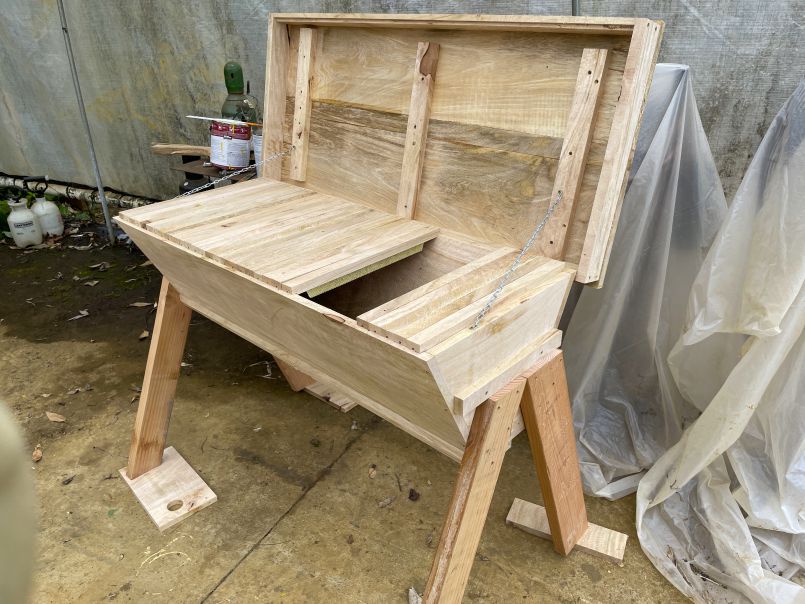
The completed structure. Now to paint the outside.
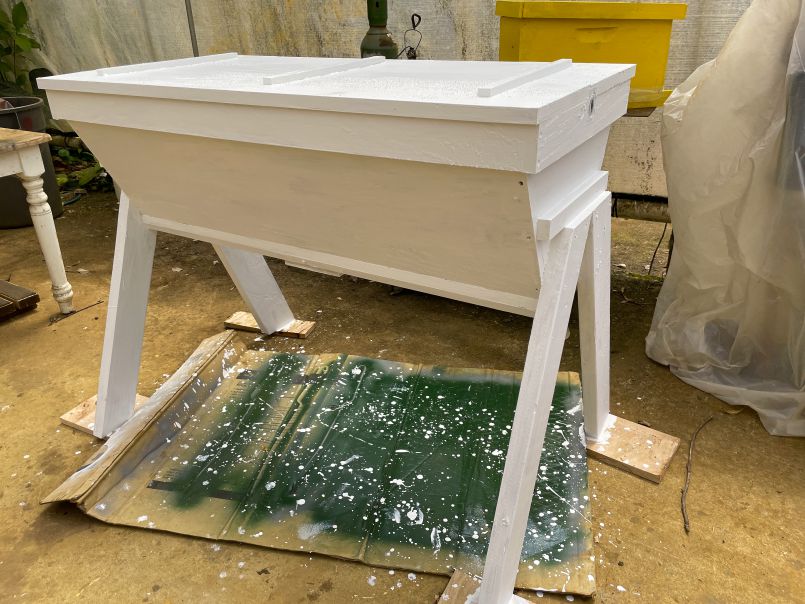
It needs to hold up to the weather, but the inside remains unfinished since the bees prefer it that way.
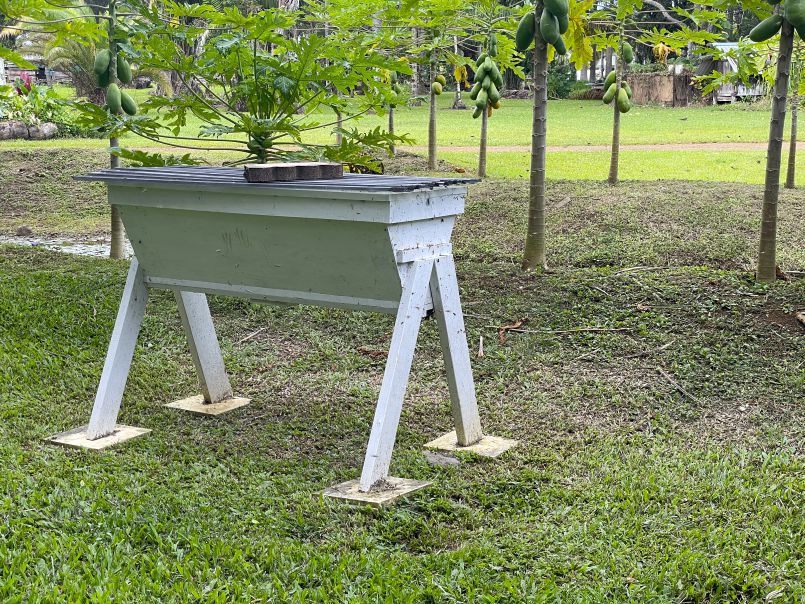
Out it goes to sit next to the stream and papayas. Some lemongrass oil is placed inside near the entrance to lure a wild swarm.
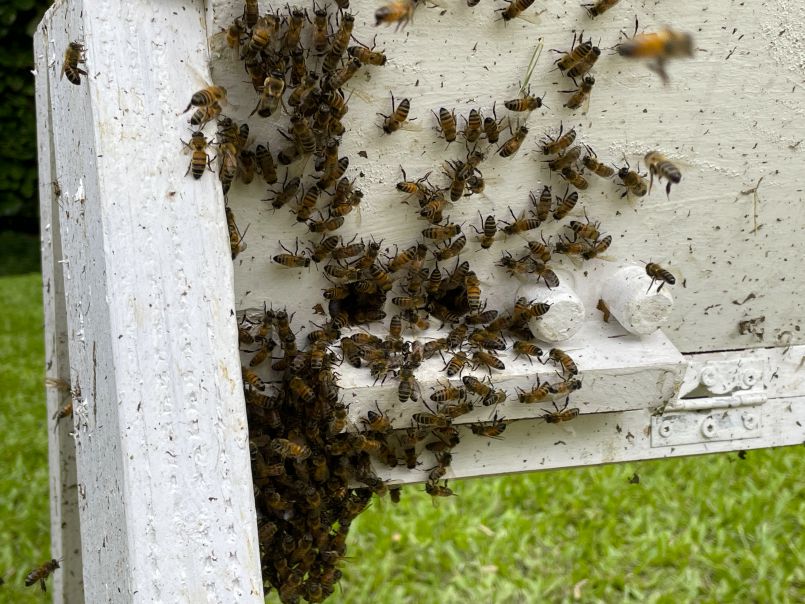
Jai! Just a month or two later a small swarm of bees finds it to their liking and moves in.
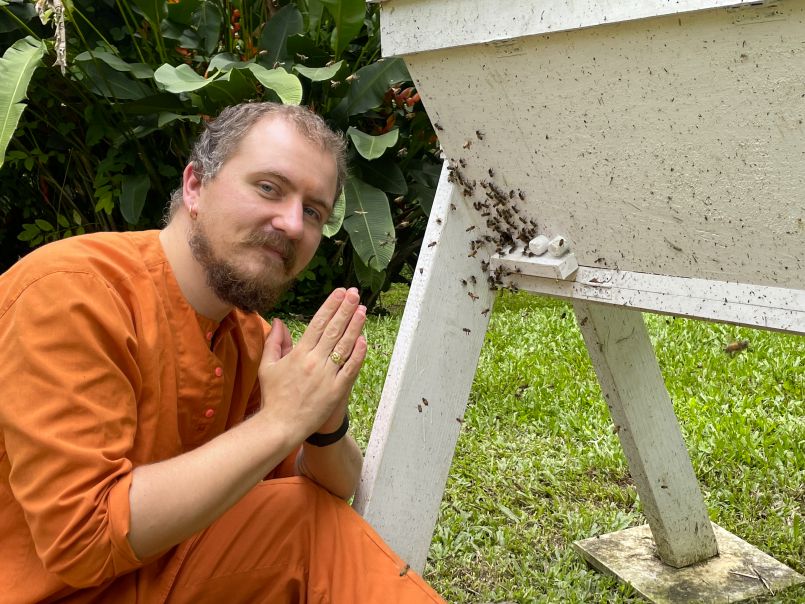
Swami with bees flying around his face. Swarming bees are rather harmless since they have nothing that they are defending.
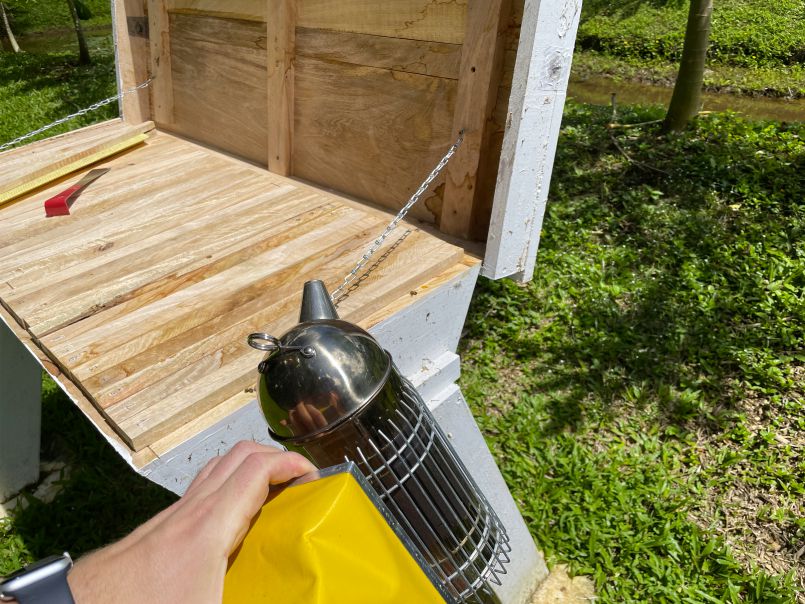
A month later and it\
s time to inspect their progress. A smoker is useful since we don\'t know their temperament yet. Something largely determined by the individual queens and their pheromones. '
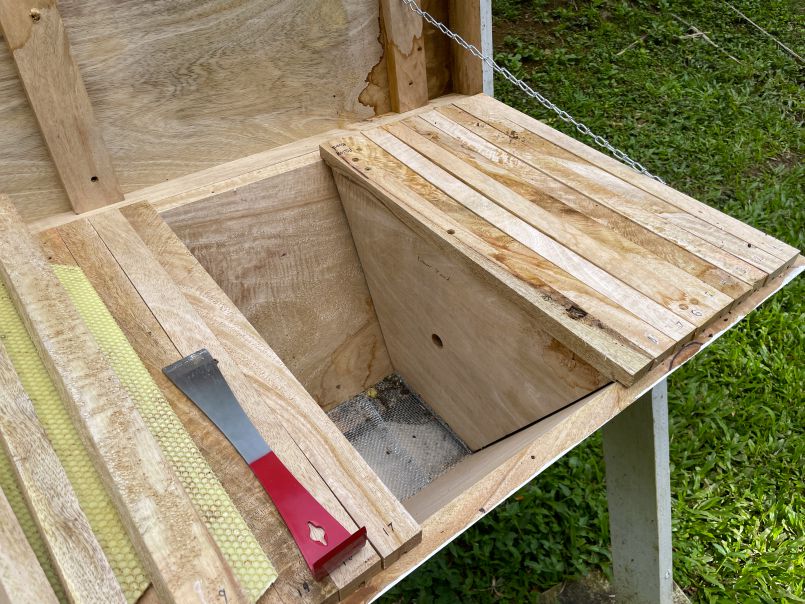
First we remove some boards to get a look at where the hive is.
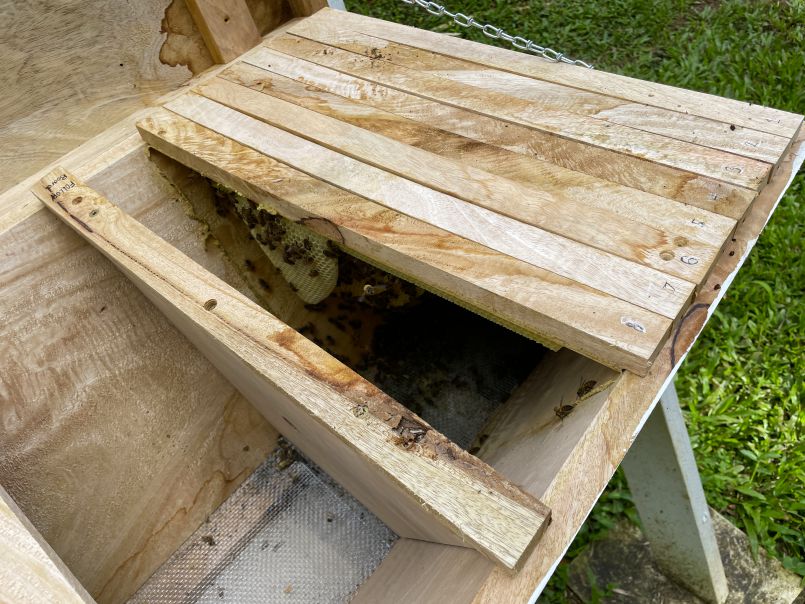
A peek inside. They\
ve already reached the last topbar in their construction project. '
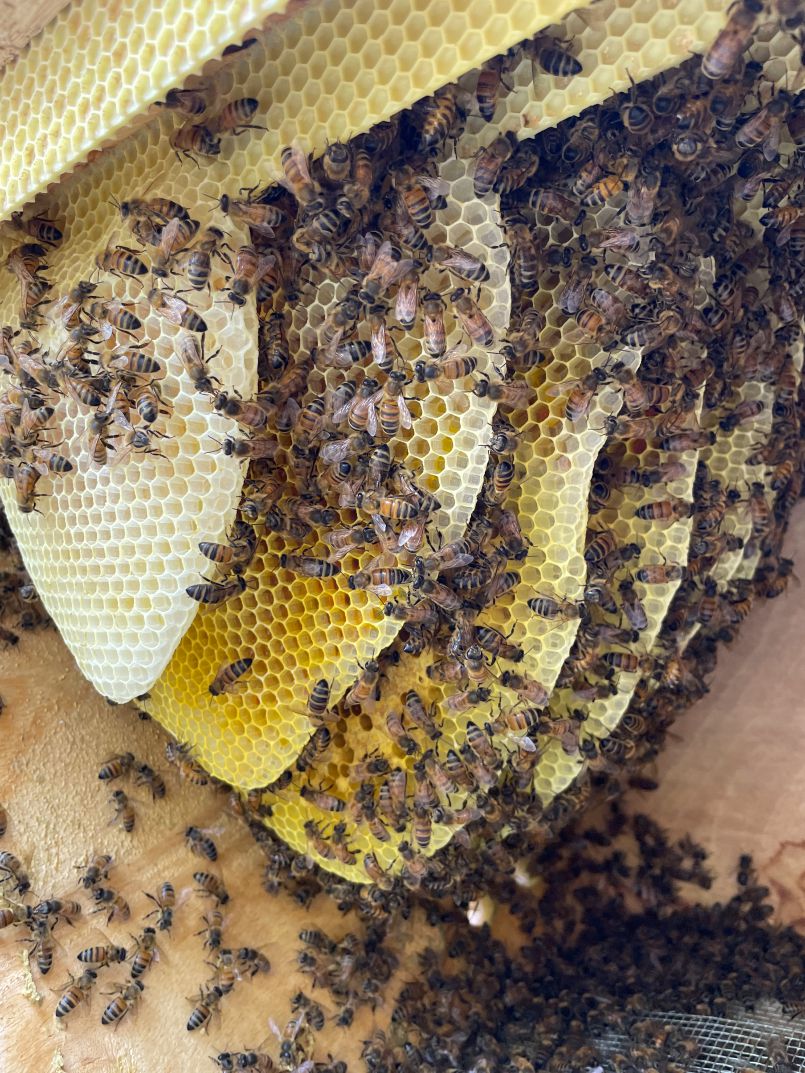
Yay! A happy, friendly colony of healthy little bees! They still have work to do to fill out these frames fully.
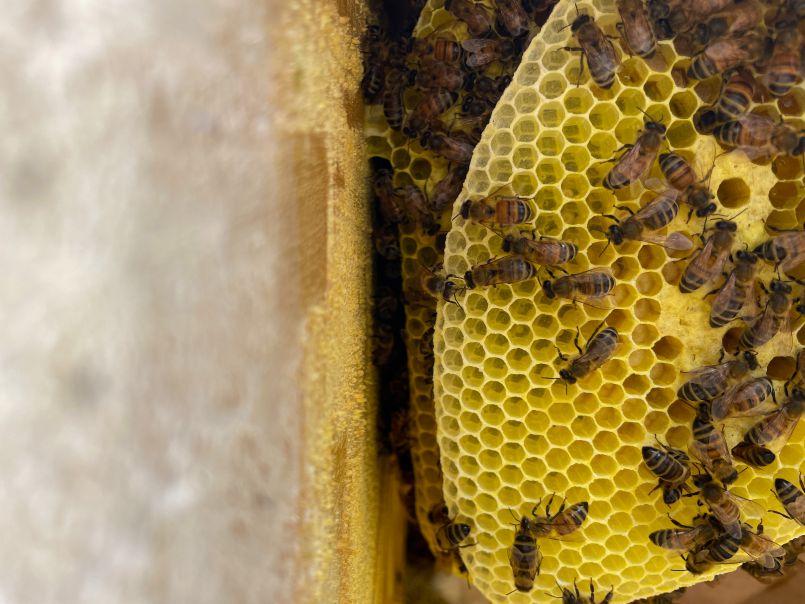
The 45 degree angle mostly worked. They only attached their wax in a few little spots.
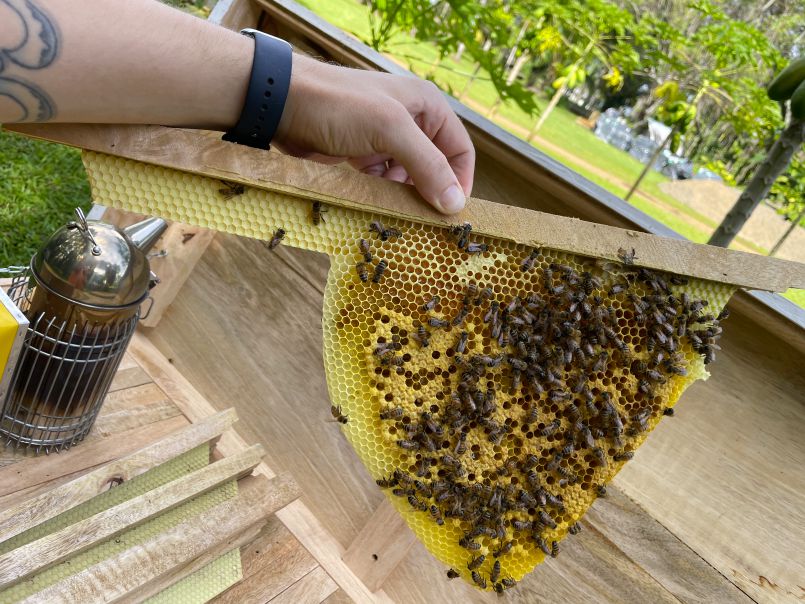
Time to inspect the frames.
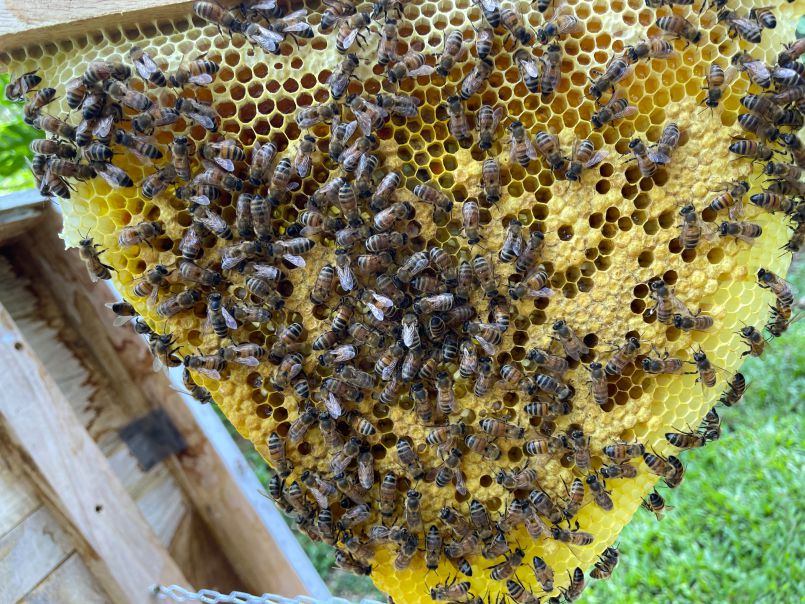
They have lots of capped brood (soon to hatch bees) and lots of honey and pollen stores. All good things.
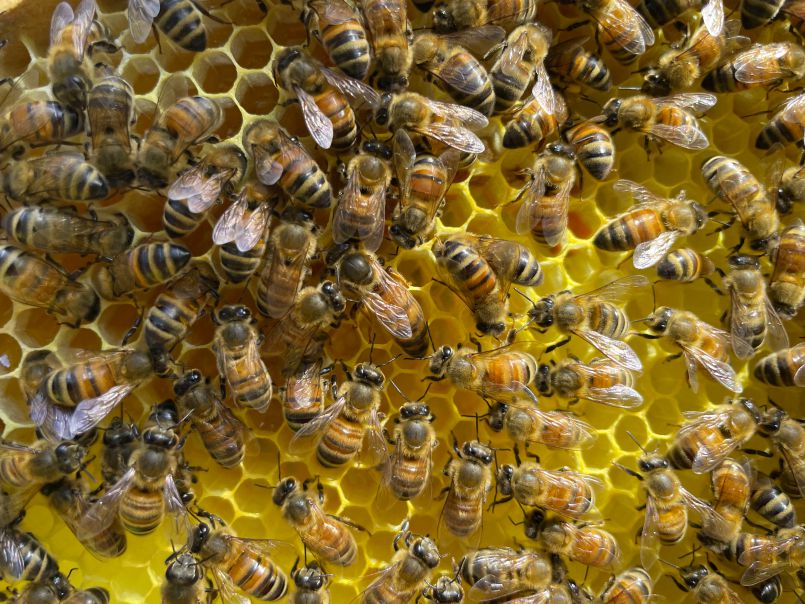
In the center is the queen. She\
s a little small, but she\'s laying lots and lots of eggs. '
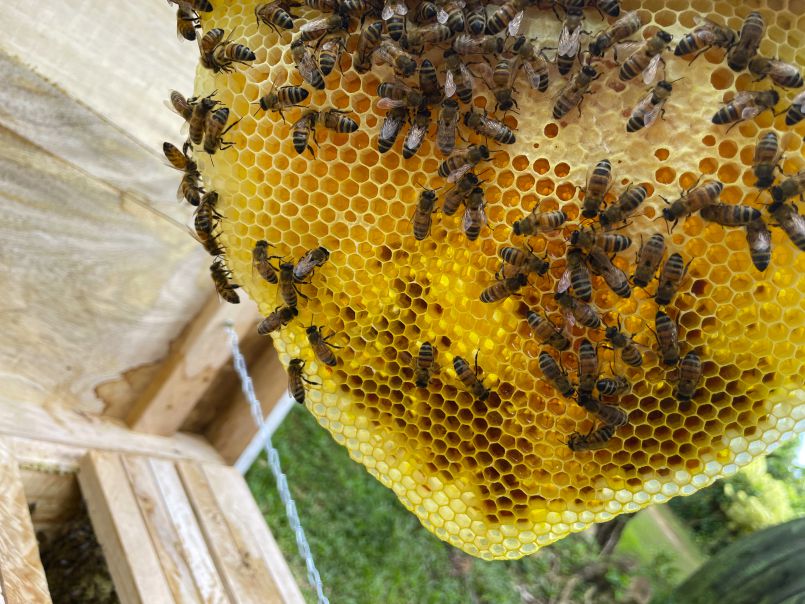
And already, we find that the bars furthest out are being used only for honey and pollen. The system works! Aum Sivaya.
}
];