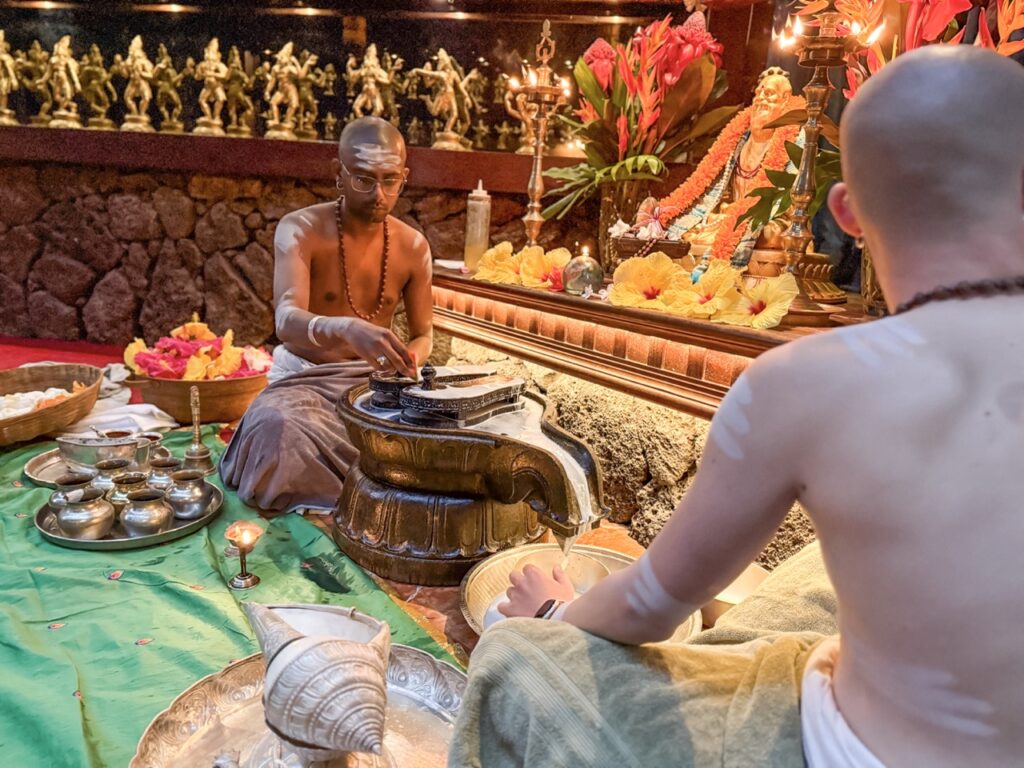
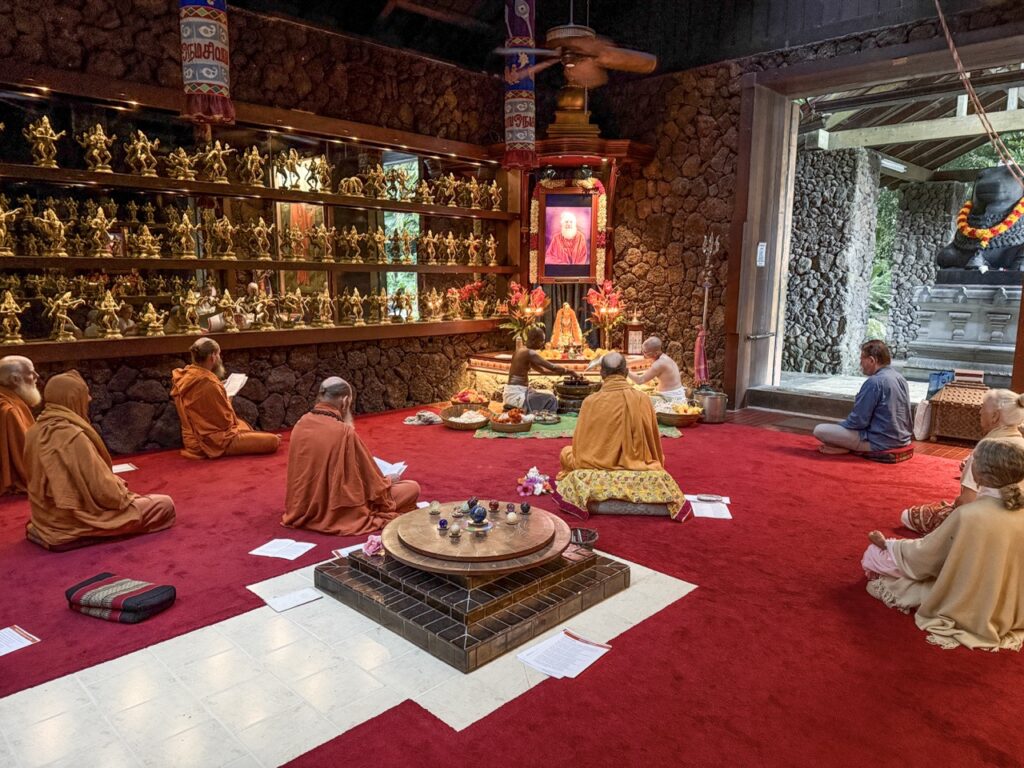
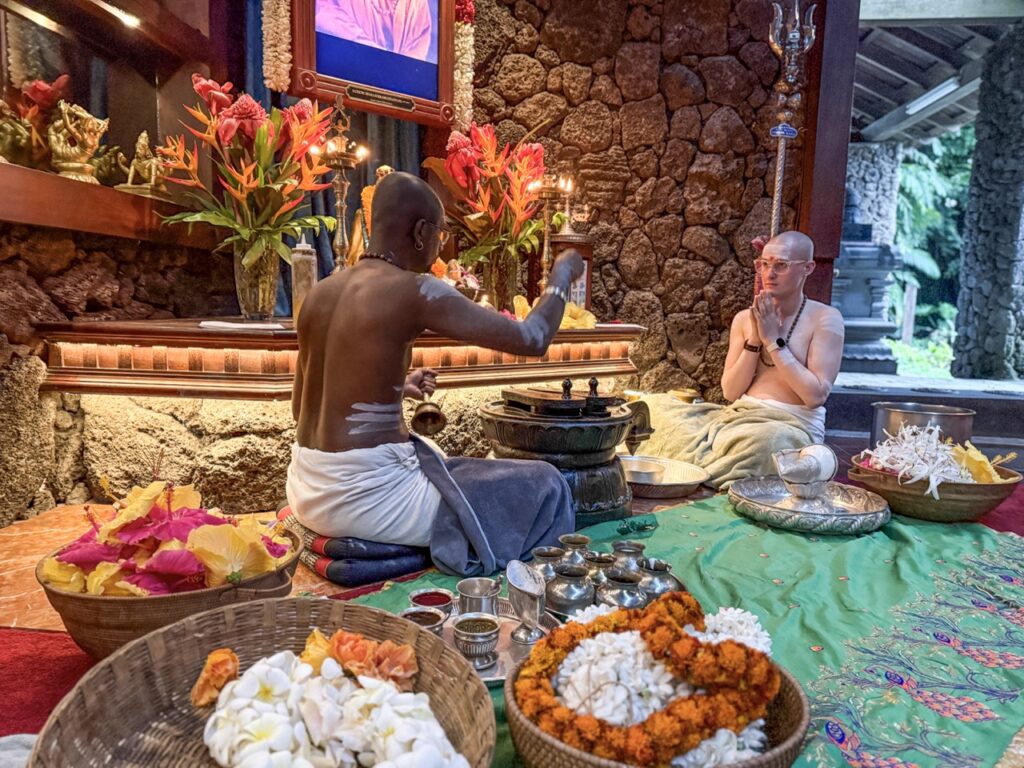
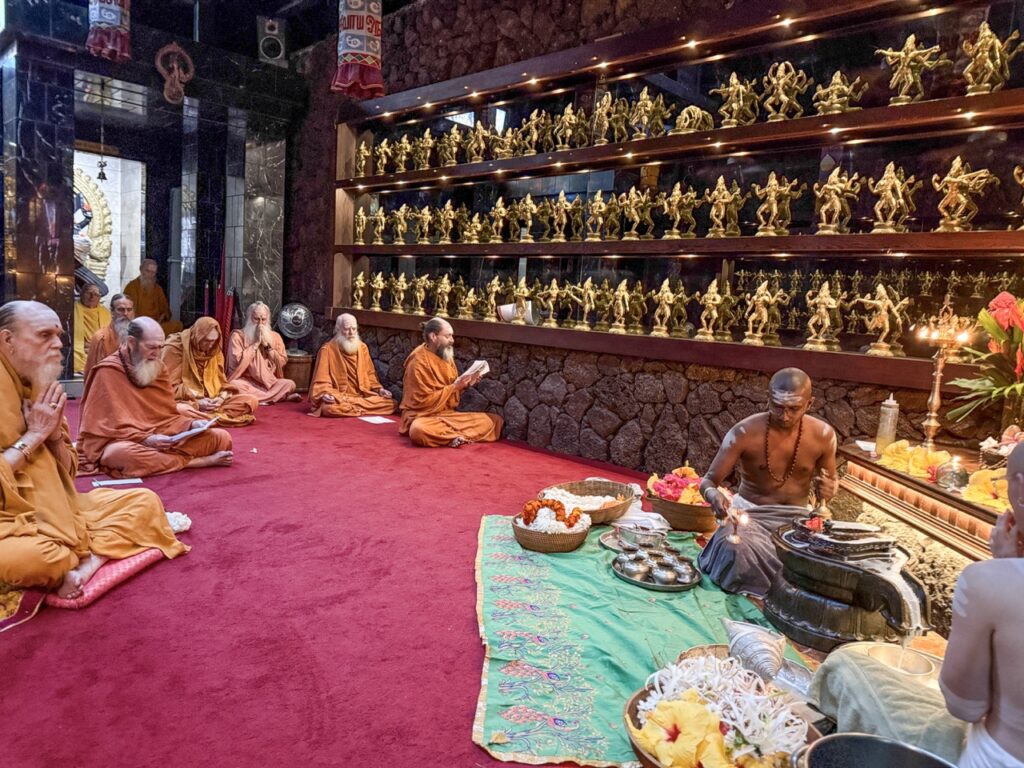
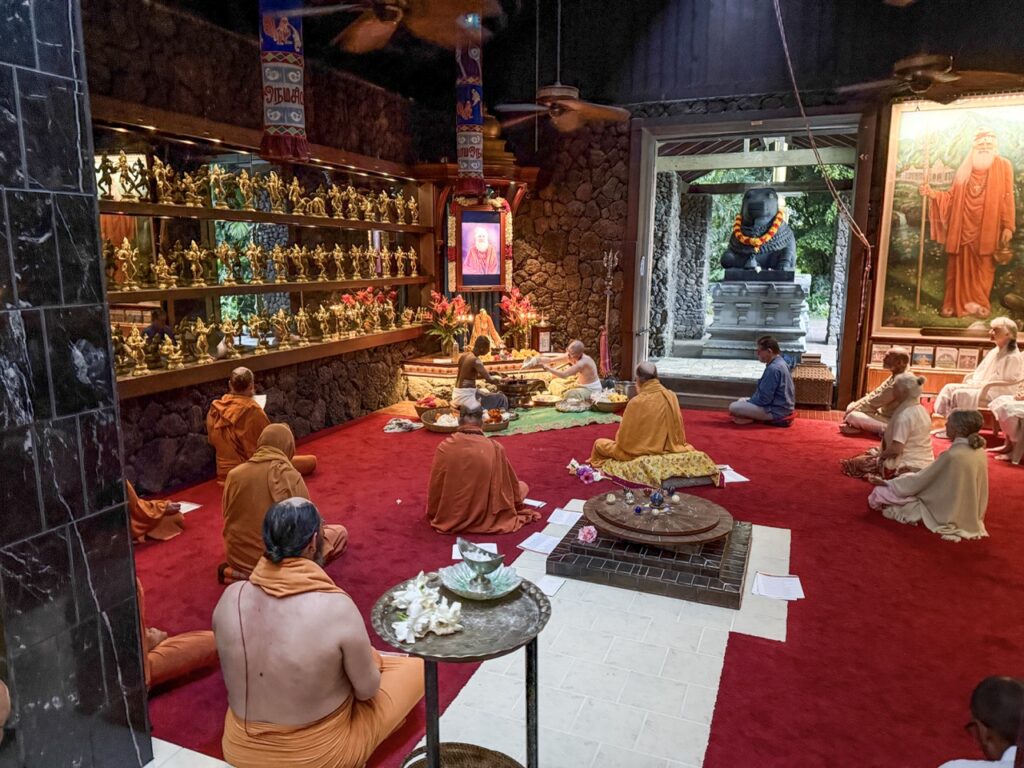
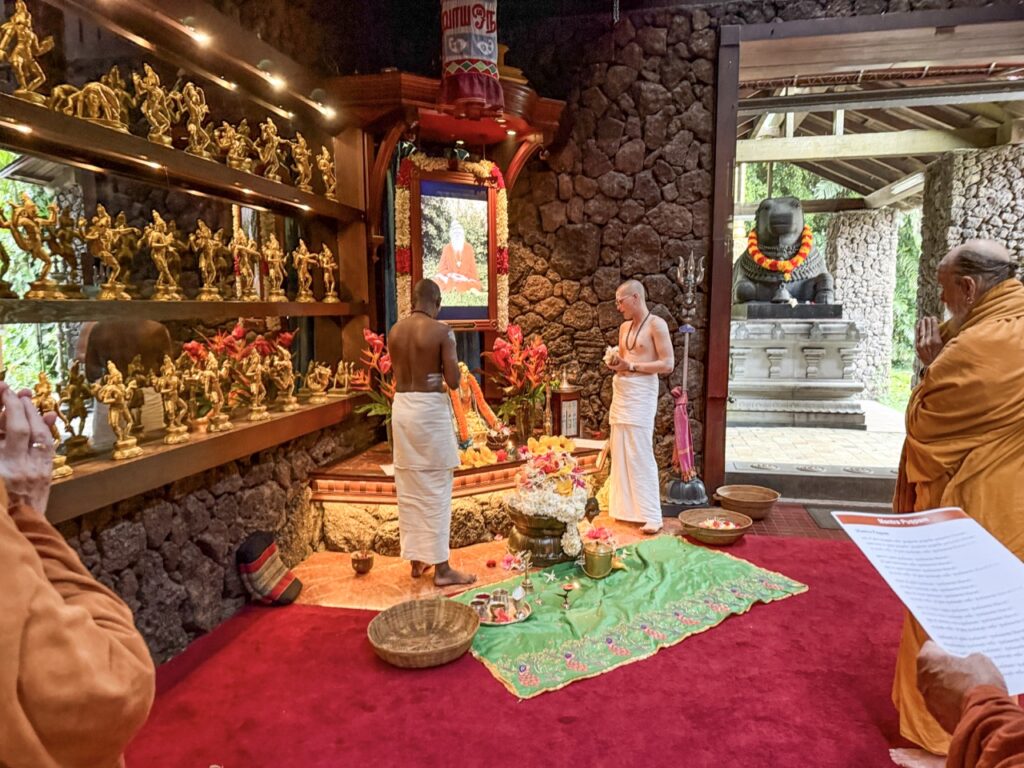
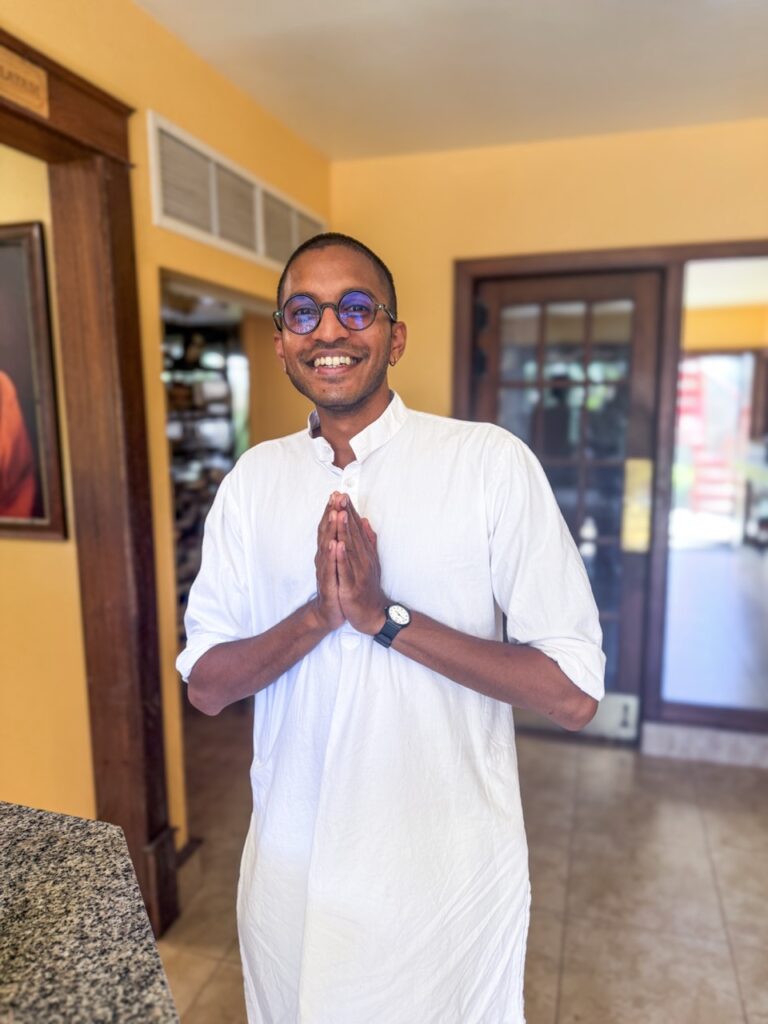
Sadhaka Sabānatha and Sadhaka Shankaranatha perform today’s puja
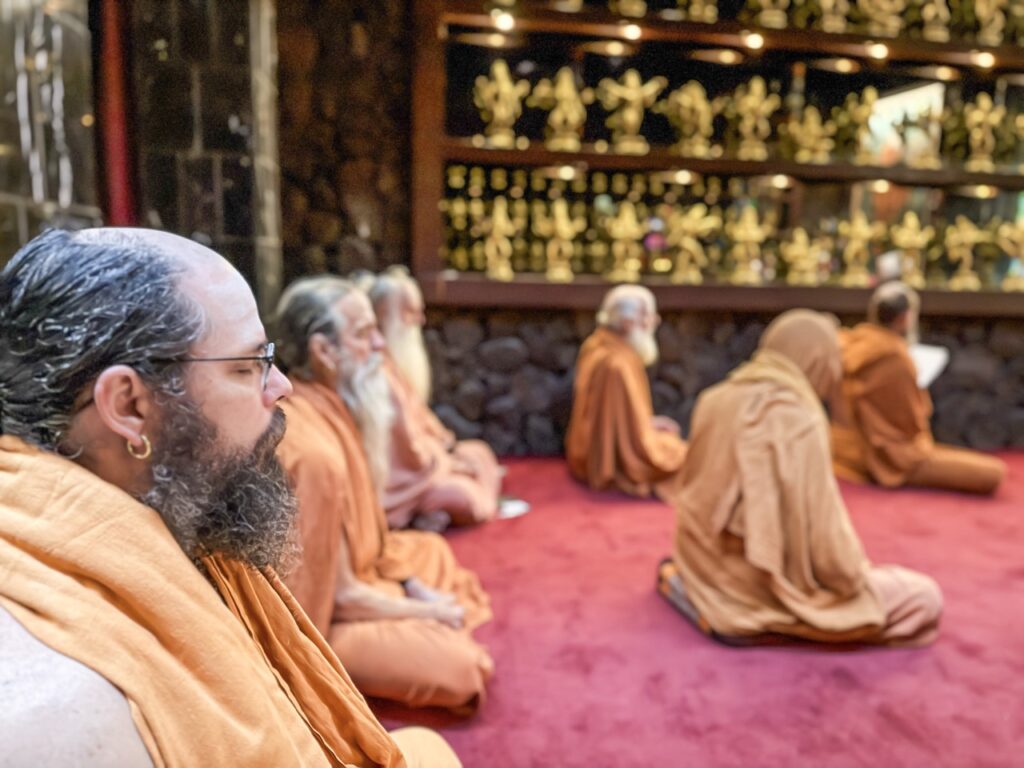
Monks and local members attend
“Even harsh karma, when faced in wisdom, can be the greatest catalyst for spiritual unfoldment.” – Gurudeva
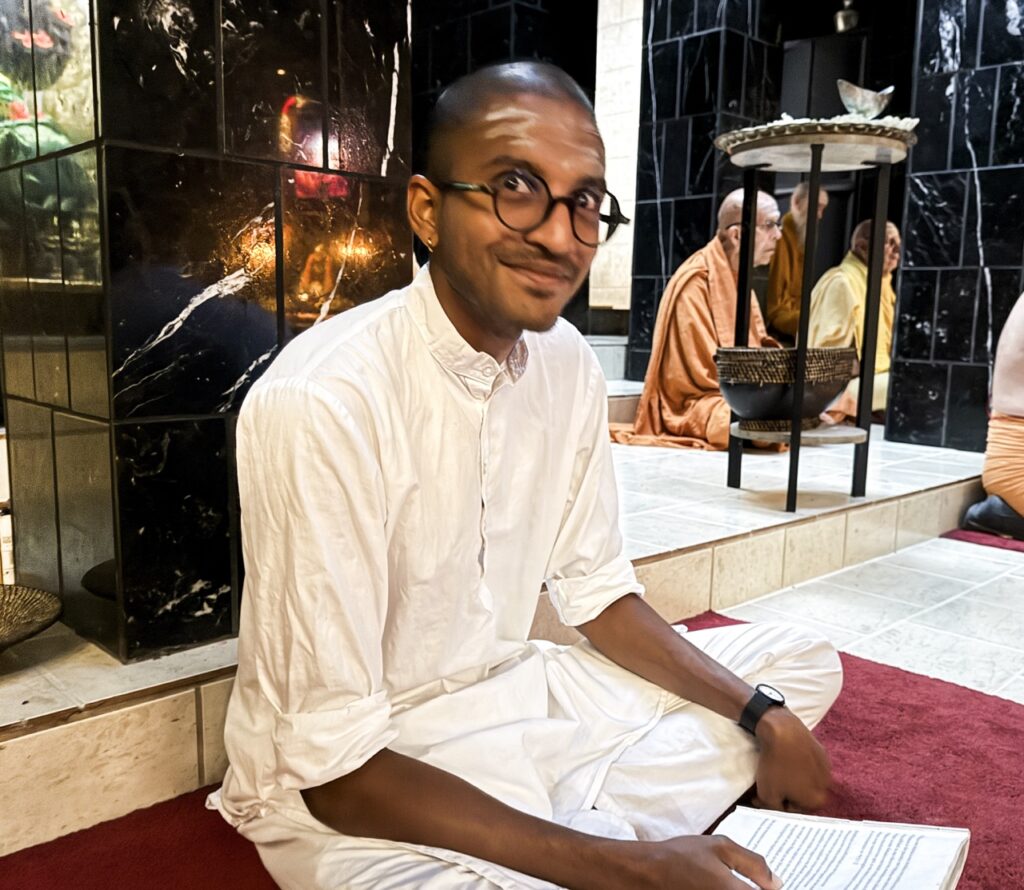
Arinien helps to chant Sri Rudram with the monks. Did you notice Gurudeva sitting on his shoulder?
“Flow with the river of life and merge in Siva’s ocean of oneness.” – Gurudeva
“To know yourself is why you are on Earth. You were born to realize the Self. You are not here to make money, to clothe yourself or to entertain yourself. These are incidentals.” – Gurudeva
Jai Gurudeva!
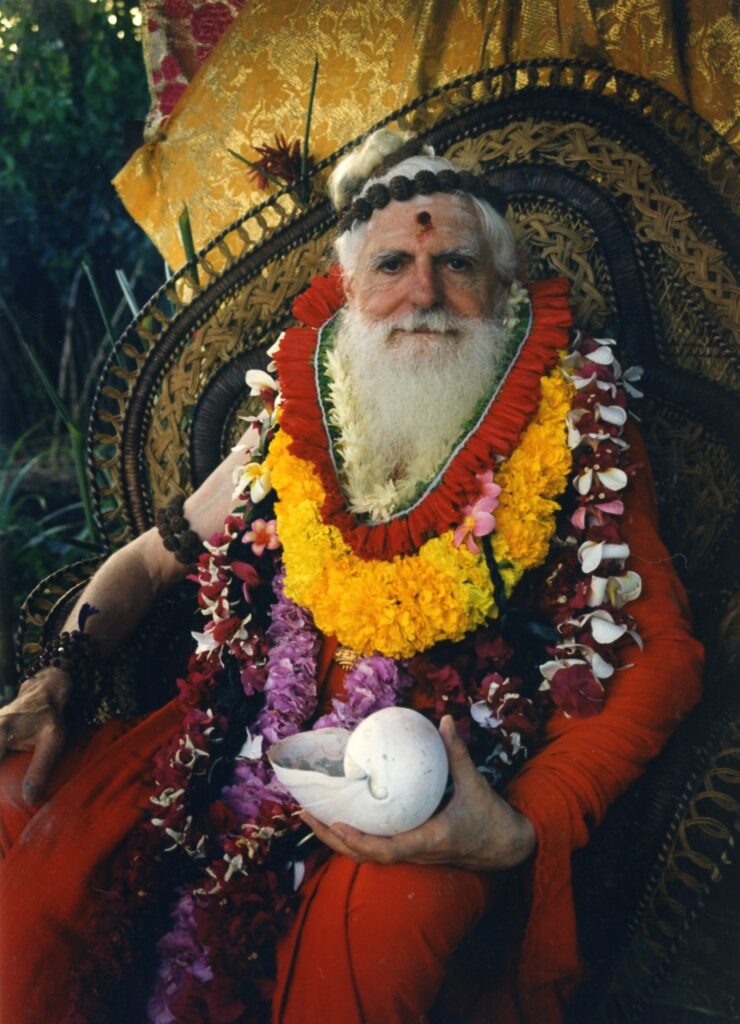
Today is the Chitra nakshatra, meaning today we observed our monthly padapuja to Gurudeva’s tiruvadi in Kadavul Temple. At 6am the monks and island members arrived to place flowers at Gurudeva’s shrine, chant Sri Rudram and offer milk, honey, sandalwood, incense and more. This day is always a good time to inwardly connect with Gurudeva for blessings and insights.
Aum Namah Śivaya
“Intuition travels through a purified subconscious. Before we can utilize the superconscious or intuitive realms of the mind, we must be able to resolve those past experiences which may still vibrate in our subconscious.” – Gurudeva
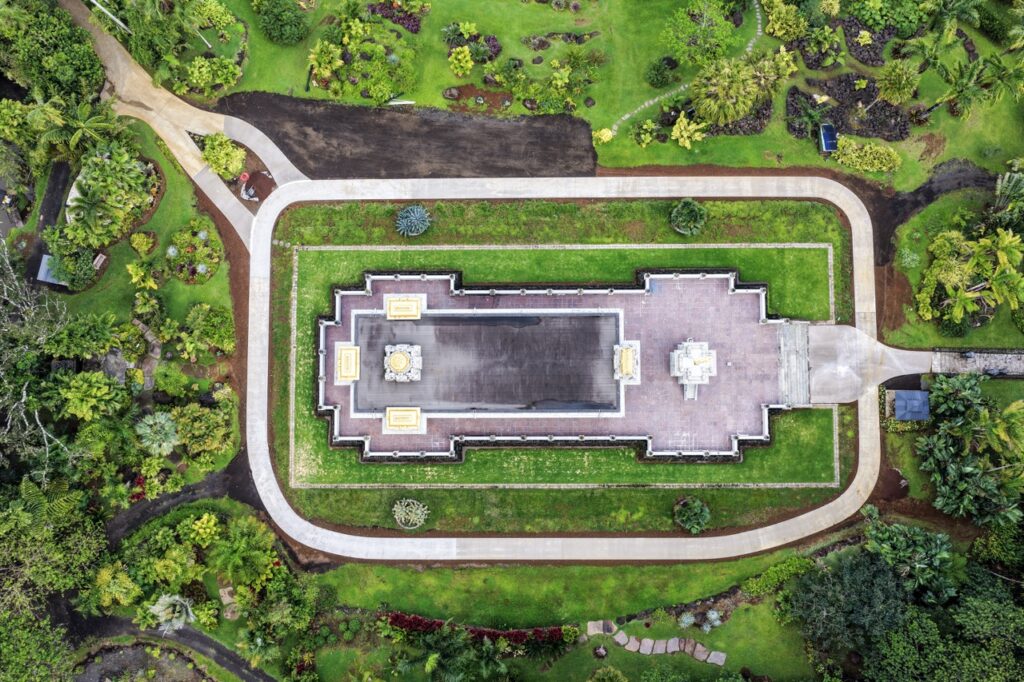
Today our monks were able to send up our new drone for a quick test flight, and capture a few photos with its Hasselblad-engineered lenses.
Apart from using drones for taking pretty photos, the Aadheenam puts them to work in other capacities as well, such as in surveying our agricultural, construction and landscaping projects. They are also used for taking updated images of our sprawling, nearby agricultural water systems—an important part of our island’s local sustainability efforts in our area.
A view from the top
The aadheenam’s new survey drone. Time to launch.
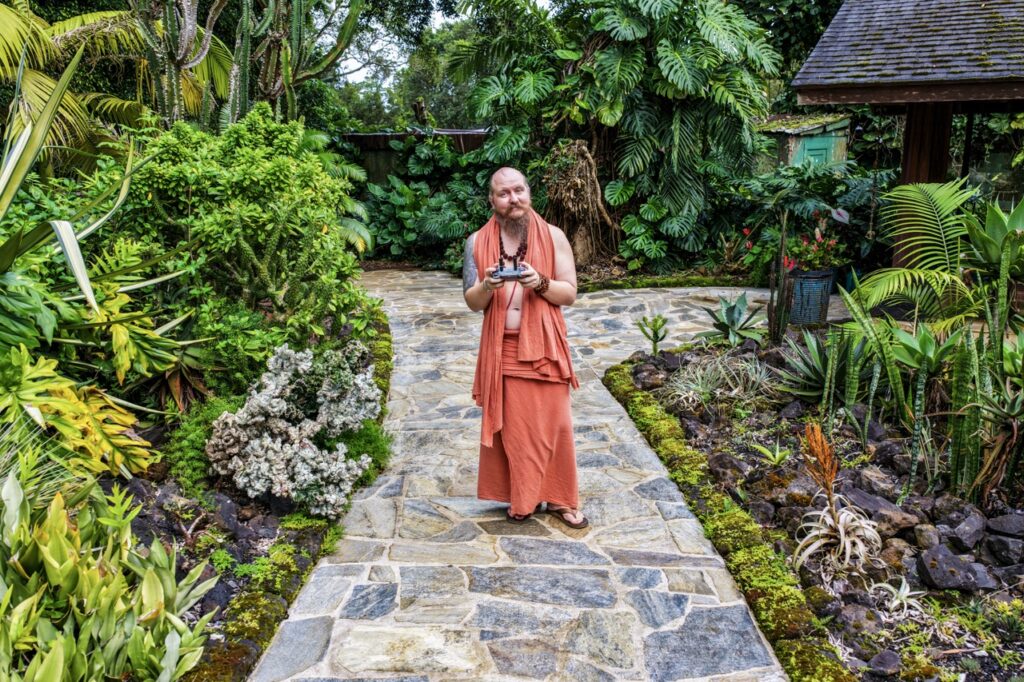
current test pilot
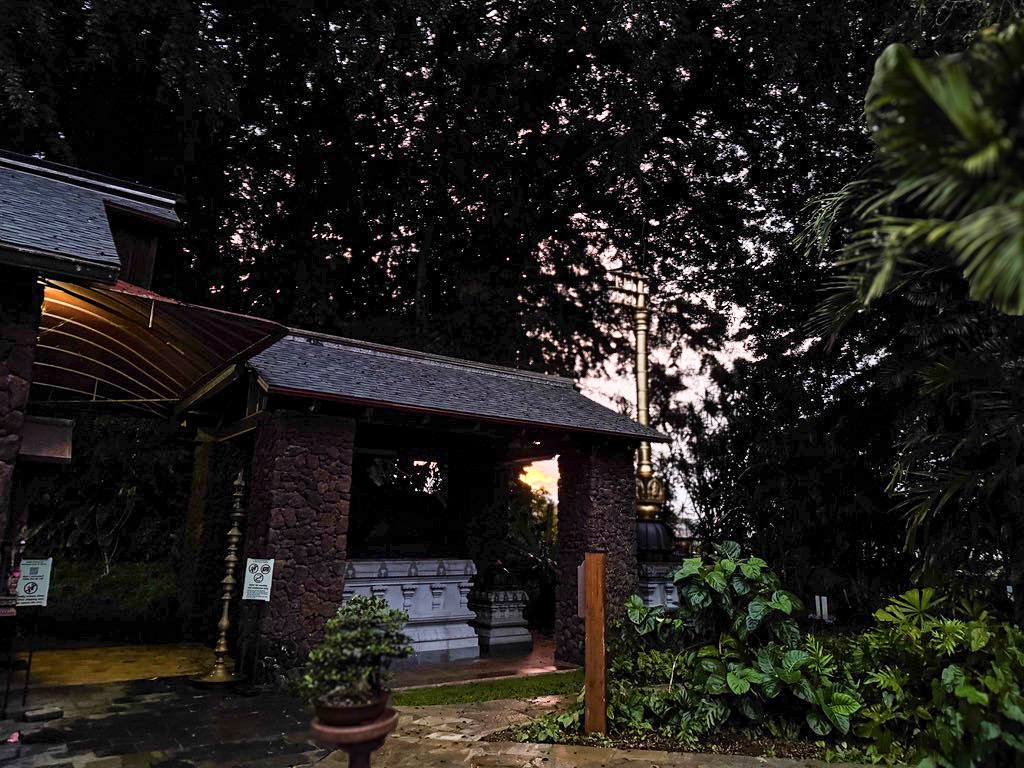
Kadavul Temple
It takes just a few seconds to fly over the pali to Iraivan Temple
Looking back we can see to the ocean
The temple’s new path foundation is looking bright!
A quick journey to the rudraksha forest parking area. Can you spot Hanuman?
Our vegetable garden looks quite organized from up above
The mulch (on the left) is gifted to us by island tree trimmers
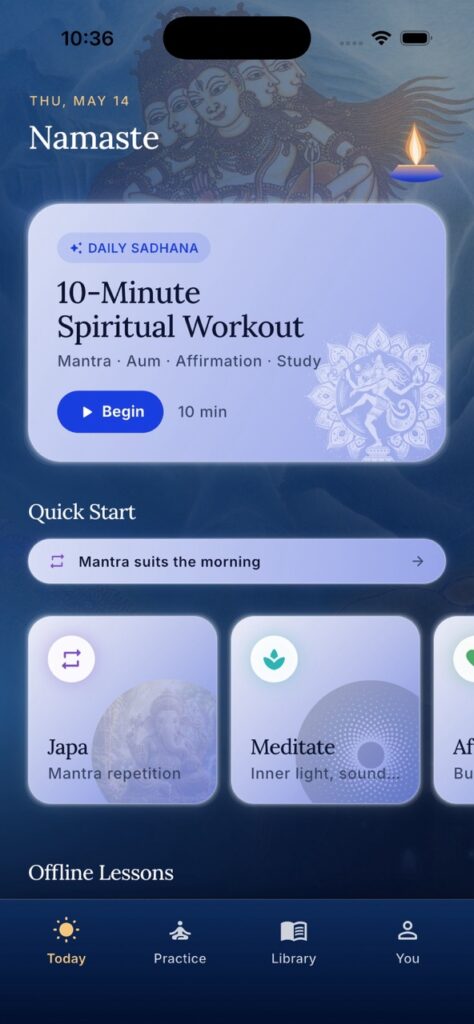
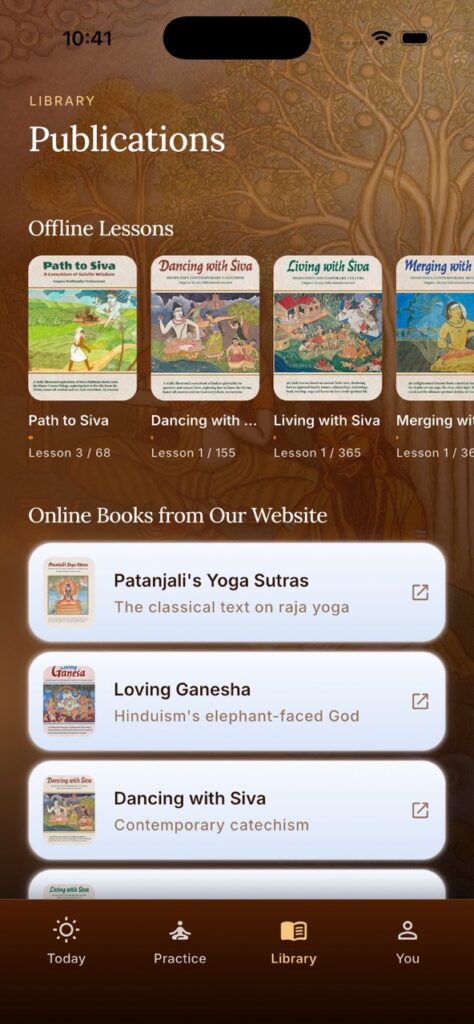
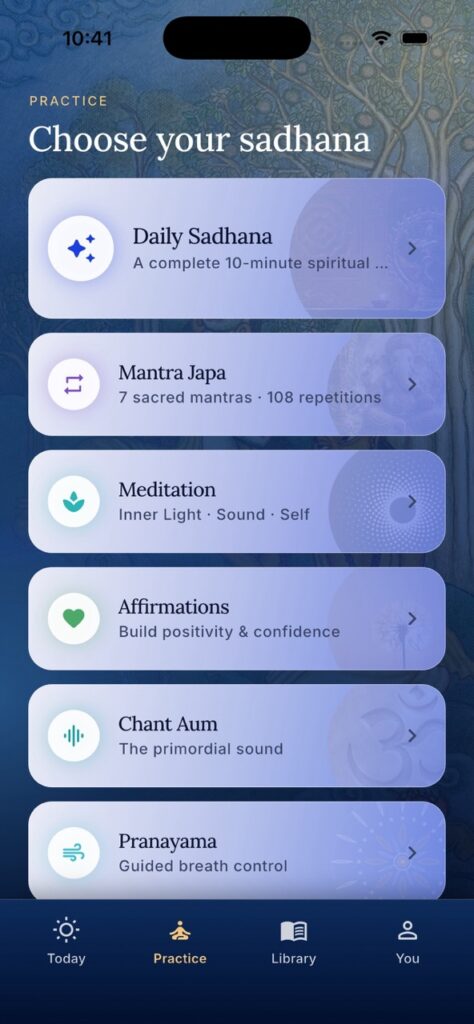
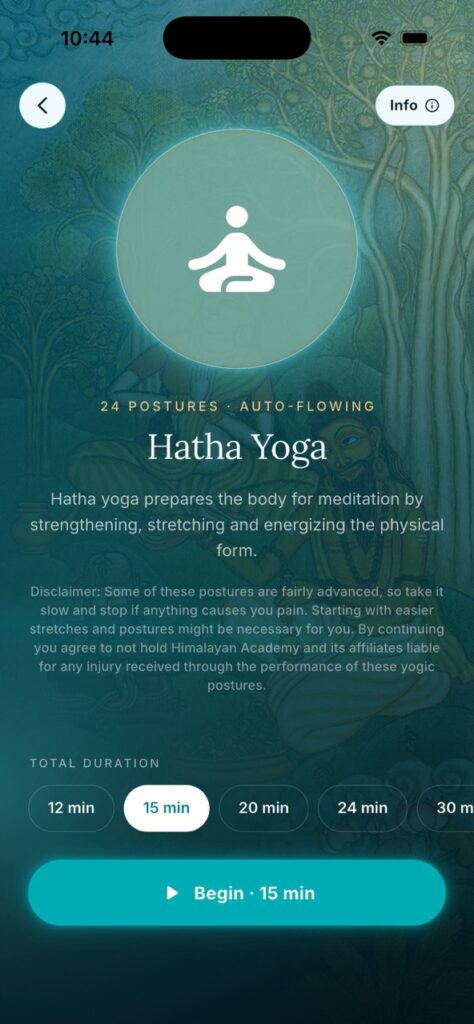
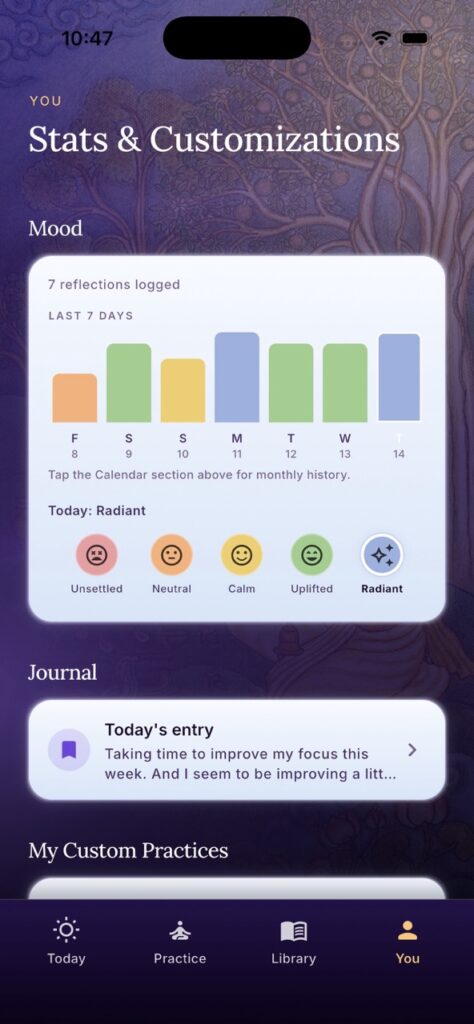
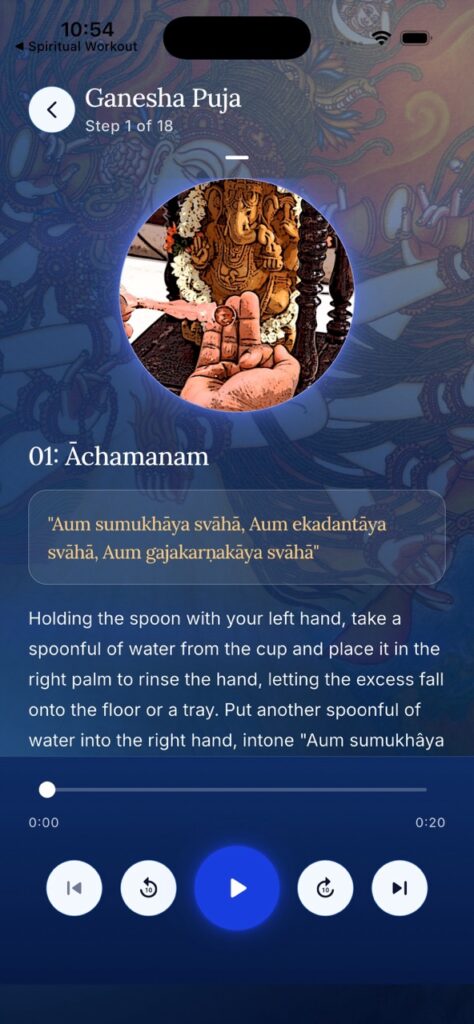
Today we have just rolled out a complete rebuild of the Spiritual Workout App for iOS! Android users will be receiving their update next week.
So if you have an Apple device, you should be able to use it today. If you have the previous version already, it might auto-update, or you can go to your app store and search for it to download it or update it manually.
What’s New
A complete rebuild — refreshed look, smoother feel, and several new ways to deepen your daily practice.
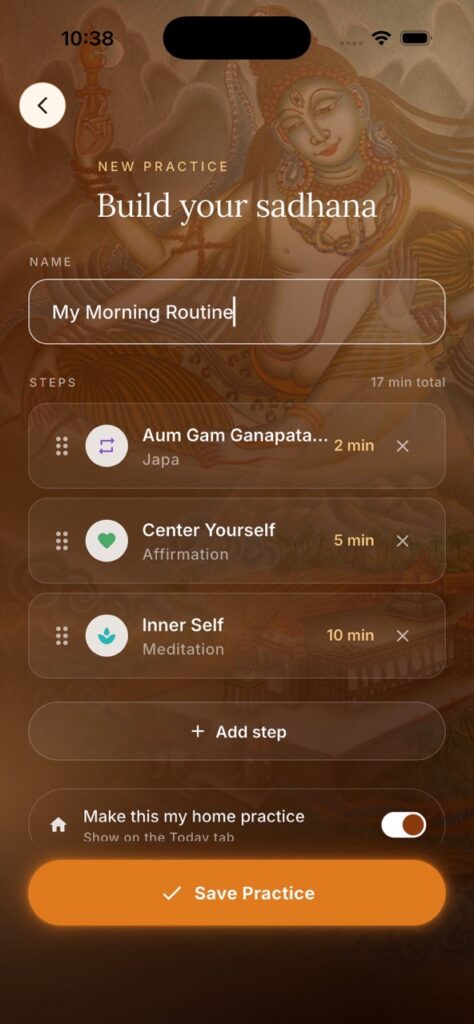
Custom Routines — design your own daily sequence, with the practices and durations of your choosing
Custom Affirmations — write your own alongside the built-in ones
Journal — capture insights and reflections after each practice
A daily reflection from Gurudeva on the home screen
Practice insights, a 14-day mood chart, and a quiet heatmap of your year
Multiple color themes to suit your mood and surroundings
Gentle daily reminders, and an optional Face ID lock for privacy
Fully offline. No ads. No tracking. A refuge to return to each day.
More info from our App Store Description:
While today nearly everyone appreciates the need for daily exercise to stay fit and healthy, many don’t realize the need to maintain a balanced spiritual life through daily practices. The Spiritual Workout is designed for Hindus — and for those who consider themselves Spiritual But Not Religious — who would like to maintain a daily spiritual practice but may not always have much time to give to spiritual well-being.
The app offers a range of practices drawn from the Saiva Hindu tradition:
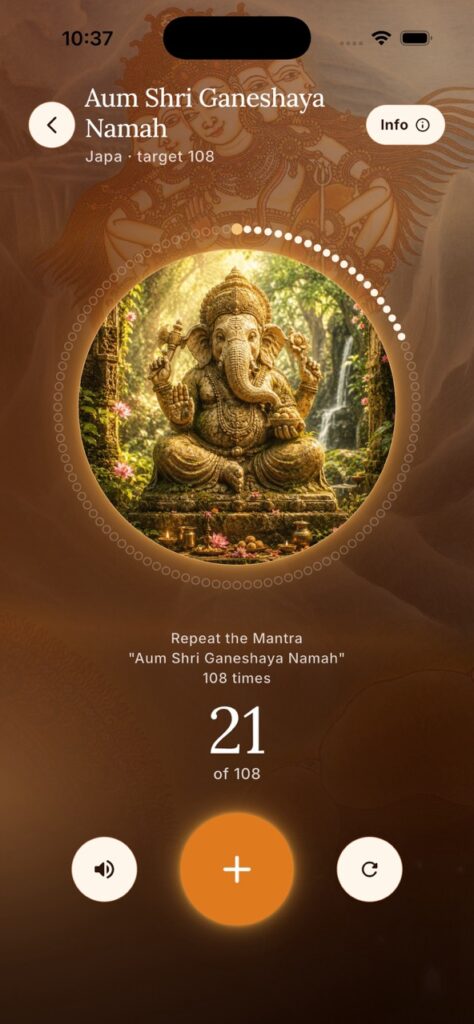
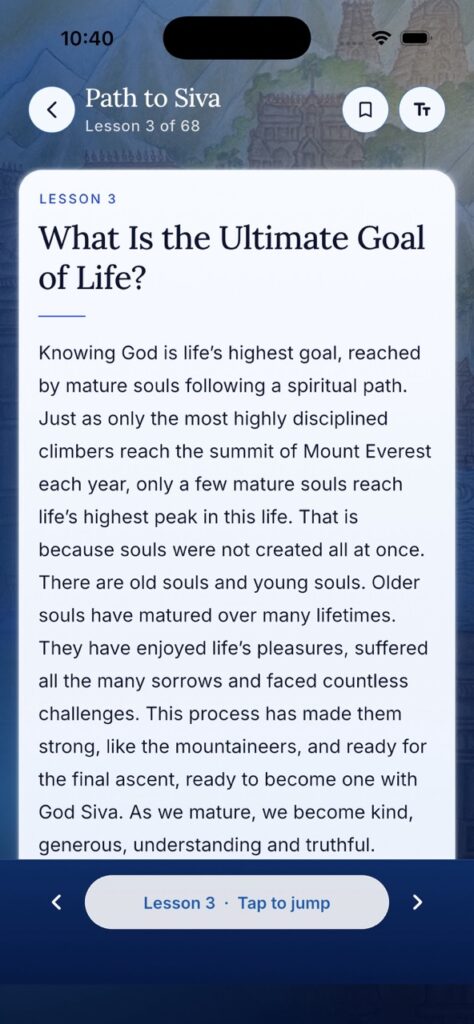
— Japa: mantra repetition — Meditation: guided sessions of several lengths, with optional voice guidance — Affirmations: built-in affirmations to gently reprogram the subconscious mind, plus the ability to add your own — Aum Chanting: the most fundamental of all mantras — Pranayama: a simple but powerful breathing practice — Hatha Yoga: gentle posture sequences — Ganesha Puja: a complete home worship with step-by-step audio guidance — Chanting: Learn several complex Sanskrit mantras — Study: four important Himalayan Academy publications — Path to Siva, Dancing with Siva, Living with Siva, and Merging with Siva — available offline, with bookmarking and adjustable text size
For those new to spiritual practice — or for busier days — the 10 Minute Sadhana combines several practices into one short daily routine. You can also build your own custom sequences, combining any practices in any order, with the durations you choose.
Spiritual Workout works offline, contains no ads, and tracks nothing about you off your device. It is offered as a refuge — a place to return to each day, not a streak to maintain.
One of our monks took this image at the ocean. The Sun is on one horizon with the full moon behind us on the other
Kadavul starts to receive the early morning light
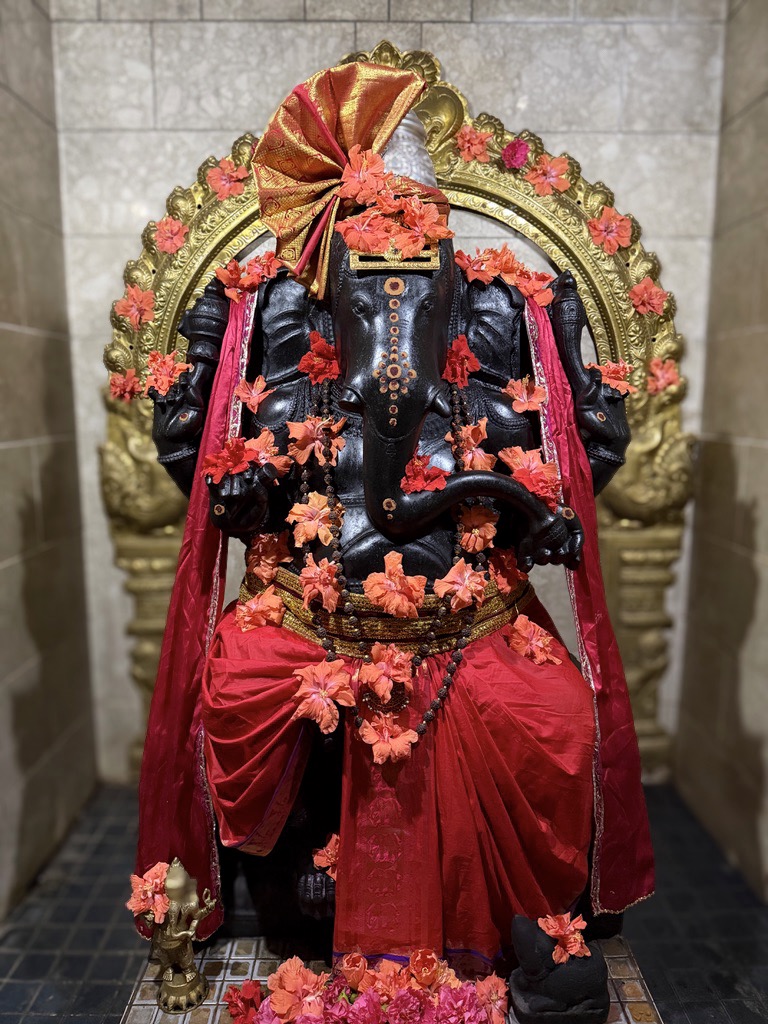
Just after sunrise, Ganesha receives his daily abhishekam
Our family of Nēnē like to land wherever an open, grass field is found in the gardens
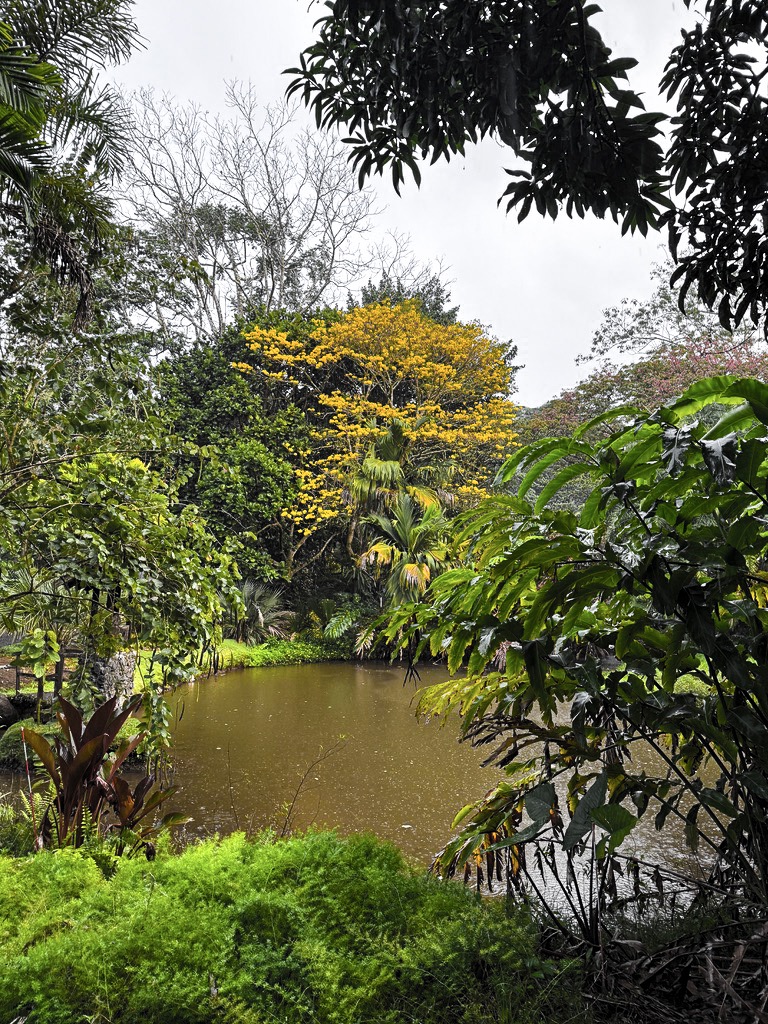
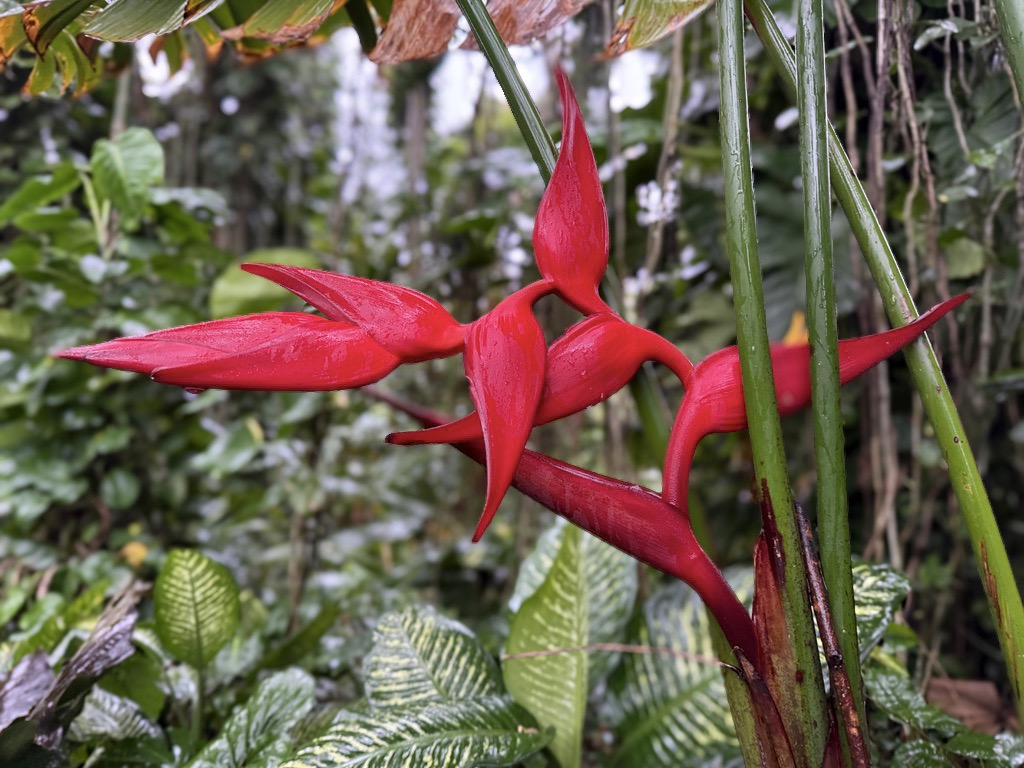
Several flowering trees are blooming bright with thousands of colorful flowers
Brightly colored dragon flies frequent our streams and ponds
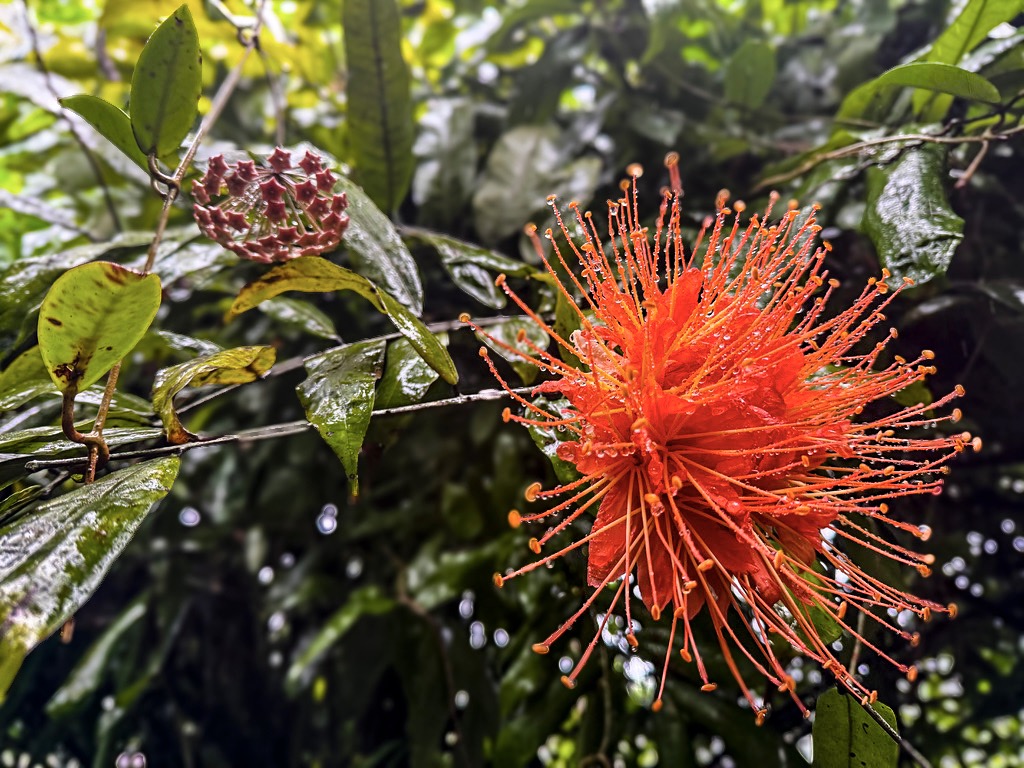
A light morning shower makes this firework-flower sparkle
Aum Namah Sivaya
Recently Kauai has been having bright sunny days with a few clouds and perfect temperatures. It’s our spring time and the flowers have started blooming everywhere, while the birds and insects are happily enjoying the clear air. During the full moon our monks observed a three day retreat—a good time to appreciate the ocean side, and to take longer walks throughout the monastery gardens. This is the season is when we have Nēnē (our special endemic Hawaiian geese) visiting the property. A specific group (see slideshow) has chosen to make the Aadheenam a consistent stop in their migration cycle. Aum.
“I am the waves. I am the ocean. We are all waves-there is no higher wave or lower wave. The waves and the ocean are one. You have to plunge yourself in the ocean.” – Siva Yogaswami
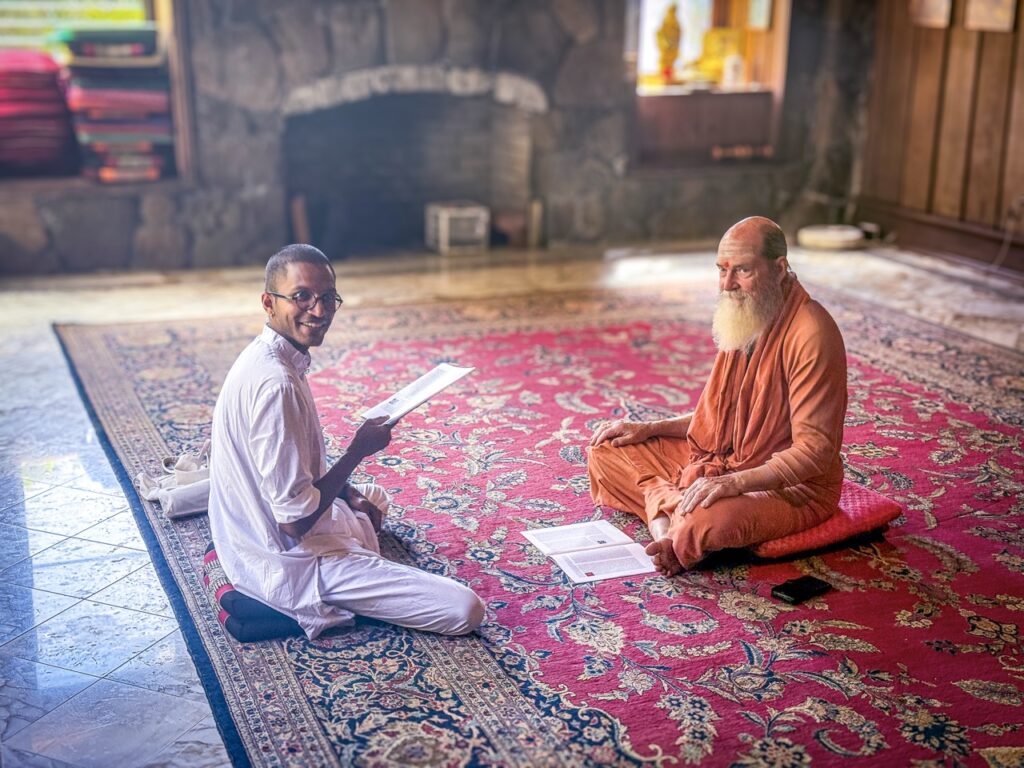
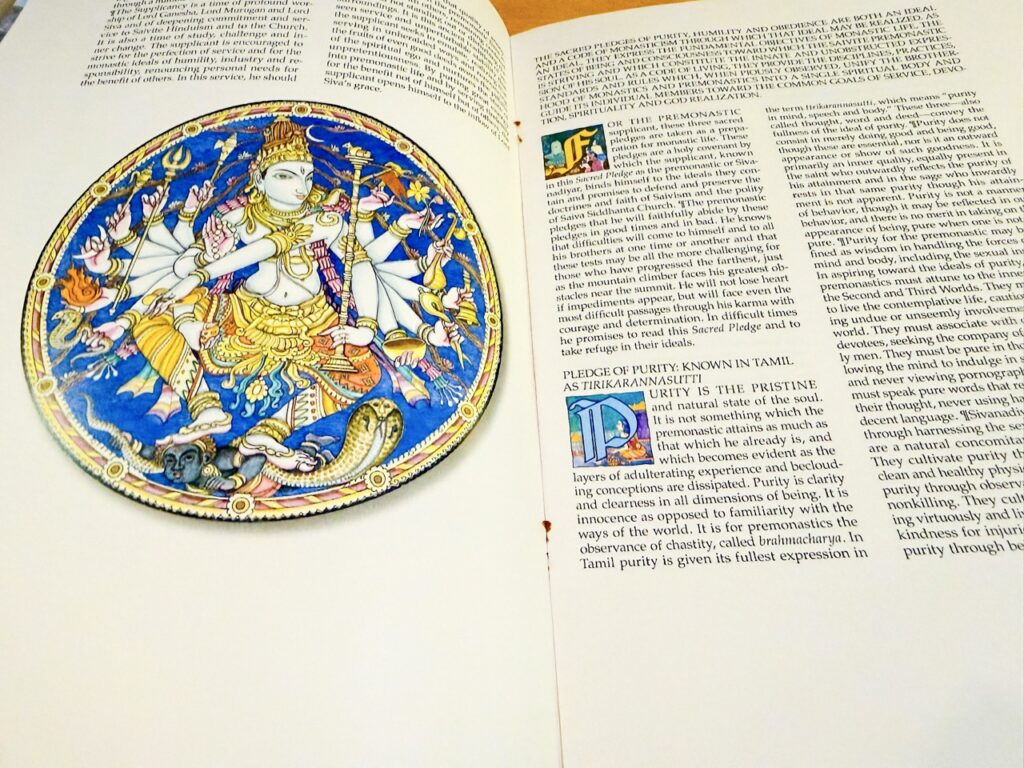
Arinien has Supplicancy class with Acharya Arumuganathaswami
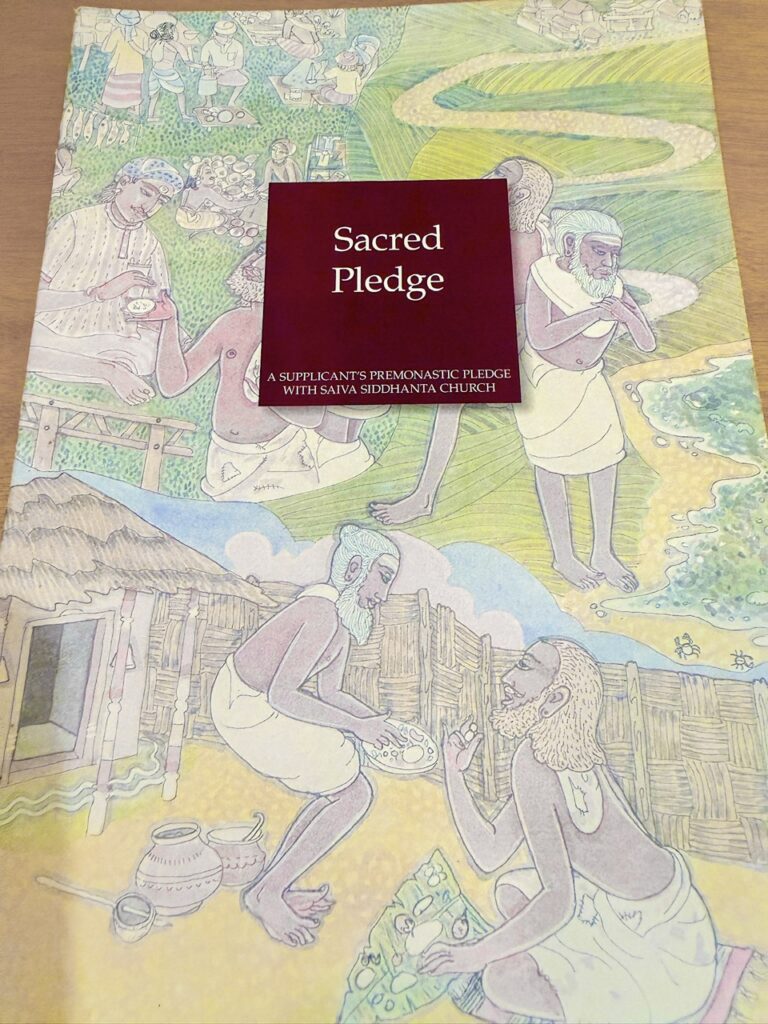
The Sacred Pledge of the pre-monastic Supplicant
Many blessings to another bright soul on the Path!
Aum Namah Śivaya
During his training as a monastic Aspirant, Brahmachari Arinien has been having many classes with the monks, including philosophy classes with Siddhanathaswami, meditation training with Tillainathaswami, puja training with Mayilnathaswami and Sanskrit chanting with Kumarnathaswami. Over the last few weeks, Brahmachari has begun his classes with Arumuganathaswami in preparation for taking his next steps towards monastic life. This next step involves the taking the Supplicancy vows of Purity, Humility, and Obedience. Once entered, this stage is the final 6-8 month period before someone is ready to take their vows as a monastic sadhaka. One of the wonderful pieces of study in Arinien’s current material is Gurudeva’s On the Brink of the Absolute which reads as follows:
“On the brink of the absolute. The higher states of consciousness very few people are familiar with, having never experienced them. They are very pleasant to learn of, and yet out of our grasp until we have that direct experience of a higher state of expanded consciousness. The mind, in its density, keeps us from the knowledge of the Self. And then we attain a little knowledge of the existence of the Self as a result of the mind freeing itself from desires and cravings, hates and fears and the various and varied things of the mind. I say “things” because if you could see hate, you would see it as a thing that lives with one as a companion. If you could see fear, you’d see it as a thing, and as understanding comes, that thing called fear walks away down the road, never to return. ¶As you unfold spiritually, it is difficult to explain what you find that you know. At first you feel light shining within, and that light you think you have created with your mind, and yet you will find that, as you quiet your mind, you can see that light again and again, and it becomes brighter and brighter, and then you begin to wonder what is in the center of that light. “If it is the light of my True Being, why does it not quiet the mind?” ¶Then, as you live the so-called “good life,” a life that treats your conscience right, that light does get brighter and brighter, and as you contemplate it, you pierce through into the center of that light, and you begin to see the various beautiful forms, forms more beautiful than the physical world has to offer, beautiful colors, in that fourth-dimensional realm, more beautiful than this material world has to offer. And then you say to yourself, “Why forms? Why color, when the scriptures tell me that I am timeless, causeless and formless?” And you seek only for the colorless color and the formless form. But the mind in its various and varied happenings, like a perpetual cinema play, pulls you down and keeps you hidden within its ramifications. ¶In your constant striving to control that mind, your soul comes into action as a manifestation of will, and you quiet more and more of that mind and enter into a deeper state of contemplation where you see a scintillating light more radiant than the sun, and as it bursts within you, you begin to know that you are the cause of that light which you apparently see. And in that knowing, you cling to it as a drowning man clings to a stick of wood floating upon the ocean. You cling to it and the will grows stronger; the mind becomes calm through your understanding of experience and how experience has become created. As your mind releases its hold on you of its desires and cravings, you dive deeper, fearlessly, into the center of this blazing avalanche of light, losing your consciousness in That which is beyond consciousness. ¶And as you come back into the mind, you not only see the mind for what it is; you see the mind for what it isn’t. You are free, and you find men and women bound, and what you find you are not attached to, because binder and the bound are one. You become the path. You become the way. You are the light. And as you watch souls unfold, some choose the path of the spirit; some choose the path of the mind. As you watch and wonder, your wondering is in itself a contemplation of the universe, and on the brink of the Absolute you look into the mind, and one tiny atom magnifies itself greater than the entire universe, and you see, at a glance, evolution from beginning to end, inside and outside, in that one small atom. ¶Again, as you leave external form and dive into that light which you become, you realize beyond realization a knowing deeper than thinking, a knowing deeper than understanding, a knowing which is the very, very depth of your being. You realize immortality, that you are immortal—this body but a shell, when it fades; this mind but an encasement, when it fades. Even in their fading there is no reality. ¶And as you come out of that samadhi, you realize you are the spirit, you become that spirit, you actually are that spirit, consciously, if you could say spirit has a consciousness. You are that spirit in every living soul. You realize you are That which everyone, in their intelligent state or their ignorant state, everyone, is striving for—a realization of that spirit that you are. ¶And then again for brief interludes you might come into the conscious mind and relate life to a past and a future and tarry there but for a while. But in a moment of concentration, your eye resting on a single line of a scripture or anything that holds the interest of the mind, the illusion of past and future fades, and again you become that light, that life deep within every living form—timeless, causeless, spaceless. ¶Then we say, “Why, why, after having realized the Self do you hold a form, do you hold a consciousness of mind? Why?” The answer is but simple and complete: you do not; of yourself you do not. But every promise made must have its fulfillment, and promises to close devotees and the desire that they hold for realization of their true being hold this form, this mind, in a lower conscious state. Were the devotees and disciples to release their desires for realization but for one minute, their satguru would be no more. Once having realized the Self, you are free of time, cause and change.”
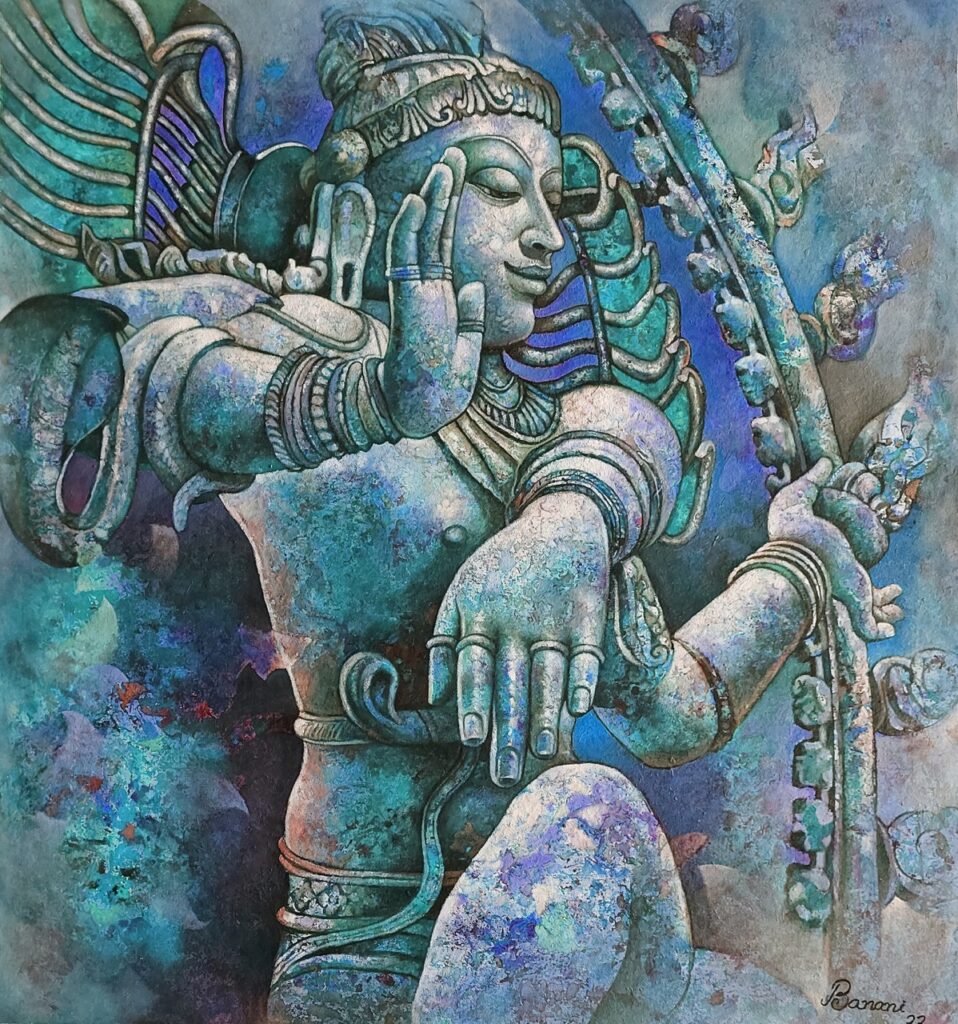
Today is Ardra nakshatra. With the Iraivan Krittika Homa taking place just a few days ago, the energies are indeed scintillating. Hours ago, the monks finished the abhishekam to Lord Nataraja in Kadavul Temple.
For those who’d like to get into some dense studies, here below is a deep dive into the Siva Sutras—summarized from parts of Satguru Bodhinatha Veylanswami’s 2018 Innersearch class material.
Introduction
In the great iconography of Nataraja—Siva as Lord of the Cosmic Dance—every detail carries meaning. The fire in His left hand is dissolution; the raised foot is liberation; the demon beneath Him is the ego’s bondage. But one element holds a cosmological secret that rewards especially close attention: the small hourglass drum, the damaru, held aloft in His upper right hand. According to Shaiva tradition, it was that drum, sounded fourteen times at the close of the Cosmic Dance, that gave birth to the Sanskrit language itself—and with it, a map of all existence.
These fourteen drumbeats produced fourteen phonetic groupings known as the Siva Sutras, or Maheshvara Sutras. Each is a terse string of Sanskrit sounds, ending in a marker letter used by the grammarian Pāṇini to refer systematically to classes of phonemes. But the Shaiva reading of these sutras goes far beyond grammar. Taken together, the fourteen aphorisms constitute the entire phonetic inventory of Sanskrit—and in doing so, they trace the complete arc of creation: from the Absolute, through successive layers of manifestation, down to earth and embodied consciousness, and back again to Siva as the Self of all. To understand this is to see the Sanskrit alphabet not as an arbitrary set of linguistic symbols, but as a living cosmological diagram—each letter the seed-sound of a force or principle that constitutes reality.
Full Sutras
Audio & Full Text:
a i u ṇ — “a i” is nirguṇa Brahman united with chit-shakti; “u ṇ” is the “big bang” of awareness expanding everywhere from a single point of awareness and entering māyā. ṛi ḷṛi k — Seeing Parasiva, Parashakti, Parameshvara and maya as a One Being. e o ṅ — The witness-consciousness (sakshin or awareness) in all the manifested beings, then Parameshvara, Parashakti and finally Parasiva as a One Being. ai au c — Parameshvara poised to commence creation by playing the damaru to expand the entire range of the universe which is within his own Self. From the thirteen vowels, the first thirteen tattvas emerge. ha ya va ra ṭ — Four of the five gross elements, each arising from its respective letter: space, air, fire, water. la ṇ — Earth, the fifth gross element. ña ma ṅ ṇa na m — The five subtle elements, each arising from its respective letter: sound, touch, form, taste, smell. jha bha ñ | gha ḍha dha ṣ — The five organs of action, each arising from its respective letter: speech, hands, feet, anus, genitals. ja ba ga ḍa da ś — The five organs of knowledge, each arising from its respective letter: ear, skin, eye, nose, tongue. kha pha cha ṭha tha ca ṭa ta v — The five primary life currents, each arising from its respective letter: prāṇa, apāna, vyāna, udāna, samāna; and the three aspects of the mental faculty, each arising from its respective letter: manas, buddhi, ahaṃkāra. ka pa y — Prakṛiti and purusha, each arising from its respective letter. śa sha sa r — The three guṇas, each arising from its respective letter: rajas, tamas, sattva. ha l — Siva as the Soul of all souls.
Longer Explanations of Each Line
Before the Beginning: The Nature of the Absolute
The first sutra opens with a single vowel: a. It is the first phoneme of the Sanskrit alphabet, and in the Shaiva understanding it is identified with Parasiva—Absolute Reality prior to all qualities, prior to all movement, prior to any distinction between knower and known. The letter a is self-luminous, the unmanifest ground of awareness. It is also implicitly present in every Sanskrit consonant, which carries an inherent a unless otherwise marked—the pervasive ground in which all sound is rooted.
Linked to a is the vowel i, identified with Parashakti, the conscious energy of Siva, called citkalā. Shakti is the dynamic aspect of the Absolute: where Parasiva is still ground, Parashakti is the potency within that ground, the seed of creative will. She is also identified with kāmabīja, the seed of desire, for it is through Shakti that the impulse toward creation first stirs. The tradition associates i with māyā, the creative flux through which the Lord enters the play of the worlds.
The third vowel of the first sutra, u, carries the quality of pervasiveness. Through Shakti (i), the Absolute (a) enters into māyā and, by means of all-pervasive presence (u), creates the worlds and governs them as Maheshvara, the Great Lord. These three vowels describe the movement from unmanifest Absolute to the Lord present within creation—continuous, not a single event.
The Four Levels of Sound
Before enumerating the principles of creation, the tradition describes the nature of sound itself, and in doing so maps the levels of consciousness. Four levels of vāk (speech or sound) are posited: parā, pashyantī, madhyamā, and vaikharī.
Parā vāk is the primordial state—undifferentiated, prior to any distinction, present in the Absolute as pure potentiality. All sounds, and all the worlds those sounds denote, exist here in unmanifest form. From parā emerges pashyantī, the “seeing” level at which differentiation begins. Then comes madhyamā, the middle ground at which the world, still latent, stands at the threshold of manifestation. Finally, sound reaches the viśuddhi cakra, the throat center, and becomes vaikharī: the audible word. This is a description of how consciousness moves from infinite openness into structured thought, word, and form.
Siva Assumes Form: The Threshold of Creation
The syllabic vowels ṛ and ḷ, associated with Parasiva and Parashakti-māyā, together activate māyā to bring forth the world of movables and immovables. Their unity is conveyed by a traditional image: as the moon cannot be separated from moonlight, nor a word from its meaning, so the Lord and His manifestation cannot ultimately be distinguished.
The vowels e and o point to Siva as the witness-consciousness (sākṣhin) present in all manifested things—the awareness in which existence arises and dissolves. The diphthongs ai and au introduce SadāSiva, the Eternal Auspicious Lord, the form the formless assumes at the threshold of active creation: “colored by Shakti,” willing to bring forth the universe from within His own Self.
The Five Elements and Their Subtle Essences
From here, the Siva Sutras become a phonetic inventory of the tattvas, the principles of manifest existence. The five gross elements (pañcabhūta) arise from five consonants: space (ākāsha) from ha; air from ya; fire from ra; water from va. Earth, emerging separately from the letter la, is the foundational element—the source of food, body, and the conditions of embodied life. It is associated with the mūlādhāra, the root support.
Underlying the gross elements are the five subtle elements, or tanmātras, the qualitative essences from which gross matter is fashioned. Sound is the tanmātra of space; touch of air; form of fire; taste of water; smell of earth. These arise from a subtler register of the alphabet.
The Instruments of Experience
The sutras then enumerate the instruments through which consciousness engages the world in embodied form. The five organs of action—speech, hands, feet, anus, and genitals—arise from consonants in the middle ranges of the alphabet, as do the five organs of knowledge: ear, skin, eye, nose, and tongue.
The five primary life currents, or vāyus—prāṇa, apāna, vyāna, udāna, and samāna, governing breath, digestion, circulation, upward movement, and integration—are encoded in the aspirated consonants, which carry the breath most audibly. The inner organ (antaḥkaraṇa) in its three aspects—manas (deliberating mind), buddhi (discriminating intellect), and ahaṃkāra (the sense of “I”)—arises from the first letters of the three middle consonant groups.
Prakṛiti, Purusha, and the Three Guṇas
At a more fundamental level, the two metaphysical principles recognized across nearly all schools of Hindu philosophy—prakṛiti (primordial nature) and purusha (pure witnessing consciousness)—are encoded in ka and pa, the opening letters of the two middle consonant groups.
From prakṛiti arise the three guṇas: rajas (activity), tamas (inertia), and sattva (clarity). These arise from the three sibilants śa, ṣa, and sa, a group unto themselves in Sanskrit phonology.
Ha: The Return to Siva
The fourteenth and final sutra centers on a single meaningful phoneme: ha. Having traced creation from the Absolute down through its layers—cosmic principles, elements, sense organs, life currents, mind, nature, and consciousness—the Siva Sutras arrive at their closing declaration. Siva is beyond all these tattvas. He is the Supreme One, the witness of all beings and their actions, the ātman—the Self—of all that exists.
The letter ha closes the series, the letter of the outbreath. In the Hamsa mantra—the natural mantra of breathing consciousness, whose reverse form so’ham means “I am That”—ha marks the pulse at which awareness returns to its source.
There is a final symmetry. The first letter of the Sanskrit alphabet is a; the last significant consonant is ha. Together—aham—they form the Sanskrit word for “I.” The entire alphabet, from opening vowel to closing consonant, spells out the self-recognition of the Absolute.
To learn Sanskrit in this light is not merely to acquire a classical language. It is to study, letter by letter, the grammar of consciousness as it unfolds into the world.

 Sadhaka Sabānatha and Sadhaka Shankaranatha perform today’s puja