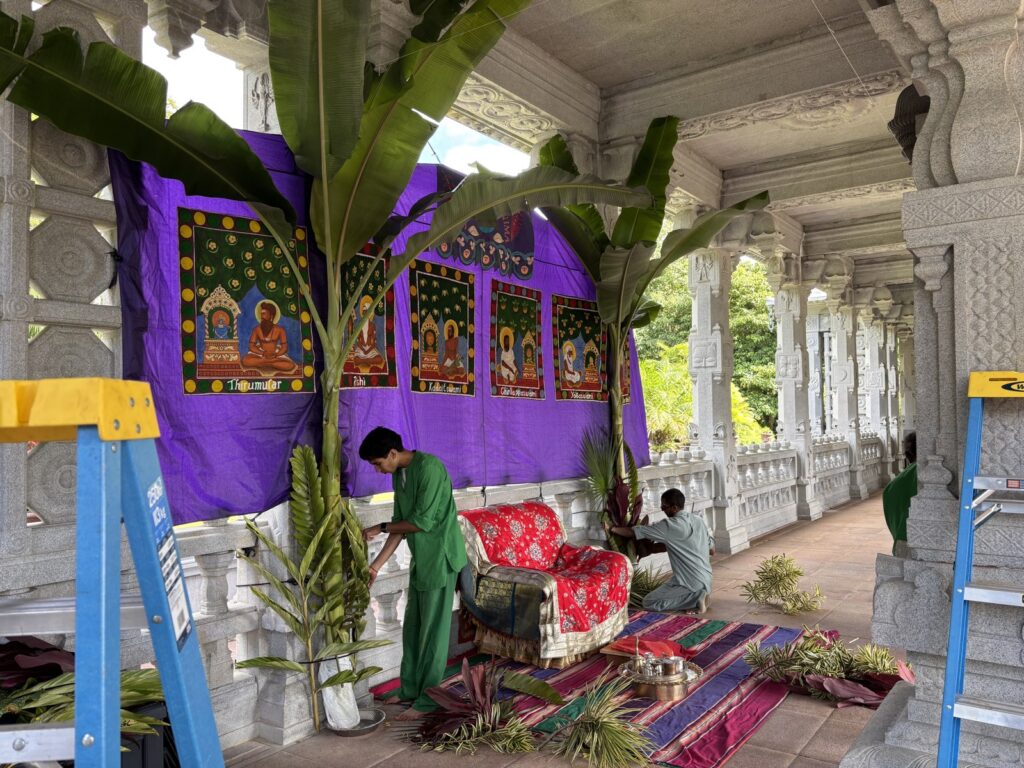
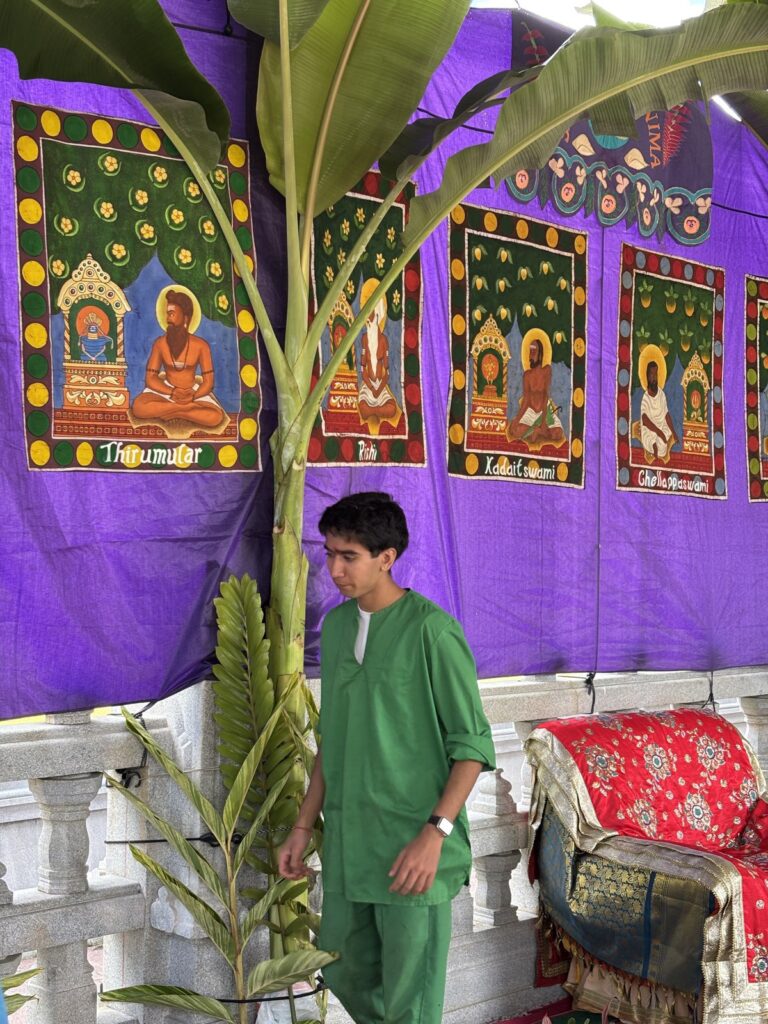
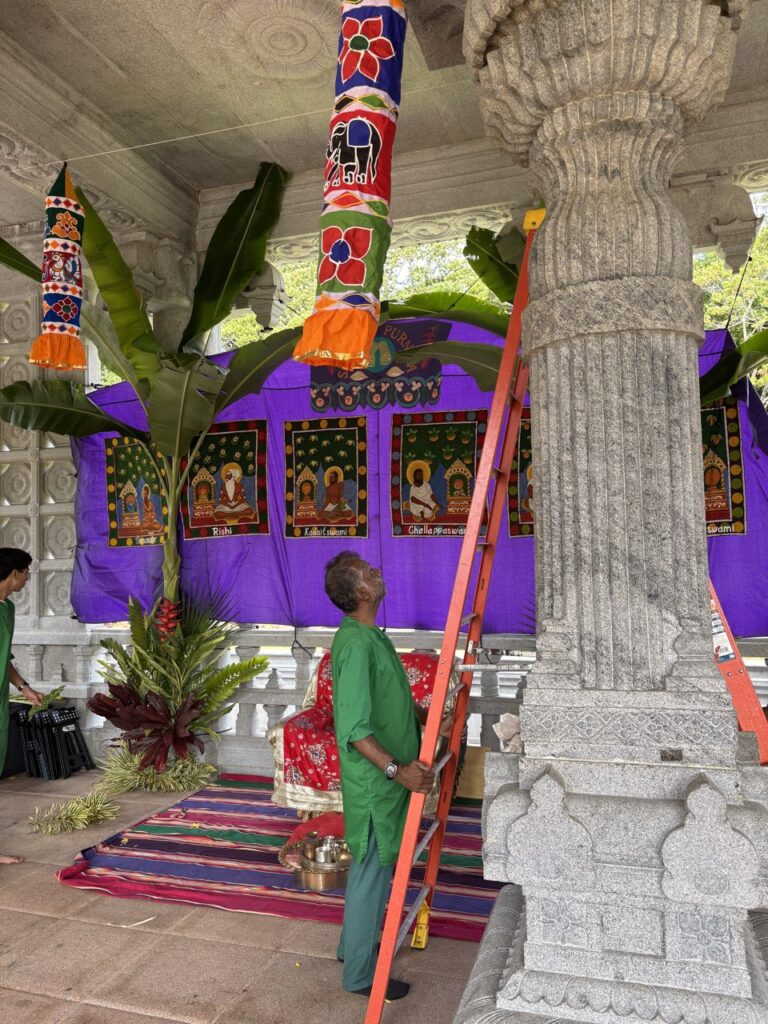
Mahasivaratri Preparations
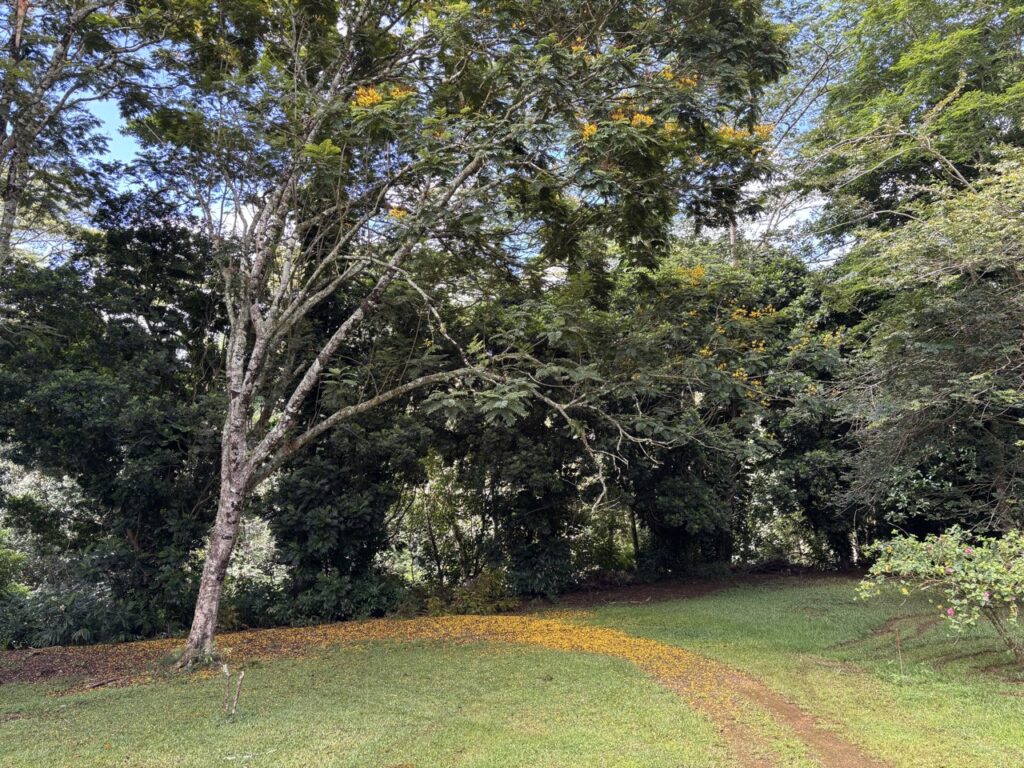
Below are some of the preparations for Mahasivaratri night at Iraivan Temple, plus today’s morning golden light on Kadavul Temple dhvajastambha.
Mahasivaratri Preparations Read More »
Below are some of the preparations for Mahasivaratri night at Iraivan Temple, plus today’s morning golden light on Kadavul Temple dhvajastambha.
Mahasivaratri Preparations Read More »
Aum Namah Sivaya
As you an see in a recent post, Tandu has been taking great care of the bonsai at the Kadavul Temple Tank. He is a master of the art. This wonderful video was created to showcase spoken Shum. You can see the transcript here:
Bashuh
Zakyka m’na
Rogini : Bihyishum Isani
Bii luhling chanim m’na charehm° rehmnam bibisim tyevum lipuhvum
Have you seen the bonsai tree by the temple near the water pool
Isani : Mi, satasim chani dimam, luhling liim m’na maa
Yes, walk around the monastery and you will see many bonsai trees
Rogini : Mum Dimsiluhbi
This is a creative work, done methodically
Isani : <<Tandu>> m’na bayasim
Tandu is the bonsai master
Rogini : Bii Ining chamam <<Tandu>>
Can I meet Tandu
Isani : Vumvumruh
Sure
Isani : <<Tandu>>, limbutye chamam ingtasi tyeamli
Tandu, please meet my friend
Tandu : Bihyishum. Kam nimf
Rogini : Zasiba . chatyem luhling língguhreh M’na
Where do you find bonsai tree
Tandu : Chamim maguh
In the forest
Isani : Tyem , luhling Chabi unga
So you dig out from the soil
Tandu : Mi
Isani : Rehim luhling íngm’ikam simm
How do you transport it
Tandu : chamim ingtasi iya vumm ingtasi bima
In my car to my house
Rogini : Rehim luhling mifahna m’na
How do you take care of the bonsai tree
Tandu : m’shumlinuh ruhsimrehm
Good planning is important
Tyebi livicha Sapuhda shali kamnam
Choose the right size of the pot
Isani : Rehim livicha Sapuhda shali kamnam
How to choose the right size of the pot
Tandu : miaguhli chasa Tyeda shali
Judging by the underground stem (roots) size
Rogini : Luhling hiasapuhda
You are trained for accuracy
Tandu : Cham kamnam nim Sapuhda unga zaim
Fill the pot with the correct soil mixture
Isani : Bii tyevum, maunuh ruhsimrehm chazanam muhm’tye m’na
Are water, fertilizer important to maintain healthy bonsai
Tandu : Mi, uu chasim kamnam chatyem aditye
Yes, and place the pot where sunlight goes through the leaves
Rogini : Chatyem Luhling remove chareh aves
Tandu : Kam lisi chanam nilimf
When the leaves that change to yellow
Rogini : Bii luhling kambilim m’na
Do you prune the bonsai
Tandu : Mi, símum’u
Yes, consistently
Isani : Rehim luhling chazanam tyeda tyembimmam
How do you hold the stems firm
Tandu : Ining luhsímmuh nim Ana kydi
I attached with copper wire
Isani : Kam nimf m’na lasaimu
Where is (your) awareness watching the bonsai grow
Tandu : Binibanuh
Joy when a creative project is almost finished.
Rogini : Maa simmuduh shumlinuh Adimmi
Very impressive skill. Bravo
Mulingshum
Om Namasivaya
The two masterful bonsai trees gracing the Kadavul Temple pool are a delight to all pilgrims. But their beauty comes with great discipline and care. The roots are so shallow, even 3 days of no rain/water can stress them and so Tandu Sivanathan has to be constantly aware of their needs.
Two days back he and his friend and bonsai sensei, Abe, gave the two a haircut. Why? Without continual pruning, the carefully developed miniature proportions and artistic structure gradually disappear. We share the happening in our slideshow today.
Bonsai, the sacred art of shaping living trees in miniature form, carries a history of more than a thousand years, passing through generations as both a refined craft and a contemplative discipline. It quietly reflects profound spiritual truths long cherished in Hindu thought. The gardener does not force the tree but guides it with patience, restraint and loving attention, working in harmony with nature rather than against it. In this gentle partnership we see the path of sadhana itself—steady effort joined with divine grace.
A bonsai reminds us that spiritual maturity is not measured by outward size or display but by balance, rootedness and inner beauty. As branches are trimmed and growth directed, the practitioner is inwardly taught the same lesson: refine the mind, steady the heart and allow life to unfold according to dharma. Thus the tending of a bonsai becomes a quiet meditation, a daily reminder that with patience, humility and devotion the soul too can be shaped into a work of living harmony.
Satguru Bodhinatha Veylanswami gives his weekly upadesha in Kadavul Temple at Kauai’s Hindu Monastery in Hawaii. It is part of a series of talks elaborating on the inspired teachings of Satguru Śivaya Subramuniyaswami as found in his book Merging With Śiva.
“The sequential pattern of evolution is experienced by each individual in a microcosmic sense in each lifetime. Even if they have been experienced in a previous life, the lessons contained in each stage are, in a sense, relearned in childhood. If we have previously learned them, then they will be quickly mastered. But if we have not learned these lessons in another life, we draw to ourselves in this life the experiences that we need to do so. This knowledge is an inheritance that comes along with the physical body. In other words, experiences from other lives affect the patterns of experience in this life. With basic inherited knowledge, the soul develops an intellectual mind through the good graces of its own personal karma and destiny, provided his intellectual mind is in accordance and in harmony with the precepts of his religion. If not, he has problems. Those problems can be overcome, but they are problems while they are being overcome. If his beliefs are not in harmony with his religion, that conflict can stagnate and congest his natural advancement and must be resolved before he can move on to the second stage. “
The Final Conclusions For All Mankind, Part Three Read More »
A couple of our common tropical hibiscus varieties planted in the ground are so resilient that you can just take cuttings from a mature plant, stick them directly in the ground and they’ll grow new plants. With more complex varieties, not so easy. For a long time we were temporarily putting cuttings in pots that serve as a gentler way station for them to put out new roots. After a while we would transfer them to the ground. However, this method was not always successful, especially with more complex hybrids, and took many months to accomplish.
Then we heard about air layering, a faster, more reliable propagation method whereby you expose the inner stem of a young branch and wrap a growing material around it, such as coco peat or sphagnum peat moss, held together by foil or a plastic bag. It only takes about 1.5 to two months for new roots to form and be ready to transfer to the ground. We are having good success with it. The slideshow above shows the process from start to finish for a fluffy double white hibiscus.
Propagating Hibiscus Through Air Layering Read More »
Jai Ganesha.
As some of you may know, Kauai has slightly shifted warm and cool seasons compared to areas in cooler climates. We have a late summer that sometimes peaks in October, with humid weather in the mid-80s °F, and a late winter that you don’t really feel until late January through February. It may look like a tropical paradise out here, but this past week has been a little chilly for anyone acclimated to constant warmth, and surprisingly windy on some days. Here are a few photos of our clear skies and our gusty days and nights.
Winter at the Aadheenam Read More »