Kauai Aadheenam

Building Support Posts

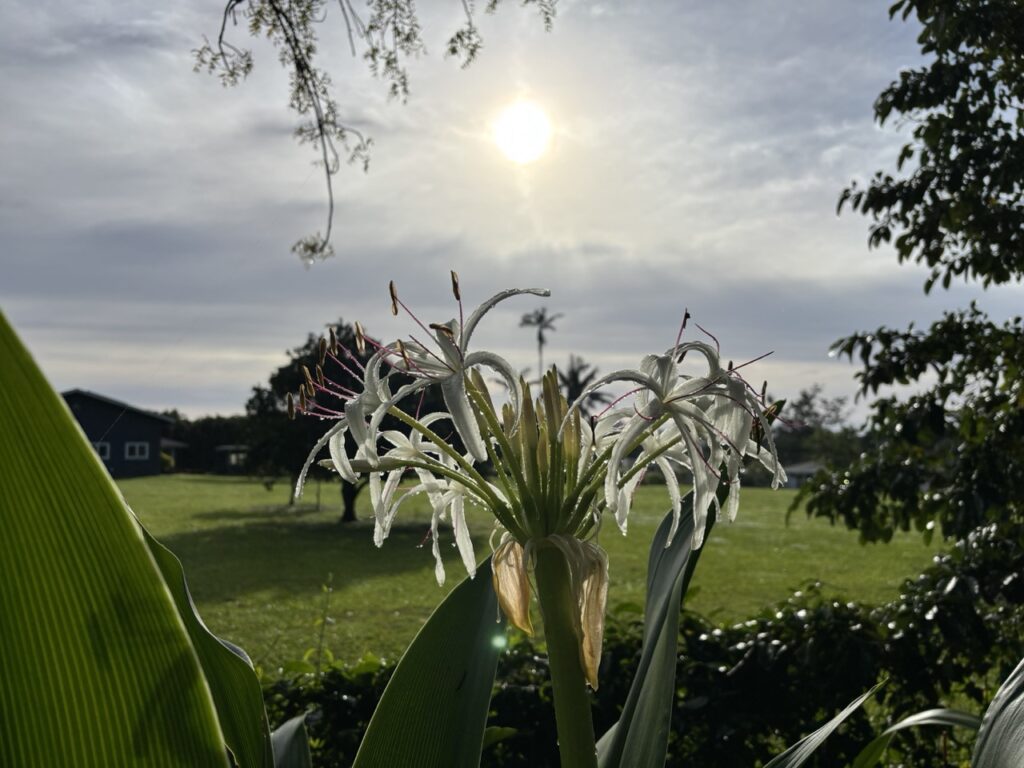
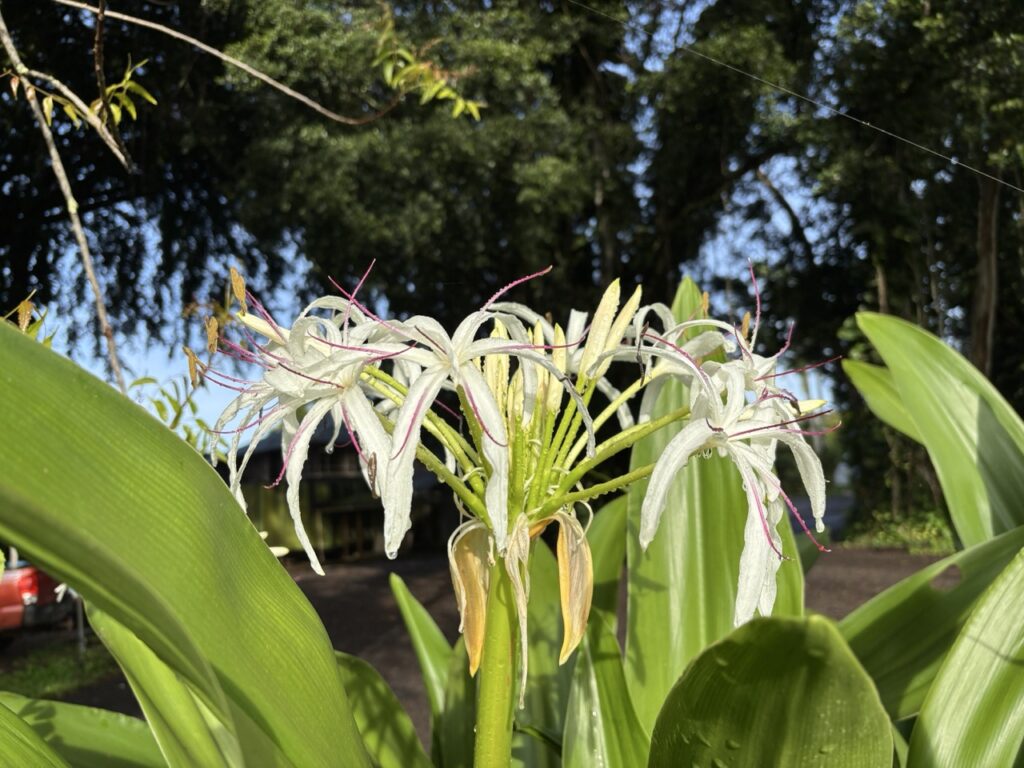
When we acquired an adjacent 17 acres of land many years ago, it came with a wooden house built on stilts. The thick wooden stilts at the outer four outer corners gradually began to disintegrate at the base due to rain damage. It was reaching a state of potential danger, so we hired a team to temporarily prop up each corner of the house so they cut off the bottom section of each wooden pillar and fill that space with concrete. The photos show the nearly-final results, with just some concrete staining left to match the color of the remaining wood pillar.

The third photo shows one of our large banana stalks heading into ripening stage.

Building Support Posts Read More »

Esoterics of Worship, Part Two

Satguru Bodhinatha Veylanswami gives his weekly upadesha in Kadavul Temple at Kauai’s Hindu Monastery in Hawaii. It is part of a series of talks elaborating on the inspired teachings of Satguru Śivaya Subramuniyaswami as found in his book Merging With Śiva.

The Hindu does not have to die to have a final judgment or to enter into heaven, for heaven is a state of mind and being fully existent in every human being this very moment. There are people walking on this Earth today who are living in heaven, and there are those who are living in hellish states as well. All that the Hindu has to do is go to the temple. As soon as he goes to the temple, to a pūjā, he is contacting the divine forces. During the pūjā, he is totally judged by the Deity. All of his karma is brought current and he goes away feeling good. Or he might go away feeling guilty. That is good, too, because then he performs penance, prāyaśchitta, and resolves unseemly karma quickly.


Additionally, today also marks 99 years since our late Gurudeva’s birth day in 1927. Here are some words he uttered in 2001 regarding diplomacy and discriminating speech.

Esoterics of Worship, Part Two Read More »

Esoterics of Worship, Part One

Satguru Bodhinatha Veylanswami gives his weekly upadesha in Kadavul Temple at Kauai’s Hindu Monastery in Hawaii. It is part of a series of talks elaborating on the inspired teachings of Satguru Śivaya Subramuniyaswami as found in his book Merging With Śiva.

Lord Gaṇeśa is the first God a Hindu comes to know. As the Lord of Categories, His first objective is to bring order into the devotee’s life, to settle him into the correct and proper flow of his dharma—the pattern of duties, responsibilities and expectations suited to the maturity of his soul. As the Lord of Obstacles, He deftly wields His noose and mace, dislodging impediments and holding avenues open until the individual is set in a good pattern, one that will fulfill his spiritual needs rather than frustrate them.

Esoterics of Worship, Part One Read More »

Happy Pancha Ganapati – Day 4!

December 24, Green

Nurturing Harmony through Cultural Arts

The sadhana of day four is to draw forth the vibration of joy and harmony that comes from music, art, drama and the dance. Family, relatives and friends gather for satsanga to share and enjoy their artistic gifts. Children dance and sing. Poems are recited. Plays are presented. When the program is over, all sit together before Pancha Ganapati, Patron of the Arts and Guardian of Culture, discussing Hindu Dharma and making plans to bring more cultural refinements into each household. More gifts are placed before Lord Ganapati.


Self & Samadhi Audiobook

We continue to create a audio version of each book that Gurudeva authored, using his professionally cloned voice. The small book, Self & Samadhi, was the final one. It is now complete and available here. The Foreword and chapter titles are rendered in a different voice.

For example, here is Chapter One–

Happy Pancha Ganapati – Day 4! Read More »

Love of the Gods, Part Four

Satguru Bodhinatha Veylanswami gives his weekly upadesha in Kadavul Temple at Kauai’s Hindu Monastery in Hawaii. It is part of a series of talks elaborating on the inspired teachings of Satguru Śivaya Subramuniyaswami as found in his book Merging With Śiva.

The Hindu looks to the Gods for very practical assistance. He devoutly believes that the Gods from their dwelling in the Third World are capable of consciously working with the forces of evolution in the universe and they could then certainly manage a few simpler problems. He devoutly believes that the Gods are given to care for man on the planet and see him through his tenure on Earth, and that their decisions are vast in their implications. Their overview spans time itself, and yet their detailed focus upon the complicated fabric of human affairs is just as awesome.

Love of the Gods, Part Four Read More »

Scroll to Top