Two days earlier it is thinking if there is anything outside.
A wild orchid by the kitchen
Black Coral calocasia, having a great first year in the garden.
Paris japonica, an otherwise unamazing plant from Japan, has 150 billion DNA base pairs (we have 3.2 billion), so its code is 50 times bigger than a human! Something to ponder, no?
Siva’s Sacred Garden is a never-ending delight, like life itself. And it is never the same, changing from day to day, year to year. Today we invite you to join us on a walking tour to meet a few of the inhabitants. And in the last slide we offer some food for thought regarding your DNA.
Herewith, a fun poem by Rudyard Kipling. It has a playful tone, but also a quiet wisdom beneath it:
The Glory of the Garden
Our England is a garden, and such gardens are not made By singing:—“Oh, how beautiful!” and sitting in the shade; While better men than we go out and start their working lives At grubbing weeds from gravel paths with broken dinner-knives.
There’s not a pair of legs so thin, there’s not a head so thick, There’s not a hand so weak and white, nor yet a heart so sick, But it can find some needful job that’s crying to be done, For the Glory of the Garden glorifieth every one.
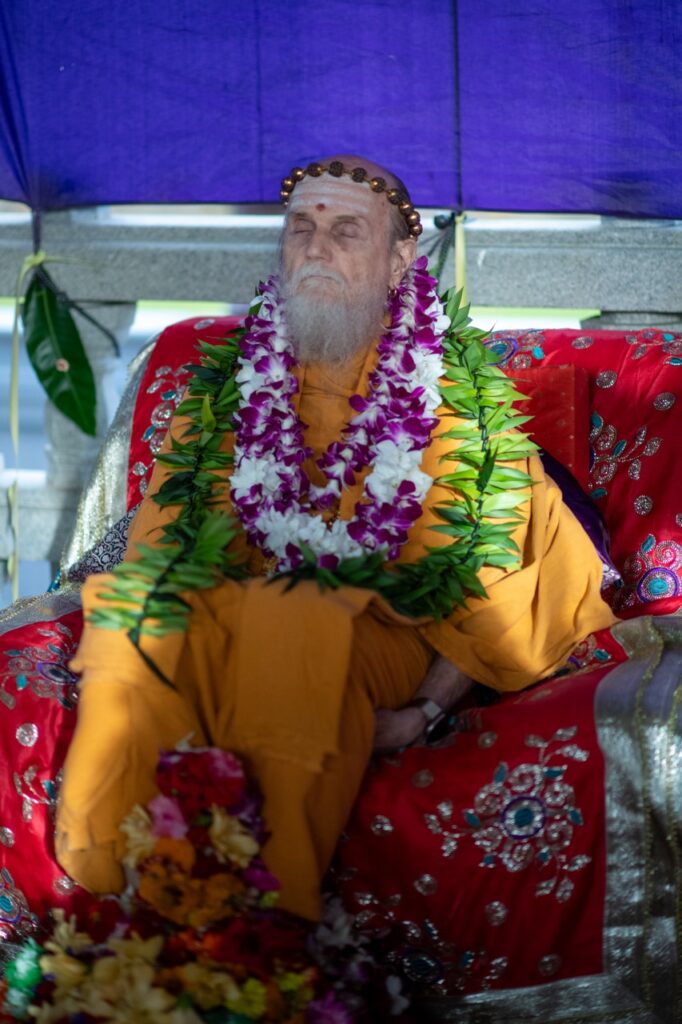
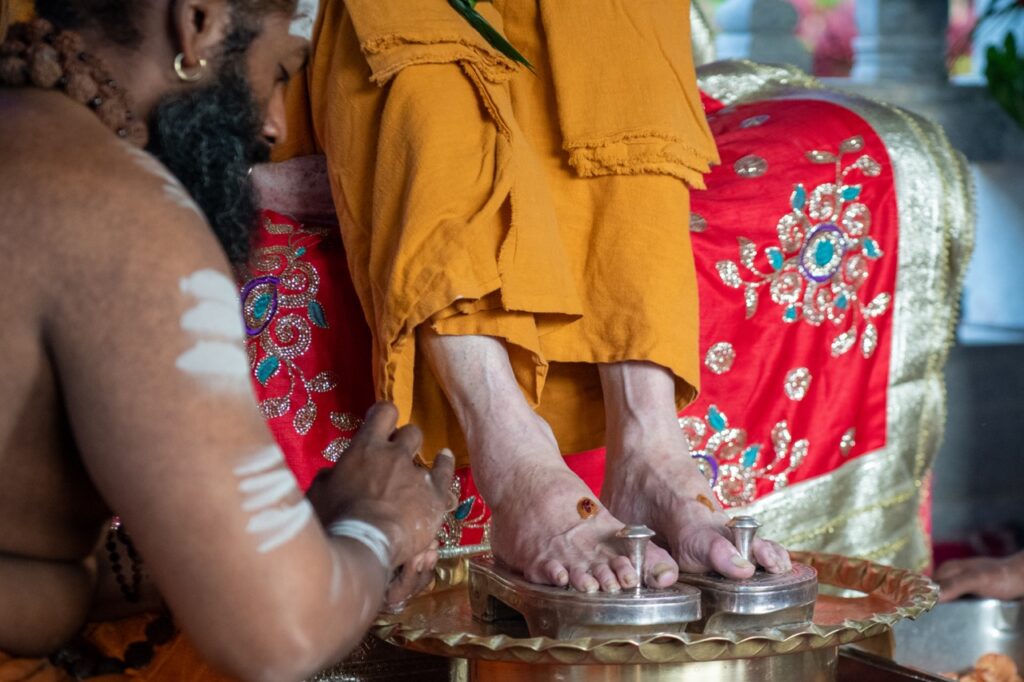
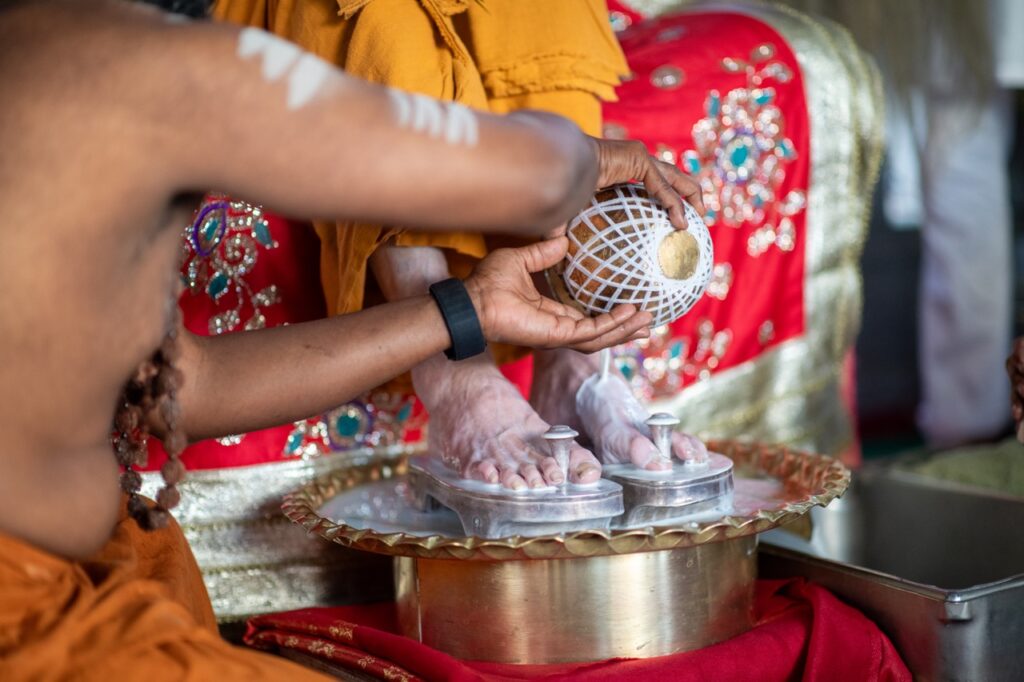
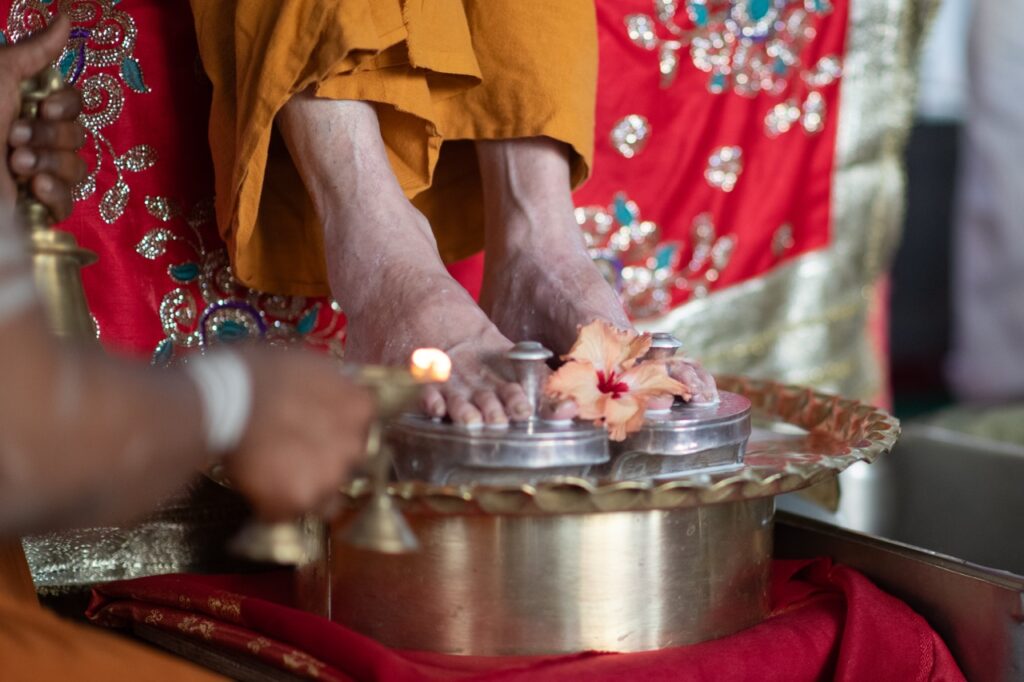
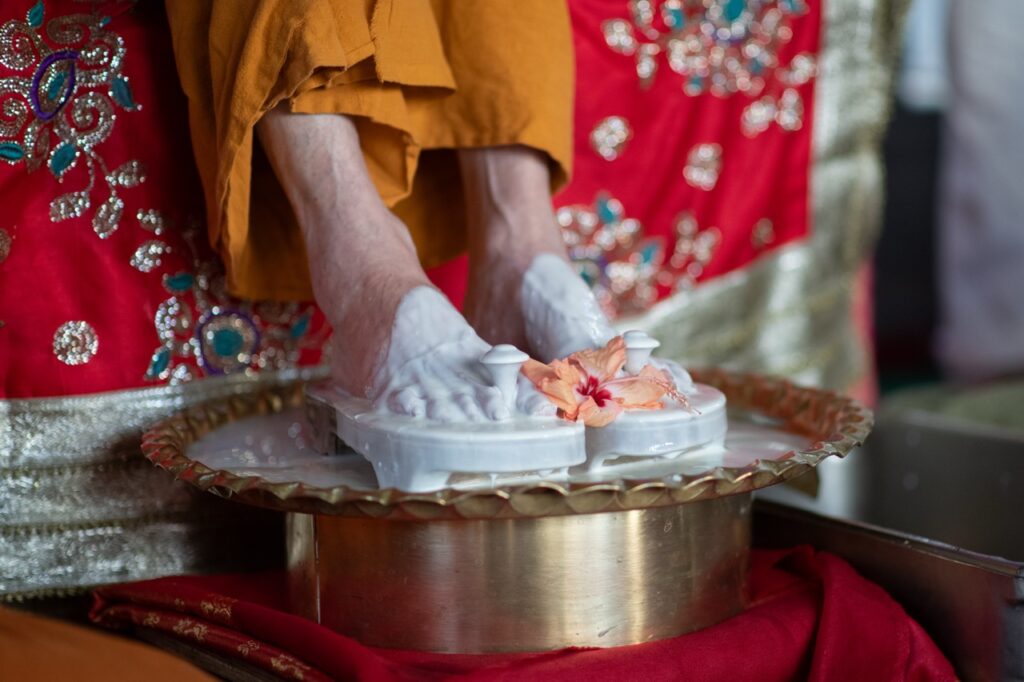
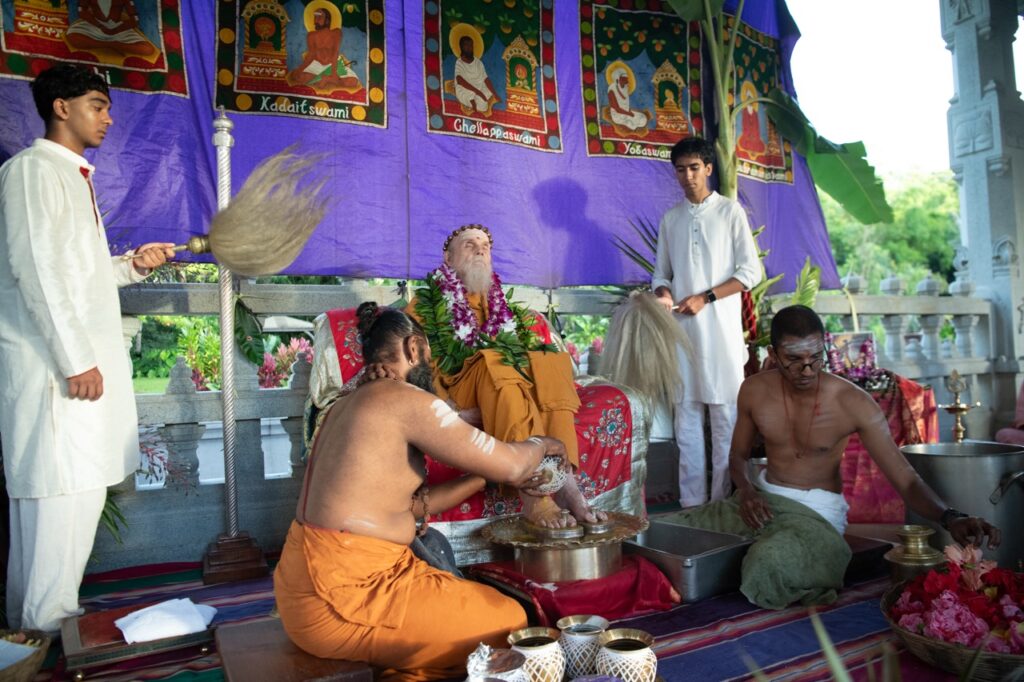
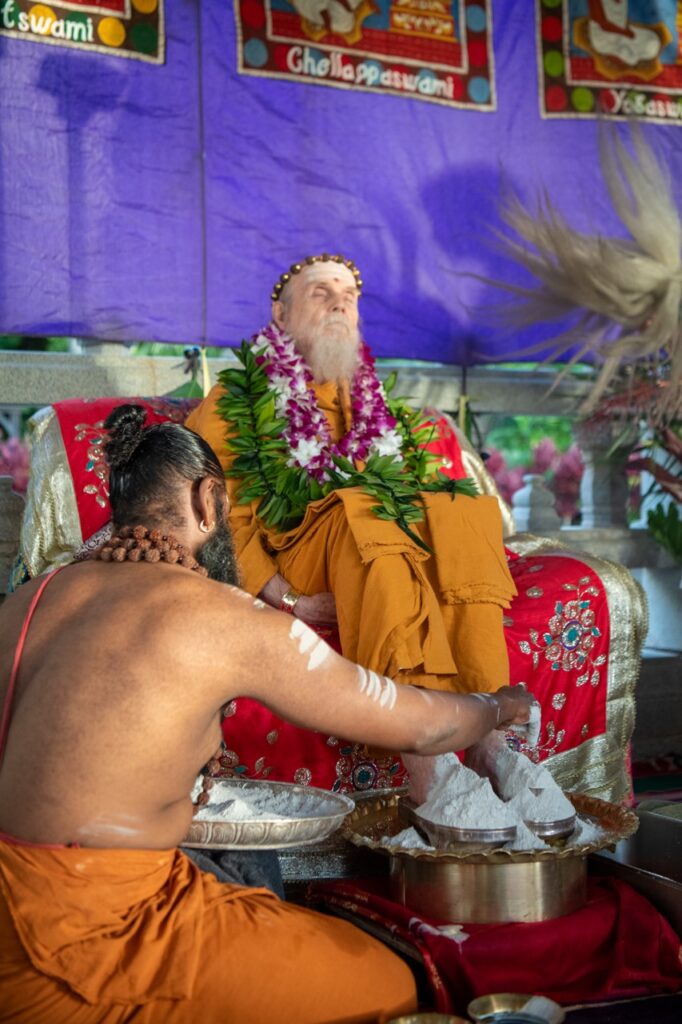
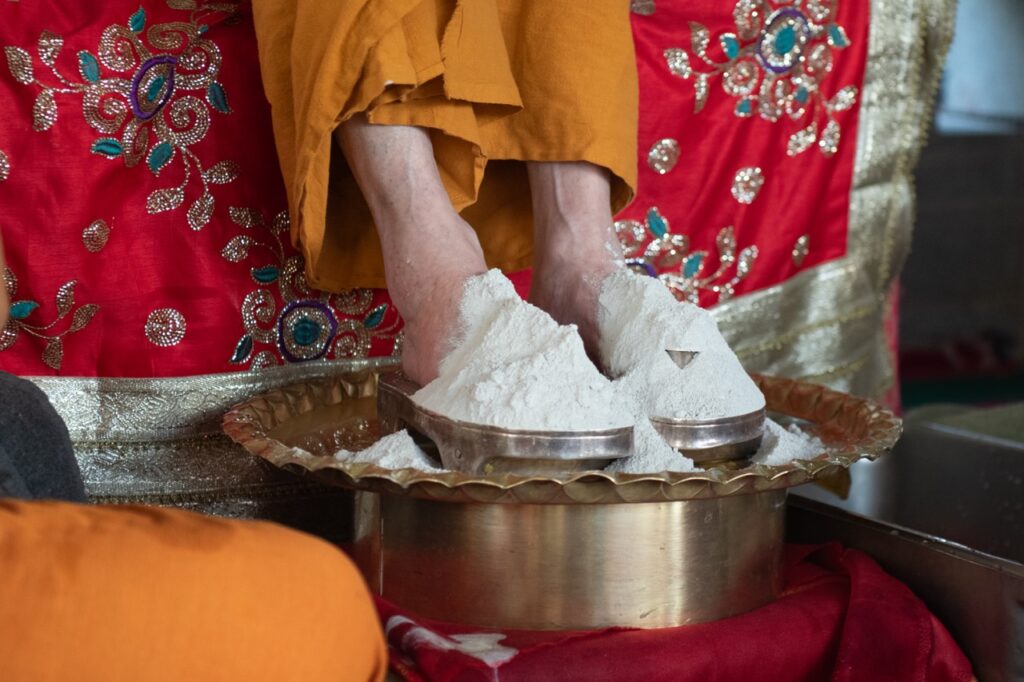
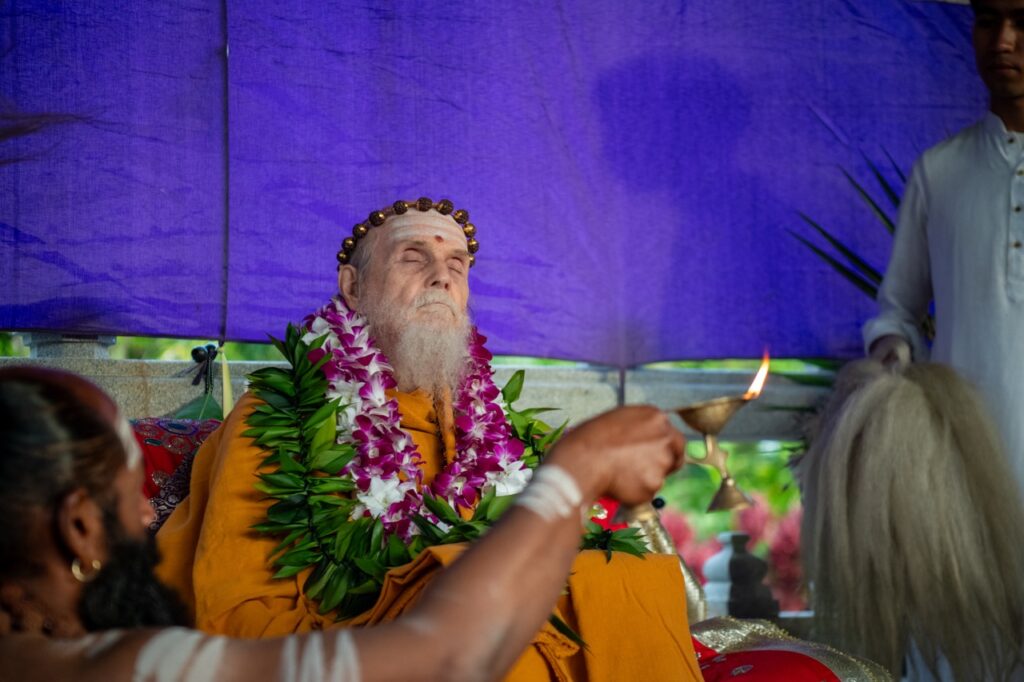
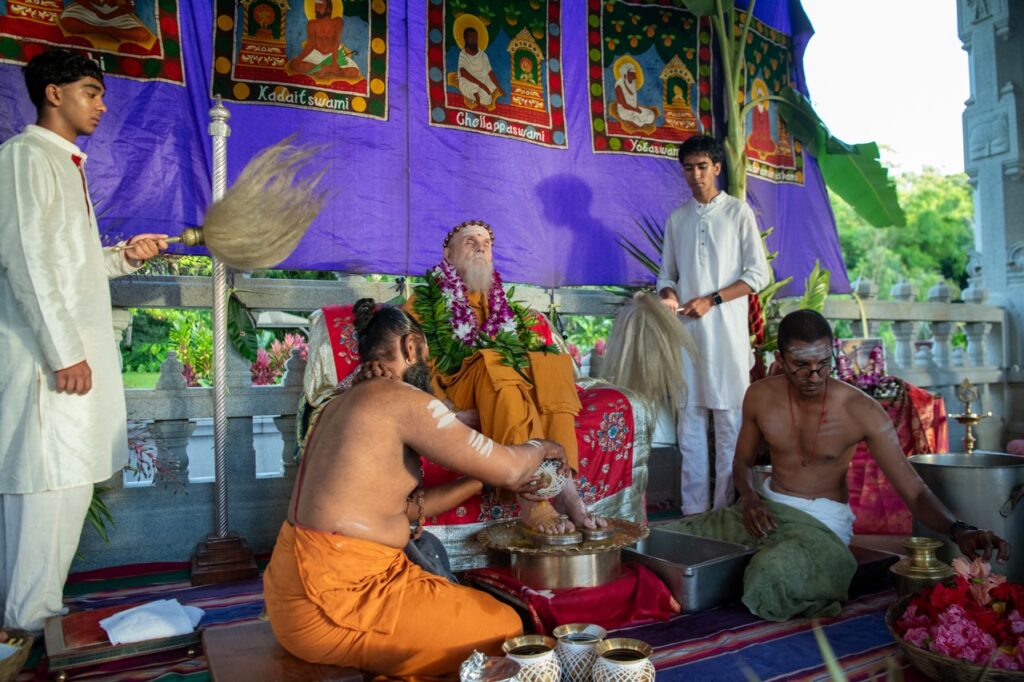
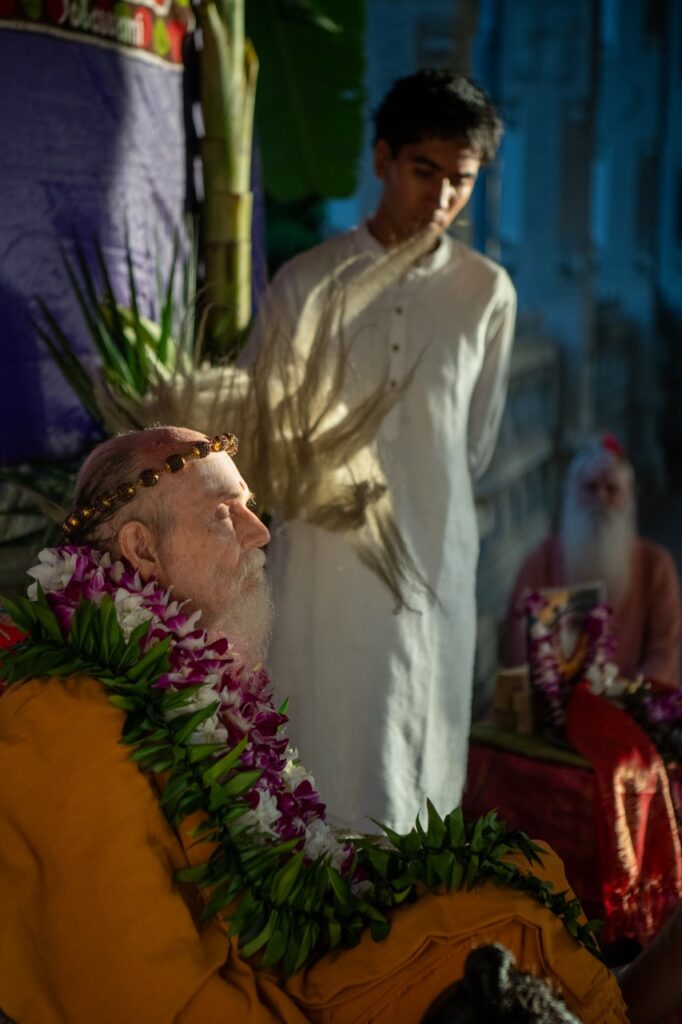
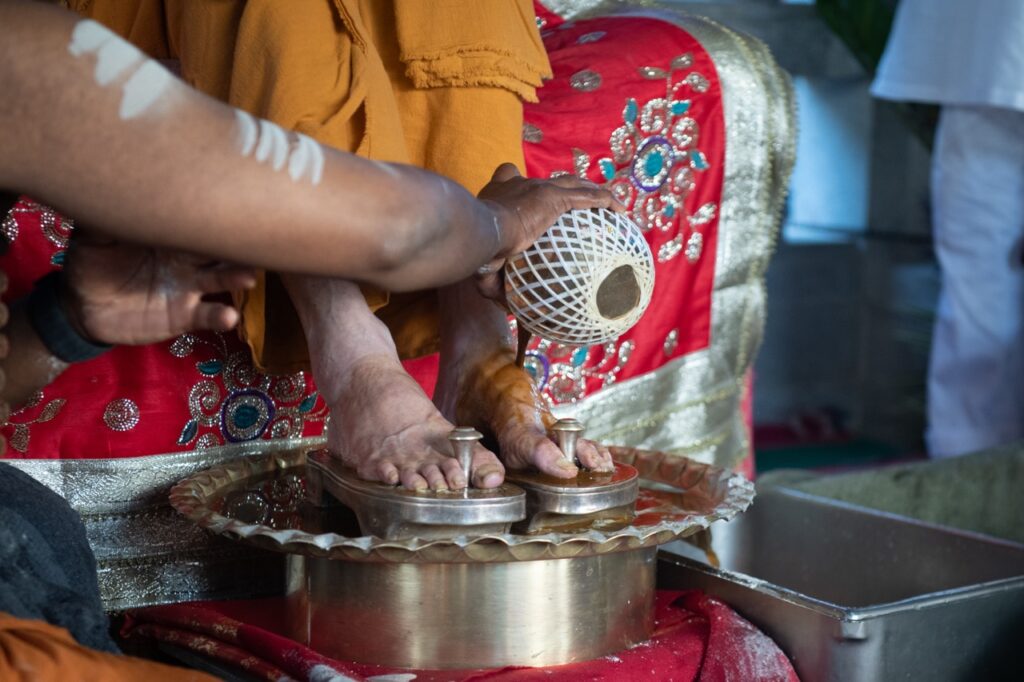
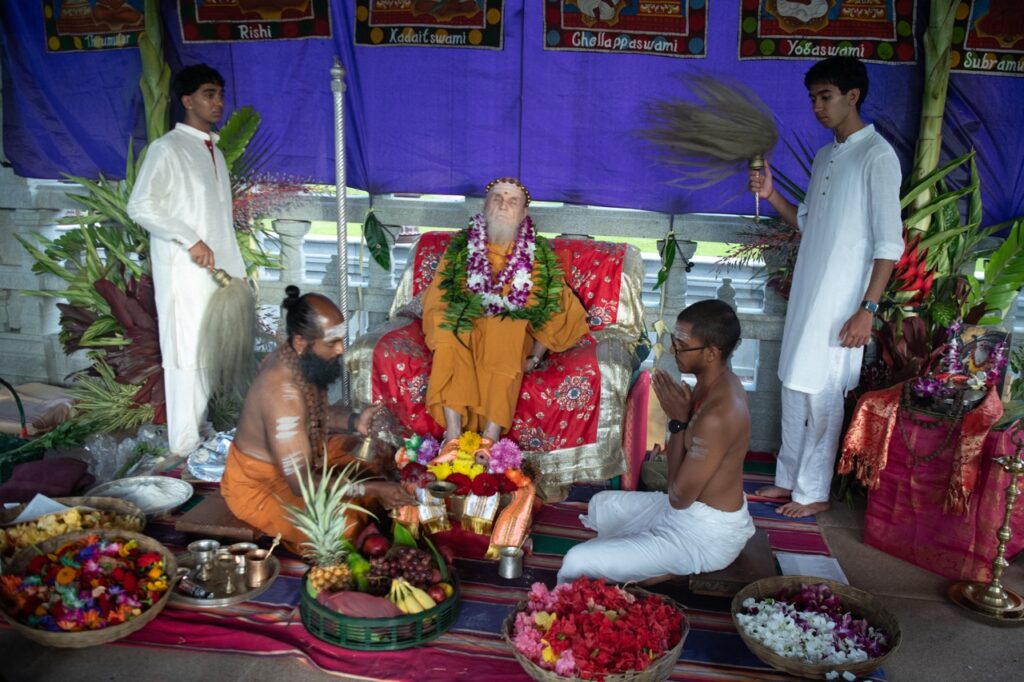
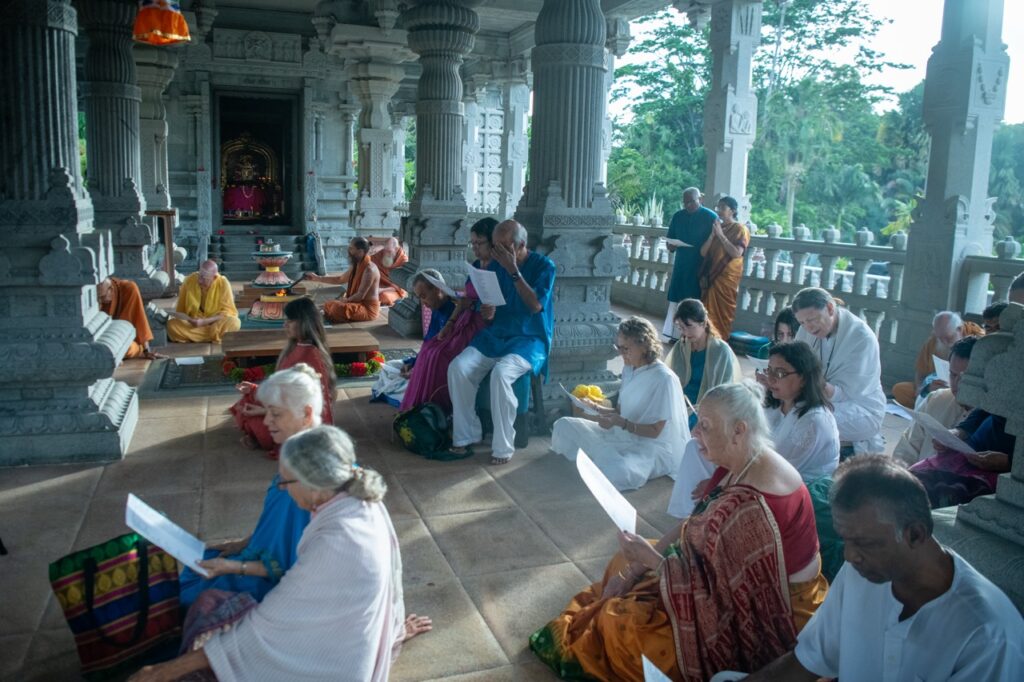
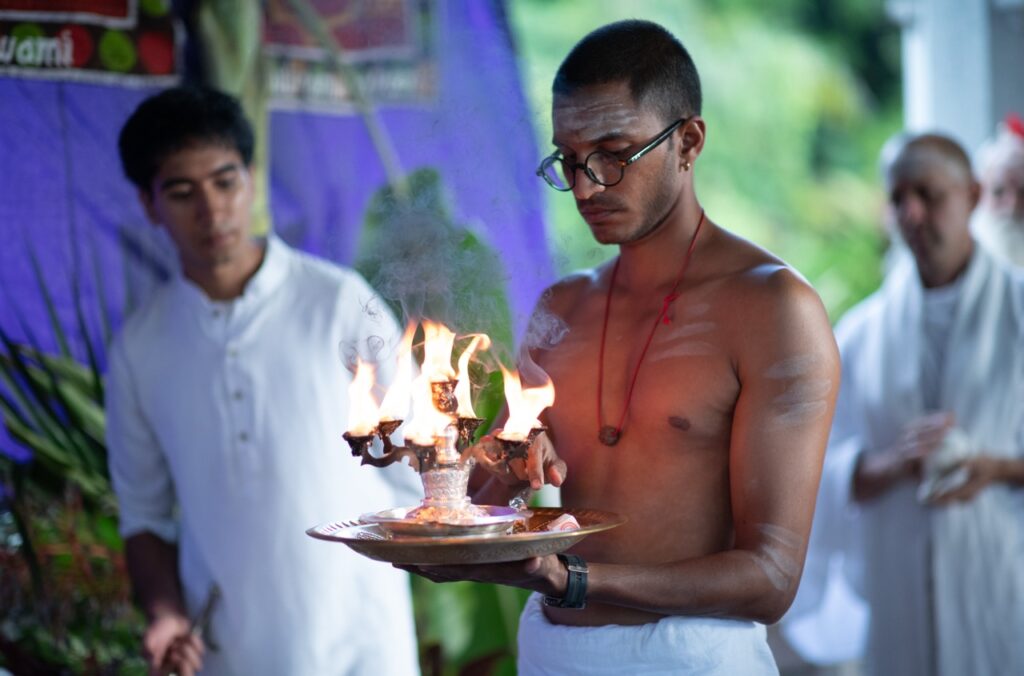
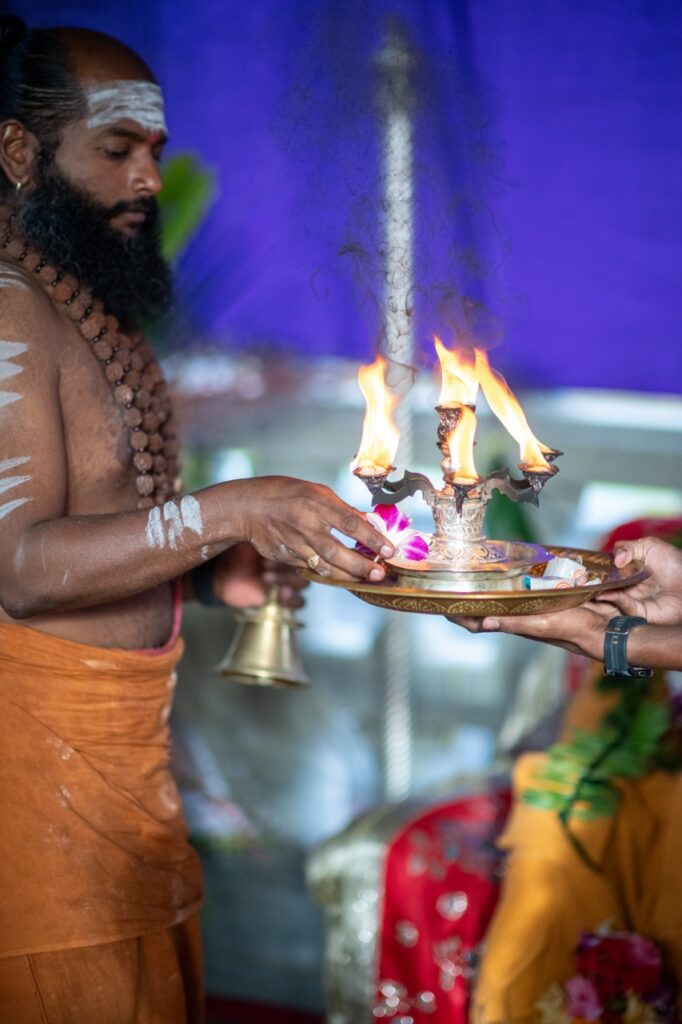
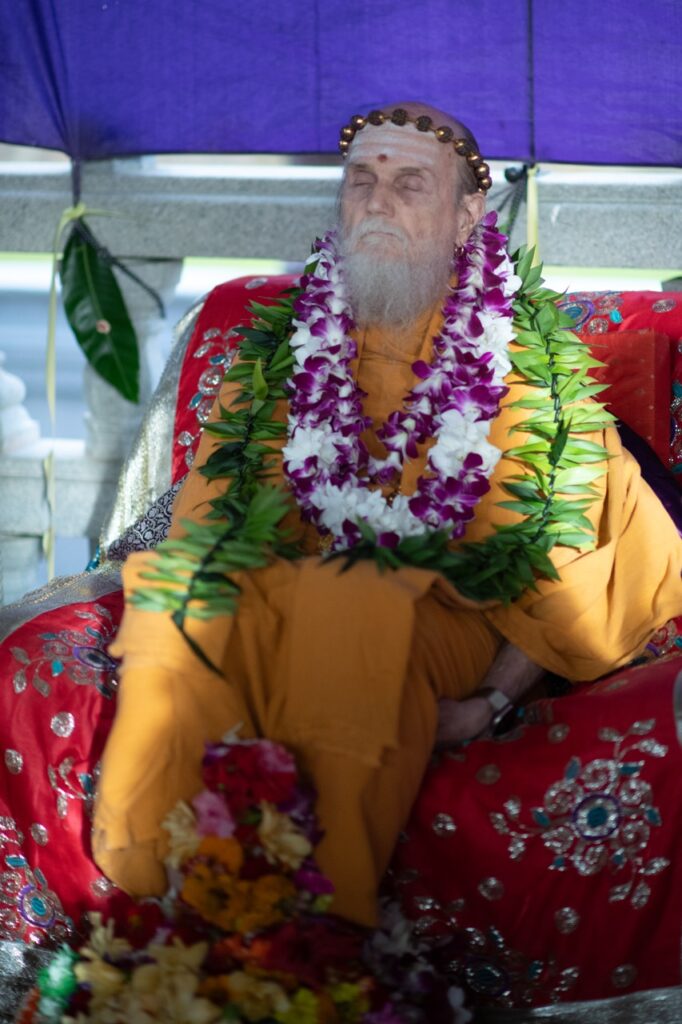
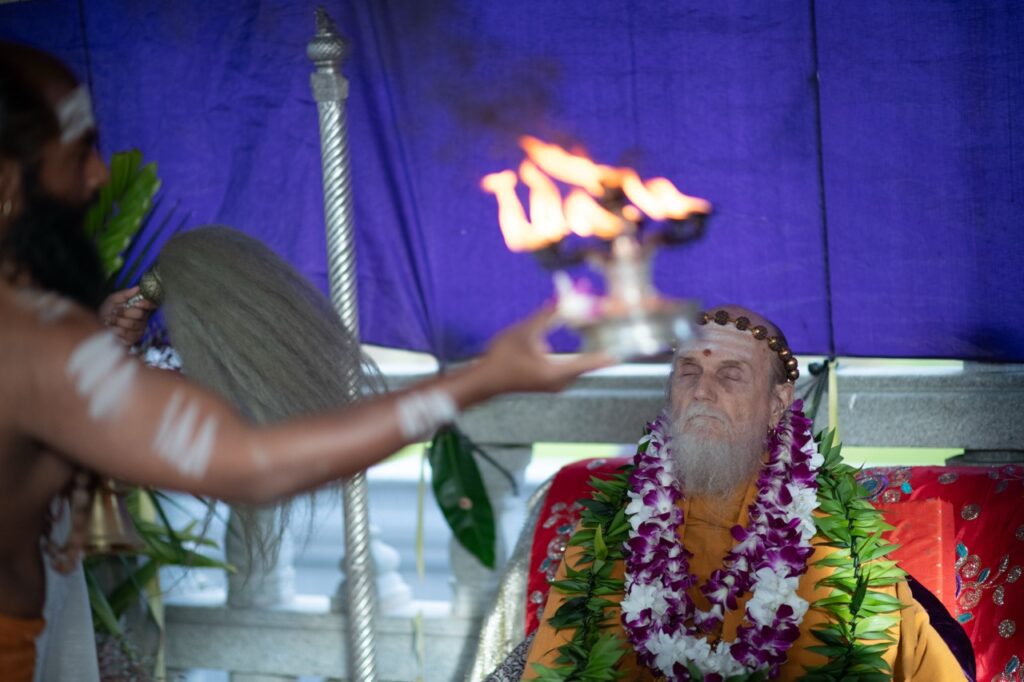
Today is Ardra nakshatra. With the Iraivan Krittika Homa taking place just a few days ago, the energies are indeed scintillating. Hours ago, the monks finished the abhishekam to Lord Nataraja in Kadavul Temple.
For those who’d like to get into some dense studies, here below is a deep dive into the Siva Sutras—summarized from parts of Satguru Bodhinatha Veylanswami’s 2018 Innersearch class material.
Introduction
In the great iconography of Nataraja—Siva as Lord of the Cosmic Dance—every detail carries meaning. The fire in His left hand is dissolution; the raised foot is liberation; the demon beneath Him is the ego’s bondage. But one element holds a cosmological secret that rewards especially close attention: the small hourglass drum, the damaru, held aloft in His upper right hand. According to Shaiva tradition, it was that drum, sounded fourteen times at the close of the Cosmic Dance, that gave birth to the Sanskrit language itself—and with it, a map of all existence.
These fourteen drumbeats produced fourteen phonetic groupings known as the Siva Sutras, or Maheshvara Sutras. Each is a terse string of Sanskrit sounds, ending in a marker letter used by the grammarian Pāṇini to refer systematically to classes of phonemes. But the Shaiva reading of these sutras goes far beyond grammar. Taken together, the fourteen aphorisms constitute the entire phonetic inventory of Sanskrit—and in doing so, they trace the complete arc of creation: from the Absolute, through successive layers of manifestation, down to earth and embodied consciousness, and back again to Siva as the Self of all. To understand this is to see the Sanskrit alphabet not as an arbitrary set of linguistic symbols, but as a living cosmological diagram—each letter the seed-sound of a force or principle that constitutes reality.
Full Sutras
Audio & Full Text:
a i u ṇ — “a i” is nirguṇa Brahman united with chit-shakti; “u ṇ” is the “big bang” of awareness expanding everywhere from a single point of awareness and entering māyā. ṛi ḷṛi k — Seeing Parasiva, Parashakti, Parameshvara and maya as a One Being. e o ṅ — The witness-consciousness (sakshin or awareness) in all the manifested beings, then Parameshvara, Parashakti and finally Parasiva as a One Being. ai au c — Parameshvara poised to commence creation by playing the damaru to expand the entire range of the universe which is within his own Self. From the thirteen vowels, the first thirteen tattvas emerge. ha ya va ra ṭ — Four of the five gross elements, each arising from its respective letter: space, air, fire, water. la ṇ — Earth, the fifth gross element. ña ma ṅ ṇa na m — The five subtle elements, each arising from its respective letter: sound, touch, form, taste, smell. jha bha ñ | gha ḍha dha ṣ — The five organs of action, each arising from its respective letter: speech, hands, feet, anus, genitals. ja ba ga ḍa da ś — The five organs of knowledge, each arising from its respective letter: ear, skin, eye, nose, tongue. kha pha cha ṭha tha ca ṭa ta v — The five primary life currents, each arising from its respective letter: prāṇa, apāna, vyāna, udāna, samāna; and the three aspects of the mental faculty, each arising from its respective letter: manas, buddhi, ahaṃkāra. ka pa y — Prakṛiti and purusha, each arising from its respective letter. śa sha sa r — The three guṇas, each arising from its respective letter: rajas, tamas, sattva. ha l — Siva as the Soul of all souls.
Longer Explanations of Each Line
Before the Beginning: The Nature of the Absolute
The first sutra opens with a single vowel: a. It is the first phoneme of the Sanskrit alphabet, and in the Shaiva understanding it is identified with Parasiva—Absolute Reality prior to all qualities, prior to all movement, prior to any distinction between knower and known. The letter a is self-luminous, the unmanifest ground of awareness. It is also implicitly present in every Sanskrit consonant, which carries an inherent a unless otherwise marked—the pervasive ground in which all sound is rooted.
Linked to a is the vowel i, identified with Parashakti, the conscious energy of Siva, called citkalā. Shakti is the dynamic aspect of the Absolute: where Parasiva is still ground, Parashakti is the potency within that ground, the seed of creative will. She is also identified with kāmabīja, the seed of desire, for it is through Shakti that the impulse toward creation first stirs. The tradition associates i with māyā, the creative flux through which the Lord enters the play of the worlds.
The third vowel of the first sutra, u, carries the quality of pervasiveness. Through Shakti (i), the Absolute (a) enters into māyā and, by means of all-pervasive presence (u), creates the worlds and governs them as Maheshvara, the Great Lord. These three vowels describe the movement from unmanifest Absolute to the Lord present within creation—continuous, not a single event.
The Four Levels of Sound
Before enumerating the principles of creation, the tradition describes the nature of sound itself, and in doing so maps the levels of consciousness. Four levels of vāk (speech or sound) are posited: parā, pashyantī, madhyamā, and vaikharī.
Parā vāk is the primordial state—undifferentiated, prior to any distinction, present in the Absolute as pure potentiality. All sounds, and all the worlds those sounds denote, exist here in unmanifest form. From parā emerges pashyantī, the “seeing” level at which differentiation begins. Then comes madhyamā, the middle ground at which the world, still latent, stands at the threshold of manifestation. Finally, sound reaches the viśuddhi cakra, the throat center, and becomes vaikharī: the audible word. This is a description of how consciousness moves from infinite openness into structured thought, word, and form.
Siva Assumes Form: The Threshold of Creation
The syllabic vowels ṛ and ḷ, associated with Parasiva and Parashakti-māyā, together activate māyā to bring forth the world of movables and immovables. Their unity is conveyed by a traditional image: as the moon cannot be separated from moonlight, nor a word from its meaning, so the Lord and His manifestation cannot ultimately be distinguished.
The vowels e and o point to Siva as the witness-consciousness (sākṣhin) present in all manifested things—the awareness in which existence arises and dissolves. The diphthongs ai and au introduce SadāSiva, the Eternal Auspicious Lord, the form the formless assumes at the threshold of active creation: “colored by Shakti,” willing to bring forth the universe from within His own Self.
The Five Elements and Their Subtle Essences
From here, the Siva Sutras become a phonetic inventory of the tattvas, the principles of manifest existence. The five gross elements (pañcabhūta) arise from five consonants: space (ākāsha) from ha; air from ya; fire from ra; water from va. Earth, emerging separately from the letter la, is the foundational element—the source of food, body, and the conditions of embodied life. It is associated with the mūlādhāra, the root support.
Underlying the gross elements are the five subtle elements, or tanmātras, the qualitative essences from which gross matter is fashioned. Sound is the tanmātra of space; touch of air; form of fire; taste of water; smell of earth. These arise from a subtler register of the alphabet.
The Instruments of Experience
The sutras then enumerate the instruments through which consciousness engages the world in embodied form. The five organs of action—speech, hands, feet, anus, and genitals—arise from consonants in the middle ranges of the alphabet, as do the five organs of knowledge: ear, skin, eye, nose, and tongue.
The five primary life currents, or vāyus—prāṇa, apāna, vyāna, udāna, and samāna, governing breath, digestion, circulation, upward movement, and integration—are encoded in the aspirated consonants, which carry the breath most audibly. The inner organ (antaḥkaraṇa) in its three aspects—manas (deliberating mind), buddhi (discriminating intellect), and ahaṃkāra (the sense of “I”)—arises from the first letters of the three middle consonant groups.
Prakṛiti, Purusha, and the Three Guṇas
At a more fundamental level, the two metaphysical principles recognized across nearly all schools of Hindu philosophy—prakṛiti (primordial nature) and purusha (pure witnessing consciousness)—are encoded in ka and pa, the opening letters of the two middle consonant groups.
From prakṛiti arise the three guṇas: rajas (activity), tamas (inertia), and sattva (clarity). These arise from the three sibilants śa, ṣa, and sa, a group unto themselves in Sanskrit phonology.
Ha: The Return to Siva
The fourteenth and final sutra centers on a single meaningful phoneme: ha. Having traced creation from the Absolute down through its layers—cosmic principles, elements, sense organs, life currents, mind, nature, and consciousness—the Siva Sutras arrive at their closing declaration. Siva is beyond all these tattvas. He is the Supreme One, the witness of all beings and their actions, the ātman—the Self—of all that exists.
The letter ha closes the series, the letter of the outbreath. In the Hamsa mantra—the natural mantra of breathing consciousness, whose reverse form so’ham means “I am That”—ha marks the pulse at which awareness returns to its source.
There is a final symmetry. The first letter of the Sanskrit alphabet is a; the last significant consonant is ha. Together—aham—they form the Sanskrit word for “I.” The entire alphabet, from opening vowel to closing consonant, spells out the self-recognition of the Absolute.
To learn Sanskrit in this light is not merely to acquire a classical language. It is to study, letter by letter, the grammar of consciousness as it unfolds into the world.
On April 14, we at the monastery joyfully celebrated the Tamil New Year. Our chef, Mani, prepared a wonderful meal for all the monks, making the day truly special and memorable. Sadhaka Shankaranatha performed the prayers for the food, adding a sacred and devotional touch to the celebration.
These are not our flowers, but once our pond looked like this.
Lately we are experimenting with growing lotus in pots.
This bud is the first at the monastery for many years. It will unfold in the days ahead. Yea!
Lotus leaves rise above the water on tall stalks while water lily leaves sit on the water’s surface
We are preparing six of these 130-gallon pots.
They are being placed in the ground. This one is near the Silpi Pavilion.
The holes are 4 feet wide and 18 inches deep
This pot was the pioneer, installed about a year back. It succeeded, so we are doing more.
The earlier pioneer pot is near Gurudeva’s bronze murti
Decades ago one of our large ponds was so dense with lotus that you could not see the water! It was a marvel, and we thought it would persist. But the Hawaiian “catfish,” called tilapia, perhaps the most widely farmed fish in the world, is an aggressive species and is impossible to get rid of. It devoured thousands of lotus plants, til there were none. The fish are still there, in abundance. Thanks to some unexpected support from recent pilgrims, we are working on systems to sidestep their damage to the lotus.
Our solution is to grow lotus in self-contained large pots (almost miniature ponds) that are four feet wide and 18 inches deep. Today we are digging holes for six of the pots, and in the days ahead we will fill them with topsoil and compost. We are getting ready for a May 1 visit from Ken Bernard, who is bringing new cultivars and helping us to establish them properly in the pots.
Hopefully, this time next year we will see dozens of buds and blooms. And the next year. And the next…
The morning begins with a 5:30am Siva Homa in Kadavul Temple
Many written prayers to the Devas and Mahadevas were submitted. Satguru adds them to the flame.
Afterwards, everyone sits to listen to a talk from Satguru
Today Satguru focused on a passage from Gurudeva about Nirvakalpa Samadhi
The previous season’s flag is ready to be replaced
Everyone parades along the cliffs edge towards the flagpole
Iraivan Temple always looks nice in the morning light
Everything does, actually.
Satguru detaches the old flag
The new orange flag of the Nartana Ritau is raised
Aum Namah Śivaya
Happy New Year of Parabhava!
This samvatsara (year) is commonly associated with a theme of dissolution and transformation. Para (परा): “away,” “beyond,” “off,” “reversed” — a prefix indicating reversal, opposition, or loss; bhava (भव): “being,” “becoming,” “existence,” “state” (from the root bhū, “to be”). Taken together it references a “reversal of the current state of being” often stated as a “downfall which leads to its opposite.” Sounds like a good time for spiritual growth!
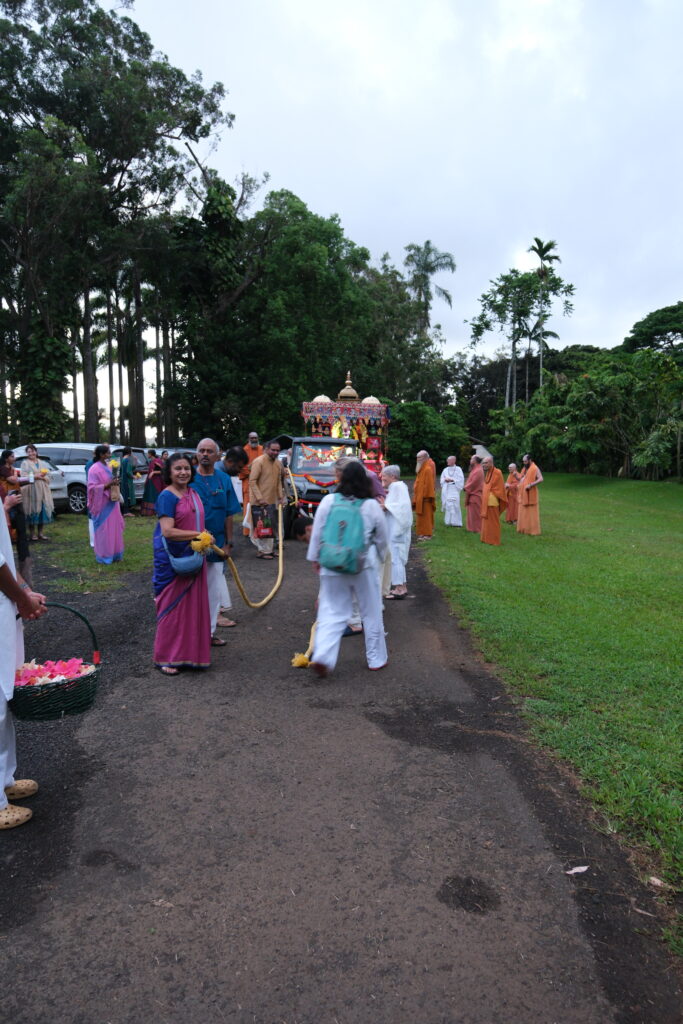
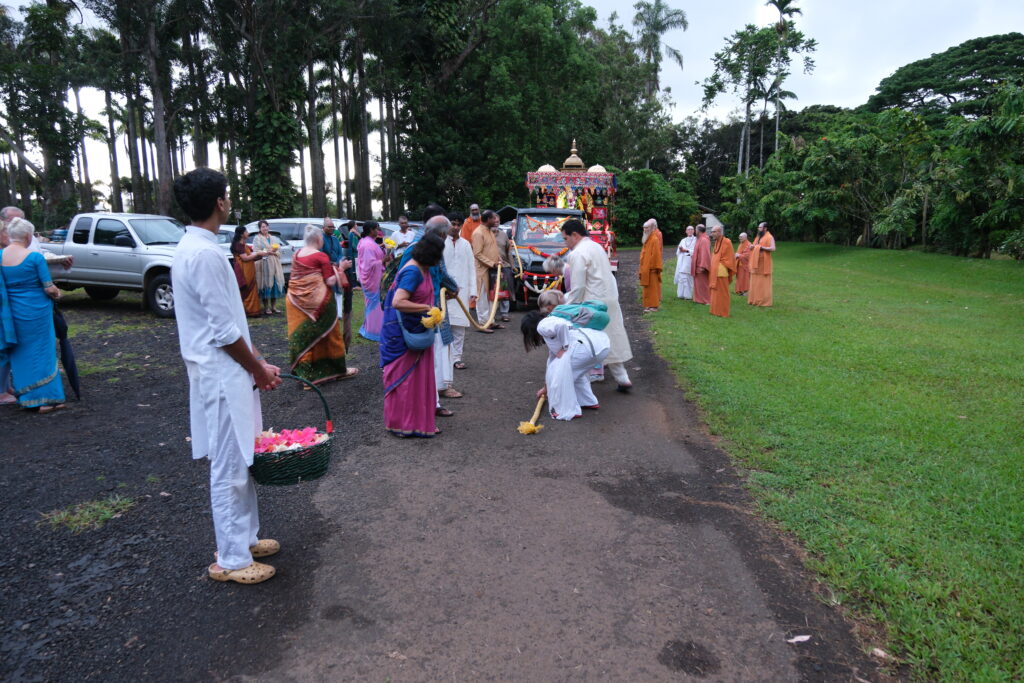
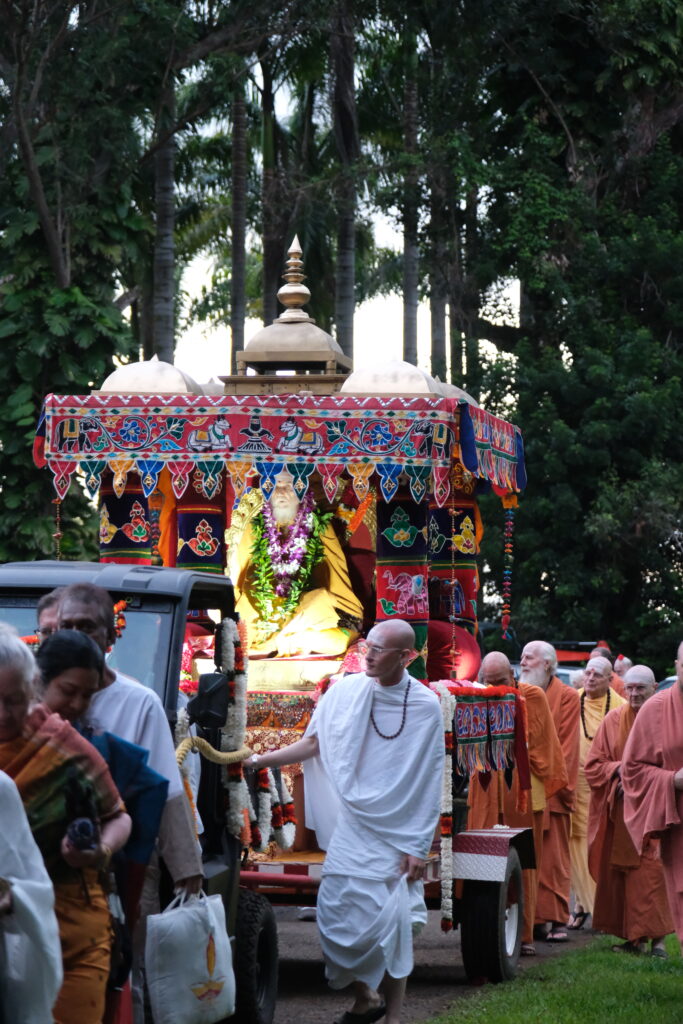
Today our monks began the day with our seasonal homa and a parade out to our flagpole. They raised the new dvaja for this spring season and for the new year as the Sun enters Mesha (Aries).
Here follows the passage from Saiva Dharma Shatras about how we should approach this new season:
Nartana Ritau, the season of Dancing with Siva, begins on Hindu New Year. This is the period of creation, the warm season, from mid-April through mid-August. The key word of this season is planning. The colors are orange, yellow-gold and all shades of green–orange for renunciation, yellow-gold for action, and green for regeneration. High above, the main Hindu flag flies the color orange, heralding the Nartana Ritau throughout this season, symbolizing sadhana and self-control. The other colors adorn smaller flags. This is the season of giving special attention to those in the grihastha ashrama. It is a time of awakening, renewal, review. The emphasis is on seeing ahead, planning for future years. It is a time of planning retreats and other activities for youths and adults for the entire year. During this time of looking forward, the Church’s six-year plan is updated by the Guru Mahasannidhanam and stewards and another year added. The Saiva Dharma Shastras are studied; and any needed additions in supplementary manuals, representing new growth, are made.
The practical focus is completion of unfinished projects. Secular holidays to observe among the families include Mothers Day in May, Fathers Day in June and Grandparents Day in August. In the monastery intensive cleaning of buildings and grounds takes place. New clothing is issued and old garments mended.
This season of harvest and new growth is also the time to review and reestablish picking and planting routines for the gardens. It is a time for ordering seeds and plants for the year, of planting trees, fragrant vines and the annual crop. Review is made for scheduling the care of all realms of the Aadheenam. Kadavul temple and the Guru Temple are cleaned and renewed during this season, and the adjacent grounds receive special, abundant attention.
The daily sadhana is the Sivachaitanya Panchatantra: experiencing nada, jyoti, prana, shakti and darshana. In Sanskrit, it is a time of learning new shlokas and mantras. Shrine rooms are renewed and redecorated for the year, and the clothing of all is renewed in the Hindu style of the current fashion. It is a time of doing things for others, religious outreach. In the missions, Nartana Ritau is the time of bringing in new students and Church members. It is a time of hatha yoga and philosophical teaching.
The main festival of Nartana Ritau is Guru Purnima. The mathavasis hold special conclave on Vaikasi Vishakham, the full moon day of May.
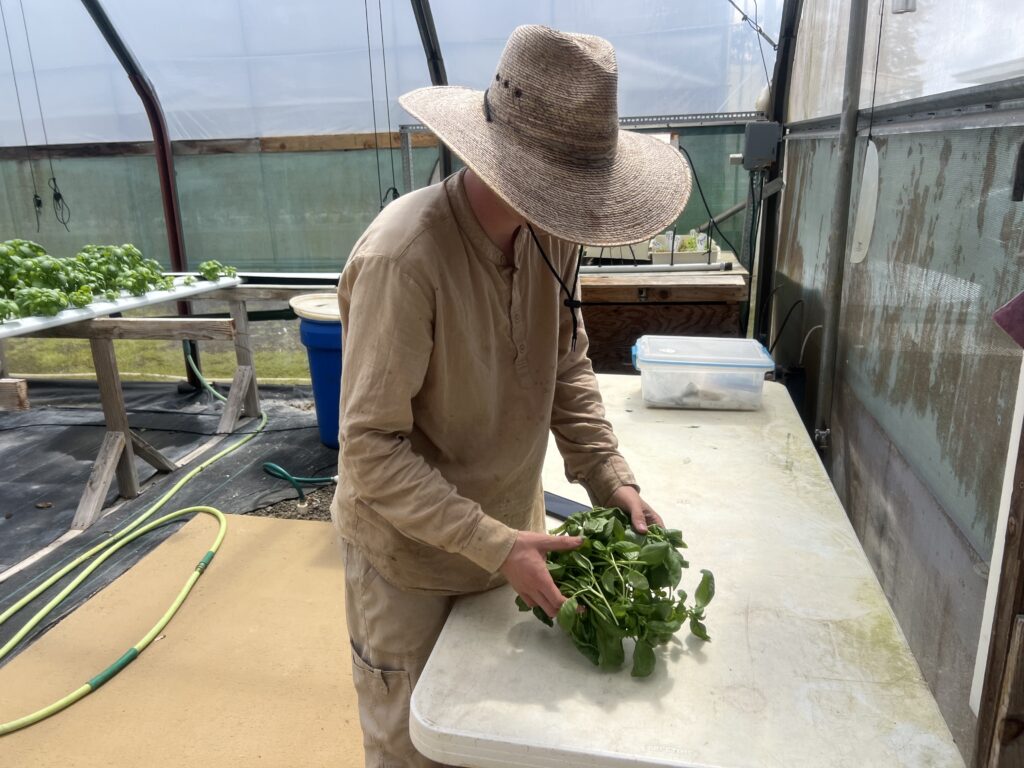
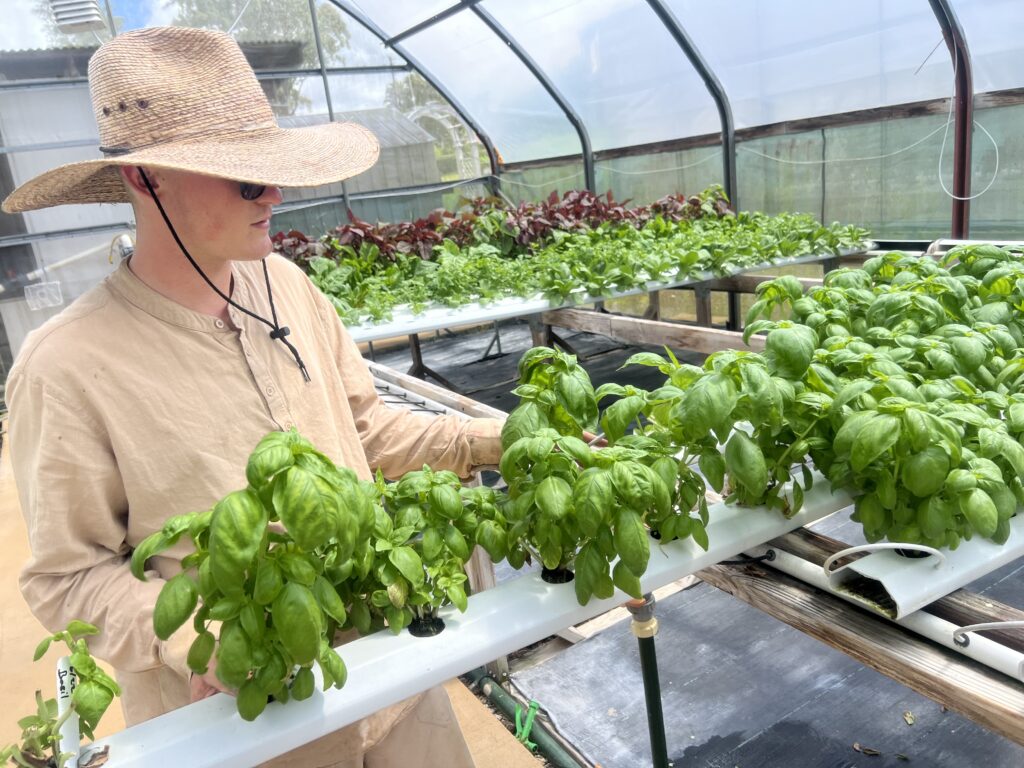
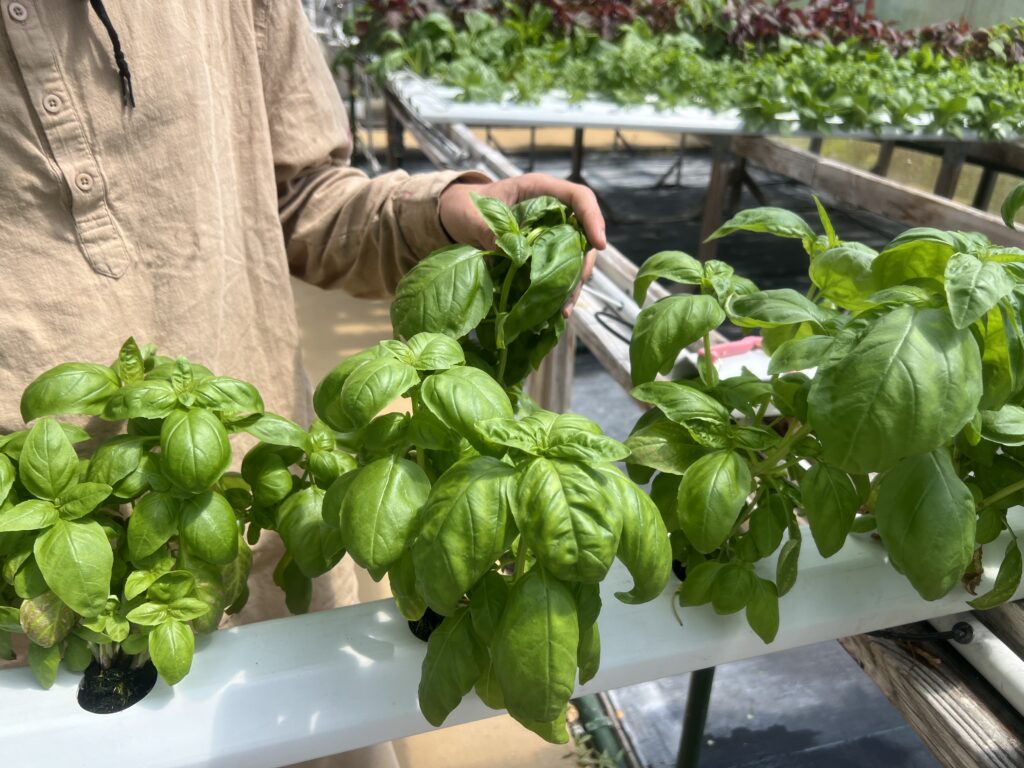
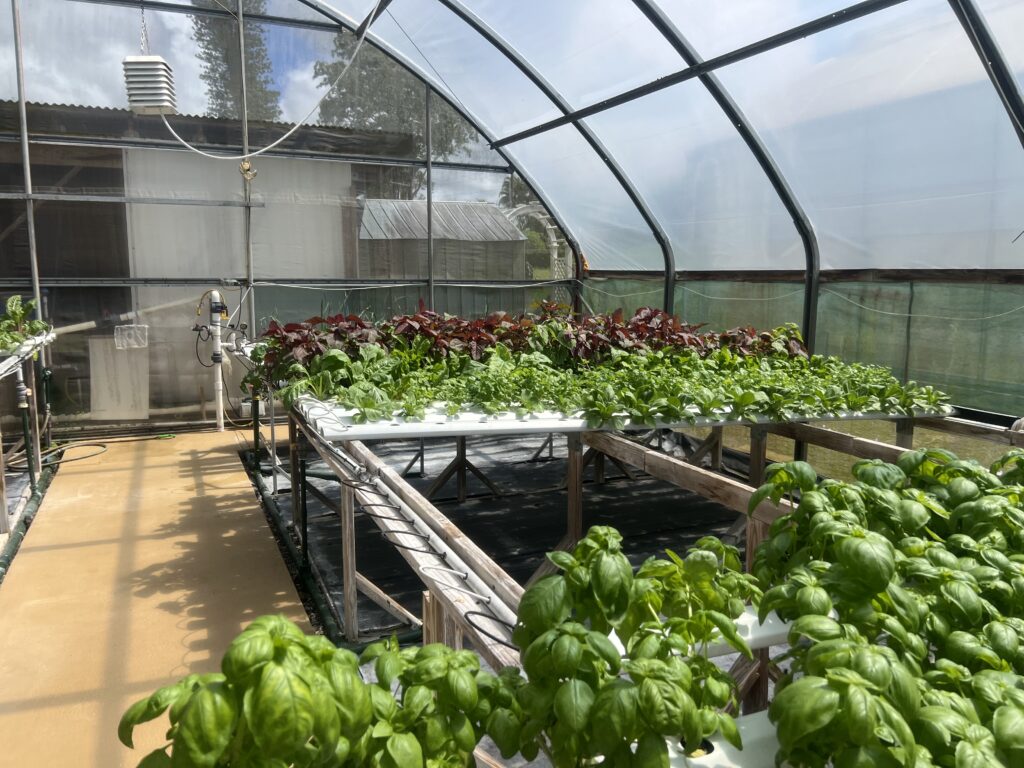
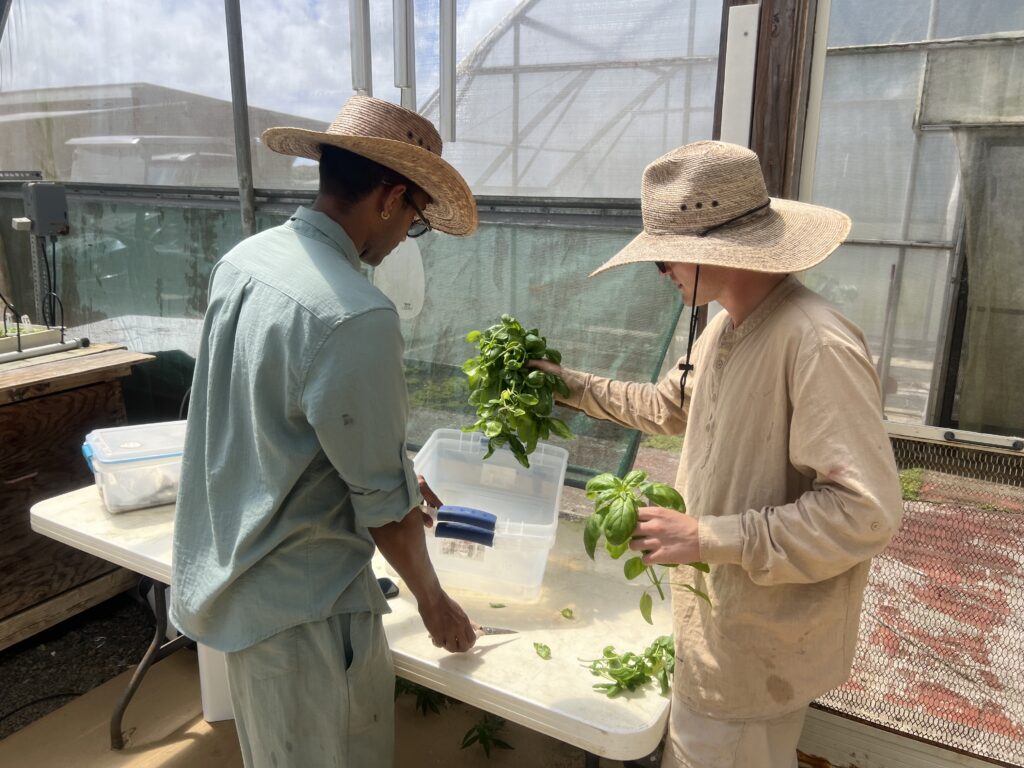
A few days ago, we visited our greenhouse, which is being managed by the Siddhidata Kulam’s mathavasi. During our visit, we were happy to see a fresh new batch of tomatoes and bell peppers growing beautifully.
While we were there, we also observed how Sadhaka Shankaranatha is attentively caring for the greenhouse, ensuring everything is nurtured with dedication and care.